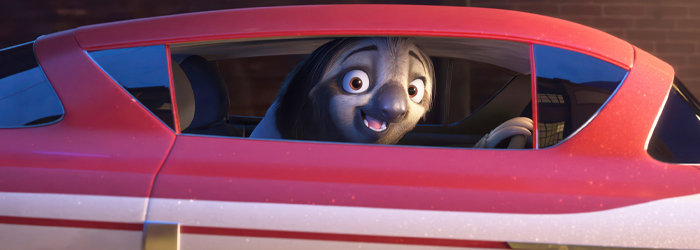
The latest: Following in the footsteps of Ne Zha 2 and Lilo & Stitch, Disney’s animated sequel Zootopia 2 reaches the $1 billion milestone in less than three weeks.
We heard it in a Hollywood movie once: “A million dollars isn’t cool. You know what’s cool? A billion dollars.”
And in this town, it’s true. A movie making that minimum seven figures isn’t cool, it’s a box office bomb. But 10 figures? Now we’re talking. Cracking a billion dollars globally requires a mighty recipe of the hottest stars, the shiniest filmmaking technology, and an engaging plot with twists and turns that never becomes super-duper complicated. And, of course, you’ll need an audience willing to turn out in droves the world over, from America to Lebanon to Zambia.
It’s a compelling window into our era of blockbusters and inflation. The Transformers and Pirates of the Caribbean series each have multiple entries, in the years before the franchises were run into the ground. Alice in Wonderland showed the way for Disney and these newfangled live-action remakes. The last Lord of the Rings was rewarded by fans with the highest gross of the trilogy, goodwill that transferred into The Hobbit: An Unexpected Journey, and then evaporated after that. The presence of the Jurassic and Star Wars movies, along with Skyfall, shows you can still wring plenty of money out of the long-running James Bond franchise.
Then there’s the superheroes. The Dark Knight movies officially ushered in the era of big business for those who take their comic-book moviemaking seriously. Marvel took a lighter step, focusing on interconnected stories that create serious FOMO for those who skip the multiplex line, in movies like Avengers, Spider-Man, Captain Marvel, and Black Panther.
Re-releases of Harry Potter and the Sorcerer’s Stone was enough to get it over the edge, while Spider-Man: No Way Home had no problem swinging over the line the first time. In 2022, Top Gun: Maverick landed in the billion zone, followed by Jurassic World: Dominion‘s slow crawl to the finish line. And James Cameron had one last wet stocking stuffer: Avatar: The Way of Water.
And in 2023, Super Mario Bros. went and foot-stomped the competition, hitting the billion-dollar goal in just 26 days. Then Barbie painted the world pink, reaching the milestone in just 17 days, and becoming the highest-grossing movie directed by a woman.
With 2024, Inside Out 2 shook off the box office doldrums (and revitalized Pixar‘s reputation as a theatrical studio) with its 19-day sprint to the billion line, the fastest ever for an animated movie. And in its seventh week, it surpassed Frozen II as the highest-grossing animated movie ever, reaching $1.46 billion worldwide. And Disney continues the streak with Deadpool & Wolverine, the naughty/nostalgic roast of the MCU and tribute to the Fox era of Marvel movies.
For 2025, Lilo & Stitch is the first billion dollar-grossing American production, following China’s animated sequel Ne Zha 2.
And if you want to go more in-depth, check out our article on The 50 Highest-Grossing Movies Ever, which includes some of those lesser specimens that couldn’t quite break a billion.
 91%
91%
 96%
96%
 72%
92%
91%
98%
91%
94%
78%
94%
72%
92%
91%
98%
91%
94%
78%
94%
 88%
88%
 83%
83%
 59%
95%
96%
99%
76%
92%
29%
77%
93%
97%
96%
94%
94%
90%
91%
95%
79%
59%
95%
96%
99%
76%
92%
29%
77%
93%
97%
96%
94%
94%
90%
91%
95%
79%
 45%
68%
89%
57%
94%
52%
88%
51%
86%
96%
79%
93%
84%
85%
92%
66%
72%
47%
48%
91%
41%
71%
80%
67%
72%
45%
68%
89%
57%
94%
52%
88%
51%
86%
96%
79%
93%
84%
85%
92%
66%
72%
47%
48%
91%
41%
71%
80%
67%
72%
 58%
53%
58%
53%
 98%
92%
94%
84%
90%
89%
84%
87%
98%
92%
94%
84%
90%
89%
84%
87%
 93%
84%
93%
84%
 81%
82%
81%
82%
 75%
82%
75%
82%
 72%
78%
72%
78%
 55%
49%
55%
49%
 18%
50%
89%
85%
18%
50%
89%
85%
 79%
78%
79%
78%
 92%
86%
92%
86%
 91%
91%
91%
91%
 87%
90%
87%
90%
 64%
83%
64%
83%
 96%
89%
96%
89%
 35%
55%
35%
55%
 32%
54%
98%
90%
32%
54%
98%
90%
 51%
55%
81%
82%
94%
94%
51%
55%
81%
82%
94%
94%
 53%
72%
94%
86%
53%
72%
94%
86%
 80%
82%
54%
59%
88%
69%
91%
91%
80%
82%
54%
59%
88%
69%
91%
91%

(Photo by Paramount Pictures / Courtesy Everett Collection. TRANSFORMERS ONE.)
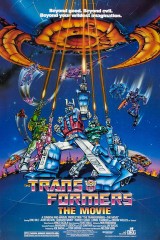
Debuting in 1984, the Transformers TV show rolled out to viewers the eternal mecha battle between Autobots and Decepticons here on Earth and beyond, though its prime drive was to get Hasbro action figures flying off Toys “R” Us shelves. That may just sound like a cynical moichandising ploy, but the series had strong characters and world-building, and kids were instantly hooked on the toys’ triple-play pleasures of robots, automobiles, and tactile hand interaction.
It’s a bond not even its creators anticipated when they released The Transformers: The Movie. The 1986 production had big-screen action, power pop ballads, and a feature-length massacre of fan-favorite Autobots, including leader Optimus Prime. Hasbro and Takara (the American company licensed the physical toys from the Japanese one and created the Transformers brand and lore) got the hint after fan outcry, where mailed letters were sealed with sad kid tears, and resurrected Prime in Season 3 of the series, comprehending they had created a media empire.
Transformers entered a new level of mainstream with the five movies from Michael Bay, directed across a decade, starting with the 2007 original and continuing with the sequels Revenge of the Fallen, Dark of the Moon, Age of Extinction, and The Last Knight. Bumblebee, a prequel set in the ’80s, brought the critical success that had eluded Bay, but not so much the box office. Rise of the Beasts cashed in on ’90s-era nostalgia by exploring the Beast Wars mythos.
And in 2024, the 40-year-old franchise got its second Certified Fresh movie, after Bumblebee: the animated origin story Transformers One that’s entirely set on Cybertron explores the path of two bot pals that lead to the creation of Optimus Prime and Megatron. Those two Certified Fresh movies are listed first as we rank every Transformers movie by Tomatometer!
91%
89%
 62%
62%
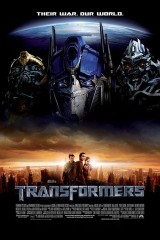 57%
51%
35%
57%
51%
35%
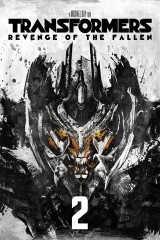 19%
18%
16%
19%
18%
16%

(Photo by ©Warner Bros. Studios)
[Box office figures as of 11/20/2023]
After Avengers: Endgame and Avatar duked it out for bragging rights as the all-time highest-grossing movie in 2019, the world was hit by the COVID-19 pandemic, which effectively shuttered theaters (some of them never to reopen), and this list seemed safe for the time being. But in late 2021, Spider-Man: No Way Home blew everyone away and nostalgia-bombed its way into the top 10.
Just a few months later, the decades-in-the-making sequel Top Gun: Maverick also shocked the world by swooping past the $1 billion mark, and another half year later, Avatar: The Way of Water proved James Cameron is the box office GOAT by shooting all the way up to the No. 3 spot. And with the latter’s ascension, Disney laid claim to a whopping seven of the top 10 highest-grossing films of all time (eight, if you count its joint ownership of Titanic with Paramount).
In 2023, The Super Mario Bros. Movie surprised everyone by jolting into the top half of this list in just its first six weeks of release, ultimately landing at No. 16, and most were ready to call it a year. Nobody was going to beat Mario. Then Barbenheimer fever hit, and before we knew it, we had a new champion that was not only the highest-grossing film ever solo-directed by a woman, but also the highest-grossing film in Warner Bros. studio history. With the addition of The Super Mario Bros. Movie and Barbie, the top 50 has lost Peter Jackson’s first Hobbit movie and Christopher Nolan’s The Dark Knight.
For the list below, we’ve included global box office performance, as well as domestic, and release date. We included dollars earned in re-releases, and in each of our descriptions, we look at where the film stood record-wise at the time of its run, and dive into things like critical and audience reception. We’ll be here to track the progress of new blockbusters and regularly update this list of top box office performers. So keep your eyes here, and check in with our weekly weekend box office wrap-ups.
Avatar (2009)
81%
The world had to wait some 12 years for James Cameron to follow up the biggest film of all time with what would become the new biggest film of all time. Nobody believed he was going to surpass Titanic’s numbers with this tale of an alien planet and the paraplegic Marine who teams up with its inhabitants in the battle for Unobtanium. But he did. At the peak of a 3-D reemergence, aided by the filmmaker’s usual technological gamesmanship (and higher ticket prices), Avatar‘s seven straight weekends at No. 1 led to over $595 million at the North American box office. Then, two days later on Feb. 2, 2010, its 47th day of release, the movie became the highest domestic earner ever. Avatar held that record for five years and 11 months and went on to become the only film ever to earn $2 billion outside of the U.S. and Canada, making it the world’s highest grosser at the time. It held onto its impressive global record for nearly 10 years, until Avengers: Endgame came along and snatched the crown. But with Avatar 2 on the horizon in 2021, the now Disney-owned-and-rebranded 20th Century Studios decided to remind everybody the franchise existed, re-releasing the film in China and, whether intentional or not, pushing it back into pole position.
Avengers: Endgame (2019)
94%
The journey that began in 2008 with Iron Man was coming to an end – at least for some of the characters in the Marvel Cinematic Universe. Audiences that had been holding their breath for an entire year after perhaps the biggest cliffhanger since The Empire Strikes Back could not wait to buy their tickets – and did they ever buy those tickets when they finally could. Opening weekend for Avengers: Endgame in April 2019 surpassed Infinity War’s year-long record by nearly $100 million. In just eight days, the film had grossed a half billion domestically. On day 10 it was over $621 million; the tenth film to ever cross $600 million. One by one the records fell, leading many to ignore the words “if” and “can” and focus instead on “when” Avatar’s previous record ($2.787 billion) as the highest-grossing movie would fall. But Endgame began to show signs early in its run that its impressive sprinting start might not be enough for it to ultimately come out ahead of James Cameron’s epic; it only had the second-biggest second weekend ever and the fourth-best third weekend. In the era of the modern blockbuster, even a record-breaker can be front-loaded and only spend three weeks atop the charts. It really all came down to a final dash near the finish line. After just six weeks of release, Endgame was about $73 million away from dethroning Avatar – substantial ground to make up. But then Marvel and Disney re-released the film on June 28, 2019 with new goodies over its end credits. And then, over the weekend of July 19, 2019 – its 13th week of release – when another Disney release would begin its run for the top 10 all-time earners (hello, Lion King), Endgame squeaked ahead. It may not have been able to catch The Force Awakens for the all-time domestic leader, but by the time summer was over, it would pull in front of Avatar and become the king of the world… at least for a while. With a 2021 re-release in China, Avatar did ultimately take back the crown, but it doesn’t diminish the incredible achievement of Endgame.
Avatar: The Way of Water (2022)
76%
For 13 years the arguments increased on whether or not James Cameron’s Avatar maintained a cultural footprint strong enough to draw in the crowds again. The counter-argument of “Don’t bet against the King” turned out to be the right one. Despite having just the 38th highest opening weekend at the time, word-of-mouth that another theatrical event was upon us spread throughout the world. Spending seven weeks atop the box office (the same as its predecessor) and 15 in the top 10 (one more than the original), the sequel to the biggest film of all time erased all doubts. Once again, Cameron made the most expensive film ever and came out profitable on the other side, securing his place to have three of the four biggest spectacles ever made.
Titanic (1997)
88%
James Cameron makes expensive movies. The Abyss, Terminator 2, and True Lies were all the most expensive movies of their time upon release. In 1997, Cameron blew out the budget again, and this time there was worry he may have gone too far. Though delayed from July until December, Titanic nevertheless became a global phenomenon the likes of which the box office had never seen at the time. After 15 straight weeks at number 1, 14 Oscar nominations and 11 statuettes, Titanic, its stars, and its signature song were ingrained in the hearts and tear ducts of the world, and the movie would hold the all-time box office record for 12 years – until Cameron would eclipse himself once again with Avatar.
Star Wars: The Force Awakens (2015)
93%
Twelve years after the completion of the Star Wars prequel trilogy, J.J. Abrams was tasked with making Episode VII – a monumental undertaking, and a risky one. Were people still interested after the prequels? Were they burnt out? The approach was to mix the old and the new, and it worked. Abrams gave a brand new cast of characters the chance to interact with the original trio of Luke, Han, and Leia, and generations of fans were so ready for the adventure that they gave the film the highest opening weekend in history ($247.9 million). In just under three weeks, The Force Awakens became the all time domestic champion, passing Avatar and joining the $2 billion club within 54 days. It still remains the highest-grossing domestic release of all time.
Avengers: Infinity War (2018)
85%
Just shy of 10 years since it began, the Marvel Cinematic Universe gathered nearly every one of its characters for a galaxy-wide showdown with the series’ Big Bad, Thanos. The movie featured one of the gutsiest cliffhangers in any franchise’s history, leaving audiences to wait in shock for an entire year to discover how Phase 3 of the epic series would end. The film bested The Force Awakens’ three-day opening weekend record with $257.6 million, and hit the $2 billion mark in 48 days. Domestically, it would ultimately come up just short of Black Panther, which was released two months prior.
Spider-Man: No Way Home (2021)
93%
Speaking of gathering Marvel characters for an epic showdown, 2021 provided an unexpected box office champion that would swing triumphantly into the top 10. That is to say, the success of Spider-Man: No Way Home wasn’t unexpected because of the film itself, which was an ambitious, multiverse-expanding entry in the Marvel Cinematic Universe that brought together some of the most beloved characters in the web-slinger’s big-screen history in a funny, heartbreaking, thrilling spectacle. No, it was unexpected because it managed this herculean feat even as the COVID-19 pandemic continued to keep audiences largely at home. If there was one movie in all of 2021 — or, hell, even going back as far as 2020 — that moviegoers were willing to risk going to the theater for, it was absolutely No Way Home, and boy did they ever show up. The film became not only the highest-grossing Spider-Man movie ever made, but also the most successful movie ever released by Sony Pictures en route to dominating 2021 and settling into the top 10 here. The future of Tom Holland’s Peter Parker is still up in the air, but he has earned himself a rather secure spot on the all-time box office list.
Jurassic World (2015)
72%
Twenty-two years after Steven Spielberg’s Jurassic Park became the Jaws for a new generation, it was time for that generation’s kids to have their own version of dinosaur mayhem. The second-best–reviewed film in the Jurassic series (72% on the Tomatometer vs. the original’s 91%), Jurassic World trampled a competitive summer full of Avengers, Minions, and inner feelings, and became just the third film since Titanic in 1998 to pass $600 million in domestic box office.
The Lion King (2019)
52%
Having found success with its live-action re-imaginings of The Jungle Book and Beauty and the Beast, Disney tripled down in 2019 with three “new” remakes. Dumbo was a bit of a bust, and Aladdin was a success, but The Lion King truly roared. That made sense given that the 1994 original, at the time, was one of the studio’s most successful films in the middle of its rebirth, and director Jon Favreau’s new, CGI-fueled version traced it for a new generation. The result is the highest-grossing domestic release to receive a Rotten score on the Tomatometer, at 52%. But its $191 million opening was the eighth highest of all time, and it became the 14th film to pass a half billion domestically and just the ninth film to rack up $1 billion overseas.
Marvel's the Avengers (2012)
91%
Want proof that Avengers work best together? Consider that the first combined outing for Iron Man, Thor, and Captain America bested the $1.4 billion that their origin stories had made combined. Five films into the MCU (including Edward Norton’s The Incredible Hulk), the team was finally assembled for a singular battle against Loki and his inherited army. Joss Whedon’s movie became the first ever to make over $200 million in a single weekend and was Marvel’s first entry into the Billion Dollar Club, which had just 12 members at the time.
Furious 7 (2015)
81%
What started out as a Point Break derivative – with cars! – became one of the unlikeliest mega franchises ever. Vin Diesel’s return in the series’ fourth film is what really got the Fast and Furious franchise engines revving, and Dwayne Johnson’s addition in the fifth film added some humor and helped get the critics on board. But it was the full embrace of the series’ now-signature bombast, as well as the untimely death of Paul Walker, that brought the combo of curiosity and tribute that helped make James Wan’s Furious 7 the franchise’s most successful entry. It hit with audiences – the opening weekend haul of $147 million was almost $50 million more than any previous entry – as well as with critics (it’s the highest-rated movie in the series at 81% on the Tomatometer).
Top Gun: Maverick (2022)
96%
Tony Scott’s fighter pilot movie Top Gun topped the box office in 1986 with a domestic gross of $176.8 million (it tallied $357.3 million worldwide), so it was no slouch by any means, and it went on to become a celebrated cult classic. But no one could have reasonably predicted that, more than three and a half decades later, its sequel would earn more than that in the U.S. alone, moving it all the way up to No. 7 on the domestic charts, and enter the top 20 earners worldwide at No. 12 with over $1.4 billion in receipts. Part of that was likely thanks to Tom Cruise reprising his role as Pete “Maverick” Mitchell, but director Joseph Kosinski also utilized some strategically deployed fan service and specially developed, state-of-the-art IMAX cameras for stunning action sequences to deliver the biggest crowd-pleaser of Summer 2022.
Frozen II (2019)
77%
When a film becomes not just a global phenomenon but the highest-grossing film in your canon of animated entertainment, a sequel is inevitable. While not quite as well-received as the first film critically (77% vs. 90% on the Tomatometer), Frozen II virtually demanded that parents bring their children for a second adventure. It began with the third-highest opening weekend for an animated film (after Pixar sequels Incredibles 2 and Finding Dory) – $130.26 million – and then became the highest-grossing film over the five-day Thanksgiving holiday, which was all the more impressive given it had opened the prior weekend. In its fourth weekend of release, it became Disney’s sixth billion-dollar film of 2019, pushing Jumanji: Welcome to the Jungle out of the Top 50 on the same weekend that its sequel The Next Level opened. Now, the movie has overtaken the original Frozen to become the highest-grossing animated film of all time… if you don’t necessrily regard The Lion King as an animated film in the traditional sense.
Barbie (2023)
88%
Barbie may not be the first toy to get its own movie, but it is certainly the one that united audiences and critics alike around the globe. Movie fans even embraced the grassroots campaign known as “Barbenheimer” as it shared a release date with Christopher Nolan’s Oppenheimer. Greta Gerwig’s film was the clear victor of 2023 with its leading opening weekend of $162 million, four straight weekends at No. 1, and the highest total ever for a female director, not to mention the highest-grossing film in Warner Bros. vast catalog. The 14th film to gross over $600 million at the domestic box office, resulting in the 11th-highest gross ever at the time, Barbie is expected to have a powerful presence in the 2023 awards race.
Avengers: Age of Ultron (2015)
75%
If any film in the top 10 could be considered both a success and a disappointment it would be Joss Whedon’s Avengers sequel. Coming up shy of the first film’s record-breaking opening weekend – note that it was still the second-best opening of all time when it was released – the movie never matched its predecessor in dollars or affection. With a 75% Tomatometer rating, it doesn’t even rank among the top 10 Tomatometer scores of the MCU – though we think there’s a case to be made for reassessing its virtues – and it lost the summer of 2015 to the dinosaurs of Jurassic World. Still, it was just the 16th film ever to cross the $400 million line domestically in its initial run.
The Super Mario Bros. Movie (2023)
59%
At the height of Nintendo’s hold on the gaming community, a live-action Super Mario Bros. film was produced in 1993 and became a massive disappointment creatively and financially. Flash-forward 30 years and a new attempt by the company that brought audiences Despicable Me and The Secret Life of Pets dominated the box office. With over $574 million, it became the second-highest grossing animated film ever released domestically and internationally. It was poised to become the top-grossing film of 2023 until Barbie passed it on August 23.
Black Panther (2018)
96%
After an introduction in Captain America: Civil War, T’Challa got his own film in February of 2019. Audiences were hungry for representation on screen and looking for a thrilling re-introduction to the character, and in Ryan Coogler’s action-packed, beautiful-looking epic, they got both. The movie became the fifth film in history to have a $200 million opening weekend, and just the third film ever to gross over $700 million in North America, outlasting even Avengers: Infinity War that summer. Why isn’t it even higher in the list? Because it remains the only post-Avengers film in the MCU to make less money internationally than domestically.
Harry Potter and the Deathly Hallows: Part 2 (2011)
96%
Fans of J.K. Rowling’s fantasy series got to see its characters (and the actors who played them) grow up in front of their eyes. The culmination of the journey that began in 2001 also ushered in a new trend of splitting final chapters in half. The back half of the Potter finale set the new record for an opening weekend at the time with $169.1 million, and its $960 million international haul ranked only behind Avatar and Titanic. By the end of its run, the eight Harry Potter had films grossed a combined $7.72 billion.
Star Wars: The Last Jedi (2017)
91%
One of the more controversial entries in the Star Wars series – don’t get anyone started on the casino planet sequence! – Rian Johnson’s The Last Jedi took the standard dip that had afflicted other middle films in the franchise. The Empire Strikes Back made 31.9% less than A New Hope, Attack of the Clones made 34.6% less than The Phantom Menace, and The Last Jedi fell 33.8% off The Force Awakens. Still, Johnson’s film joined Episodes IV, V, and VII in the 90%+ realm on the Tomatometer and may end up being the ultimate bridge to the next generation of Star Wars fans.
Frozen (2013)
89%
The Oscar-winning song that has tortured parents for nearly a decade was just part of what made Frozen the highest-grossing animated film in history. The story of two sisters searching for happily-ever-after with each other rather than the standard gentleman suitors also won the Oscar for Best Animated Feature and bested 2012’s Ice Age: Continental Drift for the highest international haul for an animated film ever, a record it eventually lost to its sequel.
Jurassic World: Fallen Kingdom (2018)
47%
J.A. Bayona’s follow-up to Colin Trevorrow’s continuation of Steven Spielberg’s series received the weakest Tomatometer score of the franchise to date (46%) and, following the path of many “second” entries in franchises (even if it’s technically the fifth), dropped 36% from Jurassic World in overall domestic box office. But it was still good enough for 23rd all-time in North America and 13th in overseas dollars. It was also the second highest-grossing domestic film of the 2018 summer season, behind the No. 23 film on this list.
Beauty and the Beast (2017)
71%
Speaking of Disney soundtracks, it was the 2017 live-action redo and not the Best Picture-nominated animated Beauty and the Beast from 1991 that really broke the bank and remains in the record books. Bill Condon’s version of the tale as old as 1991, starring Emma Watson, was not the first of Disney’s splashy re-imaginings, but it certainly was the most successful at the time, becoming the seventh film to cross a half billion in North America and the 16th to pass three quarters of a billion overseas.
Incredibles 2 (2018)
93%
Brad Bird’s The Incredibles debuted a full four years before the MCU began, a time when the Pixar brand was as close to a guarantee of success (and quality) as the industry had. Fourteen years later and deep into the superhero cinematic explosion, Bird’s sequel more than doubled the original’s box office and became the highest-grossing animated film ever at the domestic box office. It was the ninth film to cross the $600 million mark in North America and was knocked out of the top 10 domestic grossers of all time in the summer of 2022 by Top Gun: Maverick.
The Fate of the Furious (2017)
67%
A half billion dollars was put into the production of the seventh and eighth chapters of this franchise, and they made a combined $2.75 billion globally. F. Gary Gray’s film was a bit of a comedown from the highs of James Wan’s Furious 7. It even fell behind the sixth Furious film domestically, but did incredibly well abroad: it was the sixth film ever to make a cool billion outside the U.S. and Canada alone. Though still Fresh (67% on the Tomatometer), it was the lowest-scored Fast and Furious movie among critics since the fourth film.
Iron Man 3 (2013)
79%
The first Marvel film released following the massive success of Joss Whedon’s The Avengers was also the most successful of the individual Iron Man films. Robert Downey Jr.’s Kiss Kiss Bang Bang director, Shane Black, took over for Jon Favreau and put a twist on some comic-book lore in ways that still draws out disappointment from some fans. The general moviegoing public ate it up, though. Iron Man 3 was just the 13th film to reach $400 million domestic in its initial run and is the highest-grossing non-Avengers film in the MCU overseas with over $805 million. (And, if you are are keeping track, it is the 13th Disney property in the top 25.)
Minions (2015)
55%
After two successful Despicable Me films it was time to give Gru’s kooky supporting yellow folk their own story. Smart move. Minions had the largest opening for Illumination Entertainment ever, earning $115.7 million on its first weekend. Though it came up shy domestically of Despicable Me 2 ($336 million vs. $368 million) it can still boast the third-best overseas return for any animated film ($823.4 million) behind only Disney’s two Frozen films, and it stands as the company’s biggest international earner to date, even higher than The Super Mario Bros. Movie.
Peter Jackson’s (first) epic trilogy unfolded over three straight holiday seasons, and its finale was rewarded in every fashion: Return of the King historically won all 11 Oscars that it was nominated for, including Best Picture and Best Director; it was one of the best-reviewed films of the year (Certified Fresh at 93%); and it became the fourth-highest domestic grosser of all time behind just Titanic, The Phantom Menace, and Sam Raimi’s first Spider-Man film. It was no slacker overseas, either: When Return finished its run, only Titanic had a greater number outside of the U.S. and Canada.
Captain America: Civil War (2016)
90%
It was not officially an Avengers film, but Civil War may as well have been. Thor and Hulk were AWOL, sure, but Spider-Man received his welcomed introduction into the MCU, as did Black Panther. The movie’s run kicked off with the fifth-highest opening in history, earning $179.1 million on opening weekend (that’s now the 11th-highest opening). Another $745 million internationally made this the fourth MCU film to reach $1 billion. Another fun fact: Anthony and Joe Russo are one of only two filmmakers/filmmaking pairs on this list to have three films in the top 50.
Aquaman (2018)
66%
How could the DCEU get to $1 billion? Adding Batman into their Superman storyline couldn’t do it. Wonder Woman’s solid domestic numbers were nearly matched internationally, but even those figures came up short of Suicide Squad – and the goal. No, it would take Aquaman to crack the $1 billion mark for the DC Extended Universe. James Wan’s second billion-dollar film on the list may have had the second-smallest opening weekend of the Universe, but its prolonged success through the holiday season and beyond – the movie made nearly five times its opening – was greater than any DC property since Tim Burton’s Batman in 1989.
Skyfall (2012)
92%
The James Bond franchise got a boost with Pierce Brosnan and an even larger one with Daniel Craig. But there was no bigger boost to the long-running franchise than Craig’s Skyfall, the first film to cross $300 million domestically and $1 billion globally. A series that has existed for 50-plus years is going to get a little help from inflation – Goldfinger, Thunderball, and You Only Live Twice would have been $300 million grossers today – but we’re not doing inflation here. Skyfall was also a gold standard for Bond beyond the box office: It stands amongst the series’ top five scores on the Tomatometer, Certified Fresh at 92%.
Spider-Man: Far From Home (2019)
91%
No wonder Disney and Sony made up: 2019’s Spider-Man: Far From Home, which might have been the end of their association had they not moved past their impasse, is Sony’s second highest-grossing film of all time. Six of the studio’s eight highest-grossing films ever have involved Spider-Man (or Venom), but this was the first Sony flick to cross the $1 billion line, and the ninth film in the MCU to do it. (Spider-Man appeared in four of the MCU’s other members of the $1 Billion Club). It was also the fifth stand-alone Spider-Man film (live-action or animated) to register at 90% or higher on the Tomatometer – critics love their web-slinger.
Captain Marvel (2019)
79%
After getting tag-teased at the end of Infinity War, Brie Larson’s Carol Danvers made her debut in the MCU as the universe’s first headlining female superhero in 2019’s Captain Marvel. Outgrossing DC’s Wonder Woman around the world and at home, the breakthrough film was embraced by critics (though its Certified Fresh score of 79% ranks 21st out of the MCU’s 33 films). The space epic was only one of two films in 2018-19 to spend 10 straight weeks in the top 10 (the other being Black Panther), and was the seventh MCU film to reach $1 billion at the box office globally.
Transformers: Dark of the Moon (2011)
35%
The only Transformers sequel under the direction of Michael Bay to rank higher than 20% on the Tomatometer (a whopping 35%!) is not the series’ biggest domestic or international earner. But combined it remains the champion overall in worldwide gross (and bonus for the studio: it had one of the series’ lowest budgets). Only the final Harry Potter chapter could beat it in the summer of 2011, when they were the only films to pass $300 million domestic.
Jurassic Park (1993)
91%
Before James Cameron owned the top two spots in all-time domestic box office (for a period), it was Steven Spielberg who had pulled off that feat. His adaptation of Michael Crichton’s novel Jurassic Park was a return to the revered popcorn blockbusters he made his name on, and it replaced the previous year’s Batman Returns as the top opener ever with $47 million and went on to gross over $357 million that summer. That was just a couple million dollars shy of his 1982 classic, E.T., but re-releases in 2-D and 3-D over the years have put the film over $400 million domestic and $1 billion worldwide.
Transformers: Age of Extinction (2014)
18%
The Transformers series was beginning to show its age in North America in 2014, but around the world it was more popular than ever. Shia LaBeouf was replaced with Mark Wahlberg as the franchise’s central human hero, and the fourth film from Michael Bay approached a near three-hour running time at 165 minutes. But even as it dipped below $300 million for the first time at home, its $858 million international haul was still the sixth-highest total for any movie outside the U.S. and Canada at the time. (It is now 16th.) Bay’s fifth film of the franchise, The Last Knight, fell 47% in overall domestic and nearly 45% internationally. At 18% on the Tomatometer, Age of Extinction has the lowest Tomatometer score of the top 50 biggest films at the worldwide box office.
The Dark Knight Rises (2012)
87%
The conclusion of Christopher Nolan’s Batman trilogy gave us Bane, Catwoman, and even a surprise along the way. By the end of that summer only four films had grossed more domestically in their initial runs than The Dark Knight Rises: Avatar, Titanic, The Dark Knight, and Marvel’s The Avengers, which was the only film to eclipse Rises in all of 2012. When all was said and done, Nolan’s trilogy grossed over $2.46 billion worldwide.
Joker (2019)
68%
The director of The Hangover films wanted to make an origin story out of Batman’s most infamous nemesis. The project was met with skepticism, and then it began a run on the festival circuit. Venice awarded the film its top prize in the Golden Lion; some critics were hailing it as a masterpiece. Though its Tomatometer score is among the lower scores in the Top 50 (69%), Todd Phillips’ Joker had the highest opening ever in the month of October (passing the previous year’s Venom) and ultimately became the highest-grossing film ever released in that month in North America, surpassing Alfonso Cuaron’s Gravity domestically. The film has overtaken Warner Bros.’ The Dark Knight on this list, and has also earned a place in the studio’s history as one of its most profitable films of all time.
Star Wars: The Rise of Skywalker (2019)
51%
The final chapter of the Skywalker saga may have broken the trend set by the other third entries in the franchise’s trilogies (each outgrossed the middle episodes), but it will become record that we may never see broken again. During the week of January 12, 2020, it became the seventh film released by Disney in 2019 to break the $1 billion barrier – it reached that marker in 28 days, whereas The Last Jedi did it in less than three weeks. That record will be remembered far longer than having the 12th-highest opening of all-time – The Force Awakens and The Last Jedi were Nos. 1 and 2 until Avengers: Infinity War opened – or that it had the second-lowest Tomatometer score among the nine films, ahead of just The Phantom Menace. Nevertheless, it puts a capper on a nine-episode series from 1977-2019 that grossed (with re-releases) a collective $8.796 billion.
Toy Story 4 (2019)
96%
When the fourth entry of Pixar’s signature series opened to “only” $120 million, many labeled it a disappointment. Some had expected Toy Story 4 to have the studio’s biggest opening ever, and the film was then written off – by some – as part of a string of failed sequels in the summer of 2019. Well, Woody and the gang proved them all wrong. The movie went on to outgross the third film by over $12 million domestically. Even if it came up a bit short internationally, it still became the fourth billion-dollar grosser in Pixar’s history and their third highest–grossing film overall.
Toy Story 3 (2010)
98%
We all assumed it was the end for Woody, Buzz, and all their toy friends – that bittersweet finish was just so perfect. The series would have gone out with a box-office bang, too. The first summer release for the Toy Story franchise turned into the first $100 million opening weekend for Pixar as well as the studio’s first $400 domestic tally and first worldwide haul of $1 billion. For almost two years it was the second highest–grossing domestic release in Disney’s history; by 2019 it was 16th.
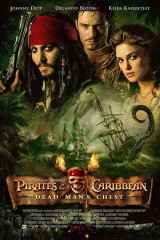
Pirates of the Caribbean: Dead Man's Chest (2006)
53%
Everyone mocked the concept of Disney turning one of their classic rides into a feature-length film. Well, some $300 million and an Oscar nomination for Johnny Depp’s portrayal of Captain Jack Sparrow later, we were looking at a franchise with a modicum of respect. At least, for a little while. Critics went from disdain for the concept before the first film was released to disdain for its epic length and earnestness in the span of just two films, with the original movie’s score of 79% dropping to 53% on the Tomatometer for the sequel. But audiences went the other direction, giving Dead Man’s Chest a 38.6% boost in domestic earnings and an 84.2% boost internationally. It was Disney’s first $100-plus million opening ($135 million to be precise), and the studio has had 20 more since then. From 2006 until Toy Story 3 was released in 2010, Dead Man’s Chest was the highest-grossing domestic release in Disney’s history.
Rogue One: A Star Wars Story (2016)
84%
A year after J.J. Abrams launched the record-breaking continuation of George Lucas’ Skywalker saga, audiences were given a go-between tale to help fill in the gaps that led to the destruction of the first Death Star. The Magnificent Seven-like story was an instant favorite for some and an average side-trip for others. It became just the seventh film to clear a half billion dollars in domestic box office. A nearly equal international haul filled in the other half needed for Rogue One to join the $1 Billion Club, a goal that Solo: A Star Wars Story came up short of by more than $600 million.
Aladdin (2019)
57%
Aladdin wasn’t always a sure bet: A blue Will Smith was mocked in early reveals of his Genie character and Tim Burton’s live-action Dumbo proved to be a bust just two months before Aladdin‘s release. But Guy Ritchie’s new version of the beloved 1992 animated film took advantage of other 2019 summer under-performers like Godzilla: King of the Monsters, Dark Phoenix, and Men In Black International, gobbling them all up and staying in the top five at the box office for seven straight weeks. Its international haul was only $70 million less than 2017’s Beauty and the Beast, and it was even higher than several films above it on this list including Black Panther and Incredibles 2.
Pirates of the Caribbean: On Stranger Tides (2011)
32%
After Gore Verbinski’s Pirates trilogy grossed a combined $2.68 billion worldwide, Disney and Jerry Bruckheimer were not about to let the series sail into the sunset. The third film’s bloated length of 168 mins was roundly criticized (its Tomatometer score is just 45%), and this fourth film fared even worse with reviewers (33%), but it did the job at the box office. Domestic audiences showed up for the revamped outing with Jack Sparrow, just not in the expected droves, and a mammoth international total ($804.6 million) kept Stranger Tides in the record books.
Despicable Me 3 (2017)
58%
Though the third film in the Despicable Me franchise made just $13 million more than the original at the domestic box office, internationally the Despicable Me films had a 164% increase from the first film ($543.1 million) to the third ($1.035 billion). Released in 4,529 theaters, Gru’s third chapter did manage to have the largest launch in film history in North America until Avengers: Endgame came along. Four other films during the summer of 2019 also exceeded its one-time record theater count.
Finding Dory (2016)
94%
Thirteen years after Finding Nemo became Pixar’s first $300 million domestic grosser and its biggest hit, the sequel focusing on Ellen Degeneres’ beloved memory-challenged sidekick reclaimed the throne, becoming again the animation house’s highest domestic grosser ever. The movie bested Toy Story 3 by over $71 million at home – even if it came up a bit short of that film internationally – and showed Pixar’s sequel business was really starting to thrive.
Star Wars: Episode I - The Phantom Menace (1999)
54%
George Lucas returned to the director’s chair after more than two decades to give fans what they thought they wanted 16 years after the release of Return of the Jedi. Fans certainly turned over their money, but many left with a sense of disappointment that would help taint the prequel trilogy for decades to come. Phantom Menace was the highest-grossing film domestically to earn a Rotten score 52% (until 2019’s The Lion King came along and matched that score, but with far more reviews). The $431 million earned in its initial run was enough to make it second only to Titanic all time in North America; it took re-releases to push it over $1 billion globally. In 1999, it was the first film to clear $100 million in five days, beating the previous record holder, The Lost World: Jurassic Park, which earned $98.6 million in the same amount of time.
Zootopia (2016)
98%
To this day, Zootopia remains the second highest–grossing animated Disney film not connected with Pixar. Since Frozen spent 16 straight weeks in the top 10, only three films have come as close, with 13 straight weeks in that top 10: Black Panther, La La Land, and yes, Zootopia. Its $682 million overseas is the sixth best ever for an animated film and the second best for any Disney animated film, Pixar or otherwise. Also, it is just one of four films on this list to receive a Tomatometer score of 98%.
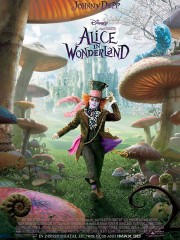
Alice in Wonderland (2010)
51%
Among the first five attempts Disney made to bring its classic cartoons to life by 2010, Tim Burton’s Alice In Wonderland was by far the most successful. Its $116.1 million start was the sixth-largest movie opening ever at the time and the second-highest for Disney behind the second Pirates film. It was Burton’s seventh collaboration with Johnny Depp, and the director has not had a film gross as much domestically in total as Alice made in its first three days since – not even with his attempt to replicate the success with Dumbo in 2019, which grossed a total of $114.7 million. But back in 2010, only Avatar, Titanic, and The Return of the King had made more money outside of North America than Alice did.
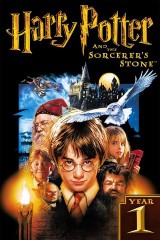
Harry Potter and the Sorcerer's Stone (2001)
80%
Four years after the publication of J.K. Rowling’s first Harry Potter book, Chris Columbus brought it to the big screen, and its legions of fans turned up in record numbers. A $90.2 million opening weekend crushed the previous title holder from four years earlier, The Lost World: Jurassic Park, by over $18 million. The Sorcerer’s Stone‘s final domestic total ranked sixth all time behind the initial runs of Titanic, The Phantom Menace, E.T., Jurassic Park, and Forrest Gump. That total remained the highest of the series until Deathly Hallows: Part 2 in 2011. International releases during the pandemic of 2020-21 ultimately pushed the film into the billion club.
On an Apple device? Follow Rotten Tomatoes on Apple News.
Thumbnail image courtesy ©Universal Pictures, ©Warner Bros. Pictures, ©Walt Disney Studios Motion Pictures
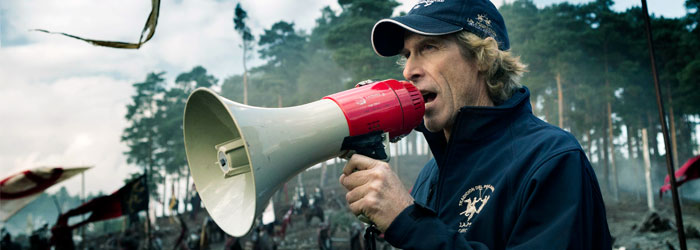
(Photo by Paramount/ courtesy Everett Collection)
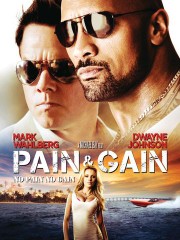
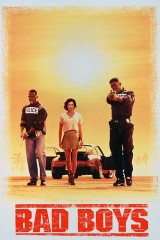
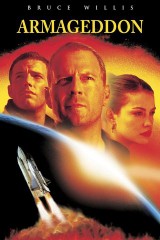
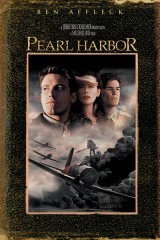
We’re ranking the movies of Michael Bay by Tomatometer, including his ’90s blockbuster triple header (Bad Boys, The Rock, and the Criterion Collection-approved Armageddon), his 5-film run playing in the toybox with Transformers, and most recently Ambulance, which as drawn the strongest reviews of Bay’s career. And for more all-out Bayhem, we broke down the sweet science of explosions in Michael Bay movies. —Alex Vo
68%
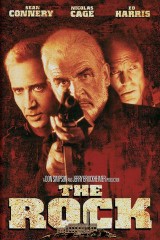 68%
57%
51%
68%
57%
51%
 49%
49%
 46%
39%
46%
39%
 43%
36%
35%
43%
36%
35%
 24%
24%
 23%
19%
18%
16%
23%
19%
18%
16%

(Photo by Paramount/Courtesy Everett Collection)
Shia LaBeouf’s first movie was the Certified Fresh surprise kids hit Holes. And though his next starring project, The Even Stevens Movie (based on the show that gave his young career a start), didn’t get same critical reception, it was a quick launch towards the Hollywood A-list. Soon enough he was groomed to be next of adventuring kin in Indiana Jones and the Kingdom of the Crystal Skull, and was the main confused human face among non-stop robotic carnage with the Transformers franchise.
By 2014, LaBeouf had all but ditched blockbusters for arthouse material, starring in Lars von Trier’s Nymphomaniac saga. Afterwards, red carpet antics, abrasive art projects, and personal issues began to consume his image, with LaBeouf seemingly in danger of becoming another industry burnout. 2016’s American Honey hinted at a comeback, but 2019 was a true redemption arc with the sentimental, classically-styled adventure The Peanut Butter Falcon, and the autobiographical Honey Boy, a searing personal history, both which became his highest-rated movies. As he prepares his next films for release (including re-teaming with Fury director David Ayer for The Tax Collector, and the Vanessa Kriby-starring drama Pieces of a Woman), we’re ranking all Shia LaBeouf movies by Tomatometer! —Alex Vo
17%
19%
 27%
27%
 25%
35%
25%
35%
 37%
37%
 39%
39%
 50%
50%
 46%
46%
 47%
47%
 55%
55%
 54%
54%
 62%
62%
 67%
67%
 69%
69%
 75%
75%
 77%
77%
 76%
76%
 78%
78%
 79%
79%
 78%
84%
78%
84%
 91%
94%
95%
91%
94%
95%

(Photo by Think Film /Courtesy Everett Collection)
The moon and the Earth: Name a more iconic duo in the galaxy. They’ve been around for almost as long as each other, separated by a mere 30 million years. They rotate in synchronicity. And sometimes the moon blocks the Sun for some cool Earth shade. You don’t see Jupiter and Titan being such BFFs. And we hear Oberon and Uranus aren’t even on speaking terms.
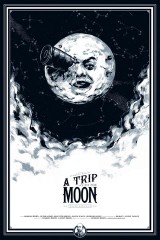
And for as long as Earth’s greatest, overachieving inhabitants have gifted themselves the invention of cinema, we humans have sought to depict the moon on screen. 1902’s A Trip to the Moon created the movies’ first iconic single image, a rocket ship face-planted in a crater, mythologizing the moon as sphere of whimsy, wonder, and fantasy. After July 20, 1969, the moon was gifted a new definition, one of scientific achievement and human triumph.
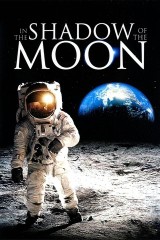
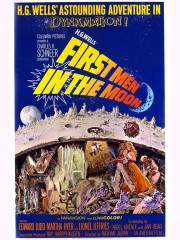
On the 50th anniversary of the moon landing by a crew of three American astronauts with the full power of NASA behind them, Rotten Tomatoes pays tribute with every moon movie to ever sprout its own Tomatometer. These are narrative movies set on the moon (H.G. Wells’ First Men in the Moon, Airplane II: The Sequel), and about going to the moon (First Man, Apollo 13), and expansive documentaries (In the Shadow of the Moon, For All Mankind). They’re also movies about the moon landing itself, like The Dish and Moonwalkers. And we’re featuring movies where the moon is significantly visited (2001: A Space Odyssey, The Adventures of Baron Munchausen, Austin Powers: The Spy Who Shagged Me), or where the moon is thematically woven into the plot, such as A Walk on the Moon or Under the Same Moon.
Ready to make a spacewalk to Earth’s closest and oldest friend? Then hop in for our guide to 38 moon movies — we guarantee you’ll be over the proverbial celestial satellite! —Alex Vo
 100%
100%
100%
99%
100%
100%
100%
99%
 94%
94%
 95%
90%
95%
90%
 91%
94%
91%
94%
 95%
95%
 90%
90%
 90%
90%
 88%
87%
88%
87%
 88%
88%
 86%
80%
86%
80%
 80%
80%
 71%
71%
 63%
63%
 71%
71%
 72%
72%
 80%
69%
80%
69%
 67%
67%
 65%
65%
 54%
54%
 43%
43%
 41%
42%
41%
42%
 42%
35%
42%
35%
 40%
28%
40%
28%
 24%
24%
 16%
16%
 6%
6%

(Photo by Daniel McFadden / © Universal)
Hollywood has been trying to transport movie audiences to the moon since the birth of cinema. First Man, the new Ryan Gosling drama that chronicles everything that went into Armstrong’s “one step,” is just the latest in a long line of movies about getting to the moon, and not getting to the moon, and what happens when we’re there. As lunar missions evolved from pure fantasy to a high-stakes space race, and eventually to historical events, so too did movies change.
“When I was young, I watched many movies about aviation and space,” astronaut Alfred Worden recalls. “I was fortunate that my father worked in a theater.” Worden, who was the command module pilot for the Apollo 15 mission and worked as a consultant on First Man, notes that space movies have gotten much more “sophisticated” since his childhood days, especially when it comes to accuracy. “I think the relationship between science fiction and science fact is always interchangeable,” adds Bert Ulrich, NASA’s multimedia liaison for film and television collaborations. “Both influence each other.”
Here are 10 films that track how filmmakers have viewed the moon, and how they predicted or reacted to real trips to Earth’s nearest neighbor.
French filmmaking pioneer Georges Méliès’ A Trip to the Moon is generally considered to be the first sci-fi movie. Loosely inspired by Jules Verne, the silent movie boasts vivid special effects and a complex plot for something made more than 100 years ago. It’s incredibly fanciful — the protagonists crash into the man in the moon’s eye when they first arrive and meet aliens known as “Selenites.” Especially when filmmaking was still in its infancy, audiences probably had no idea what was in store for the moon, both on screen and in real life.
It only took a couple of decades for things to get a little more serious. Fritz Lang, the German director behind the seminal silent film Metropolis, offered an incredibly prescient depiction of space travel, in part because this was the first film to employ a scientific advisor, rocket scientist Hermann von Oberth. The rocket in the movie launched vertically, had multiple stages, and was so believable that the Nazis actually banned the movie in Germany during World War II because the technology it featured was so similar to their top secret V-2 rockets.
The space race didn’t begin in earnest until 1957, but Destination Moon, which won an Academy Award for its special effects, was ahead of the game. There are no aliens and really not much interpersonal drama; it’s just four men on a dangerous mission. It didn’t just predate the Apollo program, though. Destination Moon is also about the privatization of the space race, many decades before Elon Musk’s SpaceX and Jeff Bezos’ Blue Origin came onto the scene.
With the space race underway, audiences were especially interested in space movies, and Hollywood was eager to provide. Despite being made when many movies were trying to mimic or leapfrog past real-world innovations, From the Earth to the Moon is based on Jules Verne’s 1865 novel of the same name. While that book was amazingly prescient for its age, the movie, which is set shortly after the Civil War, can’t help but feel like it’s straddling a time when trips to the moon were fantasy, and a near future where they would become fact.
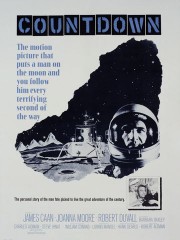
Countdown, which was made with NASA’s cooperation, is about a last-ditch attempt to beat the Soviets to the moon. Even with that high-stakes race at its core, many reviewers found the movie to be rather dull, perhaps because it focuses so much on the more bureaucratic, less glamorous aspects of space travel.
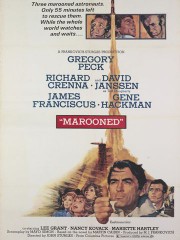
Marooned came out four months too late to “predict” Apollo 11, as the historic mission had already happened. What the movie did do, however, is predict the events of Apollo 13, as the plot focused on NASA trying to figure out how to keep three stranded astronauts alive after something goes wrong with their Apollo spacecraft. It was also quite faithful to the real space technology of the time. “Marooned was the first space movie that I would consider close to reality,” Worden says. “The spacecraft interior was the focus, and as I remember, fairly well detailed for authenticity.”
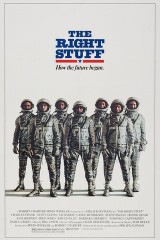
Once trips to the moon were officially no longer science fiction, Hollywood was able to turn these incredible true stories into historical dramas, which it did with the The Right Stuff, the tale of the first seven astronauts and the birth of Project Mercury. According to Ulrich, both genres of space movie are hugely important. “In the case of historical dramas, it’s reliving events; in the case of fiction, it makes people imagine,” he says. Worden says he prefers true stories to fiction, though he notes that The Right Stuff “took great liberties with [the book it was based on] and changed it into something that was part comedy and part reality.” Both he and Ulrich say that the film helped generate interest in the space program, regardless.
The dramatization of NASA’s near-disaster is such an amazing true story that director Ron Howard says some viewers in a test screening thought it was “unrealistic.” In Worden’s view, historical dramas like this and First Man are much more meaningful than fictional movies because “they tell the real story of success growing out of failure. Something everyone can relate to in a very interesting and profound way.” Apollo 13 also overcame one hurdle that all post-Apollo 11 movies have to deal with: A much higher bar on special effects, since we’ve all seen footage of the real moon missions. The Apollo 13 actors needed to take 612 trips in what’s known as a “vomit comet” in order to achieve 25 seconds of weightlessness at a time. “The weightless motions were excellent,” Worden says, and he would know.
Even though moon movies generally trended in a more realistic direction, and more imaginative sci-fi fare took place beyond the moon’s orbit, Hollywood still finds ways to “spice up” what really happened. The found-footage horror film Apollo 18 is one example, as is the third Transformers movie, which featured a scene in which Buzz Aldrin, playing himself, saluted Optimus Prime. According to Dark of the Moon, the Apollo missions were just a cover story. “For something like Transformers, we’re going to give a little more leeway,” Ulrich says of NASA’s involvement.
In some ways, First Man seems like the end of an era, as it’s positioning itself as the definitive movie about the definitive moon mission. But, it’s not all nostalgia. SpaceX wants to go to Mars, and NASA is readying its new Space Launch System for a return to the moon. “Interest in lunar exploration is really starting up again,” Ulrich says. “I think that it’s a little bit of a back to the future. It reflects the past with the Apollo missions, but now you’re looking back to the future of going to the moon.”
First Man is in theaters Friday, October 12
The movie business is difficult; that shouldn’t surprise anyone. A lot of thought and care and preparation — not to mention money — goes into the filmmaking process, and sometimes the end result just doesn’t quite turn out the way its creators intended. But even when a film production goes sideways, for whatever reason, there’s often a glimmer of something incredible hidden beneath the botched line deliveries, mediocre special effects, and general ineptitude on display. Sometimes, there are great scenes to be found in truly Rotten movies.
With that in mind, we’ve compiled an initial list of 30 examples in which an inspiring exchange, an ingeniously staged action sequence, or a hilarious performance helped shine a light on otherwise mediocre productions. We’re talking about genuinely outstanding moments — not ones we find ironically amusing — that might feel right at home in more expertly crafted films. There are, of course, countless more we could have included, but we’ll save those for the next installment of this series. And, if there are any that you think belong here, let us know in the comments!

(Photo by 20th Century Fox)
DARTH MAUL vs. QUI-GON AND OBI-WAN
The long-awaited Star Wars prequel introduced us to such inexplicable horrors as Jar Jar Binks, midi-chlorians, and mind-numbing Galactic Senate debates, but the film did offer an awesome glimpse of what it could have been. The final battle pitting Darth Maul against Qui-Gon Jinn and Obi-Wan Kenobi is one of the most dynamic lightsaber duels we’ve ever gotten, thanks in part to the martial arts talent of Ray Park as the Zabrak Sith Lord. Not only is the fight kinetic and inventive, who can forget the iconic moment when that second crimson beam emerges from Darth Maul’s double-bladed lightsaber?
WINGSUIT FLIGHT
The Transformers franchise is largely a jumbled mess of CGI, explosions, stilted dialogue, and perfunctory storytelling. That said, Michael Bay knows his way around visual spectacle, and while Dark of the Moon features its fair share of incomprehensible robot mayhem, there is one practical stunt (read: they did it for real) in the film that is genuinely thrilling. Bay enlisted the aid of experienced wingsuit flyers to jump off the Sears Tower and soar between Chicago’s skyscrapers as chaos unfolds all around them. It’s impressive, it’s majestic, and it’s just cool as hell. If only the rest of the movie could match this three-minute sequence…
OPENING HIGHWAY PILEUP
None of the Final Destination movies is particularly well-reviewed (Final Destination 5 is the only Fresh one at 62%), and for the most part, they all feel like a series of morbid Rube Goldberg-esque vignettes strung together by the thinnest of plots. A few of those gory scenarios, however, are surprisingly inventive, and none of them tops the opening to Final Destination 2, which sets its wheels in motion with an immaculately staged, over-the-top highway pileup that is equal parts ridiculous, harrowing, and literally explosive. Nothing else in the film even comes close.

(Photo by Distant Horizon)
DONNIE YEN vs. COLLIN CHOU
You may know Donnie Yen from Ip Man or Rogue One, and you may know Collin Chou as Seraph from the Matrix sequels, but chances are you haven’t seen this Hong Kong action thriller by Wilson Yip (who also directed the Ip Man movies). The story is a predictably rote potboiler about a loose-cannon cop who takes on a crime syndicate, but the climactic battle between Yen’s Detective Ma and Chou’s gangster Tony is savage and visceral, with bone-crushing stunt work and Yen adding MMA techniques to his more traditional martial arts style.
PARKING GARAGE SINGLE TAKE
Since directing and co-writing the first Saw, James Wan has introduced the world to the Conjuring universe, brought us the best-reviewed Fast and Furious movie, and earned the right to bring DC’s Aquaman to the big screen. Before all of that, though, he did direct this fairly absurd action thriller about a grieving father (Kevin Bacon) out for revenge against the gang who murdered his son. It’s a violent film with a ridiculous plot, but it does feature one sequence that demonstrates Wan’s potential for greater things. A two minute-long single take follows Bacon’s character as he attempts to lose his pursuers in a multi-level parking garage, with seamless camerawork that weaves up and down the ramps and alongside the outside of the garage to capture perfectly timed appearances by different characters. It’s impressive, and it far outshines everything else in the movie.
ABNER DOUBLEDAY INVENTS BASEBALL
Adam Sandler began his stint on Netflix with a bang, garnering a rare 0% with this joyless — and casually racist — spoof of The Magnificent Seven. There is one gloriously effective moment of inspired comedy, though. In a scene that riffs on the invention of baseball, John Turturro cameos as Abner Doubleday, who invites the titular sextet and a dozen others to play a new game with him, only to make up all of the sport’s rules and terminology on the spot just to ensure he wins. It may be the only joke in the movie that lands, but it lands superbly.

(Photo by New Line Cinema)
AUSTIN GOES TO HOLLYWOOD
By the time the third installment of Mike Myers’ Austin Powers series hit theaters, the world had just about had its fill of “Yeah, baby!”s and shagadelic double entendres, but the cameo-filled opening scene of Goldmember is pure magic. The film begins with an action-packed Hollywood adaptation of Austin Powers’ life story, starring Tom Cruise as the titular spy, Gwyneth Paltrow as Bond girl stand-in Dixie Normous, Kevin Spacey as Dr. Evil, and Danny DeVito as Mini Me. To top it all off, as the scene ends, the cameras pull back to reveal the man at the helm is none other than Steven Spielberg. Genius.
THE FIGHT FOR THE KEY
The first Pirates of the Caribbean film was a pleasant surprise, able to silence most of those who thought it silly to build a movie around an amusement park attraction. Every film since then has been a gradual step down, and it all began with the first sequel, Dead Man’s Chest, an overstuffed bombardment of spectacle with little but Johnny Depp’s performance to hold it all together. That said, the extended swordfight for the key to the titular chest is the high point of the film, making use of some fine stuntwork and clever setpieces to deliver a top-notch action scene.
“I WAS UP FOR PRINCESS LEIA.”
The Scream formula was getting creaky by the time they shifted the setting to Hollywood for the most meta entry in the series (the cast of a Stab film, based on the real events of Scream, start getting plucked off by a real-life ghostface). The laughs were still there, thanks mostly to a killer performance by Parker Posey as Jennifer Jolie, the actress playing Courteney Cox’s Gale Weathers; the scares, not so much. But kudos to Wes Craven and whoever else convinced Carrie Fisher to make a cameo as the disgruntled, and loyal-to-a-point, studio archivist Bianca. When approached by Jolie and Weathers on the hunt for details on a former starlet, Bianca stops them before they even get a chance to ask if she’s you know who. “I was up for Princess Leia,” Fisher explains. “I was this close. So who gets it? The one who sleeps with George Lucas.”

(Photo by Universal Pictures courtesy Everett Collection)
“LA MER” ON THE BEACH
It’s hard to deny that Mr. Bean is something of a cultural icon, and it’s essentially defined the career of Rowan Atkinson. While the early-’90s series was hugely popular, the character’s big screen outings didn’t quite measure up. 2007’s Mr. Bean’s Holiday found the endearing man-child stumbling his way through France, and it largely consisted of watered-down slapstick and his trademark buffoonery. But it was also intended to be an unofficial send-off for the character, and the film’s final moments absolutely shine in that respect. As Bean makes his way across a picturesque beach, everyone around him joins him in an uplifting rendition of “La Mer,” and it’s equal parts triumphant and bittersweet. Love him or hate him, his goodbye was perfect.
CHER’S SOLO
If you thought Cher singing “Fernando” to a man named Fernando in Mamma Mia! Here We Go Again was as good, cheesy, and Cher-y as it gets at the movies, you clearly didn’t stick around for the second half of 2010’s Christina Aguilera vehicle Burlesque. The movie, which is Rotten at 36%, overflows with small pleasures for those in the just right mood (read: at least three Chardonnays into your evening), among them Kristen Bell as the vampy, villainous dancer Nikki. But when club owner Tess (Cher), fretful for the future of her business, belts out the Dianne Warren-penned survival anthem, “You Haven’t Seen the Last Of Me,” singing it to no one in particular, but somehow touching anyone who hears it, well… all hail the queen.
THE CHASE
Poor man’s Scream, rich man’s Urban Legend, I know What You Did Last Summer was one of the defining slashers of the mid-to-late ’90s – even if it was one of the most generic and uninspired, sitting at 35%. Most remember it for its laughably hysterical moments (“What are you waiting fooooor!?”) and that weird Anne Heche business, but even the most discerning of genre fans give credit to director Jim Gillespie for the sequence in which the guy with the hook chases Sarah Michelle Geller’s Helen Shivers all over town. It’s genuinely scary (beware the mannequin jump scare), giggle-inducing (did she really just drop the keys), and a tiny bit moving in the end. Why the hell did she turn around?

(Photo by 20th Century Fox)
LOGAN AND VICTOR THROUGH THE WARS
X-Men Origins: Wolverine was Fox’s first attempt at a solo story based on one of their beloved Marvel properties, and other than hiring Liev Schreiber to star opposite Hugh Jackman, the film has precious few things going for it. (Seriously, who thought letting will.i.am speak — and shutting Ryan Reynolds up — was a good idea?) At least we got a pretty great opening credits sequence out of it: after revealing the origin of Logan’s (Jackman) relationship to Victor Creed (Schreiber), the film depicts the half-brothers fighting alongside each other in the US Civil War, both World Wars, and the Vietnam War, illustrating Victor’s violent descent in the process. That’s the movie we all wished we could have seen.
GARY OLDMAN WAXES NOSTALGIC ABOUT DISFIGUREMENT
Neither director Jonathan Demme nor star Jodie Foster returned for this 10-years-later sequel, but most assumed it was in capable hands, with Ridley Scott taking the helm, David Mamet penning the script, and Julianne Moore taking Foster’s place as Clarice Starling. The end result wasn’t expected to live up to its predecessor, but few foresaw the smug, unsatisfying tale of gore we ultimately got. However, in an initially uncredited role, an unrecognizable Gary Oldman plays disfigured Lecter victim Mason Verger, whose macabre retelling of his encounter with Lecter is chilling, gruesome, and a testament to Oldman’s ability to captivate an audience, even with a slab of play-doh stuck to his face.
“I’VE GOT YOU UNDER MY SKIN”
Mark Neveldine and Brian Taylor made names for themselves with the Crank series, so it was evident from the start they weren’t exactly interested in high art. Right after Crank: High Voltage, in fact, they came back with this futuristic thriller starring Gerard Butler that plays more like a CGI-blasted update on The Running Man, but with far fewer genuine thrills. Rotten at 28%, the movie is kind of a slog to get through, but when Butler’s Kable infiltrates the mansion of evil game developer Castle (Michael C. Hall), something almost magical happens. Castle reveals himself to Kable via a choreographed dance routine set to Sinatra’s “I’ve Got You under My Skin,” complete with a troupe of mind-controlled brawlers. As Kable fends off his attackers and Castle continues lip-syncing in the background, you can’t help but wonder, “Why couldn’t the rest of the movie have been this interesting?”

(Photo by Columbia Pictures)
TERRY CREWS LOVES VANESSA CARLTON
Despite the cult popularity of In Living Color during the early 1990s, the various members of the Wayans family have struggled to achieve the same kind of success on the big screen. Much of their output has been defined by spoof movies and sub-subpar comedies like White Chicks, built from interesting enough ideas for a sketch or two, but a bit too flimsy for an entire movie. In this case, though, the presence of Terry Crews does help liven things up, and he is at his absolute best when he gleefully lights up as Vanessa Carlton’s “A Thousand Miles” comes on the radio and he begins to lip-sync with it. It’s a small chunk of comedy gold in the middle of a stale, moldy, powdered-sugar donut.
THE “FIRST-PERSON SHOOTER” SEQUENCE
Back when he was still going by “The Rock,” Dwayne Johnson paid his dues in stinkers like 2005’s Doom, which did little to inspire confidence in video game adaptations on the big screen. At a measly 19% on the Tomatometer, Doom is an incoherent mess of a sci-fi action flick and an unfortunate stain on the resumes of all involved. But there is one instance of blatant fan service that, well, actually kind of works. The camera takes on the first-person viewpoint of Karl Urban’s character, Reaper, for several minutes as he tears through the research facility, blasting mutated baddies along the way. It’s a carefully planned and choreographed sequence that’s not only true to the game, but incredibly ballsy to attempt, and they managed to pull it off with pizazz.
THE 15-MINUTE FINAL BATTLE
After he brought a fresh new take on martial arts films with 2003’s Ong Bak, Tony Jaa co-directed and starred in its “sequel,” Ong Bak 2, which was neither set in the same time period as the first nor really related to it in any way outside of its title. Ong Bak 2 left much of its predecessor’s playfulness by the wayside in exchange for an overly serious and familiar tale of revenge that exposed Jaa’s shortcomings behind the camera. With that in mind, it’s still worth fast-forwarding to the final battle of the film, a glorious display of Jaa’s martial arts prowess that sees him utilizing multiple fighting styles and weapons techniques to take down an entire village of assassins over 15 brutal minutes of non-stop action. It’s visceral and awe-inspiring, and it highlights not only Jaa’s immense skill but also the dedication of his stunt team, who no doubt took a massive beating during the shoot.

(Photo by Lou Faulon/STX Entertainment)
OPENING SCENE
This is not Luc Besson’s first space rodeo, but working with a $200 million budget, he evidently felt compelled to throw every wacky idea he ever had at the screen. The end result is a visually exquisite but narratively slipshod adventure, but it features another standout opening scene that hints at the film’s true potential. Set to the music of David Bowie’s “Space Oddity,” it chronicles the history of technological advancement that eventually leads to the film’s intergalactic setting, and it reflects a refreshingly hopeful, wholesome future of peace and cooperation that’s both touching and clever. And then the rest of the movie happens.
ROD’S QUIET PLACE
Andy Samberg, Jorma Taccone, and Akiva Schaffer have amassed a huge following, thanks to their work as The Lonely Island, and fans of their brand of humor are often quick to come to the defense of this cult comedy (we get it; some of you love it). Unfortunately, critics didn’t quite feel the same way, calling Hot Rod a loosely threaded collection of hit-or-miss sketches that fails to live up to its stars’ potential. The biggest “hit” of the lot, though, is clearly the scene when Rod (Samberg) escapes to his “quiet place” in the woods to blow off some steam and ends up tumbling down a hill for nearly a full minute. It begins as a spoofy Footloose homage before it suddenly turns into one of the greatest — and probably the longest — pratfalls ever filmed, and it’s pretty glorious.
“THERE WAS A FIREFIGHT!”
Perhaps the only good thing about The Boondock Saints is the opportunity to see Willem Dafoe at full tilt (though, to be fair, when is that ever not a good thing?). Much of the film is dedicated to macho posturing and childish fantasy wish-fulfillment — not a surprise considering its notoriously toxic writer-director — but there is a brief moment that lingers long after the credits roll. As Dafoe’s FBI agent Smecker arrives on the scene of a shootout, he begins to visualize what took place, passionately conducting a chorus that only exists in his mind and proclaiming, “There was a firefight!” The whole scene falls somewhere between unhinged and insane, and Dafoe’s exclamation is the cherry on top.

(Photo by Warner Bros.)
A RHINO GIVES BIRTH
Before he really began to demonstrate his range in movies like The Truman Show during the 1990s, Jim Carrey had to wade his way through a number of films that almost solely relied on his gift for physical comedy. His outlandish antics weren’t for everyone, though, particularly when you’d seen them before, and so the Ace Ventura sequel, When Nature Calls, settled at a measly 33% on the Tomatometer. While the movie feels like a somewhat stitched-together series of vignettes, the scene when Ace becomes trapped in a mechanical rhino, strips naked, and escapes through a tiny hole in the rear is… Well, as Simon Pegg put it, “It is one of the single most genius pieces of comedic writing that will never be given its due because it’s part of a ridiculous, vaguely racist, silly comedy.”
THE EMINEM INTERVIEW
Eminem is no stranger to controversy, and his most recent album reignited a familiar one about his use of homophobic slurs in his lyrics. Say what you will about his word choice, but the man is essentially besties with Elton John, and he even skewered himself on the issue in what is certainly the best scene in the 2014 comedy The Interview. As James Franco’s talk show host Dave Skylark interviews Em on his show, the contentious rapper casually reveals that he’s gay, and that he’s surprised no one has figured it out yet, considering the “breadcrumb trail” he’s left behind in all his lyrics. It’s a rather surprisingly effective moment that only works because of all the controversy he’s attracted, and his deadpan, matter-of-fact delivery is pitch perfect, making him the funniest man in the room.
FINAL RACE
After the success of the Matrix trilogy, the Wachowskis had carte blanche to work on whatever they wanted, and they chose to take on this long-in-development feature adaptation of the classic animated series. Despite their impressive technical wizardry and the candy-colored dreamscape they brought to life, the film bombed both critically and commercially. Even if you don’t love the movie as a whole, it’s hard to deny the power of the climactic race, an unexpectedly heartfelt finale bursting with top-notch special effects that not only boasts kinetic thrills but also provides closure on a key plot point. The film has gone on to inspire a cult following, and this ending is a big part of it.

(Photo by 20th Century Fox)
THE WET BANDITS GET BRICKED
The law of diminishing returns is very real, but when it comes to movies, it’s difficult to argue with a moviegoing public that saw something it liked and simply wanted more of the same. Enter Home Alone 2, which essentially repurposes the story from its predecessor but changes its setting from Chicago to New York. The silly shenanigans here are so familiar that it all essentially feels like a lazy rehash of the same movie. That said, the scene where little Kevin (Macaulay Caulkin) displays Hawkeye-level brick-throwing accuracy just gets funnier with every painful crunch, if only because Daniel Stern’s googly-eyed desperation and concussed mumbling reaches vaudevillian heights.
QUINN AND CREEDY DO STAR WARS
Nowadays, a fantasy action film headlined by Matthew McConaughey and Christian Bale might be met with fierce anticipation, but that’s exactly what we got in 2002’s Reign of Fire, and it was far less than the sum of its parts. Despite an intriguing, if somewhat goofy, take on post-apocalyptic humanity and some fairly successfully realized CGI dragons, the film bombed with critics and audiences alike. But in one scene, Bale’s Quinn and Gerard Butler’s Creedy reenact the climactic battle from The Empire Strikes Back for a crowd of awestruck children, playing it as an oral tradition, a campfire tale told from generation to generation. It’s an inspired nod to the power of Star Wars and a wink to the audience that hits its mark much more effectively than much of the rest of the film.
THE MISSING PHONE
By the time the third Jurassic Park movie came along, it was already clear the franchise was starting to run out of ideas (gymnastics battle, anyone?), and putting dinos onscreen was deemed sufficient. At least JP3 had a pretty formidable new breed in the Spinosaurus, and one scene in particular hints at how much better the film would have been with a bit more ingenuity. After Paul Kirby’s (William H. Macy) satellite phone goes missing earlier in the movie, his newly reunited son Eric reveals it was the sound of that phone that alerted them to their location. Cue the ominous ringing of the phone… and the Spinosaurus that swallowed it.

(Photo by Universal Pictures)
MEET MR. HYDE
Last year’s reboot of Universal’s classic monster movie franchise performed so dreadfully that the studio’s plans for its own “Dark Universe” were almost immediately eighty-sixed. That was, in itself, a pretty incredible feat, considering they had the talents of Tom Cruise and Russell Crowe to work with, but at the very least, the latter provided arguably the one standout moment of the movie. Crowe brought a complex intensity to the dual role of Dr. Jekyll and Mr. Hyde, sophisticated in one breath and savage the next, and it left many of us asking if we couldn’t at least see a bit more of him, regardless of what happened to the Dark Universe.
PACINO’S SPEECH
Oliver Stone’s Any Given Sunday could have been so much more than it was, and at over two and a half hours, it was already a lot. Its overlong run time isn’t the only issue the film has, though; it also reiterates timeworn sports movie cliches and attempts to cast a critical eye on pro football even as Stone fetishizes it. All that aside, when you’ve got Al Pacino at your disposal, the smartest thing you can do is set him loose on some meaty lines, and that’s exactly what happens when Pacino delivers a pregame pep talk late in the film. It’s a powerful moment that really cements what Stone saw when he cast Pacino in the role of a head coach. Who wouldn’t follow that man?
THE BIG WAVE
It’s always a little tricky to turn real-life tragedy into a blockbuster production, but Wolfgang Petersen gathered a top-notch cast and gave it a go anyway. The Perfect Storm provided a pre-Pirates opportunity for Petersen to practice his nautical storytelling skills, but he proved he was more interested in the spectacle of it all. At the very least, he delivered an epic climax that ramped up the drama and pitted George Clooney, Mark Wahlberg, William Fichtner, and the rest of the Andrea Gail crew against a monster wave they couldn’t hope to survive. It’s an amazing image, and the fact that it isn’t an exaggeration of what the open sea may hold makes it that much more terrifying.
Man’s best friend, the giant robot, gets a little more love as Netflix drops its third season of Voltron: Legendary Defender. In celebration, we’ve bolted together one heckuva mecha list: Choose and upvote your favorite giant robots from TV and movie history.
Plenty of new releases are making their way to theaters this weekend, but there’s only one wide release — because if you’re forced to choose between opening opposite one of Michael Bay‘s Transformers movies or simply moving to a different week, it’s usually best to pick the latter. In honor of Transformers: The Last Knight‘s arrival, we decided to take a look back at Bay’s directorial output, but with a twist: instead of arranging it by Tomatometer, we’ve lined up these releases in order of opening week box office. Get ready to push the awesome button, because it’s time for Total Recall!
Transformers: The Last Knight is out this week! Take a look back and upvote the Transformers movies you like, and lay waste to the ones you don’t — including the animated one!
We bet those pesky xenomorphs are getting smug now that their last two movies, Prometheus and Alien: Covenant, have gone Certified Fresh.
Enough with the space jockeys, unqualified cartographers, and people who run in straight lines: How about terrorizing someone who can put up a real fight? Vote on our 10 suggestions below or leave your dream Alien deathmatch in the comments!
Hey, kids! Ya like superheroes? Toys? Then has Hollywood got your taste quadrant covered with this week’s release of Max Steel, based on the action figure line first introduced by Mattel in 1997. Youth-focused cross-media filmmaking has been a thing since the early 1980s, and in this week’s gallery we cover every theatrical movie based on toys, cards, and board games that got a Tomatometer!

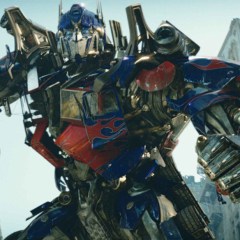

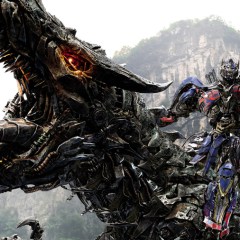

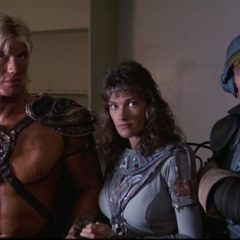

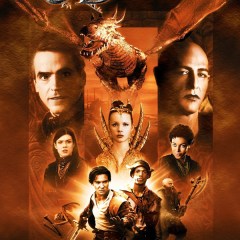

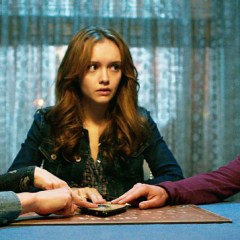
This week’s Ketchup covers ten headlines from the arena of film development news from the last seven days. Included in the mix this time around are stories about such movies as 20,000 Leagues Under the Sea, Charlie’s Angels, an Evel Knievel biopic, War of the Planet of the Apes, and new roles for Ice Cube and Jennifer Lawrence.

As we frequently cover in the Weekly Ketchup, Walt Disney Pictures is currently in the midst of reviving many of their classic animated films as live action reboots and remakes. Not all of Disney’s hits from the middle of the 20th Century were (100 percent) animated, however, such as 1964’s Mary Poppins, based on the first novel in the series by P.L. Travers (as depicted in Saving Mr. Banks). Possibly confusing matters, some this week reported that Disney was going to “remake” Mary Poppins, but what they’re actually doing is rather more conventional (and one might guess, in keeping with Travers’ intentions). Walt Disney Pictures has started development of a new Mary Poppins musical movie which would be a sequel set 20 years after the original movie in the 1930s. This new Mary Poppins musical will be directed by Rob Marshall, whose filmography includes Chicago, Nine, and last year’s Into the Woods. For the film, the songwriting duo of Marc Shaiman and Scott Wittman (Hairspray, Smash) will start working on new songs that will attempt to follow up on the classics written for the first movie, like “Supercalifragilisticexpialidocious” and “A Spoonful of Sugar.” There’s no word yet about who Disney might be hoping to cast as the older Mary Poppins, or any of the members of the Banks family.

One of the biopic projects that has been kicking (and jumping and rocket-cycling) around Hollywood since the 1990s has been the idea of an Evel Knievel movie. “Evel Knievel” might not be as well known a celebrity as he was in the 1970s, but during that time, Knievel was arguably one of the most famous figures in pop culture, following a series of well-publicized super stunts (some of which weren’t successful) on both motorcycles and a steam-powered rocket called the “Skycycle X-2.” In the past, stars such as Johnny Knoxville and Matthew McConaughey have been rumored or attached to star as Evel Knievel, but lately, it has been Channing Tatum who wanted to put on Knievel’s star-spangled jumpsuit. The project, which may be based on the Pure Evel biography book, is now being discussed with director Darren Aronofsky, whose filmography as director includes Black Swan, Noah, Requiem for a Dream, and possibly closest to an Evel Knievel movie, The Wrestler. In other Channing Tatum news, his superhero movie Gambit this week lost its director, Rupert Wyatt, over scheduling conflicts, as Fox is racing to get the movie made in time for an October, 2016 release.

One of the complaints movie fans sometimes have about recent DC Comics superhero movies is that they are less “fun,” or at least less “funny,” than their counterparts at Marvel Studios. This was a notion that some felt gained traction last year with a story that claimed that WB has a “no jokes” policy about their upcoming superhero scripts. Of course, that never necessarily meant that Warner Bros couldn’t change their plans, especially if they started to think that there would be a backlash over it, right? That might at least be one way to interpret the late-breaking news this week that Warner Bros is starting development of a movie focusing on the Blue & Gold team of Booster Gold and Blue Beetle. Like many of DC’s characters who aren’t Batman, Booster Gold and Blue Beetle are usually portrayed in the comics as being less serious and/or comedic. Blue Beetle is your typical inventor-turned-superhero (who was given a dark interpretation as Nite-Owl II in Watchmen). Booster Gold is a more unique concept, as a time traveler from the distant future who uses technology and knowledge of past events to make a name for himself in our time. Reportedly, WB is also hoping to recruit screenwriter Zak Penn, who worked on The Avengers for Marvel, to come across town to work on Blue & Gold.

With Sony’s plans for a female reboot of Ghostbusters now less than a year away from release (7/15/16), the studio is now looking at other female-centric action comedies. The latest that we’ve heard about involves rebooting a TV-show-adaptation from 2000 (and a sequel in 2003), which was the private eye comedy Charlie’s Angels. The director that Sony has recruited for their Charlie’s Angels reboot is Elizabeth Banks, who is in high demand following her successful directorial debut with this year’s Pitch Perfect 2. The reboot doesn’t yet have a screenwriter yet, so it’s probably a few years away from happening. It’s also unknown if Elizabeth Banks might also take one of the female leads (or who knows, maybe “Charlie” could be a lady this time?).

(Photo by Frazer Harrison / Staff / Getty Images)
In the arena of comic book adaptations, female spies and superheroes often have similar codenames, including Black Widow, Black Canary, and Mockingbird (from ABC’s Agents of S.H.I.E.L.D.). That last one in particular is also similar to the last two movies in the Hunger Games franchise, which is close enough for us to call that a successful segue. 20th Century Fox is currently hoping to put together a package for a spy novel adaptation called Red Sparrow (again, with the color/bird codenames!). What Fox is trying to put together is a new film for both Jennifer Lawrence and director Francis Lawrence (the director of all of the Hunger Games movies except the first one). If Jennifer Lawrence signs on to star in Red Sparrow, she will be playing a young Russian spy and “trained seductress,” who is assigned to “operate against Nathaniel Nash, a first-tour CIA officer who handles the agency’s most sensitive penetration of Russian intelligence.” Red Sparrow is an adaptation of a novel by Jason Matthews.

A few years ago, director Bryan Singer returned to the X-Men film franchise for X-Men: Days of Future Past (and next year’s X-Men: Apocalypse) after starting things off in the early 2000s with the first two X-Men films. This week, we learned that Singer has chosen his next film, and that it won’t be a fifth X-Men movie. Instead, Bryan Singer is taking on an adaptation of Jules Verne’s 20,000 Leagues Under the Sea, the classic science fiction story about a high-tech submarine called the Nautilus. Singer’s movie is expected to be produced by 20th Century Fox (also the home of the X-Men franchise). That also means that this project is not the same as the long-in-development reboot that Walt Disney Pictures has been trying to get started, which at one point had David Fincher (Fight Club, Gone Girl) attached to direct. As for the future of the main X-Men film franchise, there have not yet been any announcements outside of spinoffs like Deadpool, Gambit, The New Mutants, X-Force, and a possible X-Men/Fantastic Four crossover. With X-Men: Apocalypse, the team’s second trilogy of films will be concluded.

Although the (movie) summer of 2015 only ended a few weeks ago, much of Hollywood’s current focus is already on the summer of 2017, given the time needed to get expensive summer movies greenlit, cast, produced, marketed, and released. One such film will be 20th Century Fox’s third film in their rebooted Apes franchise, War of the Planet of the Apes (7/14/17). Details aren’t yet known about this third film, except that following the events of 2014’s Dawn of the Planet of the Apes, humanity’s future was looking quite dire, and the word “war” isn’t exactly a positive portent. For that reason, it shouldn’t be surprising that the humans will be the villains in War of the Planet of the Apes. This week, we learned that the main human villain (“The Colonel”) will be played by Woody Harrelson, who is looking for a new franchise with The Hunger Games wrapping up on November 20.
ROTTEN IDEAs OF THE WEEK

Following the success of both Ride Along and Straight Outta Compton (which was essentially an “Ice Cube biopic”), Universal Pictures is very much interested in staying in the Ice Cube business. This was manifested this week by the news that Universal Pictures has won a studio bidding war to acquire a comedy spec script for Ice Cube to star in. The comedy is called Humbug, and much like the Bill Murray comedy Scrooged, it’s a contemporary retelling of Charles Dickens’ A Christmas Carol. If the deal comes together, Ice Cube will play “a wealthy real estate mogul shown a path to redemption by the ghosts of Christmas Past, Present and Future.” Humbug will be directed by Tim Story, who previously worked with Ice Cube on Barbershop, First Sunday, Ride Along, and next year’s sequel, Ride Along 2. Story also directed the 2005 and 2007 Fantastic Four movies, which now despite having RT scores of 27 and 37 percent have the distinction of being the best reviewed Fantastic Four movies to receive theatrical releases. In similar news (insofar as the connection between Ice Cube and Straight Outta Compton goes), Universal Pictures is also reportedly considering producing another rap industry biopic in the form of an adaptation of the non-fiction book Life and Def: Sex, Drugs, Money + God, about the early years of Def Jam records. If Universal does proceed, an early rumor suggests that they may be considering casting Jonah Hill and Fantastic Four star Michael B. Jordan as Rick Rubin and Russell Simmons, respectively.

(Photo by Larry Busacca / Staff / Getty Images)
The problem with basing the “Rotten Ideas” each week objectively on the aggregated RT Tomatometer scores of those involved, is that sometimes the numbers are misleading (there is such a thing as luck, and it’s not always good). Or sometimes people are punished by bad reviews for trying to operate outside their wheelhouse. Take for example, director Ruben Fleischer, who debuted in 2009 with the genre spoof Zombieland (90 percent on the Tomatometer), and then followed that up with three films as director or producer that have all struggled to receive RT scores above 45 percent. Then, there’s the case of Liam Neeson, who has appeared in plenty of well-received films, but partly because he’s so prolific, he’s also appeared in many (and in recent years, more) Rotten films than Fresh ones. Putting those two creatives together leads us to this week’s news that Liam Neeson has signed with Universal Pictures to star in an action comedy called The Revenger. Nothing is known about the premise, except that the title suggests that it’s possibly a spoof. There’s also the detail that the comedy pitch came from the writing team of The State/Reno 911 stars Robert Ben Garant and Thomas Lennon, who have given us such wacky comedies as Balls of Fury, Herbie: Fully Loaded, and the first two Night at the Museum movies (though as writers, their Tomatometer only has one Fresh score, Starsky & Hutch).

Earlier this year, the news cycle was populated several times about (many, many) different writers who were recruited by Paramount Pictures to participate in a “writers room” experiment for their Transformers franchise. The concept is that for two weeks, the same soundstage where dance recitals for Glee were held was used for over a dozen high profile screenwriters to pitch and “workshop” various ideas on where the Transformers franchise should go next. This week, we learned some preliminary details about two of the first projects to emerge from this experiment. The first such film is the least surprising, which is that there will be a straight up fifth Transformers movie, and the second to feature Mark Wahlberg in the lead role after last year’s Transformers: Age of Extinction. That film will be written by Akiva Goldsman (Batman & Robin, Insurgent), who had also been sort of leading the writers room project. Michael Bay was initially reported to be returning to direct Transformers 5, but Bay quickly replied via Twitter, “Re: directing TF5. No, it’s not official. I have not committed to any idea as of yet.” The other project announced this week comes from screenwriters Andrew Barrer and Gabriel Ferrari (who are described as Ant-Man writers, but they were not credited on that film). Their film will be an animated Transformers movie focusing on the history of the planet Cybertron, and how the Transformers came to be. Barrer and Ferrari are also working on a new Sabrina the Teenage Witch movie.
This week lacks real “oomph” in the new release department, aside from a highly acclaimed documentary. The older releases on tap range from a big budget blockbuster to a 1980s cult classic to a Coen brothers comedy, among others. Read on to find out what’s available to watch right now.

95%
This documentary chronicles the campaign to free three young men wrongly convicted of murder.
Available now on: iTunes

35%
This time out, the Autobots and Decepticons are both gunning for the remains of Sentinel Prime, which were discovered on the moon and contain important secrets; as usual, the Autobots’ buddy Sam (Shia LaBeouf) finds himself in the line of fire.
Available now on: Amazon Prime

88%
Rango (voiced by Johnny Depp) is a pet chameleon who finds himself in a town without pity, populated by various desert animals who act like supporting players in an old Western movie.
Available now on: Amazon Prime

73%
Gurinder Chadha (Bend It Like Beckham) directs this coming-of-age comedy about a teenage girl whose dreams of a perfect social life meet head on with reality.
Available now on: Amazon Prime

84%
An atypically dark fantasy from Disney, Dragonslayer follows the quest of a wizard’s apprentice whe embarks upon a journey to — you guessed it — slay a dragon.
Available now on: Amazon Prime

96%
This gripping portrayal of life in Communist Romania features gut-wrenching performances from Anamaria Marinca and Laura Vasiliu.
Available now on: Amazon Prime

76%
Lighter than most Coen Brothers films, Intolerable Cruelty has the sharp dialogue and great-looking leads of an old-time screwball comedy.
Available now on: Netflix
The home video gods have yet again seen fit only to throw us a few crumbs this week, but, as usual, we’ll make the best of it. There are a few notable releases we won’t be writing about, like the new Blu-ray of the pitch black high school comedy Heathers (basically the HD version of the 20th High School Reunion edition that came out a couple years ago), and a 3-movie collection of the more recent Gamera films, but not a whole lot else, unless, again, you’re into TV. But first off, we’ve got the latest installment from Michael Bay and his giant robot franchise, which was, at the very least, a little better than the last one. Then, we’ve got classic Charlton Heston in one of the greatest Hollywood epics of all time, and Kevin Bacon dancing his little tooshie off in a popular ’80s teen flick. We round out the week’s selections with an earlier Guillermo del Toro thriller and an eerie silent film on Criterion. See below for the full list!
35%
Michael Bay’s Transformers franchise is one of those puzzling cinematic anomalies that occur every so often when critical backlash does little to circumvent a film’s success. The first film, despite poorly fleshed out characters and somewhat inscrutable action sequences, took home hundreds of millions of dollars, and the second film, which many considered far worse a film, made even more money. How, then, would the third one fare? Pretty damn well, as its worldwide box office gross (over $1 billion) would tell you. The plot again centers on Shia LaBeouf as Sam Witwicky, friend to the Autobots, and his monstrous robotic pals, who must fend off a new threat that emerges from, well, the dark side of the moon. The reviews were predictably harsh, with critics calling the film loud and bloated with a thin, indifferent script; its minor saving grace was that some of its special effects were indeed impressive. That said, its 36% Tomatometer score did nothing to discourage hordes of fans from seeing Dark of the Moon, so by all means, don’t take our word for it. If the franchise has satisfied you thus far, there’s no reason you won’t like this one.
87%
Lew Wallace’s 1880 novel Ben-Hur: A Tale of the Christ has been adapted for the big screen several times, but the definitive version is most certainly William Wyler’s 1959 film, one of the greatest cinematic epics ever. Starring Charlton Heston in the title role, Ben-Hur recounts the tale of a wealthy Jewish merchant during the time of Jesus Christ who, due to political strife, is exiled from Jerusalem as a galley slave. When Ben-Hur shows moxie aboard his vessel and saves the life of its commander, he regains his freedom and reenters society, only to face his old nemesis in a thrilling chariot race and ultimately reunite with his lost mother and sister. Ben-Hur won a record 11 Academy Awards, and for good reason; there are few films that can match its epic scope and grand spectacle. This week, Warner Bros. releases a 50th Anniversary Ultimate Collector’s Edition Blu-ray of the film, which comes piled high with extras that include commentary tracks, a feature-length restrospective, the 1925 silent film adaptation, screen tests, and even a reproduction of the diary Charlton Heston kept during production. The film by itself is worth seeing in high definition, but the wealth of bonus material make this a great pickup for any fan of influential cinema.
55%
Craig Brewer’s remake of the 1984 film Footloose is due out in theaters in mid-October, and seemingly in anticipation of its upcoming release, Paramount is bringing the original home on Blu-ray in a Deluxe Edition. Despite a lukewarm critical reception, the film performed well at the box office, and more than a few “children of the ’80s” will readily tell you about their affection for the film. Set in a small rural town called Bomont, Footloose stars Kevin Bacon as Ren McCormack, the new kid from Chicago, who attempts to understand the rather harsh rules imposed by the town’s conservative leadership. These rules prohibit such things as loud music and public dancing, two things Ren happens to enjoy. As Ren inches closer to the local reverend’s daughter Ariel (Lori Singer), secrets about the town’s past are revealed, and he takes it upon himself to help Bomont overcome its tragic past for the sake of its children. Critics felt the film was a tad uneven, but a good number of them enjoyed the enthusiastic performances and catchy music, however dated they may be now. The new Blu-ray comes with a commentary track by director Craig Zadan and screenwriter Dean Pitchford, as well as one featuring Kevin Bacon, and several HD extras like Bacon’s screen test and an interview with co-star Sarah Jessica Parker.
67%
Guillermo del Toro has become one of this generation’s foremost purveyors of cinematic fantasy, whether it be of the gothic fairy tale variety (Pan’s Labyrinth), the comic book variety (the Hellboy films), or, as with 1997’s Mimic, the horror variety. Though it’s not one of the director’s more stellar efforts, Mimic nevertheless exhibits some of the finesse he would later put on full display in other films, helping to set the movie apart from other run-of-the-mill shockers. Mira Sorvino plays Susan Tyler, a New York entomologist who, along with her husband (Jeremy Northam) helps genetically engineer a new insect species to help mitigate the growing cockroach problem in the city. Despite enforcing what they believe to be strict controls, however, the new species evolves rapidly and becomes a real threat to humans, and Susan ventures into the city’s subway system to eradicate them. Though the film plays with some horror flick clichés, a good number of critics were able to appreciate some of Mimic‘s finer qualities, and it sits at a just-shy-of-Fresh 59%. The new Director’s Cut Blu-ray comes with bonus features like a typically informative Guillermo del Toro commentary track, deleted scenes (including an alternate ending), and a few making-of featurettes.
100%
As with many horror films of the silent era, The Phantom Carriage might not seem all that scary to moviegoers raised on the jolts and shocks of slasher cinema — instead, it’s creepier than a graveyard at midnight. Directed by the legendary Victor Sjöström, the movie begins with three drunks sharing stories on New Year’s Eve; one tells of a legend that the last person to die in a given year — if that person has been sinful — must spend the next year driving Death’s carriage and collecting the souls of the deceased. (No points for guessing whether one of them expires that night.) The Phantom Carriage was one of Ingmar Bergman’s favorite films, and its influence is particularly evident on The Seventh Seal, with its haunting images of Death walking the countryside. A new Criterion edition features a fresh digital transfer of the film, plus a 1981 interview with Bergman, audio commentary, two different scores, and footage of the film’s reconstruction.
Time for autumn…
The leaves drop and change, the weather gets colder and so do the movies. Before we bundle up, let’s take a final look towards our past summer season.
The Summer Movie Scorecard gathers every big movie and blockbuster of summer 2011 and lines ’em up, ranked worst-reviewed to the best. Tomatometer percentages are listed for each movie, though we’ve also applied a formula (mathematical!) that, among other things, accounts for number of reviews for each of the movies.
All right! Put the shades back on and let’s dive into the Summer Movie Scorecard 2011!
A pair of star-driven comedies couldn’t keep the 3D juggernaut Transformers: Dark of the Moon from holding onto the number one spot at the worldwide box office as the Autobots held up well for an action sequel coming off of a holiday putting it on course to possibly reach the $1 billion global box office mark. The Michael Bay behemoth grossed an estimated $47M in its second weekend falling 52% from its debut frame – not bad for the third chapter in a sci-fi tentpole franchise. Last weekend’s Friday-to-Sunday take did not include the opening day which helped keep the decline manageable, but still the hold for this type of film was commendable. The third Transformers flick has now banked a stellar $261M in under two weeks making it the top-grossing domestic blockbuster of 2011.
Moon is running 11% behind the pace of the last chapter Revenge of the Fallen which had banked $293.4M in 2009 after its second weekend. A final North American take of $350-360M could result putting Optimus Prime and pals in a position to possibly finish the year as the box office champ. Next weekend, Harry Potter and the Deathly Hallows – Part 2 invades and will give Transformers a major challenge. Each of the last four installments finished near the $300M mark, though 3D surcharges and fan excitement over the conclusion of the franchise should take this new one higher. Also giving a challenge will be November’s The Twilight Saga: Breaking Dawn – Part 1 which follows a pair of chapters that also collected about $300M a piece.
Overseas, the new Transformers continued its red hot run with an estimated $93M boosting the international take to $384M and the global haul to $645M. Some key markets showed amazing strength like Korea which dipped by 33%, the United Kingdom which slipped only 27%, and Brazil which eased just 29%. However, Russia tumbled 58%, France fell 56%, and Germany dropped 51%. Helped by 3D – both with grosses and audience excitement – Moon looks on track to smash through $600M from outside of North America.
Among non-robot films, the raunchy revenge comedy Horrible Bosses led the way opening in second place with strong results to the tune of $28.1M, according to estimates. The Warner Bros. release averaged a sturdy $9,247 from 3,040 theaters with an opening that fell in between recent successful R-rated summer comedies Bad Teacher ($31.6M) and Bridesmaids ($26.2M). With an all-star cast including Jason Bateman, Jason Sudekis, Charlie Day, Kevin Spacey, Jennifer Aniston, Colin Farrell, and Jamie Foxx, Horrible Bosses offered an intriguing concept about three men fed up with their bosses who conspire to kill them. Reviews were mainly favorable helping the film reach its target audience of adults and paying ticket buyers were generally pleased with the product as its CinemaScore grade was a B+.
The Kevin James comedy Zookeeper enjoyed a respectable debut in third place with an estimated $21M from 3,482 theaters for a $6,031 average. Directed by Frank Coraci (The Wedding Singer, Waterboy), the PG-rated entry marks only the second major film for James to anchor solo following the sleeper hit Paul Blart: Mall Cop which debuted to a heftier $31.8M on its way to $146.3M. But the magic didn’t work this time as the critically-panned summer laugher scored a decent debut, but did not reach the kind of heights needed for an expensive $80M comedy. Rosario Dawson co-stars along with the voices of Adam Sandler, Cher, and Sylvester Stallone who take on the roles of the talking animals.
Originally produced at MGM with an expensive script, financial turmoil at the studio led to Zookeeper shifting over to Sony. The story of an animal caretaker that gets dating advice from his zoo attractions scored a mediocre B+ grade from audiences polled by CinemaScore. 53% of the crowd was female while 59% was over 25. James did, however, fare better than the last big-name comedian offering an animal-oriented kidpic beating the $18.4M bow of last month’s Mr. Popper’s Penguins. That Jim Carrey project earned better reviews plus a higher CinemaScore grade and is on course to end with 3.5 times its opening weekend tally.
After hitting the brakes in its second lap, the 3D toon Cars 2 stabilized in its third weekend dropping 42% to an estimated $15.2M boosting the 17-day total for Disney and Pixar to $148.8M. That puts it 5% behind the $156.7M of the first Lightning McQueen pic from the summer of 2006. Though a small gap, it will quickly get bigger as the first Cars banked a stronger $23M in its third frame and the Fourth of July holiday didn’t occur until later. Cars 2 looks on course to finish its domestic run in the same vicinity as Ratatouille‘s $206.4M which was the lowest-grossing Pixar film from the last dozen years.
Cameron Diaz’s comedy Bad Teacher followed with an estimated $9M, off a good 38%, for a $78.8M total for Sony. It looks set to become the 11th $100M+ grosser for Diaz. Tom Hanks, another star with a string of hits making it into the century club, saw a large decline for his directorial flop Larry Crowne which fell 52% to an estimated $6.3M. Universal was hoping that the older-skewing dramedy would have legs since mature adults don’t rush out on opening weekend, but bad word-of-mouth ruined the day. With only $26.5M in ten days, Crowne should fizzle out with a disappointing $40-45M by the end of its run.
The J.J. Abrams sci-fi hit Super 8 slipped 39% to an estimated $4.8M giving Paramount $118.1M to date. Led by young stars but not filling up theaters, Fox’s Monte Carlo dropped 49% to an estimated $3.8M in its sophomore session. With only $16.1M in ten days, the Selena Gomez vehicle should end up with about $25M.
Fading fast, the super hero pic Green Lantern fell 52% to an estimated $3.1M lifting the underwhelming cume for the big-budget production to only $109.7M. Rounding out the top ten was Jim Carrey’s kidpic Mr. Popper’s Penguins with an estimated $2.9M, down 49%, for a $57.7M sum.
The critically-acclaimed music documentary Beats, Rhymes and Life: The Travels of A Tribe Called Quest platformed to solid results in just three New York theaters and a solo Los Angeles house grossing an estimated $120,000 for an impressive $30,004 average. Fans rushed out upfront as the opening day accounted for 38% of the weekend – high for a specialty film – while Saturday dropped by 16%. Showered with glowing reviews, the R-rated hip hop film expands Friday to 15 more sites and will continue to reach more markets through August.
The top ten films grossed an estimated $141.2M which was down 23% from last year when Despicable Me opened in the top spot with $56.4M; but up 7% from 2009 when Brüno debuted at number one with $30.6M.
Written by Gitesh Pandya, Box Office Guru!