Kelly Reichardt’s Five Favorite Films
The First Cow director goes deep on the movies that informed her critically acclaimed new film, from a landmark Indian trilogy to an award-winning modern Italian classic.

(Photo by Dominika Zarzycka/NurPhoto via Getty Images)
Few filmmakers have a stamp as distinct as Kelly Reichardt‘s. The acclaimed director has been producing quietly devastating portraits of life on the economic margins of American society for the past 25 years; her films move quietly, slowly, centering on economic anxieties and reveling in the vistas of the American wild, whether on the frontier or in the country’s densest woods. For her latest, First Cow, she returns to the forest (echoes of Old Joy) and to the 19th Century (echoes of Meek’s Cutoff), adapting a portion of her co-screenwriter Jonathan Raymond’s novel, The Half Life.
As ever with Reichardt, the story is simple: It’s the Oregon Territory, and Chinese immigrant King Lu (Orion Lee) and traveling cook Cookie Figowitz (John Magaro) embark on a scheme to steal milk from a wealthy landowner’s cow in order to sell baked goods at market and save up enough money to rise above their station and pursue their dreams. But, as ever, the resonances are deep – the film’s imagery may be of docile cows and muddy paths and broke-down huts and silver pieces, but First Cow feels urgently of our time.
Ahead of the movie’s release, Reichardt spoke with Rotten Tomatoes about five films that were on her mind as she made First Cow, and which she feels are a piece with the new film’s look and feel, its characters, and its message. The movie will be digitally released Friday, July 10, 2020, giving people a new chance to see one of the most acclaimed films of the year.
Editor’s note: This interview took place before the Coronavirus outbreak and subsequent lockdown and was originally published ahead of the movie’s limited theatrical release.
 100%
100%
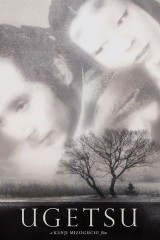
 98%
93%
98%
93%
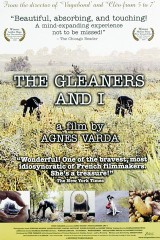 91%
95%
91%
95%
Joel Meares for Rotten Tomatoes: We are seeing you return to the 19th century, to the early, early stages of this country. I’m wondering what is it that draws you to that period and interests you?
Well it was Jonathan Raymond’s novel, The Half Life, which has kind of been hovering around us, he and I, for a couple of decades, and we’ve been trying to think of how we could ever sort of get our arms around it, because the novel spans 40 years and there’s a ship ride to China and it’s this very big [story]. So part of it was that and that I had my head in this time period for this film that I ended up not making, and I had been sort of steeped in just some paintings from the 19th century, in images I didn’t really want to lose hold of. Some of it made its way into First Cow – things I had been living with for a while.
First Cow is available to rent or buy digitally from July 10, 2020.
96%
Thumbnail image: Dominika Zarzycka/NurPhoto via Getty Images, ©Zeitgeist Films., © Netflix, Everett Collection