It’s arguable that creator Charlie Brooker’s episodic anthology series Black Mirror is one of the scariest shows on TV — not because it relies on zombie attacks or murderous clowns, but because it shows just how easily phones, computers, and other advancing technology that we are increasingly dependent on can be used against us if we’re not paying close enough attention. (That all of these episodes are available to be played on Netflix, the streaming giant known for obsessively monitoring our usage without really sharing what they find, is not lost on the creator; see the season 6 episodes “Joan Is Awful” and “Loch Henry.”)
With Netflix unleashing a new chapter of this paranoia-fueled scarefest in June, Rotten Tomatoes has crunched the numbers to rank the best Black Mirror episodes down to the worst. We’ve updated the list to reflect the current Tomatometer score; however, it’s worth noting that early episodes like “The National Anthem” and “15 Million Merits” have scores of 100% on fewer than 20 reviews, while more recent episodes, may not have perfect scores, but have more reviews — season 4’s first episode “USS Callister,” for example, scores in the mid 90s, but on 38 reviews. In case of ties in which the Tomatometer scores and number reviews are the same, the episodes are listed in alphabetical order.
Don’t like the ranking? Sound off in the comments. (Also, some spoilers follow.)
UPDATE (7/28/23): List updated to reflect the latest scores.

#1The first-ever episode of Black Mirror lives in infamy for two reasons in particular. The first is that its plot — a prime minister (Rory Kinnear) has to do the unthinkable in the name of saving his country’s kidnapped princess (Lydia Wilson) — prepares audience’s for the show’s macabre humor as it pokes fun at privacy, political corruptness, and our obsession with technology. The second is that it became a footnote in a real-life political scandal a few years later when then-prime minister David Cameron’s reputation was muddied after — and there’s really no way to say this delicately — it was rumored he’d had a roll in the sty with a pig.
#2A sort-of Hunger Games—meets—environmental disaster story, the show’s second episode highlights one of its most popular themes: our society’s addiction to fame. Here, we have a world where humans must peddle exercise bikes in order to both power their surroundings and earn “merits,” or payments. Ways out include inheritance (because inequality is still prevalent in dystopia) and participating on a reality competition show. The episode also showcases Black Mirror’s uncanny ability to cast actors just as they’re on the verge of hitting the mainstream. Alongside known names like Downton Abbey’s Jessica Brown Findlay and My Best Friend’s Wedding’s Rupert Everett is future Get Out star Daniel Kaluuya.
#3 While having little to do with technology, the last stand-alone story in the sixth season’s anthology is dubbed a “Red Mirror” episode. It also ties back to another familiar Black Mirror topic: politics. Set in 1979, Anjana Vasan plays timid shoe salesperson Nida. Although she dreams of being able to take down the coworkers and clients who demean her, Nida spends her days as an obedient employee and her nights on the couch in front of the TV. With xenophobia and sexism rampant around her, Nida accidentally picks up a cursed domino that unleashes a demon dressed like a member of the funk band Boney M. (Paapa Essiedu). She’s then told she must kill three people in three days time, lest she cause an armageddon. Can she bring herself to acts of murder? And who is the most deserving of death?
#4A winner of five Emmy Awards, this episode should make us wonder how many of the TV Academy’s voters secretly hate their coworkers. By day, Jesse Plemons’ Robert Daly is a mild-mannered programming ace who co-founded a popular multi-player game. He also has a habit of taking his work home with him; stealing the DNA of co-workers and employees who routinely ridicule him (like his partner, played by Jimmi Simpson) or don’t realize they’re the objects of his attraction (a new employee, played by Cristin Milioti) and uploading digital copies of them to his own private, Star Trek—like universe. Stay to the end to spot the voice of a surprise guest star.
#5An extremely meta conversation on the themes of celebrity, technology and the importance of reading the fine print, Annie Murphy plays Joan, an executive at a tech company who tries to coast through life without causing too much controversy (even when firing an employee). Then she learns a Netflix-esq streaming service is airing a series about her life in nearly real time, which means everyone knows the “real” her. Can Joan beat the algorithm at her own game?
#6One of a handful of Black Mirror episodes to discuss technology’s role in alleviating loss (see also: part of season 4’s “Black Museum”), this episode stars Hayley Atwell as Martha, a young woman who uses AI tools as a coping mechanism for getting over a boyfriend (Domhnall Gleeson) who perished in a car accident. Because your Tweets don’t die just because you do, she utilizes his social media interactions to recreate him in android form. It does not go well for Martha, but it does posit the question of whether the bereaved can ever have closure if we still see our beloveds’ images and data in our phones or receive annual bombardments of their birthdays on Facebook.
#7A stunning work of production and costume design and music supervision as it is storytelling, this third season episode follows the building romance between Gugu Mbatha-Raw’s Kelly and Mackenzie Davis’ Yorkie through several decade-specific fashions and nightclubs. Along the way, we get lessons on everything from aging to the jeopardized rights of both members of the LGBTQ community and persons with disabilities. It also makes us wonder if there’s a chance that someone who had a pretty crummy life has a chance at finding love and peace after it’s over. Or, as singer Belinda Carlisle reminds us at the end, is heaven a place on Earth?
#8Just when you think online dating couldn’t get any more awkward and uncomfortable, there’s this season 4 episode. Set in a world where an algorithm will handle the messy work of finding you a mate (yay!) and enforce exactly how long you have to cohabitate with that person (eh), it stars Broadchurch’s Georgina Campbell and Peaky Blinders’ Joe Cole as star-crossed lovers who must learn to listen to their hearts instead of the programmers’ commands. It’s also one of the few Black Mirror episodes that comes with a truly happy ending as the couple make like Butch and Sundance to buck the system and stay together.
#9Do you enjoy that euphoric rush of someone liking, commenting on, or retweeting your pictures or commentary? Then you might need to do a nosedive into your own priorities after watching this episode, which enjoys a byline from Parks and Recreation’s Michael Schur and Rashida Jones and is based on a story by creator Brooker. Bryce Dallas Howard stars as Lacie, an eager-to-please office dweller who is desperate to be popular. Part of the reason for this is that social media has made it so that she can still keep tabs on her childhood best friend (Alice Eve), whose life is full of #goals. It’s also because Lacie’s not alone and this world seeks to monetize hers and others’ lusts for perfection, making these digital interactions a form of currency (something not so different from what China seems to be planning). Things go awry and let’s just say that Howard may not get as many wedding invites as she used to.
#10A perfect holiday special for anyone needing a break from being locked in the house with their relatives, this episode also explores themes seen in the second season episode “White Bear.” Rafe Spall (of Edgar Wright’s blood and ice cream trilogy — i.e., Shaun of the Dead, Hot Fuzz, The World’s End) and Jon Hamm (Mad Men) star as two guys stuck in a cabin for past transgressions. But whose crime is worse? Who stands to benefit when the other spills? And how long have they been in this cabin again?
#11Several of Black Mirror’s episodes deal with technology’s role in — for better or worse — aiding romantic relationships. This episode, which aired as part of the first season, offers a dark turn on something so many of us have seen before: the obsessive need to learn about your paramour’s past relationships to the point where you no longer trust that person, causing the relationship to self destruct. Kong: Skull Island’s Toby Kebbell stars as a guy so obsessed with seeing imperfections that he has a device planted behind his ear that lets him redo various moments of his life. Naturally, this backfires when he sees his girlfriend (Doctor Who’s Jodie Whittaker, because, again, A+ casting) chatting up her ex at a party.
Also, a fun bit of trivia: This is the only episode to date that does not carry Booker’s byline in some capacity. It was written by Succession creator Jesse Armstrong.
#12Similar to the twist at the end of “White Christmas,” this season 2 episode explores the way technology can be used to enforce punishment. It stars Lenora Crichlow as woman who wakes up with amnesia in a strange house where TV screens blast an unknown image and she finds a picture herself with a man she doesn’t recognize and of a small girl. But this is not a sympathetic story of a family’s attempt to reunite. Instead, we learn that Crichlow’s character is named Victoria and she was an enabler in an act so terrible that she has been sentenced to relive her own kind of torture every day for the amusement of strangers who hate her.
#13Another example of this show’s casting department’s ability to grab talent just when they become a big deal — hi, Lodge 49’s Wyatt Russell — this story is a reminder that the products that you use safely now may not have started this way. In an allegory to those who are down on their luck and willing to sign up for drug trails, Russell’s Cooper is a broke American stranded in London who agrees to be a guinea pig for a secretive video game project in exchange for a plane ticket home. Let’s just say that he’s not going to make that flight.
#14 Diving into the concepts of work-life balance, grief and trauma, Aaron Paul and Josh Hartnett play astronauts Cliff and David during the 1960s space race. Since they both have families, NASA has helped ease their homesickness during their six-year mission by creating replicas of them who stay on Earth and allow them to interact with their wives and kids. When David’s family dies tragically, Cliff and his wife Lana (Kate Mara) try to alleviate his suffering by letting him borrow Cliff’s replica and visit their home. But what if David doesn’t want this exchange to end?
#15 A couple’s journey to make an environmental documentary turns into a behind-the-scenes making-of a true-crime story in the style of Capturing the Friedmans or The Staircase. Samuel Blenkin and Myha’la Herrold play filmmakers and lovebirds Davis and Pia who journey to his sleepy Scottish town to interview a source for their nature documentary. Instead, she convinces him to look into the community’s infamous story of a serial killer and the disappearance of some newlyweds in the late 1990s. Things get more complicated when Pia learns that Davis’ dad was the local cop on the case.
#16Season 3 of Black Mirror closes out with a movie (it’s 89 minutes long — that’s a TV movie!) that serves as a cautionary reminder that cyber bullying and death threats hurt everyone. It starts with various public figures — all of whom have recently provoked the public enough for the masses to call for their demise — actually do end up dead in bizarre ways. That’s when Detective Chief Inspector Karin Parke (Kelly Macdonald) and her team are brought in to investigate. But those who called for their grisly end must suffer their own consequences when swarms of robotic insects turn on them. Bee careful what you say on the internet, kids.
#17This fourth season episode, which is conveniently directed by former child star Jodie Foster, plays on the idea that pretty much every parent has thought but never really had the capacity to enact: Instead of worrying about what happens when your child has access to technology, how can parents harness its powers to protect their offspring? Rosemarie DeWitt stars as Marie Sambrell, an overprotective single mom who embeds a neutral implant in her daughter, Sara’s, brain that allows her to see her whereabouts and protect her from dangerous images. And while this works fine when Sara’s a child young enough to be scared of the neighbor’s dog, what happens when she’s a teenager making the same mistakes that Marie and her friends probably also made? The short answer is disaster.
#18The fourth season finale is a collection of anecdotes that work great as short stories, but aren’t long enough to hold their own for a single episode — a museum curation, if you will. They all come together through the narration of Rolo Haynes (Douglas Hodge) as he takes a young visitor (Black Panther’s Letitia Wright, thus reconfirming the casting department’s sixth sense in this arena) on a tour of artifacts from past technology misfires. Spoiler alert: They’re often props from past episodes of the series.
#19The series’ experimental choose-your-own-adventure movie follows young video-game developer Stefan (Fionn Whitehead) in 1985 as he programs a game based on a choose-your-own-adventure book called Bandersnatch. In an interactive twist, viewers make periodic choices for the main character from the frivolous (which breakfast cereal to eat) to the consequential (no examples here, ’cause spoilers). Things get even more meta from there, with Stefan harboring a sneaking suspicion that someone is influencing his decision-making (wink wink). Like “Black Museum,” “Bandersnatch” features many stories coming together (as well as Easter eggs and references to past seasons), but in this instance, the interactive features overshadow the message of the episode.
#20This love story bested the rest of season 5’s episodes with the highest Fresh score of the three. When old college buddies Danny (Anthony Mackie) and Karl (Yahya Abdul-Mateen II) reunite, they discover a deeper connection in a new VR version of their favorite old video game. In their late-night play, Karl appears as fighter Roxette (Pom Klementieff), while Danny’s avatar is Lance (Ludi Lin). When the fighting gets heated, the two challengers’ tangling takes on a sexual charge, which confuses and excites both men. But Danny has a wife and kids, and this unexpected connection could mean an upheaval of Karl’s bachelor lifestyle. Robert Rorke of the New York Post said of the episode, “Mackie and Mateen deftly convey the exciting but threatening change in their relationship.”
#21This fourth season episode may be one of the best examples of how well Black Mirror utilizes the self-contained episodic anthology format. Shot all in black and white by David Slade (Hard Candy; Breaking Bad), we’re very quickly dropped into a world with no backstory and no idea of who is the true enemy. We’re left to see things from the perspective of Belle (actress and activist Maxine Peake), a human on the run from creatures that look like those robotic dogs that can dance — except now they are killing machines. Is this the future where the dogs have inherited the earth and people are on the run? Is Belle actually a horrible person out for her own gain? We’ll never know.
#22What if someone had access to the worst things you ever did? This season three episode involves an elaborate scavenger hunt dictated by a secret society of all-knowing Big Brothers who have been monitoring our most damning acts. The teen-age Kenny (Alex Lawther) becomes an unlikely ally of Hector (Jerome Flynn), a man in the throes of an ill-advised midlife crisis, as they team up for increasingly risky and illegal acts in the name of saving their reputations. Alas, they get exposed and we all learn valuable lessons about keeping the video screen of their laptops properly covered and not downloading software from strangers.
#23Andrew Scott (Sherlock) plays ride-share driver Chris, a deranged gunman looking for satisfaction. Or is he? After taking young intern Jaden (Damson Idris) hostage, the episode unfurls a tragic tale of loss and misplaced blame, as Chris accuses social media mogul Billy Bauer (Topher Grace) of enabling a powerful addiction that unraveled the former teacher’s idyllic life. It’s Scott’s “astonishing control and range that elevated a too-tidy plot into something much messier and more profound,” wrote Benji Wilson of the Daily Telegraph.
#24One of the most politically relevant of the series, this season 3 episode takes on topics like refugees as well as government-approved experiments and hate crimes. Malachi Kirby, who starred in History’s 2016 revival of Roots, plays Stripe, a soldier trained to kill supposedly dangerous human mutants known as “roaches.” He soon learns that nothing is really as it seems — not even his dreams.
#25 A satirical take on paparazzi and celebrity gossip culture, this tongue-in-cheek horror story is set in the early aughts and follows Zazie Beetz’s Bo. A paparazzo who tries to grow a conscious after some of her photos lead to their subject’s death by suicide, Bo is making a go at having a more respectable job. But with rent due soon and her bank account empty, Bo goes hunting for Mazey Day (Clara Rugaard), a superstar who is now MIA after rumored trouble on her big production. But will Bo end up being the one who is hunted?
#26She would have gotten away with it if it weren’t for that self-driving pizza delivery van! Andrea Riseborough, Andrew Gower, and Kiran Sonia Sawar star in this story that, albeit having a plot that requires some suspension of belief, is another reminder that technology is making it even harder for criminals to get away with their acts. And this goes for anything from vehicles hitting pedestrians to voyeurism to … murder.
#27Music superstar Miley Cyrus is credited with what’s right with the episode for a compelling, committed performance as pop idol Ashley O, whose consciousness is so thoroughly transferred into a robot doll that one of the products recognizes a conspiracy to incapacitate the artist and mine her for her creative juices. The doll, her lonely teen owner, and the girl’s rocker sister embark on a quest to save Ashley O. It’s a lot to unpack in 67 minutes.
#28A mix of Sacha Baron Cohen’s comedy and Comedy Central’s The Gorburger Show with a special dash of American politics sprinkled in, this second season episode stars Daniel Rigby as the failed comedian behind an extremely popular cartoon bear named Waldo. Waldo’s main claim to fame is his booking agents’ ability to book guests on his late-night talk show by lying that it’s geared toward kids. Things get out of control when someone suggests Waldo run for public office and only escalate after an American agency steps in to brand him for an international audience.
It should be noted that this episode aired in February 2013 in the U.K. — more than two years before Donald Trump announced his candidacy for U.S. president. Maybe that whole thing isn’t Seth Meyers’ fault after all.
 78%
Black Mirror: Season 6
(2023)
is now streaming on Netflix.
78%
Black Mirror: Season 6
(2023)
is now streaming on Netflix.
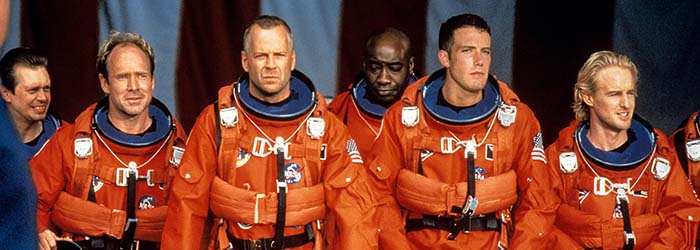
(Photo by (c)Touchstone Pictures/ Courtesy: Everett Collection.)
Armageddon celebrates its 25th anniversary!
Thirty years on, the 1990s has solidified its stature as one of the magical decades in filmmaking, much like how we view the ’30s and the ’70s. Precisely, this Gen X-decade pulled together the Hollywood studio power of the ’30s and the groundbreaking creativity of the ’70s, crocheting commercialism and art into the movie behemoths we speak of in legend as the ’90s blockbuster — which we’ve now ranked all by Tomatometer!
First off, in putting together this list, we didn’t want no scrubs: We defined the ’90s blockbuster as any film that made over $100 million at the box office in the ’90s — movies that had people literally lining up around the block to spend their easy-earned cash. (The economy was booming after all.) This, of course, ushers in all those films synonymous with ’90s blockbusterism, including Jurassic Park, Speed, Twister, Independence Day, Terminator 2: Judgment Day, The Phantom Menace, Armageddon, Wild wild West, and Batmans with three different guys.
But the ’90s blockbuster was more than just fast buses, exploding White Houses, and bat nipples. Audiences opened up wallets and handbags (they’re European!) on brazen independent films (Pulp Fiction, Good Will Hunting, The Blair Witch Project), big comedies (Sister Act, The Nutty Professor, The Waterboy, Dumb & Dumber, The Birdcage), and romances both funny and dramatic (Pretty Woman, Shakespeare in Love, Jerry Maguire, Ghost).
It was the era of the Disney renaissance (Aladdin, Beauty and the Beast, The Lion King), special-effects breakthroughs (Toy Story, Total Recall, The Matrix), and where the most popular movies of the year could reasonably expect a Best Picture statue come next February (Unforgiven, Titanic, Dances With Wolves). A scintillating ’90s blockbuster can transport us to that moment before cinematic universes, before CGI overload, and before ubiquitous cell phones and Internet; today, Lloyd Christmas can just DM Mary Samsonite and say “Hey, I have your briefcase :)” if he weren’t still illiterate.
Now, relive the rush of the decade without the searing sting of slap bracelets, or shotgunning Fruitopia, with our guide to every ’90s blockbuster ranked by Tomatometer!
100%
 100%
100%
 97%
97%
 96%
94%
96%
94%
 96%
96%
 96%
96%
 94%
94%
 95%
96%
95%
96%
 95%
94%
92%
95%
95%
94%
92%
95%
 92%
92%
 92%
92%
 93%
93%
 92%
91%
92%
91%
 91%
91%
91%
91%
 90%
90%
 87%
88%
83%
87%
88%
83%
 88%
87%
88%
87%
 87%
87%
 86%
86%
 86%
86%
 91%
91%
 86%
86%
 84%
84%
 85%
85%
 84%
84%
 84%
84%
 84%
84%
 83%
83%
 84%
84%
84%
84%
 83%
81%
83%
81%
 82%
82%
 82%
82%
 78%
78%
 80%
80%
 81%
81%
81%
81%
 78%
78%
 79%
79%
 79%
79%
 78%
78%
 76%
76%
 74%
74%
 75%
75%
 73%
73%
 74%
74%
 74%
74%
 73%
73%
 75%
80%
75%
80%
 71%
71%
 69%
69%
 71%
71%
 68%
68%
 70%
77%
70%
77%
 70%
70%
 69%
69%
 69%
69%
 66%
66%
 67%
67%
 69%
69%
 66%
66%
 68%
68%
 67%
67%
66%
67%
67%
66%
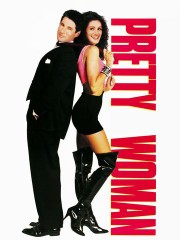 65%
63%
68%
65%
63%
68%
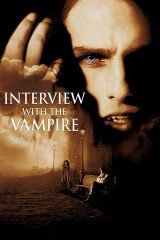 66%
66%
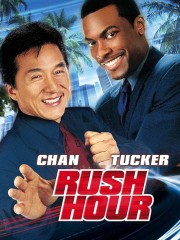 62%
62%
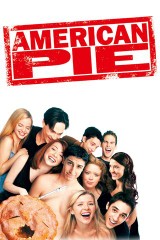 62%
62%
 63%
63%
63%
63%
 60%
60%
 60%
60%
 59%
59%
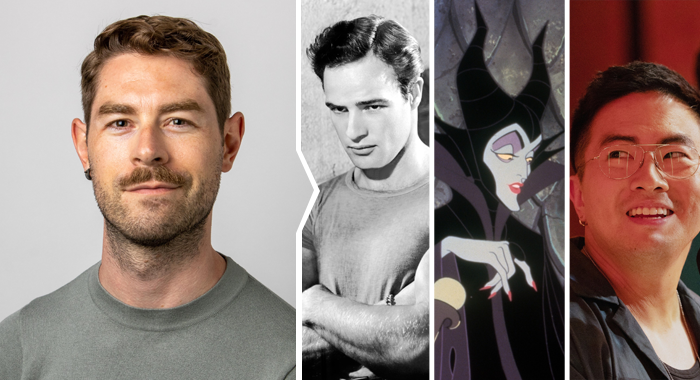
(Photo by Warner Bros. Pictures; Jeong Park for Searchlight Pictures, Courtesy of Everett Collection; Walt Disney Co., Courtesy of Everett Collection)
“Know Your Critic” is a column in which we interview Tomatometer-approved critics about their screening and reviewing habits, pet peeves, and personal favorites.
Manuel Betancourt’s criticism feels equally universal as it does personal. That’s because when he’s writing about what moves or unsettles him about a title – what works (or doesn’t) about its execution – he’s reflecting on our collective history, culture, icons, and style.
It’s no surprise, then, that his first book, due to publish next spring, is a reflection not just on the ways that he’s been raised by popular culture to look at men and see (or not see) himself, but the ways we’re all taught to aspire towards masculinity – to earn masculine approval or embody its ideals.
Betancourt says he’s interested in ways that queer desire and queer embodiment are presented in the cracks and crevices of culture, in seeing ourselves through characters that, upon first glance, look nothing like us, but after a double take or pause, encapsulate all the things we want to be: desired, emotional, self-assured, feminine, masculine, and/or something else altogether.
He says the biggest misconception people have about critics is that they’re viewed as “combative.”
“I like to think of myself as someone who is in conversation with a film or in conversation with a filmmaker, who is in conversation with the work that they’re producing – and that can sometimes be combative, and that can sometimes be critical, but that can also be collaborative, and it can also be sort of a genuine care and wanting to really uplift and champion what I’m watching,” he said in an interview with Rotten Tomatoes.
“Even if I’m nitpicking and even if I’m offering critical insights,” Betancourt said, “it always comes from a place of love, and that sometimes gets lost in the way that we are depicted, in the way that we are thought of.
Asked about his favorite thing that’s Rotten on the Tomatometer, Betancourt laughed: “There has to be something Rotten that I love, but I’m such a snob that I’m also really bad at watching things I know I’ll hate!”
He later followed up with the following answer via email: “I knew I’d find one if I looked hard enough! I stand by my adoration of Leslye Headland‘s Bachelorette, not least because it has a pitch-perfect performance from recent Oscar nominee Kirsten Dunst. But also, the chance to see Andrew Rannells play a stripper should also be enough reason to at least give this dark comedy a shot.”
Manuel Betancourt is a freelance critic and culture writer. His recent reviews can be found at Variety and the AV Club. His forthcoming book, The Male Gazed: On Hunks, Heartthrobs, and What Pop Culture Taught Me About (Desiring) Men, will be released in May 2023. Find Manuel on Twitter: @bmanuel.
What are you watching on television right now?
I’m obsessed with Abbott Elementary, and I’m excited for it to be back. And What We Do in the Shadows.
I find that I’m watching a lot of dour stuff in life, so I find that I’m gravitating to sunnier, funnier things when I sit down to watch television. I say that as I’m re-watching Bojack Horseman as well, which is… not. [laughs]
What’s your preferred seat in a movie theater?
I’m an aisle person, and usually towards the back. I like a quick exit.
I wonder if it’s a critics thing, that we’re just like, “As soon as it’s done, we need to leave!” Especially at film festivals, I’m usually rushing.
Do you have a favorite snack for when you’re watching a movie or TV?
I’m a gummy bears kind of person. I don’t buy them for anything else – I don’t buy them for road trips, I don’t buy them for at home. If I’m going to a movie, that’s my snack: Haribo gummy bears.
What’s the best thing you’ve seen so far this year?
I feel like it’s such a cliche, but Everything Everywhere All at Once.
Michelle Yeoh is a goddess and we should all be prostrated at her altar. I don’t think I’ve seen anything as good as that, and it was a thrilling experience – in a packed theater, after COVID lockdown and watching stuff on screeners on my laptop. It was just bliss.
And what, for you, makes a “good” movie?
The way that I try to assess whether a movie is “good” is whether it lives up to and embodies the very thing that it’s trying to accomplish, which seems very tautological, or seems very sort of intellectual. But I sometimes need to remember that the film that I want to see may not be the film that the filmmaker was trying to make, and I need to meet the film where it’s at. So if the film says, “I am a raunchy comedy that teenage boys are going to love,” I can’t fault it for being that, even if that’s not a thing that I enjoy.
And sometimes those things align – the thing that I want and the thing that the movie is offering is what I enjoy. There are good films that I hate and there are good films that I really don’t care for, I never want to watch again. But if a movie is good, it’s because it accomplished the thing that it set out to, and it elicited the response that it wanted from its audience.
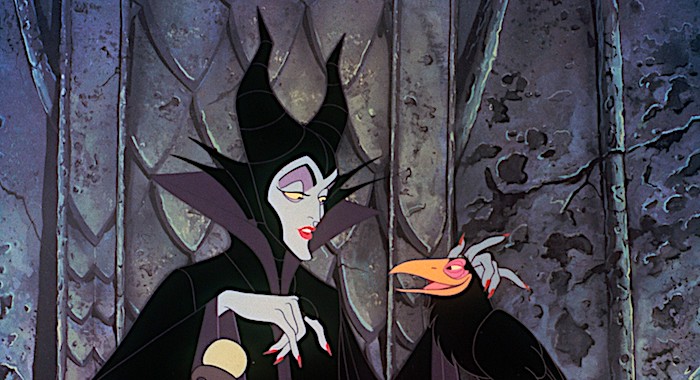
(Photo by ©Walt Disney Co./Courtesy Everett Collection)
Would you please give a quick summary of your forthcoming book and what led you to choose its subject matter?
This is the book that I’ve been, in a way, writing my entire life. It’s called The Male Gazed, and it’s a collection of essays that’s part cultural criticism and part sort of memoir, personal essay, and it’s about all the films and TV shows and media depictions of masculinity that I grew up with and that have helped me, or that helped me at some point, figure out what it is that I wanted and what I wanted to be.
As a queer man, that line between whether I want someone – whether I want him or I want to be him – is a fine line, and trying to figure out where the line between desire and aspiration lies can get a little bit blurry. I basically sat down to unpack that question over and over again with films that I loved as a teenager, with films that I loved as a kid. So whether it’s Disney films, or films like The Fifth Element… I was drawn to these very strong, aggressive, masculine men, and then realizing that I wanted something that I could never be. There’s a lot of unpacking of that.
It was a lot of fun to write, and I’m really excited to have it out, finally out in the world next year.
As a sneak peek, I would love it if you would talk about the first time you saw yourself on screen and what you related to about that character or story.
The first chapter of the book is actually a little bit about that.
I was a Disney kid, as a lot of us in my generation are or were, continue to be. It was Sleeping Beauty, the first movie that I really, truly connected with and that I was obsessed with and play-acted at home for myself. And I realized that I wasn’t drawn to play act the Prince – which is the one, the sole male character – but that I was drawn to Maleficent, who was this fabulous horned diva who was captivating, and it’s clear that the movie loves her even as they paint her as a villain.
And I’ve come to look back to that moment as, “Oh, I was seeing myself.” But I was seeing myself in a way that, I wasn’t looking for a mirror image. I wasn’t looking for a little Colombian gay boy who I could aspire to be, or who was showing me exactly who I was.
I could always find myself in difference, and that I could always find myself in someone who was completely unlike me. The way that the movie danced around her, and depicted her, and painted her, and framed her, and voiced her, and colored her – that could be an insight into who I could be, into who I feared I was, and into who I could possibly one day become.
And that has sort of always also guided my criticism, in the sense of when I talk about representation and we talk about inclusion, and when we talk about seeing ourselves onscreen, I always want to make room for those moments where we see ourselves on screen in the bleak, queer, skewed sort of ways that I think can be sometimes even more productive than finding a carbon copy of us staring right back from the screen.
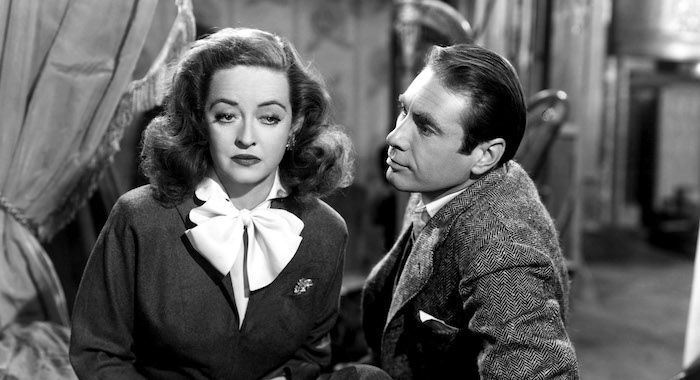
(Photo by Copyright 20th Century-Fox Film Corp. All Rights Reserved/Courtesy Everett Collection)
What is your favorite classic film? And you can define classic however you would like.
This must be such a basic answer, but All About Eve is my all-time favorite.
What about your favorite adaptation?
I love A Streetcar Named Desire – also a perfect movie, also about queer desire and masculinity, and also central to me as a person.
If I think of more recent or more contemporary stuff, I continue to be enamored with The Hours. It does something so masterful in the way that it thinks about time and the way that it translates Cunningham’s sort of three-way kind of novel, the way that it creates a fluidity between the three stories and makes it “cinematic,” I think, is fantastic.
Also, everyone should listen to Philip Glass’s score on a daily basis. That’s what I do – it’s the score that I put on when I need to write, and I’ve created a Pavlovian response in my body, so that if I’m listening to that score, I know that I need to be writing and I need to be writing faster, because I have a deadline.
What is the movie or show that you’ve watched more than any other?
My Best Friend’s Wedding. I love that movie.
The reason I watched it a lot of times, not only because I’m obsessed with Julia Roberts, as every homosexual man should be, but when I was growing up, we had a satellite dish, and for some reason we got a pay-per-view channel, but obviously we couldn’t choose one movie to watch. It just had the same movie on loop! And so, for four months on end we had My Best Friend’s Wedding on loop! I could literally, any moment, I could turn on my television and watch the film, and I did so for an entire few months in 1997, 1998.
Another movie that I probably watched the most, which is also a Julia Roberts film, is Closer, a movie that may be Rotten… Whenever I tell people I love [that movie], they bristle and look at me weird.
It’s pretty close to Rotten, but not quite!
I love that movie to pieces in ways that it’s probably very unhealthy.
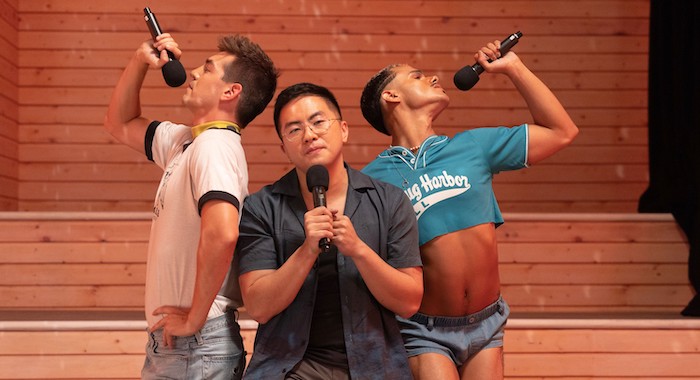
(Photo by ©Searchlight Pictures/Courtesy Everett Collection)
Is there an under-the-radar director or screenwriter that you think more people should know about? And you can define “under-the-radar” however you’d like.
I’m obviously going to be mentioning queer filmmakers, because, even right now, when we’re talking about how great a landscape it is for queer filmmakers, I think we still undervalue them. I think someone like Ira Sachs is underrated and under-discussed, and I think part of it is because his films are so quiet, and domestic, and sort of almost unassuming, but I find them so, so devastating.
I’m also excited and I was so happy to see Fire Island, because I thought Andrew Ahn was someone that we should be talking about. I love Spa Night, I love Driveways. And so getting in to see him and Joel sort of get this base with Fire Island and everyone enjoying that, and hopefully seeking out their future work, is very, very exciting.
What is the most recent movie or show that you watched that made you cry?
I recently re-watched Mommy, Xavier Dolan‘s film, on the big screen because it was playing at the Alamo Drafthouse here in LA a few weeks ago, and it destroyed me. It destroyed me when I first saw it back when it came out, because it was one of my favorite movies of that year, and I hadn’t seen it since, and… Yeah, it was visceral kind of, like, uncontrollable crying. And I know that really had less to do with the movie, but that’s the last time that I was actually bawling in a movie theater.
Is there a movie or a show that always makes you laugh?
Bridesmaids and Devil Wears Prada are two movies that I just put on if I just want to feel good, and I know that Kristen Wiig is just going to make me keel over in laughter no matter how many times I’ve seen her do an impression of someone on an airplane. “This is the 90s!” will always destroy me, that scene in particular. I play it over and over again.
Who are some fellow critics that you admire – people who influence your style or your perspective as you write?
Because I’m an academic and I have academic training, the critics that I initially found myself emulating came from that sort of tradition.
I’ve always looked at people like James Baldwin, or Richard Dyer, or Roland Barthes – people who were able to really think critically about mainstream pop culture in a way that was very erudite, in a way that was very lucid and that was very intellectual, which is how I initially started writing.
And then, as I’ve been moving toward doing more mainstream work and doing writing for The New York Times, or for Variety, or for Vulture in ways that require my voice to be a little less “jargony” and a little less academic – which was a struggle for me those first couple of years – I’ve been finding that my contemporaries and my colleagues really inspire me.
I find someone like Richard Lawson at Vanity Fair to be someone who really finds a similar way of talking very loosely about films. And even in film festival dispatches – I still remember his review of Personal Shopper, that was equal parts sort of memoiristic… It’s the kind of review that stayed with me, and the kind of review that I continue to try to find ways of writing.
I find that my point of view and my lived experience can actually be a window into larger conversations about culture, and about form, and about filmmaking, but also about the human condition as a whole.
Is there something that you consider either required reading or required viewing for someone who is aspiring to become a critic?
James Baldwin’s The Fire Next Time. Actually, The Devil Finds Work – that’s the one that everyone, every film critic, should read.
Everyone should read Baldwin, full stop, but the way that he writes about Hollywood, and the way he writes about horror films, and the way he writes about Bette Davis and Joan Crawford is just so masterful. I think a lot of us will probably spend our entire careers just reaching towards finding one percentage of the kind of insight and beautiful prose that he manages in talking about a lot of films that we all love, and stars that we admire and continue to think about decades and decades on end.
To me, that’s the true north of what film-criticism can be.
What are you most proud of in your career so far?
Just the fact that I’m still doing this, that I still get paid to do this, and that I have managed to make a career out of it for now almost eight years running – that feels like an accomplishment, and it’s what keeps me going.
Manuel Betancourt is a freelance critic and culture writer. His recent reviews can be found at Variety and the AV Club. His forthcoming book, The Male Gazed: On Hunks, Heartthrobs, and What Pop Culture Taught Me About (Desiring) Men, will be released in May 2023. Find Manuel on Twitter: @bmanuel.

(Photo by Warner Bros. / courtesy Everett Collection)
Laurence Fishburne made his movie debut in just about the best way possible: As part of the platoon that goes up the river in Apocalypse Now. He was 14 when filming started and production was so troubled that by the time the movie released, Fishburne had already celebrated his 17th birthday.
The ensuing ’80s saw the actor taking mostly smaller roles but working with big name directors (Steven Spielberg in The Color Purple, Spike Lee in School Daze) that kept him — still credited as Larry at the time — employed and just a performance away from stardom. The chance came in 1991 with John Singleton’s explosive dramatic debut, Boyz n the Hood, in which he played young father Furious Styles. And Fishburne famously closed out the decade with The Matrix, a movie still at the forefront of pop culture 20 years later. When Fishburne was cast as the Bowery King in John Wick: Chapter 2, there was immediate rejoicing that he was reuniting on-screen with Matrix alum Keanu Reeves.
And after 2019’s Parabellum, what further wacky misadventures await Reeves and Fishburne in the series? As we await another sequel, we’re ranking all Laurence Fishburne movies by Tomatometer! —Alex Vo
0%
 0%
0%
 13%
13%
 19%
19%
 18%
18%
 18%
18%
 26%
26%
 22%
25%
22%
25%
 30%
30%
 36%
36%
 28%
28%
30%
28%
28%
30%
 35%
33%
35%
33%
 36%
38%
36%
38%
 38%
38%
 43%
43%
 46%
46%
 44%
44%
 48%
48%
 41%
41%
 47%
50%
47%
50%
 55%
57%
55%
57%
 58%
58%
 57%
57%
 59%
59%
 60%
60%
 65%
65%
 65%
65%
 67%
68%
70%
73%
67%
68%
70%
73%
 77%
77%
 74%
74%
 74%
74%
 68%
68%
 78%
78%
 76%
77%
76%
77%
 73%
73%
 86%
86%
 85%
85%
 87%
87%
 86%
83%
86%
83%
 89%
87%
89%
89%
87%
89%
 97%
97%
 96%
96%
 91%
91%
 98%
98%
The ’90s were fertile ground for romantic comedies, and if Julia Roberts wasn’t the decade’s reigning rom-com queen – all votes for Meg Ryan and Sandra Bullock will be considered – she certainly has a share of the throne. Notting Hill, arguably her last great rom-com, remains a timeless, beloved urban fairy tale, and also one of the most successful rom-coms in history, earning $364 million worldwide ($116 million in the U.S.) since its release in North American theaters on May 28, 1999.
Notting Hill re-teamed screenwriter Richard Curtis (Love Actually) with his Four Weddings And A Funeral star Hugh Grant, whose chemistry with Roberts (in their only on-screen appearance together) is so off-the-charts it makes you buy the wish fulfillment fantasy that’s at the heart of Notting Hill’s appeal: that an A-list Hollywood star could fall in love with an ordinary, working-class Englishman.
Roberts’ fierce energy, radiant smile, and quick-witted intelligence have had audiences swooning since she burst on to the scene as the hooker-with-a-heart-of-gold in 1990’s Pretty Woman. The star recently told Buzzfeed that she’s done making romantic comedies, and so in honor of her legacy, and to mark the anniversary of her best reviewed rom-com, Notting Hill, we’re paying tribute to her rom-com legacy. In order of Tomatometer, of course.

(Photo by Courtesy the Everett Collection)
Did You Know… Julia Roberts reportedly turned down the lead role (which went to Catherine Zeta-Jones) to play the supporting role.
Roberts plays: Kiki, assistant to her mega-star sister Gwen (CZJ), whose estranged actor husband Eddie (John Cusack), is falling in love with Kiki.
Meet Cute: Alas, none – Kiki’s already well acquainted with her brother-in-law.
Best Line: “That woman you saw by the pool, that woman you just have to spend the rest of your life with… that was me.”
Memorable Sidekick: None, but Billy Crystal as a seasoned, world-weary Hollywood publicist named Lee Phillips has the role in spirit.
Romantic Obstacle: Will Kiki’s sister will really let her take her man?
Wins Boy? Yes.
Did You Know… Eight years before the film’s release, Roberts was a runaway bride in real-life, ditching actor Kiefer Sutherland at the altar.
Roberts plays: Maggie, a small-town woman whose penchant for leaving grooms at the altar draws the attention of big-city newspaper columnist Ike (Richard Gere).
Meet Cute: Ike inquires about Maggie in a beauty parlor.
Best Line: “There is a distinct possibility I am profoundly and irreversibly screwed up.”
Memorable Sidekick: Maggie’s sharp-tongued friend Peggy Flemming (Joan Cusack). “Not the ice skater,” she tells Ike.
Romantic Obstacle: Fear of commitment.
Wins Boy? Yes.

(Photo by Courtesy the Everett Collection)
Did You Know… The script was originally written as a dark drama titled Three Thousand, in which (horrors!) Roberts’ character died in the end. Somehow, director Garry Marshall re-imagined it as a modern-day Cinderella.
Roberts Plays: Vivian, a prostitute who (as in the original script) accepts $3,000 for a week as an escort to billionaire corporate raider Edward (Richard Gere).
Meet Cute: A lost Edward asks Vivian for directions on Hollywood Blvd.
Best Line: “You and I are such similar creatures, Vivian… we both screw people for money.”
Memorable Sidekick: Vivan’s pal Kit (Laura San Giacomo).
Romantic Obstacle: It’s a business transaction, after all…
Wins Boy? Yes.
Did You Know… Roberts was not the first choice to be the lead – it was first offered to Sarah Jessica Parker, who was already committed to Sex and the City.
Roberts Plays: Julianne, a food critic trying to break up her best friend Michael’s (Dermot Mulroney) wedding to young Kimmy (Cameron Diaz) because she’s in love with him.
Meet Cute: None – they’ve already met.
Best Line: “Shut up! Now I love this man, and there is no way I’m gonna give him up to some two-faced, big-haired food critic!”
Memorable Sidekick: George (Rupert Everett), Julianne’s unflappable gay pal.
Wins Boy? No (but she wins anyway, with a graceful wedding toast to the bride and groom).
Did You Know… Roberts told Vanity Fair she was anything but enthused when she first got the script (but before she read it). “How boring,” she told her agent. “How tedious—what a stupid thing for me to do.” Luckily, she felt a little better once she read the script.
Meet Cute: Anna walks into William’s bookstore on Portobello Road.
Best Line: “I’m just a girl. Standing in front of a boy. Asking him to love her.”
Memorable Sidekick: Rhys Ifans as Spike, Grant’s wacky Welsh roommate, the kind who flexes his biceps to paparazzi in his underwear.
Romantic Obstacle: Anna’s moody movie-star boyfriend Jeff (an un-credited Alec Baldwin).
Wins Boy? Yes.
Notthing Hill was released in theaters in the U.S. on May 28, 1999.
84%
She’s an Oscar-winning thespian and one of the world’s most bankable superstars — and this week, Julia Roberts reunites with director Garry Marshall for the ensemble dramedy Mother’s Day, which gives us the perfect excuse to take a fond look back at some of her best-remembered (and all-around best) roles. There’s stuff to make you laugh, cry, and give you food for thought here — just like a great Julia Roberts movie. It’s time for Total Recall!


New this week to streaming video, we have new original series from Hulu and Netflix, an Academy Awards’ Best Picture winner, a handful of Criterion movies from 1966, and plenty of Certified Fresh choices. Read on for details:

Misanthropic standup comedians and BFFs hang out and make fun of their fellow New Yorkers in this Hulu original series. Series premiere on August 5th.
Available now on: Hulu
Kathryn Bigelow’s Certified Fresh, Best Picture-winning Iraq War drama tells the tale of three explosives experts charged with disarming and disposing of the homemade bombs.
Available now on: Netflix
David O. Russell Gulf War heist picture follows a trio of U.S. Army Reservists (George Clooney, Ice Cube, and Mark Wahlberg) who find a map that leads them to a stash of plundered Kuwaiti gold.
Available now on: Netflix

Peter O’Toole, Samantha Morton, and Peter Dinklage star in this Certified Fresh family adventure about a collie who undertakes an epic journey to reunite with her previous owners.
Available now on: Netflix
This documentary offers an inside look at the world of Hollywood casting directors.
Available now on: Netflix
Elizabeth Banks, Michael Ian Black, Bradley Cooper, Amy Poehler, Paul Rudd, and many more team up for this prequel/reboot of the 2001 cult comedy about a summer camp in Maine.
Available now on: Netflix
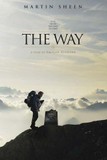
Emilio Estevez and Martin Sheen in this Certified Fresh dramedy about a man who treks across France in tribute to his late son.
Available now on: Netflix
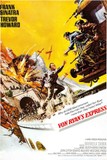
Frank Sinatra and Trevor Howard team up to liberate a group of British soldiers from a German POW camp in this action-packed World War II thriller.
Available now on: Netflix

Kristen Wiig and Bill Hader star in this Certified Fresh dramedy about estranged twins who reunite as both are in the midst of personal problems.
Available now on: Netflix
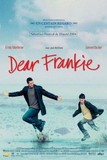
Gerard Butler stars as an anonymous seaman who agrees to help a single mother (Emily Mortimer) preserve the long-running lie that her son’s father is a sailor on a ship that just happens to be docking in town.
Available now on: Netflix
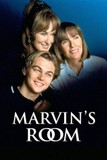
Meryl Streep, Diane Keaton, Leonardo DiCaprio, and Robert De Niro star in this Certified Fresh drama about estranged sisters who try to mend fences whell illness strikes their loved ones.
Available now on: Netflix
The film follows Perry on her “California Dreams” world tour, capturing her eye-popping stage show as well as archival footage of her younger days and glimpses of backstage drama.
Available now on: Netflix

How silly can you get? Val Kilmer is Nick Rivers, a vapid American rock star on a goodwill tour of the Soviet bloc in Zucker-Abraham-Zucker’s classic spoof of spy movies and Elvis musicals.
Available now on: Netflix
Geoffrey Rush, Kate Winslet, Michael Caine, and Joaquin Phoenix star in this biopic about the Marquis de Sade.
Available now on: Netflix
This comic murder mystery still stands as one of the best big-screen vehicles for Chevy Chase’s brand of smug silliness.
Available now on: Netflix
In this romantic comedy, Dermot Mulroney is caught in the middle of a romantic tug-of-war between his longtime restaurant critic pal (Julia Roberts) and his 20-year-old fiancee (Cameron Diaz).
Available now on: Netflix
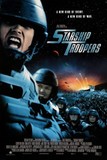
Paul Verhoeven directed this cult favorite, a slyly satirical sci-fi action flick about an alien insect invasion.
Available now on: Netflix
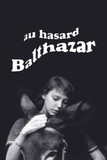
Robert Bresson’s masterpiece is a devastating look at man’s inhumaity to man, as witnessed by an oft-mistreated donkey.
Available now on: Fandor
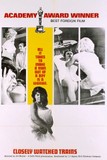
This coming-of-age drama about a lovelorn station guard classic of the Czech New Wave.
Available now on: Fandor

Nagisa Oshima tells the story of a murderer and rapist — and the people affected by his crimes — in this disturbing, formally inventive classic.
Available now on: Fandor
This riveting look at the French occupation of Algeria recreates the tumultuous late-1950s-early-1960s conflict so remarkably that you won’t believe it isn’t a contemporary newscast.
Available now on: Fandor

Jean-Pierre Léaud and Chantal Goya star in Jean-Luc Godard’s French New Wave classic, whic is stuffed with ideas about politics, pop culture, and the battle of the sexes.
Available now on: Fandor

Ingmar Bergman’s haunting, hypnotic Persona explores the fluidity of human existence. Liv Ullman plays Elizabeth, an actress who has suffered an onstage breakdown; she refuses to speak, and is cared for by Alma (Bibi Andersson).
Available now on: Fandor
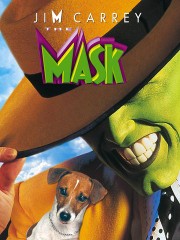
From the moment she made Jim Carrey’s eyes pop out of his skull in The Mask, it was clear Cameron Diaz was a star in the making — and she immediately started making good on that promise, building a diverse filmography that boasts an impressive number of box office hits. Along the way, Cameron has also accumulated a fair bit of critical acclaim — and since she’s returning to theaters this week with Jason Segel in director Jake Kasdan’s Sex Tape, we thought it was high time to take a look back at some of her proudest moments. That’s right, film fans — it’s time to Total Recall!
Matt Atchity breaks down this week’s list.
61%
Witty equal-opportunity political humor has become something of a lost art on the big screen over the last decade or so, but thing’s weren’t always this way. For proof, simply look to 1995’s The Last Supper, an ensemble indie comedy about a group of young liberals (including Cameron Diaz, Ron Eldard, and Annabeth Gish) who begin poisoning conservative dinner guests as part of a misguided campaign to save the world. While the murder victims aren’t terribly sympathetic, their murderers aren’t especially likable either — so by the time they cross paths with a Limbaugh-esque conservative pundit (played by Ron Perlman), loyalties to either ideological extreme have been tested. “In today’s divisive political climate, where compromise is a dirty word,” observed Leslie Rigoulot of Film Scouts, “The Last Supper raises not only timely questions but moral dilemmas as well.”
68%
Charlie’s Angels was one of the most popular television series of the 1970s, thanks in no small part to its genius lowbrow blend of runway-ready jiggle and consequence-free violence — so when Drew Barrymore set about producing a big-screen adaptation of the show, she wisely included heaping helpings of both ingredients, enlisting Lucy Liu and Cameron Diaz to join her for 98 minutes of skin-tight blockbuster action. As the Ph.D.-sporting test pilot/model/P.I. Natalie Cook, Diaz was able to give a kung fu twist to the bubbly, air-headed persona that Hollywood has foisted on blondes for generations, mixing tongue-in-cheek cheesecake with glossy action set pieces — and as it had in the 1970s, this proved a thoroughly successful combination, blasting through almost $265 million at the box office and impressing critics such as Kirk Honeycutt of the Hollywood Reporter, who wrote, “The good-natured humor of its three stars, who appear to be having a gas playing these ridiculous figures, goes a long way in overcoming the bad jokes and even worse plot twists.”
74%
In the years immediately following The Mask, Cameron Diaz tended to appear in movies that either didn’t live up to expectations (Feeling Minnesota, She’s the One) or vanished without a trace (Head Above Water, Keys to Tulsa). Her luck changed, however, with My Best Friend’s Wedding, a romantic comedy which put Dermot Mulroney in the middle of a romantic tug-of-war between his longtime restaurant critic pal (played by Julia Roberts) and his 20-year-old fiancee (played by Diaz, natch). Nothing groundbreaking, obviously, but Wedding gave Diaz a chance to show off her gift for goofy comedy after a few darker films — and its $299 million gross didn’t hurt her bankability, either. Unusually for a romantic comedy, it was also praised by many critics, among them the Globe and Mail’s Rick Groen, who wrote, “Every once in a long while, along comes a refreshing change like My Best Friend’s Wedding, a movie whose appeal rests largely on its knack for defying our expectations by riffing off, even undermining, a familiar genre.”
74%
Author Jennifer Weiner has been lumped into the “chick lit” subgenre, but you can say this much for her second novel, 2002’s In Her Shoes: It translates well to the screen. Directed by Curtis Hanson and led by a cast that included Diaz, Toni Collette, and Shirley MacLaine, Shoes follows the tale of two sisters: Dowdy lawyer Rose (Collette) and flighty, unemployed Maggie (Diaz). Thrown out by the sisters’ stepmother, Maggie moves into Rose’s apartment, where she quickly demonstrates that she hasn’t changed any of the thoughtless behavior that drove a wedge between them, and leaves Rose little choice but to send her packing. Maggie flees to Florida, where she hunts down their estranged grandmother in search of some easy money…and ends up learning a thing or two about herself in the process. Yes, it’s sort of a hackneyed storyline arc with plenty of familiar ingredients, but Susannah Grant’s screenplay reflects the empathy Weiner has for her characters — and Hanson knows how to get the most from his actors. For Diaz, Shoes represented an opportunity to show a breadth and depth uncommon to many mainstream “women’s movies.” As Tom Long wrote for the Detroit News, “It’s a chick flick for non-chicks too, one of those movies that makes you laugh and cry and leaves you feeling satisfied and drained and vaguely embarrassed for having such a good time.”
72%
When Martin Scorsese decided to dramatize the violent political struggles that took place in 19th century New York, he didn’t skimp on his cast, hiring Daniel Day-Lewis, Leonardo DiCaprio, John C. Reilly, and Liam Neeson to bring his vision to life. Pretty terrific company for Diaz, who co-starred as Jenny Everdeane, the morally ambiguous con artist whose beauty adds a hormonal component to the long tug-of-war between Amsterdam Vallon (DiCaprio), Bill “The Butcher” Cutting (Day-Lewis), and Johnny Sirocco (Henry Thomas). While not the most substantial role, playing Jenny gave Diaz the opportunity to act alongside some of the biggest names in the business — and earned her a Golden Globe nomination for Best Supporting Actress in the bargain. One of the biggest award-winners of the year, Gangs of New York enjoyed praise from critics like the New York Post’s Jonathan Foreman, who wrote, “It vividly and energetically evokes a fascinating time and place that has never before been the subject of film, and presents a powerful if imperfectly coherent vision of urban politics at their most primal.”
81%
It wasn’t the largest or most demanding role — in fact, if things had worked out a little differently, it could have doomed her to a career of playing blowsy dames in tight dresses — but Cameron Diaz could hardly have asked for a more memorable introduction to audiences than the part of Tina Carlyle, the vivacious gangster’s moll whose appearance reduced Jim Carrey (and not a few filmgoers) to a leering Tex Avery cartoon. Diaz was so new to acting that she didn’t even start taking lessons until after she was cast in The Mask, but she took to the discipline quickly, and spent the next few years working her way through roles in smaller films that didn’t have the same big-budget sparkle (or co-stars as marquee-hogging as Carrey) as she honed her craft. She quickly developed some star power of her own, and ceased being an afterthought for critics like the Washington Post’s Joe Brown, who wrote, “Even without the state-of-the-art, boundary-busting computerized effects from Industrial Light & Magic, Carrey’s a human cartoon, and his spontaneous, Avery-esque, anything-for-a-laugh outrageousness makes this otherwise blank Mask a must-see.”
84%
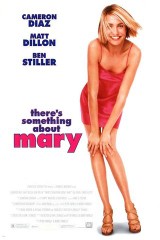
Filmgoers were already familiar with Cameron Diaz in 1998, but There’s Something About Mary still counts as her true cinematic coming out party — it was this $369 million smash hit, after all, that proved Diaz had sharp enough comic timing to hold her own against Ben Stiller and Chris Elliott — and that her brilliant smile could help make even the filthiest gags seem almost wholesome. Though it was ostensibly Stiller’s movie, it was Diaz who made us believe that there really was something about Mary — something that would make her senior prom date (played by Stiller) hunt her down years after the painful zipper incident that cost them their big night out, and drive the other men in her life to contemplate leaving their wives, duck out on the Green Bay Packers, or even adopt entire fake personalities. And along the way she carried the most notorious hair gel joke in the history of modern man, helping send an unapologetically lowbrow comedy all the way up to 83 percent on the Tomatometer. What was Mary‘s appeal for ordinarily stuffy critic types? In the words of Roger Ebert, “What a blessed relief is laughter.”
88%
Cartoons and fairy tales have gone together for decades, leaving DreamWorks with plenty of rich tradition to spoof with their inaugural adaptation of William Steig’s popular book about the misadventures of a hideous ogre (voiced by Mike Myers). In fact, the studio added a few elements not present in the book, such as Shrek‘s ceaseless, quick-fire pop culture references, a number of satirical, fairy tale-derived characters, and a Smash Mouth song on the soundtrack. Also new and improved: The storyline arc for Cameron Diaz’s character, Princess Fiona, who went from an ordinary ogress to the unwilling, secretly cursed royal fiancee of the loathsome Lord Farquaad (John Lithgow), and picked up a few action hero moves in the process. While it wasn’t strictly faithful to the source material, Shrek was lots of fun for critics and audiences alike; it grossed nearly $485 million worldwide, nabbed the first Best Animated Feature Academy Award, and earned the admiration of scribes such as the New York Observer’s Andrew Sarris, who applauded, “What gives Shrek its special artistic distinction is its witty and knowingly sassy dialogue, delivered by vocally charismatic performers whose voices remind us of their stellar screen personae in live-action movies.”
89%
Three years after Shrek broke the bank for DreamWorks, Cameron Diaz helped prove with Shrek 2 that one good turn as an animated ogre deserves another. After Shrek‘s success, everyone knew a sequel was inevitable, and its May release virtually guaranteed summer blockbuster status; what nobody knew, though, is that critics would like the second Shrek almost as much as the first. Following the rule of sequels, Shrek 2 surrounded the titular ogre (again voiced by Mike Myers) and Princess Fiona (Diaz) with an array of new characters, including the suave Puss in Boots (Antonio Banderas) — but what sets it apart from other follow-ups is the depth and intelligence of its storyline, which sends Shrek and Fiona to the kingdom of Far Far Away, where they’re summoned to meet Fiona’s human parents (voiced by John Cleese and Julie Andrews), who are horrified that their daughter has taken so thoroughly to the ogre lifestyle. This sets in motion a plot involving Fiona’s fairy godmother (Jennifer Saunders) and her son, Prince Charming (Rupert Everett) — as well as a lot of unexpectedly poignant commentary on love and marriage, moving Salon’s Stephanie Zacharek to ask, “Is it going too far out on a beanstalk to say that Shrek 2 is one of the most mature movies about adult relationships ever made?”
94%
She’s been in a number of comedies and dramas, with a dash of action and sci-fi thrown in for good measure, but Being John Malkovich stands alone in Cameron Diaz’s filmography. Then again, it’s safe to say Malkovich is pretty much the only movie of its kind, ever — a dramedy about a miserable puppeteer (John Cusack) whose discovery of a magical portal into the mind of John Malkovich throws his life into turmoil. As Cusack’s wife, the equally unhappy Lotte, Diaz played completely against type, burying her glamor under a frizzy mop of brown hair and following the script into a thoroughly twisted love affair-by-proxy with Catherine Keener — and she was rewarded handsomely for her efforts, picking up a stack of Best Supporting Actress nominations from BAFTA, the Golden Globes, the SAG Awards, and other organizations. Malkovich wasn’t a huge success at the box office, but it’s acquired a cult over time, and critics certainly appreciated the opportunity to witness art and entertainment intersecting at the cineplex. “Being John Malkovich is more than just the latest cool, smart, funny movie,” wrote Jay Carr for the Boston Globe. “It jumps off the screen with the kind of freshness, originality, and light-handed stranglehold on the Zeitgeist that moves movies forward.”
In case you were wondering, here are Diaz’s top 10 movies according RT users’ scores:
1. Shrek — 90%
2. Being John Malkovich — 87%
3. Gangs of New York — 81%
4. The Holiday — 80%
5. My Best Friend’s Wedding — 74%
6. Any Given Sunday — 74%
7. My Sister’s Keeper — 73%
8. Vanilla Sky — 73%
9. The Last Supper — 70%
10. Shrek 2 — 69%
Take a look through Diaz’s complete filmography, as well as the rest of our Total Recall archives. And don’t forget to check out the reviews for Sex Tape.
Will the friendly neighborhood webslinger reclaim the holy grail of the movie biz – the opening weekend box office record?
After attacking most major markets around the world throughout this week, Sony’s global assault hits North America on Friday with "Spider-Man 3," the much-anticipated super hero sequel which ushers in a new summer movie season with a bang. And it could indeed be a record bang.
Director Sam Raimi returns with his illustrious cast including Tobey Maguire and Kirsten Dunst in the new mega-budgeted tentpole film following up on a pair of Spidey films that together grossed an eye-popping $1.6 billion worldwide earlier this decade. In the new PG-13 adventure, Peter Parker tries to take his relationship with his galpal Mary Jane to the next level just as three new villains enter the scene looking for some love and affection of their own from Spider-Man. James Franco, Thomas Haden Church, Topher Grace, and everyone’s favorite lady in the water Bryce Dallas Howard co-star. The new saga features the super foes Sandman, Venom, and the New Goblin.
With an official production cost of $258M (and some speculate that it is actually higher), Spider-Man 3 stands as the most expensive movie yet to hit theaters. But despite the enormous pricetag, and not to mention the extravagant marketing tab, the super sequel stands a chance of approaching $1 billion in global box office this summer with tons more cash coming from video, television, and merchandising. So the eye-popping budget almost seems justified.
Sony staked its claim to the first weekend of May over a year ago and competing studios took the warning by making sure they did not program anything worthy against it, or even on the weeks before and after its opening. That puts "Spider-Man 3" in the enviable position of having the entire marketplace all to itself for a full two weeks before the next summer sensation, "Shrek the Third," hits the marketplace. Spidey should easily have over $250M in the bank before the ogre pic opens giving the super hero a mammoth headstart in the annual race for the summer crown.
The lack of competition will be key this weekend in "Spider-Man 3"’s attempt to break the all-time opening weekend record set last summer by "Pirates of the Caribbean: Dead Man’s Chest" which exploded to $135.6M over a regular Friday-to-Sunday period. As big as that bow was, there was still a potent $60M spent on the rest of the top five films that weekend. This frame, look for the films in the two through five slots to collect only a third of that amount. The advantage the Venom flick has over the last "Pirates" is that the current marketplace is so dead that multiplexes will be handing over every possible screen. Whereas a July film might only get three or four screens at a venue, a tentpole release in early May can spread like black alien goo to a fifth, sixth, or seventh screen at the same multiplex since there’s absolutely nothing else of value to waste auditoriums on. This increases the grossing potential significantly.
Running time will not be an issue as "Spider-Man 3" actually runs about 10 minutes shorter than "Dead Man’s Chest." Thanks to the weak marketplace (last weekend was the worst frame in seven months), Sony has booked a record 4,253 locations for its bow this weekend breaking the previous high of 4,163 theaters for the launch of 2004’s "Shrek 2." The studio is not reporting its total print count, but based on other megablockbusters of its type, it can be safely estimated that over 8,000 total screens will offer up this new super hero flick. Possibly over 9,000. By comparison, the second "Pirates" hit set sail in 4,133 theaters with over 8,500 prints while "Star Wars Episode III" took off with over 9,400 prints in North America in mid-May 2005.
The marketing campaign has been running on overdrive with numerous red carpet premieres around the world over the last two weeks. The push seems to be helping as "Spider-Man 3" has surpassed the opening day marks of its two older brothers in every market. The event film grossed a stunning $29.2M on its first day in 16 territories on Tuesday breaking the all-time opening day record in ten of them including France, Italy, Hong Kong, Egypt, Belgium, Singapore, Malaysia, Thailand, and the Philippines. The tally was more than the first-day grosses in the same countries of the first two "Spidey" films combined. By Sunday the juggernaut will be playing in a stunning 107 markets across the globe. North American audiences may follow suit and push "3" ahead of the then-record $114.8M opening of the first Peter Parker pic from five years ago this very weekend. That same size audience turning out this weekend at today’s ticket prices would unload about $130M domestically.

Spidey hangs comfortably knowing a big opening weekend is ahead.
Although the new tale has little competition on its second weekend, its spider legs may not be as strong as those of the previous webslinger films. The first two were very big crowdpleasers with many calling the second installment the better film. Expectations are sky high for the new one. Yes, the threequel is a fun thrill ride worthy of kicking off the summer popcorn season and boasts impressive action sequences and effects. But its weak script and cram-a-ton-of-stories-into-one-film feel will not make many fans think of it as the best "Spidey" yet. It becomes so much of a super hero soap opera by its midpoint that it won’t have the same word-of-mouth as the previous ones. While that will have no effect on the opening weekend gross, it could eat into repeat business down the road. Last summer’s "X-Men: The Last Stand" opened powerfully to $122.9M over the four-day Memorial Day frame but tumbled down to $16.1M by its third weekend.
When franchises hit the third installment, pressure mounts to offer something new to the table so casual fans don’t lose interest. What "Spider-Man 3" has going for it is the buzz that has circulated (naturally or artificially – you decide) about how this could be the final "Spider-Man" film for Raimi, Maguire, and Dunst together. That succeeds in giving the film a sense of urgency in that fans feel that this might be the last party for the beloved trio. Add in the magazine covers, talk show appearances, and globe-trotting premieres and Spider-Man has truly conquered pop culture this week which will make movie fans not want to be the only goofballs on Monday who didn’t see the can’t-miss blockbuster.
Advance ticketing has been running at a record pace. Movietickets.com has reported that sales are ahead of "Dead Man’s Chest" at the same point in the advance sales cycle and three times better when compared to "Spider-Man 2." Add in Thursday night midnight shows, and the higher-priced Imax venues where tickets run as much as $15 in New York City, and the grossing potential climbs even higher.
"Spider-Man 3" stands an excellent chance of setting a new industry record for the biggest opening in history. The marketing assault has been amazing, audience anticipation is sky high, competition is zero, and every screen out there is dumping its spring trash in favor of the Sandman flick. Towering over its foes, "Spider-Man 3" might swing into the friendly neighborhood of $140M over the Friday-to-Sunday span this weekend.
Who would dare go head-to-head against Spider-Man this weekend? The Hulk of course! Eric Bana joins forces with Drew Barrymore in the poker drama "Lucky You" which Warner Bros. is quietly dropping into the marketplace. Offered as a counter-programming option for adult women, the much-delayed film from director Curtis Hanson ("L.A. Confidential," "8 Mile") tells of a hardcore card shark who juggles rocky relationships with his need to win a tournament. The PG-13 film could not have asked for a more unlucky frame. Although countering super hero films with chick flicks can be a good move ("My Best Friend’s Wedding" vs. "Batman & Robin," "The Devil Wears Prada" vs. "Superman Returns"), this time this film just doesn’t have the goods. Buzz is low, reviews are bad, and Drew just isn’t the draw she used to be. Plus "Spider-Man 3" boasts plenty of female appeal so the choice will be simple for most women. Not likely to find full houses in its 2,525 theaters, "Lucky You" looks to settle for a distant second place showing with about $7M this weekend.

"I’m not sure this hand is strong enough to go against Spider-Man."
Elsewhere in the land of single-digit millions, "Disturbia" will end its three-week reign atop the charts. The Paramount thriller has been enjoying good legs with second and third weekend declines of 42% and 31%, respectively. This time the fall should be harder since "Spidey" will appeal to the exact same audience. A 45% drop would give "Disturbia" about $5M for the session and a solid 24-day cume of $59M.
The supernatural thriller "The Invisible" probably burned through much of its audience on opening weekend so a 50% drop to around $4M could result. That would give Buena Vista $13M after ten days. Fellow sophomore "Next" starring Nicolas Cage should collapse as well as moviegoers showed no interest last weekend. A 50% decline should lead to a $3.5M frame and a dismal ten-day total of only $13M.
Author: Gitesh Pandya, www.BoxOfficeGuru.com
In this week’s wrap-up of news that ended up on the editing room floor, Adam Sandler and Kevin James wish they knew how to quit each other, a new movie crossbreeds a 1980s classic with Pauly Shore, and there has been a Leonardo DiCaprio sighting.
Adam Sandler and Kevin James will join the attack on the institution of marriage, in "I now Pronounce You Chuck and Larry." The film will be directed by Dennis Dugan ("Happy Gilmore") and written by Alexander Payne and James Taylor (the authors of "Sideways"). James and Sandler star as two firefighters who pretend to be a gay couple in order to receive their fire department’s domestic partner benefits. Hilarity ensues.
D.J. Qualls, Keith David, and Danny Trejo will star in "Delta Farce" as three amigos that are in the army now. The trio is mistakenly dropped in Mexico instead of Iraq, and they wind up defending a village from bandits. C.B. Harding ("The Blue Collar Comedy Tour") is slated to direct.
In breaking news, Leonardo DiCaprio was photographed! That’s right, dashing Leo has been (gasp!) filming "The Blood Diamond," and (double gasp!) some sneaky and well-compensated photographer shot some photos of him in the act (of, uh, acting)!
In other news:

Jessica Alba joins comedian Dane Cook in Lionsgate’s comedy "Good Luck Chuck" about a serial dater (Cook) who finally meets his true love (Alba). (Variety)
Several more actors join the ensemble cast of the Anthony Hopkins-directed indie "Slipstream" – John Turturro, Camryn Manheim, Jeffrey Tambor, S. Epatha Merkerson, Fionnula Flanagan, Christopher Lawford and Michael Clarke Duncan. The cast already includes Hopkins, Christian Slater, Stella Arroyave, Lisa Pepper, Kevin McCarthy, Gavin Grazer, Aaron Tucker and Lana Antonova.
(Hollywood Reporter)
The Weinstein Company wants Catherine Zeta-Jones to topline and Rob Marshall ("Chicago") to direct a movie version of an acclaimed 1959 show about famous stripper Gypsy Rose Lee.
(New York Post)
Production Weekly reports that David Krumholtz ("Numb3rs") will join Eva Mendes in the indie feature "Live!," to be directed by Oscar-winning documentary filmmaker Bill Guttenta.
(ComingSoon.net)