Filmmakers like Cameron Crowe, John Hughes, and Bob Clark may make us think the 1980s were the true renaissance of movies made for and about teens, but let’s not discount the 1990s – specifically one year in particular: 1999.
Depending on your definition of “teen movie,” there were up to 19 films in this genre released that year, according to Phillip Iscove, the television writer and co-host of the all-things-1999-movies podcast, Podcast Like It’s 1999. Even more important, Iscove says, is that teen rom-coms like 10 Things I Hate About You and She’s All That, black comedies like Jawbreaker and Cruel Intentions, and coming-of-age films like The Wood and American Pie still resonate with those who grew up in and around that era because “there’s a universality that they’re trying to hit.”
Before we dive into the year of 1999, let’s act like Alicia Silverstone’s Cher Horowitz from Clueless and totally pause at the mid-‘90s. Writer-director Amy Heckerling adapted that 1996 film from Jane Austen’s classic novel, Emma, replacing Regency-era British aristocracy with a posh Beverly Hills high school while star Silverstone kicked the dumb blonde trope out with last season’s fashions. A year before this, Baz Lurhmann’s flashy Romeo + Juliet set the Bard’s famous play about star-crossed teen lovers in a gritty, steamy beach city and made male lead Leonardo DiCaprio a teen heartthrob (his female counterpart, Claire Danes, was already known to younger audiences thanks to her cult TV show, My So-Called Life).
So it shouldn’t be a surprise that, by the time greenlights, casting, and production turnarounds were through, we’d land in 1999 with 10 Things I Hate About You, an adaptation of Shakespeare’s marital comedy The Taming of the Shrew about elaborate scheming to marry off one daughter in order to gain access to another; She’s All That, which is rooted in George Bernard Shaw’s Pygmalion, a play about teaching a lowly flower salesgirl how to pass in high society; and Cruel Intentions, which is based on Les Liaisons dangereuses, Pierre Choderlos de Laclos’s novel about bored socialites who break hearts for sport.
“Clueless was proof-of-concept that there’s an audience [for modern adaptations of classic works] if it’s done well,” says Neil Landau, a screenwriter and professor at UCLA School of Theater, Film and Television. “Adults who greenlight movies love when it’s source material. It doesn’t feel as frivolous. I think the young people see them because of the canon and the things you study in high school.”
Plus, he says, these works were in the public domain and therefore cheap to get licensing rights.
Independents Studios + DVD Sales = Boffo Profits
(Photo by Paramount courtesy Everett Collection)
It’s also important to remember what was going on in the industry itself at that time. She’s All That was distributed by Miramax when it still was the hip younger sibling brought in to spice up Disney. 10 Things I Hate About You was distributed by Touchstone Pictures, which is also part of Disney. American Pie was produced by Summit when it was still considered an independent studio. Then there’s MTV Films, which, Iscove reminds us, had an ambitious slate in 1999 that included Varsity Blues, Election, 200 Cigarettes, and The Wood – all movies for or about teens and young adults that were released in July or earlier of that year. He says, nowadays, companies like Annapurna Pictures (Everybody Wants Some!!) and A24 (The Bling Ring, Eighth Grade) excel at distributing and producing these films, but it’s not all they do.
Part of this is because we’ve since changed how we look for these types of movies. Tim Gray, the senior vice president and awards editor at Variety, says his trade magazine wrote in 1998 that “DVD players were expected to hit 1.4 million in 1999.” He says that number may sound like small potatoes, but it was a strong indicator that the public was willing to commit to a new technology – especially since he says Variety also ran an advertisement around that time saying that “it would be a $13 billion industry within a decade.” Since teen movies were still cheap to make, Gray says that “indie companies were emboldened by that idea” of DVD viewership the way that video cassette players in the 1980s made Hollywood realize that there was still business to be had once a film left theaters.
Iscove argues that the desire for teens to see themselves on screen hasn’t changed – just how they find them may have evolved. We all know what “Netflix and chill” is code for, but think of the success of films like To All The Boys I’ve Loved Before and Alex Strangelove and realize that the kids may want to watch something on streaming channels too.
White Male Humor Still Dominated
(Photo by Universal Pictures courtesy Everett Collection)
The late ‘90s was still a time when white, male, heteronormative bro-culture dominated, especially since the (mostly male) development executives who were green-lighting these films had themselves been raised on now-questionable films like Porky’s and Risky Business. While there are exceptions – Jawbreaker, Election — this was an era where teen boys were straight, cis-gender, and supposed to treat sex like a conquest (see: Cruel Intentions and American Pie) and where teen girls were supposed to be OK with prettying themselves up and potentially dumbing themselves down in the name of popularity (see: 10 Things I Hate About You and She’s All That). Oftentimes, these kids were white, suburban, and entitled. When the idea of sexual assault is brought up, such as Julia Stiles’ Katarina’s reveal toward the end of 10 Things, it’s done in an almost blink-and-you’ll-miss-it way.
“It was the beginning of the ending of an era,” says UCLA’s Landau of this period when “virginity is a rite of passage for boys. For girls, it was filled with shame and stigma.” He says this only influenced mainstream views, as chances are girls and young women were going with boys in their age brackets to see these movies either in groups or on dates.
However, these norms have evolved considerably since 1999. Director Kay Cannon’s summer 2018 hit Blockers threw the double-standard that girls can’t own their own sexuality in our faces. Some of the biggest successes to come out of the recent South by Southwest film festival were Booksmart and Snatchers, which mock the finger-wagging trope of “good girls don’t do that.” As for films about boys and sex? Another hit from SXSW was Good Boys, which still has rauchy humor but – as the trailer reminds us – features boys from a much more innocent age.
We may never get another year as robust with movies that cater specifically to the teen audience as we did in 1999, and we may never again get teen movies quite like the ones we saw that year. But thanks to films like Blockers, like Eighth Grade, like The Spectacular Now, Dope, The Edge of Seventeen, Sing Street, and Lady Bird, we can rest assured that the genre is in good hands, and the adolescents of today won’t lack for entertainment that speaks to them on a personal level too.
Check out our list of every 1999 teen movie ranked here. What were your favorites? Tell us in the comments!
In-N-Out for breakfast, macaroni and cheese at two in the morning, and corn syrup by the six-pack. No, this isn’t the ghost of your college eating habits come back to haunt you, but a sampling of what Charlize Theron ate to play mother Marlo in the new Jason Reitman dramedy Tully. Theron gained 50 pounds for the role, inspiring this week’s gallery the 24 most extreme actor transformations in the movies.
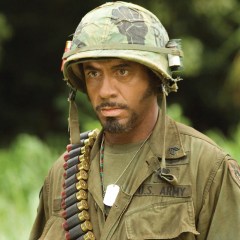
Robert Downey Jr. in Tropic Thunder (2008, 82%)
In a case of life imitating art imitating life, Robert Downey Jr. got an Oscar nomination playing a actor desperate for awards attention. RDJ on playing the sheltered, blackfaced Kirk Lazarus: “I’d be in makeup for a couple hours and they’d be setting up some big shot or whatever. I’d go back to my trailer and I’d close the door and I would lock it. I’d just look at myself in the mirror and I would talk to myself as the character and I swear to God, it was one of the most therapeutic [moments]. I’d look at myself and just be like, “You beautiful, man.” And I would actually have this strange transcendent experience.”
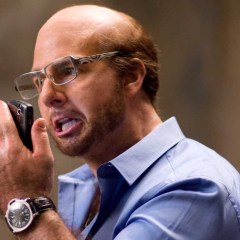
Tom Cruise in Tropic Thunder (2008, 82%)
In a genius move, while everyone was paying attention to RDJ, the filmmakers snuck in another drastic actor transformation. Tom Cruise suggested they needed a studio exec like Les Grossman to put outside pressure on the Tropic‘s beleaguered film crew, and had two additional requests beyond that: “I want to have fat hands and I want to dance.”
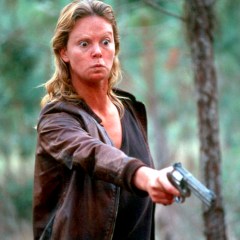
Charlize Theron in Monster (2003, 81%)
According to CNN, all Theron needed for her Oscar-winning role was some freckle makeup, crooked teeth, and lots of potato chips. “The greatest thing I can hope for, which is an impossible thing to hope for because so much emphasis has been put on the transformation, but it’s that people can go see it and get past all that,” Theron said.
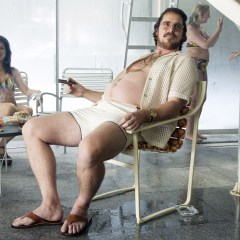
Christian Bale in American Hustle (1998, 83%)
Turns out weight training in Hollywood is just as magical as its accounting. Just look at Bale, who bounces the pounds around going from roles like The Machinist to Batman Begins, or The Dark Knight to The Fighter in succession. The 43 pounds he put on for Hustle, however, proved hard to shake afterwards: “I discovered that I put on weight like Santa Claus,” Bale said. “I just get this belly that kind of extends out. I still have not been able to put on jeans.”
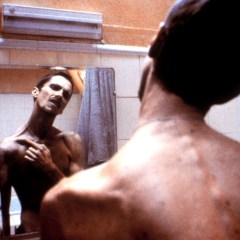
Christian Bale in The Machinist (2004, 77%)
Bale, who lost 62 pounds here, comments on the experience: “It’s an amazing experience doing that. When you’re so skinny that you can hardly walk up a flight of stairs … you’re, like, this being of pure thought. It’s like you’ve abandoned your body. That’s the most Zen-like state I’ve ever been in my life. Two hours sleep, reading a book for 10 hours straight without stopping … unbelievable. You couldn’t rile me up. No rollercoaster of emotions.”
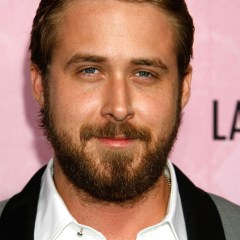
Ryan Gosling in The Lovely Bones (2009, 31%)
If an actor puts on 60 pounds and no one is around to watch it, will he at least still get a Golden Globes nomination? Gosling drank melted Haagen Dazs during pre-production without consulting director Peter Jackson, who disapproved and replaced him with Stanley Tucci. Gosling on getting fired: “Then I was fat and unemployed.”
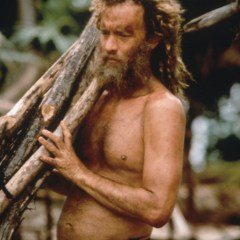
Tom Hanks in Castaway (2000, 90%)
There was enough downtime in production waiting for Tom Hanks to lose 55 pounds of fat (and gain 3 in beard) that director Robert Zemeckis uprooted his crew to shoot and cut What Lies Beneath.
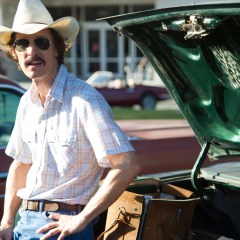
The Dallas Buyers Club Dallas Buyers Club (2013, 93%)
This might be the only club on this list that could literally save your life. After he was diagnosed with AIDS in 1985, electrician/rodeo cowboy Ron Woodroof took it upon himself to find proper treatment, whether it was FDA-approved or not. Not only did he end up providing aid for others like him, he also helped educate the country about the disease. He also indirectly helped Matthew McConaghey win an Oscar.
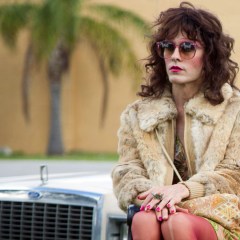
Jared Leto in Dallas Buyers Club (2013, 93%)
Leto speaks on losing over 40 pounds: “It provides you with a certain amount of fragility, it changes the way you walk and talk and think and move. It changes you inside and out.”
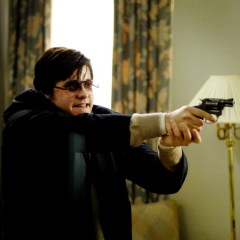
Jared Leto in Chapter 27 (2007, 19%)
Leto abruptly put on 67 pounds to play John Lennon’s killer, which gave the actor gout and left him unable to walk to set. “I’m not sure it was the wisest choice,” he admits.
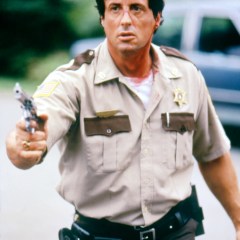
Sylvester Stallone in Cop Land (1997, 73%)
By the mid-’90s, Stallone had tired of being king of the action movie ghetto and the toll of keeping his body in maximal physical shape. “I had pushed a little too far and had an erratic heartbeat,” Stallone recalls, “So I said, maybe I should do a film that I can have pancakes and French Toast every morning and not stay on a treadmill for hours a day. That was Cop Land.”
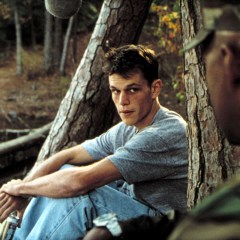
Matt Damon in Courage Under Fire (1996, 85%)
Damon dropped to 139 pounds at 25. From his Reddit AMA: “I had to run about 13 miles a day which wasn’t even the hard part. The hard part was the diet, all I ate was chicken breast. It’s not like I had a chef or anything, I just made it up and did what I thought I had to do. I just made it up and that was incredibly challenging.”
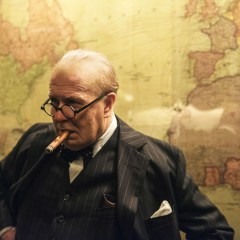
Gary Oldman in Darkest Hour (2017, 85%)
Oldman refused to take on the Winston Churchill role unless he could lure makeup artist Kazuhiro Tsuji out of retirement. After doing so, Oldman spoke of the transformation: “We went for as much detail as we could. You ended up sort of losing me in the process, so we had to pull it back so that Gary and Winston would complement one another. It ended up as a hybrid between the two.”
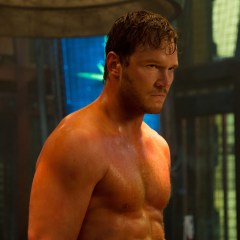
Chris Pratt in Guardians of the Galaxy (2014, 91%)
Pratt’s 60-pound loss regimen included P90X, boxing, swimming, 4,000 calorie-a-day consumption, and, according of Pratt himself while promoting the first Guardians at Comic-Con in Hall H, “lots of crying.”
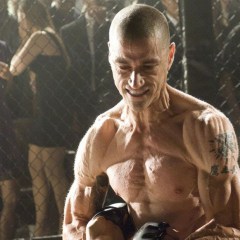
Matthew Fox in Alex Cross (2012, 12%)
Fox, required to play a psycho killer who’s better at navigating sewer pipes than Mario, harvested lean muscle through puke-inducing physical training. Overall, he dropped 40 pounds. “It’s gonna take a long time before I can confront eating another plate of steamed broccoli and chicken breast,” he says.
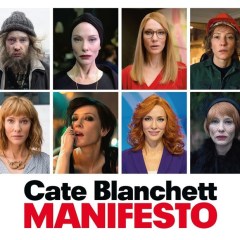
Cate Blanchett in Manifesto (2015, 78%)
Blanchett recalls what it’s like to play 13 different characters in a movie shot over 11 days: “I always work best – which is why I love theatre – where it’s just: ‘The audience is there. It doesn’t matter whether I feel like doing this or not. I’ve just got to do it.’ It’s got the adrenaline of standup.”
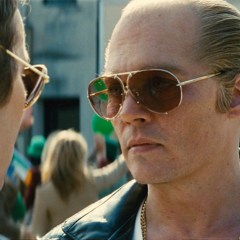
Johnny Depp in Black Mass (2015, 73%)
It’s no secret Depp loves transforming himself for roles. The Whitey Bulger role is tame in comparison to, say, the Mad Hatter, yet paradoxically more extreme than anything Depp has ever done. Depp comments on his Bulger: “I want an audience to lose themselves. When they’re seeing what they know to be this guy called Johnny Depp and all his baggage and all his movies, I want them to forget me. That’s the great test. If I can get them within three to five minutes, we’re going to be okay. But if they immediately go, ‘I’m watching some guy in makeup,’ then I’m screwed.”
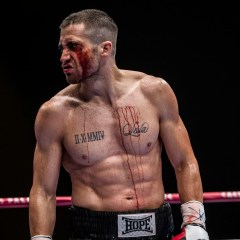
Jake Gyllenhaal in Southpaw (2015, 59%)
Gyllenhaal would do 2,000 press-ups and run five miles everyday for the boxing drama. He recalls: “I was just terrified that I would look like an idiot in the ring. I didn’t know how to box when I started. I had five months to learn, and I know that it takes me a long time to learn a skill, and also to come across like I’ve been doing it since I was six years old.”
Tilda Swinton in Trainwreck (2015, 86%)
Another transformation that didn’t require watching the scale or major prosthetics, but simply tweaking your public image. Swinton, who’s made a career on etheral quirk, goes smoky and blonde for this mainstream comedy. “The first thing I thought of was that I should be a different color. That I would need this kind of Tandoori tan, which I still find amusing,” she laughed. “I’m very sort of pathetic that way. I find it very amusing the idea of me having a tan.”
Hilary Swank in Boys Don’t Cry (1999, 88%)
“I went down to seven percent body fat,” Swank said. It’s one of several factors (including breast binding and stuffing socks into pants) that got Swank into the mental and physical space of trans murder victim Brandon Teena.
Robert De Niro in Raging Bull (1980, 95%)
De Niro famously gained 60 pounds to play endgame Jake La Motta, the most an actor had ever put on for a role at the time.
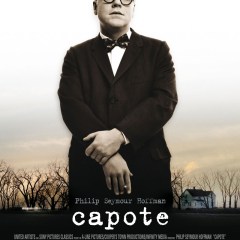
Phillip Seymour Hoffman in Capote (2005, 90%)
While most on this list put on or lost weight, PSH was able to transform himself through sheer tyranny of acting. Also, they cast taller actors and put PSH in shoulder-tight clothing to make him seem closer to Truman Capote’s small stature. “When I think back on it, I think it was totally insane,” director Bennett Miller said, “Capote was 5’2″, Phil was 5’10.5″, he weighed about 240 lbs, and had a deep voice, thick wrists like a wrestler or a football player — like a jock. He did have the right color hair, though.”
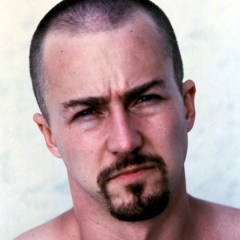
Edward Norton in American History X (1998, 83%)
Norton sported a drastic look, but director Tony Kaye tried to become a different person entirely. Kaye, who lost final cut, wanted to be credited as Alan Smithee after Norton made his own version of the movie and got that one released into theaters.
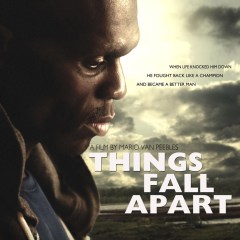
50 Cent in All Things Fall Apart (2011)
Fiddy, who plays a gaunt and cancer-stricken character, had this to say: “I was on liquids for nine weeks straight. And there was a point that I was saying, ‘Oh s–t, what the f–k am I doing?'”
Is this a kissing gallery? Yes, young Tomatoreader, this is our tribute to Valentine’s Day, and it’s something you should see all the way through even if you hate the holiday. You see, this is no average smooching gallery. This week’s 24 Frames looks at the most passionate, most pure, most inconceivably romantic mouth meetings from all-time movie history.
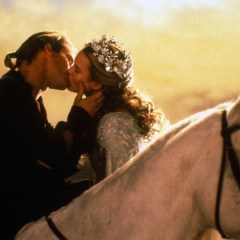
Cary Elwes and Robin Wright in The Princess Bride (1987)
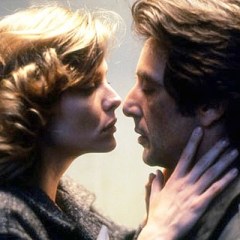
Michelle Pfeiffer and Al Pacino in Frankie and Johnny (1991)
Scarlett Johannson and Jonathan Rhys Meyers in Match Point (2005)
Tom Hanks and Meg Ryan in You’ve Got Mail (1998)
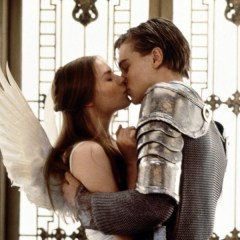
Claire Danes and Leonardo DiCaprio in Romeo + Juliet (1996)
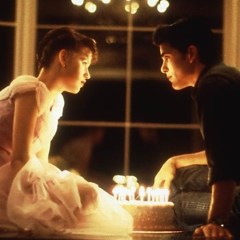
Molly Ringwald and Michael Schoeffling in Sixteen Candles (1984)
Demi Moore and Patrick Swayze in Ghost (1990)
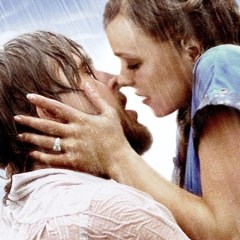
Ryan Goslin and Rachel McAdams in The Notebook (2004)
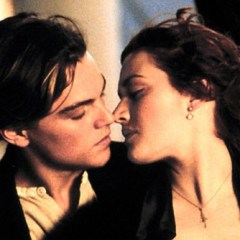
Leonardo DiCaprio and Kate Winslet in Titanic (1997)
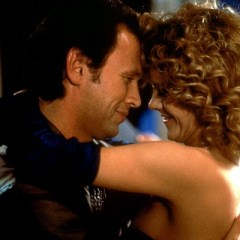
Billy Crystal and Meg Ryan in When Harry Met Sally (1989)
Natalie Portman and Hayden Christensen in Star Wars: Episode II – Attack of the Clones (2002)
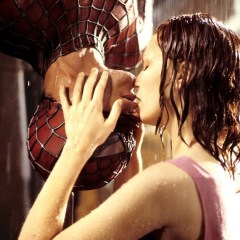
Tobey Maguire and Kirsten Dunst in Spider-Man (2002)
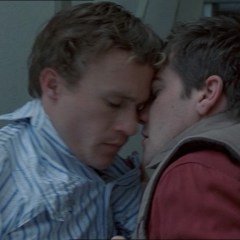
Heath Ledger and Jaky Gyllenhaal in Brokeback Mountain (2005)
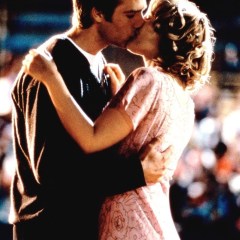
Michael Vartan and Drew Barrymore in Never Been Kissed (1999)
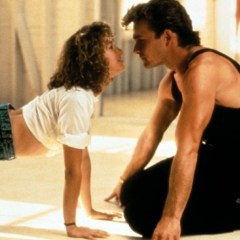
Jennifer Grey and Patrick Swayze in Dirty Dancing (1987)
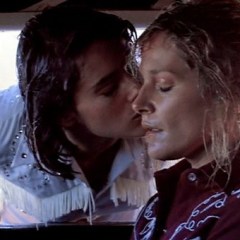
Helen Shaver and Patricia Charbonneau in Desert Hearts (1985)
Carey Mulligan and Ryan Gosling in Drive (2011)
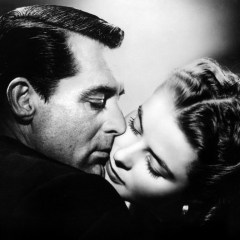
Cary Grant and Ingrid Bergman in Notorious (1946)
Chloe Sevigny and Hilary Swank in Boys Don’t Cry (1999)
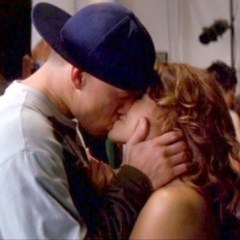
Channing Tatum and Jenna Dewan in Step Up (2006)
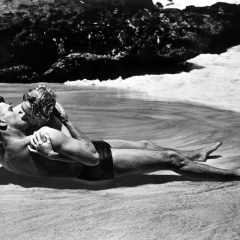
Burt Lancaster and Deborah Kerr in From Here to Eternity (1953)
Omar Epps and Sanaa Lathan in Love & Basketball (2000)
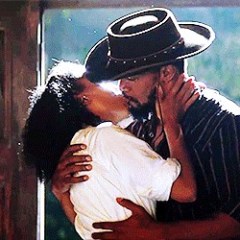
Kerry Washington and Jamie Foxx in Django Unchained (2012)
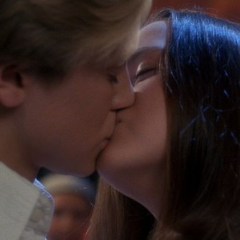
Christina Ricci and Devon Sawa in Casper (1995)