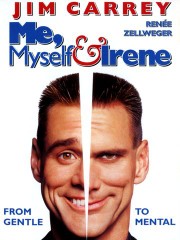
(Photo by Fox/courtesy Everett Collection. ME, MYSELF & IRENE.)
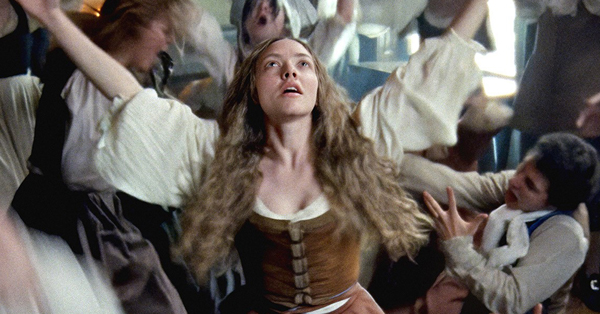
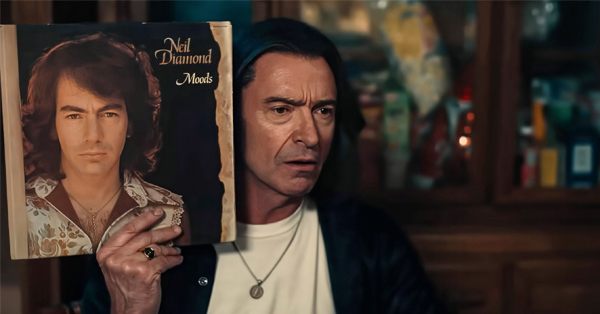
The latest: Me, Myself & Irene, Carrey’s reunion with his Dumb & Dumber directors Peter and Bobby Farrelly, celebrates 25 volatile years!
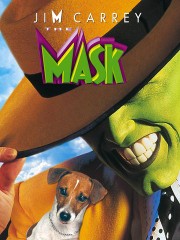
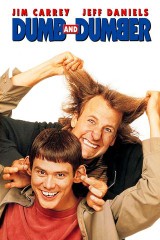
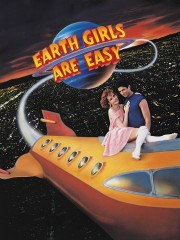
Earth Girls Are Easy sounds like one of those debased projects that occur either at the beginning of a career, out of naivete, or at the end of one, out of desperation. But we doubt Jim Carrey looks back on the 1988 comedy with embarrassment, and probably not his co-stars Jeff Goldblum, Damon Wayans, and Geena Davis either. It’s silly, it’s Fresh, and it helped Carrey land In Living Color. And that show helped make the man who would talk out of his ass on the big screen, to the delight of millions. Ace Ventura: Pet Detective made over $100 million, and that was the lowest-grossing of Carrey’s comedies that year, behind Dumb & Dumber and The Mask.
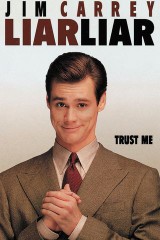
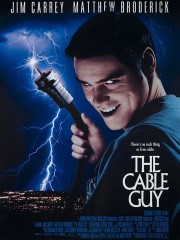
After that breakout in 1994, Carrey was locked and loaded to be the manic centerpiece of 1995’s summer blockbuster event: Playing the Riddler in Batman Forever. The comic book caper was the highest-grossing movie of the year… the same couldn’t be said about 1996’s The Cable Guy, Carrey’s first box office bomb. Fret not: He sprung back in 1997 with Liar Liar, and The Truman Show in 1998.
Part of Carrey’s early enduring quality was a subtle sensitivity hiding beneath the flailing limbs and facial contortions, and the sudden pathos that could erupt from his oddball characters. Carrey began displaying this knack for drama more nakedly in serious projects like Man on the Moon, where he transformed into his comedy idol Andy Kaufman, and Eternal Sunshine of the Spotless Mind, the most memorably melancholic romance of recent decades. Of course, Carrey continued to crowd-please with slapstick like Fun With Dick and Jane, Bruce Almighty, Dr. Seuss’ How the Grinch Stole Christmas, and Yes Man.
After a quiet decade pursuing personal hobbies and middling movie work, Carrey spin-dashed into the 2020s with Sonic the Hedgehog, playing iconic villain Dr. Robotnik (see where it landed on the video game movies list). —Alex Vo
 94%
94%
 93%
86%
93%
86%
 83%
83%
 81%
81%
 79%
79%
 71%
71%
 69%
69%
 69%
69%
 68%
64%
68%
64%
 64%
64%
 57%
57%
 52%
50%
52%
50%
 48%
48%
 47%
47%
 47%
47%
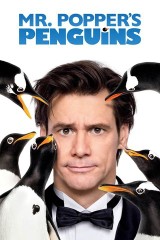 47%
47%
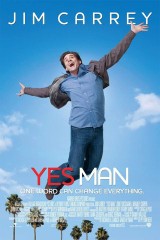 44%
44%
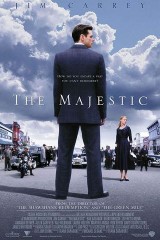 42%
42%
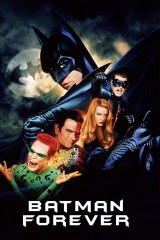 41%
41%
 37%
37%
 33%
33%
 31%
31%
 30%
30%
 23%
23%
 11%
0%
11%
0%
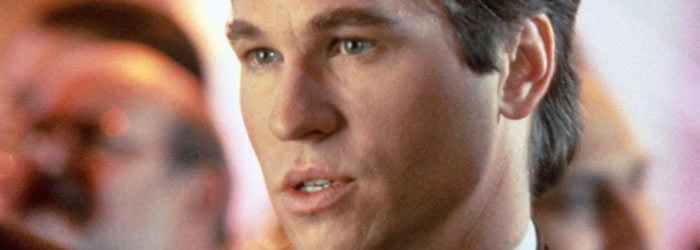
(Photo by Warner Brothers /courtesy Everett Collection. BATMAN FOREVER)
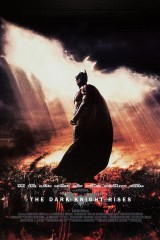
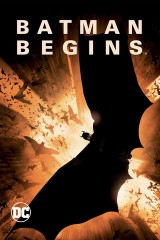
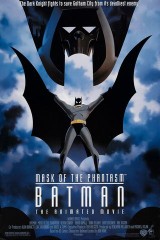
A Dark Knight, the Caped Crusader, ol’ Boogaloo Bats. There is a Batman for all seasons. But whatever you call him, he’s known far and wide as a comic book hero who’s managed to keep relevant in entertainment for decades, re-invented time and time again to answer a nation’s distress Bat-signal all. It was camp colors and biff–bang–pow for the 1960s (the Batman TV show). The ’80s found a taste for blockbuster art deco madness (Tim Burton’s Batman). The ’90s got the best of it (Mask of the Phantasm) and the worst (Batman & Robin). The world of the 2000s demanded realism and it got Christopher Nolan’s The Dark Knight trilogy. Recently, he played nice with the Justice League. And then Robert Pattinson donned the cowl in 2022’s long-awaited The Batman.
94%
89%
 87%
85%
87%
85%
 85%
85%
 83%
83%
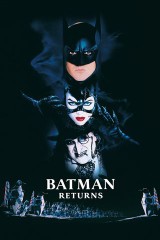 82%
77%
100%
100%
82%
77%
100%
100%
 100%
100%
 100%
100%
 100%
100%
 100%
100%
 100%
100%
 100%
100%
 100%
94%
100%
94%
 93%
93%
 92%
92%
 89%
83%
83%
89%
83%
83%
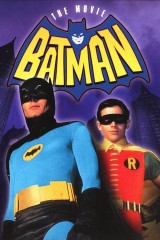 80%
80%
 78%
78%
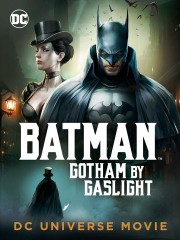 75%
71%
75%
71%
 71%
71%
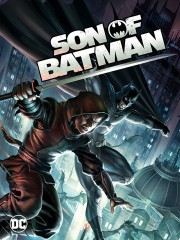 64%
63%
64%
63%
 60%
60%
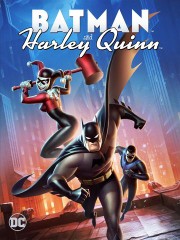 50%
39%
41%
50%
39%
41%
 35%
28%
35%
28%
 11%
11%
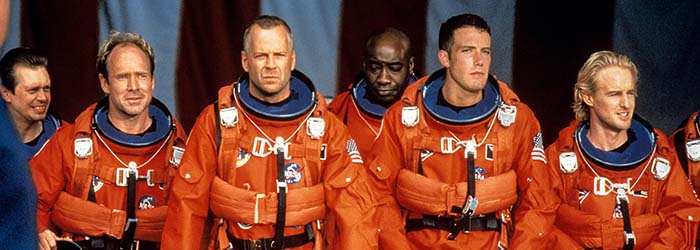
(Photo by (c)Touchstone Pictures/ Courtesy: Everett Collection.)
Armageddon celebrates its 25th anniversary!
Thirty years on, the 1990s has solidified its stature as one of the magical decades in filmmaking, much like how we view the ’30s and the ’70s. Precisely, this Gen X-decade pulled together the Hollywood studio power of the ’30s and the groundbreaking creativity of the ’70s, crocheting commercialism and art into the movie behemoths we speak of in legend as the ’90s blockbuster — which we’ve now ranked all by Tomatometer!
First off, in putting together this list, we didn’t want no scrubs: We defined the ’90s blockbuster as any film that made over $100 million at the box office in the ’90s — movies that had people literally lining up around the block to spend their easy-earned cash. (The economy was booming after all.) This, of course, ushers in all those films synonymous with ’90s blockbusterism, including Jurassic Park, Speed, Twister, Independence Day, Terminator 2: Judgment Day, The Phantom Menace, Armageddon, Wild wild West, and Batmans with three different guys.
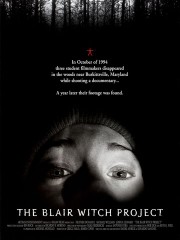
But the ’90s blockbuster was more than just fast buses, exploding White Houses, and bat nipples. Audiences opened up wallets and handbags (they’re European!) on brazen independent films (Pulp Fiction, Good Will Hunting, The Blair Witch Project), big comedies (Sister Act, The Nutty Professor, The Waterboy, Dumb & Dumber, The Birdcage), and romances both funny and dramatic (Pretty Woman, Shakespeare in Love, Jerry Maguire, Ghost).
It was the era of the Disney renaissance (Aladdin, Beauty and the Beast, The Lion King), special-effects breakthroughs (Toy Story, Total Recall, The Matrix), and where the most popular movies of the year could reasonably expect a Best Picture statue come next February (Unforgiven, Titanic, Dances With Wolves). A scintillating ’90s blockbuster can transport us to that moment before cinematic universes, before CGI overload, and before ubiquitous cell phones and Internet; today, Lloyd Christmas can just DM Mary Samsonite and say “Hey, I have your briefcase :)” if he weren’t still illiterate.
Now, relive the rush of the decade without the searing sting of slap bracelets, or shotgunning Fruitopia, with our guide to every ’90s blockbuster ranked by Tomatometer!
100%
 100%
100%
 97%
97%
 96%
94%
96%
94%
 96%
96%
 96%
94%
96%
94%
 95%
96%
95%
96%
 95%
94%
92%
95%
95%
94%
92%
95%
 92%
92%
 92%
92%
 93%
93%
 92%
91%
92%
91%
 91%
91%
91%
91%
 90%
90%
 87%
88%
83%
87%
88%
83%
 88%
87%
88%
87%
 87%
87%
 86%
86%
 86%
86%
 91%
91%
 86%
86%
 84%
84%
 85%
85%
 84%
84%
 84%
84%
 84%
83%
84%
83%
 84%
84%
84%
84%
 83%
81%
82%
83%
81%
82%
 82%
82%
 78%
78%
 80%
81%
81%
80%
81%
81%
 78%
78%
 79%
79%
 79%
79%
 78%
78%
 76%
76%
 74%
74%
 75%
75%
 73%
73%
 74%
74%
 74%
74%
 73%
73%
 75%
80%
75%
80%
 71%
71%
 69%
69%
 71%
71%
 68%
68%
 70%
77%
70%
77%
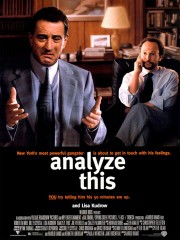 70%
70%
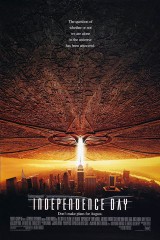 69%
69%
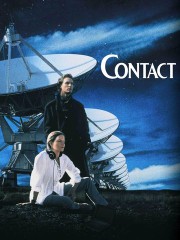 69%
69%
 67%
69%
67%
69%
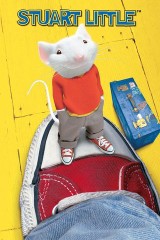 66%
66%
 68%
68%
 67%
67%
66%
67%
67%
66%
 65%
63%
68%
65%
63%
68%
 66%
66%
 62%
62%
 62%
62%
 63%
63%
63%
63%
 60%
60%
 60%
60%
 59%
59%

(Photo by Warner Bros./courtesy Everett Collection.)
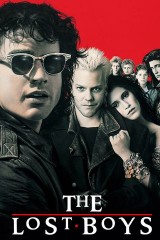
Your typical journeyman director deep in the studio system will make movies across plenty of genres, on-time and under-budget, foster some lasting professional relationships, and never make a name for themselves beyond to the most ardent, specific film buffs. Yes, Joel Schumacher worked across multiple genres without a thematic throughline, with studios and actors quick to praise his behind-the-scenes professionalism, but the director also brought enough verve and dynamic color to his films that Schumacher’s name, at his creative peak, did become a kind of brand. A calling card of big Hollywood entertainment with style to separate from the rest. This began in earnest in 1987 with the Brat Pack-adjacent The Lost Boys, the stylish horror/comedy that pulled vampires out of cliff-nested castles and into teen parties and suburbia, a popular concept still seen in the likes of True Blood and Twilight. Having made Kiefer Sutherland a star, Schumacher worked with him again on his next film, Flatliners.
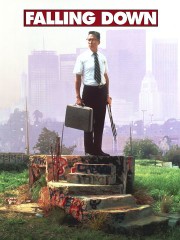
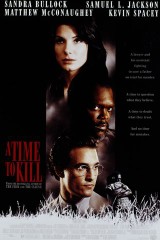
Schumacher entered his most commercially viable period in the ’90s, starting with 1993’s Falling Down, starring Michael Douglas on a particularly bad Los Angeles day, in a film that has been latched onto as a manifesto of urban rage still discussed and referenced now. Schumacher took the reins for 1995’s Batman Forever after Tim Burton and Michael Keaton left the blockbuster franchise. Some inspired casting (Val Kilmer as Bruce Wayne, Jim Carrey as The Riddler, and Tommy Lee Jones as Two-Face), plenty of wild art direction, a brash soundtrack, and just a touch of camp turned the movie into pop-culture phenomenon. A year later, Schumacher released A Time To Kill at a time when anything Grisham, Crichton, and Clancy was being adapted and making a mint at the box office. (Schumacher had previously turned Grisham’s The Client into a movie.)
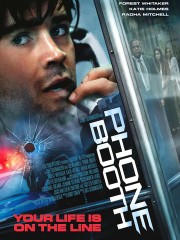
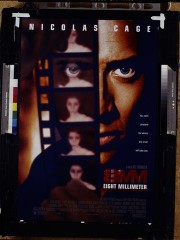
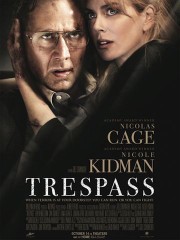
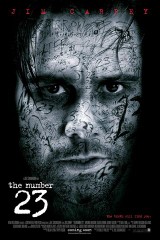
Then came the disastrous Batman & Robin, which killed the franchise for nearly a decade. Schumacher took full ownership for the movie’s failure, claiming that he had steered too far towards what marketing and merchandising wanted out of a Batman joint. A public bomb of this proportion could’ve been a career-ender, but his workmanship and a steady line of stars willing to collaborate time and again meant the next Schumacher film was never far off. He worked twice with Colin Farrell, first in 2000’s Tigerland, which introduced the actor to American audiences, and then in 2003’s Phone Booth, which made Farrell a star. Sutherland, back in the saddle, played the villain. Schumacher can be credited with helping launch Gerard Butler’s career in full, when he cast him as lead in 2005’s The Phantom of the Opera. In 2007, Schumacher worked again with Carrey for psychological thriller The Number 23. His final film was 2011’s Trespass, reuniting him with 8MM‘s Nicolas Cage and Batman Forever‘s Nicole Kidman.
We celebrate his life and career with our guide to every Joel Schumacher film, by Tomatometer. —Alex Vo
 79%
79%
 78%
78%
 75%
75%
 75%
75%
 72%
72%
 66%
66%
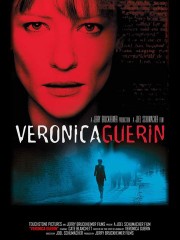 53%
53%
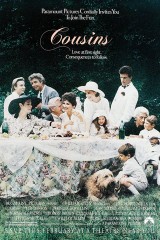 56%
56%
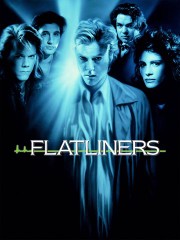 50%
50%
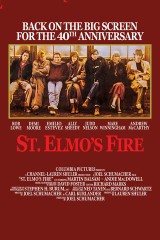 44%
44%
 40%
40%
 50%
41%
50%
41%
 32%
32%
 25%
25%
 27%
27%
 23%
23%
 18%
11%
18%
11%
 10%
10%
 9%
9%
 7%
7%
 3%
3%
As a lot of folks in Hollywood will tell you, nobody signs on to a movie thinking it’s going to be bad. Sometimes, though, due to any number of reasons, things just don’t line up the way everyone thought they would, and you end up with a stinker. That said, actors who are consummate professionals will always put forth maximum effort into any role they accept, and every once in a while, it results in a memorable performance in an otherwise forgettable film. We’re here to celebrate those performances and make sure these talented actors’ efforts don’t go unrecognized, even if the movies surrounding them were mostly dismissed.

(Photo by Paramount Pictures)
In 1987, five years after the success of Robert Townsend’s Hollywood Shuffle, studios were looking to capitalize on Black content, and fresh off the success of Beverly Hills Cop, Paramount gave Eddie Murphy a few million dollars to make his passion project. Casting his comedy idols in a minority-led Cotton Club-style crime-comedy, Murphy made a film that was hilarious and stylish. Still, critics savaged the effort as a vanity project with no plot and little substance. The film did boast dazzling costumes, the best of which were worn by Jasmine Guy as she played the femme fatale Dominique La Rue. Primarily known for her comedic role as the southern daddy’s girl Whitley Gilbert on the Cosby Show spinoff A Different World, Guy showed she could bring the goods as the seductive and deadly mistress of the local mob boss. In between the laughs that Richard Pryor, Redd Foxx, and Della Reece provided, La Rue was a welcome, well-acted change of pace; it’s a shame that Murphy’s script rarely rose to the level of her performance.

(Photo by Universal Pictures)
Look, we can barely believe Robert Zemeckis’ dark and hilarious 103-minute catfight is Rotten on the Tomatometer, either. But at the time of release, critics were underwhelmed by what they saw as pretty ineffective satire, even as they praised the movie’s innovative special effects – “There’s a hole in my stomach!” – and the two women to whom they were generously applied. As long-time rivals and youth-obsessed divas Madeline Ashton and Helen Sharp, Meryl Streep and Goldie Hawn are fabulous monstrosities, all daytime-soap stares and Disney-witch snarls. Their work is big – huge, really – but always grounded in a deep sadness that flavors this showcase for pre-Jurassic Park Industrial Light and Magic with a compelling dose of tragedy.

(Photo by )
All three Sanderson sisters in Hocus Pocus probably deserve to be on this list: Sarah Jessica Parker brings great sensuality to what could have been a throwaway role and Kathy Najimy is an incomparable doof. But we’re singling out Midler because, in a film where no corner of scenery goes un-munched-upon, it’s Midler as lead witch Winifred who goes home with the fullest belly. Flaming red hair high and front teeth comically bucked, she delivers a huge performance, hilarious and nasty all at once, her expressions destined to be enshrined forever by nostalgic millennials in the galleries if giphy. Everyone is good in this movie, true, but we don’t know whether fans would still be clamoring for a sequel without Midler’s iconic performance of “I Put A Spell On You.”

(Photo by Universal Pictures)
Nothing ever goes exactly as planned on a movie shoot, but Street Fighter’s journey to infamy was besotted with one catastrophe after another. The lead star was a coked-up, unreliable diva. A military coup in Thailand shut down road access. None of the actors were getting martial arts training, and were losing weight in the Southeast Asia humidity. And Raul Julia, who played the psychotic M. Bison, showed up withered and frail, besieged by stomach cancer treatment. Yet, the latter proved to be Street Fighter’s most enduring asset, as Julia laid it all on the line for his final role. Julia’s performance is big, unguarded, and wild, but with the good taste to stop short of chewing the scenery. You don’t laugh at what he’s created here, you actually cheer on this kind of menace, as Julia scissor kicks the movie up a notch with goofy, infectious energy.

(Photo by Everett Collection)
Angelina Jolie is no stranger to being the very-good-thing in a not-very-good movie: Think Gone In 60 Seconds, the Tomb Raider movies, or even the flick that won her an Oscar, Girl, Interrupted, which is – surprisingly for some – Rotten at 54% on the Tomatometer. In Hackers, the ahead-of-its-time 1995 techno thriller released the same year as The Net and Johnny Mnemonic, Jolie showed exactly why she would become a mega star. Her high school hacker Kate commands the screen, thanks to Jolie’s committed performance and the signature screen charisma that has kept people ponying up to see her in movies, good, bad, and Rotten as hell. Interestingly, Jolie beat out the likes of Hilary Swank and Liv Tyler for the Hackers role – only her second big-screen job.

(Photo by United Artists courtesy Everett Collection)
Showgirls’ reputation may be on an upswing with its newfound status as a cult-classic queer favorite, and the documentary You Don’t Nomi detailing how the movie came to this point, but one thing the world has always agreed on – even as the film collected six Razzies following its release and became a global punchline – is that Gina Gershon is brilliant as coke-sniffing meanie Cristal Connors. If you’ve got a favorite Showgirls line – from “I like nice t–s” to “I used to love doggy chow” – chances are Cristal snarled it.

(Photo by Warner Bros. courtesy Everett Collection)
Actors can come to set, nail their lines, and, if they have a little something extra, help pull better performances from the cast around them. As the Riddler in Batman Forever, Jim Carrey achieved this with Tommy Lee Jones, who offered an uncharacteristically unhinged take on Two-Face. Jones also reportedly detested Carrey. This alleged animosity actually underscored the tenuous alliance formed by the two villains, as Jones worked to keep up with Carrey’s manic hopping and shrill flights into delusional grandeur. Ironically, it was the latter who gave the dual performance in Forever; Two-Face is Two-Face the entire movie, but Carrey had to first build the pathetic, sympathetic Edward Nygma, a sad wretch whose tragic end would give rise to the question-baiting, green-spandexed loon. It was another showcase for Carrey’s knack for merging comedy and drama, first glimpsed in Dumb & Dumber and The Mask, and soon to bloom in full with The Truman Show and Eternal Sunshine of the Spotless Mind.

(Photo by 20th Century Fox Film Corp.)
Jingle All the Way is both worse than you think and better than your remember. The first two acts achieve moments of genuine charm and amusement from its gag-based physical comedy, as Arnold Schwarzenegger embarks on his increasingly absurd trek to find an action figure for his son on Christmas Eve. Then it hits the breaking point in a forced action finale with poor effects. But who’s rock-solid throughout the movie? Phil Hartman, who plays Schwarzenegger’s neighbor and a local soccer mom-seducer, a skeevy suburban Lothario who’s got the hots for Arnie’s wife. Jingle’s most famous line (“Put the cookie down, now!”) wouldn’t have become a meme if it wasn’t cut against Hartman’s inappropriately orgasmic consumption of said cookie. And Hartman’s delivery of the line “You can’t bench-press your way out of this one!” is so underrated; he was the only one who could cut through the farce of putting Schwarzenegger in a family comedy where everyone pretends everything’s totally normal.

(Photo by Everett Collection)
Director Tom Shadyac followed up the Certified Fresh Jim Carrey vehicle Liar, Liar by partnering with another comic genius for Patch Adams, the true story of an unconventional medical student dedicated to treating the whole patient, not just the disease. Usually with clown routines. The movie has rightly been slapped around for its manipulative sentimentality – Shadyac does everything but squeeze lemons into the audience’s eyes to “earn” the movie’s many tears – but at its heart is a frenzied, moving, and wholly committed performance from Robin Williams, near the beginning of a streak of sentimental ’90s roles that included What Dreams May Come and Bicentennial Man. His work was called out for being a bit “much” at the time, but for those missing the late Williams’ energy and that rare ability to have us chortling through our tears, it’s frankly a feast.

(Photo by Everett Collection)
The Star Wars Prequel Trilogy has undergone something of a reappraisal in recent years, at least by fans who remember Episodes I, II, and III fondly, but the fact remains that The Phantom Menace is one of the worst-received entries in the saga, due to a plodding story, stiff acting, and at least one character who rubbed audiences in every wrong way. For his part, Liam Neeson brought the requisite gravitas to play Jedi mentor Qui-Gon Jinn, but it was his padawan, a young Obi-Wan Kenobi played by Ewan McGregor, who stole the show and became an instant fan-favorite. Although McGregor would truly blossom in the role over the next two films, this is where he established himself as one of the saga’s most reliable anchors, giving fans a reason to stay with the franchise despite The Phantom Menace’s shortcomings. Hell, one look at our recent Star Wars showdown bracket is all you need to see how influential his work was.

(Photo by Dimension Films)
Scream 3 has gotten some later-in-life appreciation in the #MeToo era: As well as a wink-wink, nudge-nudge horror satire, it’s a pretty bold attack on systemic sexual abuse in Hollywood – featuring a Harvey Weinstein-style producer character… in a movie produced by the Weinsteins. It might be the most meta movie ever made, and years ahead of its time. Still, it remains the bottom of the slasher series’ offerings, with critics lashing it for leaning too hard into laughs over scares, and its 39% Tomatometer score makes it the only Rotten Scream movie to date. The highlight of the film is 1990s indie darling Parker Posey as actress Jennifer Jolie, who is cast to play Courteney Cox’s reporter, Gale Weathers, in the movie-within-the-movie, Stab 3. (We said it was meta.) Parker is nervy and hilarious as she shadows the “real” Weathers across the studio backlot, imitating her moves and line delivery, and a total scream when she gets into full breakdown mode, jittery cigarette rarely out of shot, as the bodies start piling up. You rarely believe she’s genuinely terrified at any point – when cornered by Ghostface she begins shrieking, “You can’t kill me! I’m the killer in Stab 3!” – but in this high-camp low-point for the series, she’s a treat.

(Photo by 20th Century Fox Film Corp.)
Let’s be real, here: When is Denzel Washington ever not good? This wasn’t the first time he and director Tony Scott had collaborated (they did Crimson Tide in 1995), nor was it the last (they would go on to work together three more times, including Scott’s final film, Unstoppable), but it was the relentless violent streak and punishing run time that made Man on Fire the least of their collaborations. That said, Scott and Washington clearly had an understanding, and even when the final product as a whole failed to deliver, Denzel was always reliably irresistible. As a vigilante out for revenge, he’s all bile and gritted teeth, and he seems to pull a shocking sadistic streak from somewhere deep within. He’s so compelling that you can’t help but root for him, even when he’s doing the absolute dirtiest of dirty work.

(Photo by Steve Wilkie/©Lions Gate courtesy Everett Collection)
Jigsaw is a rare breed in the horror villain world: He was human. Nobody seemed able to stop him, yet there was nothing supernatural about the monster — he couldn’t take an axe to the head or survive a house fire. What Jigsaw did have was a wonderfully warped sense of justice, drawers full of blueprints for death-dealing traps, a lot of time apparently, and Tobin Bell’s chilled-over performances to bring the guy to cinematic life. The simple, menacing purr of Jigsaw’s “I want to play a game…” by Bell was enough to send shivers down our spines, and let us know we weren’t about to break out the Parcheesi board. If anything, Bell was too good and reliable, as the Saw franchise hung on to the character well beyond his shelf life, until he became the only good thing about the later sequels.

(Photo by ©Universal Pictures courtesy Everett Collection)
Tokyo Drift is sort of the neglected stepchild of the Fast and Furious series, a somewhat franchise-adjacent detour that takes viewers all the way to Japan and introduces a completely new cast with pretty much no connection to either of the two films that preceded it. It didn’t help that the star of the film was Lucas Black, whose middle name might as well be “Flat” and whose lack of presence on screen essentially doomed the project from the get-go. But if there was one bright spot in the film, it was the calm, collected, perpetually peckish Han, as played by Sung Kang. Immensely likable with a hint of mystery behind his sly smirk, Han came to represent the heart and soul of the franchise and one of its most compelling characters, so much so that fans actively campaigned (#JusticeForHan) to bring him back. Guess who shows up at the end of the trailer for F9?

(Photo by )
Snow White and the Huntsman was an entirely unnecessary and borderline nonsensical retelling of the Snow White fairy tale that earned mixed reviews from critics and fans. Star Kristen Stewart, who was miscast as Snow White, gave us a heroine no one wanted to root for, and her onset affair with director Rupert Sanders overshadowed any good points the film had to offer. This was supremely unfortunate as one of the best parts of the film was Charlize Theron as the Evil Queen Ravenna, by way of Ursula from The Little Mermaid meets 101 Dalmatians’ Cruella de Vil in all the best ways. Literally dripping in gold, courtesy of her magical mirror, and wearing medieval goth couture, Theron’s Ravenna was captivating and deliciously entertaining despite acting opposite a CGI effect. It’s a testiment to Theron’s talent that she delivered such a flawless performance while playing off tennis balls on set.

(Photo by Dimension Films)
If you ever need to make a case for not waiting too long for a sequel, Sin City: A Dame to Kill For should be Exhibit A. In 2005, Sin City was a surprise hit, earning $160 million at the box office, and the popularity only grew from there. However, for a host of reasons, it took over nine years to commission a sequel, and by that time, tastes had changed; even the most ardent fans had moved on. In addition to A Dame to Kill For’s woeful timing, the new script lacked the originality and crispness of the first installment, save for one standout performance. Joseph Gordon-Levitt proved in Rian Johnson’s Brick that he was an actor tailor-made for noir, and his work here only furthers that legacy. Playing Johnny, the brash cardman, he drips bravado and determination as he risks his last dollar for revenge. Slick and stylized, he and Eva Green are the only things that hook the audience; it’s only a shame everything else pales (pun intended) in comparison.

(Photo by ©Warner Bros. Pictures)
The Wachowskis’ Jupiter Ascending is only slightly less ambitious than Cloud Atlas, but it’s also arguably a lot goofier, with inane dialogue, baffling turns of plot, and gaudy special effects. But oh, did Eddie Redmayne ever come to play. If he was looking for a change of pace after his Oscar-winning portrayal of Stephen Hawking in The Theory of Everything, he certainly found it in the role of Balem Abrasax, the effete eldest sibling of a ruling family who speaks in sighs and whispers one moment and erupts like a banshee the next. This is scenery-chewing with style, and Redmayne digs into every line with gusto. It’s absolutely glorious to behold, and it’s quite possibly the only memorable thing about the film.

(Photo by Jaimie Trueblood/Columbia Pictures)
Passengers failed mostly due to its unfortunate and problematic premise. A mechanic in cryogenic sleep is awakened early on an 80-year trip to a colony in space. Facing the prospect of dying alone, he sabotages a fellow passenger’s pod because he thinks she’s his soulmate. By essentially dooming his lady love to a life of isolation and assuming she would fall in love with him — which she does — the film was so distasteful that critics found little to enjoy despite stellar visuals and impressively futuristic production design. Obvious problems aside, Passengers also features two standout performances from Jennifer Lawrence and Christ Pratt. Lawrence showcases the chops that won her the Oscar just four years prior, Pratt is surprisingly good in a dramatic role, and the pair have undeniable chemistry. If not for the queasy feeling you get thinking about why they are together, this could have been an adventurous sci-fi romance.

(Photo by )
There are a lot of things wrong with Suicide Squad, from tonal issues to paper-thin characters, dull action sequences to atrocious dialogue, and whatever Jared Leto was trying to do as the Joker. Regarding the latter, not all of the acting is bad, thankfully. Margot Robbie’s take on Harley Quinn is fun and exciting, and it earned her a solo joint (sort of) that opened earlier this year to solid reviews. But one of the unsung bright spots of the film is Viola Davis’ Amanda Waller, who initially behaves just shady enough to make you suspect her of ulterior motives and then succeeds in delivering one of the few genuine surprises in the film. She does the best she can with what she’s given and grounds the story as arguably the most interesting character, which says a lot about the antiheroic ensemble that surrounds her. There’s a reason she’s one of the very few people who are returning for James Gunn’s hopefully much better follow-up next year.

(Photo by Anna Kooris/Universal Pictures)
Critics were fairly split on Ma, Tate Taylor’s schlocky thriller about a loner who exacts revenge on her high school tormenters by befriending – and then targeting – their own teenage children. But all agreed that whatever you thought of the gory, campy flick, Octavia Spencer delivered big time as title character. Whether tearing up the dance floor to “Kung Fu Fighting,” staring down her prey across a crowded room, or transfusing dog’s blood into a naked former high school crush – really – Spencer is hilarious, sympathetic, and completely menacing.
What are some of your favorite performances in Rotten movies? Let us know in the comments.
Thumbnail image by Universal Pictures
Who is superhero cinema’s ultimate genius, billionaire, playboy, philanthropist? The wise-cracking tech head who took down Thanos? Or the reclusive, brooding, vengeful detective who looks as good in a tux as he does zipping between the buildings of Gotham? In our latest episode of Vs., Rotten Tomatoes Contributing Editor Mark Ellis is pitting the MCU’s Iron Man against DC’s Dark Knight, comparing their box office pull, Tomatometer and Audience Scores, and the quality and inventiveness of their gadgets, all to declare who is the superior super-powered scion.
As always, if you don’t agree with our choice of winner, let us have it in the comments.

(Photo by Warner Bros. Pictures, Sony Pictures Classics, and Netflix)
“Know Your Critic” is a column in which we interview Tomatometer-approved critics about their screening and reviewing habits, pet peeves, and personal favorites.
Amélie is the film Carlos Aguilar has seen more than any other – and he never would’ve seen it, if not for a critic who endorsed the film on television when he was a kid.
“When it first was released, I was still living in Mexico City and I was very young, maybe 11 or 12,” he told Rotten Tomatoes in an interview. Horacio Villalobos was a film critic on TV at the time, and Aguilar watched his program “religiously.”
“He talked about this French movie that he really loved and that was only playing in a few theaters in Mexico City. It was because he recommended it very passionately that my mom took me to see Amélie,” Aguilar said. “It wouldn’t have been on my radar if that critic hadn’t recommended it.”
Now, Aguilar is a film critic and writer himself, with work published in the Los Angeles Times, TheWrap, and Remezcla. His reviews appear on Rotten Tomatoes alongside those of critics he admires – such as Justin Chang of the LA Times, Eric Kohn of IndieWire, and Claudia Puig, President of the Los Angeles Film Critics Association. He admires both their writing and their commitment to supporting up-and-coming critics.
“That’s usually what connects great writers – they tend to be also great people outside of the writing,” Aguilar said.” They want more diverse voices to be part of the conversation. It’s not only about them, but about bringing in others and growing the field.”
Carlos Aguilar is a freelance critic and film writer based in Los Angeles, CA.
What’s your favorite childhood film?
I was always very much an animation, Disney kid. I remember loving The Little Mermaid and Beauty and the Beast and those classic Disney films. Those were the ones that I watched as a kid. Now, I know that they’re considered bad, but the Batman movies from the ’90s – I think it was Batman Forever and Batman and Robin. I was big on those movies. Re-watching them now, it’s cringe-y – but back when I was a kid, I loved those movies.
What do you think is the biggest misconception about critics?
That we like to antagonize the general public. I feel like audiences sometimes feel like there are movies “for” critics and movies “for” audiences, which is completely a lie because critics are themselves part of the audience.
Sometimes the figure of the critic has been seen as an intellectual, unapproachable and pretentious person that only likes a certain type of movie. That’s what some people in the audience see as a critic. They feel like if a critic likes a certain type of movie, that that’s not what the audience would like – that divide between the audience and the critic is the big misconception.
There’s critics that like all types of film and not all critics like the same type of thing or agree on the same thing or disagree on the same things. The misconception is that people believe that the critics are looking for the films that audiences are not going to like and that we want to go against the grain or against popular taste.
What’s your favorite classic film?
There’s a Mexican film called Macario from 1960. It’s black and white and it was the first movie from Mexico that was nominated for the Oscar for best foreign language film. We have this beautiful cinematographer, Gabriel Figueroa, who’s one of Mexico’s most beloved, admired cinematographers from that era. It’s like if I can describe it in simple terms, it’s like A Christmas Carol that’s set in Mexican colonial times on the eve of Day of the Dead.

(Photo by Sony Pictures Classics)
What’s Rotten thing you love?
Pedro Almodóvar’s I’m So Excited – in Spanish it’s Los Amantes Pasajeros. It’s generally considered one of his worst, at least in recent years. But I remember watching it and finding it hilarious and engaging.
I don’t want to say that the reason is entirely because there’s things that get lost in translation, but… There’s a lot of phrases there that are just hilarious and I also admire that it’s a movie that takes place entirely on a plane… it’s over the top and it’s raunchy. The things that you love in an Almodóvar, but in a more absurd way.
It doesn’t always work, and perhaps there’s many reasons why people don’t find it an artistic accomplishment, but I always have fun quoting lines from it or re-watching it.
What do you consider required viewing?
I think I’m going to say Krzysztof Kieślowski’s The Decalogue, which is this 10-part series of 1-hour films or episodes that were made for Polish television in the late 1980s. Each of them deals in a very abstract way with one of the 10 Commandments…
Just the fact that he was able to create 10 stand-alone pieces of cinema that somehow relate to each other in ways that are not obvious and that have this moral ambiguity… All of them are very subdued and written in a way that doesn’t have easy answers. It’s not black and white.
You saw 40 films at Sundance this year. What is your personal record for the most movies you’ve watched in a day?
I definitely don’t recommend it, but at Sundance I saw five films in a row one day this year. To me, that’s a test of endurance. But also, for you to watch that many films consecutively at a festival, the stars have to align. The times have to be right – you have to be at the right place, the shuttles have to be on time.
What are you most proud of in your career so far?
Honestly, that I’m still doing it. It’s not a flashy, glamorous profession as some may think, especially if you’re a freelancer like myself. It’s always a constant battle to get work, to get access, to make a living writing.
In my particular case, being an immigrant, being a DACA recipient, oftentimes people in my circumstances or from my background don’t see themselves in careers like film criticism – which is so far-fetched, so unreachable to work in a field that is often seen to be reserved for a certain type of person with a certain type of education. For me to be here, to have a voice in this industry, I feel like I’m very proud that somehow… if someone can feel that if I’m doing it, they can also be doing it. I feel like that’s always a victory.
Do you have any advice for critics who are still finding their voice?
I think that opening up yourself to watching movies that you assume you’re not going to like is a good way to see what your taste is, see what it is that you really react to. What are the things that you find yourself not liking or liking about a certain movie? I feel like that really opens up your cinematic taste buds. It just gives you a wider palette of the things you’ve seen.
Is there an up-and-coming critic that you want people to check out?
Yeah, there is a young Latina critic. Her name is Kristen Huizar. She won the LAFCA Ruth Batchelor Scholarship, which is a scholarship that the Los Angeles Film Critics Association (LAFCA) gives to young critics from underrepresented backgrounds. She’s in LA and she’s an artist and a writer and reviews films and talks about films from a unique perspective as a Latina woman in LA… I think she mentions often that she uses public transportation, and doesn’t have the LA experience that often gets represented on screen or in the writing.

(Photo by Netflix)
How has the digital landscape influenced your criticism?
It’s definitely the only way that many of us can write today. Most outlets only exist digitally today and because of that, when we get to write something for print, it’s become a big event or a landmark to get something in print because that’s so rare. I do feel that without the digital publishing and digital outlets, most of us wouldn’t be writing today – especially people from underrepresented backgrounds.
What’s the hardest review you’ve ever written?
I wrote this review-essay for IndieWire on how Roma was an interesting experience for me because I’m someone that was born in Mexico City, but left young and hasn’t been able to return in over half my life.
It was my own memories and seeing the city that my mom left, seeing when she was young. Also, thinking about the fact that I haven’t been there in so long that it’s probably a different city today. It was a strange exercise in seeing the same city where I grew up in from a different perspective and being reminded of the people that you leave behind, the memories that you carry with you. That was challenging to write, to relate those emotions to the film and to express that through that lens.
Is there someone in your life who isn’t a critic whose opinion you admire?
My mom’s opinion when it comes to movies or art in general really matters to me. I remember when I was a kid, she would be very interested in watching Akira Kurosawa and Ingmar Bergman and a lot of international cinema. My mother has a grade-school education. She didn’t go to college. She didn’t even finish high school, but she was always very interested in culture and the arts.
To me, she’s always been an example of the fact that just because you’re not an intellectual or someone that went to a private school or has a degree, doesn’t mean that you cannot be inspired or moved by all types of films.
Carlos Aguilar is a film critic and writer based in Los Angeles. Find him on Twitter: @Carlos_Film.
Along with the numerous and various incarnations of Batman in film and television, comes an Alfred. Bruce Wayne’s loyal butler keeps both Wayne Manor and the Batcave in order and generally has Batman’s back. This summer, however, Alfred Pennyworth becomes the star of the show in upcoming Epix drama Pennyworth.
A new teaser just dropped Friday for the 10-episode, hour-long series, in which Jack Bannon plays Alfred Pennyworth in his 20s, as he returns to London after serving in the SAS. Alfred wants to start his own security business, but then young billionaire Thomas Wayne (Ben Aldridge) hires him to be his private bodyguard. This could be the beginning of a beautiful friendship.
Gotham creators Bruno Heller and Danny Cannon created Pennyworth, which also stars Emma Corrin as Esme, Paloma Faith as Bet Sykes, Hainsley Lloyd Bennet as Bazza, Ryan Fletcher as Dave Boy, Jason Flemyng as Lord Harwood, and Polly Walker as Peggy Sykes.
In honor of Alfred getting his own series, we looked at all the movie and TV Alfreds from the classic ’60s Batman series to the films with Michael Caine and Jeremy Irons and even recent animated-movie incarnations. Heller, Cannon, and Bannon spoke with Rotten Tomatoes about Pennyworth to help us compare their vision of Alfred Pennyworth to the greats.
Pennyworth debuts on Epix this summer.
DC Universe, the DC Entertainment streaming service, launches this week with a good deal of material. Its first original television show, Titans, does not debut until next month, but there is plenty to enjoy in the meantime as the service brings together movies, television shows, and animated series based on DC Comics characters — most notably the original Batman feature film cycle, Batman Begins, and The Dark Knight in honor of Batman Day on Saturday.
The platform also features a surprising amount of the source material — you can download the comics and read them as you please. But just how lost in DC lore can one get on DC Universe? Let’s take a look at the initial offerings and just how deep into the comics multiverse DC Universe goes.

(Photo by © Warner Bros. / Courtesy: Everett Collection)
If you were a child in the early 1990s – or a teenager for that matter – the debut episode of Batman: The Animated Series was something of a revelation. Titled “On Leather Wings,” it set a new darker tone for Batman cartoons. Though initial publicity mentioned Robin would appear, he was nowhere to be seen here. Instead, an almost solitary Batman faces down his first opponent, Manbat, and the Gotham City Police Department in a moody episode that’s painted in darkness. The minute-long intro sequence lacked text or lyrics to explain the premise; instead, Shirley Walker’s reworking of Danny Elfman’s Batman theme plays over one the best title sequences in American animation. During a time when afternoon cartoons featured the pop-culture anarchy of The Animaniacs and the later seasons of Teenage Mutant Ninja Turtles, the difference was striking.
On DC Universe, the series is organized by airdate – Robin makes an early appearance in episode two and disappears again for a time – which gives the show, which we recently dubbed the best superhero series ever, added context on the platform. As an example, “On Leather Wings,” aired as a special on Sept. 6, 1992, and the next episode would not debut until November, indicating Fox saw it as something different, if only for a moment. But from November 1992 on, episodes kept redefining characters like Poison Ivy and Catwoman. The first Mr. Freeze episode, “Heart of Ice,” was a revelation thanks to a completely serious treatment of the character and the definitive Freeze performance from actor Michael Ansara. Other great episodes from the early part of the run include the two-part “Two-Face,” in which District Attorney Harvey Dent becomes the notorious Batman foe, “Beware the Gray Ghost,” in which Batman ’66 actor Adam West lends his voice to Batman’s childhood hero, and “The Man Who Killed Batman.”
“On Leather Wings” and the rest of the initial Animated Series arrives in a remastered edition highlighting the rich visual darkness and serious tone of the early episodes. Though it would eventually become a brighter show both in subject matter and technique, the impact of “On Leather Wings” has not dulled.

(Photo by Courtesy the Everett Collection)
Beyond Batman: TAS, DC Universe features a great number of animated series based on DC Comics characters (though Beware the Batman!, Green Lantern: The Animated Series, and the current Teen Titans GO! are notably absent). From the Max Fleischer Superman theatrical shorts of the 1940s to 2013’s Young Justice Season 2 finale, much of the wide and wild world of DC animation rests in one convenient place. Here are some highlights:
Super Friends: “ A History of Doom.” Three aliens from another universe come to a destroyed Earth and learn the origins of the Legion of Doom and their part in the planet’s destruction. While the series featured episodes with wilder visuals and better endings, this episode’s opening moments of apocalyptic landscapes and a dying Superman presage DC Comic’s eventual affair with Crisis events and killing off characters by 15 years.
Justice League Unlimited: “For The Man Who Has Everything.” This adaptation of a classic comic book story by Alan Moore and Dave Gibbons features the added bonus of voice talents like Kevin Conroy as Batman, George Newbern as Superman, Susan Eisenberg as Wonder Woman, and Eric Roberts as the villainous Mongul. As in the original comic-book story, Mongul’s darkly ironic birthday present for the Man of Steel gives him the thing he wants most – a life on Krypton – even as his friends face impossible odds fighting the villain.
Batman: The Brave and The Bold: “Evil Under The Sea!” While Jason Momoa will redefine Aquaman in his upcoming feature film, The Brave and The Bold offered one of the most thrilling takes on the character ever presented on screen: an underwater adventurer modeled on the 1960s Hercules films whose larger-than-life tales grate against Batman’s (Diedrich Bader) sensibilities. As voiced by John DiMaggio, this Arthur Curry’s boisterous love of life just might see him deposed by his jealous brother if the King of the Seas and Batman can’t work together.
Animated films like Green Lantern: First Flight and the 2009 Wonder Woman also back up the cartoon offerings with strong production values and great voice acting.

(Photo by DC Universe)
As promised in early announcements for the service, DC Universe features a large collection of DC Comics titles from its earliest days to its most recent relaunch. The first appearances of the Trinity – Superman, Batman, and Wonder Woman – are available for all to enjoy. Deeper cuts like the earliest Hawk and Dove series from the 1960s and Prez – the company’s strange attempt to appeal to the late ’60s counterculture – share equal footing with well-known event comics like Flashpoint. Some of the titles, like Hawk and Dove, Doom Patrol, and The New Teen Titans, are there to give subscribers background on the upcoming Titans series. Others, like the Legion of Superheroes early run in Adventures Comics, are just there to delight newcomers to the characters and long-time fans alike.
Some 81 issues of Batman represent various eras from the first issue to its 650th. Classic stories by Bill Finger & Bob Kane and Denny O’Neil & Neal Adams, and more modern tales like “A Death in the Family” and “Knightfall,” represent the breadth of Batman as a comic-book character. If you want a better idea of the Silver Age Justice League, the first 76 issues of Justice League of America are available, too. Also, the first appearances of Green Lantern Hal Jordan and Flash Barry Allen are available in a handful of issues from DC’s 1960s Showcase series.
If you’ve never read a Golden Age comic book, try one of the first 10 issues of Action Comics – you’ll learn that Superman only appeared on three of those covers. Batman’s early appearances in Detective Comics are also available, as are the first appearances of Aquaman and Green Arrow in More Fun Comics and the Justice Society of America in All Star Comics.

(Photo by © Warner Bros. / Courtesy: Everett Collection)
While history may have dulled the impact of Lois & Clark: The New Adventures of Superman, DC Universe allows subscribers to re-examine and re-appraise the series. The show was developed by producer Deborah Joy Levine, whose initial intent was to recast the famous pair as a bickering couple in the vein of ABC’s Moonlighting. That direction is crystal clear in the pilot episode, which establishes the dynamic and a winning Lois Lane (Teri Hatcher) as quickly as it undermines some of its goals by having Lois’s sister tell her she’s “too smart” for most guys.
Backing up Hatcher is Dean Cain. As in the comics of the day, an emphasis was placed on Cain’s performance as Clark Kent, who ends up being far wittier and more subversive than his famous alter ego. In fact, while Cain may play Superman a little too straight, his Clark is a pleasure to watch as he spars with Hatcher’s Lois.
Of course, the frisson between the two was inspired in part by the original Adventures of Superman, the 1950s television series starring George Reeves as Clark Kent/Superman and Phyllis Coates (later Noel Neil) as Lois Lane. Though the verbal barbs between the two were less frequent – and, indeed, Reeves’ Clark rarely gave back what he got – his knowing wink said all he needed to say. It was every bit as important as the actor’s ability to convince viewers he could fly. Six seasons of the series are available on DC Universe, spanning TV’s black-and-white era and its slow adoption of color. For many, this series represents their first real extended look at Superman, though it avoided the character’s most famous antagonist in favor of miscellaneous gangsters and mad scientists, an inadvertent throwback to the hero’s earliest Golden Age adventure. The series also featured, arguably, the best TV Jimmy Olsen in the form of actor Jack Larson.
Besides the two Adventures of Superman series, DC Universe also offers a number of shorter-lived series like CBS’s The Flash, Fox’s Human Target from 2010, The WB’s Birds of Prey, and the single season of Constantine. In terms of more successful series, it also has the three seasons of Wonder Woman and all four seasons of The Adventures of Superboy.

(Photo by © 20th Century Fox Film Corporation, TM & Copyright / Courtesy: Everett Collection)
One element of the service not getting much attention is its array of short features from Cartoon Network’s DC Nation block, a handful of specials culled from home-video releases, and a few curios from DC television lore. The highlight of the specials collection has to be Secret Origin: The Story of DC Comics. While always putting the company in its best light, the feature-length documentary written and directed by Mac Carter is, in some ways, a prelude to DC Universe itself. Thanks to interviews from comic-book creators like Mark Waid, Grant Morrison, Bob Kane, and even some rare archival material from Superman creators Jerry Siegel and Joe Shuster, it paints the media dominance of Superman and Batman as an inevitability.
Other specials include Batman Unmasked: The Psychology of Batman, Look, Up In The Sky! The Amazing Story of Superman, and the absolutely strange 1970s television special, Legends of the Superheroes. Though it features Batman ’66’s Adam West and Burt Ward back in their iconic roles, the attempt to camp up heroes like Hawkman and Black Canary fails in a way that must be seen to be believed.
The DC Nation shorts represent an earlier attempt to diversify the brand by taking characters like Shazam and Shade the Changing Man and presenting them in quick, but highly stylized, cartoon form. Teen Titans GO! emerged from the concept, but the Shazam short “Stamina” may be the best of the bunch. The Sailor Moon-inspired Amethyst: Princess of Gemworld is also worth the quick watch.

(Photo by Warner Bros. Entertainment Inc.)
Though DC Universe opens with no new television content, the archival material available will keep any fan of DC’s rich media history busy until Titans debuts in October.
Visit DCUniverse.com to learn more and sign up for a subscription ($7.99 per month or $74.99 annually). The service will be available in the U.S. on Saturday, September 14, on iOS, Android, Apple TV, Android TV, and Roku, as well as the web and mobile web.
While there would’ve been a certain amusement in watching a surly, 75-year-old Harrison Ford pretending to meet Lando for the first time and winning the Millennium Falcon, Disney went with the age-correct Alden Ehrenreich for Solo: A Star Wars Story. Though a few were up-in-blasters over casting someone besides Ford in the Han Solo role, that fervor has died down now that the reviews are out claiming the movie to be moderately neat-o. And that makes it the right time to look at 24 more movie characters replaced and recast with new actors, and how that turned out on the Tomatometer.


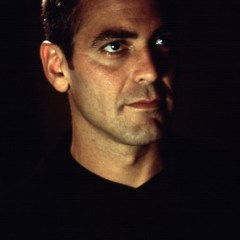
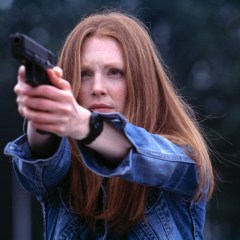
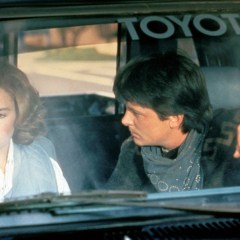
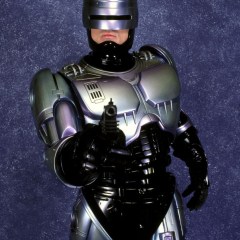




With Justice League hitting theaters this Friday, we explore DC’s long history at the movies by ranking their 29 theatrical superhero films best to worst by Tomatometer!
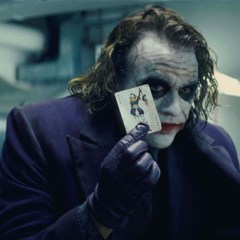
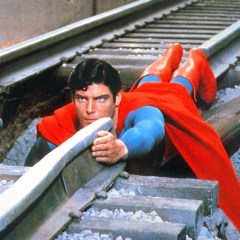

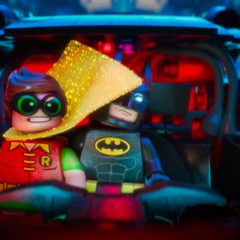

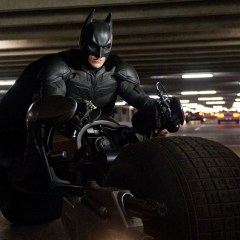
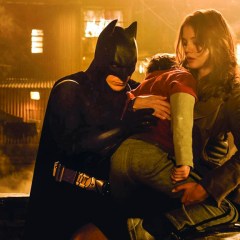
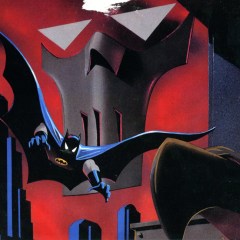
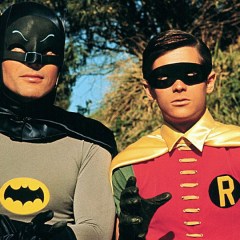


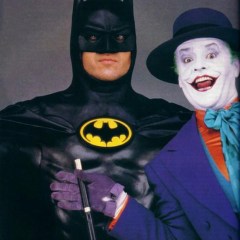


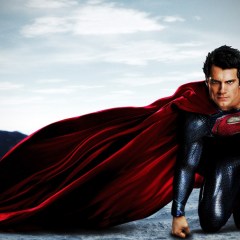

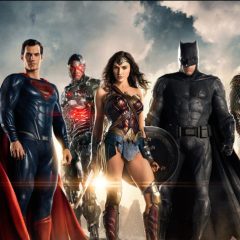

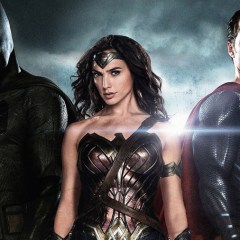
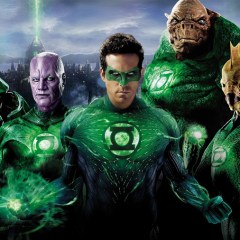
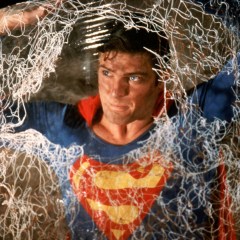

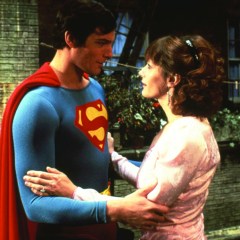
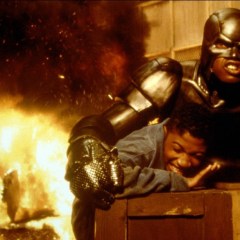
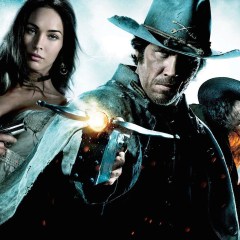
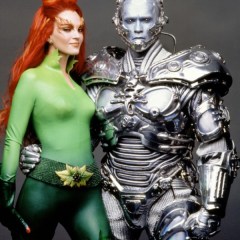
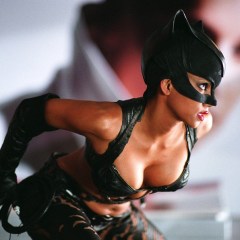
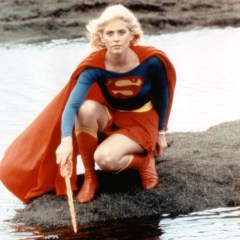
As Wonder Woman gets added to the heap of superhero movies from DC and Warner Bros. throughout the years, here’s your chance to rank them as you see fit from the list below, which featuring each theatrical movie’s Tomatometer score, audience rating, and critics consensus!
The Masked Manhunter. The Caped Crusader. Bats. You know who we’re talking about, film fans, and chances are you were anticipating The LEGO Batman Movie ever since Warner Bros. announced Will Arnett’s version of the character would be getting his own spinoff. In honor of this momentous occasion, we decided to take a (mostly) fond look back at the Bat in all of his cinematic guises, from the worst to the best, and now that The LEGO Batman Movie has premiered, you can find out where it ranks with the others. With the Bat-signal blazing, it’s time for Total Recall!

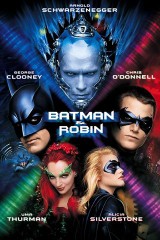
One of the least-loved blockbusters of recent years, Batman & Robin brought the Batman 1.0 franchise to a screeching halt. Unlike the earlier installments, which returned the Caped Crusader to his brooding noir roots, Batman & Robin was a veritable camp-o-rama, closer in spirit to the 1960s TV series. Utilizing punny dialogue to a jaw-dropping degree were villains Arnold Schwarzenegger as Mr. Freeze (“Ice to see you!”) and Uma Thurman as Poison Ivy (“My garden needs tending”). Even George Clooney made little impression as Batman, and his sidekicks (Chris O’Donnell as Robin, Alicia Silverstone as Batgirl) failed to drum up much audience or critical enthusiasm. As a result, a planned fifth sequel, Batman Triumphant, which would have pitted our heroes against the Scarecrow, never materialized, so it was left to Christopher Nolan to resurrect the series. “Fans of the movie series will be shocked at the shortage of original thought put into this project,” wrote John Paul Powell of Jam! Movies.

The established rules of superhero films require at least one blockbuster battle by the final act — the catastrophic damage from which is typically largely forgotten by the time the curtain rises on the inevitable sequel. Credit Batman v Superman: Dawn of Justice, then, for trying to take a more thoughtful approach, and using the aftershocks from Man of Steel‘s climactic orgy of violence to establish the titular conflict between two iconic superheroes. Unfortunately, director Zack Snyder was also tasked with setting up a slew of future films in the burgeoning DC Extended Universe, and the result was a sequel that juggles an unwieldy array of characters and storylines while trying to grapple with serious questions — and in spite of Batman v Superman‘s super-sized running time, many critics felt the whole thing was even more of a muddled mess than the much-maligned Man of Steel. Still, the CG-enhanced action was enough for some scribes, including Andrew O’Hehir of Salon, who admitted the movie was “kind of dopey” but shrugged, “It largely kept me entertained for two and a half hours, which is not nothing.”

One can draw a fairly direct line from the 1966 Batman to Joel Schumacher’s mid-series reboot: Garish colors. Some tongue-in-cheek dialogue. The presence of Robin to draw in the young’uns. This may not be a great Batman movie, but it is a successful one — drawing in a legion of new viewers while shifting the series away from the twisted mindscape of Tim Burton (whose movies weren’t totally representative of the comics anyway). And if you were at the right age, there was nothing more fun in 1995 than this (except perhaps getting a PlayStation). It’s “a free-form playground for its various masquerading stars,” wrote Janet Maslin for The New York Times.

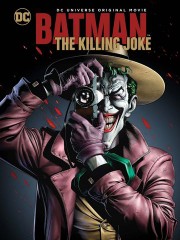
Batman’s film history is fairly distinguished in its own right at this point, but he’ll always have his roots in the comics — and one of his most widely acclaimed stories, the 1988 Alan Moore graphic novel The Killing Joke, got its big-screen due with this 2016 animated effort. Aside from the acclaimed source material, in which the Joker puts Commissioner Gordon and his family through a particularly grueling ordeal, Killing had a lot going for it, including years of pent-up fan demand and the return of Mark Hamill as the Joker’s voice. Unfortunately, it didn’t add up to one of the better entries in the Batman filmography; critics were split more or less evenly over whether it did its inspiration justice — or whether its story was ultimately too misogynistic to deserve the treatment. “Alan Moore probably wouldn’t appreciate us saying it, but The Killing Joke story itself feels made for the screen,” observed SciFiNow’s Steve Wright. “It’s hard to truly critique something when it takes its cues from a truly excellent comic-book storyline.”

One of the most hyped movies in Hollywood history, and one of the finest examples of movie tie-ins and cross-promotion (so successful it made t-shirt bootleggers filthy rich), Batman is also one of the weirdest event pictures of all time. Director Tim Burton jettisoned the plots (if not the dark tone) of Bob Kane’s original comics, and came up with set designs reminiscent of Fritz Lang’s Metropolis and freakish, brooding characters similar to… well, a Tim Burton movie. Particularly compelling is Jack Nicholson as the Joker, who gleefully relishes his plan to kill the citizens of Gotham City with lethal gas. Michael Keaton makes for a subdued Dark Knight, a hero who dispenses vigilante justice while living a morose existence in Wayne Manor. A precursor to more complex comic book adaptations, Batman made piles of money, and the bat-logo was ubiquitous in the summer of 1989. “Burton brings back film noir elements to the new Batman, elevating it to a dark, demented opera,” wrote Jeffrey Anderson of Combustible Celluloid.

For a Batman interpretation frequently derided for its campiness, Batman: The Movie has a surprisingly high number of quotable lines and memorable scenes. Remember how the dynamic duo deduce that all their archenemies — Penguin, Catwoman, the Riddler, and the Joker — are working together to take over the world? Or the insane logic Robin consistently applies to Riddler’s questions, only to be right every time? But the best bit has to be the one involving bat ladders, shark repellent Bat-spray, and a high seas encounter with an exploding Megalodon. “Holy Cornball Camp, Batman!” exclaims Scott Weinberg of eFilmCritic.com, “This movie’s a hoot!”

Tim Burton has said he always sympathized with monsters, and so, for his sequel to Batman, he gave audiences not one, but two empathetic, pitiable villains. The Penguin (Danny DeVito) is a deformed orphan who leads an army of aquatic, flightless birds from the bowels of Gotham City. The Catwoman (Michelle Pfeiffer) is a frumpy secretary who is killed by her boss (Christopher Walken) after she learns of his evil schemes but is brought back to life by a group of cats. Teaming up against Batman, the pair plan an assault on the city above. Batman Returns is so cold and dark it makes the first installment look like Amelie by comparison, but that’s not necessarily a bad thing; it still made a killing at the box office, and was Burton’s favorite of the two Batman movies he helmed. “Of all the Batman pictures, this is the most striking, atmospheric and effective,” wrote David Keyes of Cinemaphile.org.

Before the Nolan Batman movies, Mask of the Phantasm offered the most articulate exploration of the Bruce Wayne character. While the movie takes the action that made The Animated Series such great afternoon fun and expands it (but avoiding cheap, empty thrills that having a big budget can afford you), it also showers loving detail on a pivotal romance in Bruce’s life and an affecting scene of Bruce begging for release at his parents’ gravestone. It’s the rare movie that shows its protagonist for what he is: essentially insane. “[Mask of the Phantasm] managed to soar above the theatrical Batman adaptation,” states Kevin Carr of 7M Pictures, “And would remain the best Bat Movie to hit the big screens until Batman Begins shook things up in 2005.”

With his lack of superpowers and a vast fortune at his disposal, Batman was always the most plausible of heroes. With Batman Begins, director Christopher Nolan shucked off the direction of the previous big-screen incarnations and boiled the Batman mythos down to its essence, resulting in one of the most realistic superhero movies ever. Thankfully, Nolan didn’t skimp on action-packed pyrotechnics, and as the suitably suave and tortured Bruce Wayne, Christian Bale added a greater emotional heft to the Caped Crusader (he was also ably abetted by the likes of Morgan Freeman, Michael Caine, Cillian Murphy, and Gary Oldman). Batman Begins signaled a bold new beginning for the franchise, and was a huge hit with audiences and pundits alike. “It’s a wake-up call to the people who keep giving us cute capers about men in tights,” wrote Kyle Smith of the New York Post. “It wipes the smirk off the face of the superhero movie.”

After two critically acclaimed and commercially successful Batman films, it was up to Christopher Nolan to deliver the final chapter in similarly rousing fashion. And while it would have been difficult for anyone to replicate the phenomenal success of 2008’s The Dark Knight, Nolan came pretty close, picking up eight years after TDK and focusing on a half-broken Bruce Wayne who sees a chance for redemption when a new enemy disrupts the economy and takes the entire city hostage. Reliable supporting players Gary Oldman and Morgan Freeman reprised their roles, while Nolan filled out the rest of the cast with similarly high profile talent like Tom Hardy, Marion Cotillard, Joseph Gordon-Levitt, and Anne Hathaway, who slipped into Catwoman’s black leather as Selina Kyle. Thoughtful, explosive, and grounded in Nolan’s dark Gotham reality, the resulting film served as a satisfying conclusion to one of the most successful blockbuster franchises in recent memory. As the Boston Globe’s Ty Burr enthused, “This is what a superhero movie is supposed to look like.”

We’ve grown accustomed in recent years to the idea of Batman as a perpetually dour figure whose good works are only accomplished through his inability to shed a crippling survivor’s guilt and thirst for vengeance, but during his long decades as a cornerstone of the DC media empire, he’s been through a lot of incarnations, some goofier than others — all of which is why Will Arnett’s doofus Dark Knight in The LEGO Movie was a nod to the character’s colorfully complex history as well as a refreshing surprise. Spinoffs are obviously far from a sure bet on the big screen, but Arnett’s scene-stealing LEGO Movie turn laid a solid foundation for a standalone adventure — and it paid deliriously entertaining dividends with The LEGO Batman Movie, which delivered on that promise and then some. “Basically,” argued the Globe and Mail’s Barry Hertz, “it’s a standard-issue Batman narrative — arguably better than 50 percent of history’s other Batman films — that just happens to take place in a Lego-fied world.”

Having already brought an end to the candy-colored, Schumacher-wrought nightmare that gripped the Batman franchise in the late 1990s, Christopher Nolan and Christian Bale had fans primed for a successful second act — but even after the smashing success of Batman Begins, few could have guessed just how popular The Dark Knight would be in the summer of 2008. A sprawling superhero epic that somehow managed to make room for jaw-dropping visuals, a compelling storyline, and stellar performances, Knight climbed out from under months of intense speculation — not to mention the shadow cast by Heath Ledger’s shocking death — with a worldwide gross in excess of $1 billion, a towering stack of positive reviews, and a posthumous Best Supporting Actor Oscar for Ledger. Richard Roeper joined the chorus of near-universal critical praise, calling it “a rich, complex, visually thrilling piece of pop entertainment, as strong as any superhero epic we’ve ever seen.”
Lastly, vote for your favorite movie Batman in the poll below!
[socialpoll id=”2418350″]
Holy online polls, Batman! Will Arnett voices a snarkier, slightly more self-obsessed version of the Caped Crusader in this week’s Lego Batman Movie, which got us thinking: Who played the Dark Knight the best? Whether you’re into the campy hijinks of Adam West, the unhinged antics of Michael Keaton, the super-serious pathos of Ben Affleck, or one of the other memorable actors to play — or voice — the role, see if your favorite is the same as everyone else’s by voting below!
[socialpoll id=”2418350″]
DC’s Batman Vs. Superman: Dawn Of Justice and Suicide Squad weren’t received as disappointments so much as they were greeted as unforgivable insults to the general public. They inspired a lot of wailing, complaining, rending of garments, and insane over-reactions.
A moviegoing audience pathologically obsessed with superheroes responded to these movies with a world-wide gasp of shock and disappointment. It was as if they imagined that if they just tried hard enough, they could will different, better versions of Batman Vs. Superman: Dawn Of Justice and Suicide Squad into existence, and then they wouldn’t have to feel silly about being so emotionally invested in the box office and critical consensus of movies about weirdos in crazy costumes.
One segment of the public began weeping uncontrollably while screeching, “No! A silly superhero/super-villain team-up movie I was looking forward to wasn’t as good as I thought it could/should/would be! We can’t let such an abomination stand. We demand justice! We demand revenge!” Another antithetical yet curiously similar group, meanwhile, hollered, “No! A silly superhero/super-villain team up movie isn’t being treated by critics with the hushed reverence it’s due! That’s not fair! We demand justice! We demand revenge!”
Yes, the strange, overheated overreaction to Batman Vs. Superman: Dawn Of Justice and Suicide Squad’s negative reviews is silly and ridiculous. But unlike the 1966 film version of Batman, it’s not silly and ridiculous in a fun, self-aware, campy fashion. No, the hallmark of these online complainers is that they take themselves way too seriously, whereas the defining feature of Adam West’s 1960s Batman is that it does not take itself seriously at all.
In its 1960s incarnation, Batman never stopped winking at audiences to let them know that it was in on the joke. The show and its spin-off movie reveled in artificiality. They set out to make a live-action superhero extravaganza that was more cartoonish than actual cartoons and more of a comic book than actual comic books.
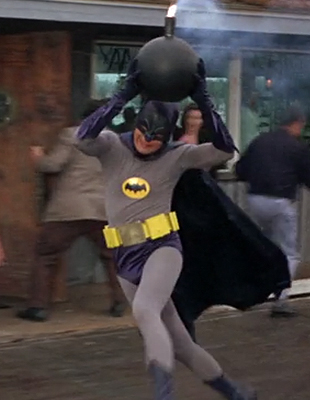 |
The 1960s Batman was as much a parody of its source material as a straight adaptation. |
Like the recent film versions of 21 Jump Street, the 1960s Batman was as much a parody of its source material as a straight adaptation. Unlike the Batman reboots that followed, the show and movies did not aim for realism or grit. The show didn’t just acknowledge the absurdity of a rich middle-aged man dressing up in a silly costume to fight evildoers in equally silly costumes, it ratcheted up that absurdity to delirious satirical levels.
I suspect the makers of the 1966 Batman film would have found the notion that subsequent filmmakers would treat the character as a tormented figure of infinite darkness who inhabits a gloomy world full of moral ambiguity both preposterous and a huge joke. As played by Adam West in the role that made him a trash-culture icon, Batman is less the living personification of the psychological costs of vengeance and humanity’s dark side than a clean-cut, wholesome do-gooder beloved by everybody other than the cartoonish criminals.
The 1966 Batman pits West’s Bruce Wayne/Batman and Burt Ward’s Dick Grayson/Robin against a felonious foursome of the TV show’s most popular and prolific villains. There’s Catwoman (Lee Meriwether, who is great but will never be able to compete with Eartha Kitt’s even greater interpretation of the role), a conniving super-villain who attempts to seduce Bruce Wayne in her alter-ego as a beautiful Russian. Batman may be the world’s greatest detective, but he’s somehow not sharp enough to figure out that his new Russian crush bears a distinct resemblance to one of his greatest (and certainly sexiest) foes.
Then there’s the gloriously redundant twosome of the Joker (Cesar Romero) and the Riddler (Frank Gorshin). True, jokes and riddles are different, but by including both of these gentlemen in the same story, it becomes clear that the show returned to the “mirthful supervillain” well at least once too often. The film clumsily and amusingly acknowledges this weird redundancy by having characters state repeatedly that Batman and Robin must wrestle with crazy hybrids like “a riddle in the form of a joke” as well as “joking riddles.” Finally, we have Burgess Meredith as the Penguin, who is old, short, and weak but smart enough to rent a submarine — where part of the film takes place — under the clever pseudonym P.N. Guin.
This not-so-fabulous foursome has joined forces to steal a miraculous invention able to “dehydrate” and then “re-hydrate” human beings. They plan to blackmail the nations of the world with this ridiculous contraption, which is really nothing more than a MacGuffin. But four villains means four times the frenzied over-acting. The Riddler, Penguin, and Joker all have a tendency to shout their comic book banter while mugging deliriously in ways that make them seem more hyper than scary. The four “super” villains here don’t seem capable of hurting Batman’s feelings, let alone cause him physical harm. By contrast, Nolan’s Batman films had terrifying villains: Scarecrow, the Joker, and Bane all seemed capable of killing Batman.
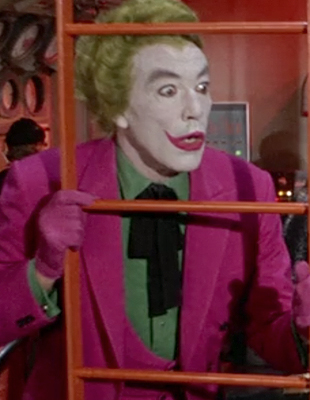 |
The four “super” villains here don’t seem capable of hurting Batman’s feelings, let alone cause him physical harm. |
On television, Batman defined camp better than anyone this side of Susan Sontag. That extends to this faithful adaptation, but in addition to the film’s refreshing acknowledgment of its inherent ridiculousness, there are some sharp, memorable gags that score big laughs. Early in the film, for example, Batman and Robin are out in their Bat-Copter when Batman rappels down via rope ladder and spends what feels like a solid fifteen minutes engaged in a one-sided boxing match with a rubber shark so hilariously phony it suggests that “punching the shark” should join “jumping the shark” as a pop-culture cliche. One of the film’s other signature set-pieces finds Batman/Bruce Wayne desperate to get rid of a wonderfully fake-looking bomb but unable to find a place to toss it where it won’t cause major harm. An overwhelmed Batman then issues one of the film’s signature pieces of dialogue: “Some days you just can’t get rid of a bomb!”
Batman is also full of inspired running jokes, and one of my favorites is its obsession with sticking a “Bat” into the name of everything, even if it just makes things confusing. When preparing to battle the aforementioned pesky shark, for example, Batman makes sure to specifically request “shark-repellent bat-spray” from Robin. This is, of course, a shark repellent spray used by the Batman, but it’s confusingly worded enough that it sounds like it might be a shark repellent that also repels bats, or possibly Batman, or Batmen in general. Regardless, it’s all very silly.
In another standout scene that similarly belongs in an old Looney Tunes cartoon, Batman and Robin are scaling a wall — something they did all the time in the TV show, which frequently felt incredibly, deliberately fake — and Robin expresses shock and horror that some ne’er-do-wells drink so excessively they see things that aren’t there. Batman explains that they’re in a tough neighborhood full of “rumpots” and, as if on cue, one such rumpot pokes his head out his window just long enough to see what he naturally assumes is an alcohol-induced hallucination of a pair of men in outrageous tights scaling his building.
Batman is a product of the go-go mid-1960s. It’s got an unmistakable groovy bachelor pad vibe. West’s Batman is the only one who seems to prefer the millionaire bachelor side of his persona to the one who dresses up like an angel of vengeance to beat up bad guys. Christian Bale acted as if Bruce Wayne was in physical pain every time he was in a tuxedo at a fancy party, but West’s Batman seems like he could probably let go of the whole “crime fighting” thing without much concern. There are no stakes here, no real danger, just a bunch of silly heroes in Halloween costumes battling equally silly villains in Halloween costumes.
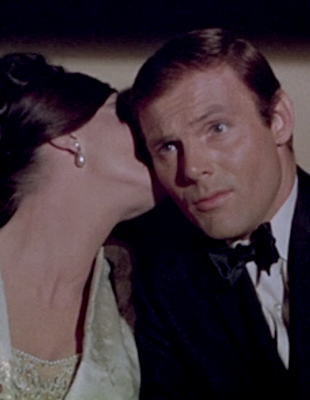 |
West’s Batman is the only one who seems to prefer the millionaire bachelor side of his persona to the one who dresses up like an angel of vengeance. |
When Batman squares off against the film’s quartet of All-Star Super-Villains in an amusingly amateurish battle royale late in the film, it becomes apparent just how hilariously unthreatening his foes really are. The Joker, Riddler and Penguin all come off as frail men in their fifties who would probably lose a physical altercation with a toddler. They’re almost impressively unimpressive in their old, sad, weak physicality.
In an attempt to make it more of a fair fight, Catwoman tosses a cat to Batman, who then must physically battle his geriatric foes without dropping the cat. It’s a brilliant sight gag, and it’s also far more impressive than anything in Christopher Nolan’s Batman movies. Let’s see Christian Bale’s Batman spend five fighting minutes fighting Bane without dropping an enormous tabby.
I loved the Batman TV show as a kid, and I responded just as strongly to it as an adult. That’s because the show operates on multiple levels. The black and white morality, goofy banter, crazy sound effects rendered both visually and sonically, outsized villains, and cool gadgets all appeal to kids and emotionally stunted adults. But the film’s winking, ironic tone, self-reflectiveness, meta elements, and breezy, campy humor make it just as appealing to grown-ups.
While there’s no reason a trifle like this needs to be any longer than 85 minutes (it could stand to trim 20 minutes or so), Batman holds up surprisingly well as an entertaining, hilarious lark. It’s also a much different film than the Batman movies that would follow. True, Joel Schumacher tried to channel some of the show’s campy spirit with Batman Forever and Batman & Robin, but there’s a difference between being in on the joke, as West’s Batman clearly is, and being the joke itself, like Batman & Robin. The 1960s Batman was a smart, hip show playing at being silly and dumb, but Schumacher’s films are genuinely stupid.
Obviously, no one wants a return to the Schumacher era of Batman, but I think the gloomy Guses behind the new DC Universe films would be smart to take another look at this particular incarnation. There are elements of it DC might want to consider employing in subsequent films involving Bruce Wayne and his costumed alter-ego, such as being “fun” and “enjoyable” rather than a dreary, mournful slog.
Original Certification: N/A
Tomatometer: 80 percent
Re-Certification: Fresh
Nathan Rabin if a freelance writer, columnist, the first head writer of The A.V. Club and the author of four books, most recently Weird Al: The Book (with “Weird Al” Yankovic) and You Don’t Know Me But You Don’t Like Me.
Follow Nathan on Twitter: @NathanRabin
This weekend’s Batman v Superman: Dawn of Justice brings DC‘s heaviest hitters face-to-face for their first live-action throwdown on the big screen — and gives us our first glimpse of the new Wonder Woman in the bargain. To celebrate this momentous occasion, we’re serving up a supersized Total Recall overview of all the times the Caped Crusader and the Man of Steel starred in movies of their own.

One of the least-loved blockbusters of recent years, Batman & Robin brought the Batman 1.0 franchise to a screeching halt. Unlike the earlier installments, which returned the Caped Crusader to his brooding noir roots, Batman & Robin was a veritable camp-o-rama, closer in spirit to the 1960s TV series. Utilizing punny dialogue to a jaw-dropping degree were villains Arnold Schwarzenegger as Mr. Freeze (“Ice to see you!”) and Uma Thurman as Poison Ivy (“My garden needs tending”). Even George Clooney made little impression as Batman, and his sidekicks (Chris O’Donnell as Robin, Alicia Silverstone as Batgirl) failed to drum up much audience or critical enthusiasm. As a result, a planned fifth sequel, Batman Triumphant, which would have pitted our heroes against the Scarecrow, never materialized, so it was left to Christopher Nolan to resurrect the series. “Fans of the movie series will be shocked at the shortage of original thought put into this project,” wrote John Paul Powell of Jam! Movies.

With Gene Hackman back in the cast and a four-year break to cleanse filmgoers’ palates after the unpleasantness of Superman III, 1987’s Superman IV: The Quest for Peace seemed to have everything going for it at first — including a smartly topical storyline that put the Man of Steel in the middle of the Cold War (and doing battle with a nuclear-powered Superclone designed by Lex Luthor). Unfortunately, when money started to run tight at Cannon Films, director Sidney J. Furie found himself forced to cut corners in every direction; the result, according to most critics, was a disjointed, cheap-looking mess, further hampered by dejected-seeming performances from a cast that appeared to know exactly how much of a mistake they were making. (In fact, Jon Cryer — who played Luthor’s nephew Lenny — alleges that Christopher Reeve told him the movie was “an absolute mess.”) It all added up to the original franchise’s critical and commercial nadir, a dud so resounding that it sent the franchise into limbo for nearly 20 years. Calling it “More sluggish than a funeral barge, cheaper than a sale at K mart,” the Washington Post’s Desson Thomson warned, “it’s a nerd, it’s a shame, it’s Superman IV.”

The first two Superman movies boasted an impressive narrative scope, state-of-the-art special effects, and layered performances that made it possible for the story to move gracefully between action, drama, and comedy, sometimes within the space of a single scene. They were a tough act to follow, in other words — which might explain why 1983’s Superman III didn’t really bother attempting to build on their success, instead opting to take the franchise in an altogether sillier direction by pitting the Man of Steel against a power-mad CEO (Robert Vaughn) who blackmails an unscrupulous computer programmer (Richard Pryor) into using his know-how to help him achieve world domination. Aside from the typically techno-ignorant screenplay, which imagines weather satellites capable of creating tornados and supercomputers that achieve sentience after being attacked with an axe, III earned fans’ and critics’ ire by ignoring any semblance of character development in favor of director Richard Lester’s fondness for oddball humor and silly sight gags. Under different circumstances, Pryor could have been a worthy addition to a Superman movie — and the storyline, which sent Clark Kent back to Smallville for a high school reunion that reconnected him with childhood crush Lana Lang (Annette O’Toole), certainly had possibilities, as did a subplot that found Superman’s personality slowly being altered due to artificial Kryptonite poisoning. Ultimately, however, Superman III was less than the sum of its parts; as Variety argued, “Putting its emphasis on broad comedy at the expense of ingenious plotting and technical wizardry, it has virtually none of the mythic or cosmic sensibility that marked its predecessors.”
The established rules of superhero films require at least one blockbuster battle by the final act — the catastrophic damage from which is typically largely forgotten by the time the curtain rises on the inevitable sequel. Credit Batman v Superman: Dawn of Justice, then, for trying to take a more thoughtful approach, and using the aftershocks from Man of Steel‘s climactic orgy of violence to establish the titular conflict between two iconic superheroes.
Unfortunately, director Zack Snyder was also tasked with setting up a slew of future films in the burgeoning DC Extended Universe, and the result was a sequel that juggles an unwieldy array of characters and storylines while trying to grapple with serious questions — and in spite of Batman v Superman‘s super-sized running time, many critics felt the whole thing was even more of a muddled mess than the much-maligned Man of Steel. Still, the CG-enhanced action was enough for some scribes, including Andrew O’Hehir of Salon, who admitted the movie was “kind of dopey” but shrugged, “It largely kept me entertained for two and a half hours, which is not nothing.”

One can draw a fairly direct line from the 1966 Batman to Joel Schumacher’s mid-series reboot: Garish colors; some tongue-in-cheek dialogue; the presence of Robin to draw in the young’uns. This may not be a great Batman movie, but it is a successful one — drawing in a legion of new viewers while shifting the series away from the twisted mindscape of Tim Burton (whose movies weren’t totally representative of the comics anyway). And if you were the at the right age, there was nothing more fun in 1995 than this (except perhaps getting a PlayStation). It’s “Bigger, battier and better,” wrote Susan Wloszczyna for USA Today.

After coming down from the nostalgic rush of Superman Returns, studio execs decided that instead of a sequel, yet another reboot was in order, and they handed the reins to Watchmen director Zack Snyder to make it happen. The result was 2013’s Man of Steel, starring Henry Cavill as the latest take on the broad-shouldered Kryptonian orphan and Michael Shannon as his first nemesis, the villainous General Zod. Snyder’s revisionist take on the Superman mythology definitely had a special effects advantage over its predecessors, but a large number of critics took issue with other aspects of the movie, particularly what many saw as a rather cavalier approach to violence — summed up by Superman’s decision to commit murder in the final act. Still, even if few would argue that Man of Steel was an entirely successful attempt to apply a dark layer of post-Nolan grit to the franchise, plenty of writers appreciated seeing a fresh spin on a familiar character. “If Man of Steel is Snyder at his most conventional,” mused Mick LaSalle for the San Francisco Chronicle, “he’s still more inspired and innovative than his competition.”

One of the most hyped movies in Hollywood history, and one of the finest examples of movie tie-ins and cross-promotion (so successful it made t-shirt bootleggers filthy rich), Batman is also one of the weirdest event pictures of all time. Director Tim Burton jettisoned the plots (if not the dark tone) of Bob Kane’s original comics, and came up with a picture with set designs reminiscent of Fritz Lang’s Metropolis and freakish, brooding characters similar to… well, a Tim Burton movie. Particularly compelling is Jack Nicholson as the Joker, who gleefully relishes his plan to kill the citizens of Gotham City with lethal gas. Michael Keaton makes for a subdued Dark Knight, a hero who dispenses vigilante justice while living a morose existence in Wayne Manor. A precursor to more complex comic book adaptations, Batman made piles of money, and the bat-logo was ubiquitous in the summer of 1989. “Burton brings back film noir elements to the new Batman, elevating it to a dark, demented opera,” wrote Jeffrey Anderson of Combustible Celluloid.


For a Batman interpretation frequently derided for its campiness, Batman: The Movie has a surprisingly high number of quotable lines and memorable scenes. Remember how the dynamic duo deduce that all their archenemies — Penguin, Catwoman, The Riddler, and The Joker — are working together to take over the world? Or the insane logic Robin consistently applies to Riddler’s questions that always turns out to be right? But the best bit has to be the one that involves bat ladders, shark repellent Bat-spray, and a high seas encounter with an exploding Megalodon. “Holy Cornball Camp, Batman!” exclaimed Scott Weinberg, “This movie’s a hoot!”

Tim Burton has said he always sympathized with monsters, and so, for his sequel to Batman, he gave audiences not one, but two empathetic, pitiable villains. The Penguin (Danny DeVito) is a deformed orphan who leads an army of aquatic, flightless birds from the bowels of Gotham City. The Catwoman (Michelle Pfeiffer) is a frumpy secretary who is killed by her boss (Christopher Walken) after she learns of his evil schemes, but is brought back to life by a group of cats. Teaming up against Batman, the pair plans an assault on the city above. Batman Returns is so cold and dark it makes the first installment look like Amelie by comparison, but that’s not necessarily a bad thing; it still made a killing at the box office, and was Burton’s favorite of the two Batman movies he helmed. “Of all the Batman pictures, this is the most striking, atmospheric and effective,” wrote David Keyes of Cinemaphile.org.

Before the Nolan Batman movies, Mask of the Phantasm offered the most articulate exploration of the Bruce Wayne character. While the movie takes the action that made The Animated Series such great afternoon fun and expands it (but avoids the cheap, empty thrills that having a big budget can afford you), it also showers loving detail on a pivotal romance in Bruce’s life and an affecting scene of Bruce begging for release at his parents’ gravestone. It’s the rare movie that shows its protagonist for what he is: essentially insane. “[Mask of the Phantasm] managed to soar above the theatrical Batman adaptation,” states Kevin Carr of 7M Pictures, “And would remain the best Bat Movie to hit the big screens until Batman Begins shook things up in 2005.”

With his lack of superpowers and a vast fortune at his disposal, Batman was always the most plausible of heroes. With Batman Begins, director Christopher Nolan shucked off the direction of the previous big-screen incarnations and boiled the Batman mythos down to its essence, resulting in one of the most realistic superhero movies ever. Thankfully, Nolan didn’t skimp on action-paced pyrotechnics, and as the suitably suave and tortured Bruce Wayne, Christian Bale added a greater emotional heft to the Caped Crusader (he was also ably abetted by the likes of Morgan Freeman, Michael Caine, Liam Neeson, and Gary Oldman). Batman Begins signaled a bold new beginning for the franchise, and was a huge hit with audiences and pundits alike. “It’s a wake-up call to the people who keep giving us cute capers about men in tights,” wrote Kyle Smith of the New York Post. “It wipes the smirk off the face of the superhero movie.”

With 2012’s The Dark Knight Rises, Christopher Nolan was faced with the task of coming up with a compelling closing chapter to a blockbuster trilogy — the first two entries of which ranked among the best-reviewed superhero movies of all time. Under all that pressure, it’s commendable that Nolan emerged with something as solid as Rises: even if it didn’t quite reach the same lofty heights achieved by its predecessor, it offered Christian Bale’s Batman one last round of hard-hitting action before wrapping up this era of the franchise, with a bit of socioeconomic subtext woven into the plot for good measure. For some, just being forced to say goodbye to Nolan’s vision of the series was an untenable disappointment — to say nothing of any of the nits worth picking with a storyline that saw Batman being driven to the brink of destruction in an epic confrontation with the fearsome revolutionary known as Bane (Tom Hardy). Yet for most others, The Dark Knight Rises proved a perfectly fitting farewell — like Andrew O’Hehir of Salon, who called it “Arguably the biggest, darkest, most thrilling and disturbing and utterly balls-out spectacle ever created for the screen.”

After putting together what seemed like a foolproof plan for a speedy Superman follow-up — hiring director Richard Donner to shoot much of the sequel concurrently with the first film — Warner Bros. watched with growing dismay as production slowed to a crawl, finally coming to a halt when Donner’s feuds with producers Ilya and Alexander Salkind led to his firing from the project. Things grew more complicated when new director Richard Lester came on board, and — needing to film at least 51 percent of the movie in order to obtain a director’s credit — reshot many scenes from a movie that had already been substantially filmed. Those are just a few of the many challenges Superman II needed to overcome before it finally arrived in theaters in 1981; amazingly, all that behind-the-scenes chaos didn’t have much of an adverse impact on the original theatrical cut, which broke the $100 million barrier at the box office while enjoying almost as many positive reviews as its predecessor. It certainly helped that the screenplay gave Superman (Christopher Reeve) the most formidable villains he’d face in the original trilogy: Kryptonian criminals Zod (Terence Stamp), Ursa (Sarah Douglas), and Non (Jack O’Halloran), sent into exile just before the planet’s destruction by Superman’s father Jor-El (Marlon Brando) and freed by the blast from a bomb Superman threw into space. Add in a subplot involving our hero opting to give up his powers in order to pursue domestic bliss with Lois Lane (Margot Kidder), and it isn’t hard to see why many fans consider this the best of the Reeve-era Superman movies (or why enough of them clamored for the release of Donner’s cut that it finally saw the official light of day in 2006). “Superman II,” sighed an appreciative Janet Maslin for the New York Times, “is a marvelous toy.”

“You’ll believe a man can fly,” promised the posters for 1978’s Superman, and they were right in more ways than one. The special effects were impressive for the era, but more importantly, the movie benefited from a talented director in Richard Donner, a solid screenplay derived from a story by Godfather author Mario Puzo, and a great cast anchored by Christopher Reeve, whose looming physique and chiseled good looks combined with his Juilliard-trained acting chops to help create the most perfect Superman ever to grace the screen (so far). While Gene Hackman’s rather ineffective Lex Luthor (coupled with the buffoonish Otis, played by Ned Beatty) was far from the most imposing foe our hero would face, the movie didn’t lack for dramatic stakes — and with Margot Kidder playing Lois Lane, it even managed to mix a little feminism in with its romance. “The audience finds itself pleasantly surprised, and taken a little off guard,” observed an appreciative Roger Ebert. “The movie’s tremendously exciting in a comic book sort of way (kids will go ape for it), but at the same time it has a sly sophistication, a kidding insight into the material, that makes it, amazingly, a refreshingly offbeat comedy.”

Having already brought an end to the candy-colored, Schumacher-wrought nightmare that gripped the Batman franchise in the late 1990s, Christopher Nolan and Christian Bale had fans primed for a successful second act — but even after the smashing success of Batman Begins, few could have guessed just how popular The Dark Knight would be in the summer of 2008. A sprawling superhero epic that somehow managed to make room for jaw-dropping visuals, a compelling storyline, and stellar performances, Knight climbed out from under months of intense speculation — not to mention the shadow cast by Heath Ledger’s shocking death — with a worldwide gross in excess of $1 billion, a towering stack of positive reviews, and a posthumous Best Supporting Actor Oscar for Ledger. Richard Roeper joined the chorus of near-universal critical praise, calling it “a rich, complex, visually thrilling piece of pop entertainment, as strong as any superhero epic we’ve ever seen.”
Your favorite characters from comic books, movies, TV shows, and video games are walking the floors of the Javits Center in New York City this weekend, and you can check them out right here. Scroll down for the best costumes of NYCC 2015.





















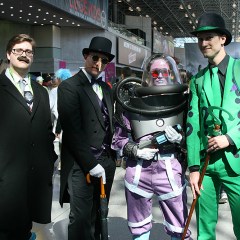













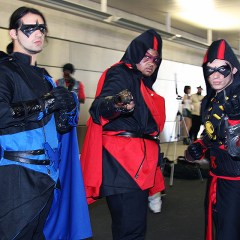
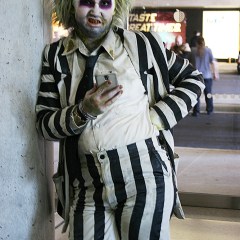
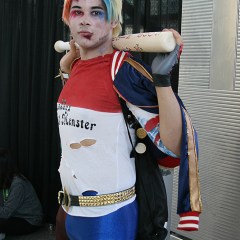

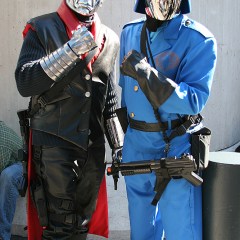















































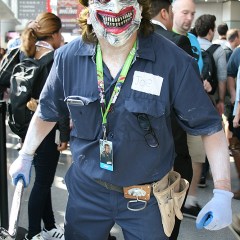

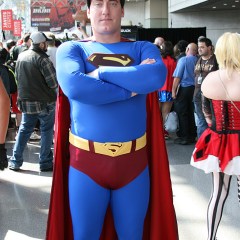
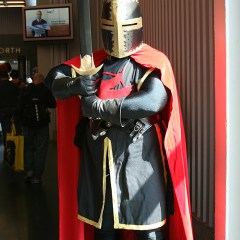
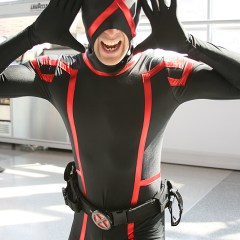
























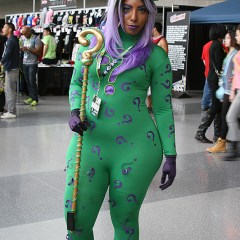


























He earned his first real success by tapping into America’s unquenchable thirst for broad slapstick comedy, but Jim Carrey always had bigger ambitions than anyone could have guessed by watching Ace Ventura: Pet Detective, and he’s proven it repeatedly by choosing projects beyond the scope of Farrelly-friendly laffers. His reach has occasionally exceeded his grasp, but few careers can boast a range extending from Dumb and Dumber to Eternal Sunshine of the Spotless Mind. And with his appearance as the Colonel in Kick-Ass 2 bowing this weekend, we decided there was no time like the present to take a look at the best-reviewed films of Jim Carrey’s career!
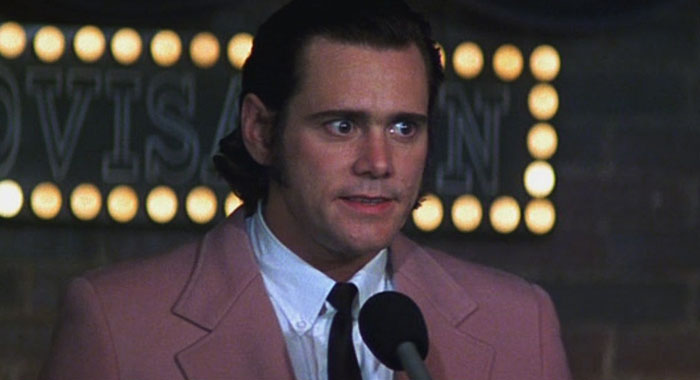
For most of the 1980s and 1990s, Andy Kaufman was a little-remembered comic, mostly known for his portrayal of dimwitted immigrant mechanic Latka Gravas on the ABC sitcom Taxi — but the late 1990s witnessed a resurgence in interest surrounding Kaufman’s often pioneering work, thanks to a pair of biographies, a handful of DVD reissues, and the R.E.M.-referencing Man on the Moon. Carrey continued his 1990s run of prestige pictures with Moon, subsuming himself so completely into the role of the inscrutable Kaufman that most critics were willing to forgive the movie’s fuzzy, weightless middle, its fudging of certain facts, and a few fumble-fingered attempts at going meta. Although many scribes were quick to point out the movie’s flaws — and Kaufman’s all-too-apparent flaws as a protagonist — praise for Moon‘s star was all but universal, typified by Jeffrey M. Anderson of Combustible Celluloid, who applauded, “Carrey gets inside Kaufman’s skin.”

Sea Bass! Part of Carrey’s 1994 trilogy of broad-as-a-barn, occasionally revolting comedies, Dumb and Dumber paired the rising star with Jeff Daniels as a couple of well-meaning dimwits who stumble into a cross-country adventure involving Lauren Holly and a briefcase full of cash. While not quite the across-the-board smash that There’s Something About Mary turned out to be a few years later, Dumb and Dumber still managed to include enough charm between the goofy jokes to reach 64 percent on the Tomatometer. It didn’t win any points for smarts, obviously, but that was beside the point — as recognized by writers such as Entertainment Weekly’s Owen Gleiberman, who noted that “Carrey…does literal-minded doofdom with peerless enthusiasm.”
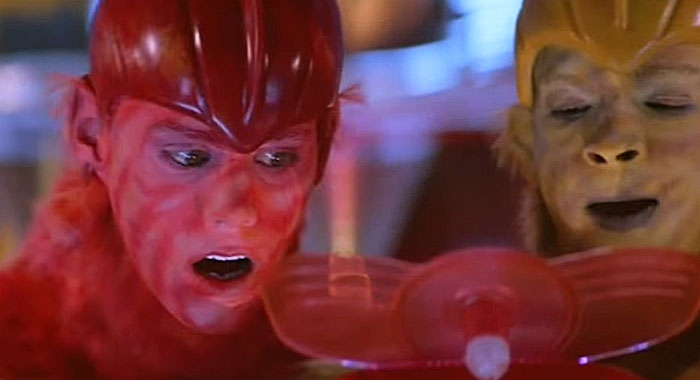
You might be surprised to find this late-night cable mainstay on a list that includes cult favorites like The Cable Guy and box-office champs like Bruce Almighty, but the Tomatometer does not lie, and critics cheered loudly enough to send this 1989 cult classic all the way up to 65 percent. Although quite a few scribes sniffed at at Earth Girls are Easy‘s low ambitions and thick layer of cheese, a greater number were able to grin and bear Julien Temple’s brightly colored send-up of hokey sci-fi and 1980s life in the San Fernando Valley. As a furry red alien named Wiploc, Carrey received one of his first major chunks of screen time here, and although his efforts were rewarded with minimal box-office success, he did get to trade lines with Geena Davis and Julie Brown — and help earn some delightfully backhanded praise from the likes of Luke Y. Thompson of the New Times, who declared the film to be “stupid but wonderful.”
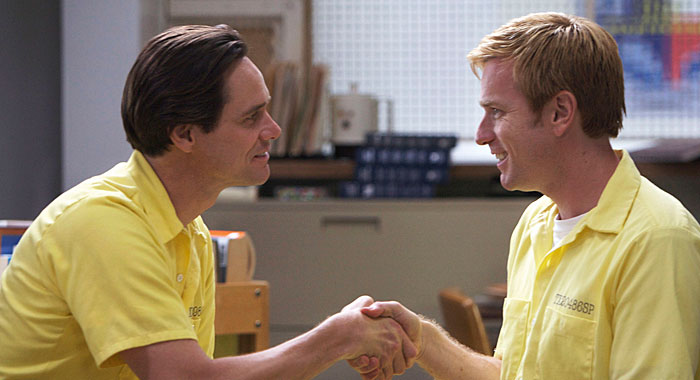
Between Eternal Sunshine of the Spotless Mind in 2004 and the end of the decade, Jim Carrey had a pretty rough go of it, vacillating between rehashed broad comedies like Yes Man and ill-advised dramatic fare like The Number 23 — and the best live-action project he booked during that span, Glenn Ficarra and John Requa’s I Love You Phillip Morris, ended up gathering dust in the studio vaults for years. Given that it dramatizes the real-life, stranger-than-fiction love affair between a cop-turned-con man (Carrey) and his charismatic prison cellmate (Ewan McGregor), it’s unsurprising (but still disappointing) that Morris would have a hard time finding a spot on the release schedule — and the minimal box office returns generated by its limited theatrical run seemed to reinforce Hollywood’s belief that audiences weren’t ready for a darkly comic dramedy about a homosexual love affair. Morris resonated with most critics, however — particularly Carrey’s work, lauded by Stephen Holden of the New York Times when he wrote, “With his manic glare, ferociously eager smile, hyperkinetic body language and talent for instant self-transformation, Mr. Carrey has rarely been more charismatic on the screen.”
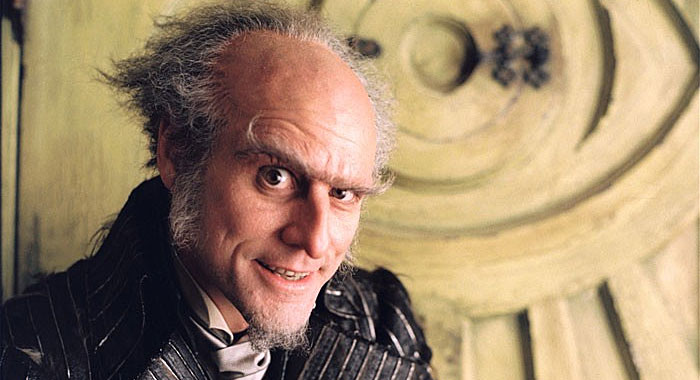
It was a bit of a non-starter at the box office, failing to recoup its $140 million budget with its domestic receipts, but few roles in the history of children’s fiction have ever been better-suited to an actor than the villainous master of disguise known as Count Olaf and his on-screen counterpart, Jim Carrey. Although A Series of Unfortunate Events drew the ire of some fans of the books for softening their frequently nasty edges, it remains a visual feast, as well as a tour de force for Carrey, who was able to take advantage of his manic energy in a way not seen since his mid 1990s heyday. A sequel remains in development limbo, but don’t let Hollywood’s cold feet keep you from giving Unfortunate a rental — as the Reno Gazette-Journal’s Forrest Hartman put it, “not many children’s movies center on recently orphaned children delivered to the home of a homicidal thespian. Then again, not many children’s movies are as good as this one.”
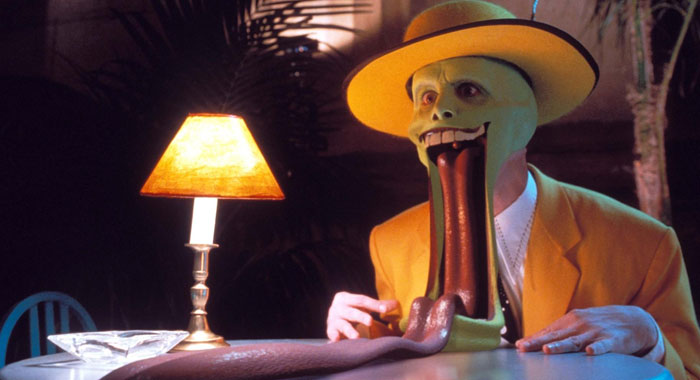
One of the only films to ever net its star nominations from both the Golden Globes and the Golden Raspberries, 1994’s The Mask presented filmgoers with something of an early 1990s trifecta: State of the art special effects, some marvelously over-the-top mugging from Jim Carrey, and a heaping helping of va-va-va-voom from instant star Cameron Diaz, who turned Carrey’s nebbishy bank clerk Stanley Ipkiss into a leering Tex Avery wolf (and had roughly the same effect on male viewers). It’s loud and far from subtle, but The Mask is also a lot of fun, not least because Carrey’s impossibly limber performance ultimately proves to be as much of a special effect as anything else on the screen. Variety’s Leonard Klady spoke for many of his peers when he summed it up as “adroitly directed, viscerally and visually dynamic and just plain fun.”

Carrey’s first brush with a Seuss-inspired adaptation didn’t go so well, which may have scared a few viewers away from the CG-animated Dr. Seuss’ Horton Hears a Who! — but it was their loss, as attested by the mostly quite positive reviews that greeted the second film adaptation of this timeless tale of a good-hearted elephant who teaches his detractors that “a person’s a person, no matter how small.” As Horton’s voice, Carrey did a better job of adding marquee value than bringing hidden layers of meaning to his character, and critics were quick to point out that Horton suffers most of the same difficulties that are bound to trouble a 90-minute film based on an illustrated short story, but for most, the movie’s charms proved impossible to resist — such as Brian Webster of the Apollo Guide, who happily reported that “taking on Seuss has proven a challenge for Hollywood, but a nice balance has been struck here between authenticity and new ideas. This one’s a winner.”
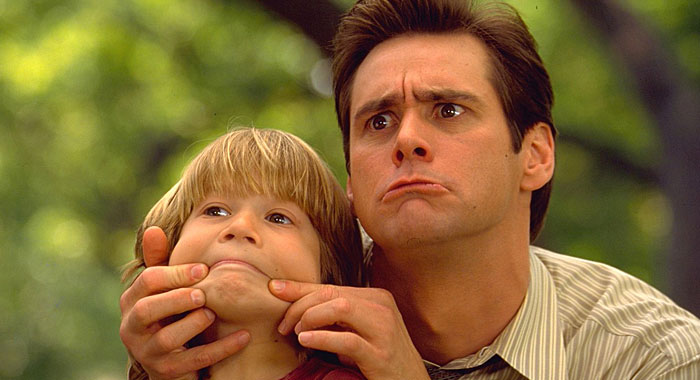
Given that Carrey and Liar Liar director Tom Shadyac had previously collaborated on Ace Ventura, a person could have been forgiven for assuming that their reunion would rely on the same scatalogical humor and over-the-top physical comedy that the world’s most famous pet detective rode to box-office riches…and they would have been right, to an extent, although Liar Liar features a much softer-edged version of Carrey’s manic persona. It isn’t his sharpest comedy, but at this point, even critics who had grown accustomed to hating Carrey’s work found themselves surprisingly susceptible to his charms — most notably Roger Ebert, who wrote “I am gradually developing a suspicion, or perhaps it is a fear, that Jim Carrey is growing on me.” Filmgoers had no such fear, driving this family-friendly tale of a pathological fibber rendered unable to lie for a day to global grosses in excess of $300 million.
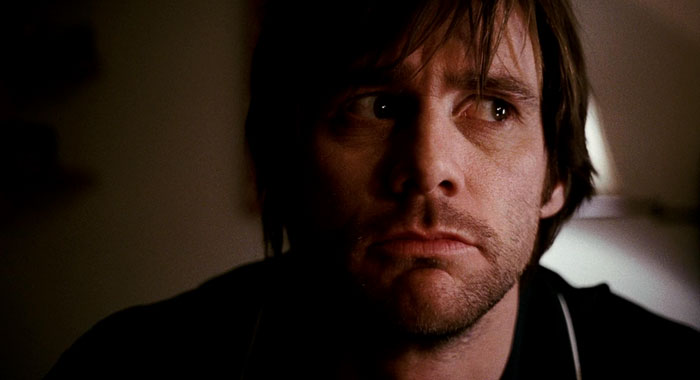
While he spent the early 1990s mugging it up for fans of perfectly obvious comedy, few people could have guessed that Jim Carrey would wind up sharing top billing with one of the premier actresses of her generation in a mindbending, critically beloved drama about the nature of love and memory — but that’s exactly what he did in Eternal Sunshine of the Spotless Mind, going toe to toe with Kate Winslet in one of the most unusual and eye-catching films of the early aughts. Armed with a script co-written by Charlie Kaufman, director Michel Gondry riddles the film with stunning visual effects that, depending on what you want out of the movie, either deepen its metaphorical layers of meaning or are simply really cool to look at. It’s admittedly too strange and/or chilly to appeal to everyone, but at its heart, the movie lives up to Mariko McDonald of Film Threat’s assessment of it as “fresh, heartfelt and ultimately heartbreaking in its honest portrayal of a modern relationship.”
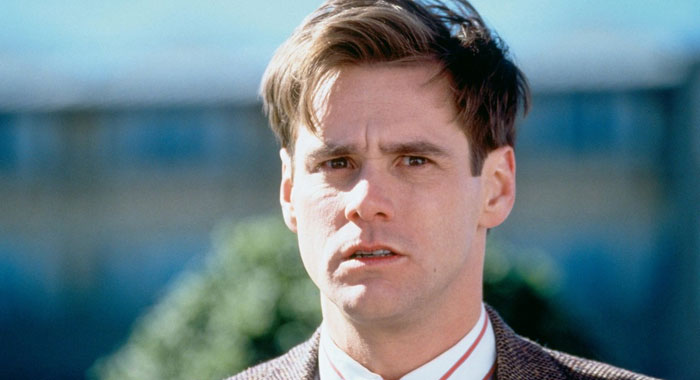
Is it science fiction? A comedy? A drama? A psychiatric syndrome? Actually, 1998’s The Truman Show is all of the above — which has a lot to do with why it’s not only the best-reviewed film of Jim Carrey’s career, but a high-water mark for 1990s cinema in general. Carrey stars as Truman Burbank, the unwitting star of a wildly popular reality series engineered by a producer named Christof (played by Ed Harris), in which Truman’s life — complete with fake wife, fake friends, and a whole fake town — is lapped up by eager audiences. It didn’t net Carrey the Academy Award that many were anticipating, but The Truman Show has endured over the last 10 years, and predicted the overwhelming popularity of reality television in the years to come. In the words of Hollywood Report Card’s Ross Anthony, “this is clearly one of the decade’s cleverest, most original pictures.”
Comic book movies are all the rage these days, and every year we see more of them hitting theaters than before. Whether you’re into quirky indie comics (Ghost World, American Splendor), superhero action titles (The Dark Knight, The Avengers), graphic novels (300, Persepolis), or even manga (Oldboy), there’s probably a big screen adaptation on this list for you. Read on to find out what’s available to watch online (whether through full purchase, rental, or streaming subscriptions) right now.
85%
In the origin story of Christopher Nolan’s Dark Knight Trilogy, Christian Bale stars as Bruce Wayne, orphaned billionaire who dons the cape and cowl to uncover a conspiracy to poison Gotham City’s water supply.
94%
Batman faces a treacherous new villain in The Joker (Heath Ledger), who terrorizes Gotham City and forces Batman to make tough decisions to keep the peace.
87%
Gotham City has enjoyed eight years of peace following the events of The Dark Knight, but a broken Bruce Wayne (Christian Bale) must become the Batman once again when Bane (Tom Hardy) takes the entire city hostage.
72%
Now known to the world as Iron Man, Tony Stark must deal with a rival arms manufacturer and becomes the target of a vengeful man with ties to his past.
77%
In the distant realm of Asgard, a powerful warrior named Thor (Chris Hemsworth) breaks a centuries-old truce, earning him exile to Earth. Once among humans, Thor must protect his new friends from an evil adversary who has followed him from Asgard.
Available now on: Amazon, Amazon Prime, Netflix, Vudu
80%
Scrawny Steve Rogers (Chris Evans) volunteers for a super-soldier program prior to WWII and leads American forces against Nazi collaborator Red Skull (Hugo Weaving) and his nefarious HYDRA army.
68%
After a military experiment gone wrong leaves his biology drastically altered, scientist Bruce Banner (Edward Norton) flees the US to search for a cure and fights to keep his blood out of military hands.
91%
When a mystical object is stolen from a remote research facility, the agents of S.H.I.E.L.D. assemble Iron Man, Thor, Captain America, and the Hulk to retrieve it and prevent a large-scale alien invasion.
96%
Marjane Satrapi’s autobiographical tale recounts the childhood of an outspoken Iranian girl growing up during the Islamic revolution.
94%
A stylish indie biopic that blends live action and animated elements in an adaptation of underground comic writer Harvey Pekar’s autobiographical comics of the same name.
88%
When small town man Tom Small (Viggo Mortensen) commits an act of heroism that gets him on the local news, a mysterious stranger (Ed Harris) recognizes him and shows up, daring to reveal secrets from a past Tom claims never existed.
82%
Tom Hanks plays Depression-era hitman Michael Sullivan, whose son witnesses an execution at the hands of his father. When Connor (Daniel Craig), the son of his employer, kills his wife and younger son in an attempt to keep the family quiet, Sullivan sets out on a path of revenge.
Available now on: Amazon
83%
Young slacker Scott Pilgrim (Michael Cera) falls for his dream girl, Ramona Flowers (Mary Elizabeth Winstead), but if he wants to be with her, he’ll have to defeat her seven evil exes in battle first.
90%
In the first of Sam Raimi’s three Spider-Man films, Peter Parker (Tobey Maguire) is bitten by a radioactive spider and inherits superhuman powers, which he uses to stop Norman Osborn, the megalomaniacal Green Goblin.
93%
Peter Parker is now a college student and dating Mary Jane Watson (Kirsten Dunst), but he finds adversaries in the disturbed Dr. Octopus (Alfred Molina) and Harry Osborn (James Franco) — Peter’s best friend and the son of Green Goblin.
63%
This time out, Spider-Man squares off against Sandman (Thomas Haden Church) and the alien symbiote Venom (Topher Grace), the latter of which presents a particularly personal struggle for Peter.
71%
Marc Webb’s reboot of the franchise stars Andrew Garfield as a wisecracking Peter Parker, who is bitten by a radioactive spider and discovers secrets about his past that lead to the birth of his first adversary, the Lizard (Rhys Ifans).
86%
Ron Perlman reprises his title role in this sequel, which finds Hellboy fighting to keep an otherworldy tyrant from wiping out humanity.
85%
As Professor Xavier (Patrick Stewart) and his X-Men continuing to fight for the mutant cause, Wolverine (Hugh Jackman) sets out to uncover secrets about his dark past.
56%
As Magneto (Ian McKellen) prepares for an all out assault on humankind, Professor X (Patrick Stewart) rallies his troops to meet their forces head-on in a massive mutant battle.
86%
Director Matthew Vaughn takes us back to the 1960s, when a young Professor Xavier (James McAvoy) and Erik Lehnsherr/Magneto (Michael Fassbender) first meet, begin to gather mutants to their respective cause, and discover they hold very different ideas about the future.
Click to Page 2 to see the availability of Kick-Ass, Dredd, 300, and the Superman, early Batman and Men in Black franchises, plus more!
88%
As Planet Krypton verges on annihilation, a lone infant escapes into space, only to land on Earth and live out his dual life as both Clark Kent (Christopher Reeve) and the powerful Superman.
Available now on: Amazon
88%
Superman saves Paris from a nuclear attack, but he simultaneously awakens a trio of powerful Kryptonian criminals in Earth’s orbit who then attempt to take over Earth.
Available now on: Amazon
72%
This 2006 film picks up where Superman II left off, as Clark Kent/Superman (Brandon Routh) returns after years of absence only to find that the world is getting along fine without him… and his former enemy Lex Luthor (Kevin Spacey) is up to his old tricks.
Available now on: Amazon
93%
Based on the Daniel Clowes graphic novel, this coming-of-age comedy focuses on recent high school grads Enid and Rebeca (Thora Birch, Scarlett Johansson), who spend their summer navigating relationships and trying to figure out what to do with their lives.
Available now on: Amazon
91%
New York cop James Edwards (Will Smith) is recruited for a top secret government agency tasked with policing earth’s resident aliens; with his partner Agent K (Tommy Lee Jones), the two help stop a “Bug” (Vincent D’Onofrio) bent on the destruction of a hidden universe.
38%
Agent K (Tommy Lee Jones) has retired and had his memory wiped, but when a shapeshifting villain (Lara Flynn Boyle) takes control of the MIB offices, Agent J (Will Smith) must team up with him again to bring her to justice.
67%
After an unexplained anomaly wipes all traces of Agent K (Tommy Lee Jones) from the present, Agent J (Will Smith) travels back in time to partner up with a young K (Josh Brolin) and set things right.
78%
Dave Lizewski (Aaron Johnson) wonders why there aren’t any real superheroes in the world, so he buys a goofy outfit and tries his hand at vigilante justice. When he inadvertently upsets a crime boss (Mark Strong), he teams up with a few fellow heroes to take him down.
80%
In a dystopic near future, “judges” dispense justice at their discretion. Dredd (Karl Urban) and a rookie partner (Olivia Thirlby) get their first assignment: take down a highrise populated by gangsters and ruled by a ruthless drug lord named Ma-Ma (Lena Headey).
73%
This adaptation of the Alan Moore graphic novel, set in an alternate England, stars Natalie Portman as a young woman who joins with a mysterious masked man, skilled in speech and combat, who seeks to overthrow the totalitarian government.
80%
Adam West and Burt Ward star in this campy classic, which finds the Caped Crusader (West) and Robin (Ward) chasing down a gang of their most famous adversaries after they’ve dehydrated the UN.
77%
Tim Burton’s take on Batman stars Michael Keaton in the title role as he attempts to thwart the Joker’s (Jack Nicholson) plan to poison consumer products used by the citizens of Gotham City.
Available now on: Amazon
82%
Tim Burton follows up the 1989 hit with a much darker film, in which Batman (Michael Keaton) must deal with Catwoman (Michelle Pfeiffer) and the Penguin (Danny DeVito).
Available now on: Amazon
41%
Val Kilmer takes up the cape and cowl for Joel Schumacher’s decidedly campier sequel; Robin (Chris O’Donnell) enters the picture to lend Batman a hand against the Riddler (Jim Carrey) and Two-Face (Tommy Lee Jones).
Available now on: Amazon
83%
A companion to the 1990s animated series, Mask of the Phantasm pits Batman against the Phantom, who frames Batman for the murder of a crime lord and uncovers a dangerous link to someone from his past.
65%
Jane Fonda stars as the title heroine in this sci-fi cult favorite about a government rep from Earth who searches the galaxy for a missing scientist and explores her sexuality with a number of intergalactic suitors.
66%
Based on stories from the eponymous sci-fi comic magazine, Heavy Metal tells a handful of loosely connected stories through eye-popping animation.
Available now on: Amazon
46%
Four turtles exposed to radiation grow up learning martial arts from a mutated rat sensei and do battle with a ruthless crime lord known as Shredder.
36%
The Turtles are back to take down Shredder, who has obtained some of the same radioactive ooze that transformed the Turtles and uses it to create new warriors to do his bidding.
Let’s stop here, this is Bat Movies: a five part article series exploring the films and cultural impact of Bruce Wayne and his night moves as justice-dispensing vigilante. In this second installment: Joel Schumacher’s Batman Forever and Batman & Robin.
The summer of 1995 produced a particularly bountiful yield of American nonsense for my juvescent ripe mind: Mortal Kombat, Bad Boys, Batman Forever. This new Batman represented Warner Bros attempt to rebrand the franchise as family-friendly and, though I dislike Hollywood’s advertorial, quadrant-specific filmmaking, it worked like gangbusters: it got me and my dumbass friends into the theaters. What also helped was the “empire of media” I described yesterday, wherein a TV show or video game (Sega Genesis version of The Adventures of Batman & Robin, highly recommended) could have a longer lasting influence than the movies themselves. The daily offering of Batman erased all memory of Batman Returns, I’m sure to WB’s delight.
Having now seen Batman Forever for the first time since the Clinton era, it’s apparent the studio modeled this movie after The Animated Series. Forever wastes no time with money shots of the new Batsuit and Batmobile, amping up the audience from the get-go, a deliberate move away from Burton’s method of keeping Batman in the shadows and building up anticipation to his first appearance. Forever also hews closely to the cartoon’s characterization of Bruce Wayne as millionaire playboy: He immediately gets a beautiful blonde tacked to his arm (Dr. Chase Meridian, played by Nicole Kidman) for star-studded galas, and he is also shown working at Wayne Enterprises. When played by Michael Keaton, Wayne wasn’t much beyond a creepy loner who sits in his house with the lights off, who apparently doesn’t have to work very hard to maintain the empire.
The Riddler’s origin stems directly from an unpleasant encounter with Bruce at a Wayne Enterprises laboratory. The villain then goes on to taunt both Wayne and Batman, unknowing they’re the same person. In the Burton films, Bruce Wayne, the man, never had a consistent physical threat, so Edward Nigma (Jim Carrey) antagonizing Wayne with riddles is a credible way to keep the action going when Bruce is out of the cowl.
In terms of pure popcorn entertainment, Forever probably delivers the most out of the Bat movies. Granted, I find Schumacher’s design tastes garish beyond belief, but the action rarely lets up and when it does, the romance is soapy enough to make Gotham’s ugly world feel right. Special mention must be made to Chris O’Donnell as Robin, who has always been such a pointless and annoying character. He’s the Poochie of Batman movies. Sample line from a WB board meeting circa 1995: “If we want to hit the four quadrants, we gotta grungify this movie by 10%.”
Filming was troubled. Schumacher called Jim Carrey a gentleman, but had more choice words for the rest of the cast. Kilmer was difficult as Schumacher tells it, while Tommy Lee Jones is “overpaid, overprivleged.” I can see why Jones would be extra curmudgeonly on the Forever set: Carrey stole the show, and not in a way as though Carrey outperformed Jones. Schumacher was quite content to let Carrey carry on for as long as he liked, giving Jones not much to work with. The Riddler’s mania completely eats up the screen and thuse Jones is forced in kind to use broad theatrics and idiotic mugging to even have a place onscreen. I seent it: That day, beneath the eyes of Tommy Lee Jones there was a cauldron of seething contempt for this damn movie.
And speaking of contempt…
I have a Reverse Bucket List, aka the things I never want to do before I die. Stuff like contracting the ebola virus, falling into a mouse trap delivery truck, or calling AT&T customer service. Above all those: Never ever watch Batman & Robin.
But indeed I now have and oh, my goodness. It’s soooo bad but soooo good. The contempt Schumacher had for his audience…I can’t even fathom it. At what point between Batman Forever and Batman & Robin did he pick up the idea that the world will eat up whatever slop he throws at it?
Batman Forever was a decent movie always on the verge of turning lousy (it jumped the shark with that execrable “holey rusted mountain” line) but Batman & Robin is camp to the core. I urge you to watch this at your earliest convenience. I’m not much of an ironic movie viewer, but this movie is so transcendentally stupid, so sublimely miscast that I feel a tingle of sadness for those who were anticipating it and saw it in theaters. You were burned and perhaps can never distance yourself objectively to witness this comedy goldmine for what it is.
Any semblance of real world physics is tossed out the window, every piece of dialogue is a worthless one-liner or cliché platitude. They couldn’t resist the Alfred-is-old, Alfred-gets-cancer subplot! Alicia Silverstone mumbles everything. George Clooney doesn’t even have a Batman voice — he looks and sounds like ER doctor guy playing dress-up. And Arnold Schwarzenegger, bless him for delivering the worst lines ever in the worst way possible. It’s just…beautiful.
In one way, it certain gives insight into the movie making process. Want to see how a bunch of A-list actors appear on their first, unrehearsed takes? Now you can: They were all used in the movie. No wonder Joel Schumacher finished shooting this movie two weeks ahead of schedule.
This is like the Zardoz of superhero movies and I was grinning like a moron the whole way through.

(Photo by George Pimentel/Getty Images)
Veteran director Joel Schumacher has had an eclectic, sometimes distinguished, and never less than colorful career across four decades in Hollywood. Though for some his name is synonymous with the camp excesses of Batman Forever and Batman and Robin, the self-described “street kid from New York” boasts a much deeper and more varied filmography that includes cult gems, blockbuster thrillers, and tense, micro genre pieces.
As a young production designer, he worked on vintage Woody Allen movies like Sleeper and Interiors before penning a series of urban pictures — Car Wash, Sparkle, and The Wiz — that bottled something of a minor cult zeitgeist. Schumacher made his debut behind the lens directing Lily Tomlin in The Incredible Shrinking Woman, and as the ’80s wore on, he was responsible for the seminal “brat pack” films St. Elmo’s Fire and Flatliners, while in between he would helm 1987’s stone-cold classic The Lost Boys — back when teen vampires were original, funny, and menacing. After unleashing an unforgettably mad-as-hell Michael Douglas on Los Angeles in Falling Down, Schumacher spent the ’90s alternating between high-profile adaptations like A Time To Kill and the candy-colored second-phase of Warner Bros.’ Batman franchise, where he was called upon, as he recounts, to render the dark knight more accessible (and, by his own admission, to became a salesman for a toy line).
Schumacher’s last decade has mostly seen him scaling back his projects, with the likes of Phone Booth, Tigerland, and Veronica Guerin realigning the filmmaker with his preferred mode of lower budget, darker movies on the fringes. With his latest, the heightened home invasion thriller Trespass, starring Nicolas Cage and Nicole Kidman, in theatrical release this week, we spoke candidly with Schumacher about his career. Read on to hear his thoughts on Batman — including how he wanted to direct The Dark Knight and almost cast Nicolas Cage as the Scarecrow — his admiration for Christopher Nolan’s films, and his preference for smaller, darker movies. But first, after much agonizing, he laid down his all-time Five Favorite Films.
I’d have to say number one is the Russian War and Peace, which is eight hours long [laughs] and is, I think, the greatest film ever made. Just in scope, and size, and the genius of Sergei Bondarchuk, and the majesty of it. It took 10 years to make, and everyone in it ages the 10 years [they do] in the book. So there are no other actors playing the other people; the children all grow 10 years, and so do the older people. That’s pretty amazing in itself. And there was no CGI, so when you see the Battle of 1812 of Borodino, it seems like there are just 50,000 soldiers on horseback. It was made by the Russian government, which is why they had access to everything and so much money. I would have to say that was my number one.
Number two… I would usually say Lawrence of Arabia but I’m sure everyone says Lawrence of Arabia — and it is one of the greatest movies ever made — but I was trying to think of others, and I would have to say a Billy Wilder one. I would say Double Indemnity, only because it’s never been matched. That plot has been copied, you know, a million times, but that was the first. And his dialogue is great. Billy Wilder’s one of my favorite directors. I would like to pick five of his movies, but I’ll say Double Indemnity because no one’s ever matched it. Well, no one’s ever matched Sunset Boulevard, either.
You worked as a production designer on a late film with Gloria Swanson. Did you ever meet her?
Yes. She was… she was odd. I’d read about how in the ’20s she had started a macrobiotic diet and was a great believer in Zen and seemed to be very ahead of her time, so I assumed I would be working with a highly enlightened human being. [Laughs] And I’m not saying she was unpleasant, but she was far from enlightened, and very critical of everything and everybody. But that’s okay — she was Gloria Swanson. [Laughs] Legends can act like legends.
The Cook, the Thief, His Wife & Her Lover is truly one of my favorite movies of all time. I think that it is, you know, Peter Greenaway’s genius, and it has my favorite actress in the world, Helen Mirren. It also has Michael Gambon and Tim Roth — I mean, we could go on. The visuals are magnificent. I think it is the consummate piece about the greed of the ’80s. It’s pure theater and it’s just a visual masterpiece.
Speaking of that, we must go to Blade Runner — true visual genius, and also in a class never matched. I saw it the first show, the first day, with a bunch of my friends. I can remember that because it was at the Cinerama dome in Hollywood, and it was on that huge screen with that incredible sound system. I still remember that great Vangelis music. But that opening — it’s embedded in my mind, that opening, with that scape of the city and its almost Mayan-like temple formation and those fires out of nowhere shooting up. Plus, Sean Young — that interview [with Harrison Ford’s Deckard] is unbelievable. I got a lovely letter from her last year. I worked with her on Cousins. Amazingly, amazingly beautiful. And of course it has the great Harrison Ford, and Edward James Olmos, and we could just go on and on with that movie. Daryl Hannah is great in it. And the doll guy, William Sanderson, who I got to work with on The Client — he played one of Tommy Lee Jones’ posse. One of the great things about my job is that I’ve been able to cast, sometimes, my favorite people.
Apocalypse Now. I would ordinarily say The Conversation, because it was so ahead of its time, but Apocalypse Now — another masterpiece. Also, a lot of these movies would never be made today. But — I’m leaving out Scorsese, I’m leaving out David Fincher; you know, I’m leaving out some of the great Europeans. I’m leaving out 100, or a thousand movies that we could talk about. I’ve been a fan of Chris Nolan’s since I saw his black-and-white film Following. I saw that movie in Paris years and years ago and I thought, “We’re gonna hear from this guy; this is an amazing talent.” I’m glad people really recognized it early enough to support him. There are so many other movies we could talk about. There are at least five David Leans. There are at least five Fellinis. Five Viscontis. John Ford. John Huston. Minelli. And Kubrick! I didn’t say Kubrick! I should be thrown out of film for that. It’s really hard. I don’t know how you do it.
Luke Goodsell for Rotten Tomatoes: You mentioned Christopher Nolan. What did you think of his Batman films — were you impressed?
Joel Schumacher: Yes. You know, I was the person who was hired to revamp the franchise because of Batman Returns — [Warner Bros.] had a lot of problems with it being too dark, and kids being too scared; they saw it as a disappointment. So we did a younger, sexier, maybe more user-friendly Batman [Forever] which obviously connected, because it was such a hit — and then, I know I disappointed a lot of people with Batman and Robin. But I did my job — I sold a lot of toys. I’d always begged to do The Dark Knight [at the time]. If you look at most of my movies you can understand why I’d wanna do The Dark Knight — my other movies always have the tendency to go toward the dark. But there were a lot of issues going on. We had to get a lot of people into theaters, which we accomplished, and we did it the best we could. And George Clooney always takes blame, which I hate — it’s all me, all the time; it’s my fault. [Laughs] It sold a lot of toys. That was my job. No excuses. Anyway, I love what Christopher Nolan’s done, especially — unfortunately — with Heath’s [Ledger’s] last performance [in The Dark Knight]; although I guess he was doing Terry’s [Gilliam’s] movie when he died. That performance alone in that movie is amazing. I can’t wait to see the next one. I think that Tim’s [Burton’s] movies and my movies and Christopher’s movies are so different that I can appreciate them all, as a Batman fan — which I have been since I was a kid.
RT: Is it true that you wanted Nicolas Cage to play the Scarecrow if you had another shot at Batman?
Schumacher: Yeah. We were preparing. In between the Batmans I did the two [John] Grishams, The Client and A Time To Kill, and I promised Warners that I would do [Grisham’s] Runaway Jury and a fifth Batman. And I was gonna do the Scarecrow. I had lunch with Nic Cage on the set of Face/Off and asked him to play that part, but — on the press tour for Batman and Robin — I was opening toy stores. And that was fun — it was nice to be the one who was hitting balls out of the park and making blockbusters, because I never was that guy — and then it wasn’t fun, because I’d started with very small movies and had done very small movies, and still do. So I actually left Warner Bros., which was one of the hardest things I’ve ever done, because they’d been wonderful to me; but I just didn’t feel Runaway Jury. I just couldn’t do it, because there was no passion for it. And then I did 8MM, which is exactly my kind of material, and also, it’s as far from a summer feel-good movie as anything. That was a big turning point. Deciding not to worry about whether “We’re No. 1” and whether or not I’m making more money every year and all that stuff. I’m a street kid from New York — it was time to get back on the subway.
RT: Do you ever have a desire to return to big films?
Schumacher: Well Phantom [of the Opera] was huge. I think after Phone Booth and Tigerland and Veronica Guerin, you know — they were getting smaller and smaller. [Laughs]. I’m proud of all those movies, but when we got down to Phone Booth, I thought, “What’s next? Are you going to make a movie called Sink, and have everyone standing around the sink?” [Laughs]
RT: I think Mike Leigh made that one.
Schumacher: Right. [Laughs] And Andrew Lloyd Webber had been trying to get me to do Phantom since he saw The Lost Boys in Europe, which was in ’88. So that was a spectacle. I’d always felt that Tigerland and Phone Booth and 8MM were like “dirt under the fingernail” movies, you know what I mean, and that Phantom was gonna be as far from that as you could possibly get. But it also had a very dark hero. Once again, we plunge into the darkness. It was fun to do. I’d never done a musical before. And then it was back to basics again. In the world today, as everyone knows, in the movie business you’re either making expensive franchises or you’re doing tiny movies that may not even see the light of day. For instance, [Schumacher’s last film] Twelve sold right away at Sundance but the people who bought it had no money to market it. DVD got it a following. And that was true of Tigerland, because Rupert Murdoch didn’t want it released because he felt that it was anti-war and anti-American, which it was certainly not.
RT: Trespass is such a small film relative to the fame of its stars. How was it reconnecting with Nicolas and Nicole? Had they changed as performers — and what was it like working in such a confined space?
Schumacher: Well, we all had grown, and certainly the world has seen Nicole and Nic start as very, very young actors. Nic was the crazy young guy, and Nicole was the beautiful girl who was married to Tom Cruise, and I think they’ve both proven to the world what their talents really are — and worked very hard at it, too. We’ve stayed friends for years. There are things that they always were that they still are. They are never late. [Laughs] And when I say they are never late, I don’t mean ever. And they are the most professional actors. Nicole takes 25 minutes in hair and make-up. The guys don’t take 25 minutes — they take an hour. They help the other actors, and when you’re dealing with filming in such a small space, everybody is dependent on each other. Sometimes there are seven people talking at once in a room, and four cameras moving around them constantly. It’s a dance. And it gets a little rough.
RT: Did Nicolas originally want to play the villain in the film?
Schumacher: I wanted him to be the hero. He decided he wanted to play the bad guy, so we investigated that. I said to him, “Everybody knows you can play this bad guy, that you can tear up the screen and you’ll do something unique and original — but I want you to play the hero.” In 8MM, what we worked on together is that he’s a relatively average man who then changes and tragically becomes someone he never thought he would be, and I wanted Nic to play a husband and a father and then also become someone he never thought he would be. Nic got so torn he quit. But he came back after two days and decided he had always wanted to play the father. [Laughs]
RT: Nicolas recently described his acting style as “nouveau shamanic.” What do you think he meant?
Schumacher: Well, Nic is totally captivated by magic — by voodoo, by all of the magical arts, if you will, and superstitions. He loves all of that. I’m sure you can imagine — Nic doesn’t think like anyone else; he thinks like Nic Cage. There’s not necessarily a connected, plotting logic to it — there’s magic to it. He’s an artist. They’re very different styles. Nicole is perfection beyond belief and has worked so hard of every single nuance and second of her performance, while Nic lets it fly — he lets it really fly and sees where it goes. I think they worked off each other really well. Not that Nicole isn’t spontaneous — in a movie like Trespass, everyone’s spontaneous all the time.
Trespass is in limited release this week.
9%
Thumbnail image: George Pimentel/Getty Images, ©Janus Films courtesy Everett Collection, Paramount Pictures, Trimark, (c)Warner Bros. courtesy Everett Collection, United Artists
You know how superhero sequels often try to get a lot more villains into the mix? Well, recent word indicates that we’ll be seeing the arrival of several colorful newcomers in "The Dark Knight."
Remember when we told you that Anthony Michael Hall was hired to play a role in the "Batman Begins" sequel? Well, one source indicates that he’ll be playing a very well-known character — while a second source states right out: Hall is playing Edward Nygma. Fans of the Batman comic book, TV series, or (ugh) "Batman Forever" will remember that Edward Nygma is the alter ego of … The Riddler.
Also, early reports indicated that Aaron Eckhart would be playing District Attorney Harvey Dent, but that his Two-Face side wouldn’t show up until future sequels. Or maybe he will, says Film Ick. Apparently the Two-Face make-up will be required on the "Dark Knight" set.
Lastly, fans of Maggie Gyllenhaal will be pleased to learn that her input has been very welcome where the Rachel Dawes character is concerned. Apparently she expected to be just another small cog in a very big machine, but after replacing Katie Holmes as Bat’s love interest, she’s been very "hands-on" with the character. (Plus she’s a better actress.)

"The Dark Knight" hits theaters next summer … as if you didn’t know that already.
Source: IGN Movies, Film Ick, Batman On Film
Following a busy holiday weekend when five new releases opened nationwide, the crowded marketplace will now face another four new films invading multiplexes everywhere.
Jim Carrey tries out the horror genre in "The Number 23," TV comedy comes to the big screen in "Reno 911!: Miami," Billy Bob Thornton longs to be in outer space in "The Astronaut Farmer," and more frights pop up in "The Abandoned." Overall ticket sales should simmer down after the record Presidents’ Day holiday weekend led by "Ghost Rider" which will fight to keep its box office crown. Meanwhile, aging Oscar contenders will compete over last-minute biz ahead of Sunday’s Academy Awards which will bring some drama of its own.
After tackling comedy, drama, super hero flicks, and kids movies, Jim Carrey explores his darker side in the new psychological thriller "The Number 23." The Riddler reteams with his "Batman Forever" director Joel Schumacher in this R-rated story about a man obsessed with a book that seems to reveal mysteries about his own past. Virginia Madsen co-stars. Older teens and young adults will make up the target audience here and many in the horror camps will come out of curiosity too. The title is strong and the marketing has been solid so "23" will be able to make a serious challenge for the top spot. Jim Carrey’s starpower will be put to the test once again since this is not a "Bruce Almighty" or "Liar, Liar" situation. Actually, "23" might post one of the best openings of his career for a non-comedy. Maybe if it opens big, he’ll be cast in one of the next twenty-three "Saw" films. Opening in over 2,500 locations this weekend, the new Carrey film may end up grossing $23M – $2M – $3M.

Jim Carrey goes whacko due to "The Number 23."
After making a mint on "Borat," Fox looks to another raunchy comedy for some income. "Reno 911!: Miami" finds the cast of the popular Comedy Central series hitting the road to Florida for a national convention. The R-rated pic will play almost exclusively to fans of the show which while successful, is not really a runaway smash so the potential could be limited. Trailers and commercials actually look funny so a slightly wider crowd may come in. Though "23" could not be more different of a film, it will still offer plenty of competition for older teens and young adults. Moviegoers paying top dollar for a ticket are more likely to try out a Jim Carrey film, even if he’s testing out a new genre. By not screening for critics and releasing the film in the most theaters of any new release this weekend, Fox is basically hoping that those who have seen the show will come out and give this one a try. Steep declines in subsequent weeks are assured. But for the opening frame, a debut in 2,702 venues could lead to a weekend tally of around $14M for "Reno 911!: Miami."

Our favorite careening cops are ready to take on Miami.
Billy Bob Thornton plays an ex-astronaut who tends to his farm in the aptly-titled "The Astronaut Farmer" from Warner Bros. The PG-rated film co-stars Virginia Madsen who pulls double duty this weekend playing the wife to both a bad santa and a grinch. The former Mr. Jolie sells more tickets when he’s not the anchor of a film, so it could be a rough ride this weekend. Appeal to teens and young adults seems weak as the turnout could come from older adults who may also bring with them younger children thanks to the rating. With the violence of "Ghost Rider" and the debut of a trio of R-rated pics, there could be an opportunity with the family crowd. That is, if they already have seen "Bridge to Terabithia." The marketing push has not been too loud so don’t expect a high altitude here. "The Astronaut Farmer" opens in over 2,000 theaters on Friday and may find itself with about $8M.

Billy Bob has the right stuff in "The Astronaut Farmer."
Hitting theaters on a pitstop to what could be solid DVD revenue, the horror film "The Abandoned" enters the marketplace as the weekend’s other new scary movie. The R-rated film tells the story of an American woman who finds terror in Russia when she sets out to find her birth parents. Obviously, opening against Jim Carrey’s new spookfest will hurt the grosses for "The Abandoned." If it were a PG-13 film aimed at teenage girls, it could have been another story, but those over the age of 17 who want a fright will be thinking "23." Lionsgate is only launching "The Abandoned" in about 1,250 locations so a mild $3M gross could result.

No reviews, and no other photos for "The Abandoned."
Last weekend, Nicolas Cage enjoyed a record-breaking Presidents’ Day opening with "Ghost Rider" which grabbed $45.4M over the three-day portion of its holiday bow. The Marvel super hero flick opened much like 2003’s "Daredevil" which launched on the same frame and suffered a 55% drop on the sophomore session. "Ghost Rider" should see similar results as it also attracted much of its fan base last weekend and is facing the same level of competition that the Ben Affleck actioner saw in its second attack. Look for "Ghost Rider" to burn up another $20M which would lift its ten-day tally to $79M.
Disney’s "Bridge to Terabithia" should enjoy a better hold since there is little new competition for its family audience. A 30% decline would give the PG-rated fantasy around $16M for the weekend and a solid $48M after ten days. Aside from crossing his fingers for an Oscar, Eddie Murphy will see another sizable drop in sales for his comedy "Norbit." A 45% fall would give the Paramount release a $9M frame bumping the cume to $74M.
LAST YEAR: Tyler Perry‘s comedy "Madea’s Family Reunion" opened atop the charts with a powerful $30M debut for Lionsgate. The hit flick found its way to $63.3M. Holdovers rounded out the top five with Disney’s "Eight Below" dropping a spot to second with $15.9M in its sophomore frame. The Steve Martin remake "The Pink Panther" took in $11.1M and was followed by "Date Movie"’s $9.1M and the $7.2M of "Curious George." Opening to poor results were the animated film "Doogal" with $3.6M and New Line’s "Running Scared" with $3.4M. Final grosses reached only $7.6M and $6.9M, respectively.
Author: Gitesh Pandya, www.BoxOfficeGuru.com
Heath Ledger is alone no more in wreaking havoc in Gotham City: according to The Hollywood Reporter, Aaron Eckhart is in final negotiations to play Two-Face in the upcoming "Batman Begins" sequel, "The Dark Knight."
Batman Historology majors are well familiar with Two Face, one of the DC universe’s most famous villains. For people who haven’t kept up, Aaron Eckhart will be portraying Harvey Dent, a Gotham City DA who gets disfigured by acid and goes insane, rechristening himself as Two-Face.

Eckhart in "The Black Dahlia"
Aaron Eckhart has been critically lauded in recent times for his role in "Thank You For Smoking." And in 1995, Tommy Lee Jones played Two-Face in 1995’s zany "Batman Forever."
"The Dark Knight" will be out in theaters July 18, 2008.