
65 Ralph Fiennes Movies Ranked (28 Years Later: The Bone Temple)
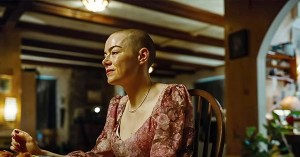
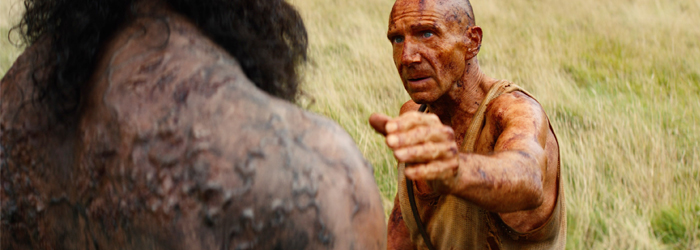
The latest: Fiennes returns as Dr. Ian Kelson in 28 Years Later: The Bone Temple. It’s Fiennes’ 34th Certified Fresh film!
In a film career spanning 33 years, Ralph Fiennes wasted no time establishing himself as trustworthy dramatic actor and a fountain of gravitas from the beginning. Fiennes trained in stage acting at the Royal Academy of Dramatic Art in London before having success at the National Theatre, and eventually fulfilled his dream of acting in the Royal Shakespeare Company, which he joined in 1988. He would have a few appearances onscreen in British TV movies before hitting the big screen in 1992, in director Peter Kosminky’s rendition of Wuthering Heights. Whether playing a lowborn aristocrat, a dark lord of wizardry, a hotel concierge, a Papal candidate, or the Greek God of Death, Fiennes remains one of Hollywood’s most reliable forces of dramatic excellence. Let’s have a look at some of his most iconic roles, followed by a Tomatometer ranking of his entire filmography. (Tyler Lorenz)
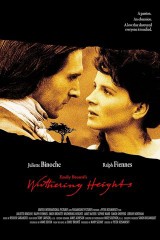
WUTHERING HEIGHTS (1992): Fiennes’s illustrious big screen career began in an adaption of Emily Brontë’s English literature classic, Wuthering Heights, as Heathcliff across from Juliette Binoche’s Catherine Earnshaw. The pair play star-crossed lovers locked in mental and emotional combat with each other and the other residents of the local aristocratic estates. While acknowledging that the tragic romance could be construed as melodramatic, Fiennes said he believes Wuthering Heights is really a “violent, obsessive” book.
Independent (UK)’s Adam Mars-Jones on Wuthering Heights: Ralph Fiennes makes a demonic Heathcliff, his startlingly blue eyes the only concession to a matinee audience. This performance reminds us that early reviewers of the book were not wrong, when they wondered at the morbidity of its romanticism.
SCHINDLER’S LIST (1993): A year later, Fiennes would play the iconic villain Amon Goeth in Steven Spielberg’s legendary Holocaust drama, Schindler’s List, opposite Liam Neeson and Ben Kingsley. Fiennes described taking the role as the Austrian SS agent and war criminal as a “no-brainer”, citing the passion he knew Spielberg would bring to the film. He said in an interview that the first time he stepped onto set in his Nazi uniform, it made him feel “powerful” despite the “horrendous associations we have with them now”.
A documentary on Oskar Schindler by Thames Television helped him gain a better understanding of the real man he was portraying. He referenced the Stanford Prison Experiment as a means of explaining how a figure like Amon Goetz could mentally reach a place of such deludedly justified brutality. Fiennes would receive a nomination for Best Supporting Actor for his role, and the film won seven Academy Awards, including Best Picture.
St. Louis Post-Dispatch’s Joe Pollack on Schindler’s List: “Liam Neeson is a splendid Schindler, tall, handsome, devil-may-care and a poker-playing genius. Ben Kingsley, as Itzhak Stern, Schindler’s accountant and chief aide, is as brilliant as ever, and Ralph Fiennes is evil and powerful as Amon Goeth.”
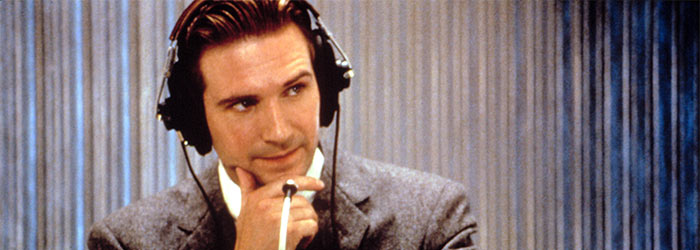
(Photo by Courtesy Everett Collection. QUIZ SHOW.)
QUIZ SHOW (1994): Fiennes would next appear in Robert Redford’s, Quiz Show, where he played the embattled game show contestant Charles Van Doren, who was leaned on by network producers to be an accomplice in their rigged productions. Early as it was in his career, Fiennes felt a lot of pressure playing a living person, but credited Robert Redford’s direction with helping alleviate a lot of that pressure. His goal was to portray Van Doren as a sympathetic victim of the system, rather than fully complicit in it. The film received a nomination for Best Picture.
Los Angeles Times‘ Kenneth Turan on Quiz Show: “Fiennes’ ability to project the pain behind a well-mannered facade, to turn intellectual and emotional agony into a real and living thing, is devastating. Impressive as the film is… Quiz Show would have been a very different experience without him.”
STRANGE DAYS (1995): In a foray into the world of sci-fi, Fiennes headlines Strange Days. Directed by Kathryn Bigelow and written by James Cameron and Jay Cocks, Strange Days follows Fiennes’s character Lenny Nero, a black marketeer in dystopian Los Angeles who specializes in a technology that allows people to relive the experiences, emotions, and sensory feelings of other people. Fiennes has said that while the film is set in a bleak backdrop, that it is ultimately an “optimistic film” and believes that it alludes to an eventual sense of harmony. While the tech noir was not a commercial success, the film has its cult following among cinephiles.
The New Yorker’s Anthony Lane on Strange Days: “Fiennes holds steady; his moody, lonely performance, especially in the beguiling first half hour, lends the story an air of calm despair.”
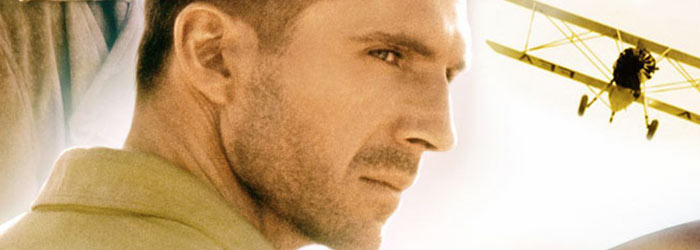
(Photo by Miramax. THE ENGLISH PATIENT.)
THE ENGLISH PATIENT (1996): Perhaps Ralph Fiennes most decorated film, The English Patient, based on the novel by Michael Ondaatje and directed written for the screen by Anthony Minghella, centers on a man who suffered mutilating burn wounds in a plane crash, and the nurse who cares for him. His past is slowly revealed in flashback, as his passion love affair approaches his fateful accident. Fiennes plays László Almásy, the eponymous English patient, reuniting with Juliette Binoche as Hana, his nurse in the “present” time, and Kristin Scott Thomas as Katharine, Almásy’s lover in flashbacks. Despite the brutality of the biplane accident in the film, Fiennes said “Everyone is always so cautious about actors doing things that are dangerous. I mean, I was dying to go up in it. I did in fact sneak a ride up in the biplane, the Tiger Moth. I think they are so beautiful, those old planes.” The film was nominated for twelve Academy Awards and won nine. Ralph Fiennes was nominated for Best Actor in a Leading Role.
TIME Magazine’s Richard Corliss on The English Patient: The cast is superb: Binoche, with her thin, seraphic smile; Scott Thomas aware of the spell she casts, but not flaunting it; Fiennes, especially, and radiating sexy mystery, threat shrouded in hauteur. Doom and drive rarely have so much stately star quality”.
THE CONSTANT GARDENER (2005): In director Fernando Meirelles’s The Constant Gardener, based on the novel by John Le Carré, Fiennes plays Justin Quayle, a British diplomat to Kenya who is investigating the murder of his wife Tessa, played by Rachel Weisz. The dubious circumstances of her death, initially blamed on infidelity, lead Justin to suspect her demise is linked to a conspiracy coverup. Due to the small 16mm cameras they were shooting on and the director’s willingness to be flexible with the dialogue on the day, Fiennes felt a previously unknown sense of freedom on set, saying, “when you are given permission to play, a whole other energy comes out, which just suddenly makes it live.” The movie was nominated for four Academy Awards, with Rachel Weisz winning the Oscar for Actress in a Supporting Role.
The New York Review of Books’ Marcia Angell on The Constant Gardener: “Where the film most improves on the book is in its treatment of the main characters. Fiennes and Weisz portray the relationship between Tessa and Justin as touching and believable, something the book fails to do.”

(Photo by Focus/Courtesy Everett Collection. IN BRUGES.)
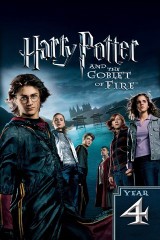
HARRY POTTER AND THE GOBLET OF FIRE (2005): In 2005, Ralph Fiennes’s dramatic expertise was the key factor in changing the tone of the Harry Potter franchise, with his chilling portrayal of the Dark Lord Voldemort in the fourth film of the saga, Harry Potter and the Goblet of Fire. Fiennes admitted he wasn’t well versed in the world of Harry Potter before getting the role but knew that young family members were overjoyed to learn he had gotten the role. He said of the character, “You don’t know where he’s coming from. People are very scary when you suspect they might do something violent. You have to judge that, try and get it right, so that it’s not too much. Yet if it’s not forceful enough, it doesn’t count.”
Reeling Reviews’ Laura Clifford on Harry Potter and the Goblet of Fire: “Harry Potter is not just for kids anymore. Director Mike Newell has reset the bar for the series and delivered a smashingly dark and dramatic film.”
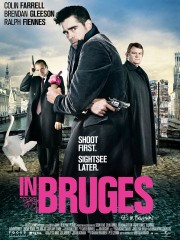
IN BRUGES (2008):In Martin McDonagh’s darkly funny hitman drama In Bruges, Fiennes plays the hot-headed, yet fiercely principled crime boss, Harry Waters. Harry has sent two of his on-the-run hitmen to the sleepy town of Bruges, Belgium, to lay low. But when one of his charges receives an order he refuses to comply with, Harry takes it upon himself to “fulfill the contract”. According to Fiennes, “if his sense of his world order is disturbed, he goes crazy.” Much like Harry’s impression of Bruges, fans of this film agree Fiennes’s performance is “like a fairy tale”.
CineXpress Podcast’s Fico Cangiano on In Bruges: “A wonderful film that has so much going on underneath all the intelligent dark humor and hitmen premise. Farrell, Gleeson and Fiennes are fantastic.”
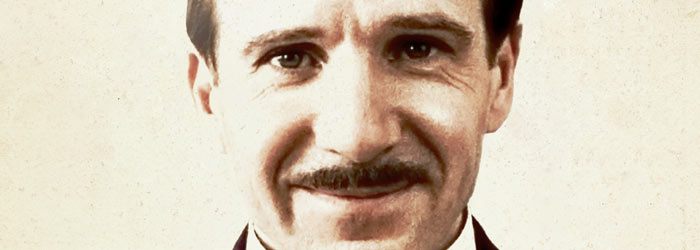
(Photo by Fox Searchlight/Courtesy Everett Collection. THE GRAND BUDAPEST HOTEL.)
HARRY POTTER AND THE DEATHLY HALLOWS: PART 2 (2011): So ends the saga of Harry Potter (well… for now), and so ends the saga of Ralph Fiennes as He-Who-Must-Not-Be-Named. Reminiscing on the psyche of the character over five films, Fiennes said, “As for his loneliness, I do understand, I don’t think he’s ever had a love life. He doesn’t know what love is; it’s a language he doesn’t understand. He’s all about acquiring power and controlling and manipulating a lot of people. It can be thrilling and freeing to play, because all the rules disappear. […] Some actors enjoy signaling the evil in characters called ‘bad guys’, but you want to be a human being first of all. Everyone has the potential to be corrupted. Everyone.” Fans will appreciate the dedication he gave to embodying the character, but don’t hold your breath for him to return as the Dark Lord. Fiennes has said he has a sense of completion with the character.
CineVue’s Edward Frost on Harry Potter and the Deathly Hallows – Part 2: “David Yates finally gives us the Harry Potter film we have been waiting for; a beautifully shot, incredibly loyal final chapter that mixes heartfelt emotion, strong performances and miraculous action.“
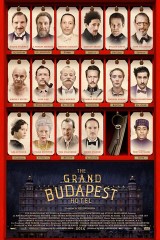
THE GRAND BUDAPEST HOTEL (2014): Fiennes’s finesse meets Wes Anderson’s auteur stylings in The Grand Budapest Hotel. Fiennes plays Monsieur Gustave, the concierge of the eponymous hotel. A man with his quirks, Gustave has a keenness for L’Air de Panache Pure Musk, fastidiousness, and the older women guests of the hotel. Fiennes says, while other characters find Gustave vain or over precise, he believes his character “has a strong ethic, has a strong principle, which is rooted in how you serve people.” The Grand Budapest Hotel received five Academy Award nominations, taking home Oscar gold for Best Achievement in Costume Design.
Metro Times’ Jeff Meyers on The Grand Budapest Hotel: “Like Gene Hackman in The Royal Tenenbaums, Fiennes seems both in sync and immune to Anderson’s fastidious nature. It’s a tour-de-force performance that should earn an Oscar nomination but will most likely be overlooked in favor of more sober portrayals.“
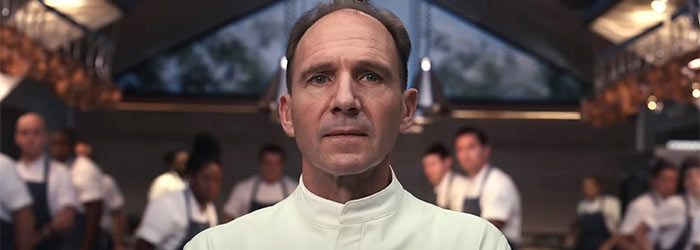
(Photo by Searchlight/Courtesy Everett Collection. THE MENU.)
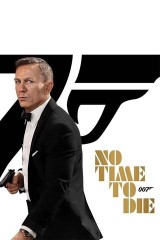
NO TIME TO DIE (2021): M returns in Daniel Craig’s final outing as 007 in Cary Joji Fukunaga’s No Time to Die. Fiennes believes the farewell film is very psychologically rooted: “The Spectre of it all, and the chemical weapons of it all, that’s the functioning engine, but I think the real richness is in the relationships.” He commended Craig on his performance as Bond: “He has a physical toughness, he’s persuasive in the physicality of the part. He’s a man you believe has been in the front line, of all kinds of tough physical circumstances.”
iNews.co.uk’s Christina Newland on No Time to Die: “This is a film obsessed both by its characters’ personal histories, and by its own. But it really soars when it is smartly combining the old with the new.”
THE MENU (2022): Things get weird in the kitchen when Ralph Fiennes takes on the mind-warping role of Chef Slowik in director Mark Mylod’s twisted culinary horror flick, The Menu. Margot and Tyler, played by Anya Taylor-Joy and Nicolas Hoult, have arrived at a secluded, water-locked compound to enjoy the decadent cuisine of the renown and reclusive Chef Slowik. But not everything is as it seems, as the guests find themselves trapped in the dining room, enduring food courses that manifest as fright more than delight. Ralph approached his character with a sense of rationality and openness, so that he would not signal the imminent oddity. In how he related to the ominous chef, Fiennes said, “he’s complicated about having had success and then sort of feeling he’s sold out, and I can sort of have a window on what that might feel like. You start off with the purest intentions, and things happen to you, and the world comes to you, and the light is shone on you a little bit, and then are you somehow devaluing what you’ve set out to do.”)
Medium’s Nuha Hassan on The Menu: “With splashes of horror and comedy, The Menu explores the world of fine dining restaurants. The movie has a stellar cast, including Fiennes and Taylor-Joy, who are incredible and magnetic together.“

(Photo by fOCUS/Courtesy Everett Collection. CONCLAVE.)
CONCLAVE (2024): Catholic mysteries meet the malaise of the modern day in director Edward Berger’s Conclave. Ralph Fiennes plays Cardinal Thomas Lawrence of the United Kingdom, Dean of the College of Cardinals. After the passing of the Pope, Lawrence is tasked with the sacred duty of convening the papal conclave, where the College of Cardinals are held in seclusion until a new Pope has been selected. But even in this Holy place, rumors spread and politicking runs rampant. As stress and cynicism bear down on Cardinal Lawrence, be begins to question what his faith really means to him. Fiennes was taken by the clever script writing, pointing out in particular the duality of a character who tries to eschew any ambitions for leadership, but upon receiving a few votes, is struck by the vanity he didn’t think he had. Conclave received eight Academy Award nominations, winning the Oscar for Beset Adapted Screenplay. Ralph Fiennes received his third Oscar nomination, this time for Best Performance by an Actor in a Leading Role.
Filmfare’s Devesh Sharma on Conclave, “[Fiennes’s] performance is a study in restraint, yet he effortlessly conveys the internal turmoil of a man who is deeply torn between duty and conscience.”
 98%
97%
98%
97%
 97%
97%
 96%
96%
 96%
96%
 95%
95%
92%
93%
95%
95%
92%
93%
 92%
92%
 92%
88%
89%
89%
88%
92%
88%
89%
89%
88%
 88%
87%
86%
88%
87%
86%
 86%
84%
86%
84%
 84%
84%
 84%
84%
 83%
83%
 83%
83%
82%
83%
83%
82%
 79%
79%
 78%
78%
78%
78%
 77%
77%
 77%
77%
 76%
76%
76%
76%
 76%
76%
 100%
100%
 95%
95%
 94%
94%
 94%
89%
94%
89%
 70%
71%
70%
71%
 68%
68%
68%
68%
68%
68%
 66%
66%
 65%
67%
65%
67%
 63%
63%
 63%
63%
 62%
62%

 58%
58%
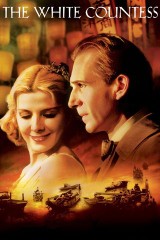 51%
51%
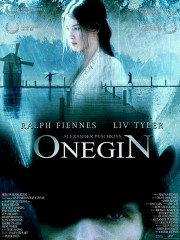 48%
41%
48%
41%
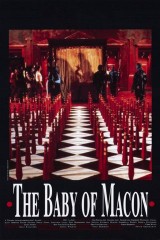 38%
38%
 37%
37%
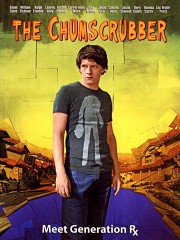 37%
37%
 31%
31%
 31%
31%
 27%
27%
 26%
26%
 17%
15%
10%
17%
15%
10%
 5%
5%