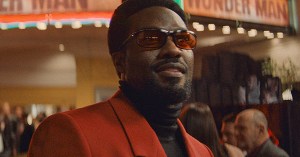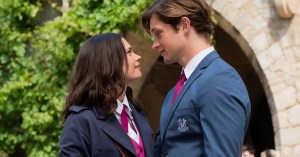
Steven Yeun’s Five Favorite Films
The star of The Walking Dead and this week's Okja talks about Frank Darabont's "magic window," filming in Korea, and what made Glenn such a relatable character.

(Photo by Priscilla Grant/Everett Collection)
Over the course of six seasons, Steven Yeun became a fan favorite as Glenn Rhee on AMC’s megahit series The Walking Dead, but the Korean-American actor (and new father) has also been providing voice work for a couple of well-received Netflix original animated series (Trollhunters and Voltron: Legendary Defender). With this week’s streaming release of Bong Joon-ho‘s Certified Fresh Okja, Yeun continues his successful relationship with Netflix — and he got to work with one of the directors who inspired him to begin acting in the first place.
Rotten Tomatoes spoke recently with Yeun, who gave us his Five Favorite Films, talked about the new movie, and reflected on what made TWD‘s Glenn so relatable. Read on for his list.
 66%
66%
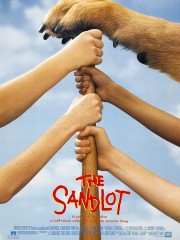 62%
62%
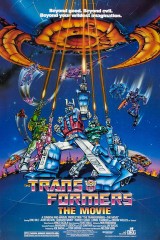
 82%
82%
 100%
100%
 95%
95%
Ryan Fujitani for Rotten Tomatoes: Speaking of Song Kang-ho, considering how often he’s collaborated with Bong Joon-ho, were you disappointed you didn’t get to work alongside him in Okja?
Steven Yeun: Well, that would have been awesome. But I also think that’s a testament to director Bong, that it’s not about him kind of just putting in people that stars or people like, but rather he’s very thoughtful in his casting, and if it doesn’t fit, it doesn’t fit.
RT: So how was it to actually work with Bong Joon-ho?
Yeun: It was amazing. He’s exactly what I thought. Not exactly what I thought he’d be, but the details were exactly as I thought they would be. He really dives into the nuance of everything that he’s putting into frame. You know, you’re getting a frame-by-frame shot list, a storyboard of what the movie’s gonna look like, and in some respect, someone might look at that and say, “Wait, you want me to stand here? So you’re limiting me as an actor?” But in reality, it’s actually more freeing, because if anything, all he’s doing is saying, “Trust me. I’m putting you within these parameters but you’re allowed to do anything you want within these parameters.” So it’s kind of a really freeing journey to take. You kind of can’t do wrong because he wants you to be there.
RT: In the film, you play the role of an interpreter, and I’ve seen the videos of you and Conan O’Brien in Korea, but what’s it like to really get to flex your Korean skills? Do you speak it fluently?
Yeun: I do speak it fluently. My pronunciation is probably pretty decent. For this role, I actually had to make my pronunciation worse, which was the fun part. It was kind of an exploration with [my character] K into the world of what an Asian-American person might go through, or any immigrant. Like, he feels like he’s a part of the society that he’s representing, which is America, but America doesn’t necessarily see him in that way sometimes, and when he goes back to the place where everybody looks like him, they don’t understand what he’s saying. So K’s kind of on his own island, and it gives him a lot of motivation to do the things that he does. It was really fun.
RT: What was it like for you, to be working on a film in Korea?
Yeun: It was awesome, man. It was a really, really transformative experience for me, because I’ve been to Korea before — I was born in Korea, but I’m fully, fully American at this point. To go back and be at the same age that my father was when he and my mother were there, right before they immigrated, was kind of like this weird, shoe-filling feeling, you know? That was really bizarre.
And also, K is obviously the interpreter in the movie, but in that way, I had to interpret for the cast as we moved along, and when we were down, when we would go out to eat, they needed me to navigate. It was a very meta experience. There’s a weird feeling. There’s a buzz. It feels like you’re connected to some sort of mothership, in a way.
RT: So, South Korean cinema has found a much larger global audience, thanks to people like Bong Joon-ho, Park Chan-wook, and Kim Jee-woon, among others. But something I’ve noticed is that, even in the darkest films — things like Oldboy or last year’s The Wailing — there’s always an element of wackiness, this uniquely Korean sense of humor that sometimes results in jarring tonal shifts but they somehow still work.
Yeun: Yeah, I know what you mean.
RT: It looks like Okja has some of that as well. Why do you think that’s so common?
Yeun: I don’t know if I can necessarily speak at this point, with kind of limited thought on it, about why that might be, but it is interesting to explore. It could be the fact that, as a culture that is a very collectivist society and in some ways is very repressed, to a degree, it could be a little steam valve that releases a little bit of tension for the audience.
The Wailing, to me, is f—ing terrifying. That movie is awesome, so good. But I was not as scared watching it, because they allowed me to see the humanness of what was going on. If anything, actually, now that I see that, I think humor, in the way that they subtly do that, allows you to actually connect with it more, because it makes it much more real, right? Like that pudgy old, s—ty police guy is going to go defeat the demon, and he throws a bunch of shovels in the back of his truck, or a pickaxe or something dumb — you know, whatever they have — and that’s not a joke. That’s just actually probably what would happen. If anything, it colors a portrait of it being much more grounded, to a degree.
Yeah, I think that’s maybe it, you know? Maybe Korean cinema as it stands loves exploring the fact that life is everything, that life isn’t just a comedy or a thriller or a horror. It’s all of them.
RT: Korean films do seem to blend disparate genres in ways that a lot of Western films generally don’t.
Yeun: Yeah, I mean, you look at something like Secret Sunshine. Lee Chang-dong, that guy is such a brilliant filmmaker that’s really working off of very subtle, really grounded performances. But then you get Song Kang-ho in that movie, and you’re like, “He’s not doing anything that’s not real. That’s an actual guy. I’ve seen that guy.” But man, he does it so well that you can’t help but laugh, because it’s so silly, you know? Honestly, to me, that was his best performance ever.
RT: Since I’ve got you, I have to ask about The Walking Dead. One of the other editors here told me, “Oh man, when they killed Glenn, I was done with the show,” and then literally stopped watching after that episode, because he was such a big fan of the character. I’m wondering if you encounter other people who feel that way, and if so, what do you tell them? How do you convince them to stick with the show, if you do at all?
Yeun: Yeah, you know, that’s very flattering. Is he Asian-American or Asian?
RT: He is not, no.
Yeun: I think that’s the coolest part. I think Glenn kind of sneaks up on people. Not to say that people reject him at all, but people don’t really understand why they feel the way that they feel, and maybe the reason why they’re so disgusted is because that does sneak up on them. You know, you don’t realize the connection you’ve made with a character that is probably more in line with a clear window into connecting with a character. I think the other characters are more to be awed, to wish to be like, you know? Glenn was kind of the one that you could just parallel yourself to. So, in that way, I can see the feeling. I can see why someone whould be like, “I’m done,” because it essentially killed you off the show, right?
But what I will say in response to that is, that’s also the beauty of that death, that it catapults the show into another era, because we finished telling the story as it is, and now we’re gonna tell it in a different, new, fresh, and exciting way. And what I will say is that Scott [Gimple] is truly, truly a thoughtful person, and I think a lot of people have their judgments on how they would have done something, but I think Scott, of all people, is someone that lives a couple steps ahead of a lot of others. So it will be fascinating to see what people think when they return and review what we’ve witnessed with that show.
Okja will be available on Netflix on Wednesday, June 28.