
Aldis Hodge’s Five Favorite Films
The Brian Banks star has a love of assassins, bridesmaids, and Iko Uwais.

(Photo by Rachel Luna/Getty Images for Film Independent)
After making a big impression in a string of standout small roles – in films like Hidden Figures, Straight Outta Compton, and What Men Want – Aldis Hodge is about to have his breakout moment. Hodge plays the title character in Brian Banks, out this week, the true story of a high-school football star whose career is seemingly over before it even gets started when he is wrongly convicted of rape, but who finally gets to realize his dream when he works with the California Innocence Project to clear his name. Early reviews for the inspirational film from director Tom Shadyac are singling out Hodge’s performance as the singularly focused Banks, describing it as “career-defining” and lauding his “intensity and grit.” The actor is earning similar praise for his work in the upcoming Clemency, which debuted to rave reviews at Sundance – it is currently at 100% on the Tomatometer – and in which he plays a death-row inmate. Ahead of Brian Banks‘ release, Hodge shared his Five Favorite Films with Rotten Tomatoes (actually six, given an unbreakable tie!), and how his passion for writing, comedy, and martial arts (he’s been practicing various forms since he was a kid) have informed his tastes.
 76%
76%
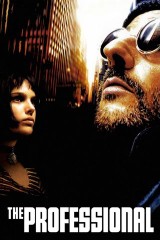 73%
73%

 39%
39%
 87%
87%
Joel Meares for Rotten Tomatoes: It was really interesting watching this film and then having also recently watched When They See Us, Ava DuVernay’s piece on Netflix, and seeing both projects focus on post-prison life in a way we don’t often see. Was there something in doing this film that you learned that you didn’t know about what happens people leave prison and have to navigate the systems and rules outside?
Just how difficult it is in every element and every aspect. It seems like that world is working against you. Brian has a book now called What Set Me Free, and there you’ll learn a whole host of things he went through in terms of dealing with a parole officer who was not very kind to him. And him actually trying to make it; it’s like they work to put you back in prison. They don’t really have a good start, they don’t have help; they’re out, but it seems like the prison system is working as hard as it can to get them back in, cutting off any sense of the opportunity at a real life as much as possible.
Before we started shooting, I had to wear an ankle monitor, the same one Brian wore, for about a month. Tom Shadyac, the director, asked me if I would be willing to just wear it without taking it off and I only took it off when we got to shooting a scene where I had to take it off. When you wear it and you’re so self-conscious, you realize this thing now is part of your identity – you have to shift how you do everything. The fact that you can’t go within a certain distance of a park — and parks are everywhere — you start noticing parks are everywhere. So that means you can’t live in certain places, you can’t even eat in certain places, you can’t be around certain people. It shifts your entire idea of what the world is. People are still in a cage when they’re on parole. Just because they’re outside, they’re not free.
So you weren’t just wearing it, you were wearing it and abiding by the rules?
Yeah, brother, it’s not fun. You have to charge that thing at night or else it starts beeping and will wake you up. You have to figure out how to shower with it. You do not wear shorts for anything; you wear thick socks to cover it. It was a real process. I appreciated that Tom asked me to do that because it was something to get into the mindset. It really put me in the state of mind of what it means to be self-conscious in a different way. I just did a month; Brian had to do five years.
How much time did you spend with Brian, and what was your biggest take away from your time with him?
We met about a month-and-a-half prior to shooting in Memphis. The moment we had a conversation, right off the bat, I started asking him about his whole training regiment, so I could get a trainer, but I was like, “Why don’t you train me yourself?” We started training together in the gym and we were basically together every single day; we were either together physically in the gym or we talked every single day until we got to Memphis. When we were in Memphis we were still together every single day, even on the days off. It was just me and him. We formed a great bond. We’re still friends today. I had a chance to meet his little son a few months ago back in New York. He gave me such a great opportunity to really execute my art and show what I can do and be effective in a different way; hopefully more effective towards a progressive conversation about change.
So, he’s taught me a few things, but he’s a great guy, and the very first time we met, that was what it was about for me. Do I like this guy? Do I respect this guy? I asked him if he was still angry and bitter. He said, “Nah, the anger had its time. I let it go. I just want to be happy.” I was like, this man is elevated, so I can respect that, I can learn from that. That’s my dude right there.
You’ve done this film and Clemency and played a D.A. in City on a Hill. What draws you to these kinds of stories – about prison and issues in the justice system? And why do you think we are seeing a number of prominent stories like this at the moment?
I can’t answer why they’re getting told at the moment outside of just serendipitous timing, because Brian really started trying to pioneer this project back in 2012. I think the first script was written by 2014. We shot this film in 2017, so it’s years in the making before finally getting to a place where I think the universe was just like, “Now is the time.” You couldn’t work out the time better between When They See Us and this movie coming out. I think it’s the universe saying, “We really do have an issue. Let’s really focus on the conversations that need to be had, and actions that need to be taken when it comes to this.”
Nothing really drove me directly to Brian Banks. He came to me and I answered. I kind of leave myself open these days; I’m trying to just not control or live in the illusion of control when it comes to what I’m doing. If something feels right, I’ll hit it and, you know, the Banks audition came across, I believed in the story, I was personally inspired, so I was like, “Please let me be an asset.” And I was lucky enough to book the job.
Thumbnail image: Rachel Luna/Getty Images for Film Independent, Universal Pictures, Lions Gate, Twentieth Century Fox Film Corp, Akhirwan Nurhaidir/©Sony Pictures Classics
Brian Banks is in theaters August 9, 2019.