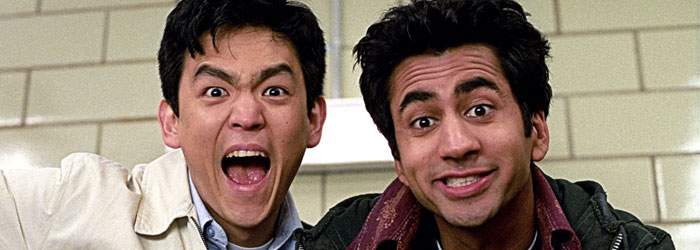
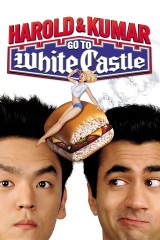
(Photo by New Line/courtesy Everett Collection. Harold & Kumar Go to White Castle.)
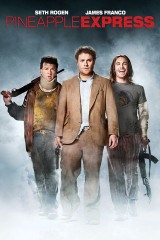
If your movie nights could take a few more hits, check out our guide to the best stoner movies! These are essential and favorite movies to the marijuana experience, ranging from counterculture classics (Up in Smoke, Easy Rider), top-shelf mainstream films (Pineapple Express, Friday), and cult comedies (Grandma’s Boy, Super Troopers), all featuring icons like Jeff Spicoli and The Dude. Then we took all the movies and sorted them by Tomatometer, highest first of course.
If you’re seeking a trip guide, something to pair with whatever state you’re in, check out the 25 Favorite Stoner Movies! (And don’t forget the 20 best movies to watch high.)
 94%
94%
 88%
88%
 82%
79%
82%
79%
 84%
80%
84%
80%
 78%
78%
 77%
77%
 75%
75%
 73%
73%
 69%
69%
 68%
68%
 64%
64%
 52%
52%
 53%
53%
 51%
51%
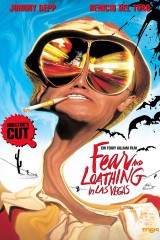 51%
51%
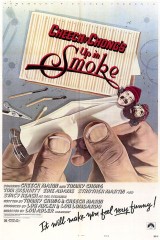 47%
39%
47%
39%
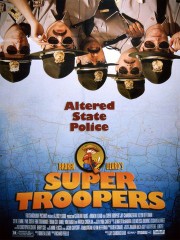 37%
37%
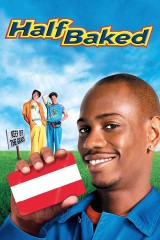 28%
28%
 25%
25%
 16%
16%
 16%
16%
 15%
15%

(Photo by Walt Disney Studios Motion Pictures/courtesy Everett Collection)
After a number of character parts and bit roles in a swath of urban dramas at the start of his career, Jackson made his breakthrough statement as the fiery voice of reason in Spike Lee’s Do the Right Thing: DJ Mister Señor Love Daddy. Pulling off a character with a name like that should only lead to more success, and sure enough, then came the slapstick comedy (Loaded Weapon 1), a disarming role in Jurassic Park, and the ultimate ’90s character: hitman Jules Winnfield in Pulp Fiction.
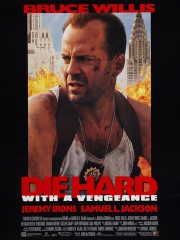
From there, Jackson has only cemented his rep as Hollywood’s versatile king of volatile cool, partnering with John McClane (Die Hard With a Vengeance), feelin’ the Force in the Star Wars prequels, starring as the sexy spawn of Shaft, and making his mark in original meme movie Snakes on a Plane.
And as, of course, the linchpin of the Marvel Cinematic Universe: Nick Fury, whose movie appearances (brief or significant) are all included here in the greater interest of the general public, i.e. you’re going to complain if we didn’t. With that said, hold on to your butts for Samuel L. Jackson movies ranked by Tomatometer! —Alex Vo
 97%
97%
 93%
93%
93%
93%
 93%
93%
 92%
92%
 91%
91%
91%
91%
 92%
91%
90%
92%
91%
90%
 88%
88%
 87%
87%
 88%
85%
88%
85%
 85%
85%
 84%
84%
 83%
83%
 84%
84%
 82%
82%
 82%
82%
 81%
79%
79%
80%
81%
79%
79%
80%
 80%
78%
80%
78%
 78%
78%
 78%
78%
 77%
77%
 77%
77%
 77%
77%
 75%
75%
75%
75%
 75%
75%
 74%
74%
 75%
75%
 72%
72%
 81%
81%
 73%
73%
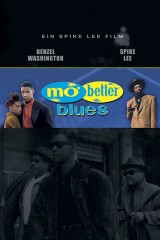 71%
71%
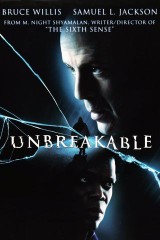 70%
70%
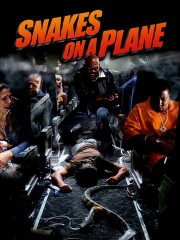 69%
69%
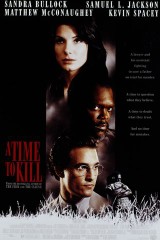 66%
66%
 67%
67%
 68%
68%
 67%
67%
 68%
68%
 66%
62%
65%
66%
62%
65%
 63%
64%
63%
64%
 61%
61%
 60%
62%
60%
62%
 60%
56%
54%
60%
56%
54%
 52%
52%
 50%
50%
 48%
48%
 48%
46%
48%
46%
 44%
44%
 46%
46%
 44%
44%
45%
44%
44%
45%
 42%
42%
 39%
39%
39%
39%
 36%
36%
34%
36%
36%
34%
 31%
25%
31%
25%
 26%
26%
 26%
26%
 26%
26%
 25%
25%
 31%
31%
 29%
29%
 22%
22%
 23%
23%
 23%
23%
 33%
33%
 21%
21%
 18%
18%
 21%
21%
 17%
17%
 17%
17%
 17%
17%
 15%
15%
 14%
14%
 13%
11%
13%
11%
 13%
13%
 10%
10%
 2%
2%
 0%
0%
The Marvel Cinematic Universe is a wonder for many reasons, not least of which is the way it wove together an intricate continuity across all of its movies. Throughout 23 films (and counting), there are crossover characters, intersecting storylines, and resonant names, locations, and even brands. Of course, when you step back, you realize that the MCU was only doing what comic books have been doing in print for decades. Take another step back, and you’ll notice that what they’ve done isn’t all that unique to movies, either. Because Quentin Tarantino, for one, has been doing it for decades, too.
From his earliest days as a struggling screenwriter to his iconic and era-defining films, Tarantino has built his own world of interconnected characters and original brands. In honor of the 25th anniversary of his legendary opus Pulp Fiction (released October 14, 1994), let’s take a look at the QTCU — the Quentin Tarantino Cinematic Universe.

A short film co-written, directed, and starring Tarantino while he was famously working at Video Archives in Manhattan Beach, California (it’s no longer there, so don’t plan a visit), My Best Friend’s Birthday only exists in a truncated 36-minute cut because large parts of it were destroyed in a fire. Still, the seeds of the QTCU are there. For one, Quentin plays a character named Clarence who, early on, discusses his love of Rockabilly music and Elvis’ acting ability. This would, of course, foreshadow Christian Slater’s character in True Romance, a script written by Tarantino but directed by the late Tony Scott. In Birthday, Tarantino’s Clarence hires a call girl to show his friend a good time on his special day — a sequence of events that would be flipped in True Romance, when Slater’s Clarence finds himself on the receiving end of a birthday call girl surprise.

Tarantino’s signature work, the movie that launched him as a filmmaker. In this tale of a jewel heist gone wrong, the audience is treated to flashbacks that fill in the stories of each of the movie’s black clad, code-named criminals. We find out that Mr. White (Harvey Keitel) used to run with a partner named Alabama. Of course, a woman named Alabama Whitman (later, Worley) is seen getting a taste for a life of crime in True Romance, the Tony Scott film that Tarantino wrote (see below). We also learn that Mr. Blonde (Michael Madsen) is named Vic Vega, as in the brother of John Travolta’s Vincent Vega in Pulp Fiction.

(Photo by Warner Bros. courtesy Everett Collection)
Apart from the obvious connections to earlier films — the Rockabilly-loving Clarence and call girl-turned-crook Alabama — there is a more subtle cinematic link in Tony Scott’s Tarantino-penned action adventure. The movie climaxes with a drug deal in the hotel suite of big time movie producer Lee Donowitz (Saul Rubinek, channeling real life producer Joel Silver). Donowitz is a producer of war movies — fitting because his father, Donny Donowitz, fought in WWII as part of the Inglourious Basterds. You might remember him as the baseball bat-wielding avenger known as “The Bear Jew” (played by Eli Roth).

(Photo by Miramax Films)
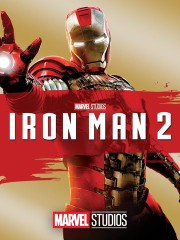
Pulp Fiction, which celebrates its 25th anniversary this year, is arguably the Iron Man of the QTCU, because it’s really the one that takes the threads and begins to weave them together. The film introduces us to several brand names that would become central players in Tarantino’s world, starting with “that Hawaiian burger joint” Big Kahuna Burger — Samuel L. Jackson’s Jules takes the world’s most intimidating bite of one of these burgers and washes it down with “a tasty beverage” from the place early in the movie. Later, Bruce Willis’ Butch Coolidge orders a pack of Red Apple cigarettes, a brand that shows up in just about every subsequent QT movie. Finally, Christopher Walken’s Captain Koons — he of the legendary “gold watch” speech — is also a descendant of “Crazy” Craig Koons, one of Django’s bounties in Django Unchained.

(Photo by Warner Bros. Pictures)
Although Natural Born Killers was directed by Oliver Stone, the script was pure Tarantino. We mentioned earlier the brother connection between Vic and Vincent Vega, but there is another set of brothers that was first introduced in Reservoir Dogs, too. In Dogs, Vic complains about a pain-in-the-ass parole officer named Seymour Scagnetti (we never actually see him), whose own brother, Jack, would show up in Natural Born Killers (played by Tom Sizemore).

In the Tarantino-written and -directed segment of this anthology film, the characters are seen smoking Red Apple cigarettes. Tarantino’s character also refers to his drink as a “tasty beverage,” which echoes the same colorful turn of phrase Jules used in Pulp Fiction.

Tarantino wrote the script for this Robert Rodriguez-directed horror film and peppered in some of his signature touches. There are Red Apple cigarettes present and accounted for, and George Clooney’s Seth Gecko at one point makes a run for Big Kahuna Burgers. The movie also introduces gravelly-voiced, no-nonsense Texas Ranger Earl McGraw (played by Michael Parks), who would become a key player in the QTCU. It’s also worth noting that the movie features yet another pair of brothers (Seth and his brother, Richie, played by Tarantino) who have a thing for black suits.

(Photo by Miramax Films)
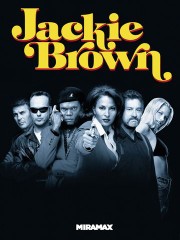
Beware of people who claim that, because it was based on an Elmore Leonard novel and not an original Tarantino idea, there are no overt connections to the QTCU in Jackie Brown. They’re just not paying attention. Midway through the film, we see Jackie in the Del Amo Mall food court, enjoying a meal from Teriyaki Donut — the same fictional fast food franchise whose food Ving Rhames’ Marcellus Wallace is carrying when Butch Coolidge runs him down in Pulp Fiction. In a second food court scene not long after, we not only see Jackie indulging in Teriyaki Donut again, but her accomplice Sheronda (LisaGay Hamilton) sits down at her table with a tray full of food from Acuña Boys, which would later be referenced in Kill Bill Vol. 2 and appear a couple of times in Grindhouse.

(Photo by Miramax Films)
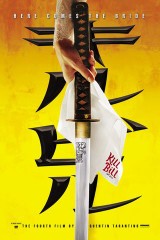
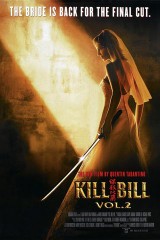
We’ll treat this kung fu-inspired magnum opus as one film, with plenty of easter eggs to link it to the larger QTCU. For one, if you look at The Bride’s (Uma Thurman) old gang, the Deadly Viper Assassination Squad, you’ll notice that they all fit a little too easily into Mia Wallace’s description of her failed TV pilot, Fox Force Five – the blonde leader, the Japanese kung fu master, the black demolition expert, the French seductress, and Mia’s. character, the deadliest woman in the world with a knife (or sword?). The first cop on the scene after the Bride’s wedding day massacre is, of course, Earl McGraw, and Red Apple and Big Kahuna also make appearances. And remember Acuña Boys from Jackie Brown? In Vol. 2, they happen to be the name of the gang that Michael Parks’ Esteban Vihaio runs.

(Photo by The Weinstein Co./Dimension)
In both the Tarantino portion of this double feature homage, Death Proof, and the Rodriguez portion, Planet Terror, there are connections to the QTCU. Big Kahuna burgers are mentioned, and Red Apple cigarettes are smoked. On top of that, an ad for Acuña Boys “Authentic Tex-Mex Food” — first glimpsed in Jackie Brown — pops up during intermission, and one of Stuntman Mike’s early victims, Vanessa Ferlito’s Arlene, can be seen sipping from an Acuña Boys cup. Texas lawman Earl McGraw also reappears, along with his son, Ed, and we learn there is a sister named Dakota, too, who features in Planet Terror. As kind of a bonus, Rosario Dawson’s Abernathy has a familiar ringtone on her phone — it’s the same melody whistled by Elle Driver (Darryl Hannah) in Kill Bill Vol. 1.

(Photo by Francois Duhamel/©Weinstein Company)
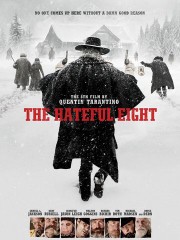
In addition to Donny Donowitz, Michael Fassbender’s English soldier-turned-spy Archie Hicox has deep ties to the QTCU, it turns out. Late in the old west-set Hateful Eight, it is revealed that Tim Roth’s Oswaldo Mobray is actually a wanted man named “English Pete” Hicox, Archie’s great-great-grandfather.

(Photo by The Weinstein Co.)
We’ve already mentioned “Crazy” Craig Koons, but there is another deep cut reference to Django hidden in an earlier Tarantino movie. In Kill Bill Vol. 2, Bill’s brother Budd (played by Michael Madsen – also another pair of QT brothers!) buries the Bride alive in the grave of Paula Schultz. This is the lonely final resting place for the wife of bounty hunter Dr. King Schultz (Christoph Waltz) in Django.

(Photo by The Weinstein Company)
In addition to the Hicox family tree, Red Apple tobacco — the early version of the soon-to-be ubiquitous (in the QTCU, anyway) cigarette brand — makes a couple of appearances here. Demián Bichir’s Bob smokes a “Manzana Roja” right after the intermission, and Channing Tatum gets a custom-rolled Red Apple cigarette — his “favorite” — from Dana Gourrier’s Miss Minnie.

(Photo by Columbia Pictures)
At one point in Kill Bill Vol. 2, The Bride drives a blue Volkswagen Karmann Ghia. That same car shows up (driven by Brad Pitt’s Cliff Booth) in Hollywood. And not only do Booth and Leonardo DiCaprio’s Rick Dalton smoke Red Apples (of course), but there’s an end-credits scene in the movie that shows Dalton doing a TV commercial for the cigarette brand.
Pulp Fiction was released in theaters on October 14, 1994.
92%

(Photo by Dia Dipasupil/Getty Images)
Even if his name doesn’t immediately ring a bell, you’ll almost certainly recognize Jon Bernthal‘s face. After a string of appearances in various TV series and smaller films, Bernthal found mainstream success with a pivotal role in the first two seasons of AMC’s The Walking Dead, which led to parts in Martin Scorsese’s The Wolf of Wall Street, David Ayer’s Fury, and Denis Villeneuve’s Sicario. Most recently, Bernthal appeared in Edgar Wright’s acclaimed Baby Driver and Taylor Sheridan’s thriller Wind River, and his turn as Marvel vigilante the Punisher in season 2 of Netflix’s Daredevil has led to a previously unplanned solo series for the character, set to drop later this year.
This week, Bernthal stars opposite Richard Armitage and Tom Holland in the period drama Pilgrimage, about a group of 13th century Irish monks on a journey to escort a holy relic to Rome. He took some time to speak to RT about his Five Favorite Films, and explained why he couldn’t tell us when Punisher would arrive.
Alright, I’d say the first would have to be Goodfellas. I know that’s probably one you get a lot, but I remember it came out, and I was probably in about the 8th grade. Me and my buddy Dougie Thornel probably saw that at the theaters 30 times. I mean we would just go, and we would watch it, and then sit in the theater and watch it again. I can’t say enough good about it. It’s horrifying, it’s hilarious, it’s so unbelievably honest.
Look, I mean, Scorsese is my favorite filmmaker. You know, the fact that I got the chance to work with him [on The Wolf of Wall Street] was sort of the mountaintop, the kind of crowning achievement of my career, and I don’t mean that in sort of how I’m perceived by the world. I just mean in terms of experience. My brief time on that movie really changed the way that I work as an actor. He’s one of these guys that makes you feel that anything is possible.
I’ve studied in the Russian theater, and one of the main ways that we study was you get a scene and then you do a big improvisation about the scene and what the scene could be. That’s precisely how he worked. Each one of these scenes, you create this unbelievably vivid reality, you really take yourself to the place, and everybody feels like they are one hundred feet tall. It doesn’t matter whether you are background or whether you are craft services or anything, but everybody is so full of ideas. You make it on the day, and then he just sort of takes what he wants from that. I feel like that method of filmmaking that’s so Scorsese, so uniquely his, shines brightest in that movie. That sense of anything can happen at anytime, it’s happening right there in the moment. I think it really, really just shines brightest in that film, and that’s why it’s my favorite film.
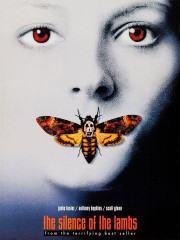
Second I would say came out roughly around the same time but probably, The Silence of the Lambs. I just loved that movie. That too, me and my buddy Dougie Thornel… We actually were too young to get into that movie, but I remember one time we weren’t allowed in and then we snuck in anyway, and again, it was one where we went back and back and back.
I think Ted Levine’s performance as Buffalo Bill is one of the most haunting performances that has ever happened on film. He’s an actor that I admire so deeply and I really love… Especially in the last few years, I’ve gotten to take these parts that are only in a few scenes and really create as rich a back story and history for the character as possible, and I thought he did that so cogently and so beautifully in that movie.
Its not just that there are so many quotable lines, but you really see the depths of the torture that’s going through him. It’s such a meditation on serial killing and psychotic murderers, and I love the fact that Hannibal Lecter — obviously one of the great characters of all time — but I just love the fact that you don’t know whether to root for him or against him. I think it’s the ultimate anti-hero character, and the fact that they were able to achieve him being able to… you know, at the end of the movie, you’re actually rooting for him, that he got out and that he’s going to go eat people. I think that’s just so f—ing awesome. And obviously the scene with Levine and Jodie Foster with the night vision. It’s a book that I loved and I think its one of those rare times where I think the movie totally even outshines the book. Wow, what a film. It will always be one of my favorites.
Then, next I would say, would have to be True Romance. Again, I just cannot say enough good about that movie. It’s a movie I can just watch over and over and over and over again. It really, to me, defined what love is and it defined what… It was just the coolest movie ever made, but so heartfelt and so honest, and every performance is so rich. God, I just love that f—ing film, man. I just absolutely love it, and I believe every second of it too, and I cannot say enough good about that one.
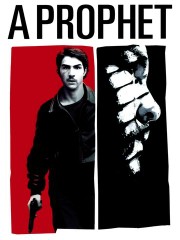
Then A Prophet. I love that movie. I think one of the greatest things about films is when they can take you to a very certain time and a very certain place. It’s time travel, its magic. I know nothing about what French prison would be like, I know nothing about it, but I believe every single second of that film. I feel like, after you watch that film, you know a little bit about what that’s like. I know how difficult that is to do. I just think it’s a beautiful honest moment, and I think that he deals with the immediacy of panic and how being panicked can change you and what people will do to survive. Its a brilliant film.
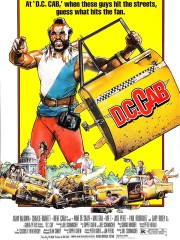
Lastly, I gotta throw it in there, I gotta say D.C. Cab. [laughs] I know that probably no one else says that, but I’m born and raised DC. I’m DC through and through. It will always be in my heart. Again, me and little Dougie Thornel grew up watching that movie on VHS over and over and over again. It shows a little bit of the real DC that I think never gets shown in films and television. I just love the movie. I think it’s the only honest DC movie ever made, and its funny as hell.
RT: We’re talking about the Joel Schumacher movie with Mr. T, right?
That’s right. Yeah, Mr. T and the Barbarian Brothers. [laughs] It was a great movie, man. He also made Saint Elmo’s Fire and all those movies, which are kind of like Georgetown and kind of made about the DC everybody thinks is DC, but that’s not the real DC. D.C. Cab is real DC. There’s this scene at the end, through the credits, where they do this parade — it’s just the most honest thing ever. I love the film.
RT: You mention your old friend Dougie Thornel quite a bit.
Jon Bernthal: I gotta say, with Dougie, to this day, every film I do, every moment I do, when I’m working on a moment in a film, I still ask myself, would this make little Dougie Thornel laugh? Would this make him want to watch? Would the two of us, sitting there on the milk crates in a s—ty ass room watching TV, would this be something that we would buy and we would think is funny or hilarious? Its called the Dougie Test, and I do it on everything I do.
RT: Any chance I can get the Punisher release date out of you?
Bernthal: [laughs] No, of course not man, no! First of all, I don’t know it, and even if I did there are like… You know, they take that s— so seriously. They know better. They don’t even tell me, so you couldn’t even trick me.
Pilgrimage opens in limited release today, August 11.
Today he’s one of the most bankable movie stars in Hollywood, and one of the few actors audiences will pay to see no matter what sort of role he’s playing — whether it’s action, drama, or comedy the script calls for, having Brad Pitt‘s name above the title is about as close as anyone can come to a guarantee for a hit film. Not so long ago, however, Pitt was just another good-looking dude with enough gumption to work his way into a steady stream of TV shows and bit parts in movies. He’s come a long way, for sure, and to celebrate his latest starring role — in David Ayer’s Fury, opening this weekend — we decided the time was right for a brand new Brad Pitt edition of Total Recall.
On the surface, it looks like just another buddy cop movie — in fact, with its “retiring detective partnered with unorthodox rookie” setup, it could have been a Lethal Weapon ripoff. Of course, as we all now know, David Fincher’s Seven brought its own dark twist to the genre, plunging the viewer into a bottomless pit of sorrow, rage, and moral decay — and ultimately refusing to help them climb out at the end. With Fincher’s amped-up direction, Darius Khondji’s gripping cinematography, and mesmerizing performances from Morgan Freeman and Kevin Spacey, Pitt could conceivably just shown up to take a paycheck without damaging Seven too much, but instead, he helped take it to another level, using his youthful good looks — and his character’s mounting horror and confusion — as a painful visual analogy for the brutal loss of innocence and compassion suffered by everyone in the film. Though some critics took issue with Seven‘s constant gloom and grisly violence, most scribes echoed the sentiments of Netflix’s James Rocchi, who called it “a harrowingly bleak vision that haunted me in the theatres and made my flesh slick with fear even on this recent re-viewing.”
He started the 1990s on a hot streak, but by the end of the decade, Pitt was suffering through a bit of a slump, appearing in a string of critical dogs (Seven Years in Tibet, The Devil’s Own, Meet Joe Black) whose box office tallies reflected their disappointing reviews. But just when the naysayers were ready to write him off as an expensive hair model who couldn’t break a movie, Pitt rebounded with Fight Club, a reunion with Seven director David Fincher that paired Pitt with Edward Norton in an adaptation of Chuck Palahniuk’s hit novel. Though some critics found the film’s overpowering violence and homoerotic overtones repugnant (New York Magazine’s Peter Rainer, for one, dismissed it as “the squall of a whiny and essentially white-male generation that feels ruined by the privileges of women and a booming economy”), most writers responded to Fight Club‘s social criticism and thought-provoking themes. In the words of ReelViews’ James Berardinelli, it’s “a memorable and superior motion picture — a rare movie that does not abandon insight in its quest to jolt the viewer.”
Critics have a reputation for turning up their noses at escapist fare, but when it’s done right, most scribes have no problem saying so — as they did in 2001, with the Certified Fresh Ocean’s Eleven. A loose remake of the 1960 Rat Pack feature of the same name, Eleven blended the original with the nod-and-a-wink light touch of The Sting, giving its high-wattage cast free rein to essentially goof off for 116 minutes — and audiences, who hadn’t been treated to a real all-star caper since 1984’s woeful Cannonball Run II, turned out in droves. Pitt’s turn as the food-obsessed Rusty Ryan gave him an opportunity to flash the pearly whites and old-fashioned Hollywood cool that he’d played down in recent projects such as Seven Years in Tibet or Fight Club, and helped charm critics like Rolling Stone’s Peter Travers, who wrote, “forget Oscar, Ocean’s Eleven is the coolest damned thing around.”
An adaptation of Norman Maclean’s semi-autobiographical book of the same name, A River Runs Through It arrived on screens with a pretty stellar pedigree — director Robert Redford had won an Academy Award for his first effort, 1980’s Ordinary People, cinematographer Philippe Rousselot (who would win his own Oscar for River) was highly regarded for his work in French cinema, and musician Mark Isham brought his Grammy-winning talents to the Oscar-nominated score. The result, as you might imagine, was a visually sumptuous film — one whose stunning vistas bowled critics over even as they yawned through its languid pace and shrugged at its simple presentation of a Montana family’s multi-generational dynamic (as TV Guide wrote, “it’s hard to get excited by fisherman casting their lines into the water”). Still, in spite of its lack of flash, River afforded Pitt an early opportunity to work with some tremendously talented individuals, and proved he was more than just the cowboy-hatted hunk he portrayed in Thelma & Louise. Caryn James of the New York Times was suitably impressed, writing, “here are two things I never thought I’d say: I like a movie about fly fishing, and Robert Redford has directed one of the most ambitious, accomplished films of the year.”
By the time Thelma & Louise was released in 1991, Brad Pitt had been around for a few years, notching roles on the big screen (blink-and-you’ll-miss-him appearances in No Way Out and Less Than Zero, as well as topline billing in the low-budget horror flick Cutting Class) and surfacing repeatedly on television (most notably via recurring gigs on Dallas, Growing Pains, and Fox’s quickly canceled Glory Days). However, it was his turn as J.D., the impeccably coiffed, frequently shirtless con man who fleeces Thelma and Louise, that put Pitt over the edge, turning him from a somewhat familiar face into a bona fide sex symbol. It was a performance so well-regarded — albeit mainly by Pitt’s solidly female target demographic — that not even Johnny Suede and Cool World could keep him from imminent superstardom. Of course, it didn’t hurt that Pitt’s breakout role came as part of a movie that inspired waves of praise from critics like Matt Brunson of Creative Loafing, who wrote, “this beautifully realized picture remains a trenchant, almost mystical slice of Americana.”
Nothing gets a cineaste’s anticipation humming like news of a new Terrence Malick film — and since Malick is nothing if not deliberate, we had plenty of time to hum over Tree of Life. Originally announced in the wake of Malick’s 2005 effort The New World, it tumbled down the release schedule throughout 2009 and 2010 before finally bowing in May 2011 — all 139 inscrutable minutes of it. The product of Malick’s progressively harder-to-contain ambition, Life took viewers from the dawn of life to the 21st century, leaving plenty of room for solid acting from Pitt and Jessica Chastain — as well as hosannas from critics like Salon’s Andrew O’Hehir, who deemed it “a noble crazy, a miraculous William Butler Yeats kind of crazy, alive with passion for art and the world, for all that is lost and not lost and still to come.”
Though his film roles to that point had, for the most part, required him to do little more than look good, Pitt’s turn in the Terry Gilliam-directed 12 Monkeys — coming on the heels of his eye-opening appearance in Seven earlier in the year — proved that he not only had good taste in scripts, but the talent to back it up. As the institutionalized activist Jeffrey Goines, Pitt tapped into a nervous energy he’d never been asked to draw on, holding his own against Bruce Willis and helping the twisty dystopian sci-fi thriller become one of 1995’s biggest surprise hits. Though it would be some time before Pitt starred in another movie that earned this kind of critical affection, after 12 Monkeys, the critics knew he wasn’t just another pretty face. As Desson Thomson of the Washington Post wrote, “Willis and Pitts’s performances, Gilliam’s atmospherics and an exhilarating momentum easily outweigh [its] trifling flaws.”
Generally speaking, an actor doesn’t get many chances to play a character named Aldo — and an actor also doesn’t have many opportunities to work with Quentin Tarantino. So when Tarantino came to Pitt with the role of the cheerfully violent Nazi-hunting Lieutenant Aldo Raine in Inglourious Basterds, he clearly knew better than to say no. The result was a tense, colorful, funny, and terribly bloody World War II revenge fantasy that set loose a terrific ensemble cast (including Christoph Waltz and Michael Fassbender) in a spellbinding parallel dimension. Argued the Miami Herald’s Rene Rodriguez: “Inglourious Basterds transcends the war genre to become its own kind of unique picture: A bloody blast of pure movie bliss.”
Take Christian Slater, an Arquette, and the guy who directed Beverly Hills Cop II, and nine times out of 10, you probably aren’t going to get a film that tops any sort of critically themed list, let alone one that inspires a writer like Peter Canavese to crown it “a hall of fame guy’s movie” — but the exception proves the rule, and 1993’s True Romance is that exception. Slater and Patricia Arquette are the stars of this cult classic action flick, which boasts a Tarantino script and noteworthy supporting turns from (among others) Dennis Hopper, Val Kilmer, Gary Oldman, Christopher Walken, and Bronson Pinchot; it’s Brad Pitt’s few minutes as the epically stoned Floyd, however, that steal the show, sprinkling a few much-needed belly laughs between the bursts of gunfire. Such was Floyd’s influence that he served as the inspiration for 2008’s Pineapple Express. And for good reason: Not only was he industrious enough to figure out an exciting new use for an empty honey container, he was cool enough to threaten a room full of shotgun-wielding Mafia henchmen with death. (We never said he was smart.)
As a (freakishly entertaining) by-the-numbers account of how the Oakland A’s used newly adapted metrics to turn conventional baseball wisdom on its head, Michael Lewis’ Moneyball seemed like one of the least cinematic bestsellers to have its film rights optioned by a major studio — and after directors David Frankel and Steven Soderbergh departed the project, it looked like it might be destined for the scrap heap. But with Bennett Miller behind the cameras and Pitt lending his rumpled charisma to the role of A’s GM Billy Beane — not to mention an Aaron Sorkin screenplay — it ended up being not only a six-time Academy Awards nominee, but a $110 million box office hit. “Baseball fans know this story,” admitted USA Today’s Claudia Puig, “but Miller puts it all in fascinating context. This is a thinking person’s baseball movie, a more complex version of the inspirational sports story.”
In case you were wondering, here are Pitt’s top 10 movies according RT users’ scores:
1. Fight Club — 96%
2. Se7en — 95%
3. Snatch — 94%
4. True Romance — 93%
5. Twelve Monkeys — 88%
6. Inglourious Basterds — 87%
7. Legends of the Fall — 87%
8. Interview with the Vampire — 86%
9. Moneyball — 86%
10. A River Runs Through It — 84%
Take a look through Pitt’s complete filmography, as well as the rest of our Total Recall archives. And don’t forget to check out the reviews for Fury.
James Gandolfini, star of the HBO drama The Sopranos and a character actor in films a diverse as The Man Who Wasn’t There and Where the Wild Things Are, died June 19, reportedly of a heart attack, in Italy. He was 51.
Gandolfini played mob boss Tony Soprano with a mix of charm, vulnerability, and menace that won The Sopranos a devoted following and earned the actor a plethora of awards, including three Emmys, five Screen Actors Guild Awards, and a Golden Globe. With a thick Jersey accent, corpulent body, and expressive face, Gandolfini cut an imposing, expressive figure as a character actor in a number of feature films.
Born in Westwood, NJ, in 1961, Gandolfini graduated from Rutgers University and worked as a bouncer and a bartender before pursing an acting career. After landing a role in the 1992 Broadway revival of On the Waterfront, he was cast as a hitman in Tony Scott’s True Romance. Gandolfini had small parts in a number of prominent films before The Sopranos debuted in 1999; subsequently, he received prominent billing in the Coen Brothers’ noir thriller The Man Who Wasn’t There and Spike Jonze’s fantastical adaptation of Where the Wild Things Are. He won rave reviews playing a general in the military farce In the Loop.
Recently, Gandolfini had played CIA director Leon Panetta in Kathryn Bigelow’s Oscar nominated Zero Dark Thirty. He co-produced and starred in Not Fade Away, a drama about a teenage garage band directed by Sopranos creator David Chase. He also played a casino owner in The Incredible Burt Wonderstone.
According to reports, Gandolfini was in Sicily for the Taormina Film Festival when he was stricken with a heart attack. He is survived by his wife, Deborah Lin, a daughter, and a son from a previous marriage.
For James Gandolfini’s complete filmography, click here.
Noomi Rapace rose to international stardom as Lisbeth Salander in the original adaptation of Stieg Larsson’s The Girl with the Dragon Tattoo and its sequels, success she parlayed into roles in Sherlock Holmes: Game of Shadows and Ridley Scott’s hit Alien prequel, Prometheus. With a sequel to the latter in the works and two movies opposite Tom Hardy on the horizon, Rapace is balancing a burgeoning Hollywood career with acclaimed roles in her native Sweden. This week, she stars opposite Colin Farrell, Terrence Howard and Isabelle Huppert in the action thriller Dead Man Down, which reunites her with Dragon Tattoo director Niels Arden Oplev for his English-language debut. We spoke with the actress recently and got the scoop on her all-time favorite films.
True Romance (Tony Scott, 1993; 91% Tomatometer)
I love True Romance. When I read the script for Dead Man Down, it kind of reminded me a little bit of that one. It’s like some kind of thing similar to that crazy world around them: the violence, the criminals, the macho culture, and those two main characters with very complicated souls. So that one is one of my favorites.
Raging Bull (Martin Scorsese, 1980; 98% Tomatometer)
Of course, I love Raging Bull. And I love The Godfather. [Laughs] Maybe I need to find something a little fresher. But Raging Bull, you can always feel when an actor kind of goes into — I don’t know Robert De Niro, but I kind of get this feeling that he went really deep into it, and that the character and he melded together. I can feel like he’s not pretending. He’s actually living it. That’s always something that hits me, and I forget about the outside world; it’s almost like the movie I’m watching takes over and becomes my reality. I’ve seen Raging Bull so many times and it feels so pure and real. It’s beautiful and sexy and rough, and there’s so much pain in it at the same time. I think it always attracts me, you know, with people struggling and people fighting and people wanting to become something, wanting to change their lives or change who they are; people fighting with their own demons. For me, that’s such a beautiful example of that — someone who was really focused on being something, and becoming something, and how hard it is and how much you need to fight.
When we interviewed Ray Winstone recently, he picked Raging Bull as one of his favorites, too.
I love him, by the way, in Gary Oldman’s movie Nil by Mouth.
That’s one of my favorites. That one is on my list, too. When I saw it, it just blew me away completely. I saw it when I was quite young, and I remember thinking, “My god, are these really actors? Could a movie be done this way?” It was something I’d never seen before, and it was so brutal and so real; just like watching a documentary. Those kinds of filmmakers and actors kind of opened up things in me that gave me hope and inspired me. I felt less lonely in a way, because I thought, “Okay, there’s people out there exploring things that I would like to do.” People who were not afraid of darkness; people who were not afraid of going into things that were not charming and easy and, you know, sweet and cute. That one made a very strong impression on me.
And then Frances — do you remember the movie Frances, with Jessica Lange? I love that movie, too. It’s such an amazing portrait of a woman losing herself into a different reality. I did a movie called Babycall and it’s also about a woman with two realities, in a way, and she’s kind of drifting in and out. She knows that she should stay in this world and that she should be focused; she needs to pull herself together and sort out her brain, but at the same time she can’t control it. I think that Jessica did it beautiful and so strong. It just broke my heart, that movie. So when I did Babycall, I revisited Frances. So that one is a movie that I love. It always inspires me.
I love the movie Bullhead. I’m working with the director now. He’s kind of putting the light into a business, a very dirty business — it’s not the cool gangsters, it’s not the kind of sexy gangster world; it’s the gritty, very uncharming world of criminals working in the meat industry in Belgium. And the whole backstory to this lead guy is so incredible. I was in tears a couple of times when I saw it. And now I’m gonna work with Matthias [Schoenaerts] and with Michaël R. Roskam, who directed it.
Dead Man Down opens in theaters this week.
History is littered with the corpses of sports champs whose bids for movie immortality have been dubious at best; for every Hong Kong martial arts superstar and Austrian bodybuilder there are scores of straight-to-video beefcakes lacking the onscreen charisma to match their real-life skills. Rarer still is the successful female action hero crossover, but this week — with the somewhat unlikely help of genre-shifting filmmaker Steven Soderbergh — a new one arrives in the shape of Gina Carano, former Mixed Martial Arts fighter and now star of her very own spy thriller, Haywire.
The story goes that Soderbergh caught one of Carano’s fights on TV one evening and couldn’t believe the talented — and visually striking — fighter wasn’t headlining her own movie. So, with the help of screenwriter Lem Dobbs (The Limey) and a supporting cast of thespian eye-candy that includes Ewan McGregor, Michael Fassbender, Antonio Banderas, Channing Tatum and Michael Douglas, he set about putting together an action vehicle for Carano, in which the fledgling actress plays a CIA-trained assassin on the loose and out to avenge those who double-crossed her. With its minimalist plot, punishing (yet expertly-staged) fight choreography and throwback thriller cool, Haywire is the kind of film that seems almost too good to be true in the movie release graveyard of January — and, if fate smiles upon it, should make a new action hero of its leading lady. We had the chance to chat with Carano about the movie recently; but first, she ran through five of her all-time favorite films.
True Romance (Tony Scott, 1993; 91% Tomatometer)
True Romance would definitely be in my top five. I particularly loved Patricia Arquette in True Romance. I loved how delicate she is but also how down she is in the fight scene in that film — it’s by far one of my favorite fight scenes ever. It’s just so real. I loved that hotel fight scene. And of course I loved the dialogue. I loved how you could just get so attached to the characters. That’s kind of like a fairytale for me: to think that two people could meet like that and be completely, you know — just 100 per cent have each other’s back, instead of all the bullshit we go through in everyday life. Two people that just fell in love, and their dedication to each other — that really comes through in the film. And I think the whole story, and the dialogue, is just really cool.
Another one of mine is Braveheart. I just loved the whole — I mean, I love anything that you can really feel. That was such a beautiful story, and the way it was filmed, and just the heart — it just grabs your attention and you can’t stop watching it. The tragedy in it. It’s epic. It’s one of those movies you can only dream about being in. I think I watched that movie before every fight. And I cry at the end of that movie. I must have seen it millions of times. I’m like that: I like to watch movies over and over and over, and so I’ve done that with Braveheart.
That ending gets you ready to fight?
Yeah! I just walk away from that feeling very good and free and ready to take on the world for some reason. [Laughs]
You know the movie Let Me In? The new one — I haven’t seen the original. I really liked that movie. I don’t know why. It’s just one of those movies that I loved the relationship, and the dark story behind it all. I loved those two young characters, and how wonderful actors and actresses they were. I really enjoyed that movie.
I have to say — there’s gotta be a movie with Johnny Depp in it, because he’s one of my utmost favorite actors. I’ll tell you one of my old school favorites, and that’s Cry-Baby. That’s gotta be the comedy part of me coming out.
Oh, I love Cry-Baby.
You do?! Oh my gosh, that’s so funny. ‘Cause sometimes people look at me like I’m crazy when I say that. But I really do love that movie. It just made me laugh. And the characters in it… At the time [I saw it] I was in high school. I could probably quote that whole movie without even watching it. It puts a huge smile on my face. And [Depp’s] just so phenomenal in it; and it’s a musical as well. I still love Hatchet Face: “There’s nothin’ the matter with my face!” [Laughs]
I liked Butch Cassidy and the Sundance Kid. I really enjoyed that movie. And I kind of fell in love with Paul Newman for a phase. [Laughs] I really kind of fell in love with him and started watching all of his movies.
He was a pretty handsome guy.
Yeah, and I hear that he was pretty short also, which is unfortunate for me — ’cause I’m 5’8″. So there would have been no me stalking him.
Next, Carano chats about working with Steven Soderbergh and dueling with her co-stars.
Steven Soderbergh really threw you in the deep end here, headlining your first major film against some serious acting talent. Were you daunted by the challenge?
Gina Carano: Yeah he threw me in the deep end, but he threw himself in with me, you know. It wasn’t like I was by myself — and he knows how to swim like an Olympic champion. He was right along with me and he knew exactly what he wanted. It was really refreshing to meet a man with a vision who knows exactly what he wants to do, and he doesn’t — he doesn’t panic, and never gives up. And I really saw that in him. The people that he surrounded me with — not only on-screen, but off-screen — made me very comfortable. I felt like the whole reason I got the job was because of my physicality, and so I felt more confident than I ever have in bringing fighting to the big screen.
Working alongside people like Ewan McGregor, Michael Fassbender, Michael Douglas and Antonio Banderas — that must have been some crash course in acting for a first-timer.
Well, the first person I started off with was Fassbender, and whether any of them knew it or not I was 100 per cent observing and learning as much as I could from them. And what I realized was they really go with their gut instinct on certain things, and they really put their heart into what they do, and their opinion into the characters that they choose.
Even Steven said, It’s gonna be really interesting to see who takes these roles, because the guys that take these roles are gonna have to be okay with being physical with a female and/or possibly getting beat up by a female — so we’re really gonna find out who’s an actor by the guys that take these roles. And they were all so genuine. There were no egos involved. It was all about creating the best possible scenario, instead of, you know, “Well my character needs more of this or more of this.” It wasn’t about that. It was about creating something beautiful, regardless of how they looked after. So I thought that was really cool.
How did the other actors take to the physicality of the action in the film?
I think that, you know, being physical in those situations is acting. With physicality, even if there’s no lines in a movie, just walking around you still have a camera on you — so I really realized how genius these guys are. Because they didn’t have the last nine years I had to get good at technique; they only had a certain amount of time in their schedules to learn these fight scenes, so it was really fascinating to see how quickly they all picked it up, and how much they threw themselves into it. Every single one of them — Channing, Michael, Ewan — nobody wanted a body double, nobody said, “Oh, that’s too tough for me,” you know; they all wanted to do more.
Once they all realized they could throw me around, you know, and be as completely physical with me as they would a man — except that there’s no ego there — then it was so much fun for us to walk away with bruises. It was really one of the most poetic feelings in the world; especially because my purpose in the fight isn’t to hurt them as much as take care of them. So it was kind of like this cool, weird thing where you could be physically violent with each other but at the same time take care of each other. That was very interesting to see that they just threw themselves completely into it.
Haywire opens in theaters across the US and UK week.
Juno Temple’s star is definitely on the rise. The daughter of punk filmmaker Julien Temple, the 22-year-old English-born actress began her career with supporting roles in movies like Notes on a Scandal, Atonement, and St. Trinian’s — and later delivered a lead performance in Jordan Scott’s excellent, unfairly maligned boarding school drama, Cracks. She’ll soon headline several films including William Friedkin’s Killer Joe, Jonas Akerlund’s Small Apartments and the long-percolating lesbian werewolf project Jack and Diane, in addition to starring as a “street smart Gotham girl” in Christopher Nolan’s The Dark Knight Rises — a role that has fans speculating could be anything from Selina Kyle’s sidekick Holly Robinson to Harley Quinn to a female Robin.
In the meantime, Temple appears in this week’s Dirty Girl, an autobiographical comedy-drama from debut director Abe Sylvia. Set in the strange world of Oklahoma in 1987, the film follows the unlikely adventure of two misfit high schoolers — Temple’s trashy, promiscuous Danielle and Jeremy Dozier’s overweight, closeted Clarke — as they bust out of town and head for the Californian coast, a posse of angry and/or confused parents desperately on their trail. Which means Temple gets to wear anachronistic hot pants, flip the bird to religious zealots and strip to Sheena Easton’s “Strut” — things we’re pretty sure won’t be called upon for her employment in Gotham City. We caught up with Temple recently to chat about Dirty Girl, but first, she took a few moments to run through her all-time five favorite films.
Badlands (Terrence Malick, 1973; 98% Tomatometer)
Badlands, I think is one of the best love stories of all time. I think it’s beautifully shot and I think Sissy Spacek’s flawless in it. I watched that movie and — you know when your hair stands up on your body and you can’t control it? — that movie really affected me quite deeply, and I cried at the end. I based a character that I did last year in this movie called Killer Joe on Sissy Spacek in that movie. It’s a big inspiration for me. I think it’s a flawless movie.
True Romance, again… a romance at heart, a young couple on the run doing crazy stuff. I think Alabama is one of the coolest characters of all time. I love the script — I think it’s so dynamic.
Heathers — again, a kind of weird romance story and a dark tale. I love the dialogue in that movie. I probably shouldn’t quote it.
Please do.
“F–k me gently with a chainsaw.” [Laughs] But my favorite is, “You’re such a pillow case.” It’s so good — it’s like the worst insult ever but so funny. It’s just so funny and so gritty and I love the performances in it, and I think it has one of the best endings of all time.
Because I think it’s one of my dad’s masterpieces, and Joe Strummer was someone who was a big part of my upbringing and was one of my dad’s best friends. I have such great memories of hanging out with the two of them. It’s something that means a lot to me. I really think my dad put his heart and soul into that film and that’s the kind of film-making I wanna do. No, I don’t wanna direct. I wanna act.
Did you learn from your dad, growing up around sets?
Yeah. I did. I mean, I learned a lot. He helped me with a lot of tough decisions at times and, you know, he’s helped me with a lot of auditions, too. I really hope I get to do a movie with him one day, and he gets to direct me in a film. I would love that beyond words.
I’d love to see him do another narrative feature. Absolute Beginners is kind of great.
I agree. Earth Girls Are Easy is probably my number six on this list. [Laughs]
La belle et la bête by Jean Cocteau. It’s the movie that made me want to be an actress. I was four-years-old and my dad had it on laser disc. I was being annoying and bratty or whatever, I was a child, and my dad said, “Hey, watch this movie.” This is when we lived in LA and we had this great giant striped couch and I was wearing — I remember this so well — this corduroy dress with red trim, and I lay there and started watching it. I had a really vivid imagination as a child but I had never seen anything like this in my life. Do you remember the scene where she faints and the Beast carries her and he has that incredible cloak that looks like it is actually the night sky? It’s insane. And he carries her and all the arms — we had these arms in our house, these giant arms that hold the candles — all the arms move and he’s carrying her and walks into her bedroom, and as he goes through the door with her, her clothes go from rags to riches. I remember that being the specific scene where I was like, “I wanna do that. How does that happen? I wanna be a part of that.” That was the day I knew I wanted to be an actress. Also, the way that the Beast smokes, when he looks at her and his skin smokes; and when he takes off the glove and his hand’s just smoking. The whole ending… it’s this weird, twisted ending.
Next, Temple chats about her role in this week’s Dirty Girl, and how an English private school girl gets into character as a mid-West American teen.
RT: It’s a curious character, this one. How did you end up being cast for the movie?
Juno Temple: I got sent the script by my agent and I read it and of course I wanted to audition for it — I wanted the part immediately. I arrived at my audition and I was wearing cut-off denim hot pants, biker boots, ripped band t-shirt, a biker jacket that I’d sliced the sleeves off of, had a nose piercing and my dreadlocked hair that I hadn’t brushed in three weeks and I had a sh-tload of jewelry.
This was all for character?
No, it’s kind of the way I dress. I’m a big fan of ’90s grunge — the grungier the better. So I went in and did my thing, then got a phone call from my agent saying “They loved your audition, but they want you to come back in and take out the nose ring and brush your hair.” So I went back in looking slightly tidier.
Begrudgingly so?
[Laughs] I remember I was furious ’cause I had a 45-minute audition and I came out and my nose had closed. My ex boyfriend had to re-pierce my nose on the way home, and my nose was bleeding. [Laughs] It got re-pierced and it was back in for a while. Then I got a call back to come in and chemistry read with Jeremy [Dozier] and it was like an instant click. We just got on immediately in a way that was quite overwhelming.
The film immediately establishes that your character’s in control — at least in the sexual sense. Was that something that appealed to you?
Yeah, what attracted me was the journey she goes on, what she goes through — because she has this crazy arc. I liked the fiery, outrageous personality that she has in the beginning. She has attitude and she doesn’t care what people think. She’s gonna speak her mind and sometimes it pisses people off. But she’s very misunderstood, too — she’s misunderstood by her family, by her school; boys use her for sex and that’s all they care about. She doesn’t have any friends. Then Clarke comes into her life and I think fate brings them together. I’m a strong believer in that fate is real, but it only gets you so far — then you have to make the choice to do something. And so they do: they continue this incredible friendship and they really bring each other out of their shells. They really open each others’ eyes. I think that’s a great example of a true friendship, when you see the world through somebody else’s eyes and you like looking at the world that way. They do that for one another. I think the moral of the story is don’t judge a book by its cover, which I think is great when you look at all the sh-t that’s going on in schools — with the bullying and stuff. You know, what better than to say, “Some people aren’t gonna like you or take you for what you are, but some people will — and they’re gonna change your life.” They’re the people you should be hanging out with.
I’m guessing high school in Oklahoma is not the way you grew up–
[Laughs] Oh, I went to an English boarding school!
So how do you become this teenager in the mid West in 1987?
I talked to the director a lot about the kids in his school — ’cause it’s his story and nobody knows it better than him. We talked a lot about it and figured out how she’s gonna be. She’s an ’80s character but she also looks very ’70s, so she doesn’t quite fit into the world — she’s got hand-me-downs from her mom, because they can’t afford new clothes. So that makes her even more of a misfit. I love that she’s this kind of Cherie Currie character in this uptight Oklahoma high school — she really looks like she sticks out like a sore thumb. I loved that, the make-up and everything and the Farrah Fawcett bangs. I thought that was cool having her different to everyone else, because everyone notices her and are like, “Who the f–k is that?” So that was another thing, the costumes. And getting into the music — because like I said, I’m a ’90s grunge fan, so that really wasn’t my music scene, but once you listen to it and get into the idea of playing that character, it was brilliant.
So now you’re a fan of Melissa Manchester?
She’s extraordinary.
How was it singing her song while she played behind you on piano?
I’ve never been so nervous in my entire life. Singing A cappella with her playing piano behind me. I was so nervous. I’m shaking [Laughs] You can totally see it. She was so kind afterwards. She was so lovely to me and Jeremy. It was pretty cool to be singing Melissa Manchester’s power ballad that just blew a bunch of peoples’ minds in the ’80s and she’s there playing piano while you do it… it was a trip.
Last question. I’m sure nobody’s asked you about this–
The Dark Knight? Oh no, you’re not gonna ask about it. Okay. Because everyone’s been asking and I’m not allowed to talk about it.
I just have one question: Is it true that you’re playing The Penguin?
Obviously! I mean — look at me. [Laughs]
Dirty Girl is in select theaters this week.
Inglourious Basterds, Quentin Tarantino‘s unique take on the Second World War, blasts into cinemas on Friday. Following our interview with the maverick director last week, RT sat down for exclusive chats with Brad Pitt, Diane Kruger, Christoph Waltz, Eli Roth, Melanie Laurent, Til Schweiger, Daniel Brühl and Michael Fassbender to learn more about their characters and the Tarantino experience, with additional comments from the director himself. Join us as we discover Tarantino’s original plans to play Pitt’s character himself, Diane Kruger’s desire to record a song in character and how Eli Roth came to replace Adam Sandler.
Lt. Aldo Raine (Brad Pitt)

I did True Romance, which he wrote, and we were in each other’s periphery from time to time. I was told he had this thing that he’d been writing for eight years, and he originally wrote the part for himself. Somewhere along the way he decided that I would make sense in it, and he put it my way. [laughs] I always had a feeling we’d work together!
So he came out to see me and we cracked open a bottle of wine — because I was in the south of France — and had a laugh and talked about film from A to Z, as you enjoy doing with him. I’m not sure how much of the movie we got through that night, but it’s one of the best scripts I’ve read.
Brad Pitt and I wanted to work together for a long time and this was just the right time, completely. I didn’t really consider anybody else — he was one of the first people to read the script. After I finished it, two days later I sent him a copy. And it was cool, because he was waiting for it.
Col. Hans Landa (Christoph Waltz)

I walked into the audition and we did a reading together. No cameras, no pressure, we were just playing, and Quentin’s so great at making you feel at ease, because that really is the basis. You need to feel safe, and then things can develop. We started playing, like two kids in a room, and we went through the whole script. That was there the ball started rolling.
After I walked out of the first session, I said to the casting agent in Berlin, ‘Look, if that’s it, it will have been more than just worthwhile. Thank you!’ And when Quentin called me back for a second audition, I said, ‘I feel exactly the same, only now it’s 200 per cent better.’ And a few days later I got the call.
Bridget Von Hammersmark (Diane Kruger)

When I took the role, I thought, I’m sure it’s going to ruffle a few feathers! But I felt that — because it’s a farce and a fairytale, and because it’s Quentin Tarantino — if anyone can get away with it, it’ll be him. And I thought it was funny. That’s why I wanted to do it.
I’m German. Trust me, I get offered a World War Two movie once a week! And I like to think that, if I’d been Bridget Von Hammersmark, I’d have brought down the Third Reich too. We did some mock-up movie posters, with me as Bridget, but you don’t see all of them in the movie because they were only able to use a couple. Quentin came up with all these film titles, like Auf Wiedersehen Doesn’t Mean Goodbye. I tried to convince him to let me record a song. I can’t sing for a shit, but in those days, all the movie stars sang, whether they could sing or not. So I was trying to persuade Quentin that I should maybe record one as Bridget. [laughs] He was not too impressed.
Sgt. Donny Donowitz (Eli Roth)

Donny carries a baseball bat. He doesn’t want to shoot Nazis, he doesn’t wanna scalp Nazis or slice their throats. He wants to feel the violence. He wants to feel the sensation of beating Nazis to death with his bare hands.
Originally the part was going to be written for Adam Sandler – in December 2004, when Quentin first told me about Donny, he said, ‘I’m thinking about Adam Sandler for this.’ As he was writing it, I kind-of became his Jewish sounding board. At that point he had the basic storyline, and he was working it all out, but there just certain moral character choices that he wasn’t sure about, and he wanted to be authentic. And after a while he said, ‘You know, Eli, while I’m writing this character I’m just hearing your voice in my head.’ And when it came time to make the movie, he said, ‘Pick up the script — you’re going to Germany.’
The Cannes premiere felt like we were shooting a scene from the movie. It was like we had one last mission, and the mission was, we were going to infiltrate the Inglourious Basterds premiere. And here’s the plan: we were all going to dress up like movie stars, and because Aldo looks the most like a movie star, we’d dress like him and follow him up the red carpet. When he put on his sunglasses, we’d put on our sunglasses. When he took them off and waved, we’d take them off and wave. And that’s how we’d sneak into the Inglourious Basterds premiere. And then we’d blow up the fucking theatre.
Shosanna Dreyfus (Melanie Laurent)

I decided to play Shosanna as very cold, very arrogant, very French. [laughs] That’s my specialty! I think she’s alive, but she’s died inside and she’s just surviving. But she’s a Tarantino heroine, so she’s fragile and strong at the same time, and she can cry sometimes. I think Shosanna is very clever, and when you’re really clever, it’s all in your head. You don’t have to show everything.
Lt. Archie Hicox (Michael Fassbender)

My American agent hounded Quentin practically every day until Quentin said, ‘OK, come over to Berlin.’ My being able to speak German was a massive plus, but I had to do a lot of work to make it sound right. I had to make sure I didn’t sound like an English person speaking German. That’s still there, but I had to really minimise it as much as possible. An English-speaking audience wouldn’t notice, but I didn’t want the German audience to say, “Jesus Christ, we’d know in two seconds that he was English!” The German cast were really good about it, and they were really supportive. [laughs] Well, they actually took the piss quite a bit, which I guess was payback for all the times they have to speak English! When I watched the film with Daniel Brühl in Cannes he said, ‘It sounds a little bit off, but it’s not blindingly clear you’re a total foreigner.’
I knew immediately from the audition what Quentin was looking for there. I knew he wasn’t looking for a super-cool commando, someone like a Michael Caine. And I knew that Simon Pegg was originally attached, so I thought, OK, Simon’s a funny guy, so obviously Quentin’s looking for some humour. Also, the way he read it with me at the audition made me think, OK, he wants me to push it in that direction. He gave me all the ammunition. He said, ‘Archie’s like a young George Sanders.’ I mean, it’s even in the script. So I watched as many of the old Saint films I could get my hands on, and as many George Sanders films as I could, and tried to get that air of a 1940s movie star. The way they talked then was very much different then, like an upper-class character would talk today. So that’s what I tried to zone in on.
Fredrik Zoller (Daniel Brühl)

I tried to get as much information about the Nazis and see as many movies as I could, but a lot of it is forbidden in Germany. It’s easier to get them in other countries than in Germany itself. You aren’t allowed to watch certain movies, and sometimes you just see parts of it — you can’t see the whole movie. So I tried to see as much as I could, which meant a lot of movies by Leni Reifenstahl.
There’s a great documentary about the last film made by the Nazis, called The Life Goes On, which was never finished; it disappeared. I also looked at films starring Audie Murphy, because he was an inspiration for Quentin for the part; an American war hero who became an actor by playing himself.
Sgt. Hugo Stiglitz (Til Schweiger)

Over the years I’d heard on the grapevine that Quentin was planning a World War Two movie, and I kept calling my agent in America, saying, ‘Get on that! I want to be in that film!’ But that was all I knew, and when I read the script I was blown away. I thought it was his best writing since Pulp Fiction, and I was very impressed with his knowledge of German cinema, with his knowledge of accents. It’s a fairytale. Everybody knows how the Third Reich ended, so Quentin is using his freedom as a filmmaker to create his own world. When I was a kid I used to dream about how cool it would be to kill those fuckers. To go after Goering and Goebbels and Hitler and all those motherfuckers! And when I read the script, I said to him, ‘I’m very jealous that I didn’t have this idea myself!’ It’s a brilliant idea, I think.
General Ed Fenech (Mike Myers)

Inglourious Basterds is released in the UK on 19th August, in Australia on 20th August and in the US on 21st August.

With his sixth film, Quentin Tarantino has fashioned the ultimate in pulp fiction, a Second World War epic set in Nazi-occupied France that sees two parallel assassination plots vying to kill off the Big Four: Adolf Hitler, Martin Borman, Joseph Goebbels and Heinrich Himmler. Far from a weighty WWII drama, Inglourious Basterds is full of outstanding, dry-comedic turns – notably from Brad Pitt as the Tennessee-born Lieutenant Aldo Raine – and an effervescent black humour.
But while it dares square up to history, in ways that will surprise and possibly shock, Tarantino’s latest is not irreverent and empty: it is a revenge drama in the most extreme sense possible, with a smart and unsettling climactic showdown that forces us to confront the very idea of movie violence as entertainment.
Debuting in Cannes in May 2009, where it screened in a slightly different form, Inglourious Basterds is yet another experiment in style and genre from a master of pastiche – in the true, artistic sense of the word – but this time with a ferocious intelligence we perhaps haven’t seen before. Sitting down exclusively with Rotten Tomatoes, the director discusses his wartime adventure, over ten years in the making…

[tomatometer]MuzeID=1200615[/tomatometer]
Quentin Tarantino: I literally started in January of last year, and I wrote January through to July. The first two chapters in the movie are made up of older material. I did a little rewrite on them, but it’s older material. Everything from chapter three to the end I wrote in that big go.
QT: Not really, because I felt the same way about it too! If I couldn’t make it as good as thought it should be then I would have just not done it. But I knew I had to write it, I knew I had to finish, even if it I ended up not doing it, just to get it out of my system. Just to move it out to the side so I could find the next thing. I had to climb that mountain before I could see where any other mountain was. Because I had thought about maybe not doing it. And in a weird way it was kinda liberating. Just letting go of the idea of doing it kinda steered me back to it.
QT: [laughs] I’ve never thought about that before, but I guess that’s right. I guess it just always worked out that way. To me, the title is always very organic: it’s not just about, “Oh, that would look good on the poster.” If for some reason I couldn’t have used the title Inglourious Basterds, I probably would have called the movie Once Upon A Time in Nazi-Occupied France.
QT: To me, it’s a lot like Pulp Fiction, it’s a lot like True Romance and it’s a lot like Reservoir Dogs. The La Louisiane scene is like a reduced Reservoir Dogs, but with Nazis and in German. It’s a 23-minute scene, and instead of that warehouse they’re in a little basement bar. But to me, there’s this aspect that’s like Pulp Fiction, where you have all these different stories that are going in one direction. In this, it’s more so. The stories are even more diverse, but it actually is telling one big story, as opposed to being a big mosaic. But it also kind reminds me of True Romance a lot, because there’s always a new character that comes in and takes the movie — someone who just takes the movie and runs with it. Every 20 minutes it’s like, “What the fuck movie is this?”
Mélanie Laurent as Shosanna in Inglourious Basterds
QT: Well, y’know, it was the Dirty Dozen idea that set me down to start writing in the first place. But that’s how it always is with me: the thing that sets me down to start writing is usually not what I end up doing. Because, as much as I love genre, and I try to deliver the goods, I go off from it. I go do my own thing. When I sat down to write Reservoir Dogs, I sat down to write a heist film. Well, I did. [laughs] But you didn’t see the heist!
QT: That’s not where it started. That’s definitely not where it started. I had no idea that was going to happen. When you start writing, you have your characters on a metaphorical paved road, and as they go down it, all these other roads become available that they can go down. And a lot of writers have roadblocks in front of those roads: they won’t allow their characters to go down those roads. For whatever reason – usually movie conventions. Well, I’ve never put any roadblocks on any of these paths. My characters can go wherever they would naturally go, and I’ll follow them.
QT: Well, on this movie there’s one real big roadblock, and that’s history itself. And I expected to honour that roadblock. But then at some point, deep, deep, deep into writing it, it hit me. I thought, Wait a minute: my characters don’t know they’re part of history. They’re in the immediate, they’re in the here, they’re in the now, this is happening. Any minute, they’re dead. And you know what? What happens in this movie didn’t happen in real life because my characters didn’t exist. But if they had, this could have happened in real life. And from that point on, it simply had to be plausible, and I had to be able to pull it off.
Continue on as Tarantino expands on his theory that his characters might have changed the course of the war had they actually existed, discusses breaking with war-movie cliches and working with Brad Pitt.
[tomatometer]MuzeID=1200615[/tomatometer]
QT: My characters change the course of history. And when I say that, I’m not just talking about Shosanna, or Aldo and the Basterds. I’m talking about Fredrick Zoller. If a German soldier had done what he did at that point in time in the war, I’m here to tell you that Joseph Goebbels would have made a movie about him. Just like Hollywood made To Hell and Back, with Audie Murphy. And if that soldier had looked like Daniel Bruhl, he would have been the star too. But not only that, Goebbels did make a similar movie, called Kolberg, which was basically saying, “OK, so we’re not going to win any more battles – but we can make this big, epic production that will be a propaganda victory as if we’d won a battle.” So I believe Goebbels would have done that, and they would have had a gala premiere, and a lot of people would have been there… And so on and so on. So it’s just the idea that my characters changed the course of the war.
QT: Leone is a huge influence on me, all right. He’s probably my favourite director. He is my favourite director, and The Good, the Bad and the Ugly is my favourite film. His aesthetic and mine are kind of intertwined, ’cause I’m really influenced by him, but I’ve tried to go my own way. I’ve never done a spaghetti western. I couldn’t do a spaghetti western. [laughs] I’m not that Italian! And the minute you shoot one of those movies with synch-sound it makes it a completely different movie anyway. But taking a style that he developed, and then applying it to other genres, does make it quite different. So he’s a big influence.
QT: I wanted to stay away from all the silly war-movie clichés that I never bought into. You know, those scenes where a bunch of guys have to take out a guard, so they very lightly strangle him and that takes care of that. [laughs] They kill a German soldier and all of a sudden, not only is there no blood on his uniform, or even a bullethole, but it miraculously fits them when they put it on! All that kind of stuff. That was a big thing in mind that I had, but as the movie started heading towards a climax… You know, I’ve never really done anything like this before. It truly is a plot-driven movie at a certain point. The plot takes its time getting there, but it is about a big event. It is, in some ways, more of a genre film than I’ve ever done before, because the end does play by the rules. There is a mission at the end, and they go on it. Now, I monkey around with the expectations of that mission, but, ultimately, it is that.
Diane Kruger (Bridget von Hammersmark) and Michael Fassbender (Lt. Archie Hicox) during Tarantino’s 23-minute La Louisiane scene.
QT: Well, Brad was a blast. He was a blast in this role. As I was writing the script, it went from “Oh, Brad could be good in this,” to, “Brad would be damn good in this,” to, “Brad would be fuckin’ awesome in this,” to, “OK, now, I need to fuckin’ get Brad, because if I don’t, what am I going to do?” [laughs] But one of the things that was so cool was, a lot of his character is about rhythm – the way he speaks – and he loved that character so much, he would stay in character for the most part during the day. It wasn’t some method-y, psychotic kind of thing, or some unnerving kind of thing. He could always respond as Brad, but there was always a little Aldo in there. And I loved the character of Aldo, so to be able to hang out with him all day long was a joy!
QT: I remember a critic actually saying, sometime after Reservoir Dogs and Pulp Fiction, that I was too much a lover of minutia to ever become a master of suspense. So the technique I was trying to employ in this movie was this: the suspense is like a rubber band that’s being stretched throughout the scene, getting tighter and tighter and tighter. And if I’m pulling that off, if I am successful in that, then the idea isn’t to make the scene shorter. The idea is to see how long I can stretch the rubber band out. The scene should be as long as it can be, as long as the rubber band will hold. It should take it to its finest, finest point. And then – snap! And when it snaps, it’s over in a second.
QT: Oh yeah. I thought it could be more horrifyingly realistic if you didn’t see the blood. if you just saw the sawdust. Anyone can just – POW! POW! POW! – show that stuff. But both in that sequence in the La Louisiane sequence I was experimenting with modes of suspense, in a way that I’ve never really done before.
Continue on as Tarantino talks about the pressure of readying the film for Cannes, Maggie Cheung’s deleted scenes and the power of cinema.
[tomatometer]MuzeID=1200615[/tomatometer]
QT: There was definitely pressure! It’s up to you to say, but I don’t feel there was any quality loss in there, and there’s nothing ragtag about what we did. Me and Sally, my editor, we can work fast. [laughs] I don’t know if I really want to work this fast ever again, on this big a film, but we’ve always worked best under some sort of a deadline. This is not new to us. It was new to us in terms of how big the movie was and how little time we had, but we had a complete rush job to get Reservoir Dogs ready in time for Sundance, and we had a complete rush job to get Pulp Fiction done in time for Cannes, and we had a big rush job to get Jackie Brown ready in time for our Christmas release date. So we’ve always lived there. And we like there. We like not second-guessing things. You can fuck around with a movie too much. We like rushing the judgement. It’s like, “We’re going this way, and that’s it.” Bam!
QT: And, by the way, they published that before anyone had seen the movie! [laughs] That’s BS. They also had the running time completely wrong. Everyone just assumed the movie would be 2hrs 40. Including me, alright! [laughs] Because we were rushing to make Cannes, there was only step that me and my editor Sally Menke hadn’t done. and that was to watch the movie with an audience. And that’s usually the last step: we watch the movie outside of California with people we don’t know, and just gauge the audience. It’s just a case of listening to them. Like, “OK, there’s a laugh in that scene but we didn’t realise it and we cut the scene too short.” Or, “We extended that scene to get a laugh, but we didn’t get it, so maybe we should think twice.” I don’t do cards, or talk to the audience about it, it’s just about feeling. And then after we do that, we go back to the editing room, using little things that we felt after seeing the film in a giant room full of people. I wasn’t going to use the Cannes audience for that. I can’t judge it from that. I have to judge it from a normal, multiplex-y kind of theatre. And that’s the last step. It’s just a little bit of pruning. Like you’d prune a bush.
QT: Maggie was fantastic. She was terrific in the movie — she’s one of the best actresses on the planet and she doesn’t need me to defend her. But it was literally a situation where we did the scene, and she was wonderful in the scene, but when we were cutting the movie together we realised we didn’t need the scene. Not only wasn’t it essential to chronicle Shosanna’s first years in Paris before we see her again, it was kinda the opposite of what I would normally do. To describe how Shosanna survived is a movie unto itself. So I’d rather leave that to the viewer, for them to make that movie in their head. I’ve given you a little signpost, to how she could have done what she did, but I’d like to leave it open to your imagination. ‘Cause you’re either going to tell it or you’re not going to tell it. Now, in the writing of the script I did feel it was necessary, in order for you follow the scenario on the page. But in the making of the movie it wasn’t necessary. I’ve talked to Maggie, I’m going to show her the scene, and if she allows me to, I’ll put it as a deleted scene on the DVD.
Christoph Waltz as Col Hans Landa, proud of his nickname, “The Jew Hunter.”
QT: The metaphor is not lost, you know, in that, via these film prints and via her cinema, Shosanna is intending to put the Nazis in an oven and create her own final solution. I must say, that’s an aspect that most people don’t talk about with regard to The Dirty Dozen, and to me it’s one of the strongest aspects of that film. I don’t know how much people contemplated that when the film came out. But now that we’re so knowledgeable about the Holocaust, when you see that film now, you can’t not see it: they create their own oven for the Nazis. And not just the Nazis: their wives, their girlfriends, all the collaborating-with-the-enemy bitches that are hanging out with them. They pile up those grenades and they douse them with gasoline, creating their own napalm, and they just burn ’em. [laughs] I mean, it’s pretty fucked up!
QT: Well, yeah. One of the things that’s actually very interesting to me about that is that, one, nitrate stock can do that, so it’s just a neat, cool, practical aspect. But I like the idea that it’s the power of cinema that fights the Nazis. But not even as a metaphor – as a literal reality.
Inglourious Basterds is released in the UK on 19th August, in Australia on 20th August and in the US on 21st August.
Welcome to Day Three of RT’s Five Days of Christmas Countdown, in which we serve up a different list each day of the best holiday flicks around. Today, we’ve got the best-reviewed holiday thrillers — a list that includes a proto-slasher, a cop/buddy flick, and a wrestling match between love and hate.
The holidays are here, and it’s time to break out the sleds, roast the chestnuts, and watch a movie or five about yuletide magic (or a decided lack thereof). And when in doubt regarding your best viewing for any occasion, as always, we’re here to help; the merry elves at Rotten Tomatoes have listed the Tomatometers, checked them twice, and will be presenting, during the Five Days of Christmas, the best-reviewed holiday films in the following categories: Classics, Comedies, Animated/Children’s, Dramas, and Thrillers. Pour yourself a cup of eggnog and get ready for some fine seasonal viewing!
Top Five Holiday Thrillers
All this holiday cheer is all well and good, but what if you like a few chills to go with your jingle bells? We’ve got just the five movies for you. Whether it’s running barefoot through shards of broken glass, Shelley Winters at the bottom of a lake, or sorority girls being hunted down by a murderous psychopath that strikes your yuletide fancy, you’ll find it here!
5) Black Christmas (1975) 63%

Think John Carpenter‘s "Halloween" invented the use of the killer’s-perspective shot? Nope — they’re all over the place in Bob Clark‘s "Black Christmas," released a full four years earlier. Not a film geek and don’t care? Not to worry, "Black Christmas" has lots to love, including the stunning Olivia Hussey (otherwise known as "The Hottest Juliet in the History of Film") and pre-fame versions of Margot Kidder and Andrea Martin. For its 32nd birthday, "Black Christmas" is receiving the big-budget remake treatment. It is bound to suck. Rent the original instead, and you’ll be likely to jump in terror the first time someone calls to wish you a merry Christmas.
Starring: Olivia Hussey, Keir Dullea
Directed by: Bob Clark
4) Gremlins (1984) 80%

"No exposure to bright light. Don’t get him wet. And never feed him after midnight." These would later go on to be helpful rules for taking care of young "Gremlins" star Corey Feldman, but in this holiday classic, they’re the three quick steps from cuddly Mogwai to leathery, troublemaking Gremlin. One of a series of mid-1980s kids’ classics from director Joe Dante, "Gremlins" is notable for helping to provoke the invention of the PG-13 rating, which seems laughably quaint if you compare its more violent bits with those of, say, "Spy Kids." (If viewed back-to-back with "The Santa Clause," "Gremlins" will make for a very Judge Reinhold Christmas. And there isn’t a thing wrong with that.)
Starring: Hoyt Axton, Phoebe Cates
Directed by: Joe Dante
3) Lethal Weapon (1987) 91%

This film’s connection to the season may seem rather tenuous, and we suppose it might be; that being said, it’s hard to argue with the inclusion of a movie in which Christmas is celebrated immediately after Gary Busey receives a brutal, richly deserved public pummeling. Were the sequels necessary? Hardly, but that doesn’t make a dent in Richard Donner‘s steely direction, Mel Gibson and Danny Glover‘s easy chemistry, or Michael Kamen and Eric Clapton‘s terrific score.
Starring: Mel Gibson, Danny Glover
Directed by: Richard Donner
2) Die Hard (1988) 95%

Nothing says "Christmas" like sending a dead terrorist in a Santa cap down an elevator with a note saying "Ho, ho, ho. Now I’ve got a gun." After Bruce Willis killed his movie career with "Blind Date" and "Sunset," it was "Die Hard" that brought it back from the dead — while simultaneously reinventing large chunks of the entire action-movie genre. The sequels couldn’t help but be inferior (and it’s best not even to think about the upcoming "Die Hard 4.0"), but the first entry in the John McClane saga is a lean, mean action machine. Revisit Nakatomi Plaza this season and let the bullets fly all over again.
Starring: Bruce Willis, Alan Rickman
Directed by: John McTiernan
1) The Night of the Hunter (1955) 100%

Ah, noir for the holidays — there’s nothing like it. Christmas may not be the first thing on your mind when you watch the tale of murderous Harry Powell (played by Robert Mitchum) and his quest to learn the location of a treasure hidden by his dead prison cellmate, and in fact, there’s nothing terribly jolly about impersonating a preacher or marrying a woman to get at her kids. But if a bloody shiv in your stocking sounds like some primo Christmas cheer, "Night of the Hunter" will have you shaking like a bowl full of jelly.
Starring: Robert Mitchum, Shelley Winters
Directed by: Charles Laughton
Click here for Day Two: Top Five Seasonal Dramas
Click here for Day One: Top Five Yuletide Comedies
The release date’s been bounced around quite a bit, but it seems like New Line has finally settled on October 14th for the release of "Domino," and you can see the all-new trailer for the rather bizarre-looking flick right here.
Directed by Tony Scott ("True Romance"), written by Richard Kelly ("Donnie Darko"), and inspired the the true-life antics of runway-model turned bounty-hunter Domino Harvey, "Domino" certainly looks … different.
Keira Knightley plays the title role, and she’s flanked by colorful folks like Mickey Rourke, Christopher Walken, Mena Suvari, Lucy Liu, and Edgar Ramirez.
Domino Harvey, daughter of actor Laurence Harvey, model-turned-bounty hunter, and subject of the upcoming Tony Scott thriller "Domino," has died at the age of 35, says The Hollywood Reporter.
British newspapers state that Ms. Harvey was found in her bathtub and later pronounced dead at Cedars-Sinai Hospital just after 11pm on 6/28. Los Angeles police state that Ms. Harvey’s cause of death will be withheld, pending an investigation.
New Line’s "Domino," which stars Keira Knightley ("King Arthur") as the title character, is presently scheduled for release on August 19th. Co-starring alongside Ms. Knightley are Christopher Walken ("True Romance"), Mickey Rourke ("Sin City"), and Mena Suvari ("American Beauty"). Richard Kelly ("Donnie Darko") contributed the screenplay.
Update, courtesy of Variety: New Line indicates that the release date for "Domino" will remain as is — and also that no changes will be made to the film.
How do you feel about Keira Knightley ("Pirates of the Caribbean," "King Arthur")? How about director Tony Scott ("Enemy of the State," "True Romance") and screenwriter Richard Kelly ("Donnie Darko")? Could you say no to an ensemble cast that includes Christopher Walken, Lucy Liu, Delroy Lindo, Jacqueline Bisset AND Mickey Rourke? Well then, check out the first trailer for "Domino" right here at Yahoo! Movies."Domino" is the (kinda) true-life tale of model-turned-bounty hunter Domino Harvey and her rather dangerous adventures.