(Photo by Getty Images / Grant Lamos IV / Stringer)
Chris Columbus‘ 1980s output helped shape a generation of young film fans with hits like Gremlins, The Goonies, and Adventures in Babysitting — and he’s further solidified his legacy in the decades since, directing more massive hits (including Home Alone, Mrs. Doubtfire, and films in the Harry Potter franchise) while building an impressive production portfolio with releases like The Help, Night at the Museum, The Witch, and this weekend’s The Young Messiah.
Columbus took time out of his busy schedule to talk with Rotten Tomatoes about the movies that have defined his personal love affair with cinema and informed his own ever-expanding filmography. Check it out here — and leave a little room for The Godfather, which he purposely didn’t mention because it’s such a widespread favorite.
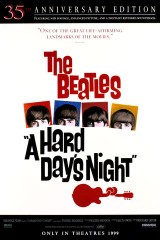
These are all films vying for my favorite film. The thing I love about all the films I chose for the list is that they still feel extraordinarily fresh, as if they were made yesterday. There’s a timeless quality to them and a vibrancy and an energy to all of them, but particularly A Hard Day’s Night really struck me, being a huge fan of rock and roll. It’s a film that really defies any sort of — it’s difficult to put it into a specific genre — it’s a rock and roll film, right? It’s also sort of like a documentary of the early years of Beatlemania, and it’s also comedically like a Marx Brothers film. I just love the combination of all of those things, which give it an intense vibrancy and charm. Also these are five films that I watch at least once a year. I always come back to them and the Criterion collection just restored [Hard Day’s Night]. It was a marvel to see it restored and how beautiful a movie it is.
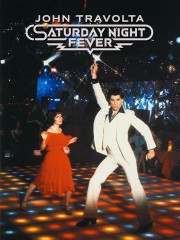
Moving to New York from Ohio in 1976, it was an opportunity for me to just basically gorge myself on films that I had never had an opportunity to see before. There were so many theaters, so many repertory theaters showing films. You could see three films for a dollar, you could see prints of these movies, and I was watching a lot of films. In 1977, Saturday Night Fever came out, and it was the first time I remember seeing a film twice. Sitting there and watching it once and sitting there and watching it again. Another musical choice, but different than A Hard Day’s Night because it felt like it really captured what was going on — at least what I felt was going on in New York at that particular time. Travolta’s performance in that film is one of the top ten performances I think I’ve seen in film in my entire life: very real portrayal of a character, the relationships all feel very authentic and real, and it’s got an energy and an emotional intensity that really stuck with me. Sticks with me all these years later. I always wanted to see someone do a sequel to it — not the sequel that exists, not Staying Alive, but the sequel that felt like — it would be interesting if someone would go back to do a Creed sort of version of where those characters are now.
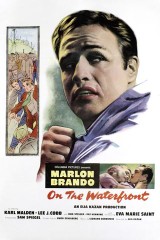
I actually own a print of this. It’s one of those movies that was pivotal [for] me. I remember it screened in 16mm at my high school. The emotional power of that movie — it’s the first time I ever felt such intense emotion watching a film. I wasn’t that well-versed in film in high school, but I knew I was being hit by something incredibly powerful. What really struck me was Marlon Brando’s performance. And I know that’s easy to say, but that’s why I never get tired of watching the film, and why I really wanted to own a print because there’s a level of acting there that went beyond anything I had seen before. And it still ranks as maybe the best performance I’ve ever seen on film. I find it fascinating every time I watch it. Plus he’s surrounded by a brilliant cast and also the location — the way the film was shot on location — at that time, it had never been done before. All of that adds to the fact that I have a pretty lousy print of the movie but that’s what’s fun about it — it even feels more real. And then Criterion — to be completely geeked out — released it again last year, and I didn’t know it was shot in three different formats. Television was becoming popular at the time so they didn’t know if they would go widescreen with it, 1:85, or the typical way I think it was released, which I think is 1:66, but it’s fascinating to look at those versions as well. This is one of the greats.
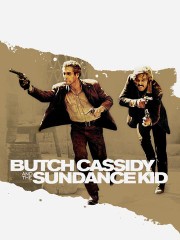
Godfather and Blazing Saddles got me into falling in love with film, but this is a pivotal movie that was probably — I think it was 1969 — prior to that I had been to the movies a few times and seen some hideous movies like Santa Claus Conquers the Martians and that sort of thing, and The Jungle Book. I went with my cousin to see Butch Cassidy. It was an amazing mixture of what I thought was sort of a poignant character study and a comedy. What’s amazing about the movie — and the reason I watch it time and time again — I had never seen such chemistry between two actors. Newman and Redford were just incredible together, and those sequences in the movie were some of the funniest sequences I’ve ever seen. So they taught me how to stage comedy a little bit, yet at the same time, it had serious undertones. It was beautifully directed and shot, and you watch it today, and it feels like it was made last week.
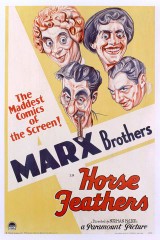
I watch this with my family a lot. All of the Marx Brothers movies have been very popular in the Columbus household for the last 20 years or so. I was a bit of a dictator making my kids watch these movies. They grew up with them because kids are really reluctant to watch black-and-white films. Our family loved the Marx Brothers films, and for some reason the one that we always went back to, and the one that we were obsessed with, was Horse Feathers. It’s 1932, so that’s going back a long way. Yet at the same time I would show that movie to my kids who were seven and five and three, and they were mesmerized. I learned a lot about comedy and breaking the rules in that movie — in terms of comedy — which extended to seeing movies like Blazing Saddles and Young Frankenstein and Annie Hall to a certain extent. The Marx Brothers started it all, and it’s smart comedy. The funny thing about the movie is, there are scenes that, still for me and my family, are falling down funny. So they can watch that movie and take away from it — maybe laugh a little harder than they do at some of the more modern comedies. That movie — and there’s like five or six Marx Brothers movies — is just a wonderful sort of family experience and that’s why it’s on the list.
The Young Messiah is now open in wide release.
This week on home video, we’ve got Ethan Hunt’s latest impossible mission, a Seth MacFarlane comedy sequel, the second chapter in a post-apocalyptic franchise, and a failed superhero reboot. Then we’ve also got an understated drama starring Richard Gere, a documentary about a brave young girl, and a few choices from the Criterion Collection. Read on for details:
Tom Cruise and relative newcomer Rebecca Ferguson star in this widely acclaimed thriller, in which the IMF is on the run from both the government and a shadowy band of bad guys. Special features include a chronicle of the film’s development, a look at Tom Cruise’s involvement, character profiles, and more.
Richard Gere and Jena Malone star in this Certified Fresh drama about a day in the life of a homeless man in Manhattan. No info on bonus features is available.

This documentary chronicles the story of education activist and Nobel Prize laureate Malala Yousafzai, who was wounded in a Taliban attack in Pakistan. Bonus feature information isn’t available at this time, and it’s only available on DVD.
The second installment of the dystopian sci-fi series finds Thomas (Dylan O’Brien) and his gang attempting to survive a barren landscape while on the run from an evil organization and deadly zombies. Extras include several featurettes on the story, characters, and visual effects (including a visual effects reel), as well as deleted scenes, a gag reel, and more.
In this follow-up to Seth MacFarlane’s hit 2012 comedy, Ted (voiced by MacFarlane) is married and wants to adopt a baby, but encounters trouble when the government declares he is property and has no legal standing. Special features include an extended look at the movie’s Comic-Con scenes, a gag reel, deleted scenes, and more.
Miles Teller, Michael B. Jordan, Kate Mara, and Jamie Bell star as the titular heroes, whose physical capabilities are enhanced when they teleport to an alternate dimension. Will they be able to stop a former friend who went through the same experience, but emerged with a vendetta? Extras include a profile of the team’s powers, a look at the creation of Planet Zero, concept art, and more.

The first of three choices from the Criterion Collection this week is a set of four Alfred Hitchcock thrillers: The Man Who Knew Too Much, The Lady Vanishes, The 39 Steps, and Foreign Correspondent. Each film comes with its own set of bonus features.
Next, we have Criterion’s tribute to phenomenal music films, including the Beatles’ feature debut A Hard Day’s Night, the concert film Monterey Pop, the Rolling Stones’s controversial Altamont Speedway show in Gimme Shelter, and The Who in Quadrophenia. As with the Hitchcock set, each film comes with its own special features.
And finally, we have Howard Brookner’s intimate portrait of William S. Burroughs, filmed over the course of five years back in 1983 but only discovered in 2011. Extras include a new interview with Brookner, rare outtakes, a 30-minute experimental edit of the film from 1981, and more.
This week, Across the Universe hits theaters. Julie Taymor‘s film, starring Evan Rachel Wood and Jim Sturgess as a young couple in the midst of the heady, chaotic 1960s, utilizes the Beatles‘ music to evoke the time period. With that in mind, it’s a good time to take a closer look at the Beatles’ cinematic legacy.
A number of films have attempted to distill the influence and essence of the Fab Four, some from the perspective of their fans (I Wanna Hold Your Hand, 82 percent on the Tomatometer), others from the enduring appeal of the group’s music (the notorious Sergeant Pepper’s Lonely Hearts Club Band, 17 percent); still others poke mild fun at Beatle history (The Rutles: All You Need is Cash, 88 percent). Even the group’s first bassist, Stu Sutcliffe, was the subject of a biopic (Backbeat, 74 percent). Ultimately, though, it’s the films in which the Beatles themselves star that remain the best testament to the group’s legend; like their records, the Beatles’ best movies are replete with bold innovation, a mischievous sense of humor, and a sheer joie de vivre.

It’s the personalities of the Beatles that keep the rest of A Hard Day’s Night from aging. The movie follows a day in the life of the young Beatles on their way to a television performance; it sounds simple enough, but the group must outwit its rabid fans, management, and the police, as well as overcoming the dissent sewn by Wilfrid Brambell as Paul’s crotchety grandfather. A Hard Day’s Night has a sophistication and formal daring that remains unmatched in the world of rock film; it’s “a comedy classic that cross-pollinated Jean-Luc Godard with the four Marx brothers,” wrote John Anderson of Newsday.

But something’s missing this time out. Despite the Beatles’ good humor, reasonably funny jokes, and several remarkable songs (including “Ticket to Ride,” “You’ve Got to Hide Your Love Away,” and the title tune), Help! lacks the easy charm and stylistic daring of Night. (And in this age of political correctness, some may find the exotic religious cult plotline a bit questionable). Still, Help! makes for moderately pleasant viewing; the Austin Powers films would later draw from this swingin’ spy movie parody. “While it’s true that it’s more Richard Lester’s vision than the group’s, it must be noted that Lester’s anarchic absurdity and quick cut camera gags make for a pretty good whole,” wrote Brad Laidman of Film Threat.


Though some of the animation may seem somewhat dated by today’s standards, the sense of daring contained within Yellow Submarine still seems fresh; the film exerted an influence on the films of Wes Anderson, particularly The Life Aquatic with Steve Zissou. (Those who see it as a stoner film miss the point; as the Beatles themselves knew, children are often unconscious surrealists). The film embodies “exactly what the Beatles represented emotionally and philosophically in the mid-’60s: artistic daring, cheeky non-sentimentality, a new generation taking over, naively confident the world was ‘getting better all the time,'” wrote William Arnold of the Seattle Post-Intelligencer.

In fact, it’s only when the band is playing that the old spirit of excitement and teamwork is revived; the group runs through its new material, which includes “Get Back,” “Two of Us,” and the title track, as well as some loose, ragged covers of R&B classics like “Kansas City” and “Lawdy Miss Clawdy.” And the famous rooftop concert that concludes Let It Be has a giddy, raucous air; you can feel the excitement of the crowd that gathers on the street below, and the brief respite for the Beatles from the bad feelings in the studio. (The rooftop concert was memorably recreated for U2’s “Where the Streets Have No Name” video.) Even though it ends on a note of triumph, Let It Be is a document of the dissolution of the Beatles, and as a result, it’s a bittersweet experience. “This was the only time the Beatles were not working for the camera in the characters associated with their respective personalities,” wrote Phil Hall in Film Threat.”The raw emotion on screen makes for unsettling yet hypnotic viewing.”

Time will tell if Across the Universe sets off another wave of Beatlemania. But one thing’s fore sure: when it comes to rock movies, nobody can top the Fab Four.
Director Tarsem Singh, best known for doing R.E.M videos such as "Losing My Religion," has been tapped (according to IMDb) to to helm the update of the 1973 classic "Westworld."
The film, which was written and directed by Michael Crichton, depicts a theme park where all your fantasies can come true, thanks to an army of high-end robots. In short order, the dream becomes a nightmare when the robots go on a killing frenzy. The film, which was an inspiration for later works such as "The Terminator" and "Jurassic Park" (also a Crichton work), was a great late career triumph for veteran actor Yul Brynner.
Pre-Governors office, there were rumors that Arnold Schwarzenegger, Sylvester Stallone, and Bruce Willis all wanted in on the remake. One plan is for Sly and Arnie to play the James Brolin / Richard Benjamin characters with Willis playing the android. Due to the "Terminator" connection, Arnie thought it might be fun to be the one being stalked. This, of course, is likely to change as casting and politics continue to develop.