(Photo by © Universal, © Warner Bros., © Paramount, © Dimension Films)
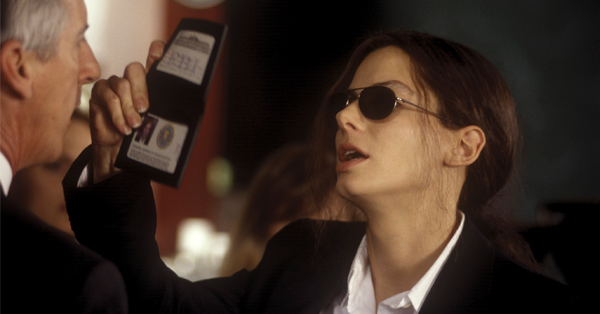
Those who saw John Krasinski‘s A Quiet Place earlier this year surprised to hear that the director and his co-star and wife, Emily Blunt, recently told Rotten Tomatoes that Jaws is their favorite movie. Their new creature feature opens with a scene that shocks audiences in ways that echo the Spielberg film’s famous first scene, and even goes one step further, breaking one of the biggest rules of horror (and nope, we’re not saying which).
The scene was not in the original screenplay, say co-writers Scott Beck and Bryan Woods; it was something Krasinski added himself in the rewrite phase. “I’ve got to give props to John for just being a crazy person,” says Beck. “I think he just really wanted, like, the opening of Jaws — let’s establish this monster right out the gate, and get really, really dark.” Woods adds: “You pull that on an audience and you instill this instinctual fear: These characters are fair game, so watch around every corner.”
Is it one of the scariest openings, ever, though? Time will tell — we need a few years and a lot of perspective to make those kinds of calls. For now, we at Rotten Tomatoes have voted on our favorite scary opening scenes up to now, and ranked them according to just how pinned-back-in-our seats we were the first time we saw them.

(Photo by © Paramount)
This is Quentin Tarantino’s favorite slasher flick and it’s not hard to see why: It’s gruesome as hell. It’s set in a mining town, and the slasher wears a mining get-up and uses mining tools, which means a lot of inventive swinging pickaxes and nail-gun use (so much so that the MPAA had the filmmakers slice out 9 minutes of gore from the original cut). The opening is basic, over in barely two minutes, and may have suffered a touch because of those cuts. But its simplicity and directness is kind of the point: This film isn’t wasting any time, and it didn’t come to play.
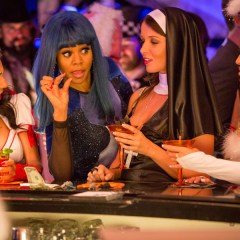
How did director Wes Craven and writer Kevin Williamson choose to up the ante on awesome openings in this sequel, which is actually slightly higher on the Tomatometer than the original? They showed us that original opening again, this time as a movie-within-the-movie (Stab!), starring Heather Graham as Casey Becker, who had been played in the original by Drew Barrymore. Confused? So is Jada Pinkett Smith’s Maureen, the actual victim of this super-meta opening. She just came out to see a dumb scary movie, and has no idea why her boyfriend has just stabbed her and the audience is doing absolutely nothing about it. Seriously, worst movie theater audience ever.

(Photo by (c) New Line)
Movie rule #96: When a flight steward says it’s going to be fine, you can bet that it really, really isn’t. This opening set the standard for the rest of the Final Destination franchise, and was believed at the time to be inspired by the explosion of TWA Flight 800 in 1996. Like the flight shown in the movie, that real-life 747 was on its way to Paris and carrying high school kids when it blew up shortly after takeoff.

(Photo by (c) New Line)
It’s hard to pick the best of the Final Destination openings — replace plane with car with roller coaster and so on and they’re essentially the same — but the Rotten Tomatoes staff votes have the third installment, starring Mary Elizabeth Winstead, nudging out the others. This time we’re at an amusement park, and the latest set of unlucky teenagers is killed (or not) on a roller coaster. It’s brilliantly staged, zeroing in on virtually every “could it happen?” thought that runs through your mind when strapping into a fast-moving ride: Will the wheels come loose? What if my seat lock comes undone? The film’s Devil’s Flight roller coaster was actually a ride called the Corkscrew in Playland in Vancouver, which was made to look higher — and much deadlier — in post-production.
Nothing really happens in the opening few minutes of Tobe Hooper’s infamous low-budget 1974 horror flick, and yet rarely has a movie evoked so much dread so quickly. There’s that (rather long) text scroll, laying out the movie’s “maybe-based-on-a-true-story” credentials, and then those camera flashes, shocking us to life with grisly images of decomposing eyes and other bits and bobs. Finally, Hooper pans out to reveal a ghastly, barely-human sculpture sat upon a grave marker. Fun fact: The Narrator is none other than John Larroquette, who has said he was paid for his efforts with a marijuana joint.
While 28 Days Later opens in an empty London, its sequel begins in a packed house somewhere in the countryside. We’re quickly introduced to the occupants, a sweet-seeming family and a Walking Dead-style crew of likable survivors. And then all hell breaks loose. It’s not just that director Juan Carlos Fresnadillo throws everything at the scene — “name” actors bite it, Scream-style, and kids are in no way off limits — that makes it such a gut punch. It’s the way the filmmakers upend expectations, particularly when it comes to our “hero”, played by Robert Carlyle. With each choice he makes, he reveals himself to be anything but a Rick Grimes. And frankly, when the dust settles, we’re leaning #TeamZombie.
Did you know Victor Salva’s monster flick is based on a true story? Well, the opening scene, in which the Creeper gets into his truck to tail two kids who catch him dumping a victim, was inspired by one. In 1990, Ray and Marie Thornton were driving on a Michigan road when they spotted Dennis DePue dumping what looked like a body behind an abandoned schoolhouse (it turned out to be his wife). In their court testimony, the Thorntons said that DePue proceeded to follow them in his van for miles.

(Photo by (c)Warner Bros.)
Scream and When A Stranger Calls may have horror-dom’s most famous problem callers, but Black Christmas’s pervy “moaner” is a close runner-up. The film’s opening sequence meanders a little, lurching from one cliché (stalker cam!) to another (hiding in the closet!), with detours into calls with mom and a bit of bathroom boozing. But when the sorority sisters circle around the phone to listen to the stalker — who goes from static-y groans to screechy vulgarities that we won’t repeat here — it’s as transfixing as it is disturbing.

(Photo by ©New Century Vista Film)
Sometimes seeing the aftermath of a horrible act can be even more terrifying than witnessing the act itself. The opening sequence of The Stepfather is a case in point. With each shot we’re given an awful little breadcrumb clue to what has just happened in this bland-looking suburban home. There’s the blood on Terry O’Quinn’s face. An out-of-place toy boat. A dial tone. And then… We won’t give it away. Director Joseph Ruben would go on to make more chillers in this vein — including Sleeping with the Enemy and The Good Son — but none would come close to creating moments as chilling as The Stepfather’s (very) cold open.

(Photo by ©New Century Vista Film)
A couple decides to go skinny dipping at night and it ends badly thanks to something bite-y in the water. Sound familiar? There is a lot that sounds and looks familiar about this Roger Corman-produced answer to Spielberg’s Jaws. But that doesn’t mean it isn’t fun in its own right — and memorable. A bunch of the Rotten Tomatoes staff saw this one when they were kids, and the opening scene left a mark.

(Photo by (c) Warner Bros.)
What’s worse than an iceberg — right ahead? A wire, right onboard. In the best part of this pretty mediocre movie, almost an entire ship’s worth of passengers is wiped out in one fell swoop when a wire snaps and slices across a dance floor packed with revelers. It takes the well-dressed folk a few seconds to realize they’ve all been cut in halves and quarters and thirds (depending on height), and when they do, the makeup department goes to work. Side note: The little girl who survives (she was just short enough to escape) is Emily Browning.
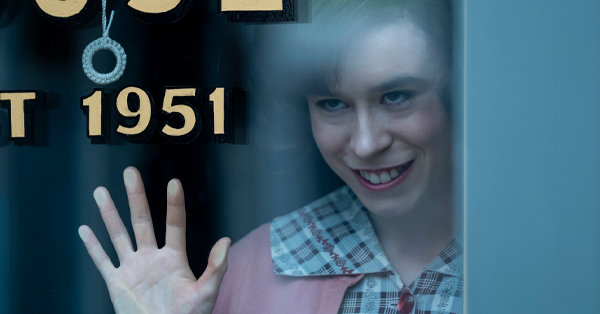
Robert Eggers’ unnerving opening plays on every parent’s — or babysitter’s — greatest fear: A child that vanishes the second you look away. Here, a game of peak-a-boo takes a dark turn when Thomasin’s (Anya Taylor-Joy) baby brother disappears and is then seen in the clutches of a witch. Said witch is then doing something to the baby that we can’t quite make out until… wait, is that a knife?
How exactly did Danny Boyle film in a completely empty — and completely eerie — central London? He had some help from his then teenage daughter, it turns out. Boyle has explained that in lieu of traffic marshals and police, which he couldn’t afford, his daughter and her friends tried to hold back traffic during the seven early mornings over which they shot the sequence.
High school is terrifying, and rarely has it been as terrifying as in the opening sequence of Brian De Palma’s Carrie. The film is no conventional horror flick, and the scene is no conventional horror opening, but its mark is indelible: Just try to wipe the image of a screaming Sissy Spacek begging for help from your memory.
Online snarks have said that Dawn of the Dead’s opening seven minutes were the peak of director Zack Snyder’s career. Frankly, they’d be the peak of most directors’ careers as far as we’re concerned. In the absolutely brutal sequence, Sarah Polley’s Ana wakes to discover her neighbor’s daughter is a ravenous zombie (the fast-moving 28 Days Later kind) who isn’t making any sort of distinctions between family and food. Eyes out for the “Here’s Johnny!” nod and ears out for the excellent use of Johnny Cash’s “When the Man Comes Around” over the killer credit sequence. [Editor’s note: This story originally said that Ana woke to find her own daughter was a zombie — we have corrected, and regret, the error.]
It Follows opens with an almost two-minute tracking shot that coldly observes a young girl running for her life on an idyllic suburban street. We eventually join her as she gets in her car and later find her next alone on a beach. Cut to… well, just watch it. There are no big scares or jumps or monsters in these few minutes. The key horror here is mystery: Why is she running? What is she running from? And what the hell did that to her?

(Photo by © Compass International Pictures)
John Carpenter told Rotten Tomatoes recently that you have two options for opening a horror film: “You can slow things down, lull people into a false sense of security, and then smack them in the face with it,” or “kick it into gear straight away — let’s go!” For 1978’s Halloween, he went with the latter approach, opening with a stalker-cam single shot that took him and his crew some eight hours to execute. Carpenter says he was inspired by long tracking shots in films like Orson Welles’ Touch of Evil.
Director Tommy Lee Wallace’s 1990 miniseries adaptation of Stephen King’s It doesn’t open with Georgie and Pennywise’s drain-side chat — it begins instead with the disappearance of a little girl and a memorably abandoned tricycle — but it does get to the scene eventually. When the moment does come, Wallace plays it TV safe: We see Tim Curry’s clown bearing his teeth and advancing on his victim before we cut to the next scene. Andy Muschietti takes the road less traveled in his treatment of the scene, which opens 2017’s It, showing Pennywise’s attack on poor Georgie in all of its gory glory. Yes, that’s a child getting his arm chomped off — and Muschietti isn’t letting us look away.
Wes Craven’s big comeback film kicked off a slasher revival and gave the horror genre one of its most famous lines (“What’s your favorite scary movie?”). Most of that was thanks to the opening scene, penned by horror fanatic Kevin Williamson, which plays out like a mashup of Jeopardy and the last half hour of Halloween. It was always going to be a nerve-shattering ten minutes; what made it more than that was the casting of Ghostface’s first big target, Casey Becker. Craven said he wanted to have the film’s biggest star die straight out the gate, and had considered offering the role to Alicia Silverstone. But when Drew Barrymore, who was set to take the lead role, said she wanted to do the opening scene, the plan changed and Craven had his “No they didn’t!” moment.
It took a lot of innovating to pull what is arguably cinema’s most famous opening together: Actress and stuntwoman Susan Blacklinie had hooks attached to her Levi’s so that drivers could pull her to and fro to get that jerked-by-a-Great-White effect; Spielberg employed a devastatingly effective predator’s-eye view to put us inside the hungry mind of the shark; and John Williams’ score did the rest of the work. The scene was a direct lift from the opening pages of Peter Benchley’s bestselling book. In those pages, the reader — like Spielberg’s camera — mostly inhabits the perspective of the beast (the opening line reads, “The great fish moves silently through the night.”). On page, the opening scene is as brutal and mysterious an attack as on screen. “At first, the woman thought she had snagged her leg on a rock or a piece of floating wood,” writes Benchley. “There was no initial pain, only one violent tug on her right leg. She reached down to touch her foot, treading water with her left leg to keep her head up, feeling in the blackness with her left hand.” Then comes the kicker: “She could not find her foot.”
Which scary opening scene is your favorite? Don’t see it on the list? Are you about to write us an angry letter asking how in Samara’s name we could leave out The Ring? Save the postage, and let us know what you think in the comments.

(Photo by Victor Chavez/Getty Images)
For kids who grew up in the 1980s, Joe Dante‘s name should be a familiar one. The director, who earned his stripes cutting trailers for Roger Corman early in his career, breathed life into fan favorites like Explorers, Innerspace, The ‘Burbs, and of course, the beloved horror comedy Gremlins. Among a long list of other credits, Dante was also the man at the helm of the original Piranha and the cult werewolf flick The Howling, and he contributed a segment to Twilight zone: The Movie, alongside John Landis, George Miller, and Steven Spielberg.
With Halloween coming up, Dante spoke to RT about his Five Favorite Horror Films, admitting “that’s always a tricky question, because there are so many more than five.” Thankfully, he agreed to narrow down his list, and he also spoke to us about why the genre appealed to him as a director, what it takes to make an effective horror comedy, and what he thinks about the current wave of horror filmmakers.
From my own personal tastes, my favorite horror film, I think, is a movie called The Innocents, which is based on this Henry James novel Turn of the Screw. The British picture from 1961 with Deborah Kerr as the repressed governess who goes to the faraway estate to take care of these kids who are seemingly possessed by the ghosts of the people who used to haunt the place. It’s a beautifully made movie and it’s not a rock-em’ sock-em’ movie, but its got really great psychological chills in it. And of course, there’s the eternal question as to whether the governess is imagining these things, or are they really happening? And it’s left kind of ambiguous, and it’s a really artful movie. I don’t think it was ever a particularly popular movie. I think a movie like The Haunting, which is somewhat similar, was a little bit more accessible to people than The Innocents, but, for my money, it’s, I think, the best horror film I’ve ever seen.
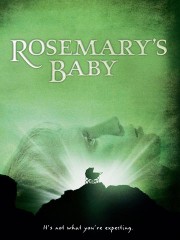
You know, I’d have to give a shout out to Rosemary’s Baby, which is not only a great horror film, but probably the most faithful adaptation of a book that I’ve ever seen on screen. The realistic ambience of New York in the ’60s is so palpable that it makes all of the horror tropes seem much more believable. We have a heroine we can identify with, and are the people around her all witches, or is she imagining it? Once again, there’s always a psychological component to a really good horror film. I don’t know if I’ve ever seen a film better directed than Rosemary’s Baby.
RT: Horror or otherwise?
Yeah, it’s one of the best-directed movies ever. There’s nothing wrong with it. You can’t really point to, “Oh, that doesn’t work.” No, it all works. It’s quite brilliant.
To go back to the ’30s, which is the movies I saw when I was growing up on television — it was one that they never showed, because it was lost for years and it was by James Whale. It’s called The Old Dark House, 1932. It’s currently about to be reissued on Blu-ray. For years, all you could see were these sort of beat-up prints I think they found in the mid-’60s, and they had been lost, because of a remake and some rights issues and stuff. Now, it’s sort of come back, and it’s got a great cast of Charles Laughton, Gloria Stuart, Boris Karloff, Melvyn Douglas, Raymond Massey.
It’s the classic “travelers stranded in the haunted house and the bridge has washed out”, but it’s the template for all the movies that followed it. It’s still one of the more watchable and disturbing movies from that period. And it’s a shame that it isn’t better known; it never got television distribution, and it wasn’t included in the package of Universal horror pictures because it wasn’t in their library anymore. It’s a chance, I think, for people to catch up with it now. I’m a big James Whale fan, and this might be his best picture.
RT: How were you able to see it, initially?
I got a 16mm print. I used to collect 16mm movies, and collectors very often were the ones who found the gems that weren’t in the mainstream. Now, of course, it’s all on video. I’ve seen a clip of the restoration and it really looks like it was shot yesterday. It’s really great.
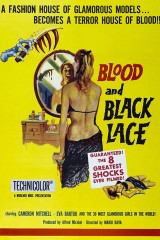
One of my favorite filmmakers is an Italian director named Mario Bava. His most famous movies have titles like Black Sunday and Black Sabbath and all that, but the one that really was astonishing at the time was a picture called Blood and Black Lace, which is one of the most gorgeously lit Technicolor movies I’ve ever seen. And it’s a whodunit kind of thing — a murderer in a fashion house and models are being killed in various gruesome ways. This is the early ’60s when you could get away with a lot more in the way of explicitness than you had been able to before, and these movies still basically played grindhouses. But it’s such a beautiful movie to look at, and the juxtaposition of beauty and death is really perverse in it. It runs through all his works, but in this particular movie, which I think is one of Tarantino’s favorites, it really comes to the fore. It’s a very entertaining picture, and very violent.
Bava was completely unknown when he was actually alive. Almost nobody except, you know, the most extreme film buffs ever saw those movies. But now, as often happens to people when it’s too late for them to enjoy it, he’s now revered, and people see his movies who didn’t even know they existed before.
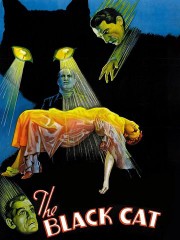
Growing up on movies on TV, part of the Universal package was a very, very weird and creepy movie called The Black Cat. Which is ostensibly based on Edgar Allen Poe’s story, but wasn’t. It’s a devil-worshiping movie with Karloff and Lugosi, and it’s directed by a guy named Edgar Ulmer, who was a very promising European director whose career ran afoul of the fact that he slept with the boss’s niece or something like that and got, basically, blackballed by the major studios. But before he did that, he was able to make this very, very dark and very dreamlike horror movie, which only runs about 65 minutes. It’s an art deco nightmare, and it’s got all these very perverse ideas and concepts running through it. It’s like watching somebody else’s bad dream.
It’s really a wonderful picture. I mean, Karloff has given better performances. The Body Snatcher is probably his best performance outside of Frankenstein, and that was on my list, but between The Body Snatcher and The Black Cat, I have to go with The Black Cat, because it’s so off-beat and kind of unique. There aren’t a lot of other movies like it.
The interesting thing is, now these movies are actually available to see. When I was growing up, you had to wait until two o’clock in the morning on Friday; they were going to run some movie, and if you didn’t watch it then, they weren’t gonna run it again for another year and a half or more. And you’d fall asleep anyway, you know. It was so hard to see these things. You had to really seek them out.
The Mario Bava movies, I had to go to the lowest dives, the crappiest grindhouses, to see these things, and often the prints were all beat up. But now, all this stuff is available, and it looks great. I just don’t think film lovers realize what a paradise they’re living in right now. [laughs] For those of us who really had to go the distance to seek these things out, it was really quite arduous.
Ryan Fujitani for Rotten Tomatoes: How did you first become interested in horror movies? Was it as simple as just seeing them on TV as a kid?
Joe Dante: It was really watching them as a kid. It was probably because you could see things in those movies that you couldn’t see in other movies, and they weren’t like what you saw when you went out on the street. They brought you into a different world, and maybe a world you didn’t want to live in for a long time, which is also good. And I got the usual nightmares. I imagined that there were giant spiders under my bed and everything, and my parents would say, “If these movies scare you so much, why do you see them? Why do you watch them?” And I don’t know. I can’t help myself. [laughs] And then, of course, ironically I ended up growing up to make them.
RT: How and when did you know that you wanted to make horror movies?
Dante: Well, I didn’t even realize that I wanted to make movies until I was quite a bit older. I was gonna be a cartoonist, and when I came out to California to work for Roger Corman making trailers, I realized that it was possible to actually make a movie, because when you make trailers you have to cut down a scene into the tiniest components of what makes it, and you sort of get a sense of, “Oh, you don’t need this shot, but you can use this shot and this leads to this.” And so, when I got a chance to direct a movie, I was much better prepared than, for instance, a writer, or an actor who doesn’t think editorially.
So I found that I enjoyed it, because it’s a very communal thing, making movies, because everybody’s involved. And then, of course, I gravitated to horror movies, because the second movie I was offered was a pictured called Piranha, which was a science fiction horror film. From then on, I did The Howling, which is a werewolf movie, and then I did Gremlins, and pretty much I started to get typed. But, I didn’t mind getting typed, because it was a genre that I liked. It wasn’t like I thought, “Well, I’m gonna be the next James Whale,” or something. There was really no need for that anymore. I was hoping to have a more varied career, and I’ve been lucky. I’ve been able to make comedies and things.

Joe Dante on the set of Twilight Zone: The Movie, 1983 (Photo by Warner Bros. courtesy Everett Collection)
You know, it’s a genre that’s always been close to my heart. What amazes me about it is that it was always so reviled, and it was always considered so second-rate, and now it’s one of the few genres that has lasted all this time and is now a tentpole genre. Now, it’s like, everybody knows that if we make a horror film, people are gonna go see it. So it’s become a staple. It was so funny, because zombie movies, I mean, nobody would walk across the street to see a zombie movie when I was kid. And now, it’s like a cash cow.
RT: What do you think about this new wave of contemporary horror, stuff like It Follows and The Witch?
Dante: Well, I think it’s really good. For a while the genre was laying kind of fallow, because after a certain point it’s like, “Well, now what do we do? We’ve done everything. The audience knows all the cliches. They know all the gimmicks. They know all the tricks.” And for a little while, people were finding their way, like, “How are we gonna do this? We can’t just keep making it the same movie over and over.”
Now there are people coming who actually have different takes on it and are presenting the stories in different ways. You know, female characters in particular have improved. And these movies, I’ve always believed, reflect the society that they’re in. I think you can go back and look at horror movies and you can really get an idea of what the society was like at the time and what the politics were. You know, when Night of the Living Dead came out in the middle of the Vietnam war, people started to notice that there was something going on. And now, I think you can go back to the ’30s, even the ’20s, and the German silents, and you can sort of get a sense of what the world was around them. It’s really fascinating.
RT: Do you think that’s one of the keys to making a good horror film? Reflecting the Zeitgeist, in a way?
Dante: I think so. I think there’s a lot of fear in the Zeitgeist, and if the idea is to instill fear in people, you have to figure out what’s scaring them right now. What’s the scariest thing going for them? And how can you exploit that? Now, with the current political situation and even the world political situation, people are very uneasy. This clown movie IT opened up to huge response, which I was kind of… You know, I looked around me before it opened, and I knew it had been done before for TV, but it just seemed to me this is probably going to make a killing, because people want to escape into that kind of a world as opposed to coming out of the theater and having to face Kim Jong-un and Donald Trump and all the other things that are going on.

Joe Dante on the set of Gremlins, 1984
RT: Your films in particular have often combined elements of horror with elements of comedy. Gremlins, for example, is frequently hailed as one of the most iconic examples of something that could be considered a “horror comedy.” For you, what’s the trick to blending the funny with the scary?
Dante: Well, it depends on what you mean by “scary.” There’s different kinds of scares. There’s jump scares, then there’s the hairs-on-the-back-of-your-neck scares, which are rare, but always effective. And, I mean, my generation grew up on Abbott and Costello Meet Frankenstein, you know? We’d seen the Frankenstein movies, and we took them seriously. Then all of a sudden, here was one that didn’t, except it did, because even though the comedians had the comic stuff, all the horror stuff was treated pretty straight. And it was pretty well-produced and pretty well-presented, and atmospheric. I think that there’s always been a tradition of horror comedies, but they’re always pretty atmospheric. Whether Bob Hope is in them or Martin and Lewis or whoever. You have to take the horror stuff pretty seriously, or else nobody takes anything seriously.
There’s always an element of absurdity in horror story. You have to find a way to channel that, so that people don’t laugh in the wrong places. And I think that’s one of the reasons that people like to lard their horror with some humor, because usually these stories are, taken at face value, pretty unbelievable, so in order to buy into that world, you have to give it some semblance of the world that the people in it live in. Which is why Bob Hope would be making wisecracks all through The Cat and the Canary, and that was all part of the fun. But there are a lot of horror films that don’t have any humor in them whatsoever and can be very grim, and that doesn’t mean they’re any less effective, but I prefer my horror with a little bit of humor.
RT: Do you do anything special to celebrate Halloween?
Dante: Well, I usually watch horror movies. [laughs] But it’s fun when the kids come. You know, the juvenile blackmail with the, “Give us candy or we’re gonna throw toilet paper all over your house.” I can get behind that.
A remake scoring better than its original counterpart? Rare, but it’s been done before as seen in this week’s gallery of every movie remake that got a higher Tomatometer than the first try!



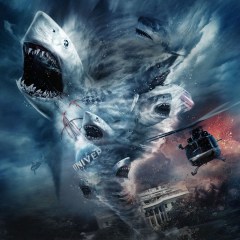
Look out! The fifth film in Syfy’s shark-infested franchise is coming: Sharknado: Global Swarming reunites Fin Shepard (Ian Ziering) and April Wexler (Tara Reid) in a globe-trotting, chainsaw-swinging shark-tornado adventure.
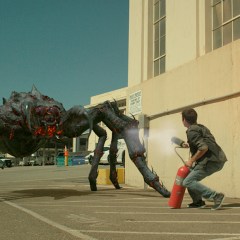
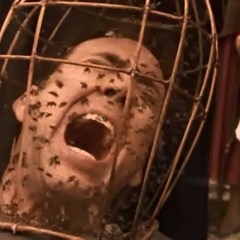
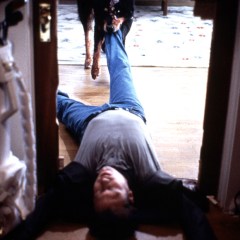
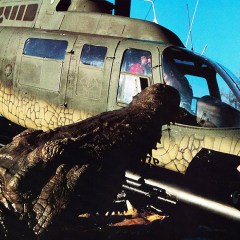
Can’t get enough ridiculous animal attacks? Check out this gallery of silly and savage cinematic offerings — many, like Sharknado, have lots of sequels if you need more mutant spiders or nightmare hybrid beasties.


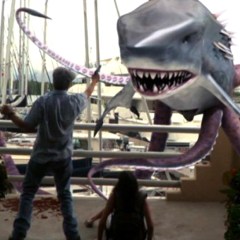
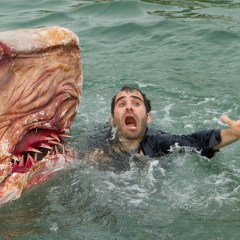





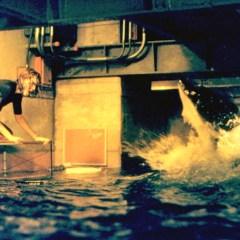
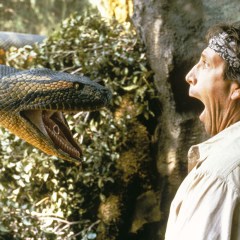

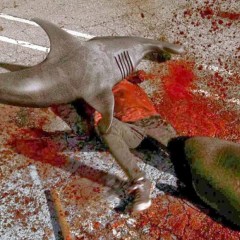
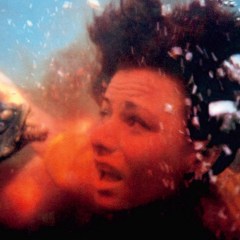


Sharknado: Global Swarming premieres August 6 at 8/7C on Syfy.
Repent, sinners: Earth Day is nigh! From toxic pollution to bottled water, nature has had just about enough of mankind’s thirst for convenience, as seen in this gallery of 24 tales of eco-terror!
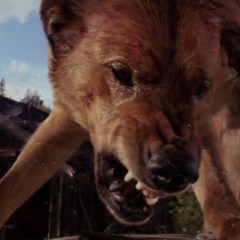
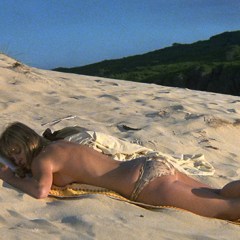
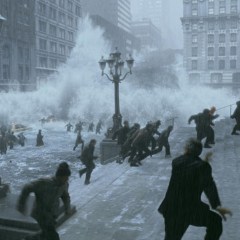

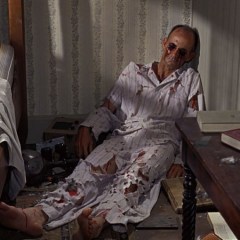
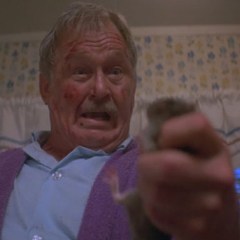
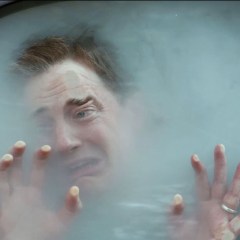
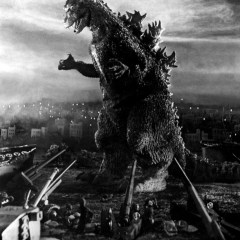
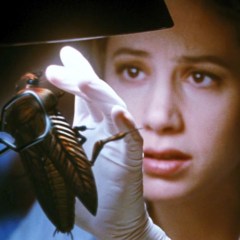




Movies as we know them just wouldn’t be the same without Roger Corman. Sure, filmmakers like Francis Ford Coppola, Martin Scorsese, Jonathan Demme, James Cameron and Joe Dante probably would have found their way into the game eventually, but the fact remains that they all got their start under the tutelage of Corman and his low-budget genre factory — a tireless B-picture production line that also gave early breaks to unknown young actors like Robert De Niro, Sylvester Stallone and Jack Nicholson. Perhaps more significantly, Corman was one of the pioneers of the independent movie model, cranking out scores of exploitation and genre films (and distributing foreign titles by Truffaut, Bergman, Fellini and Kurosawa) that turned profits even as they flaunted the traditional studio system. (Not to be discounted: he also directed a handful of genuinely fine movies, like the Edgar Allan Poe adaptation The Masque of the Red Death.) This week, Corman is celebrated in Alex Stapleton’s documentary Corman’s World: Exploits of a Hollywood Rebel, a career-spanning look at his work that gathers together exultant testimonials from many of his most famous pupils. We caught up with Corman earlier this week for a chat about his career and his “graduates,” his thoughts on independent film, and how the Lucas/Spielberg blockbusters spelled doom for genre pictures. First, here are Corman’s five favorite films.
Battleship Potemkin (Sergei M. Eistenstein, 1925; 100% Tomatometer)
Well, if I were to pick my five favorites I would probably start with Battleship Potemkin, the great Russian silent film. To me, that is the greatest film ever made. It was probably the originator of a number of cutting techniques — the “Odessa steps” sequence, with the baby carriage rolling own the steps at the same time the troops are marching down the steps, is still one of the most powerful montage sequences I’ve ever seen.
If I went on to number two, there it becomes more difficult. I would say probably Lawrence of Arabia. I would say simply for the epic scope; the broad expanses and deserts, and then cutting in tight from these giant long shots to Lawrence and the other characters. And the power of Peter O’Toole’s performance as Lawrence.
Citizen Kane: So many people would pick that and there isn’t much I could say about it. The photography is extremely good. He was using a lot of low angles, he was using covered sets; and at that time, and still, very few art directors will put a ceiling on a set because it makes it very difficult to light, but he gave it a great feeling of realism. Also, it was a brilliant script. It’s well directed, well acted — Welles himself is brilliant as Kane — and it really stems from the script.
Did you ever meet Orson Welles?
Yes, I did meet Orson Welles. Orson and Peter Bogdanovich and I had dinner one night, and I met him a few other times. When I did The St. Valentine’s Massacre at Fox I wanted classical actors for Al Capone, the leader of the South Side gang, and Bugs Moran, the leader of the North Side gang. We cast Jason Robards for Bugs Moran and I wanted Orson Welles for Al Capone. The executives at the studio said they agreed with Jason, but they said, “Roger” — and I was fairly young at the time — “this is your first picture for a major studio, we have to tell you nobody can work with Orson Welles. He takes over the set and does anything he wants.” I told the story to Orson and Orson said, “[I’m] probably the most cooperative actor anybody ever saw! I don”t know what they’re talking about. I would have been great as Capone!” [laughs]
Then each one becomes more difficult as I go along. On the Waterfront — you go straight to Marlon Brando. It was a good picture all around, a good script, and Kazan directed it brilliantly. And the shooting on location, I would assume they would have never shot in a studio — the look of the film gives a great sense of realism, that you are there on the waterfront, you’re there in cold weather, you can see the breath coming out of the actors mouths. I would say it’s probably — probably — Marlon’s best performance, although you would have to give a nod to Godfather.
You know, I would pick Jim Cameron’s picture, Avatar, as a fifth. It’s the only new picture, I think, that can be up there in that group. Jim Cameron, one of our graduates — who started making low-budget science fiction pictures for us — went and jumped ahead and here’s Avatar, the most expensive science fiction picture ever made. Jim’s a technical genius, and the fact that he single-handedly brought back 3D — which had been up there, in and out a few times; in the ’50s and then forgotten — and he used it beautifully and sensitively. So many times when a director’s working with 3D you have the shot of the arrow coming out of the screen, shooting straight at the audience, and effects like that; he deliberately stayed away from that type of effect and just showed you the 3D world. And the use of computer graphics, green screen, motion capture and so forth for the blue-skinned people on the planet — I just thought it all came together as a brilliant film, both technically, in the way he used 3D, and in the beauty of the picture itself.
Speaking of your graduates using 3D — have you had a chance to see Martin Scorsese’s Hugo yet?
Yes, I saw Hugo and I was very impressed with it. Again, Marty used 3D sensitively and intelligently, and once more he was restrained in the use of 3D. You had a few things coming out toward you, but primarily you became immersed in the story, and Marty filmed a great story. The story of Georges Méliès, the old French director and one of the originators of film, and the story the young boy I thought was beautifully down. I think it’s an excellent film.
Next, Corman talks about some of his famous graduates, the state of independent film, and how the Spielberg-Lucas blockbusters spelled doom for his genre movies.
You’ve fostered many future-great directors on your productions; filmmakers like Martin Scorsese and James Cameron. Did you have a sense at the time that they were going on to big things?
Roger Corman: I was convinced they were both brilliant and that they would have fine careers, but I had no way of knowing the heights to which they would actually rise. I knew — either knew or believed — they would be successful. I couldn’t predict how successful.
Was there anyone who you worked with that went on to surprise you?
Well most of them I thought were good, but one who surprised me, and on his very first picture, was Ron Howard. Ron had played the lead in Eat My Dust, a comedy car chase film, and when we did the sequel — because the first one was so successful, we did Grand Theft Auto — he played the lead and he directed. I was a little bit apprehensive about his ability to both act and direct in the same film — and he just showed right there that he could do it. Grand Theft Auto became sort of a B-picture classic, and it showed right there what a fine director Ron was.
He would have been quite young at the time, too.
Yes. I knew he had gone to the SC film school for a while but he didn’t graduate because he was working so much as an actor; but I knew he had something of a background. So that reassured me.
Let’s talk a bit about Corman’s World. Why has it taken so long for someone to make this documentary about you? It feels like there should have been many by now.
[Laughs] There was a documentary made in the late 1970s [Roger Corman: Hollywood’s Wild Rebel, 1978], which I thought was a well-made documentary, but I guess nobody thought of doing it again until [director] Alex [Stapleton] came up with the idea. She asked me, and I talked with her a little bit; she’s very intelligent and very sensitive, and she understood a great deal of what I was doing. I was just impressed with her and I said, “Fine, let’s go ahead.” I’m a little bit surprised at the number of people she got to be interviewed for it; it became a bigger picture than I thought.
It must be nice to have all these big stars and filmmakers come out and say, “We got our start with Roger Corman.”
[Laughs] I was a little surprised that they were all there, and a number of them showed a certain amount of emotion — and I felt a reciprocal emotion. I thought, there we were — we were all young at one time — and here we are; we’re still working
Jack Nicholson quips that — by mistake — you occasionally happened to make a good movie —
[Laughs]
Do you have a favorite?
It varies from time to time. For today — of the pictures I produced and directed — maybe The Intruder, which was a picture I did with a new young actor, Bill Shatner, about racial integration, in 1960. And then one of the Poe pictures — maybe Masque of the Red Death. I was working in England and I had greater access to facilities for the construction of the sets. We had the best look of any of the Poe films on Masque.
Nicolas Roeg’s photography on that film is incredible.
Yes. He was a brilliant young cameraman. I believe he may have won the English equivalent of the Academy Award for best cinematography, which was surprising because it was a very low-budget picture.
You haven’t directed since the early ’70s. Did you ever consider going back to it?
Well, I had directed so many films that I just decided to take a year off in 1970, and then come back after the traditional sabbatical, but during that time I got bored and I started my own production company, New World. I got so involved in producing — we were making 10, 12 films a year — that I just never got back to directing.
As one of the most successful independent producers outside of Hollywood, what’s your opinion of the industry at present? Is it a good time to make independent films?
No. These are not good times for independent films. When I first started, and up until around the mid-’90s, every theatrical film I made got a full theatrical release. Starting in the mid-’90s and up through the last 15 years or so, the trend has been growing in which these big-budget tent-pole films, and the normal major studio films, dominate the market to the point where it’s very difficult for medium-budget or low-budget independent films to get a full theatrical release. Every now and then one does break through, but as a generality they do not — and that has taken away part of the pleasure and the satisfaction of making films; but also simply the commercial potential.
Without the theatrical distribution we have to depend on DVD, VOD, cable, foreign sales and so forth, and one of the key components there is DVD — and that is slipping. It isn’t slipping as much as some people think, but it is definitely dropping a little bit.
Over the past few decades we’ve seen “cult” film sensibilities gradually assimilated into mainstream product. What was it like watching that happen, as someone whose stock in trade was genre and exploitation movies?
I think it started with Jaws. When Jaws came out Vincent Canby, the lead critic at The New York Times, said, “What is Jaws but a big-budget Roger Corman film?” He was half-right: it was to a certain extent a big-budget Roger Corman film, but it was also better. The fact that this bigger and better film had come out, striking right into the heart of the type of film that I and my compatriots were making, started the beginning of the just-slight slippage for us, and difficulty for us at the box-office. When Star Wars came out, I felt the same thing. I felt these two pictures are changing the course of Hollywood, and the ones that are going to be hurt are my compatriots and me.
Were there not more low-budget genre opportunities as a result, or did they make it harder?
They made it harder, right from the beginning. Particularly in science fiction films: we had very little money to do special effects and the giant special effects — to a certain extent in Jaws but then to a great extent in Star Wars — those special effects were so spectacular that there was no way that we could compete. It wasn’t just that Star Wars had great special effects — it was well written, well directed, well acted; it was just a good all-round picture — but the special effects were so phenomenal. We tried to compete. I raised my budgets a little bit to try and get special effects, which I did, and it enabled us to maintain our presence theatrically for a certain length of time; but we had been damaged.
There’s still a healthy legacy from what you achieved, in the films of people like Eli Roth and Quentin Tarantino — to pick just a couple of random examples.
Yes. I know Eli and Quentin and we’ve talked about it, and if there is any second or third generation they are the leaders of it — because they’re taking some of the themes and ideas we had, and they’ve got more money to spend so they’re making them bigger. Not bigger to the extent of Avatar or Star Wars or something like that, but big enough so that they can get a very good film — and they’re both extremely talented filmmakers.
Finally, you received an honorary Oscar not too long ago. How did that feel, to be venerated by the Hollywood establishment?
I don’t know if I would use the word “venerated” [laughs], but anyway — I would say “recognized” — I knew I was up for it , because the Lifetime Achievement Awards are not voted on and announced to peoples’ surprise on the show, they’re voted in advance by the board of governors of the Academy. They tell you that you’re going to get it. I knew I was being considered, and I said, “I have no chance. I make low-budget pictures — they’re not going to give an Academy Award to someone who makes low-budget pictures.” And I was truly surprised — I was gratified. I was pleased.
It was thoroughly well-deserved.
Thank you.
Corman’s World: Exploits of a Hollywood Rebel opens in select theaters this week.
As Piranha 3-D chomps into theaters in all of its glorious B-movie gore, we caught up with the man behind Roger Corman’s decidedly more modest 1978 original — director Joe Dante, then making his third feature film ahead of hits like The Howling, The Twilight Zone and, of course, 1984’s horror-comedy classic, Gremlins.
RT spoke to Dante recently in Melbourne, then hosting a retrospective of his career, and asked him to name his all-time five favorite films. Though his picks are now regarded as classics, many weren’t well-reviewed or even financially successful upon their first releases. ?Psychologically, maybe it reflects my career,? Dante laughs. ?No, I?m a firm believer that movies are not best appreciated at the time they?re released. They need to age a little, like wine, and people can?t really assess a movie until a couple of years have passed, at least.?
To Be or Not to Be (1942,
97% Tomatometer)
It?s a brilliantly angry comedy that was made during WWII. It was obviously considered to be in very poor taste, because it was making jokes about concentration camps and so on, but it?s a very personal and passionate film that also happens to be very funny.
Once Upon a Time in the West (1968,
98% Tomatometer)
The apotheosis of the Italian Western. Sergio Leone had been examining themes from the West of a number of pictures and here they coalesced into one poetic fable that is strikingly beautiful to watch and very moving. Again, it was not a success when it came out, and was brutally cut after a number of engagements, but now has belatedly been appreciated and restored.
Touch of Evil (1958,
94% Tomatometer)
This was Orson Welles? last chance to work for a major studio and it was all going quite well until they saw it and didn?t quite get what he was doing. But it?s an audacious film, with all of his usual signature flourishes. Prior to that period, he?d seldom had the opportunity to use the technology the studios had and so it?s an exciting film to see visually. Thematically, it?s very dark. At its heart it?s a Universal-International B-picture, which is what they wanted. Their reaction to it is fairly inexplicable because the movie is extremely entertaining and could?ve been promoted into a solid box-office picture. Instead it was released at the bottom of a double bill and they fooled around with it.
The Night of the Hunter (1955,
98% Tomatometer)
The Night of the Hunter was Charles Laughton?s only film as a director and its poor reception pretty much killed his directing career. It?s a remarkable debut and there?s no other film quite like it. It?s very reliant on imager from back in the days of D.W. Griffith and it?s strikingly designed and extremely dark. I saw it at a kiddie matinee when I was a child and I was just terrified. It has such a fairy tale atmosphere about it that it probably speaks more directly to children than it does to adults.
The Bride of Frankenstein (1935,
100% Tomatometer)
It?s one of those pictures that puts the lie to that idea that the sequel is never better than the original. Again, you have a filmmaker in James Whale who has now been given more resources to explore the same themes and issues as he did in the first film but he brings along with it an attitude towards the material and a result he doesn?t so much kid it as parody it. It?s a beautiful film to look at, extremely well acted, very witty.

It’s the future, or so we keep being told, but while every second movie seems to be getting the 3D treatment in the wake of Avatar‘s world-conquering success in the format, when you see Pixar’s forthcoming Toy Story 3 — which makes outstanding use of the third dimension, in service of a great story — it’s easy to see how the horizons of cinema as we know it could well change to embrace the technology. To mark the release of the Disney-Pixar film, Rotten Tomatoes put on the 3D goggles and took a look into the near future, to bring you a preview of 10 of the must-see movies on their way over the next year…

Despicable Me is the first feature co-directed by Chris Renaud, who was Oscar-nominated for his short No Time For Nuts, which starred prehistoric saber-toothed squirrel Scrat from the Ice Age series. Realizing that such supporting characters — think also the penguins of Madagascar and the Little Green Men of Toy Story — often steal the show, much of Despicable Me appears focused on Gru’s relationship with his overall-wearing popcorn-a-like minions. These creatures are sure to be a hit with the kids, while the stellar voice cast, which includes Russell Brand, Kristen Wiig, Danny McBride and Ken Jeong, ought to keep parents amused. The crazed scenario, which lends itself to dozens of minion-launched rockets and roller-coaster 360-degree spinouts, should ensure the 3D is used to maximum effect.

If you’ve never seen Tim Burton’s 1984 short, do yourself a favor and watch it on The Nightmare Before Christmas extras. Shot in beautiful B&W that anticipates the classic Hollywood horror flavor of his later Ed Wood and offering the graveside humor of Beetlejuice and Nightmare, this has modern-day schoolboy Victor Frankenstein inspired by his science teacher’s (cult legend Paul Bartel) frog-zapping experiments to use electricity to bring back to life his dearly departed doggie Sparky. Sympathy for the monster/outsider and terrifically droll dialogue (dad Daniel Stern says to mom Shelley Duvall: “I guess we can’t punish Victor for bringing Sparky back from the dead”) are other Burton trademarks that emerged fully formed. All that said, Frankenweenie is a linear 29 minutes and didn’t reflect the filmmaker’s original intention to make it in stop motion. Now, though, Disney is giving him creative control to design the characters and expand the story so that other schoolkids learn Victor’s secret and start re-animating their dead pets. An uprising of zombie goldfish, iguanas, cats and dogs, conceptualized and made by Burton, in 3-D and in glorious black and white? Sold.

Nic Cage chews the scenery and unveils absurd bouffants with pleasing regularity. But no matter how crazy his excesses in Bad Lieutenant: Port Of Call New Orleans or Knowing, we have a feeling we haven’t really seen the full magic of his facial frenzy and follicular follies until they’ve been realized in three dimensions. Here’s what you need to know about Drive Angry: He plays a dad tracking down those responsible for killing his daughter. It features a ’69 Dodge Charger and a ’71 Chevrolet Chevelle. Eye candy Amber Heard appears. So do David Morse and William Fichtner and a dollar’ll get you two that they’ll be playing bad guys. Tom Atkins shows up but we’re betting he’s too goddamned likable to be anything other than an old pal of Cage’s character. And just to amp up the guilty-pleasure must-see vibe: Cage told MTV in April that a) this time he “dyed the hair [our italics] lighter because I think that’s what the character should look like” and b) “There’s a supernatural element to it as well, which is keeping with what my interests are right now.” So, it’s Ghost Driver, as conceived by Patrick Lussier, director of the My Bloody Valentine remake? Schlocktastic!

We didn’t include Avatar 2 on this list because — duh — it’s a given we want to see it. But before that we’re keen to venture into the Sanctum, whose production James Cameron has been overseeing in Australia this year. The lean $30m film, which uses the Avatar cameras, is based on the real-life experience of Andrew Wight, an Aussie adventurer who led an underwater caving expedition that got trapped in a subterranean hell-maze for two days after a flash flood blocked the entrance to the system. Wight has since produced Cameron’s Aliens of the Deep and Ghosts of the Abyss and is producing and writing Sanctum, with the film directed by compatriot Alistair Grierson, who proved his action and suspense chops with low-budget WWII flick Kokoda. RT saw some 3D proof-of-concept footage a few months back and can testify that visual immersion in the dark depths triggered all sorts of spine-tingling fear.

We love the 1978 original but recognize it as a cheap-ass cash-in on Jaws that just happened to be awesome because Roger Corman put Joe Dante behind the camera with a script from John Sayles. While it’d be a bit much to hope for the same winning combination of scares, schlock and spoof from director Alexandre Aja (High Tension and The Hills Have Eyes weren’t exactly laugh riots) and writers Josh Stohlberg and Peter Goldfinger (Good Luck Chuck, Sorority Row) what is guaranteed are a lot of in-your-face piranha attacks. And with Eli Roth playing the MC of a wet T-shirt contest, you can count on at least some bad-taste laughs with the carnage. A couple of fun facts: the first Piranha spin-off was sequel Piranha II: The Spawning, which was the feature debut of 3Dmeister James Cameron, and there was a 1995 TV movie remake called Piranha, which marked Mila Kunis’ first major role.

Have stunt pranks gone out of style? Before you answer, think right back to the start of cinema. Okay, so Mack Sennett and Buster Keaton seldom upended themselves in full portable toilets to get a laugh. But the point is that stupid stuff that might kill people always has an audience. The Jackass crew, led by Johnny Knoxville, have reunited for this, perhaps the final frontier for the franchise — at least until technology is developed that actually beams the madmen into your living room so they can spray you with bodily fluids or drive a nail through your scrotum. So, embrace Jackass 3D, we say. Having Johnny, Bam and the gang figuratively in your face might be the safest way to vicariously experience a lot of otherwise pretty painful stuff. As for the aesthetics of the thing, director Lance Bangs told TimesOnline a few weeks back: “It’s utterly crazy. Everything in 3D looks as brightly coloured as candy. I’m a cameraman on it, and it’s amazing to watch the footage being turned 3D, like watching everything through a viewfinder.” For those who’d sniff that acclaimed music-vid director Bangs and Jackass co-creator Spike Jonze should have — you know — grown up by now would do well to note they’ve made this while also creating The Lazarus Effect, an HBO documentary about Aids patients in Zambia. Make sure you see that, too.

It’s not quite Dylan goes electric, but The Adventures Of Tintin: Secret of The Unicorn sees Steven Spielberg finally embrace digital. That he’s doing it at WETA in 3D motion capture with Peter Jackson producing and with a beloved period comic character makes the possibilities of the playground all the more intriguing. The cast features Jamie Bell and Daniel Craig but also Gollum hisself Andy Serkis and Britcom stars Simon Pegg and Nick Frost. The scriptwriters include Edgar Wright and Dr. Who and Coupling‘s Stephen Moff. All this means there’s the distinct whiff of Belgian-American-British-Kiwi comedy-action genius at work. If you factor in that Spielberg and Tintin creator Herge fell for each other back in 1981, and that the latter believed the former was the only filmmaker who could do his creation justice, this will be 30 years in the making when it premieres late next year.

Flawed supervillains are the new black for 3D animation in 2010. Following Despicable Me‘s Gru comes the titular baddie, voiced by Will Ferrell, whose claim to be an evil genius is somewhat laughable given his every plan to take over Metro City has been thwarted by Metro Man, a superhero with the voice of Brad Pitt. Megamind’s goofy attempts to be more than a clichéd nogoodnick — alligator pits are sooooo last year — and show-downs with the insufferably right-on superhero promise fun visuals. Same goes for a Superman-mocking opener which sees eight-day-old Megamind jettisoned from his home planet just before it’s sucked into a black hole. Having Tina Fey and Jonah Hill on board for supporting vocals adds to the expectation of a breezy good time.

Back in 1982, the last 3D revival was getting underway, with in-your-face gimmick adding to the schlocky fun of Parasite and Friday the 13th Part III. But that year’s truly inventive visuals — even above and beyond the towering likes of Blade Runner and The Thing — were showcased in Tron. It was the first movie to make extensive use of computer animation — primarily in scenes involving the light vehicles — which was interspersed with backlit animation and an ingenious new take on rotoscope techniques. The technology and distinct look of Tron anticipated the revolution we’ve experienced recently thanks to digital effects, motion-capture and 3D. So, it’s only fitting that Tron: Legacy will most likely set the post-Avatar benchmark for visual immersion. The storyline — Kevin Flynn’s son disappears into the same virtual world that claimed his dad all those years ago — feels unforced and the seamlessness continues with the return of key cast members Jeff Bridges and Bruce Boxleitner. What has changed in the record-setting 28 years between original and sequel is the ability to realize filmmakers’ wildest imaginings in three-dimensions. Strapping yourself in before the light cycles start racing may be a good idea.

We’ve steered clear of 3D conversions with this list because experience has so far shown that movies conceived and shot in the format work better than those that have it applied in retrospect. That said, Zack Snyder’s films are perhaps in a class of their own. No matter whether you loved or hated it, parts of 300 had astounding visual depth and the same goes for Watchmen. You can imagine were those films converted they’d look as though they’d been conceived for 3D. Which brings us to Sucker Punch. This action-fantasy gives riot-gal Baby Doll five days in which to escape a mental asylum with her posse of kick-ass femmes or otherwise face lobotimization. That this “Alice In Wonderland with machine guns” is set in the 1950s and blurs the lines of reality with parallel world narratives means that Snyder’s got a huge palate with which to work. Emily Browning, Vanessa Hudgens, Jena Malone, Abbie Cornish (pictured), Jamie Chung, Carla Gugino represent for the chicks, while Jon Hamm, Scott Glenn, Robin Hood’s Oscar Isaac and Black Dynamite‘s Michael Jai White hold down the fort for the dudes. Sucker Punch is a six-year labor of love for Snyder and it marks the first time he has worked on a feature that he originated (along with writer Steve Shibuya) so we look forward to seeing what the man does when freed of the confines of remake or adaptation.

Alexandre Aja is the French horror prodigy, inducted into Alan Jones’ splat pack, whose first film High Tension (Switchblade Romance in the UK) led to the high profile Hollywood remake of The Hills Have Eyes and now to Mirrors, a new take on a Korean original.
Kiefer Sutherland stars as a beleaguered ex-Cop who takes a nightwatchman job in an abandoned department store with a murky past. The silver-backed glass of the title is concealing a dark secret.
We caught up with Aja for his only UK interview to learn more about the movie as well as his latest project, a 3D remake of Joe Dante‘s classic Piranha.
I saw the movie recently at Frightfest.
Which cut of the movie did you see? Did you know there’s a cut for the UK which is different from the cut that’s being used in the rest of the world. The movie was rated 18 and they butchered the movie to get it rated under 15. They might have shown you the good one because they only did the cuts very recently. The first cut has been released in the States and the rest of the world. Fox decided to cut it here. I really don’t know why they took that decision.
It’s strange because usually in the UK it’s good. High Tension was released uncut, and The Hills Have Eyes was as well.

This has been around for a while.
Yeah, it was right after The Hills Have Eyes that I received the script from Fox not knowing it was based on the Korean movie. I didn’t really connect with the story or the characters. But in the movie itself something really strong stuck with me after reading the script and that was the idea of using the mirrors not only as an object but as a killing device. I thought it was something that hadn’t been done before but it tapped into this universal fear we all have inside of us. It had been waiting to be tapped.
The idea of an alternate reality behind the mirrors is something we all thought about as kids.
Of course, there is something about looking on this side of the mirror to see if we can look through to the other side.
Did you see the Korean film in the end?
Of course, after we read the script I went to see the movie and the movie itself confirmed everything I thought about the script and the idea that you could control the reflection and to make you do stuff you’re not supposed to do.
Who wrote that English script then?
I don’t remember, but it was basically word-for-word the Korean movie. Scene by scene. We completely rewrote it, and that was the deal with Fox. Let us, Greg Levasseur and I, take the script and write a completely new one with it. I wanted to keep the idea that we have mirrors everywhere around us and I wanted to not only have them in the department store but to have them all around. I wanted to find a way to get out of the department store and bring the threat into the world. And, of course, I realised I could take it beyond just the mirrors and into every reflecting surface like the water.

What was it about Keifer that made him the right choice?
When I was writing the script I realised the fact that making this movie would be more expensive than The Hills Have Eyes and I knew I would need a strong leading actor – a big star. I started thinking about all the classic movie-star men and Keifer was one of the first men that came to my mind because I was thinking about who could play that ex-cop character who’d lost everything, turned to alcohol and was really trying to put his life back together by taking a job as a night watchman. I was thinking of Keifer in Flatliners. I was twelve or fourteen when I saw Flatliners and it was such an amzing movie. It was really scary and his character was so cool and romantic, and dark at the same time. It was exactly the character we were thinking so for me Keifer was an obvious choice.
Yeah, my goal was to bring the other Keifer back. To bring the Keifer we used to see in The Vanishing, Flatliners, The Lost Boys. Not the Keifer who became Jack Bauer. But at the same time it was interesting because Keifer is not an actor who makes it a composition. He’s an actor with a personality of his own and every character he plays is a side of himself. When you spend time with him, as I did, you realise that he is the guy from Flatliners, he is Jack Bauer, he’s all of them.
Were you surprised by what he brought to the material?
We met and felt a connection immediately and we made a deal almost on the spot which was that he was in charge of making that character believable and deep and making something scary and suspenseful. Together we’d make the best movie we possibly could.
You spoke about not wanting to get pigeonholed as a horror director, but you’ve stayed in the genre ever since High Tension. Why?
I love the genre. As an audience member I love to be scared. The only thing as a filmmaker I don’t want to do is to repeat myself and so far I have the feeling that High Tension and The Hills Have Eyes and P2 are all completely different movies. Maybe I will reach a point where I’ve felt that I’ve explored all the subgenres within horror and from that point I will maybe look for something else, or some other kind of movie.

Right now I’m really attracted by stories and a lot of the stories that I’m interested in right now are dealing with a genre element.
Does it ever affect you, surrounding yourself with horrific images all the time?
For the first time on this film I started to scare myself with what I was writing. I’m not superstitious and I don’t believe in the supernatural, really, in movies. While writing we did so much research in the history and legends and it started to make an affect.
What’s the status on Piranha 3D?
We’re preparing to shoot in Spring. The thing is it’s such a difficult movie, not only because of the technicality of it and the CGI fish, but also because it all happens in a lake. We were supposed to start shooting now, but the longer to leave it the colder the water gets. The movie takes place during Spring Break and, of course, the studio wanted it ready for the summer, but if you’ve got 1000 people who need to get murdered in the water, you have to wait for the right temperature for the water, for the weather, for everything.

Most of the film takes place outside on location in the lake. It’s all there, it’s so simple. An earthquake releases prehistoric piranhas during Spring Break. All these drunk American kids being torn to shreds by crazy fish. You can’t make something more different than Mirrors than this movie and I’m really excited about it because it’s such a thrill ride. It’s super-gore, super-action, it’s going to be really amazing. I’m so excited about that project.
Do you embrace these challenges? Desert, then mirrors, now underwater with CGI fish in 3D…
I have a feeling that may be true because when I did High Tension we had only $2m, shot everything by night and it was a nightmare. I had a feeling it would be the most difficult movie I ever made. And then we made The Hills Have Eyes in the middle of the summer in the desert and after that I thought no-one could do anything more difficult. Then we spent 6 weeks in an underground parking garage for P2 and Mirrors was just something no-one can imagine because of all the technicalities. This is way more difficult and way more challenging than all the other movies put together. Maybe I’m looking forward to that – at the very least it’ll keep me from falling asleep!
Hot news on the Piranha front – the forthcoming remake of Joe Dante’s 1978 horror classic will be shot in 3-D.
As previously reported, Alexandre Aja (High Tension, The Hills Have Eyes) will helm the project, about a school of killer fish munching on teen flesh during spring break.
And with the film’s international rights currently being sold in Cannes, Dimension Films head Bob Weinstein explained “The film presents us with a unique opportunity to launch a new global franchise and take advantage of the incredible developments in 3-D technology.”
The original Piranha, not in 3-D.
Director Aja will work with 3-D expert Neville Page (currently collaborating with James Cameron on Avatar) to create the creatures, with the violent horror expected to earn itself
In this week’s Ketchup, producer Avi Arad talks "Spider-Man"’s future, with or without Tobey Maguire, Shia LaBeouf explains how "Transformers" avoided an R rating, and Brandon Routh discusses his possible adversaries in the "Superman Returns" sequel.
Also, Shia LaBoeuf got confirmed as Indiana Jones’s son (only to deny the report a bit later), and then made the news again by being confused about a "Constantine" sequel. Read on.
This Week’s Most Popular News:
"Spider-Man" Will Go On Without Tobey Maguire
They’re not even done constructing all the "Spider-Man 3" footage into an actual movie yet, but that won’t stop the astute movie-geek interviewers from asking Avi Arad about if and when we can expect a "Spider-Man 4."
LaBeouf Says MPAA Not the Boss of Spielberg; "Transformers" Avoids R Rating
Fresh from dispelling rumors that he was all set to star as Harrison Ford’s son in next year’s "Indiana Jones IV," Shia LaBeouf has dispensed more behind-the-scenes information about a high-profile film — this time, one he definitely is a part of, summer’s Steven Spielberg-produced, Michael Bay-directed "Transformers.
Routh Talks Villains for "Superman Returns" Sequel
It certainly had its moments, and was unquestionably better than "Superman III" and "Superman IV: The Quest for Peace," but last year’s franchise reboot "Superman Returns" was far from perfect. There was the occasionally leaden pacing, for one thing, not to mention the glaring lack of a super-powered villain to test Superman’s mettle (and light up the screen with some rock ’em sock ’em action).
Shia LaBeouf Confirmed as "Indiana Jones" Junior
According to one of Slate Magazine’s sources, it’s a done deal: Shia LaBeouf IS on board to play the heroic archaeologist’s son in "Indiana Jones 4."
LaBeouf Says "Hey, I’m in the News Again…and What’s This About ‘Constantine 2’?"
In his continued quest to lead a news item every day this week, Shia LaBeouf tells Sci Fi Wire that he was caught off-guard by recent reports that Warner Bros. is in talks with Keanu Reeves and Rachel Weisz to reprise their roles in a sequel to 2005’s "Constantine."

LaBeouf looks just as confused as the rest of us.
In Other News:

In this week’s Ketchup, we just can’t get enough of those tidbits from the upcoming third installments of "Spider-Man" and "Pirates of the Caribbean" and the live-action "Transformers."
Also, Heath Ledger can’t avoid "Dark Knight" questions while trying to promote his little indie film, and some guy’s intial reaction to "Apocalypto" somehow made headlines. Read on for more.
This Week’s Most Popular News:
New Peeks at Spidey 3 and Pirates 3!
It really stinks to have to sit and wait for movies like these ones, but as long as we keep getting a constant string of posters, trailers, set pics and photo galleries, we’re happy. Actually we’re not, but we’ll take what we can get, right?
A Young Captain Jack in "Pirates 3"?
The latest rumor swirling around about the next (and final?) "Pirates of the Caribbean" flick is that we just might get a peek at what Captain Jack Sparrow looked like … as a kid!
(More) New Transformers Pics!
I get the feeling that this is going to be a weekly occurrence until Michael Bay’s "Transformers" is finally released, but here you go: More new pics of the robo-vehicles!
A Few Random "Dark Knight" Nuggets
Poor Heath Ledger is out there on the circuit trying to promote his indie flick "Candy" — and all he’s getting are "The Dark Knight" questions! Ah well, I suppose it’s better than being unemployed, eh Heath?
"Apocalypto" Wow
Yes, "wow" says … a guy who reads AICN. Some dude with a pseudonym caught an early screening of Mel Gibson’s "Apocalypto," and get this: He LIKED IT! Stunning!

In Other News:

Writer/director Chuck Russell has been fiddling around with his "Piranha" remake for a few months now, and it seems that he’s found a fan in the Weinstein brothers and their Dimension genre label. So they’ll be distributing the flick when the time comes.
Says Variety: "Dimension Films has reeled in domestic distribution rights to "Piranha," the remake of the 1978 genre hit that Chuck Russell will direct in spring.
Pic’s set at Arizona’s Lake Havasu, a vacation hotspot that turns into an all-you-can-eat buffet when a phalanx of fish swim through a crack in a crater formed by a prehistoric eruption at the bottom of the lake.
Russell wrote the script, using elements of drafts by Josh Stolberg and Peter Goldfinger, as well as the original John Sayles script that Joe Dante directed the first time around. That came from a story by Richard Robertson."
—
Yes, the original "Piranha" was written by the John Sayles. The guy also wrote the b-movie classics "Alligator," "Battle Beyond the Stars," and "The Howling"!
As far as Mr. Russell is concerned, he’s already proven that he can do a rock-solid monster movie remake ("The Blob"), so bring on the man-eating fish already! It’s gotta be better than the 1995 made-for-TV remake that starred William Katt. (And please don’t PG-13ify the thing!)
Our daily remake news, courtesy of Variety: Director Chuck Russell, along with Chiller Films, is planning to mount a remake of Joe Dante‘s "Piranha." Working from John Sayles‘ original screenplay, as well as a new spec script from Josh Stolberg & Peter Goldfinger, Russell hopes to bring this tale of underwater carnage to a modern audience.
Producer Mark Canton has some enthusiasm for the project: "We want to take people back to a horror classic which was an enormous success in its day but which will benefit from updated technology." And Mr. Russell has already earned his stripes in the remake department; his 1988 adaptation of "The Blob" is generally well-received by the hardcore horror fans. The director’s most recent films were "Bless the Child" and "The Scorpion King."