Welcome to Rotten Tomatoes’ compendium of cinema’s best-reviewed tales of swords and sorcery, fire and ice, and dungeons and…you get the idea. The swirling mythic cauldron (i.e. our database) reveals to all the best-reviewed live-action fantasy movies of all time, sorted by our ranking formula with at least 20 reviews each!
 64%
64%
 70%
67%
70%
67%
 63%
63%
 68%
68%
 63%
63%
68%
63%
63%
68%
 69%
69%
 66%
66%
 71%
71%
 64%
65%
64%
65%
 67%
67%
 77%
77%
 74%
74%
 76%
65%
76%
65%
 70%
70%
 77%
77%
77%
77%
 80%
80%
 78%
78%
 76%
76%
 84%
84%
 74%
74%
 73%
73%
73%
73%

 84%
84%
 77%
77%
 84%
84%
 81%
81%
 72%
84%
72%
84%
 84%
84%
 76%
76%
 78%
78%
 80%
80%
 82%
82%
 92%
92%
 83%
83%
 85%
85%
 89%
89%
 92%
74%
84%
92%
74%
84%
 91%
77%
91%
77%
 91%
91%
 83%
90%
83%
90%
 94%
74%
94%
74%
 90%
90%
 86%
86%
 88%
88%
 93%
93%
 94%
94%
 97%
71%
97%
71%
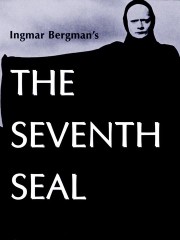 93%
93%
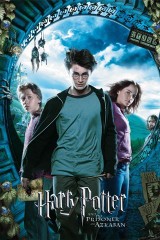 91%
97%
93%
91%
97%
93%
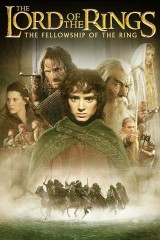
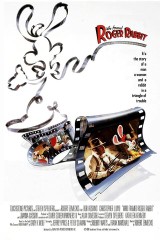 96%
96%
 97%
79%
88%
97%
79%
88%
 100%
100%
 100%
100%
 95%
95%
 96%
89%
96%
89%
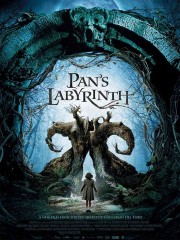 95%
95%
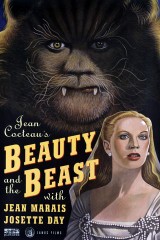 96%
86%
96%
86%
 96%
94%
96%
94%
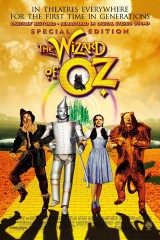 98%
98%
Neil Gaiman’s Good Omens arrives this weekend, bringing both heaven and hell with it. Based on 1990 novel Good Omens: The Nice and Accurate Prophecies of Agnes Nutter, Witch by Gaiman and Terry Pratchett, the Amazon Prime limited series tells the story of agents of God and Satan who want to stop the Apocalypse — simply because it sounds like a terrible idea. Fortunately, it seems like the reluctant Antichrist has similar inclinations.
Michael Sheen (The Queen) plays angel Aziraphale, and David Tennant (Broadchurch) is demon Crowley. The two first met when Crowley turned into a snake and slipped past Aziraphale into the Garden of Eden to tempt Eve. Theirs has been a fine bromance ever since.
Rotten Tomatoes met up with the stars, Gaiman, director Douglas MacKinnon (Doctor Who), and, representing Terry Pratchett’s estate, executive producer Rob Wilkins, ahead of the series’ London premiere to find out just what makes the Amazon Studios and BBC Studios co-production Good Omens such a delicious binge-watching option.
Starting out the gate with the credit sequence, the series pays homage to Monty Python.
But while in sketch series Monty Python’s Flying Circus, nobody expects the Spanish Inquisition, Agnus Nutter actually does expect the Spanish Inquisition when her time of judgment arrives.

(Photo by Amazon Studios)
Aziraphale and Crowley build their lovingly adversarial relationship one historical clash after another – including, during another nod to Monty Python, when Crowley turns up as the Black Knight. Sketches of Aziraphale and Crowley’s bond strengthening over the ages are pure joy and recommend further adventures of the collegial duo. And Welsh actor Sheen and Scottish actor Tennant spark onscreen in a way that critics have hailed.
“Most of the show’s charm hinges on the unlikely camaraderie between an Angel and a Demon, played, with considerable gusto, by Michael Sheen and David Tennant,” CNN’s Brian Lowry wrote.
New York Magazine’s Keith Phipps wrote, “Good Omens can work only with the right leads, so cheers to bringing in Sheen and Tennant, two actors who know how to make a three-course meal out of understated dialogue and cosmic absurdity.”
And, from Allison Shoemaker of RogerEbert.com: “Together, it’s like watching two musicians at the top of their game play a duet; they positively sing.”
In a press conference before meeting with reporters, Tennant explained the relationship further.
“They’re not particularly good representatives of their respective head offices. They’ve rubbed off on each other, so much, that Crowley’s not that mean anymore, and Aziraphale’s not that holy,” he said. “So, between them, they’ve reached a common ground, and they’ve become each other’s, sort of, significant other, really … They’ve only got each other to rely on, and they’ve become — although they would deny it until the end of time, quite literally, they’re sort of each other’s yin and yang … But, it’s only when you see what head office is like — for instance, when the angel, Gabriel, appears — that you realize how humanized they’ve become by the mortal world, that they really like, quite a lot because it’s got wine.”

(Photo by Scott Garfitt/BACKGRID)
Sheen and Tennant are just the start. The rest of the cast fills out with an enviable assemblage of talent for serialized entertainment:
The series, a coproduction of Amazon Studios and BBC Studios, is directed by Douglas Mackinnon (Doctor Who) and also features Jack Whitehall, Mireille Enos, Brian Cox, Nick Offerman, Ned Dennehy, Ariyon Bakare, Nina Sosanya, Steve Pemberton, and Mark Gatiss.

(Photo by Amazon Studios)
The series’ stars raved about bringing Gaiman and Pratchett’s characters to life.
“Nothing is odd about this character; I think she’s entirely relatable. Particularly, the channeling of many, many souls, alive and dead, and riding a motorbike, in a cape, with a former member of Spinal Tap. It’s just part of the day job, really,” Richardson related in a press conference before breaking off to meet with reporters. “It feels like my element. I love it. Transformation and costume and inhabiting of other, but at the same time, the character is, all the characters are, incredibly humane. I just… I love that about this project. That’s what comes across, I think.
And what will book fans think, especially given changes like Archangel Gabriel’s expanded role?
“I think had we gone into this project without Neil,” Hamm said, “there would have been a different reaction, but because Neil was involved from the get-go and was so involved during the process of making it, it became like a version 2.0. So I think the fan base was jazzed, they were like, Oh my God, we’re getting more, we’re almost getting a sequel or something, we’re getting the extended version, the EP. … We were at New York Comic Con and there were 5,000 people that showed up for a panel discussion. It was bonkers. It was like a rock concert. It didn’t hurt that we had Doctor Who on stage. It was still pretty cool and that was when I was like, Oh yeah there are way more people that are just as excited about this as I am. Worldwide, it’s been published in 70 languages.”

(Photo by Mike Marsland/WireImage)
Good Omens has a lot of heart. That’s baked into the series by Gaiman, the stars attest.
“The writing is absolutely promoting humanity,” Richardson said. “You know, it’s very affirmative and optimistic, really, isn’t it?”
“[Neil is] very centered,” she continued. “He knows what he thinks about everything. That doesn’t mean he’s not open. He is completely open. So you ask him a question, and it’s really considered. It’s not, ‘You don’t need to worry about that.’ It’s this is just what’s happened, or I think you should try that, or whatever it is. You know, everything is very considered. It’s great.”
Lawrence: “He has time for you, which is wonderful.”
Richardson: “Like having Daddy on set.”
Lawrence: “Yes, it is, or a beautiful angel.”
Hamm also noted that Gaiman brings something different to the process of creating a series.
“What Neil really brings to everything he does is the capacity for storytelling,” Hamm said, “and that’s first and foremost. Also I think some people in the more traditional Hollywood aspect, they’re trying to make money. They’re making product, whether it’s a Marvel movie or what have you franchise, they’re not necessarily concerned with storytelling. They’re concerned with IP, or what’s it going to be on the second weekend or what’s the third movie going to be at franchise – Neil just wants to tell a story. That’s how he’s created this career that’s been so wide-ranging, and I think you’re going to see a lot more Neil Gaiman stuff get filmed because the stories are so compelling.”
Antichrist Adam Young has the wide-eyed English-schoolboy charm of classic heroes like Mark Lester’s 1968 Oliver or any number of Nicholas Nicklebys throughout the cinematic age – until, of course, the boy inherits his powers. Aziraphale and Crowley’s attempts to manage the situation are akin to trying to stop a tornado with a butterfly net — a magical butterfly net, but still.

(Photo by Scott Garfitt/BACKGRID)
Though Good Omens’ main characters, Aziraphale and Crowley, are male, we find engaging and richly drawn women among the secondary stars of the series. Anathema spends most of her time chasing a McGuffin, but in the end contributes greatly to the stop-the-Apocalypse cause.
“There’s a big difference between a tough female character and a strong female character and Anathema’s strong, she’s very in her essence,” Arjona said. “She’s a woman and she’s sure of herself and so unsure of what she’s doing and messes up, and she’s flawed and she doesn’t get it right all the time — sometimes she does — and she has this guy that’s following her and never falls into romance. She’s like, ‘I gotta do what I gotta do — maybe after babe. I’ll catch you later.’ She’s doing her own thing and I love that about her, and I wish a lot of other characters would be like that because relatable to me, and I see my friends and the way they deal with their careers and their own life, and it’s very similar to Anathema.”
Richardson’s Madame Tracy is a very rich character, who, despite her own flaws, endures a level of verbal abuse and emotional sabotage from Shadwell.
“Madame Tracy has her own strengths. She, in some ways, feels a bit retro. I mean, her part is retro, and the fact that she’s making a living in the way she is, is a bit retro. But at the same time she’s providing an incredible help in the community, and she’s also very supportive, and she’s trying to be a little bit life-enhancing … so there are those feminine traits, things showing. She takes care of Shadwell, and she looks out for people. It’s rather lovely, but she’s her own woman.”
Good Omens sets out to prove a love bond between the prostitute and the Witchfinder, but where she definitely shuts the door on the risk of her infidelity, his name-calling promises to continue.
“I know it is a bit questionable,” Richardson said, “but maybe it’s, pardon the pun, better the devil you know. I don’t know, you know? She’s practical.”

(Photo by Amazon)
The production design, effects, and costuming on the series lend a distinctive voice to the characters’ surroundings. Several of the actors noted that the costumes and unique environments helped them fully inhabit their characters.
“There’s an opportunity to sort of portray this guy as the boss that everyone has, that everyone hates, who’s constantly smiling and telling you, ‘Great job,’ while also subconsciously saying, ‘You’re terrible,’” Hamm related. “And, I’ve worked for that guy before, and I’ve hated him, and it was kind of fun to play. Just like, ‘Everything you’re doing is wrong. Keep going.’ And, I got to wear so much cashmere in this, that it was A: warm, B: soft, C: comfy. But yeah, there was a lot to recommend for being on the heavenly side of thing, from a fabric point of view.”
Arjona similarly credited the series’ style choices for aiding her performance: “I just tried on her boots and something happened, and I got really lucky because I didn’t have to do much work after I tried on her boots.”

(Photo by Ian Gavan/Getty Images)
With Good Omens, Gaiman sought to fulfill a deathbed wish of his collaborator on the book, Terry Pratchett, and so, dug in his heels.
“Being the writer was relatively pleasant and entirely stress-free in that nobody was really waiting for this. I wrote it, I promised Terry I would write it, I wrote it, did the adaptation, divided the book into six, every 50 pages: OK, that’s episode one, that’s episode two. Fair enough, I’ll write a mini movie through time that will kick off episode three. That was all simple and very stress free,” Gaiman said.
“The problem is that I’d promised Terry Pratchett that I would make a TV show that he would want to watch, and I’d learned through my previous outings in television — some of which have been incredibly successful and some of which hadn’t — that the measure of which were successful and which weren’t were not the quality of the script to begin with; it was what actually wound up on the screen at the end. And I thought, OK, I have to be in a place where I can control that, where I have a director who I can work with who we share a vision with, where I can cast the people who I see in my head, where I’m there just making sure that a producer who — producers don’t understand scripts. I wish they did, but they don’t —”
MacKinnon: “Some of them do.”
“Some of them do,” Gaiman conceded. “A lot of the time, what a producer will do when they go, ‘OK, we have X amount of money. We have this in the script and here is a sequence that is both expensive and if we lose it, we’ll save a day of filming and nobody’s going to notice if that scene is gone,’ completely failing to understand that if they pull that scene out, nothing that follows it will actually make any more sense. This is something producers have been doing since the dawn of time.
“To make this thing for Terry, what I had to do was be in a place where I could just say no when somebody said, ‘So, we think we’re going to lose Shakespeare’s Globe.’ I go, ‘Yeah, no we’re not.’ Sometimes I would come back with, ‘I’ll tell you what. If we need to save that money, we can lose this scene after that you really like but that actually doesn’t change anything. It can go.’”
It’s the only instance of anyone tied to Good Omens who we’ve spoken to describing Gaiman’s behavior on the production as anything other than “lovely.”

(Photo by Amazon Studios)
Both Sheen and Tennant aren’t strangers to supernatural beings; Sheen appeared as Head Lycan in Charge Lucian in the Underworld vampires-versus-werewolves film franchise, then as The Twilight Saga vampire Aro. Tennant, meanwhile, not only played the titular extraterrestrial in Doctor Who for three seasons and in specials as the tenth Doctor, whose abilities were anything but earthly, but also turned up as witch and Voldemort loyalist Barty Crouch, Jr. in Harry Potter and the Goblet of Fire.
The actors appear to take on these heavenly creatures with ease and a sort of glee.
“All those characters like vampires, werewolves, angels, demons, they get reinvented — don’t they? — by each generation, because they come to represent different things for each generation,” Sheen said. “And also budgets have changed. There’s a lot more money to make stuff that can really use those sort of effects quite well. But in terms of Heaven and Hell and angels and demons — the end of time’s and apocalypse is a whole other thing, I suppose — we’re starting to think about slightly differently. I think the angels and demons thing and Heaven and Hell is always partly about going, well you have these two extremes and real life is about somehow being in the middle somewhere and being in the gray area and that’s certainly what, I think, Good Omens is about.”
There’s a good chance that Good Omens will ruffle some feathers, but Gaiman isn’t worried.
“One of the things that I made a call writing literally page one, which was, I thought, Well, it could be Adam and Eve in the Garden of Eden, and they’re not going to be white. So, in the first five minutes, you’re going to have to deal with the voice of God and she’s a woman and she’s Frances McDormand, and you’re going to have to deal with a non-white Adam and Eve. That’s your first five minutes. You can stop watching now. If you were upset or offended, great excuse to stop watching now. You will probably be much more offended by things later on like an 11-year-old Antichrist who is actually a good kid … But look, that was there for you: You had a five-minute warning — [Good Omens] actually starts with the word ‘warning.’”
Good Omens debuts on Friday, May 31 on Amazon Prime.
(Photo by )
Beloved novelist Neil Gaiman — Coraline, American Gods, Stardust, and The Sandman graphic novel series — took charge of the book-to-screen adaptation of the 1990 novel Good Omens: The Nice and Accurate Prophecies of Agnes Nutter, Witch to fulfill a promise to his good friend and collaborator Terry Prachett, who died in 2015. Now that the series Good Omens has arrived as an Amazon Prime offering, we caught up with Gaiman to talk about the new comedic fantasy series and his favorite films.
The limited series boasts a stellar lineup of acting talent, including Michael Sheen (Frost/Nixon) as angel Aziraphale, who botches his gig as Garden of Eden chief of security by allowing demon Crowley, played by David Tennant (Doctor Who), to tempt Eve with an apple from the tree of the knowledge of good and evil. In the subsequent millennia, the two find themselves repeatedly at odds, and form a friendship of a sort that only two mutually admiring adversaries can. Their bond transcends the modern bromance and is more celestial in nature, with Crowley regularly tempting Aziraphale into small transgressions on his path, and Aziraphale occasionally coaxing out Crowley’s better angel. Their friendship meets the ultimate test when the Antichrist arrives and is promptly misplaced. The duo must work together to stop End Times lest humanity, good wine, and fine cuisine perish in the Apocalypse.
Mad Men’s Jon Hamm is a brash, Americanized Archangel Gabriel, who is captain of Team Heaven, while Anna Maxwell Martin (The Bletchley Circle) appears as Beelzebub, leader of the forces of Hell. Josie Lawrence (Enchanted April) appears as 17th century witch Agnes Nutter, who produces the only accurate book of prophecies ever written. Adria Arjona (True Detective) is Anathema Device, a witch and Agnes Nutter’s descendant, while Miranda Richardson appears as part-time medium and prostitute Madame Tracy, who cares for her righteous neighbor, Witchfinder Sergeant Shadwell played by Michael McKean. Frances McDormand is the voice of God, Benedict Cumberbatch voices Satan, and Sam Taylor Buck is reluctant Antichrist Adam Young.
The series, a coproduction of Amazon Studios and BBC Studios, is directed by Douglas Mackinnon (Doctor Who) and also features Jack Whitehall, Mireille Enos, Brian Cox, Nick Offerman, Ned Dennehy, Ariyon Bakare, Nina Sosanya, Steve Pemberton, and Mark Gatiss.
Gaiman, whose Starz adaptation of American Gods was recently renewed for a third season, shared his five favorite films and another fantasy he’s working on: retirement.
Debbie Day for Rotten Tomatoes: We’re doing a feature called “Five Favorite Films.” Were you able to give that any thought?
Neil Gaiman: You know I really wish somebody had said, “They are doing a feature called ‘Five Favorite Films,’ please have five films ready.” Then I could have just had it for you, rather than what I’m going to have to do now which is grab a piece of paper and a pencil and scribble. Just give me a few seconds, I’m just going the scribble. The nice thing about lists of favorite films is … they always change. Let’s see, there’s four and … OK, there we are, there’s five favorite films jotted down. Don’t know that they’d be the same five favorite films that I would come up with …Tuesday next. But, they’re a good start.

The first one would be Lindsay Anderson’s If… It’s a film that I love because it allows me sometimes try and explain what it was like to be a kid at an English Public School — I was a scholarship boy in the early 1970s — late ’60s where you were in — even though it’s set earlier than that and was made earlier than that — you were in a culture that hasn’t changed.
I remember just watching it and suddenly feeling understood. Which was a completely new one for me. I’d be, you know, This is my world. It was like, OK, here is something Malcolm McDowell–starring, the idea of kids — while we didn’t actually shoot up the school in rebellion, it was the kind of strange stuffy environment that needed to come tumbling down, and I’d never seen that before depicted on film. For years I wondered about why some sequences were in black and white, and many years later I was reading an interview with Lindsey Anderson and discovered it was because they ran out of money for color film, so they just went over to black and white stock, which works in several places through the story.

Second film: All That Jazz, Bob Fosse. It’s an incredibly hopeful, uplifting art journey and you know, on the one hand it’s about a man who is killing himself through over-work and who is over-extended and miserable and is going to die of a heart attack, and on the other hand, it’s Bob Fosse’s celebration of the fact that he didn’t die of a heart attack. He came through, and now he’s going to take the events that precipitated him into his heart attack, create a roman à clef around them, and build something magical, which he does. There’s a sort of strange and lovely honesty to it that, the first time I saw it when I was about 15/16 and it was on television, I found arresting, and it’s magic.
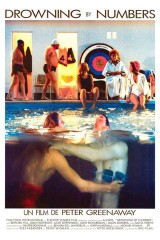
A third film I’m going to list is Peter Greenaway’s film Drowning by Numbers. And Drowning by Numbers, a few years ago my wife and I at the Brattle Theater in Cambridge, [Massachusetts,] got to show each other films that we loved, and the one that was the hardest for the Brattle to get hold of was a cinema print of Drowning by Numbers. I really wanted to see it on a big screen again; I’d seen it on a big screen when it first came out, and in the intervening years, seen it on video, but loved it. It’s a film about games, it’s a film about numbers, it’s a film about murder, men being murdered by women, who may all be the same woman, but are, at least the way that I read it, aspects of the triple Goddess — the maiden, the mother, and the crone — but all of them are having the same relationship with men. All of them are profoundly killing off these rather abusive and appalling men in their life, and it’s a strangely beautiful and absolutely surreal film that plays by its own rules.
And one of its rules is it makes you in the audience count. You start noticing numbers showing up on screen and realize they are counting to 100. So when you are at number 50 on the screen and a character is explaining to you the rules of the game, you realize that you have another 50 to go and you’re exactly halfway through. Beautiful performances and beautifully filmed, and just one of those places where, as far I am concerned I wish there was so much more cinema like that, but there doesn’t seem to be.
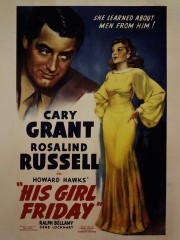
No. 4, I’d go for His Girl Friday. There’s just that Howard Hawks rapid dialogue, the glory of Cary Grant [at his] most Cary Grant-ish. It’s funny. It moves, it actually has huge social responsibility, and they did a thing where they gender-swapped the lead. Hilly, in the play The Front Page and in other films made of The Front Page, is a guy going off to get married and having that be sabotaged by his editor. Howard Hawks’ twisting things, so that Rosalind Russell played Hilly and was the ex-wife of Cary Grant’s, her abusive and appalling editor who was also determined to get a story and have her get the story and have her not leave. There was brilliance in that, and it’s feisty, and it’s funny, and it’s something that I can watch over and over again and never get tired of.
And then you get into the contentious fifth film, and I’ve jotted down a bunch of things I thought, well Ran is a possibility. I love Akira Kurosawa‘s take on King Lear, I love what he did to it. I love the movement, the battles. You know, there’s nothing about that film I do not enjoy. Laurel and Hardy’s Way Out West, because I thought that would be a wonderful choice, and it does have, to my mind, the finest dance in the whole of film. But, I thought about A Matter of Life and Death, which was a film that was enormously inspirational when making Good Omens. I felt like that was of the same DNA as the thing that we were doing … Also Bedazzled, the original Peter Cook and Dudley Moore Bedazzled, which again has a lot of the DNA of Good Omens in it.
But eventually I came down on Belle et la bête, [Jean] Cocteau’s Beauty and the Beast. I remember watching it and feeling transported. For me, it’s like dreaming. It does the same that Bride of Frankenstein does, where I can never quite remember the plot when it’s over, I’m just aware that it’s finished now and this wonderful place that I went has gone away.
My children do not like black-and-white films, and once, for Father’s Day, my daughters asked what I wanted for Father’s Day, and I asked, “Will you watch this film with me? It’s a foreign language film, so you won’t like it, and it’s black and white, so you won’t like it, but will you watch it with me?” They said, “Well yeah, for Father’s Day we will.” And what I loved was that after 10 minutes, they had forgotten that it was a foreign language film, and they had forgotten that it was a black-and-white film, and they were entranced by this retelling of Beauty and the Beast, made by Cocteau not even on a shoestring; he’s in post-war France, immediately post war, and they had no money for anything. Everything is being improvised. Everything is being created on the fly, and yet what they come up with is something that is so much cooler than any infinite amount of CGI.
Speaking of heart attacks and artists, how’s TV development treating you? I mean you seem extraordinarily busy.
Gaiman: I am, although, you know, a week from now on the 31st of May, Good Omens comes out and happens, and I get to retire as a showrunner. I guess I might have to come out of retirement if we get nominated for awards — just turn up at award dinners and things. But basically as far as I’m concerned I made this thing that I promised Terry Pratchett I would make and now I’m done. I don’t have to be a showrunner anymore. I love talking all the things that I’ve learned in the four years I’ve been making Good Omens and getting to apply them to other things and getting to help other people make things.
So you know, it’s nice to be a producer of Gormenghast, for example, and I’m very actually looking forward to seeing and helping Toby Whithouse along and looking forward to Toby going out to the world with his Gormenghast. I’m looking forward to being more involved in adaptations of my own stuff coming up in the future, but I don’t really want to write them again, I don’t want to showrun again. I would really like to become a writer, and possibly even a novelist again.
I hear you have some talent for that.
Gaiman: As I’ve said, I will become a retired showrunner, and in my retirement, I may take up writing.
(Photo by Amazon Prime)
Good Omens looks like it was a blast to film. What was that experience like?
Gaiman: It was a blast to film. Good Omens was fascinating because it was an incredibly long shoot. We were making Good Omens, I think we shot altogether for about 120 days, and it’s a lot like making a 6-hour-long movie. And when we finished, it was then followed by 11 months of post-production, so that was long, long days, hard work, making something huge, but also — more by luck than anything else, because it just came down to me and director Douglas MacKinnon so much of the time — we wound up making something that feels very, very handmade and feels pretty personal. We got to make personal choices, and there wasn’t anybody leaning over our shoulders saying, “No you need this. You can’t do that.”
Is that one of the joys of working with a streaming company?
Gaiman: I think Amazon trusted us, which was great, and the BBC who were technically our producers, nobody had ever done anything like this before, and they didn’t really know what it was, and they just left us alone to get on with it.
Well, you can’t argue with the result – it’s a joy to watch your work come to life with such talented actors.
Neil Gaiman: Thank you. I’m so proud of it. I made the show for Terry Pratchett, he asked me to make it before he died, and then he died. I wanted to make a show that Terry would have loved, and make a show that Terry would have laughed at, but also that contained all of the ideas and the textures of Good Omens, and I think we did it.
May I ask, what is going on with The Sandman? That’s one I’ve been really looking forward to.
Gaiman: Sandman has been interesting, because for the last 30 years … people have failed to make all sorts of versions of Sandman because the time was not right. In the ’90s people were going, “We don’t know how to make a $70 million R-rated film that would have any CGI in it … that doesn’t work for us,” and all of this kind of stuff. What’s great about now is we’ve reached an era in which the fact that there are well over 80 Sandman stories becomes a feature, it becomes an advantage, rather than a problem with how you cram all that into 120 minutes.
So, we now have the CGI, we now have the technology, and we now have an adult audience, and we have millions upon millions of people who love Sandman and would love to see it. So I would be very, very surprised if we do not actually get some cool Sandman thing happening in the next two or three years. But then again, there have been many things over the years with Sandman where I’ve gone, “Ah, OK. Well, they’re going to make this. And this is going to be great then.” And it has never happened. So anything is possible.
Good Omens debuts on Friday, May 31 on Amazon Prime.

(Photo by Noam Galai/Getty Images)
Nicolas Cage is the hardest working man in show business. Over the past two years alone, he has appeared in ten films, including the Edward Snowden biopic Snowden and the bonkers horror comedy Mom and Dad. We’re barely two months into 2018, and Cage has already starred in two more: Panos Cosmatos’ revenge thriller Mandy, which premiered at Sundance, and Looking Glass, a psychological thriller about a married couple who take over a desert motel and discover the dark secrets it holds. The man clearly enjoys his work, and the world is all the better for it.
Cage also has a reputation for putting 100% of himself into every role he takes, no matter how small, so it wasn’t too surprising to learn that he had not merely Five Favorite Films he wanted to talk about, but a cool baker’s dozen. As he put it, “I can’t put it all in five. It’s just, there’s different movies for different reasons in different lifetimes.”
And listen, if Nicolas Cage wants to talk Thirteen Favorite Films, Nicolas Cage gets to talk Thirteen Favorite Films. Read on for all of his choices, in which he sheds some light on the ways Dennis Hopper, Bruce Lee, Jerry Lewis, and Jean Marais have all influenced his unique acting style.
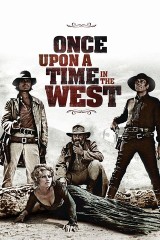
Once Upon a Time in the West would come on the million-dollar movie. We had that once a week, I think, when everything was deployed on television. I had a [inaudible] television and I watched Once Upon a Time in the West, and I was blown away by the power in the stillness and silence of Charles Bronson as Harmonica, and I just thought the culmination of Morricone’s score with Leone’s gorgeous style, and then the showdown between Henry Fonda, who is outstanding as a bad guy, and Bronson was one of the most powerful moments I’ve ever experienced in cinema, and it really made a big impact.
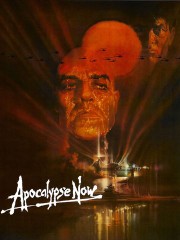
I saw Apocalypse Now really with everybody else, so Marlon Brando was there, and my uncle was showing the movie, and Dennis Hopper was there and [Marc Marrie], and … I don’t think Marrie was there, but everybody … Let’s see. Larry was there. They were watching the movie for the first time, and I must’ve been about, gosh, what was I? 12, 13? I don’t know, but it really put a big effect in me, and I was blown away by the scope of the film. I don’t think there really was a movie like that before with the helicopter sequences, and with Brando’s performance with Dennis Hopper was… I mean, he was really going off the rails in that, and that had a big impact on me as well, in terms of my own later choices with film performance. I wanted to get a little more Dennis Hopper or less Dennis Hopper with some of the stuff that I was doing, so that had a big impact.
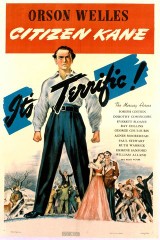
Citizen Kane I saw when I was… My dad used to take me to the arthouse theaters, and I grew up on these movies. I was watching Citizen Kane when I was like eight years old, and I just watched it again. I watched it at night and I watched it the next day, and that is the best movie ever made. Nothing really ever comes close to it, and even now, the editing today doesn’t match. I don’t know if Welles did it, but I know he had total authority on the film, and then they took it away from him for The Magnificent Ambersons, and even now, in terms of performance, in terms of film editing, in terms of the cinematography, in terms of the music, all of it just came together perfectly, and it has never really been challenged in any way. I think it stays as fresh today as it ever was.
Was that something you were able to process, even as an eight-year-old seeing it for the first time?
Yeah. Yeah, I was blown away. I think Welles’ performance was heartbreaking, really, and that lands, even if you’re a child. The emotion is there, and you feel it. I mean, little kids can understand music that might seem complex — you can play classical music for a little child, and they will be affected. They know good music, and I knew what I was seeing was a great film, and it was exciting to see it as an adult.
Enter the Dragon was powerful to me because it was like watching a superhero come to life. I’d never seen anything like Bruce Lee, and that movie changed my life, because it made me believe that a man can actually do these extraordinary things physically, and he was a great actor. He had great facial expressions, and he’s also had a big impact in some of my choices as a film performer, certainly not in terms of my style of movement — nobody can move like him — but in some of the facial expressions. If you look at the end of Face/Off, when I shoot the Castor Troy character with the harpoon, my face goes through all these expressions. That was direct steal from Bruce Lee when he jumped on a guy and killed him with his feet. In fact, I went through that slow-motion shot rather recently with Mandy. I stole from Bruce Lee’s facial expressions when he breaks the guy’s neck and the camera goes right into his eyes and he’s got that very ferocious, wide-eyed look. He passed, and I put that in the picture.
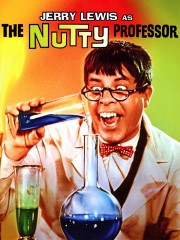
The Nutty Professor. So Jerry Lewis, I met Jerry once. We became friends later, but when I first met him, he knew what a fan I was of The Nutty Professor, particularly the Buddy Love performance, and [inaudible] I said to him — and I meant it — I said, “Jerry, it’s just you and Brando,” and he took about a two-minute pause, and he went, “Well, Brando’s good also.” It was hilarious. He was wearing a kimono, if you believe that, a Japanese kimono and tennis shoes.
Something about Jerry Lewis’ direction, he believes in the total filmmaker. He felt that you weren’t really a filmmaker unless you starred in it, composed it, edited it, directed it, all of it, and that’s what he was, and I think that The Nutty Professor has also had a huge impact in terms of my own tone, performance style. I’ve borrowed from the Buddy Love character a million times, and so much so that I’ve had directors tell me I need to get new material. I put him in City of Angels, and I got the good fortune of having him play my father in The Trust before he passed on, so Nutty Professor was a big influence.
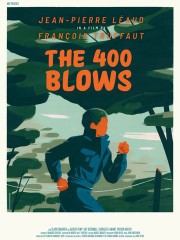
400 Blows I saw when I was a kid, and that of course really was heartbreaking. I felt so bad for the kid in that movie, and he went on to become an actor. I think he was in Last Tango in Paris, the actor in that.
War of the Gargantuas was something I just thought was so fantastical and so bizarre that it is my favorite of Honda’s movies, but the effects look great, and all the little toys, and it was just something that transported me. I can lose myself in that movie, and I love the brothers warring, and it has kind of like a personal feeling for me.
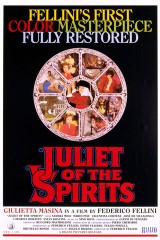
Juliet of the Spirits was something I also saw at a young age. It spooked me, but also kind of turned me on, and I found it thrilling and psychedelic and colorful, and it had an enormous impact on my childhood because I would have bad dreams about it. That’s also the case with The Wizard of Oz.
The Wizard of Oz, the witch was always haunting me, the green witch, the Wicked Witch of the West, so Wizard of Oz was also a huge impact film in my childhood, as well as Pinocchio.
I think Pinocchio is Disney’s masterpiece, and I think that it’s such a perfectly put-together film. It has such a beautiful message in it, and so much thought went into it, and of course it’s beautifully drawn, and the colors are extraordinary, and I love Monstro, and the underwater sequences are quite something.
Cocteau’s Beauty and the Beast. Again, very fantastical, very transporting and mysterious, and Jean Marais’ performance as the beast is wonderful. I wanted to have that sound to my voice when I did Moonstruck, and then Norman Jewison got very upset with me and lost his patience with it and almost fired from the movie. He called me on Christmas Eve to tell me that the dailies weren’t working, because he said, “You gotta drop the Jean Marais. I don’t want you sounding like [inaudible] talk like that in the character,” but the irony is that John Patrick Shanley told me that when he originally wrote Moonstruck the title was The Wolf and the Bride, so I thought there was some connection there.
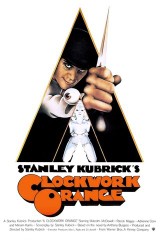
A Clockwork Orange, of course, was like the ultimate film for an adolescent to see. I watched [Malcolm McDowell’s] performance in that, and it had such an impact on me that I would glue an eyelash on my eye and then go to school with one eyelash. My father really lost his patience with that one. He said, “You gotta take that eyelash off. You’re not going to school like that.”
Looking Glass is currently in theaters in limited release and available to stream. Mom and Dad is available to stream and on DVD/Blu-ray. And just for fun, here are Nic Cage’s top 5 movies by Tomatometer:
Juno Temple’s star is definitely on the rise. The daughter of punk filmmaker Julien Temple, the 22-year-old English-born actress began her career with supporting roles in movies like Notes on a Scandal, Atonement, and St. Trinian’s — and later delivered a lead performance in Jordan Scott’s excellent, unfairly maligned boarding school drama, Cracks. She’ll soon headline several films including William Friedkin’s Killer Joe, Jonas Akerlund’s Small Apartments and the long-percolating lesbian werewolf project Jack and Diane, in addition to starring as a “street smart Gotham girl” in Christopher Nolan’s The Dark Knight Rises — a role that has fans speculating could be anything from Selina Kyle’s sidekick Holly Robinson to Harley Quinn to a female Robin.
In the meantime, Temple appears in this week’s Dirty Girl, an autobiographical comedy-drama from debut director Abe Sylvia. Set in the strange world of Oklahoma in 1987, the film follows the unlikely adventure of two misfit high schoolers — Temple’s trashy, promiscuous Danielle and Jeremy Dozier’s overweight, closeted Clarke — as they bust out of town and head for the Californian coast, a posse of angry and/or confused parents desperately on their trail. Which means Temple gets to wear anachronistic hot pants, flip the bird to religious zealots and strip to Sheena Easton’s “Strut” — things we’re pretty sure won’t be called upon for her employment in Gotham City. We caught up with Temple recently to chat about Dirty Girl, but first, she took a few moments to run through her all-time five favorite films.
Badlands (Terrence Malick, 1973; 98% Tomatometer)
Badlands, I think is one of the best love stories of all time. I think it’s beautifully shot and I think Sissy Spacek’s flawless in it. I watched that movie and — you know when your hair stands up on your body and you can’t control it? — that movie really affected me quite deeply, and I cried at the end. I based a character that I did last year in this movie called Killer Joe on Sissy Spacek in that movie. It’s a big inspiration for me. I think it’s a flawless movie.
True Romance, again… a romance at heart, a young couple on the run doing crazy stuff. I think Alabama is one of the coolest characters of all time. I love the script — I think it’s so dynamic.
Heathers — again, a kind of weird romance story and a dark tale. I love the dialogue in that movie. I probably shouldn’t quote it.
Please do.
“F–k me gently with a chainsaw.” [Laughs] But my favorite is, “You’re such a pillow case.” It’s so good — it’s like the worst insult ever but so funny. It’s just so funny and so gritty and I love the performances in it, and I think it has one of the best endings of all time.
Because I think it’s one of my dad’s masterpieces, and Joe Strummer was someone who was a big part of my upbringing and was one of my dad’s best friends. I have such great memories of hanging out with the two of them. It’s something that means a lot to me. I really think my dad put his heart and soul into that film and that’s the kind of film-making I wanna do. No, I don’t wanna direct. I wanna act.
Did you learn from your dad, growing up around sets?
Yeah. I did. I mean, I learned a lot. He helped me with a lot of tough decisions at times and, you know, he’s helped me with a lot of auditions, too. I really hope I get to do a movie with him one day, and he gets to direct me in a film. I would love that beyond words.
I’d love to see him do another narrative feature. Absolute Beginners is kind of great.
I agree. Earth Girls Are Easy is probably my number six on this list. [Laughs]
La belle et la bête by Jean Cocteau. It’s the movie that made me want to be an actress. I was four-years-old and my dad had it on laser disc. I was being annoying and bratty or whatever, I was a child, and my dad said, “Hey, watch this movie.” This is when we lived in LA and we had this great giant striped couch and I was wearing — I remember this so well — this corduroy dress with red trim, and I lay there and started watching it. I had a really vivid imagination as a child but I had never seen anything like this in my life. Do you remember the scene where she faints and the Beast carries her and he has that incredible cloak that looks like it is actually the night sky? It’s insane. And he carries her and all the arms — we had these arms in our house, these giant arms that hold the candles — all the arms move and he’s carrying her and walks into her bedroom, and as he goes through the door with her, her clothes go from rags to riches. I remember that being the specific scene where I was like, “I wanna do that. How does that happen? I wanna be a part of that.” That was the day I knew I wanted to be an actress. Also, the way that the Beast smokes, when he looks at her and his skin smokes; and when he takes off the glove and his hand’s just smoking. The whole ending… it’s this weird, twisted ending.
Next, Temple chats about her role in this week’s Dirty Girl, and how an English private school girl gets into character as a mid-West American teen.
RT: It’s a curious character, this one. How did you end up being cast for the movie?
Juno Temple: I got sent the script by my agent and I read it and of course I wanted to audition for it — I wanted the part immediately. I arrived at my audition and I was wearing cut-off denim hot pants, biker boots, ripped band t-shirt, a biker jacket that I’d sliced the sleeves off of, had a nose piercing and my dreadlocked hair that I hadn’t brushed in three weeks and I had a sh-tload of jewelry.
This was all for character?
No, it’s kind of the way I dress. I’m a big fan of ’90s grunge — the grungier the better. So I went in and did my thing, then got a phone call from my agent saying “They loved your audition, but they want you to come back in and take out the nose ring and brush your hair.” So I went back in looking slightly tidier.
Begrudgingly so?
[Laughs] I remember I was furious ’cause I had a 45-minute audition and I came out and my nose had closed. My ex boyfriend had to re-pierce my nose on the way home, and my nose was bleeding. [Laughs] It got re-pierced and it was back in for a while. Then I got a call back to come in and chemistry read with Jeremy [Dozier] and it was like an instant click. We just got on immediately in a way that was quite overwhelming.
The film immediately establishes that your character’s in control — at least in the sexual sense. Was that something that appealed to you?
Yeah, what attracted me was the journey she goes on, what she goes through — because she has this crazy arc. I liked the fiery, outrageous personality that she has in the beginning. She has attitude and she doesn’t care what people think. She’s gonna speak her mind and sometimes it pisses people off. But she’s very misunderstood, too — she’s misunderstood by her family, by her school; boys use her for sex and that’s all they care about. She doesn’t have any friends. Then Clarke comes into her life and I think fate brings them together. I’m a strong believer in that fate is real, but it only gets you so far — then you have to make the choice to do something. And so they do: they continue this incredible friendship and they really bring each other out of their shells. They really open each others’ eyes. I think that’s a great example of a true friendship, when you see the world through somebody else’s eyes and you like looking at the world that way. They do that for one another. I think the moral of the story is don’t judge a book by its cover, which I think is great when you look at all the sh-t that’s going on in schools — with the bullying and stuff. You know, what better than to say, “Some people aren’t gonna like you or take you for what you are, but some people will — and they’re gonna change your life.” They’re the people you should be hanging out with.
I’m guessing high school in Oklahoma is not the way you grew up–
[Laughs] Oh, I went to an English boarding school!
So how do you become this teenager in the mid West in 1987?
I talked to the director a lot about the kids in his school — ’cause it’s his story and nobody knows it better than him. We talked a lot about it and figured out how she’s gonna be. She’s an ’80s character but she also looks very ’70s, so she doesn’t quite fit into the world — she’s got hand-me-downs from her mom, because they can’t afford new clothes. So that makes her even more of a misfit. I love that she’s this kind of Cherie Currie character in this uptight Oklahoma high school — she really looks like she sticks out like a sore thumb. I loved that, the make-up and everything and the Farrah Fawcett bangs. I thought that was cool having her different to everyone else, because everyone notices her and are like, “Who the f–k is that?” So that was another thing, the costumes. And getting into the music — because like I said, I’m a ’90s grunge fan, so that really wasn’t my music scene, but once you listen to it and get into the idea of playing that character, it was brilliant.
So now you’re a fan of Melissa Manchester?
She’s extraordinary.
How was it singing her song while she played behind you on piano?
I’ve never been so nervous in my entire life. Singing A cappella with her playing piano behind me. I was so nervous. I’m shaking [Laughs] You can totally see it. She was so kind afterwards. She was so lovely to me and Jeremy. It was pretty cool to be singing Melissa Manchester’s power ballad that just blew a bunch of peoples’ minds in the ’80s and she’s there playing piano while you do it… it was a trip.
Last question. I’m sure nobody’s asked you about this–
The Dark Knight? Oh no, you’re not gonna ask about it. Okay. Because everyone’s been asking and I’m not allowed to talk about it.
I just have one question: Is it true that you’re playing The Penguin?
Obviously! I mean — look at me. [Laughs]
Dirty Girl is in select theaters this week.
With the passing of Ingmar Bergman Monday, the world of cinema lost one of its most unique and important voices. Thus, we at Rotten Tomatoes decided to pick our favorite Bergman films as a tribute to the man who contributed so much to the art of movies.
From dark allegory (The Seventh Seal) to light(er) comedy (Smiles of a Summer Night), from emotionally wrenching period drama (Sawdust and Tinsel, Cries and Whispers) to musical theater (The Magic Flute), Bergman contributed a depth of feeling and intelligence to the cinema seldom seen before. The great Swedish director confronted the mysteries of human existence head-on, and, in doing so, carved out a niche that casts a long shadow over the medium.
Bergman’s work has influenced everything from The Break-Up to Bill and Ted’s Bogus Journey; Wes Craven utilized The Virgin Spring as the basis for Last House on the Left, while Woody Allen and Robert Altman cited him as a key influence.
With a filmography as rich and potent as Bergman’s, it’s hard to know where to start. If you’re a beginner to Bergman’s oeuvre, here are some of our favorites.

Wild Strawberries
A lyrical and sometimes surreal film about a man in the twilight of his life, Wild Strawberries explores Bergman’s recurrent themes of innocent children subjected to dishonorable elders. The old man in Wild Strawberries realizes too late that he’s failed to create meaningful relationships with those near to him and remembers, with some dishonesty, his often painful past.

Fanny and Alexander
A broadly autobiographical film about Bergman’s own upbringing, Fanny and Alexander was made for Swedish TV and re-edited from 300 minutes down to 168 for release in American theaters. Bergman’s most popular film in the states, Fanny and Alexander deals again with Bergman’s issues of innocence and knowledge and displays in, sometimes depraved ways, how children don’t lose their innocence so much as have it stolen from them.
— Sara Schieron

Winter Light
Best known as the middle entry of Bergman’s “faith trilogy,” Winter Light revolves around a pastor’s crisis of faith after he’s unable to console one of his congregation. It’s an emotionally direct film — no dream sequences, no parlor games with Death — and Bergman skillfully draws tension from this simplicity. The film essentially ends the same way it begins, but everything that transpires in between gives the film’s final moment a shot of existential horror Bergman is legendary for.
— Alex Vo

Persona
A deeply unsettling, hypnotic work, Persona explores the fluidity of human existence. Liv Ullman plays Elizabeth, an actress who has suffered an onstage breakdown; she refuses to speak, and is cared for by Alma (Bibi Andersson). What follows is a disquieting journey into the depths of the soul; as Alma reveals her deepest secrets to Elizabeth, she finds herself in an emotional tug-of-war with her patient. Persona is Bergman at his most formally experimental, and his obsession with the poetry of the human face is at its apex in this mysterious, rewarding film.

Monika
One of Bergman’s earliest films, Monika is about the fleeting nature and naiveté of youthful passions. A free-spirited teenager named Monika (Harriet Andersson) and her reserved boyfriend Harry (Lars Ekborg) spend an idyllic summer on a remote island — before reality and responsibility set in. Monika may lack the existential probing and Big Questions of Bergman’s later films, but as an examination of the messiness of teenage emotions, it has a delicate beauty all its own.
— Tim Ryan
On their weekly syndicated show "Ebert & Roeper," Roger Ebert and Richard Roeper gave early reviews of "V For Vendetta" — and gave the comic adaptation two thumbs up.
Ebert enjoyed the revolutionary superhero tale of a lone freedom fighter in a fascist future Britain, despite not being able to draw specific analogies between the film’s political message and any corresponding situations in the real world: "The strange thing is I kept feeling it was a sharply pointed political parable but I couldn’t get the parallel going." Despite this apparent ambiguity, Ebert said "it does make incoherence really entertaining."
Equally impressed, Roeper commended the overall performances of Hugo Weaving and Natalie Portman — "she kind of wrestled with her English accent here and there, but it’s a nice performance" — and dismissed the controversy that "Vendetta" glorifies terrorism, noting that anarchist hero V is labeled a terrorist "by someone who’s essentially Hitler, a dictator."
Both Ebert and Roeper drew the quite obvious thematic parallels to "Phantom of the Opera" (V’s masked mentor), "1984" (with John Hurt as Big Brother), and even "Beauty and the Beast" (guess which is which). Both critics were also quite taken with the film.
Ebert celebrated the growing maturity of comic book adaptations, which "are getting more thoughtful and challenging in their stories and after "Batman Begins" and "Spiderman 2", "V For Vendetta" is one of the most intriguing so far."
Roeper agreed: "There are some great brilliant action scenes but this is more thoughtful, darker, and more in the vein of "Batman Begins." And that’s a very good thing."
For Ebert & Roeper’s complete audio review, visit their official site.
"V For Vendetta" comes out this Friday, March 17. Incidentally, it now has a Tomatometer of 77%, with 13 reviews.