

10 Essential Chilean Films That Are Worth Watching
Dig deeper into the Chilean films that preceded, chronicled, endured, and emerged from the country's turbulent history.

For Hispanic Heritage Month, Rotten Tomatoes is spotlighting essential films from four Hispanic communities to celebrate their cinematic histories — from beloved classics and box-office landmarks to award winners and breakthrough movies that changed the conversation.
Chile’s film industry has endured a rollercoaster ride full of triumphant ups and very violent downs ever since the first film produced in the country was projected at Iquique’s Great Philharmonic Hall in 1897. After a slight decline in the ’20s, Chilean cinema enjoyed a bounce back the following decade with its first sound film, Norte y Sur (1934), and the creation of the government-owned Chile Films. Then came another low, when Chile Films was privatized from the late ’40s to the ’60s.
Reopened in 1965, Chile Films became synonymous with what later became known as the New Chilean Cinema, a politically engaged film movement that mirrored similar movements coming out of Cuba and Brazil at the time. Then came the violent, CIA-supported 1973 coup d’etat that deposed democratically elected president Salvador Allende and installed Augusto Pinochet in his place. Chile Films was shut down, and films that were considered subversive were burned. Such filmmakers as Miguel Littín, Patricio Guzmán, and Raúl Ruiz fled, while others were disappeared by Pinochet’s regime. Most, like Ruiz and Littín, continued to make films in Europe and Latin America (Littín’s 1983 Alsino and the Condor was nominated for an Academy Award for Best Foreign Language Film).
With Pinochet’s defeat in the 1988 election, Chilean cinema was brought back from the grave. Film festivals and film schools were revived, exiled filmmakers returned home, and the government started to financially support film projects. By 2008, 22 Chilean films were released locally. By 2014, that number increased to 40. Films made in Chile once again began to attract major international attention, winning awards at the Berlinale, competing in Cannes, and receiving Academy Award nominations and wins.
This renaissance knows no boundaries, with filmmakers such as Pablo Larraín, Sebastián Leilo, and actors Paulina García, Alfredo Castro, and Antonia Zegers having directed or acted in films outside Chile. Their output isn’t limited to the big screen, either: Larraín has produced and directed a number of miniseries for Netflix and Apple TV, including the soon-to-be-released four part series My Sad Dead. Chilean cinema keeps growing: CinemaChile reported that 188 films would be produced in the 2026-27 fiscal year, a 20.5% growth in the country’s film industry compared to 2025-26.
Unavoidably, most Chilean filmmakers are still wrangling with the legacy of the Pinochet era. These 10 films reflect the history of the country’s cinema.
Essential Mexican Films | Essential Argentine Films
1. Tres Tristes Tigres (1968)
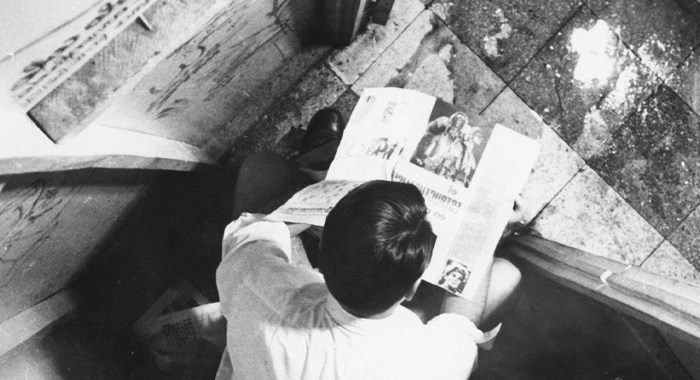
Raúl Ruiz’s first feature film, based on a play by Alejandro Sieveking, lays the groundwork for what would become his style: his preference for literary adaptations, wordy dialogue, and labyrinthine structures, but without the flights of fancy that would define his later work. Inspired by the French New Wave, Tres Tristes tigres focuses on three characters in Santiago de Chile’s underworld: Tito, a simple-minded and irresponsible provincial who works for Rudy, an ambitious car dealer; Amanda, Tito’s sister who works as a stripper while moonlighting as a prostitute; and Lucho. Instead of delivering Rudy some important paperwork needed to close a deal, Tito spends his time hanging in bars with the other two. Long thought burned by the Pinochet regime after Ruiz was forced into exile, a copy of Tres Tristes Tigres was discovered at the Uruguayan Cinematheque, restored, and screened again in Chile in 1993 at the Viña del Mar Festival.
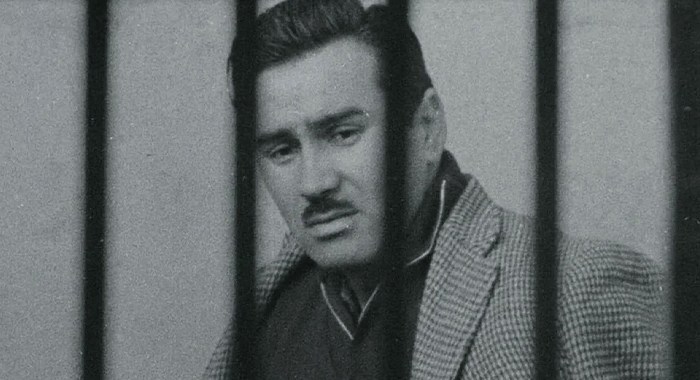
2. Jackal of Nahueltoro (1969)
Where to watch: Cineteca Nacional de Chile
Shot with the same camera used by Ruiz in Tres Tristes Tigres, Miguel Littín’s feature debut is based on the true crime story of José del Carmen Valenzuela Torres, an alcoholic and illiterate drifter who in 1960 brutally killed a woman and her five children in northern Chile. Told from Valenzuela’s point-of-view, the film reconstructs his early life, the actual murder, and his time in prison, where he learns to read and write, converts to Catholicism, and leans a trade before he is executed. A prime example of the socially and politically committed films that came out of the New Chilean Cinema, Jackal of Nahueltoro questions the institutional forces and systems that create the conditions that condemn people like Valenzuela to a life of poverty, ignorance, and violence.
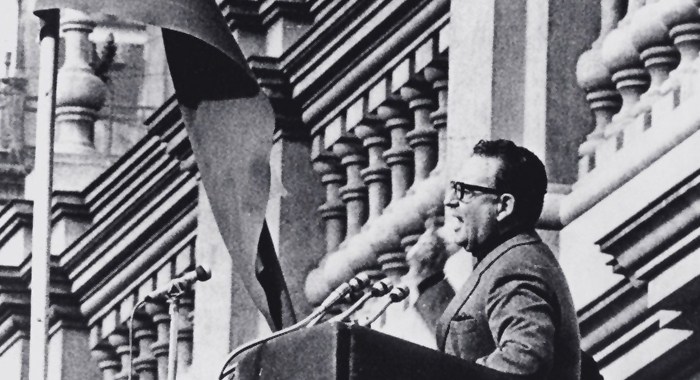
3. The Battle of Chile Parts I-III (1975-79)
Where to watch: Apple TV, OVID.TV
With the death at age 85 this past September 15 of groundbreaking documentary filmmaker Patricio Guzmán, Chile lost its chronicler par excellence of the country’s history before and after Pinochet’s dictatorship. Any of his films would have made this list, but the three-part The Battle of Chile (and its prologue, The First Year) is indispensable. Recently restored in 2K and released by Icarus Films, The Battle of Chile has a you-are-there intensity, a sense that if this moment, if these people, aren’t recorded, they will be lost forever. Shot clandestinely with film stock donated by Chris Marker, the documentary offers a detailed account of the forces, internal and external, from the right and the left, that played a crucial role in the events that led to the bombing of the presidential palace by General Augusto Pinochet’s armed forces and the overthrow of Allende’s government on September 11, 1973.
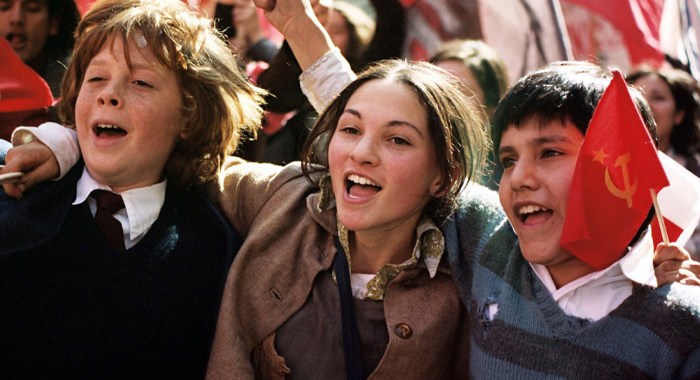
4. Machuca (2004)
Where to watch: Kino Film Collection, Kanopy
The top grossing Chilean film of 2004, Andrés Wood’s third film, Machuca, revisits the pivotal period of 1972-73 from the sympathetic eyes of a child. Gonzalo, an 11-year-old boy from a well-to-do family in Santiago who studies at a reputable Catholic school, befriends a young boy named Pedro Machuca, one of five new children from the slums brought by the school’s headmaster as part of a government-sponsored initiative to foster tolerance and mutual respect among the classes. Gonzalo begins to spend more time with Machuca and his family in their shantytown, joining them in marches and protests. He also develops a crush on Silvana (Manuela Martelli), Machuca’s sister. Wood slowly but surely lets the class tensions between the trio simmer to a boiling point, leading to an ending as devastating as the coup itself.
5. No (2012)
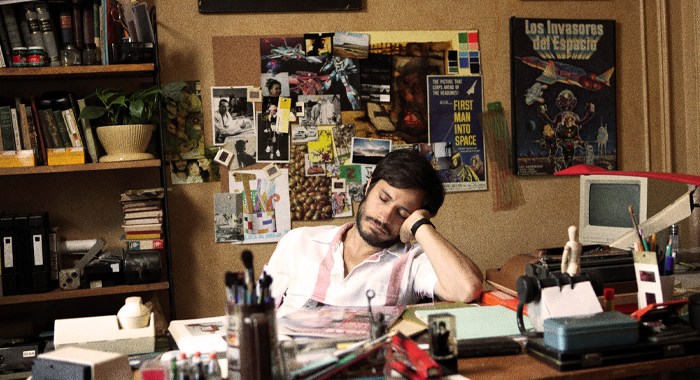
Where to watch: Fandango, Apple TV, Prime Video,
The final film in Pablo Larraín’s so-called Chile trilogy (which include 2008’s Tony Manero and 2010’s Post Mortem) and his first collaboration with Mexican actor Gael García Bernal, No is the thrilling reenactment of the successful advertising campaign that led to the ouster of General Augusto Pinochet. In 1988, Pinochet was forced to call a plebiscite on his presidency with a simple YES or NO vote. Opposition leaders recruit René (García Bernal), a young advertising executive to come up with a strategy to win over the voters. Much to their chagrin, René develops a campaign that mimics much of American advertising at the expense of the ideological bullet points they’d much rather see reflected in the ads. A propulsive, exhilarating thriller, the entire film was shot with rebuilt U-matic cameras to mimic the broadcast look of the time and incorporated commercials from the actual campaign, immersing audiences in the historical moment. One of Larraín’s best.
6. A Fantastic Woman (2017)
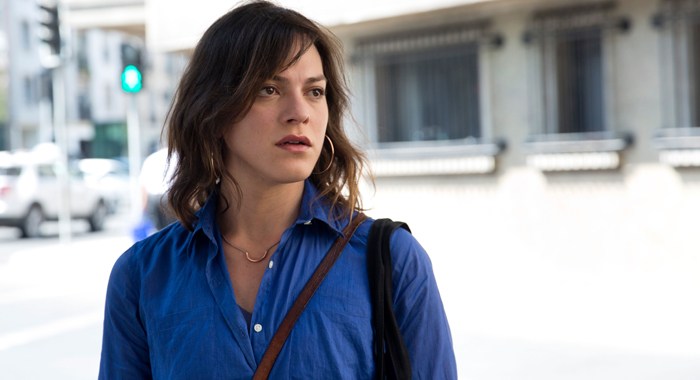
Where to watch: Fandango, Apple TV, Prime Video,
The first Chilean film to win an Academy Award for Best International Feature, Sebastián Leilo’s A Fantastic Woman is groundbreaking in more ways than one. Besides being one of the few Latin American films with a transgender character played by a transgender actress and launching the career of Daniela Vega (who delivers a stunning, unforgettable performance), its win at the Oscars helped propel the passage in 2018 of a law in Chile that allowed people over the age of 14 to change their name and gender on official documents. Marina (Vega) is a young waitress deeply involved with Orlando, who is 20 years older than her. When he dies on the way to the hospital after collapsing on his birthday, Marina is treated with suspicion by hospital staff, misgendered, prohibited by his family from attending his funeral, and investigated by the police. Full of flights of fancy to offer a counterweight to the hatred and discrimination she suffers, Marina’s fight for respect is handled with delicacy and empathy.
7. The Wolf House (2018)
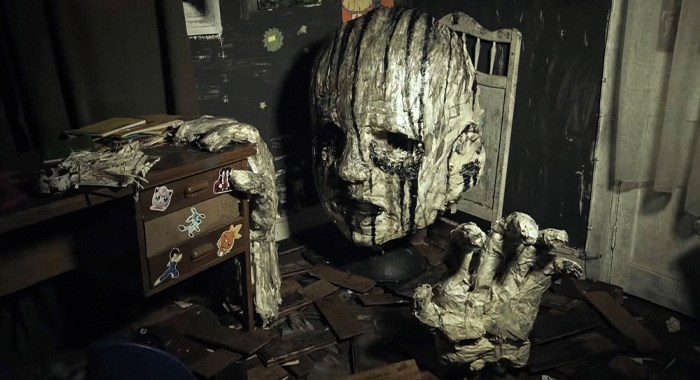
Where to watch: Fandango, Fubo, Kanopy, OVID.TV, Prime Video
Chilean artists Cristobal León’s and Joaquín Cociña’s feature-length animated debut tells a dark tale worthy of the Brothers Grimm or Hans Christian Andersen. Inspired by the incidents surrounding Colonia Dignidad — a colony founded in Chile in 1961 by Paul Schäfer, a man accused of child molestation in Germany, that was used by Pinochet’s regime as a location for the imprisonment, torture, and murder of hundreds of political dissidents — The Wolf House takes the form of a film unearthed from the colony’s vault and “restored” by Cociña and León. After setting three pigs free, a girl named María escapes from the colony and seeks refuge in an abandoned house where two of the pigs are hiding. The two pigs transform into children, and María vows that she will protect them from the wolf. Presented as one long, uninterrupted sequence and shot in digital at several museums and galleries, often in front of an audience, The Wolf House is a beautifully, intricately handcrafted, haunting, perturbing and breathtaking work.
8. Chile ’76 (2022)
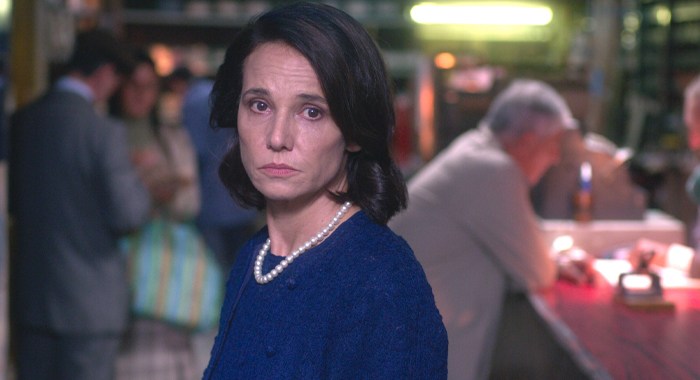
Where to watch: Fandango, Kino Film Collection
Machuca’s Manuela Martelli makes her directorial feature debut with this unnerving thriller about an aristocratic woman who finds herself involved with the opposition three years after the coup. In Chile ’76, Aline Küppenheim (who worked alongside Martelli in Machuca) plays Carmen, the upper middle-class wife of a respected doctor. Carmen is working on the redecoration of their summer home when she is approached by the local priest with a request: tend to a young man who has been shot in the leg. A former Red Cross volunteer, she at first hesitates but, curious, agrees to take care of his wounds. One favor leads to another, and Carmen soon becomes enmeshed in the opposition’s cat-and-mouse games with the regime. María Portugal’s synthesizer-driven score, full of foreboding and ominous beats and sounds, establishes a paranoid atmosphere where every gesture, every word, and every shadow is charged with potential danger.
9. The Punishment (2022)
Where to watch: Fandango,
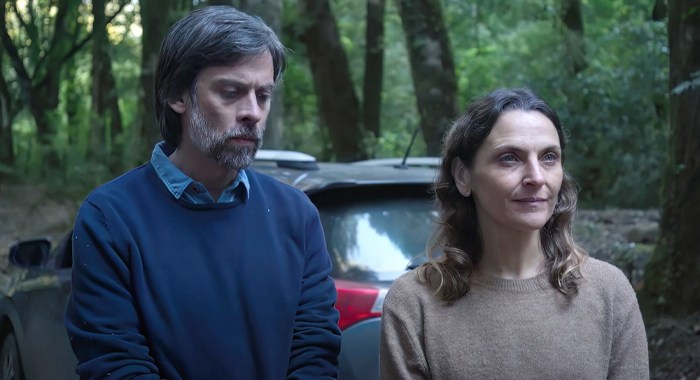
Shot in one single take, Matías Bize’s The Punishment tells in real time the story of two parents who leave their seven-year-old son behind in a forest as punishment for his unruly behavior. When parents Ana and Mateo return minutes later, they find that the boy is now missing. Once the cops arrive, they begin to dissemble, but the officer in charge sees through their lies. Who’s really to blame? With night fast approaching, finding the missing boy takes on added urgency. Not only do Bize and screenwriter Coral Cruz put these two characters through the wringer; by choosing to tell this story this particular way, he also traps us in this maelstrom of contradictory emotions. We feel Ana’s and Mateo’s discomfort and anguish, especially in the final 10 minutes when Ana reveals, in a monologue, some hard truths about her relationship to Mateo and her notions of motherhood.
10. The Eternal Memory (2023)
Where to watch: Fandango, Apple TV, Paramount+, Prime Video
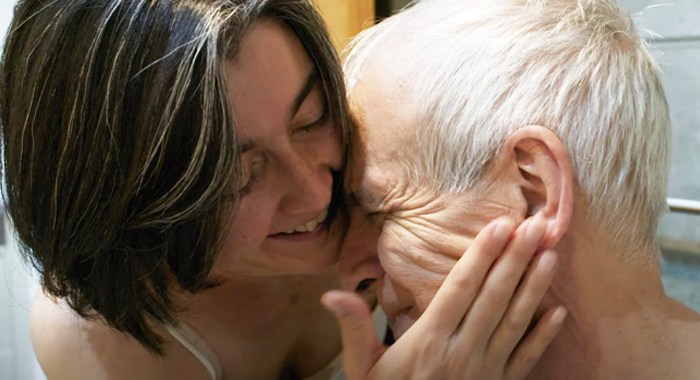
Winner of the Grand Jury Prize for Best World Cinema Documentary at Sundance in 2023 and shot over four years, Maite Alberdi’s moving documentary The Eternal Memory tells the story of how two shining lights of Chilean culture, actress and former Minister of Culture Paulina Urrutia and journalist and documentarian Augusto Góngora, face the onset of Augusto’s Alzheimer’s together. As the editor-in-chief of Teleanálisis, an underground news organization during the Pinochet era, the person in charge of Televisión Nacional de Chile’s cultural programming, and the author of Chile: la memoria prohibida (Chile: The Forgotten Memory), Góngora, like Patricio Guzmán, fought to preserve Chile’s memory of those long years. Featuring footage shot by Alberdi before the pandemic and footage shot by Urrutia during the COVID lockdown, the documentary painstakingly documents Góngora’s mental decline, Urrutia ‘s fortitude, and the enormous toll taking care of him has on her. Góngora passed away five months after the documentary’s premiere at Sundance.
Alejandro A. Riera is a Santurce, Puerto Rico-born film and theater critic, editor, and press coordinator based in Chicago. His written work, in both English and Spanish, has appeared in Remezcla, Third Coast Review, the Chicago Reader, his own blog, and in the Chicago Tribune’s much missed Spanish-language publications ¡Exito! and Hoy. He contributes a monthly column for Cinelandia, the weekly newsletter dedicated to Latin American and U.S. Latino cinema. He was the Chicago International Film Festival’s publicity manager for nine years. After 15 years as the media relations manager for both the International Latino Cultural Center of Chicago (ILCC) and its main event, the Chicago Latino Film Festival (CLFF), Alejandro was recently appointed publicity manager for the ILCC and the CLFF’s programming manager.