
Director Alexandria Stapleton on Finding the Real Story in Sean Combs: The Reckoning
The director and executive producer of the Netflix series talks about vetting sources, discovering the dark side of Diddy, and getting her Emmy nomination.
Sean Combs. Puff Daddy. Diddy. Love. No matter what you call him, recent revelations about his abuses in the industry have spawned countless media pieces and shocked Hollywood, the music industry, and the world. It also sparked a wave of news reports, docuseries, and social media conversations that attempted to shed light on a real-life wolf in sheep’s clothing who has been convicted of terrorizing individuals for decades. The recent four-part documentary by Emmy- and Grammy Award–winning executive producer Curtis “50 Cent” Jackson and Emmy-nominated director Alexandria Stapleton, Sean Combs: The Reckoning, seeks to fill gaps where previous stories about the mogul, music legend, and convicted sex offender fell short. It was recently nominated for three Emmys, including Outstanding Directing for a Documentary/Nonfiction Program.
Stapleton a seasoned documentarian, dedicating the last 15 years of her career to nonfiction storytelling. Up against stiff competition for the Best Director prize, including names like Mariska Hargitay, Lawrence Kasdan, and Judd Apatow, she would become the first Black woman to receive this particular honor if she wins. After countless hours with subjects before the cameras ever roll, Stapleton had the herculean task of earning their trust and making them feel comfortable, despite the personal and intimate details of their revelations. This was in addition to crafting a compelling story. We recently sat down with the series director and executive producer to discuss its reception and what she hopes for those brave enough to share their stories with the world.
Jacqueline Coley for Rotten Tomatoes: Congratulations. Tell us about Emmy nominations morning. What was it like for you? Who did you speak with?
Alexandria Stapleton: The first person I spoke with was someone from the Netflix team who called to congratulate me and the team, and then the second call was my mom. It was a crazy, hectic morning. I was on my way to urgent care with my son because he had an earache, so I was juggling in-car conversations and was overjoyed to be nominated, but I also had mom duties to take care of.
RT: Sean “Puffy” Combs was also an infamous Hollywood figure and already under scrutiny before you joined this project. Talk about your initial conversations with the producers about what you wanted to bring to this story that hadn’t already been covered through the many months and years that people have been talking about his abuses.
Stapleton: I started the project the day that Cassie [Ventura] dropped her lawsuit, which was definitely an opening to look underneath the hood of her allegations. I think that even if you had heard about abuse and certain things about Sean [Combs], the world had not been exposed to details at that level. That was literally when I got started. My first conversations with [executive producer] 50 Cent were still very short, in that window. She dropped her lawsuit in October or November, and we were talking that fall. I started putting the [series] together very early on, from these allegations going public. The news was covering the lawsuits that were dropping, but this is all pre-indictment. Sean responded that he denied all the allegations.
Then the tape dropped of the infamous and horrible, disgusting scene of him physically abusing Cassie in the hotel elevator. We were likely already shooting by that point. This was very tricky, because things were happening in real time as I was prepping, shooting, and editing. We were still shooting and cutting throughout the trial, so responding to information going public as it happened was one of the Herculean challenges of making this series.
RT: The job of the documentarian is to capture as much as possible to tell the story, but then you have to shape that story in the edit bay. What was your approach to where you were going, and how many new places did you find outside of the trial itself where you were able to gather information that spoke to how you told the story?
Stapleton: As a filmmaker, I noticed that the media kept grabbing the salacious details of the story. On social media, it was just shock and awe, all the craziness about baby oil and gory details, and my job is not to regurgitate that. My job is to find the story. A series that I think is so incredibly well done is O.J.: Made in America. Ezra [Edelman], the filmmaker behind it, did an incredible job telling OJ’s origin story and getting into that micro-storytelling. I really felt that’s what I wanted to do with The Reckoning. Let me start with a basic timeline of Sean Combs’s origin story: his upbringing in Mount Vernon and Harlem, his family backstory, his mother and father, and how he got his break in the industry. Uptown became my starting point.
Looking at the timeline of his public persona, I grew up on his music and understood Sean Combs’s public image. But as these allegations came out, it became a Tetris thing: We looked at them, vetted them to the best of our ability, and picked the ones we felt had multiple sources behind them. Not all the civil lawsuits were credible, so we chased the ones with credibility and additional sourcing, then mapped those allegations as an additional layer on the historical timeline. That’s where the story started to come to life. Around the City College incident, before he was even the famous Puff Daddy who got his deal with Clive Davis, looking at Joi Dickerson Neal’s allegations of him being a party promoter who sexually assaulted her — those started to paint this portrait of a man who was a complete paradox to the fun-spirited P. Diddy. We were starting to understand this uglier side of abuse and exploitation of some of his artists.
RT: The whole series really shows that duality. Sometimes you find things in the edit bay that you think will be huge and they don’t end up being as big, and sometimes there are moments on set where you know right away how significant something is. Which piece of information gathering held up as the most significant all the way through to the final series?
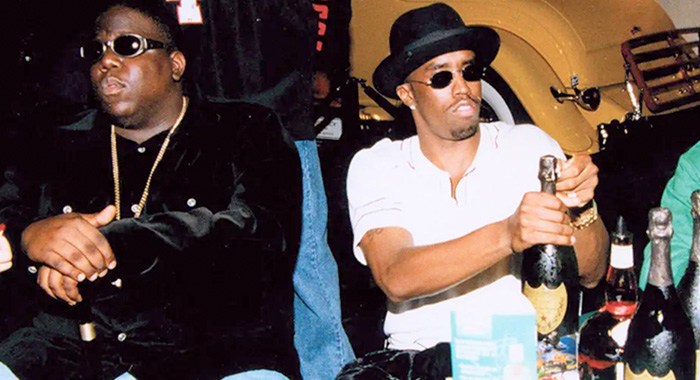
Stapleton: I’ll answer that with two different lanes. With archival material, there were some giant moments of his career, like the VMA performance where he performs “I’ll Be Missing You”. I was 17 when that came out. Biggie’s death was so tragic, and I remember that performance so clearly. When we were in the edit, and you go through all of episode 1 and episode 2, and Biggie has passed on, and that moment plays, it just hits so different when you understand so much more about what was going on behind the scenes. I think the audience felt the same way. That’s part of what made the series work: that these familiar moments just hit you completely differently.
The biggest thing that fell into my lap, when we were already well into the edit bay months in, was accessing footage of him in the last week leading up to his arrest. To be clear, I’m not saying Diddy shot it, but he allowed a camera to follow him. That was all new to me, and it was shocking. It wasn’t like one single moment everything hung on. After doing so many interviews and cutting the material for so long, seeing that footage felt like I had a real interview with him. He was showing you who he is, unedited, without the way he would normally cut things together to sanitize a version of himself. You were getting these darker moments with him, seeing him react to more allegations and civil suits being dropped, seeing where his priorities were. Him going to Harlem, acting like all is good for people to see, but then quietly freaking out and panicking and saying horrible things about the community. That really backed up so much of what the interview subjects described him to be.
RT: Now that it is out in the world, what has been the reaction that you hold most precious throughout this process? Because when you were making it, there was a lot of conversation that maybe wasn’t as encouraging as the reception you ended up getting.
Stapleton: What I hold dear to my heart was the opportunity to have a series that allowed so many people to share their story uninterrupted. They were able to share the good parts, their ambition, what attracted them, perhaps meeting him or entering into the world of Bad Boy. But they were also able to share their heartache, their physical disgust, or the trauma they suffered at his hands. What became very clear as I started meeting and interviewing people was how overwhelming it was that so many had been silenced. I don’t think I’ve ever worked on a project where so many people were afraid to talk, because even 20 years later they still live in fear of retribution from him and his ecosystem. Sean Combs seemed very advanced with skills of manipulation and tactics to keep people quiet and isolate them. All of these people were on their own island, feeling like their trauma was theirs alone, internalizing it as their own fault. The blessing for me was helping them see that wasn’t the truth and to find community with each other after the series came out.
Sean Combs: The Reckoning is currently releasing new episodes weekly on Netflix.
Thumbnail image by Jason Mendez/Getty Images for Netflix