
Dave Navarro’s Five Favorite Films
The Rocker Guitarist Discusses Cinephelia, Political Scandals, and Overcoming Trauma

Getty Images / Anna Webber / Stringer
Best known as the guitarist for Jane’s Addiction, the Red Hot Chili Peppers, Panic Channel, Deconstruction and, well, himself, Dave Navarro has done his fair share of TV as well, not only as host of Ink Master, but also as a judge on Rock Star: INXS and Rock Star: Supernova.
Now, Navarro is the producer and subject of Mourning Son, a documentary that delves into his profound personal trauma (his mother’s ex-boyfriend murdered her and her sister when Navarro was 15; he was out of the house at the time). A self-proclaimed cinephile, Navarro shared his Five Favorite Films, and discussed the difficulty of sharing his most painful memories on camera.
 93%
93%
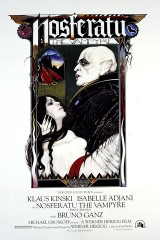 90%
90%
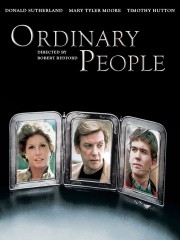 95%
95%
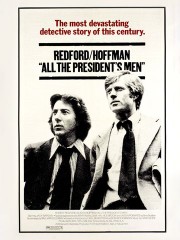 90%
90%
 66%
66%
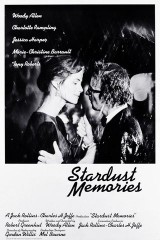
Kerr Lordygan for Rotten Tomatoes: Do you want to talk about Mourning Son? I know it’s probably hard to talk about.
Navarro: Basically, me and my partner, Todd [Newman], we worked on it every step of the way. This film couldn’t be more DIY independent filmmaking because we just basically made it ourselves. We were talking about making a film. We were talking about what it would be like to put a documentary together, because we’re both such huge fans of film. And we just got in the car one day with a video camera and went and made one. That was literally how it happened. We funded and shot everything ourselves, did audio ourselves, did the film ourselves, booked everything ourselves, found everybody ourselves, did the interviews… Everything down the line was all by ourselves until we finally hired on an editor who helped us make sense of everything we had, but even then — we’re in the editing room the entire time. There was no other project I’ve ever been a part of that has been that hands-on from beginning to end. We just wanted to do it ourselves. It’s certainly — a story of this nature, which is — it goes over my mom’s murder and dealing…
RT: Yeah, I didn’t know. I saw the trailer and I had no idea that you went through that.
Yeah, yeah.
RT: What an amazing thing that you were able to put it out there. Was it cathartic? Was it helpful, or was it torturous?
You know, I think maybe at times a little bit of all of that. Yeah, it’s super hard to revisit a lot of that stuff. But I mean, the odd thing was that — how can I put it? It’s really an experience like no other. I’ve never worked on a documentary film before, I’ve never worked really with any feature length film before in my life, so there was a lot to juggle in terms of emotionally and technically — and just a sheer filmmaking sense, a lot to navigate through, and make sense of so, yeah, there was some catharsis involved.
But I think, more than anything, as we were telling the story, and as we were putting it together — because we initially didn’t really have any idea what we were going to do with this — is this going to be a 15 minute film that we put out on YouTube?… We didn’t know what it was going to be. And it just evolved because part of the thing that we learned about documentary filmmaking is that as you put the film together, it kind of decides where it wants to go from there. Then it just decided it wanted to be this feature length thing, and I think one of the things we realized as we were going is that it had the potential to help trauma survivors and victims of crime in a way that no other film has. And in terms of pointing out that there’s no right way to do this, and it’s probably never, ever going to be totally okay. You’re just going to have to get better, and things are tough. I think it speaks on a real level to people who have been through something like that. And buzz words like “closure” you got to throw that out the window right away, because there’s never going to be a day that there’s closure. I think what happens is that, in today’s “touchy-feely” climate, people end up feeling bad because they don’t feel closure, and then they feel worse.
RT: Yeah, like any time someone says they need to “just deal” with something, or you need to “work through it” — what does that even mean? I don’t even know what that means, to work through something.
It would imply that there’s a day that it’s all better. No, what happens is you learn to cope, and you learn that there’s more to live for, and you find other things that are bringing you joy. But this film, — you know, I go into drug addiction; I go into all sorts of ways of either avoiding, or dealing, or compounding, or however — whatever I chose to do. And certainly being a public figure while doing all that was challenging.
RT: Was it rewarding to have fame at your fingertips while it was happening, or was it more of a distraction?
I don’t have any other frame of reference, so I don’t really know. You know what I mean? All I know is that there were a lot of things that I may have not experienced as much as I could have, because my head was somewhere else. But you learn, you know?
Through the process of making this thing we realized that we weren’t just speaking to ourselves, and we weren’t just speaking to the murder junkies that watch Investigation Discovery all day long — although I’m one of them. We were hopefully speaking to a lot of people, and just maybe people who have dealt with loss — it doesn’t have to be that traumatic, you know. Just showing that there’s an up side, but even in my own personal way, my up side is very particular. I’m not suggesting anyone do anything that I did or didn’t do. It just happened to be my journey.
Mourning Son is now available on VOD, Cable On-Demand, and iTunes.