

7 Films at NewFest That Celebrate Rural LGBTQ+ Communities
NewFest and Rotten Tomatoes are celebrating cinema that spotlights queer life in small towns, suburbs, and rural areas in the US and around the world through the retrospective "Queering the Canon" series.

Rotten Tomatoes is proud to partner with NewFest, New York’s largest presenter of LGBTQ+ film & media and the largest convener of LGBTQ+ audiences in the city.
Queer folks are everywhere – from small towns to the ‘burbs, to vast rural areas.
Full of romance, friendship, and close-knit communities, NewFest’s retrospective “Queering the Canon” series this year shares small-town stories from rural America, Sweden, Mexico, and Guinea. The series is co-curated by Nick McCarthy, NewFest’s Director of Programming, and Anton Astudillo, year-round programmer for the festival.
“This year’s triumphant theme, ‘We’re Out Here,’ spotlights an expanse of cinematic odes to queer folks who discover identity and find community within small towns, suburbs, and rural areas across the U.S. and around the globe,” said McCarthy.
In celebration of Queering the Canon, Rotten Tomatoes’ Review Curation team added 170 reviews for films screening at the festival, placing historical and current criticism in conversation, and archiving these reviews on the Tomatometer.
“Queering the Canon is a unique opportunity for our audiences to discover films with queer narratives from past decades, many of which they may be encountering for the very first time,” said Astudillo. “That, to me, is truly exciting.”
Featuring anniversaries, restorations, 35mm prints, and in-person Q&As with legacy filmmakers and special guests, the series champions the knowledge that queer people are here, there, and everywhere — and we always have been.
Queering the Canon screens both virtually and in-person in New York City from March 26-30. Find the full festival lineup and secure tickets at newfest.org.
Desert Hearts (1985)
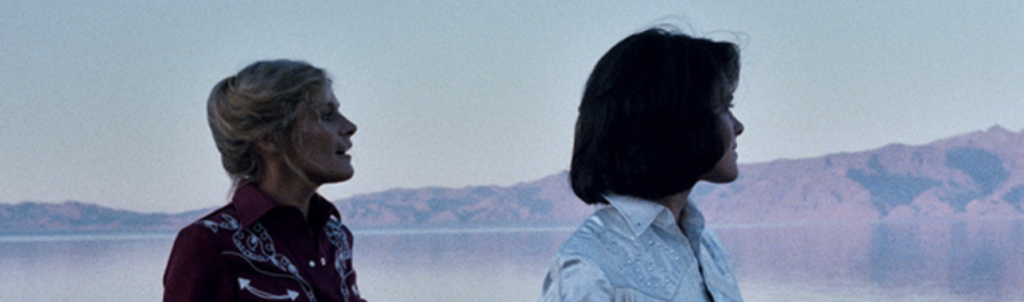
Thursday, March 26, 2026 – 7:30pm; Q&A with director Donna Deitch and star Patricia Charbonneau to follow
Donna Deitch’s classic of lesbian cinema is one of the greatest love stories of all time. The year is 1959 and Professor Vivian Bell (Helen Shaver) has arrived in Reno, Nevada for a divorce. There she meets Cay Rivvers (Patricia Charbonneau), a backwards-driving, jean short-wearing sculptor/casino employee who is brazenly herself. These two opposing forces circle around each other, falling in lust and love, as Cay dares Vivian to take a risk for something more.
Celebrating four decades since its theatrical release in 1986, join us in revisiting a film that was ahead of its time. From an overwhelming kiss in the rain to one of the best sex scenes ever put on film, Desert Hearts redefined what queer women could expect from our movies. The romance crackles with possibility, but its love story goes beyond this central pair — it’s also about the bonds of friendship, the challenge of family, and the importance of embracing the entirety of oneself.
“For the first time in American cinema, a film showed that two women could end up as a couple, and lesbian audiences have come to demand attractive leads, hot sex, and happy endings ever since.”
– Lydica Marcus, The Advocate (February 27, 2007)
Dakan (1997)
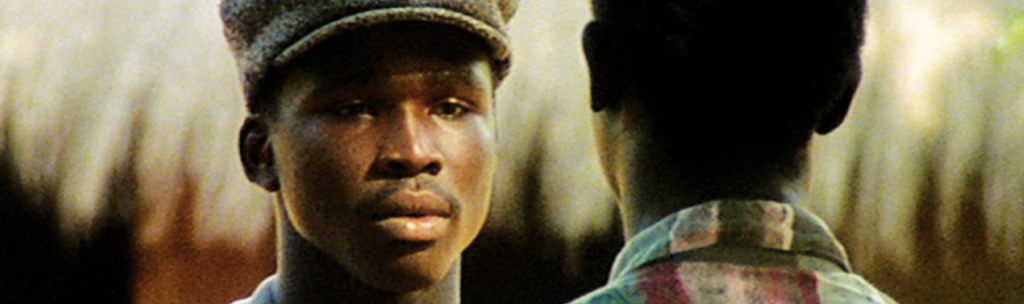
Friday, March 27, 2026 – 7:30pm, with special guest introduction by filmmaker Amir Adem
Touted as the first queer love story from West Africa, this poignant and unapologetic drama endures beyond the controversy and celebration it received upon its premiere at the 1997 Cannes Film Festival.
Sory and Manga feel an irrepressible romantic connection they cannot deny. But after the young men share their authentic feelings with their parents, they are separated and sent in different directions. Sory begins to work in his father’s business, while Manga must spend a year with a traditional healer in the backcountry – and they are both firmly encouraged to settle down with women. As Sory and Manga attempt to meet social conventions, it gradually becomes clear that their personal journeys are more paralleling than divergent.
A rarely screened milestone in queer cinema, Mohamed Camara’s Dakan (“Destiny”) is a powerful call to listening to — and trusting in — one’s heart.
“Director Mohamed Camara, filming in secret due to the touchy subject matter, convincingly overlays a class conflict and social critique onto this gay Romeo and Juliet update, but the focus is always on the emotional power of a taboo relationship.”
– Garry Morris, Bay Area Reporter (June 18, 1998)
Waiting for Guffman (1996)
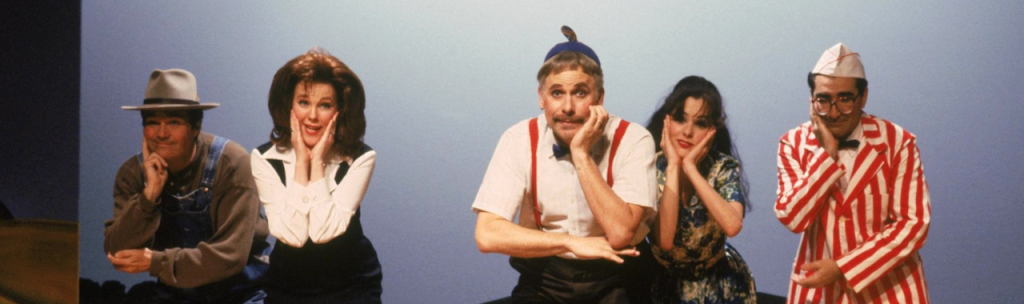
Saturday, March 28, 2026 – 4:00pm
When the town of Blaine, Missouri approaches its 150th year (“sesquicentennial”), there’s only one way to celebrate: with a musical revue called “Red, White and Blaine.” Hoping the show will be his ticket back to Broadway, impresario Corky St. Clair (Christopher Guest) rounds up a cast of enthusiastic locals (Eugene Levy, Parker Posey, Fred Willard, and the late great Catherine O’Hara) to perform his ostensibly toe-tapping triumph. But when Corky reveals that theater agent Mort Guffman will attend the opening, things really kick into high gear.
Commemorating its own 30th anniversary, this seminal satire from director Christopher Guest (Best in Show, A Mighty Wind) blends comic absurdism, improvisation, and deadpan genius into a marvel of mockumentary. NewFest will be screening it on 35mm.
“Waiting for Guffman is a pseudodocumentary that captures show business at its most mediocre, but this time, most of the subjects aren’t nearly pretentious enough to poke fun at. Their dreams of escape are so modest that Guest’s movie comes off as clever.”
– Justine Elias, Village Voice (February 11, 1997)
Show Me Love (1998)
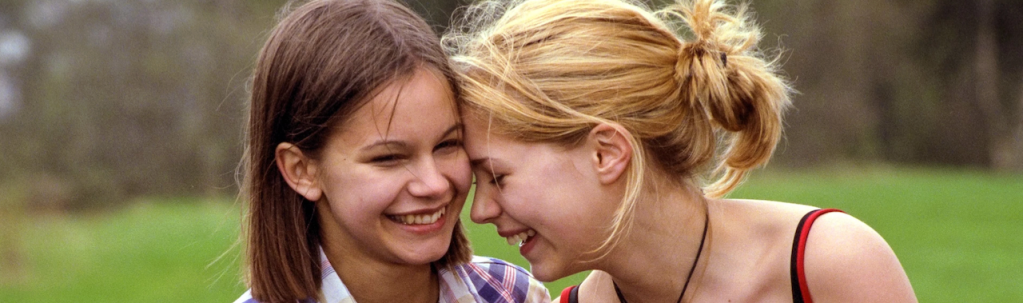
Saturday, March 28, 2026 – 7:00pm
Set in the small Swedish town of Åmål, this cherished coming‑of‑age film follows Agnes (Rebecca Liljeberg), a creative and lonely teenager who has long been secretly in love with Elin (Alexandra Dahlström), the cute, rebellious sister of the school’s most popular girl. As the only visibly queer student, Agnes endures bothersome bullying but finds refuge in poetry and the moody alternative music she treasures. Around her, classmates try to play into a world shaped by contemporary pop culture and the teen‑idol wave of the late ’90s (including Robyn, an iconic pride of Sweden whose 1997 hit song serves as the English-language title of the film).
When Agnes and Elin’s paths — and angsty vibes — finally intersect, Agnes’s long‑held crush proves a challenge to the town’s conservative notions, revealing a tenderly defiant story of budding desire, courage, and self‑acceptance.
“Its final, triumphant jab at small-mindedness truly deserves to be called the feel-good ending of the year.”
– Scott Heller, Boston Phoenix (November 5, 1998)
“Captures the bittersweet desperation of youth: a tragedy as it’s in the midst of occurring yet such a comedy in hindsight. It’s a totally endearing love story free of artifice – with an optimism rare for these sort of flicks.”
– Oliver Skinner, IndieWire (January 22, 2014)
Southern Comfort (2001)
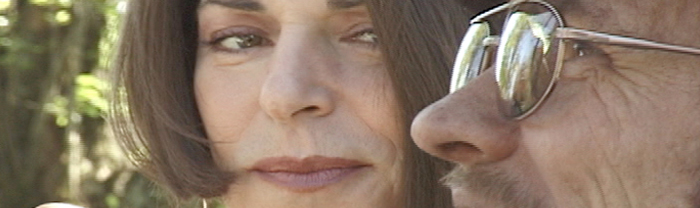
Sunday, March 29, 2026 – 5:00pm; Q&A with director Kate Davis to follow
Winner of the Grand Jury Prize at 2001’s Sundance Film Festival, this vibrant vérité documentary traces the final year in the life of Robert Eads, a transgender man and community leader living in rural Georgia.
Southern Comfort moves with quiet intimacy and wit, following Eads as he opens his world with disarming honesty — his romantic partnership with transgender woman Lola, his loving yet complicated bond with his son, and the chosen family that surrounds him across the rural South. As Eads candidly confronts being denied lifesaving treatment by a failing healthcare system, the film transforms that injustice into a profoundly human portrait.
Through these compelling conversations, director Kate Davis captures a community navigating love, caretaking, and identity in a region that often refuses to see them — a reminder of the resilience and interconnectedness that sustain trans lives throughout America.
“Davis takes you so far into the lives of these folks that maybe for a moment you wonder how they could permit such sustained disclosure of themselves. Then you remember the doctors. And you realize that there are still lessons to be learned.”
– Gene Seymour, Newsday (February 21, 2001)
“Just try watching all the way to the end of Kate Davis’ remarkable 90-minute film… without reconsidering your notions of what it means to be male or female and what it takes to be loved.”
– Joanne Weintraub, Milwaukee Journal Sentinel (April 13, 2002)
The Place Without Limits (1978)
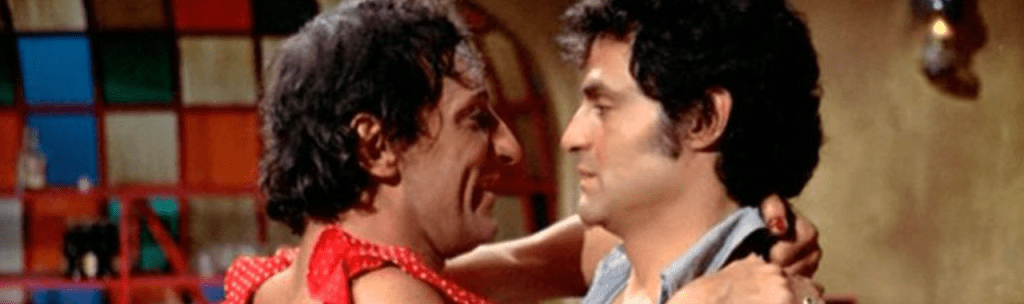
Monday, March 30, 2026 – 7:00pm, Q&A with film critic Nicolas Pedrero-Setzer to follow
Adapted from José Donoso’s iconic novel, The Place Without Limits (El lugar sin límites) centers its story on Manuela and her daughter, who run a fading brothel in the remote setting of El Olivo, Mexico. As the tumbleweed town withers, an unwelcome visitor — once treated as family by the town’s mayor — returns and stirs long‑buried tensions that threaten its fragile peace. Manuela, rejected and mislabeled by those around her, navigates a world ruled by machismo and prejudice. Her resilience and luminous spirit make her the emotional core of a community pushed to the brink.
Selected by Mexico as its entry for the Best Foreign Language Film at the 51st Academy Awards, Arturo Riptein’s The Place Without Limits is a gripping portrait of dignity and survival in a place determined to extinguish it.
“El lugar sin limites shares the same feminist sentiments as Broken Mirrors as it becomes an all-out attack on machismo.”
– Kevin Thomas, Los Angeles Times (June 10, 1985)
Greetings From Out Here (1993)
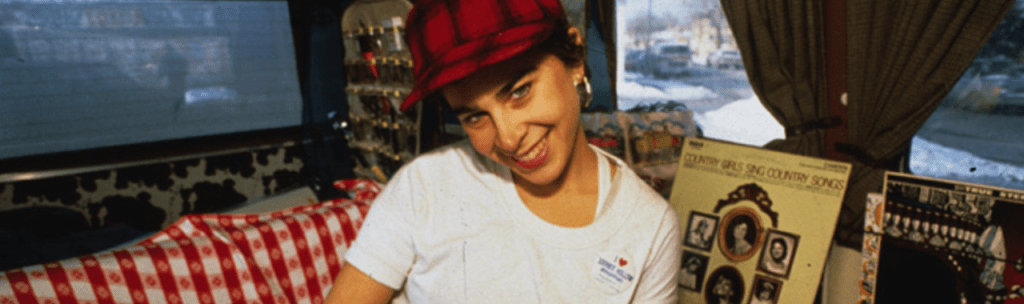
Virtual exclusive – available only at newfest.org from March 26-30, 2026
Accompanied by her dog Sam and a video camera, filmmaker Ellen Spiro traveled from Virginia to Texas and back exploring the openly gay culture in the Deep South. Highlighted by spontaneous encounters with local eccentrics and mechanics (her van breaks down frequently), Greetings From Out Here provides detailed portraits of small town queer Southerners, from Rita, a retired military officer turned drag queen in New Orleans, to Iris, a Black lesbian living in a bus in the Ozarks.
Filmed on location at the Texas Gay Rodeo, Mardi Gras, Gay Pride in Atlanta, Dollywood, Miss Miller’s Eternal Love and Care Pet Cemetery, and the Short Mountain Radical Faerie sanctuary, Spiro’s footage captures the richness, vitality and courage of “out” gay Southern life in the early 1990s.
Watch Rotten Tomatoes’ critic panels at NewFest here.
Check out more of Rotten Tomatoes’ archival review projects here. Dom Pembleton (they/them), Rotten Tomatoes Bilingual Review Curator, completed archival research for this project.