(Photo by Buena Vista/courtesy Everett Collection)
Since their 1984 neo-noir debut Blood Simple, brother directors Joel and Ethan Coen have danced amok across American cinema with mordant tales of wayward souls and their crimes and misdemeanors. Among their achievements include making a generation-defining comedy (The Big Lebowski), revitalizing the Western (True Grit), and winning Best Picture (No Country For Old Men). They even brought back bluegrass, achieved through cultural Trojan horse O Brother, Where Are Thou?.
Recently, the brothers have struck out on their own, with Joel adapting known Scottish play into The Tragedy of Macbeth, and Ethan making his solo debut with the twisty lesbian anthem Drive-Away Dolls.
 95%
95%
 94%
94%
 94%
94%
 93%
93%
 93%
92%
93%
93%
92%
93%
 91%
91%
 90%
89%
90%
89%
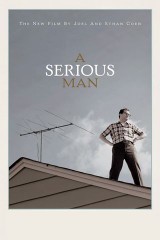 89%
86%
89%
86%
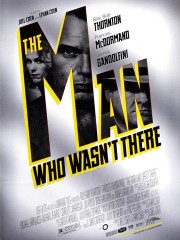 81%
79%
81%
79%
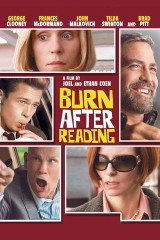 78%
78%
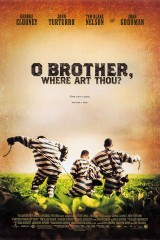 78%
78%
 76%
76%
 64%
64%
 64%
64%
 54%
54%
Sitcom star, dependable character actor, occasional leading man — John Goodman has basked in the glow of a number of different spotlights over the last few decades, carving out a career enviable for its versatility and sheer success as well as entertaining to watch. Whether he’s making good use of his expert comic timing or lending dramatic gravitas to a scene, Goodman has become a reliable indicator of quality for whatever project he happens to be involved with — and this weekend, given that the project in question happens to be Kong: Skull Island, we figured now would be the perfect time to pay tribute to Mr. Goodman with a look back at his best-reviewed films. All hail King Ralph, it’s time for Total Recall!
An early and enduring critical favorite, The Big Easy was a concerted move to the mainstream for director Jim McBride, who cut his teeth on stuff like the X-rated apocalyptic fantasy Glen and Randa. It captured Dennis Quaid at his Hollywood heartthrob peak, chucking him and Goodman into the bayou with a never-sultrier Ellen Barkin for a sex-drenched neo-noir about police corruption (and, it must be noted, really good music). Easy wasn’t a huge hit — it grossed less than $18 million during its theatrical run — but its cult has grown over the years, affirming the words of critics like the Washington Post’s Hal Hinson, who enthused, “This is one movie that lives up to its billing; it’s easy all right. Like falling off a log.”
Something of a palate cleanser for the Coen brothers after the rich darkness of their previous effort, Blood Simple, 1987’s cockeyed comedy Raising Arizona united a motley crew of character actors to tell the tale of a well-meaning ex-con (Nicolas Cage) who hatches a plan with his police officer wife (Holly Hunter) to cure their childless condition by kidnapping a baby from a furniture magnate (Trey Wilson) who publicly jokes that his five infants are more than he knows what to do with. The kidnapping coincides with the unfortunate reappearance of Cage’s criminal associates (Goodman and William Forsythe), who complicate the situation with plans of their own — and then there’s the Lone Biker of the Apocalypse (Randall “Tex” Cobb) to contend with. Perhaps less a movie than an artfully assembled compilation of quirks, Arizona quickly ascended to cult classic status; as Time Out’s Geoff Andrew enthused, “Starting from a point of delirious excess, the film leaps into dark and virtually uncharted territory to soar like a comet.”
Goodman’s cuddly frame and avuncular smile have made him a natural for a number of kindly characters, but he also has a unique intensity that makes him great for villains — dual gifts that were both put to effective use in 2016’s 10 Cloverfield Lane. As Howard Stambler, a mysterious doomsday prepper who saves (or maybe kidnaps) our heroine (Mary Elizabeth Winstead) after a car accident, Goodman has to play a lot of character notes: is he a loony with outlandish end-of-days beliefs and nefarious plans for his guest/captive, or does he really represent safety in a world gone wrong? From scene to scene, the audience is never quite sure, and the end result is — as Jeannette Catsoulis put it for the New York Times — “A master class on narrative pacing and carefully managed jolts.”
Frank Marshall (backed here by his longtime production partner Steven Spielberg) made his directorial debut with this affectionate, cheerfully creepy tribute to classic Hollywood creature features, in which a deadly breed of spider terrorizes a small town whose residents include a lunatic exterminator (John Goodman) and, of course, a doctor with the titular phobia (Jeff Daniels). “That sound you hear in the background is the ‘ugh!’ heard round the world,” chuckled Janet Maslin of the New York Times, adding, “luckily, Arachnophobia will also be generating its share of boisterous, nervous laughter.”
Goodman has delivered more than his share of memorable supporting performances, but his work in Barton Fink is near the top of a distinguished list, helping anchor an early Coen brothers picture that uses the uneasy partnership between art and commerce as a backdrop for a surreal drama about sex, lies, and a shotgun-toting traveling salesman (played by Goodman, natch). Calling the end result “Gnomic, claustrophobic, hallucinatory, just plain weird,” Time’s Richard Schickel lauded it as “the kind of movie critics can soak up thousands of words analyzing and cinephiles can soak up at least three espressos arguing their way through.”
Goodman’s outsize personality was a perfect fit for 1993’s Matinee — not only because it lent itself well to the leading character, the William Castle-inspired film producer Lawrence Woolsey, but also because Goodman proved an excellent on-screen foil for director Joe Dante’s equally boisterous style. Sadly, Dante’s fond look back at the politics and culture of the early ‘60s — which framed Woolsey’s efforts to debut a half-man, half-ant horror movie called Mant against the shadow of the Cuban Missile Crisis — failed to resonate with audiences, who ignored it to the tune of a paltry $9.5 million domestic gross. But it hit a home run with critics like Jeffrey M. Anderson of the San Francisco Examiner, who called it “A riot, and Joe Dante’s most touchingly personal movie at the same time.”
Goodman’s work with the Coen brothers hasn’t always translated to a ton of screen time, but his association with the duo has given him the opportunity to play some truly memorable, scene-stealing characters. Case in point: Roland Turner, the unforgettably noxious jazz artist who shares a ride to Chicago with the titular protagonist during Inside Llewyn Davis. Turner’s passing presence in the film is just one of a handful of regrettable misadventures, but as he has so often in his career, Goodman adds an expert dash of seasoning with his performance — and rounds out what the Arizona Republic’s Bill Goodykoontz called “one of the strangest yet most satisfying movie experiences of the year” and “one of those films in which you can’t really appreciate what you’ve seen until it’s over.” Concluded Goodykoontz, “You just have to trust that the trip is worth the trouble. And it is.”
The saga of Mike (Billy Crystal) and Sulley (Goodman), two employees of the titular kiddie-scaring company, Monsters, Inc. (and its belated prequel, Monsters University) vividly imagines a world in which children’s screams are the energy source that powers the secret city of Monstropolis — and one in which the monsters themselves are just 9-to-5 clock punchers with problems of their own. After meeting up in college and having some wacky academic adventures, Mike and Sulley go to work together — and ultimately discover that not only is inter-species harmony possible, but it may hold the key to their civilization’s looming energy crisis. “The analogy to our dependence on, say, oil is soon abandoned, the better to blur the distinction between abstract and concrete,” wrote Lisa Alspector of the Chicago Reader, pointing out that it’s “something older viewers of this 2001 animated adventure may appreciate more than younger ones.”
Given all the success he’s had with voicework, it might seem a tad ironic that one of John Goodman’s top-rated films is a silent movie. But aside from having an instantly recognizable voice, Goodman’s also been blessed with a marvelously expressive face, which made him a perfect choice for writer/director Michel Hazanavicius when casting The Artist, a Best Picture-winning romantic dramedy about a pair of silent film stars (played by Jean Dujardin and Bérénice Bejo) whose careers — both managed by studio boss Al Zimmer (Goodman) — diverge sharply with the advent of the talkies. A somewhat unlikely box office hit, The Artist also earned nearly unanimous praise from critics; as Mark Rabinowitz enthused for CNN, “There is literally nothing wrong with it. I don’t have a single nit to pick, minor flaw to point out or little bit that annoyed me. It is pure magic from the first frame to the last.”
The lion’s share of the attention for this Best Picture Oscar winner went to star and director Ben Affleck, and rightly so — but Argo also offered Goodman one of the many crucial supporting roles he’s enjoyed during his career: real-life Hollywood hero John Chambers, the award-winning makeup artist whose clandestine involvement was critical in assembling the phony science fiction movie whose “film crew” sneaked into Iran and rescued a crew of refugee diplomats during the 1979 hostage crisis. Offering some well-timed comic relief, Goodman and his partner Alan Arkin helped provide a safety valve for the often excruciatingly tense Iranian scenes. “The movieland satire is laid on thick, but it’s also deadly accurate,” observed Peter Rainer for the Christian Science Monitor. “Schlock has never seemed so patriotic, and Arkin and Goodman have rarely been so good.”
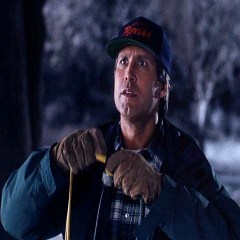
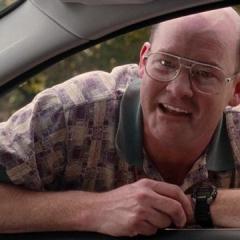
Zach Galifianakis and Isla Fisher get Hamm-sandwiched into an international espionage plot when it’s revealed their new neighbors (Jon Hamm, Gal Gadot) are actually gainfully employed action spies. Try Keeping Up with the Joneses as it inspires this week’s gallery of 24 more horrible (or horribly exciting) neighbors!





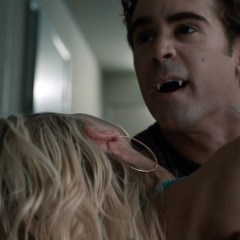
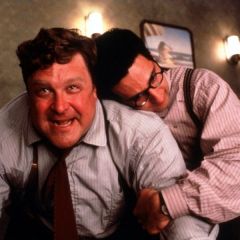
It’s the first streaming column of the month, and you know what that means: subscription services have rolled out a ton of new selections. With that in mind, as usual, we’ve pared the list down to just the Certified Fresh options. Read on for the full list.
This French period drama follows a well-to-do woman with ambitions of becoming a famous singer despite a near-total lack of musical talent.
Available now on: Netflix
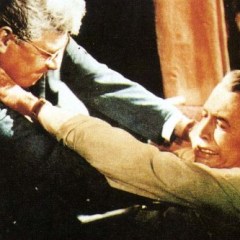
Henry Fonda, Charles Bronson, and Jason Robards headline an ensemble cast in Sergio Leone’s epic western about a pair of outcasts who help defend a recent widow from a greedy railroad baron and his sadistic thugs.
Available now on: Netflix

George C. Scott delivers an iconic Oscar-winning performance as the titular general, who goes toe-to-toe with a British field marshal while working together to thwart German forces in World War II.
Available now on: Netflix
Based on true events, this Robert Redford drama set in the late 1950s centers on the scandals that emerged when it was discovered that a popular television quiz show had rigged its results.
Available now on: Netflix
In this Best Picture-winning western, Clint Eastwood stars as an aging gunslinger whose soul has been irrevocably stained by the violence of his past; Gene Hackman and Morgan Freeman lend sturdy support.
Available now on: Netflix
Richard Linklater’s affectionately nostalgic look at the 1970s centers on a group of high school friends in Texas as they celebrate the last days of the school year.
Available now on: Netflix
George Clooney, Mark Wahlberg, and Ice Cube star in David O. Russell’s Certified Fresh war satire about a trio of Gulf War soldiers who embark on a gold heist and end up witnessing the repercussions of the war firsthand.
Available now on: Netflix

Werner Herzog’s engrossing documentary tells the strange, fascinating, and ultimately ill-fated story of adventurer and amateur bear expert Timothy Treadwell.
Available now on: Netflix
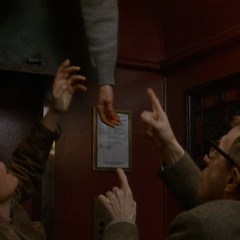
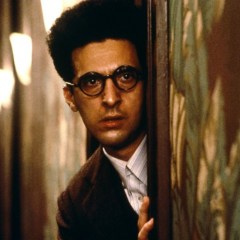
John Turturro and John Goodman star in the Coen brothers’ dark comedy about a playwright with writer’s block who moves into a Los Angeles hotel that may not be all it seems.
Available now on: Netflix
Benedict Cumberbatch stars in this Oscar-winning drama about pioneering scientist Alan Turing, who is recruited by the British government to help break a Nazi code during World War II.
Available now on: Netflix
This Palme d’Or-winning drama follows a Sri Lankan refugee who experiences difficulty acclimating to Paris.
Available now on: Netflix
Arguably the most celebrated — surely the most widely recognized — Audrey Hepburn film. We just prefer to pretend all the Mickey Rooney stuff doesn’t exist.
Available now on: Netflix

This musical comedy based on the novel of the same name tells the story of a group of working-class musicians in Ireland who decide to form a soul band.
Available now on: Netflix
In James Cameron’s multiple Oscar-winning romance, Leonardo DiCaprio and Kate Winslet play star-crossed lovers who meet aboard the ill-fated ocean liner. He teaches her how to spit.
Available now on: Netflix
This Certified Fresh documentary from Werner Herzog depicts everyday life in a village in Siberia.
Available now on: Netflix
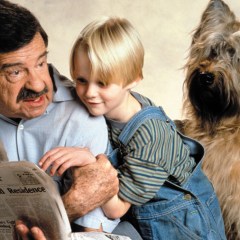
Ricky Gervais and Greg Kinnear star in this comedy about a man who wakes up from a near-death experience and discovers he can see ghosts… all of whom want a favor from him.
Available now on: Netflix
Matthew Broderick stars in John Hughes’ 1980s classic about a teenage iconoclast who takes his best pal on a wild tour of Chicago in an effort to cheer him up.
Available now on: Netflix

This drama centers on a Cuban drag performer who clashes with his estranged boxer father when he returns from a 15-year absence.
Available now on: Netflix
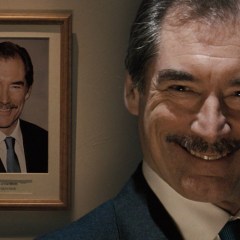
Jack Nicholson and Faye Dunaway star in this classic Roman Polanski noir about a private detective who stumbles into a vast conspiracy involving the privatization of water rights in California.
Available now on: Amazon Prime
Martin Scorsese’s music documentary focuses on the 1976 farewell concert for The Band, where artists like Bob Dylan, Neil Young, and Joni Mitchell all performed.
Available now on: Amazon Prime

This 2008 thriller from Sweden gave the seemingly tired vampire genre a much needed shot in the arm by effectively mixing scares with intelligent storytelling.
Available now on: Amazon Prime
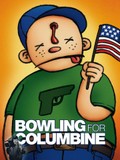
Michael Moore’s provocative documentary is a pointed examination of America’s rocky relationship with firearms.
Available now on: Amazon Prime
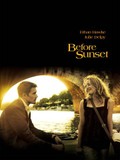
The second entry in Richard Linklater’s painfully romantic Before trilogy, Sunset catches up with Jesse (Ethan Hawke) and Celine (Julie Delpy) nine years after the two first met and spent a night together in Vienna.
Available now on: Amazon Prime
A breakout film for South Korean director Bong Joon-ho, this sci-fi monster flick that combines scares, laughs, and satire in service of a popcorn flick as entertaining as it is intellectually satisfying.
Available now on: Amazon Prime

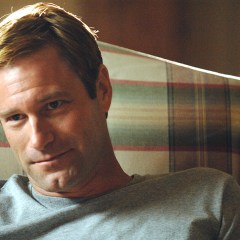
This sci-fi thriller centers on a man who finds himself in a time loop when he inadvertently witnesses the death of a woman outside his new country home.
Available now on: Amazon Prime
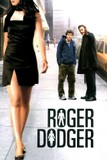
Campbell Scott and Jesse Eisenberg star in this dramedy about a proud womanizer who takes his teenage nephew under his wing, only to discover they are nothing alike.
Available now on: Amazon Prime
Keira Knightley and Matthew MacFayden star in this adaptation of the Jane Austen novel about a woman struggling to choose between a number of suitors.
Available now on: Amazon Prime

Mel Gibson and Danny Glover star as mismatched partners in this comedy about a pair of cops trying to take down a dangerous drug dealer.
Available now on: Amazon Prime

This Norwegian found footage horror comedy follows a group of college students in pursuit of a suspected bear poacher who instead stumble upon an unexpected discovery.
Available now on: Amazon Prime
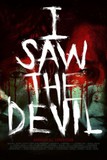
This dark thriller from South Korean director Kim Jee-woon centers on a desperate man on the hunt for his daughter’s murderer.
Available now on: Amazon Prime
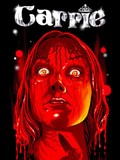
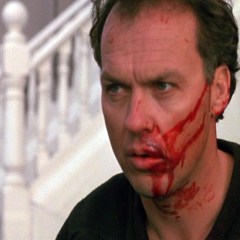
Sissy Spacek, Piper Laurie, and John Travolta star in Brian DePalma’s horror classic, the tale of a lonely teenager with telekinetic powers.
Available now on: Hulu

Full of creepy campfire scares, this mock-doc keeps audiences in the dark about its titular villain — thus proving that imagination can be as scary as anything onscreen.
Available now on: Hulu
Sam Neill and Julian Dennison star in Taika Waititi’s dramedy about a 13-year-old and his curmudgeonly uncle who are forced to flee the authorities and hide out in the woods.
Available now on: Amazon, FandangoNOW, iTunes
For more than two and a half decades now, Joel and Ethan Coen have been thrilling critics — and, here and there, audiences — with their distinctive blend of dark humor, colorful violence, and singular visual flair. Not all of the Coens’ films have been critical darlings (alas, poor Ladykillers), but with lifetime Tomatometers above 80 percent, the brothers are easily two (or is that one?) of the most respected directors in the business. Their latest effort, Hail, Caesar!, hit theaters this week, and to celebrate, we’ve collected their most definitive directorial efforts, Total Recall style!

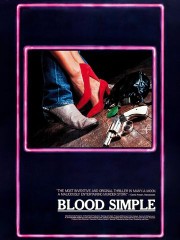
Combining the shocks of a slasher film with the moral ambiguity and twisty plotting of film noir, the Coens’ debut, Blood Simple, shook American independent cinema to its core. Creepy and deliriously malevolent, it’s the story of a bar owner who hires a sketchy private eye to kill his cheating wife (Frances McDormand); double and triple crosses and bloody mayhem ensues. With their first film, the Coens showed an aptitude for the stylistic quirks that would become their trademark — namely, a love of the ghoulish balanced with a loopy sense of humor. The Palo Alto Weekly’s Jeanne Aufmuth identified what would become recurring themes in their work when she wrote, “The Coens’ complicated sense of the surreal is consistently entertaining, down to the fleeting, oddball cameos and distinctly weird scripting.”

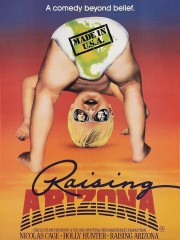
The first Coen brothers film to display their knack for quirky comedy, Raising Arizona helped seal the filmmakers’ reputation and cement their loyal following. Nicolas Cage and Holly Hunter are brilliantly cast as a cop and ex-con husband/wife duo who resolve their infertility with kidnapping. Though not their biggest hit, it’s infinitely quotable (“Edwina’s insides were a rocky place where my seed could find no purchase”), and the original score by Carter Burwell is not to be ignored. As the New Times’ Luke Y. Thompson ruefully sighed, “Nic Cage may never be better.”

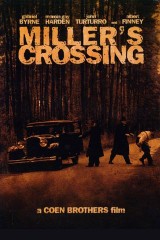
As an homage to classic gangster movies, Miller’s Crossing is hypercharged; the language is harsher, the violence more brutal, the plotting more labyrinthine. Albert Finney and Gabriel Byrne star as Irish mobsters, threatened externally by the Italian mob and internally by their shared love of a woman (Marcia Gay Harden). This intriguing tale of loyalty features impeccable 1920s decor and a streak of dark humor; it’s arguably the Coens’ most straightforward work. Combustible Celluloid’s Jeffrey M. Anderson concluded, “it’s one of their best, most cohesive films and it holds up to repeated viewings.”

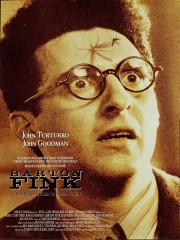
Legend has it the Coens had such a bad case of writers’ block while writing Miller’s Crossing that they took three weeks off to script Barton Fink, a 1930s-set black comedy about — what else? — a Hollywood scribe with writer’s block. A fledgling New York playwright who sells out (at the cost of… his soul!) and moves to the City of Angels, Barton Fink (played marvelously by Coen regular John Turturro) holes up in the seamy Hotel Earle, where exquisitely dismal wallpaper peels off the walls as a heat wave sweats the city. The mercury rises further when Barton’s gregarious neighbor (John Goodman) is around; almost hellishly so, you might say. But as every smart filmmaker is wont to do, the Coens offer no overt explanations of what’s really going on — just a well-told tale with visual imagery aplenty, and an ode to the sometimes infernal nature of the creative process. Describing it as “gnomic, claustrophobic, hallucinatory, just plain weird,” Time’s Richard Schickel lauded Barton Fink as “the kind of movie critics can soak up thousands of words analyzing and cinephiles can soak up at least three espressos arguing their way through.”

Prior to No Country For Old Men, the macabre, pitch-black comedy Fargo was the Coens’ most decorated film, with seven Oscar nominations and two wins: Best Actress (Frances McDormand) and Best Original Screenplay. Fargo details a ransom kidnap scheme gone wrong, with very pregnant cop McDormand investigating the crime as the bumbling perpetrators attempt to cover their tracks. The Coens’ bleak humor and taste for blood and violence never mixed as well as it did in Minnesota, so the people over at FX decided to create an offshoot television series — with the Coens on board as executvie producers — and it’s gone on to win some awards of its own. According to Kevin N. Laforest of the Montreal Film Journal, “This is truly a brilliant film, the kind you don’t see often. Intelligent, raw, funny, daring and unique, pure cinematic delight from start to end.”

Though many of the Coens’ films can be labeled cult classics, perhaps none embody the term more than The Big Lebowski. Jeff Bridges stars as pot-smoking slacker hero Jeffrey “The Dude” Lebowski, who seeks restitution for his rug, urinated on by a pair of gangsters who mistook him for a different Lebowski — namely, the “big” one (played by David Huddleston). Along with his bowling buddies, The Dude embarks on a wild chase that’s as funny, depraved, and plain unpredictable as Los Angeles always feels like it should be. Not all critics were willing to join The Dude’s steadily growing cult — Todd McCarthy of Variety sniffed that the movie “Adds up to considerably less than the sum of its often scintillating parts” — but in the end, as Chuck O’Leary of FulvueDrive-in.com wrote, “It’s pretty much impossible not to love The Dude.”

With O Brother, Where Art Thou?, the Coen brothers took their thriller tropes (ill-fated criminal plans, ironic stereotypes, and a detached tone) and magically applied it towards an Odyssey-inspired farce. Starring George Clooney as the beleaguered but resourceful Odysseus, O Brother is a sepia-toned fantasia of throwaway jokes, slapstick, and killer bluegrass. In fact, the music proved popular enough to spawn a virtual cottage industry with multiple soundtracks, a documentary, and even a national tour. “The surprise is how much fruitful digression such plotlessness makes possible,” quipped Geoff Pevere of the Toronto Star. “With no particular place to go, this hobo of a movie is free to roam the damnedest places.”

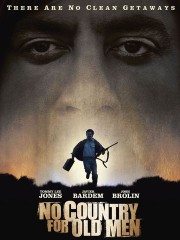
Though the Coens have long been revered for their intermittently manic and macabre storylines, they’ve never made Oscar bait. It’s perhaps logical, then, that the massive Academy sweep they enjoyed with No Country for Old Men seemed like overdue praise. In No Country, based on the stoic anti-western novel by Cormack McCarthy, Josh Brolin’s protagonist sees a way out of his trailer in a bag of bloodied bills. Chance and destiny are invoked in the most resonant, least pretentious way in the sinister form of Anton Chigurh (Best Supporting Actor Javier Bardem), the hit man who coldly and relentlessly hunts Brolin’s Llewelyn. No Country is impeccable: the cinematography is breathtaking, the dialogue efficient, and the direction assured. Yet instead of the terse comic punch we’ve come to expect from the Coens, No Country takes a more dangerous tack with its morbid themes. With all the cards (and coins) falling tidily into place, this film presented the brothers as a truly mature filmmaking team, possibly at the peak of their careers — a sentiment echoed by Peter Keough of the Boston Phoenix, who proclaimed, “No Country for Old Men is the brothers at their most polished, austere, and humorless.”

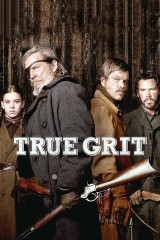
It takes some major stones to step into John Wayne’s boots for a remake of one of the Duke’s classic pictures, so even if the Coen brothers’ True Grit had well and truly stunk, we’d have to give their version credit for having something extra in its saddlebag — namely Jeff Bridges, who took the role of the cantankerous Rooster Cogburn and made it his own. Of course, it didn’t hurt that Bridges (in vintage late-period marble-mouthed form) was surrounded by an ace supporting cast that included Matt Damon and Hailee Steinfeld, or that the Coens went back to Charles Portis’ original novel for inspiration; in the end, the result was a career-launching hit for Steinfeld, a mainstream hit for the Coens, and another critically acclaimed outing for Bridges — all of whom earned Oscar nominations for their work. As Claudia Puig observed for USA Today, “Joel and Ethan Coen have pulled off an impressive feat: repurposing a classic film with their idiosyncratic blend of dark, deadpan humor and palpable suspense, while remaining ultra-faithful to the novel.”

A brilliantly cast ensemble period drama shot through with pitch-black, borderline misanthropic humor and topped off with a killer soundtrack, Inside Llewyn Davis checks off any number of the boxes filmgoers have learned to associate with the Coen brothers, so it’s very much to the film’s credit that it somehow manages to feel fresh anyway. This is due in no small part to the work of Oscar Isaac, who plays the titular struggling folk musician with an utter lack of vanity while infusing the character with enough essential humanity to temper his overall lack of likability — and to the Coens’ screenplay, which serves as a savagely honest, yet ultimately affectionate, look at the self-delusional struggle for artistic purity as a means to its own end. “It may be the Coen Brothers playing well inside their comfort zone,” wrote Scott Mendelson for Forbes, “but what a fine and thoughtful comfort zone it is.”
Back for its fifth season, the newly branded American Horror Story: Hotel takes place at the fictional and haunted Cortez in Los Angeles, a place where the guests check in but they don’t check out. But at least Lady Gaga’s here! Anyways, it’s inspiring this week’s 24 Frames gallery, a look at some of the bloodiest and crappiest hotels from movie and TV history.







Before expanding wide on November 21,
No Country for
Old Men (90 percent) will play in select cities this Friday, riding a
wave of huge expectations. (RT dug it at Cannes!) The
Cormac
McCarthy-based thriller has made big splashes during festivals and it’s
touted as a major comeback for the
Coen Brothers.
What better time to look at the movies that have made the filmmaking siblings so
respected?
Even with seemingly multiplex-ready movies like
Intolerable
Cruelty (75 percent) and
The Ladykillers
(55 percent), Joel and Ethan Coen have rarely been boffo box office draws. But the
brothers release their movies with surprising regularity, and never seem to have
much problem getting projects off the ground. It’s probably because the duo
makes weird movies. But not too weird. The Coens are essentially genre
craftsmen — crime thrillers, neo-noirs, a stoner comedy here or there — who
finesse their movies with signature arch dialogue and a morbid, mannered sense
of humor. It’s an approach that limits box office but opens countless doors to
produce a loyal and rabid cult following. Here’s a trip through the filmography
of America’s most valued team of auteurs.
 Combining the shocks of a slasher film with the moral
ambiguity and twisty plotting of film noir, the Coens’ debut,
Blood Simple
(1984, 98 percent),
shook American independent cinema to its core. Creepy and deliriously
malevolent, its the story of a bar owner who hires a sketchy private eye to kill his
cheating wife (Frances McDormand); double and triple crosses and bloody mayhem
ensues. With their first film, the Coens show an aptitude for the stylistic
quirks that would become their trademark: the balancing the macabre with a loopy
sense of humor.

The first Coen
brothers film to display their knack for quirky comedy, 1987’s
Raising Arizona
(90 percent)
helped seal the filmmakers’ reputation and cement their loyal following.
Nicholas Cage and
Holly Hunter are brilliantly cast as a cop and ex-con
husband/wife who resolve their infertility with kidnapping. Though not their
biggest hit, it’s infinitely quotable ("Edwina’s insides were a rocky place
where my seed could find no purchase.") and original score by Carter Burwell is
not to be ignored.
 As an homage to classic gangster movies,1991’s
Miller’s
Crossing (90 percent) is hypercharged; the language is harsher, the violence
more brutal, the plotting more labyrinthine.
Albert Finney and
Gabriel Byrne
star as Irish mobsters, threatened externally by the Italian mob and internally
by their shared love of a woman (Marcia Gay Harden). In some ways, Miller’s
Crossing is the Coens’ most straightforward work; while it has a streak of
dark humor, it features impeccable 1920s décor and intriguing tale of loyalty
throughout.
 Legend has it the Coens had such a bad case of writer’s
block while writing Miller’s Crossing that they took three weeks off to
script Barton Fink
(1991, 93 percent), a 1930s-set black comedy about — what else? — a
Hollywood scribe with writer’s block. A fledgling New York playwright who sells
out (at the cost of…his soul!) and moves to the City of Angels, Barton Fink
(played marvelously by Coen regular
John Turturro)
holes up in the seamy Hotel Earle, where exquisitely dismal wallpaper peels off
the walls as a heat wave sweats the city. The heat especially ramps up when
Barton’s gregarious neighbor (John
Goodman) is around; almost hellishly so, you might say. But as every
smart filmmaker is wont to do, the Coens offer no overt explanations of what’s
really going on — just a well-told tale with visual imagery aplenty, and an ode
to the sometimes infernal nature of the creative process.

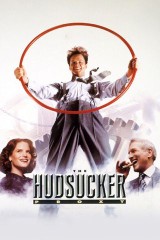
The Coens spooned
doses of their trademark guileless humor on
The Hudsucker Proxy
(1994, 58 percent), a period office comedy-cum-Christmas tale.
Jennifer Jason-Leigh is pitch perfect in her role as post-war
career woman ("Do you think this suit looks mannish?") against
Tim Robbins‘s
hapless dreamer ("You know — for kids!"). Visionary in many ways, this film
deserves a better reputation than it’s garnered in its odd little sleeper life.

1996’s
Fargo (93 percent) is
the Coens’ most successful film to date, with seven Oscar nominations and two wins:
Best Actress (Frances McDormand) and Best Original Screenplay. Fargo details a
ransom kidnap scheme gone wrong, with very pregnant cop McDormand investigating
the crime as the bumbling perpetrators attempt to cover their tracks. The Coens’
bleak humor and taste for blood and violence never mixed as well as it did in
Minnesota.

 With
With
O Brother, Where Art Thou?
(2000, 79 percent), the Coen brothers took
their thriller tropes (ill-fated criminal plans, ironic stereotypes, and a detached
tone) and magically applied it towards an Odyssey-inspired farce. Starring
George Clooney as the beleaguered but resourceful Odysseus,
O Brother is a
sepia-toned fantasia of throwaway jokes, slapstick, and killer bluegrass. In
fact, the music proved popular enough to spawn a virtual cottage industry with
multiple soundtracks, a documentary, and even a national tour.
 Though the brothers have flirted with the shadowy realms of
film noir, 2001’s
The Man Who Wasn’t There
(79 percent) is the closest they come to making a
headlong plunge into the genre.
Billy Bob Thornton stars as a classic fall guy,
and playing the character as a deeply emotionally repressed square, Thornton is
at his most controlled, wringing pathos out of an increasingly dire scenario.
Featuring sharp, evocative black and white cinematography and an excellent
supporting cast, The Man Who Wasn’t There is an existential nightmare
replete with odd touches and arguably the brothers’ most emotionally pained
work.

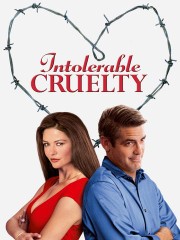
Demonstrating that their penchant for screwball comedy was not limited to marginal environments or period-piece conceits, the Coens set Intolerable Cruelty (2003, 75 percent) in no less a setting than modern day Beverly Hills. True to the genre, stars
Catherine Zeta-Jones and
George Clooney
are a suing wife and a wealthy divorce lawyer. Untrue to the genre, the stars go
together like a rug and a chair.

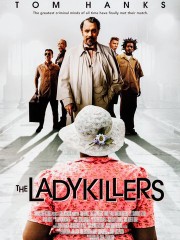
The Ladykillers
(2004, 55 percent), a remake of
Alexander
Mackendrick‘s
1955 crime comedy, relocates
the film’s original London heist to the Deep South, and swaps the British war widow
for the equally archetypal black matriarch. Though
The Ladykillers lacks the toothy bite of its macabre predecessor, it garnered
some noteworthy festival awards for long-time Coens cinematographer
Roger Deakins and the
matriarch herself,
Irma P. Hall.
Whether you enjoyed their more recent forays into comedy or not, one thing’s for certain; with the ultra violent No Country for Old Men, Joel and Ethan Coen mark a return to their darkly comic, sinister roots that made them cult favorites in the first place. Consider it a dip into the Western genre: the story of a hunter and an assassin facing off over a bag of stolen cash, set against the backdrop of the parched Texas plains. With plenty of firepower to spare, No Country not only revives that clever Coen knack for finding humor in the morbid, but it may just be the closest they’ll get to making an all-out action film — and one with valid awards season prospects, to boot. And that, we say, was well worth the wait.
Authors: Alex Vo, Sara Schieron, Timothy Mead Ryan, Nicholas Hershey, Jen Yamato
This week in RT News, comic book adaptations were the rage, starting with a new teaser trailer and spoilers of next year’s "Spider-Man 3." Robin Williams seems keen to portray The Joker in the next "Batman Begins" sequel, and the "Fantastic Four" sequel has a title and plot synopsis available for scrutiny. Also, Jo Blo has an early review of M. Night Shyamalan’s latest offering, "Lady in the Water."
In Other News: "Superman Returns" does $32M in two days; Will Smith may have a big-time co-star for his next film; some cartoon animals may have a new "Hedge" to conquer; Ron Howard wants to throw his hat into the comic-book movie ring; and we can all rejoice that David Hasselhoff’s vocal chords were unharmed after a run-in with a chandelier. Read on for details.

This Week’s Most Popular News:
Teaser Bulletin: "Spider-Man 3"
It doesn’t swing into movie theaters until next May, but you can catch the brand-new "Spider-Man 3" teaser right here … and it’s pretty darn cool.
Robin Williams Keeps Chatting About The Joker
No casting decisions have been announced just yet, so just relax. But apparently Mr. Robin Williams is lobbying pretty hard for the role of The Joker in Christopher Nolan’s impending "Batman Begins" sequel. Nolan and Williams worked together on "Insomnia," so maybe he knows something we don’t…
"Spider-Man 3" Spoiler Feast!
If you’re a ravenous fan of all things spoileriffic, and you also have some affection for the "Spider-Man" series, then head on over to a blog called "film ick" and enjoy all sorts of second sequel tidbits — including the news on who just might be the flick’s fourth villain.
"Fantastic Four and the Silver Surfer" Plot Synopsis
According to the JoBlo.com boys, we now have a new title and a small plot synopsis for next summer’s "Fantastic Four" sequel. As always, we take unconfirmed reports with a grain of salt, but if and when more info becomes available, well, we’ll share that, too.
Early Reaction to the "Lady in the Water"
M. Night Shyamalan’s newest feature, "Lady in the Water," opens in a few weeks, but Mike Sampson over at JoBlo’s was able to sit in on an early screening, and even penned an early review.
In Other News:

According to The Hollywood Reporter, Joel & Ethan Coen‘s next film will be an adaptation of Cormac McCarthy’s "No Country for Old Men." Word is that Tommy Lee Jones will play one of the old men.
"Joel and Ethan Coen are in advanced talks to write, direct and produce an adaptation of Cormac McCarthy’s 2005 novel "No Country for Old Men." Tommy Lee Jones is in negotiations to star.
Jones will play contemporary Westerner Llewelyn Moss, an antelope hunter who discovers a pile of dead men along with $2 million and a sizable stash of heroin. Violence ensues when Moss decides to play finders keepers. Heath Ledger had been in talks to co-star, but the actor, who withdrew his interest in the project, has said he plans to take "some time off.""
—
Any Coen-related news is good news, far as I’m concerned. So let’s take this thread as an opportunity to name your favorite Coens flick.
1984: Blood Simple
1987: Raising Arizona
1990: Miller’s Crossing
1991: Barton Fink
1994: The Huduscker Proxy
1996: Fargo
1998: The Big Lebowski
2000: O Brother, Where Art Thou?
2001: The Man Who Wasn’t There
2003: Intolerable Cruelty
2004: The Ladykillers
(Tough decision, but I’m still stickin’ with "Raising Arizona" … or "Miller’s Crossing." I just can’t pick.)