There’s all manner of method to the madness in our selections of the scariest movie scenes ever. Some use high amounts of gore. Others deliver unnerving calm and quiet before shattering the senses. A few feature amazing monster makeup and effects. The one common thread between them all: They work. And work not just at producing a moment of fear, but sustaining that fear, sometimes for minutes on end, to drill deep into our psyche and staying there for decades. These are the stuff of nightmares, what we see when we close our eyes at night. These are the 29 scariest movie scenes of all time. Warning: spoilers abound!
What’s the scariest movie scene you’ve ever seen? Tell us in the comments.
 93%
Alien
(1979)
93%
Alien
(1979)

(Photo by 20th Century Fox Film Corp. All rights reserved. Courtesy: Everett Collection.)
The scene: The chest burst
One of the things that sets Ridley Scott’s sci-fi nightmare apart from the other horror fare of its era is its relatively slow burn, playing on the claustrophobia of space and the fear of the unknown. So it comes as a shock to the system when a “facehugger” hurtles out of an egg and attaches itself to John Hurt’s Kane, puncturing the atmospheric dread with a visceral jump scare. But the moment that became indelibly stamped in pop culture history comes just a few scenes later, after the facehugger has detached itself and Kane is recovering from the incident. As the crew enjoys a meal together, Kane suddenly begins to choke and convulse on the table, and a small, lizard-like creature bursts through his chest and scrambles away, effectively birthing a horror villain that would terrorize space crews for decades to come.
98%
The Babadook
(2014)

(Photo by IFC Midnight/Courtesy Everett Collection)
The scene: Baba breaches bedroom
A lot has been written about The Babadook: It’s a story about grief, and it’s a story about feminism; it’s less a horror film than a domestic drama; and somehow through it all its central bogeyman has emerged a wonderfully camp gay icon. We’re all for it. But in the midst of the think pieces and the movie’s surprising afterlife, one thing often goes overlooked: The Babadook is just a really, really scary traditional horror flick, too. Take the scene in which the Babadook (dook, dook) taunts Amelia (Essie Davis) in her bedroom. On paper, it’s nothing we haven’t seen in any Conjuring or Insidious movie, but as executed by director Jennifer Kent and acted by Davis (robbed of an Oscar nom, and yes we’re still sore) it’s almost un-watchably tense. Sound and darkness work overtime to drum up the suspense before the Babadook himself appears, jerkily terrorizing the woman on the edge of a breakdown.
86%
The Blair Witch Project
(1999)

(Photo by Artisan Entertainment/courtesy Everett Collection)
The scene: Mike in the corner
Anyone who tells you this super-low-budget 1999 phenom isn’t actually scary just hasn’t watched it all the way to the end. Because if you can sit through the moment Heather discovers Mike standing in the corner of that abandoned house and not tear the leather off your La-Z-Boy’s arms then you’re a much tougher horror-watcher than we are. The traumatizing screams and image of Mike standing ultra-still in the corner are scary enough – add in the fact that none of it is explained and this is a fright-filled finale for the ages.
80%
The Conjuring 2
(2016)

(Photo by New Line Cinema / courtesy Everett Collection)
The scene: The nun comes to life
Taken on its own merits, The Conjuring 2 was a solid movie, even if it didn’t quite reach the heights of its predecessor. But it’s somewhat telling that its most memorable scare came courtesy of an entity who spends much of the film on the fringes of the primary story and whose presence was so immediately chilling that it spawned its own spin-off movie. The scene in question takes place inside the Warrens’ (Patrick Wilson and Vera Farmiga) own home, when Lorraine experiences a vision in which she is trapped and attacked by the demon nun Valak. Director James Wan milks the tension for all its worth, as a dark shadow moves across the walls and positions itself behind the painting of the nun’s face before it lunges at Lorraine with a shriek. We all checked our pants after that.
87%
The Descent
(2005)

(Photo by Lions Gate/courtesy Everett Collection)
The scene: Monsters revealed
Neil Marshall’s The Descent is considered by some the scariest movie of the past 20 years, and for good reason. The movie hooks us in with its claustrophobic setting – a tiny and very unstable cave system somewhere in Appalachia – and its dynamic group of women with their complicated pasts and relationships. Then, when it has us right where it wants us… MONSTERS. And f—king scary ones at that. The movie’s most intense scene is also the first time we see these humanoid beasties, and Marshall masterfully mixes slow-building dread, dramatic distraction, and a helluva jump scare for the big reveal. We’re so caught up in the drama over Juno getting the group lost that we almost don’t notice that thing standing RIGHT THERE.
93%
Don't Look Now
(1973)

(Photo by British Lion Films)
The scene: The ending
Up until the very end, you don’t know what the exact nature of the threat is in Don’t Look Now. You’re only aware that something sinister creeps on the fringes, vaguely menacing Donald Sutherland’s character as he wanders Venice with his wife after the accidental drowning of their young daughter in America. It’s the uncomfortable way people talk to him. Or is that just how it always feels in a foreign country? It’s in the way light reflects onto the camera. Or isn’t that how light always bounces around? It’s in Sutherland’s unsettling visions of his wife and daughter. Or is he just processing grief? But it all snaps into place for Don’t Look Now‘s vein-icing final sequence, giving terrible logic and clarity to the preceding 100 minutes.
78%
The Exorcist
(1973)

(Photo by Warner Bros./ Courtesy: Everett Collection.)
The scene: Spinning heads
William Friedkin’s controversial film, based on a novel that fictionalized purportedly true events, is famous for the raucous reactions it inspired from terrified audiences who nevertheless flocked to see it in droves. It managed to entertain just as effectively as it scared the pants off of everyone, and perhaps no scene captures that special magic as well as the moment when Linda Blair’s possessed Regan – after having performed a rather sacrilegious act with a crucifix – spins her head 180 degrees to face her frightened mother (Ellen Burstyn). Regan does spin her head again later, during the climax of the film, but this first scene is so vulgar, violent, utterly shocking, and ultimately horrifying that it’s impossible to pull your gaze away from the screen.
97%
Eyes Without a Face
(1960)

(Photo by Lux Compagnie Cinématographique de France)
The scene: Face/off
Director Georges Franju started his career as a documentary filmmaker, an invaluable skill set for his second narrative feature, Eyes Without a Face. It’s the story of a desperate father who, after disfiguring his daughter in a car accident, spends his nights killing women, slicing off their faces, and attempting to attach them to his daughter’s. The concept is gross enough, but the way Franju uses his calm and deliberate camera (indeed, like shooting a documentary) during the film’s infamous central surgery scene gives the fictional proceedings the sheen of reality.
90%
Hereditary
(2018)

(Photo by A24 /Courtesy Everett Collection)
The scene: An allergic reaction
Like Alex Wolff’s Peter in the movie, we were left completely speechless and frozen the first time we saw THAT MOMENT in Hereditary. We’re being vague for now, because it’s such a recent film and the moment is such a spoiler, so if you haven’t seen the movie stop reading now…. OK, if you’re still with us, you know what we’re talking about: Charlie (Milly Shapiro), struggling for breath in the back seat, pushes her head out of the car window and connects with a passing telegraph pole. The whole sequence, from the chocolate cake at the party to the wheezing in the car to the moment of impact, is brilliantly choreographed, but this is one of those scares that was also heavily aided by the film’s publicity. Charlie was at the center of the marketing campaign, leaving viewers to think she would be a central figure right through to the end; when she gets it about a third of the way in, we suddenly know that anything can happen in Hereditary. If Psycho broke the “don’t kill your main character” rule, and Scream stepped all over the “don’t kill your biggest star” rule, Hereditary went one further: Don’t kill the kid.
95%
It Follows
(2014)

(Photo by ©RADiUS-TWC/Courtesy Everett Collection)
The scene: A tall man arrives
Writer-director David Robert Mitchell’s debut feature, It Follows, was declared a modern horror masterpiece when it was first released back in 2014, and it’s the rare film that has only grown in stature in the years since that initial rapturous reception. The story is simple: a teenager (Maika Monroe) sleeps with her new boyfriend and finds herself cursed by Death, which takes the form of virtually anyone around her and simply moves – relentlessly – towards her, wherever she is. The only way to break the curse? To pass it on. The dread here is painted on as thickly as that metaphor is laid, and Mitchell’s movie is full of scenes you won’t soon forget (the sight of Monroe’s hair rising from her head on the beach still brings the shivers). But for sheer WTF terror we can’t go past the moment a tall man arrives from nowhere just when our hero’s closest friends are starting to doubt her story.
97%
Jaws
(1975)

(Photo by Universal)
The scene: The opening scene
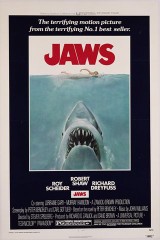
Much has been made of Spielberg’s expert use of the unknown and unseen in Jaws, and nowhere is it more apparent than in the movie’s opening scene in which a woman is jerked to and fro by something moving beneath her in the black abyss. (Stuntwoman Susan Blacklinie had hooks attached to her Levi’s and was being pulled by divers.) The scene is also the first time the world got to hear that iconic John Williams score, its pulsing slow-build instantly becoming a mood-building classic. We eventually went back in the water after seeing Jaws, but never at night.
 66%
Martyrs
(2008)
66%
Martyrs
(2008)

(Photo by Weinstein Company/Courtesy Everett Collection)
The scene: A transcendental experience
Martyrs was part of the New French Extremity movement, where a wave of filmmakers put out horror films that hit harder than ever before. Part home invasion, part torture porn, all blood and gristle, Martyrs details a cult-like group who torture young, beautiful women to the brink of death to uncover insights into the afterlife. It all comes to a head with the final sequence, where one of the main characters is flayed alive. Worse: She survives. Even worser: The experiment actually works, as the character enters a transcendental state. The knowledge she gleans about the afterlife and passes on, however, proves too much for the living.
91%
Misery
(1990)

(Photo by Columbia/courtesy Everett Collection)
The scene: Annie breaks Paul’s legs
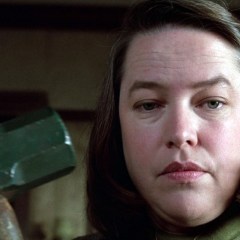
When it comes to visceral gross-out scares, the Saw films may win for degree of difficulty and Hostel (remember that one?) may be the king of holy-f—k gore. But for impact, nothing beats Rob Reiner’s Misery, in which barely a drop of blood is spilled and not a single eyeball plucked. We’re cringing just remembering the moment Kathy Bates’ Annie Wilkes’ places a block of wood between a tied-down Paul Sheldon’s (James Caan) feet and breaks his ankles with the swoop of a giant sledgehammer. The crunch! The unnatural bend of the ankle! The slow and methodical description of “hobbling” that Wilkes gives before she takes her epic swing! Jigsaw ain’t got nothing.
87%
The Orphanage
(2007)

(Photo by ©Picturehouse Entertainment/Courtesy Everett Collection)
The scene: A knock, knock game
If you were watching director J.A. Bayona’s Jurassic World: Fallen Kingdom and wondering why, in the second half, this big-budget dinosaur adventure movie suddenly morphed into a haunted-mansion movie of sorts… well, Bayona’s debut feature, The Orphanage (La Orfanato), will explain a few things. Because, frankly, when you have a filmmaker who’s simply this good at making a scary-house movie, you just let him do his thing. Like The Haunting, The Others, and other classics of the genre, The Orphanage has so much more on its mind than sending tingles up your spine; it’s steeped in grief and history and – led by a terrific Belén Rueda as the mother who moves her family back to her childhood home, a former orphanage for children with disabilities – deeply moving. And, yes, it’s also scary as hell. Perhaps no more so than in the scene where Rueda’s Laura begins to commune with the child ghosts of former residents through the children’s game of “knock, knock”: knock twice, count to three, and turn around to see who’s behind you. With each turn, she sees the specters slowly advancing, until…
82%
Paranormal Activity
(2007)

(Photo by Paramount Pictures/courtesy Everett Collection)
The scene: The 21st night
Oren Peli’s game-changing found-footage film did for the bedroom what Blair Witch did for the woods. The fast-forwarded footage of Katie (Katie Featherstone) standing by her bed and watching Micah sleep was the reason some of us got separate bedrooms – with locks – from our loved ones for months after the hit film’s release. But the movie saved its best shock for last: On night 21, a now fully possessed Katie leaves the bedroom, lures Micah out with a torrent of screams, and then – after a seemingly endless silence – throws him at the screen and proceeds to eat him. Well, at least we think that’s what might happen. Like Blair Witch’s unexplained finale, this one leaves us with lots of theories to chew on.
97%
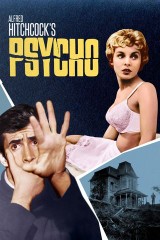
Psycho
(1960)

(Photo by Universal Pictures)
The scene: The shower kill
Hitchcock didn’t invent the slasher, but we’ll be damned if he didn’t perfect it with Psycho and its seminal scene: Marion Crane’s iconic shower death. Even after you analyze the hell out of it – the Hershey’s chocolate syrup in place of blood; the edits that never once show knife penetrating skin – the moment loses none of its ability to shock. The key is the build-up, that wonderful shadow of Norman behind the curtain, and then the brutality: those quick-cut thrusts matched by that iconic burst of Bernard Herrmann’s score.
90%
Rec
(2007)

(Photo by Filmax/Courtesy Everett Collection)
The scene: Dragged into darkness
This is a found footage nightmare set in a quarantined building in Barcelona where a zombie virus infection is breaking out. Our protagonist Angela is a newscaster who at first merely wants to report on the mysterious closure of the building, and then becomes the news herself when she ges swept into the quarantine. [REC] is a roller coaster of a film, culminating in its final scene, presented in eerie quiet and night vision, as Angela, seeming like she just might make it out, is dragged into the darkness while the dropped camera rolls on. It’s such an effective moment, it was of course spoiled on the theatrical for the American remake Quarantine.
72%
The Ring
(2002)

(Photo by DreamWorks/courtesy Everett Collection)
The scene: The cursed video
It took us far longer than seven days to wipe the images from this bizarro piece of video art from our minds. Gore Verbinski’s U.S. remake of The Ring is full of excellent creepouts – Samara emerging from the TV; the distorted victims’ faces – but the ace up its sleeve is the video at its center. This unnerving mishmash of static, random ominous imagery (a tree aflame, a woman brushing her hair), and insistent screeching is truly dread-inducing. Even after it’s been aped by the opening sequence of nearly every season of American Horror Story, the Ring video still makes an impact.
97%
Rosemary's Baby
(1968)

(Photo by Paramount)
The scene: Mother and child
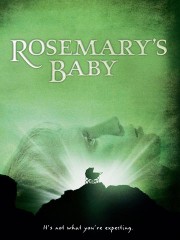
The tension rises and falls throughout Rosemary’s Baby, never allowing the viewer to settle in and fully process what’s happening. A demonic rape here, some weird juice there, just to keep the viewer discombobulated. It all reaches a boiling point in the dream-like coda, when Rosemary wakes up after giving birth, in her empty apartment. She finds a hidden room where her husband and neighbors have gathered, all in on the conspiracy for her to deliver Satan’s child, and welcome her in. You never see the baby, but Rosemary’s line says it all: “What have you done to him? What have you done to his eyes?!”
78%
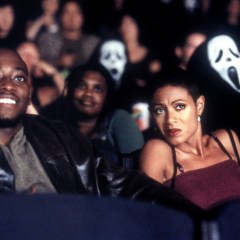
Scream
(1996)

(Photo by Dimension Films)
The scene: ‘Do you like scary movies?’
Wes Craven and Kevin Williamson’s genre-reinvigorating classic kicks off with what many consider the greatest opening scene in horror history. Plot-wise, it’s basically When A Stranger Calls, ’90s-style – girl is alone in the house, receives stalk-y phone call, happens to have encyclopedic knowledge of the film genre in which she suddenly finds herself – but Craven brings so much smarts and bravura skill to the direction of it that it kicks complete ass even decades later, after we’ve seen the countless imitators that followed and the shock of having a big-star snuffed out in the first 10 minutes has worn off. Credit too to Ghostface voice Roger L. Jackson, that perfectly placed pan of Jiffy Pop, and to Williamson’s script, a step-by-step screenwriting masterclass in how to ratchet up tension. “The question who am I, the question is where am I?”: Chills to this day.
84%
The Shining
(1980)

(Photo by Warner Bros)
The scene: Jack on the attack
Kubrick stuffed his adaptation of Stephen King’s novel with so many scary moments and images, trying to pick just one could drive you to Jack Torrance levels of craziness. But we’re doing it anyway. While the Grady twins in the hallway are spooky as hell, and we still can’t erase the image of the bathtub woman from our minds, we had to go with the movie’s most iconic moment: Wendy trapped in a bathroom as Jack hammers at the door. Kubrick’s swinging camera, Jack Nicholson’s mania, and Shelley Duvall’s totally convincing fear combine to make this the most terrifying scene in one of cinema’s most terrifying movies.
95%
The Silence of the Lambs
(1991)

(Photo by ©Orion Pictures Corporation/courtesy Everett Collection)
84%
The Texas Chain Saw Massacre
(1974)

(Photo by Bryanston Distributing Company)
The scene: Leatherface appears
The Texas Chain Saw Massacre is considered one of the most punishing, sickly transformative experiences in horror. And it’s not even 90 minutes long – and nothing really happens for the first 30 minutes. But once Leatherface appears, the movie never lets up. His grand debut happens inside his house, when a stupidly intrepid young adult enters looking for fuel for his car. Leatherface pops out from a hallway and hits the dude in the hammer, the body crumpling and then twitching on the ground. Leatherface drags the body into the butcher room, and slams the door. There’s plenty of more scares to come, but this opening salvo is as disturbing as they come.
85%
The Thing
(1982)

(Photo by Universal/courtesy Everett Collection)
The scene: Getting something off your chest
John Carpenter was well into his groove by the time he made The Thing, and he put all of his talents on display to contribute one of the most influential entries in the “body horror” genre not directed by David Cronenberg. We get our first glimpse of the “thing” fairly early in the movie when it absorbs a pack of huskies, and we see it again when it attempts to assimilate Peter Maloney’s Bennings. But the big scare comes when Charles Hallahan’s Norris appears to have a heart attack, and Dr. Copper (Richard Dysart) attempts to revive him with a defibrillator. Norris’ chest opens up like a giant mouth, complete with teeth, and rips Copper’s arms off before Kurt Russell’s MacReady blasts it with a flamethrower. Thanks to some top-notch practical effects and the judicious use of a jump-scare, the scene remains the most memorable and viscerally disturbing in the movie.
93%
Us
(2019)

(Photo by Claudette Barius / © Universal / courtesy Everett Collection)
The scene: “There’s a Family In Our Driveway”
Horror fans are split on whether Jordan Peele’s Us is a match for his debut feature, the Oscar-nominated and ground-breaking Get Out, or whether the film itself manages to sustain the tension of its first act as its story expands. But few would argue that the initial visit of the Wilson family’s mysterious, red-jumpsuit-clad doppelgängers (their Tethereds) to their vacation home is not among the most well-orchestrated and suspenseful home-invasion scenes the genre has ever given us. It’s not just the expert build-up of tension, as Winston Duke’s Gabe suddenly realizes he may need to get a little “crazy” with the strange quartet who’ve come a-knocking, but Peele’s ability to sear instantly iconic images onto our brain, from the shadowy figures holding hands in the driveway to Lupita Nyongo’s Adelaide clutching tightly to her children and, as the sequence settles, the first appearance of those golden scissors.
96%
The Vanishing
(1988)

(Photo by Argos Films)
The scene: The truth
Forget everything you know about The Vanishing. Oh, that was fast — as if you’ve never seen the Jeff Bridges/Sandra Bullock kidnap thriller before. It was a lousy movie with the distinction of being a remake…with the same director. George Sluzier was brought to Hollywood to direct the remake, and it’s easy to see why: the 1988 Dutch original is a chilling, methodical examination about the mundane face of pure evil. Naturally, the American version has none of that. It also doesn’t have the original’s ending: When the hero finally confronts his girlfriend’s kidnapper, who offers him the opportunity to find out what happened to her. The answer is one of the most terrifying scenes in movie history.
96%
Wait Until Dark
(1967)

(Photo by Everett Collection)
The scene: A climax in the dark
Sensory deprivation has long been a part of some of the most terrifying sequences in horror film history; see, for example, the climax from Silence of the Lambs, highlighted in this list, or the two Don’t Breathe movies, or, in a kind of inverse of the idea, A Quiet Place and its sequel. All likely owe some debt to Wait Until Dark, the 1967 thriller about a recently blinded woman (Audrey Hepburn) who finds herself under siege in her New York apartment when a group of criminals begin casing the place to find a heroin-stuffed doll they believe is inside. (And yes, you read that right: Audrey Freaking Hepburn is an OG Scream Queen.) The movie’s finale, in which Hepburn’s Susy Hendrix is trapped inside her apartment with the criminals (and which features a jump scare for the ages), is a nerve-shattering crescendo for a movie Stephen King has described as among the scariest of all time.
 38%
When a Stranger Calls
(1979)
38%
When a Stranger Calls
(1979)

(Photo by Columbia Pictures)
The scene: The phone calls
Pop in When a Stranger Calls and for the first 20 minutes, you’ll think you’re watching the scariest movie ever made. Carol Kane plays the babysitter, and she keeps on getting increasingly menacing calls to check on the kids upstairs. When she gets the call traced, naturally it’s coming from inside the house! Think this scene won’t work anymore because it’s been parodied and referenced to death since? Think again. It remains a masterclass in editing and suspense. The rest of the movie is pretty lousy, but that opening act can still dial up the tension decades later.
91%
The Wicker Man
(1973)

(Photo by British Lion Films)
The scene: The burning
Not quite a masterpiece these days but definitely a classic, The Wicker Man follows a prudish police officer as he investigates the disappearance of a young girl on a remote English island populated by pagans. As he follows the clues and contradicting statements of the village people, he edges ever closer to the titular wicker man, a sacrificial vessel to be burned at dusk. Even if you can get who gets put inside it, the sheer intensity and terror of the scene is still something to be witnessed.
On an Apple device? Follow Rotten Tomatoes on Apple News.
Thumbnail image: IFC Films
My motto is, no matter what, if a film moves me, there is no shame in turning on the waterworks. I ugly cried in the theater during Disney’s Coco, I sobbed through the second half of Titanic, and I bawled my eyes out for the third and fourth installments of Toy Story. But I’ve been known to get teary-eyed during scary movies, too — when I say I’ll cry if a film moves me, I do mean any film, including horror.
It may seem odd to get emotional during horror films, but they can do so much more than just be terrifying. Some can inspire sadness, hope, or even happiness. The first one I remember getting me in my feelings is Candyman (1992); I was nine years old and begged my father to take me to see it. While the film terrified me throughout, a dramatic tear rolled down my cheek during the last 15 minutes. There was something about sacrifice and children that got to me, even at a young age — it still gets me to this day.
As Halloween approaches, we revisited some of the films that include a little slashing, a little bashing, and a little sensitivity. Got suggestions of horror movies that made you weep? Let us know in the comments.
[Warning: Major spoilers follow below.]
The Monster (2016)
81%
Lizzie (Ella Balentine) is a bright young 11-year-old who has to deal with her mother Kathy’s (Zoe Kazan) alcoholic, abusive, unpredictable ways. As they travel on the road at night, they find themselves stranded on an isolated road in the middle of nowhere, fighting for their lives against one ugly forest monster.
Cry Factor: The best mother and daughter bonding happens on this frightful night. You don’t get the sense that Kathy cares for Lizzie until it’s life or death; as a mother who feels she’s given her child nothing but strife, the only thing left for Kathy to do is to sacrifice her own life so Lizzie has a fighting chance to survive. The characters started crying, and then I started crying. It’s a scary cry fest!
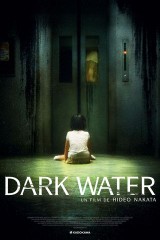
Dark Water (2002)
84%
In this moody Japanese horror film by Hideo Nakata, single mom Yoshimi Matsubara (Hitomi Kuroki) is dealing with a bitter divorce and custody battle for her young daughter, Ikuko (Rio Kanno). As the two try to start life anew in their new apartment, ghostly apparitions of a young girl with a red backpack begin to haunt them, and it’s clear something supernatural — and evil — is afoot.
Cry Factor: This movie is just sad all around. The body of a young girl who drowned in the building water tower still lingers in it; her spirit haunts the building’s hallways looking for a new “mother” to latch onto, and Yoshimi is it. The woman must choose between crossing over to be with this ghost child or allowing her own daughter to be possessed by the spirit. Yoshimi ultimately decides to sacrifice herself so Ikuko can live in peace. Ten years later, Ikuko returns to the site of her mother’s disappearance and sees her ghost, who assures her that she’s OK in the afterlife and not to worry, providing rare horor-film closure for Ikuko.
Pulse (2001)
76%
A college student commits suicide on a live internet stream, setting off a chain reaction across Tokyo that causes others to follow suit. The film follows Michi (Kumiko Aso), Ryosuke (Haruhiko Kato), and Harue (Koyuki), three unrelated folks whose stories eventually converge in this atmospheric, supernatural horror in which the internet plays a pivotal role.
Cry Factor: Kairo isn’t a typical horror film as it’s more about existentialism than anything else. Ghosts are lonely, and they travel through the internet to make contact with the living. In the end, 85% of the population is gone, and Michi begins to realize the power of human connection. The film asserts that death is just as finite as the living world, and if people cannot connect in life, they will be forced to do it in death. It will hit you in the feels, ya’ll.
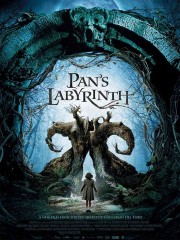
Pan's Labyrinth (2006)
95%
Many consider this to be Guillermo del Toro’s best film. The horror/fantasy tale is told against the backdrop of Franco’s authoritarian rule over Spain amd packs an emotional punch. The film follows 12-year-old Ofelia (Ivana Baquero), otherwise known as Princess Moanna of the underworld, who meets a faun that wants to help her return to her kingdom. In reality, Ofelia lives a harsh life with her stepfather, a captain under Franco’s regime.
Cry Factor: Ofelia’s mortal mother dies, and she herself is abused by her stepfather and nearly eaten by the Pale Man, all while living under Franco’s rule. This kid goes through it all. Just when you think she’s victorious, she’s shot and killed by her stepfather. Not all is bleak in death, though: she returns to the underworld to rule as its princess once again. How can you not feel anything from that?
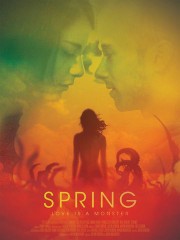
Spring (2014)
85%
If Before Sunrise and H.P. Lovecraft had a baby, it would be the horror/romance film Spring. Evan (Lou Taylor Pucci) is an American in Italy learning how to farm. He meets Louise (Nadia Hilker), a genetics student, and it’s love at first sight. The two exchange life stories, but Louise forgets to mention she is a 2,000-year-old Cthulhu-like monster. Until, that is, Evan catches her one day in the midst of a transformation phase that’s pretty gnarly to witness.
Cry Factor: Evan sees this transformation and doesn’t care; he is still in love with Louise. She explains this is a hereditary trait that helps her achieve immortality. She injects a special serum to keep herself in human form, but every 20 years, she must transform into a new look and new body – the only thing that will stop this process is falling in love. The duo decide to spend Louise’s final moments in her present form together, but when the time comes, the transformation doesn’t happen because she’s in love with Evan. It’s enough to bring tears to your eyes and butterflies to your stomach.
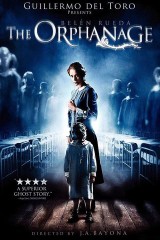
The Orphanage (2007)
87%
Creepy dead children, a haunted house, and a mother at her wits’ end trying to find her missing son – nothing is as it seems in The Orphanage. Laura’s (Belén Rueda) son Simón (Roger Princep) is missing, and she is desperate to find him. The cops aren’t helpful, and she’s seeing frightening apparitions of dead children in her home, a former orphanage. Laura can’t decipher if she’s going mad or if the ghosts are trying to tell her something.
Cry Factor: Laura has truly lost all hope, but emotions escalate when she discovers she killed her son by accident and didn’t even realize it: What she thought was the ghost of one of the creepy children was, in fact, her own child in disguise. You’ll tear up just thinking about it even years after watching. The film ends on a bittersweet note, as Laura commits suicide to cross over and be with Simon and the other children. Now she too is a part of the orphanage.
Thumbnail image by ©Picturehouse Entertainment courtesy Everett Collection
On an Apple device? Follow Rotten Tomatoes on Apple News.

(Photo by © Focus Features)
For some, staying home right now can mean curling up with a loved one on the couch for a date-night flick or gathering the whole family together for movie night. For many others, it can mean flying solo – long days and nights of streaming by yourself. We’re here to help with some movie suggestions we think are tailor-made for that latter experience.
Just like going to the movie theater alone can be a singularly joyous “treat yo self” excursion, solo home-viewing can be a great experience too – if you choose the right film. There are movies out there that actually benefit from being watched alone: It might be that they require a level of concentration and focus that distracting friends and loved ones just won’t allow you, or that the maximum scare factor is best felt when you are completely isolated – just like the babysitter being stalked on screen. It might just be that the movie has the kind of awkward/titillating sexy bits that make watching it with a first date – or, let’s say, mom – not exactly ideal. Watch it alone – no judgment, no nervous giggles.
To help those solo-fliers get through the next little while, the RT team pulled together a list of movies perfect for watching alone for all of those reasons – and a bunch that are just guaranteed to put you in an awesome mood the moment they start. Which might be the best reason of all.
What’s your favorite movie to watch by yourself? Let us know in the comments.
Click on each movie’s title to find out more, including where to stream, rent, or buy.
 93%
93%
 69%
95%
69%
95%
 93%
88%
93%
88%
 82%
82%
 88%
88%
 90%
83%
90%
83%
 86%
99%
86%
99%
 85%
85%
 77%
77%
 73%
95%
73%
95%
 93%
93%
 86%
77%
86%
77%
 83%
83%
 82%
82%
 80%
95%
80%
95%
 42%
73%
42%
73%
 45%
45%
 73%
73%
 81%
98%
81%
98%
 81%
81%
 85%
85%
 57%
57%
 67%
67%
 98%
98%
 99%
99%
 81%
81%
 94%
94%
 100%
100%
 63%
63%
 30%
30%
 93%
93%
 94%
77%
100%
90%
94%
77%
100%
90%
 96%
96%
 84%
83%
84%
83%
 79%
82%
79%
82%
 75%
75%
 40%
91%
40%
91%
 96%
96%
 55%
55%
 85%
85%
 54%
54%
 54%
54%
 73%
73%
 97%
85%
97%
85%
 93%
93%
 81%
81%
 91%
91%
 42%
95%
42%
95%
 98%
91%
98%
91%
 66%
66%
 56%
56%
 90%
90%
 59%
59%
 73%
73%
 73%
73%
 77%
77%
 91%
91%
 65%
65%
 51%
51%
 87%
87%
 84%
84%
 84%
84%
 76%
76%
 95%
95%
 96%
96%
 79%
79%
 24%
24%
 25%
25%
 47%
47%
87%
96%
 41%
41%
 50%
92%
50%
92%
 87%
87%
 93%
93%
 21%
21%
 86%
86%
 84%
88%
84%
84%
88%
84%
 96%
96%
 86%
86%
 38%
38%
 42%
88%
87%
42%
88%
87%
Thumbnail image: Everett Collection, Paramount Pictures, Focus Features
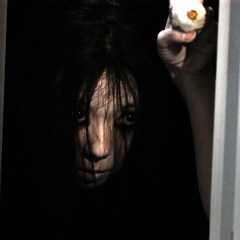
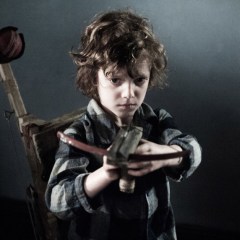
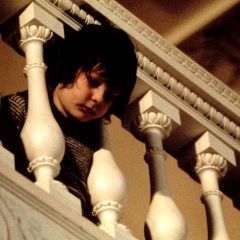
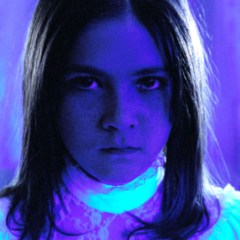
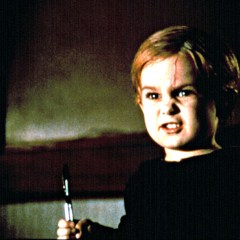
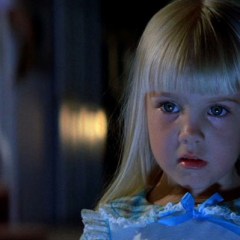
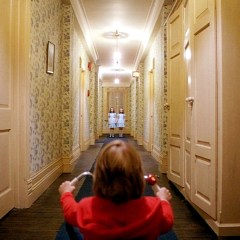
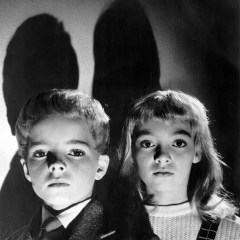
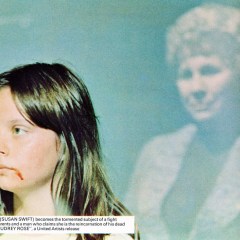
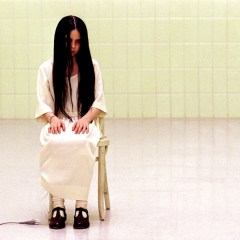
Hereditary torments viewers with every horror trick and trope in the book. It’s got jump scares, dreadful atmosphere, supernatural goings-on, the occult, spirits and seances, and, yes, creepy kids. You’ll be hard pressed to find a young girl more unsettling at the movies than Milly Shapiro as the forlorn Charlie, who may be channeling her dead grandmother…or worse. But enough tongue clucking: we present this week’s gallery of the 24 creepiest kids from horror movie history.
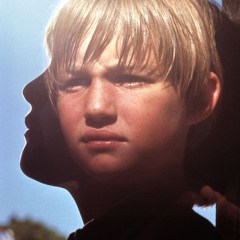
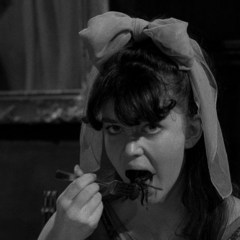
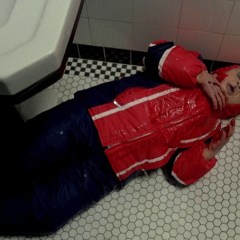
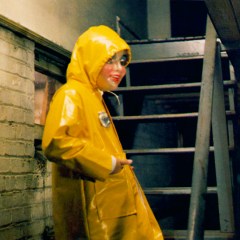



Halloween only comes once a year, but we celebrated every day this month with the October Daily Double: A recommendation every weekday of themed scary movie double feature!



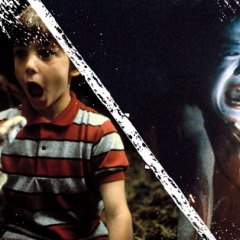


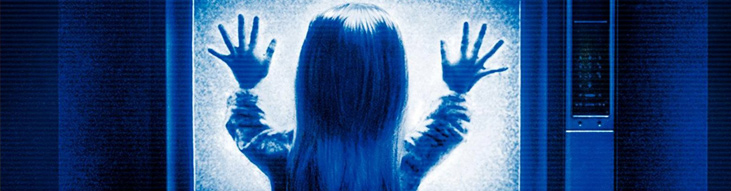
Look, we know that it’s the time of year when everyone and their sister has a list of the best horror movies of all time. This time out, we at Rotten Tomatoes decided to take a slightly different tack. Using our weighted formula, we compiled a list of the best-reviewed fright fests from each year since 1920 — the year The Cabinet of Dr. Caligari, which created the template for horror cinema, was released. This wasn’t an easy assignment — there were several years, like 1932 and 1960, that boasted a slate of classic films (and a few others, like 1937 and 1938, in which we had trouble finding any solid contenders). What was the best horror flick the year you were born? Check out our list — if you dare.
 96%
96%
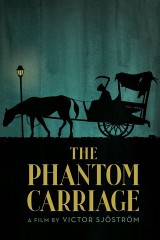 100%
100%
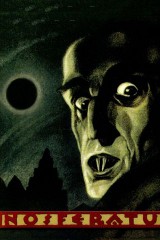 97%
97%
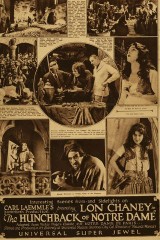 93%
93%
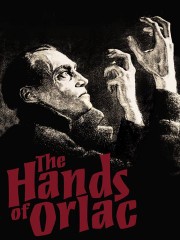 91%
91%
 90%
90%
 91%
91%
 94%
94%
 100%
100%
 93%
93%
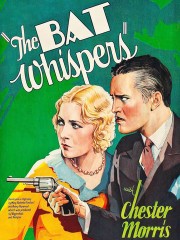 67%
67%
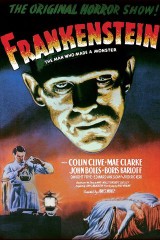 94%
94%
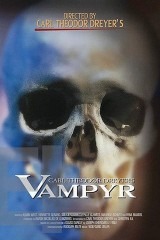 98%
97%
98%
97%
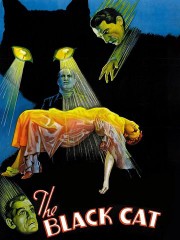 89%
89%
 98%
79%
98%
79%
 95%
95%
 79%
79%
 91%
91%
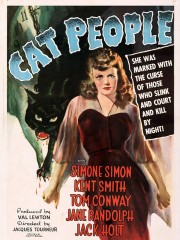 92%
92%
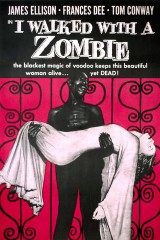 85%
85%
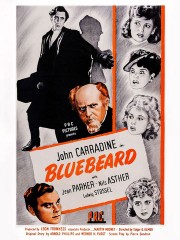 100%
100%
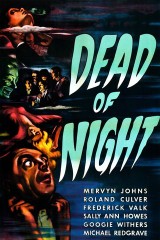 96%
96%
 95%
63%
95%
63%
 90%
90%
 96%
96%
 60%
60%
 87%
100%
87%
100%
 93%
93%
 93%
93%
 93%
93%
 97%
97%
 83%
83%
 95%
95%
 80%
80%
 97%
97%
 95%
95%
 97%
95%
97%
95%
 91%
91%
 96%
96%
 81%
81%
 100%
100%
 97%
97%
 86%
86%
 81%
81%
 88%
88%
 64%
64%
 93%
84%
93%
84%
 97%
97%
 94%
94%
 94%
94%
 93%
93%
84%
85%
93%
93%
84%
85%
 88%
88%
 89%
89%
 94%
94%
 90%
90%
 94%
88%
94%
88%
 96%
96%
 88%
88%
 91%
91%
 95%
95%
 69%
89%
69%
89%
 88%
88%
 85%
85%
 78%
78%
 83%
98%
83%
98%
 86%
86%
 82%
82%
 93%
72%
87%
92%
93%
72%
87%
92%
 75%
87%
93%
75%
87%
93%
 98%
98%
 92%
89%
92%
89%
 91%
92%
86%
98%
95%
91%
91%
92%
86%
98%
95%
91%
 98%
96%
98%
96%
Need some last minute programming to fill out a Halloween watching marathon? Then you’ve come to the fright place: 24 Certified Fresh horror movies and TV shows from the last 24 years.

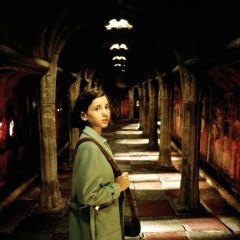

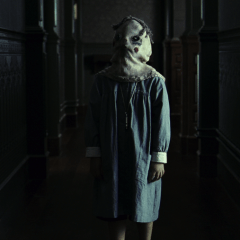


 With a reputation for excellence in the realms of fantasy and horror, filmmaker Guillermo del Toro brought a visionary touch to such critically-acclaimed films as Pan’s Labyrinth, The Devil’s Backbone, Cronos, and last year’s The Orphanage, which he produced. When del Toro turned his attentions to Dark Horse Comics’ Hellboy franchise in 2004 — infusing the big, horned anti-hero with a distinct sense of style and wit — fans and critics were summarily delighted, and the reins came loose for a bigger and more fantastical sequel. Hellboy II: The Golden Army surpassed the critical and box office performances of its predecessor and is Certified Fresh at 88 percent on the Tomatometer.
Rotten Tomatoes caught up with del Toro at the Hellboy II: The Golden Army DVD/Blu-ray Launch Party, where, in signature self-deprecating fashion, he guided those in attendance through the immersive Hellboy II Blu-ray experience. More importantly, del Toro announced plans to join fans in a ground-breaking BD-Live chat event (November 23rd at 6pm PST), where Blu-ray owners can log in and ask him their most burning questions. Except for, say, his favorite movies of all time; we’ve got that covered below.
Read on for Guillermo del Toro‘s Five Favorite Films (click for the Five Favorite Films of Hellboy II star Doug Jones and Hellboy comics creator Mike Mignola, who shared at least one top movie with del Toro himself)…
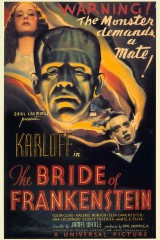
Bride of Frankenstein is absolutely perfect. It has the innocence and beauty of a fairy tale, but has the darkness of a gothic horror tale. So the combination is irresistible. [On hearing that Hellboy comics creator Mike Mignola also named Bride of Frankenstein among his favorite films, del Toro said with a smile, “Well, we are alike in some aspects.”]
Blade Runner is simply one of those cinematic drugs, that when I first saw it, I never saw the world the same way again.
The third film, Los Olvidados — Bunuel‘s movie — which I think is one of the best depictions of childhood ever made.
The Road Warrior — again, it transformed the way I see the world.

And [lastly] probably The Gold Rush, or City Lights, by Chaplin, because they are absolute pinnacles of filmmaking. You have precision comedy, precision filmmaking, and one of the best directors ever. He and Buster Keaton were fantastic, and they were two of my idols.

Unbelievably, Fox almost didn’t release their animated Dr. Seuss’ Horton Hears a Who on the Easter weekend. Until a couple of weeks ago the film was going to be released the week before (and still was in a few cities), when most kiddies were still swapping ringtones in the schoolyard.
The studio will be glad they made the switch though, as armies of rugrats piled into theatres over the weekend to make the film UK box office number one, and pass it a cool £3 million in the process.
It’s generally accepted wisdom ’round these parts that Seuss doesn’t translate to a British audience, seeing as, unlike in the States, he is not required bedtime reading for our crumpet-scoffing nippers. But it seems that despite our relative unfamiliarity with the artist’s peculiar brand of gurn-tastic, inky nonsense, a combination of the film’s strong reviews (it’s at 79% on the Tomatometer) and bedraggled parents literally dragging their unkempt spawn to cinemas to stop them rampaging through their dining rooms conspired to give the film top spot.
A similar healthy formula worked for the second placed movie – and another newcomer in the charts – The Spiderwick Chronicles. Based on the books by Tony Di Teerlizzi and Holly Black, this CGI-happy children’s fantasy, starring the gnomic Freddie Highmore, was praised by critics for having several genuinely scary moments and not being too cutesy. High praise indeed and perfect fodder for today’s hoodied, Harry Potter-obsessed, iPod-thieving youngsters.
Arguably even more successful than either of these child friendly entries however was breakdancing sequel Step Up 2: The Streets, which came third in the charts but nabbed more dough per screen than any other film in the top five. It seems ‘The Kids’ were enthralled by the sweaty, pumped-up dance sequences, and didn’t care one jot about the ropey acting, lack of correlation with the original, and, as some reviewers noted, some rather unsavoury racial stereotypes. Empire‘s Anna Smith summed up the thoughts of jaded critics, saying the film “suffered from a real lack of charisma… still, the dance bits are good.”
Sadly a film without any redeeming features whatsoever also made a strong showing this week. Yes, of course we’re talking about Fox’s Meet the Spartans, which aimed not only to spoof Zack Snyder‘s 300, but also ingeniously skewer the pomposity of today’s celebrity culture. Naturally, seeing as this was written by two of the witless scribes behind Scary Movie and Date Movie, the best way to do this was to simply repeat scenes from/simultaneously pimp last year’s Fox movies and especially TV shows (American Idol, America’s Next Top Model) and hope their audience of braying morons would reward themselves with a self-congratulatory laugh for making the association in their tiny minds. Still, it made Fox over £1 million in the first four days, so fair play.
From the ridiculous to the sublime, and ending on a high note, the Guillermo del Toro-produced Spanish-language horror The Orphanage snuck into our top ten, despite only opening on a select 74 screens. Featuring superb performances, a haunting atmosphere and the obligatory terrifying deformed child, here’s hoping this film gets a wider distribution in the next few weeks.
This week
at the movies, we’ve got two wild and
crazy guys (The Bucket
List, starring
Jack Nicholson
and Morgan Freeman),
pious crooks (First Sunday, starring
Ice Cube and
Tracy Morgan), botanical
buccaneers (The Pirates Who Don’t Do Anything: A Veggietales Movie),
haunted expatriates (The
Kite Runner), tormented mothers (The
Orphanage), and Uwe Boll (In
the Name of the King: A Dungeon Siege Tale, starring
Jason Statham
and Burt
Reynolds). What do the critics have to say?
How can a
movie directed by Rob Reiner and starring
Jack Nicholson and Morgan Freeman
possibly fail? If, say critics, it has a really contrived, sappy script, which
is the problem with
The Bucket List.
Nicholson and Freeman star as a couple of sixtysomethings who, after discovering they each have terminal
illnesses, team up to do all the living they can in the time they have left —
in the form of skydiving and tattoo-getting, among other things. Pundits say the
two stars give it their all, but they’re undercut by a predictable plot that
overdoses on schmaltz. At 44 percent on the Tomatometer, Bucket probably
shouldn’t top your list.

"I never would’ve put strip solitaire on my list."
Ice Cube
and
Tracy Morgan are talented people. Unfortunately, critics say their despite
their combined ability to generate intermittent chuckles, they’re unable to save
First Sunday. The film is a tale of two incompetent crooks who contrive a
plot to rob the local house of worship. However, their plan goes awry rather
quickly, and the pair has a crisis of faith. Pundits say First Sunday has
its moments, but it’s ultimately undone by a script that lacks nuance and
consistency; others aren’t buying the sentimentality of the last act. At 25
percent on the Tomatometer, First Sunday might need to do penance.

Ice Cube in the first Sunday the Friday after next.
Fear not,
parents:
The Pirates Who Don’t Do Anything: A Veggietales Movie contains
no plank-walking, keel-hauling, or bottles of rum. But guess what? Critics say
it’s clever enough to keep you entertained. The latest in Christian animation’s
most venerable franchise since
Davey and Goliath, Pirates follows
the comic misadventures of Larry the Cucumber, Mr.
Lunt and Pa Grape, as they are transported from their humdrum lives back in time
to the days of William Kidd — and trouble on the high seas. Pundits say while Pirates,
may be several cuts below
Ratatouille, it’s sweet and inoffensive, with a
positive message and some good laughs. At 67 percent on the Tomatometer,
this Pirates‘ life may not be for everyone, but at least it won’t make
you want to mutiny.

"We’re off to see the Eggplant Wizard!"
Khaled Hosseini‘s novel
The
Kite Runner drew widespread praise for its tale of
youngsters living through a tumultuous period in Afghani history. And critics
say Marc Forster’s big-screen adaptation does a reasonably good job of
translating the book’s sweep — while still taking some liberties. Kite
stars Zekiria Ebrahimi and
Ahmad Khan Mahmoodzada as two youngsters who survive both the Soviet invasion and the rise
of the Taliban — albeit with some pretty heavy emotional baggage. The scribes
say Forster gets some great performances from his child actors, and captures the
visual beauty of the war-torn land. But some say the film doesn’t quite have the
same impact as the novel, dialing up some of the big emotions while skimping on
nuance. Still, at 65 percent on the Tomatometer, this Kite flies
reasonably high. (Check out our interviews
here and
here.)

"Take dictation, please. Possible candidates for kite flying
society…"
If you
feel the fine art of cinematic suspense has drowned in a sea of gore, critics
say you’re in for a treat with
The Orphanage. Produced by
Pan’s
Labyrinth helmer
Guillermo del Toro, The Orphanage follows Laura (Belén
Rueda) and Carlos (Fernando Cayo) , the adoptive parents of Simon (Roger
Príncep), an orphan suffering from HIV. The boy has a host of imaginary friends,
and what he says about them starts sounding pretty sinister. The scribes say
Juan Antonio Bayona‘s film is loaded with dread and spooky atmospherics, but it
also succeeds as a heart-wrenching psychological portrait. At 85 percent on the
Tomatometer, The Orphanage is Certified Fresh. (Check out our interview
with Bayona and screenwriter Sergio Sanchez
here and our review from Cannes
here.)

"Oh, crap, I didn’t mean to screen Manos, the Hands of
Fate."
Yes, Uwe
Boll, everyone’s favorite critical pariah, has a new movie out:
In the Name of the King: A Dungeon Siege Tale. No it wasn’t screened for critics. But
what did you expect, given the fact that the man’s career Tomatometer is at five
percent? Critics don’t really dig him, especially the one he knocked out. Dungeon
Siege stars
Jason Statham,
Ray Liotta,
Leelee Sobieski,
Burt
Reynolds, and
Matthew Lillard in a tale of a regular guy who must do battle with beasts
conjured by an evil sorcerer; swordplay no doubt ensues. Hey kids, stop laying
siege to that dungeon and guess the Tomatometer! (And read our [qualified]
defense of Mr. Boll’s work in this week’s Total Recall.)

Just pretend it’s your agent, Jason.
Also
opening this week in limited release:

Finally,
props to
tabascoman77, both for boldly announcing that
One Missed Call
would end up at zero percent on the Tomatometer, and for his excellent taste in
hot sauce. Personally, I like the garlic Tabasco, but that’s just me.
Recent
Morgan Freeman Movies:
—————————————
93% — Gone Baby Gone (2007)
42% — Feast of Love (2007)
24% — Evan Almighty (2007)
62% — 10 Items or Less (2006)
52% — Lucky # Slevin (2006)
Uwe Boll
Movies:
————————
4% — BloodRayne (2006)
1% — Alone in the Dark (2005)
4% — House of the Dead (2003)
11% — Blackwoods (2002)
 The
The
Orphanage is being touted as this year’s
Pan’s Labyrinth,
a fitting tribute considering Orphanage is produced by Pan
director
Guillermo Del Toro. Though mixing horror with disparate genres is familiar
ground for del Toro, it’s virgin territory for director
Juan Antonio Bayona and writer
Sergio Sanchez, both making their feature-length debut. Their film tells the
story of Laura (Belen
Reuda), who, with her husband and son (Fernando
Cayo and Roger Princep, respectively), move back into her childhood
orphanage with plans of re-opening for business. Soon, her son goes missing and
Laura is convinced he’s been whisked away by his invisible friends. What follows
is one of the most haunting, wistful horror movies in recent memory.
The Orphanage, which opens wide this Friday, is Spain’s Oscar entry for Best
Foreign Film this year. We also
dug it when we first
saw it at Cannes, and it’s subsequently made our
top 20 list for 2007. We sat down with Bayona and Sanchez in San Francisco,
discussing studio interference, classic horror, and the role the titular manor
had in shaping the movie.
Did you ever think The Orphanage could become an
Oscar contender?
Juan Antonio Bayona: Yes, of course. [Laughs.] We
took it to Cannes and we got a wide reaction there. It was amazing. And things
started to snowball from there. The numbers in Spain have been so huge
that…there are so many good things, but there’s a lot to assimilate as well.
How did you first come in contact with the screenplay?
Sergio Sanchez: I wrote the first draft of the
script in 1998, 1999. It’s actually something I wanted to direct myself. So what
I did was I shot a short film with a similar theme. When I met Antonio at a film
festival, he really liked the short film I did. He asked me if I had any
screenplays. I gave him the script of The Orphanage which, at the time, I
was showing to production companies in Spain. And they all kept complaining
about the same things. They said, "You know, this is a mixture of drama and
horror and those two elements cannot mix. They’re like oil and water, you can’t
do that." "You don’t have a main villain." "You have two different endings."
"The first act is too long, blah blah blah." Basically, all the things that made
the script unique they didn’t like. They wanted to go for a formula.
You didn’t take heed of any of it?
JAB: Well, yes, we did. For example, with the
opinion of there being no evil character in the movie we decided to kill the
"bad guy" in the middle of the story in a very extreme and violent way to let
the audience know that this is not that kind of movie. That there is an "evil
guy" or a "good guy." That [instead] the evil lurks in every character.
So that character’s death wasn’t in the original
screenplay?
SS: The death came later on. What Antonio decided to
do was like, we’re not only not going to listen to the studios but we’re going
to go against them. [Laughs.] We’re going to kill her earlier and in the most
violent way possible so the audience is thrown off.
The movie starts off like classic horror. Suddenly, we
start taking away all the elements. [When] the story’s halfway through, it’s
very barebones and you have no idea where it’s going to go next. The final half
of the film is practically a silent movie.

When you mention classic horror films, which ones were
you thinking of when you wrote the screenplay?
SS: To be perfectly honest, I wasn’t thinking of any
movie in particular. I guess my big two influences were…one was Peter Pan,
the other was The Turn of the Screw by Henry James. I guess if I have to
talk about film influences, it’d be
The Innocents,
the Jack Clayton
adaptation of Turn of the Screw. But I wasn’t thinking of movies. I was thinking
of classic horror stories, I was thinking of Edgar Allan Poe, I was thinking of
Henry James, Shirley Jackson.
JAB: We talked about the tone of the movie. It’s
unique because it starts as a chamber movie and ends as a melodrama more or
less. We were talking about the tone of the movie and I remember talking about
not just The Innocents. I remember we talked about
Our Mother’s House
from Jack Clayton which was a very unique ghost story that also deals with
childhood.
What sort of role did Guillermo del Toro act out as
producer?
JAB: I met Guillermo, like, 15 years ago. I used to
say "50." [Laughs.] People say, "No, no, you’re not 50." We had a very funny
meeting. I was very young, more or less like you.
SS: No, a lot less than you. [Laughs.]
JAB: I was 15 at the time, I was a minor. I went to
a festival pretending to work as a journalist to get free tickets and interview
people I really admired. I remember one of these people was Guillermo del Toro.
When he saw me for the first time he thought I was a 10-year-old boy with
sideburns, [but] he was impressed by my questions so we kept in touch. He came
to Spain to shoot a movie and I went to film school and I shot a lot of stuff,
different stuff like music videos, short films. And he really liked them. Since
he knew I was going to do a movie he wanted to be there, to protect us. So he
never, for example, insisted on an idea more than once. He gave a few
suggestions. We took some and rejected others. He was there just to help us. He
would remind us of experiences he had with
Pedro
Almodovar producing
The Devil’s Backbone.
Almodovar used to say the good producer is the one who’s always there when you
need him and he’s never there when you don’t. So [del Toro] was trying to do
exactly the same with us.
And once del Toro was on board, the budget doubled.
JAB: We talked about a lot of things. Shoot the
movie in ten weeks. We talked about building a set, building the whole orphanage
set. These kinds of things. It was a very low budget movie, a $4 million movie.
But we had maybe more than what a newcomer usually has in Spain.
And that was enough to do everything?
JAB: Oh, no.
SS: No way. [Laughs.]
JAB: We cut out much from the script. But I think
it’s better. It’s like when you think about
Jaws and
Spielberg
decided to…
SS: The POV shots of the shark.
JAB: Right, from the view of the shark, because the
shark wasn’t working. That kind of thing of trying to get a benefit from your
limitations.
SS: We went though many different drafts. The final
one [is] where the major cutting happened. Actually, basically everything that
was in the script got shot. It’s not like we couldn’t shoot stuff that was in
the shooting script that was in the film. I would say something like 15 minutes
of the film was cut to get to the final cut. Antonio was very convinced [on] a
single point of view. That the audience knew what Laura knew so that you could
identify with her. So whenever the story drifted away, he just chose to leave it
out of the film.
JAB: For example, you think about the seance with
Geraldine
Chaplin. I remembered that we had to shoot that sequence in a single
morning. It was crazy. Then it was like, "Why don’t we shoot Geraldine Chaplin
with a video camera because we were going to be fast?" Then, just at that
moment, we realized that the only way to shoot that sequence was with a
video camera. That’s the kind of thing [where] we took from our limitations.

What was the working relationship between you two like?
SS: I was on the set everyday. I was there even for
most of the rehearsal period. We did a lot of research with the main actress. We
went to visit a couple of grieving groups. We visited parents whose kids were
missing. We tried to incorporate that into the character. So sometimes things
would happen during rehearsal that were very interesting so I’d go back home,
re-write the scene, and hand it back. Things like that happened all the time
JAB: For example, [Princep] would always be
brilliant on the first take. Then he would tend to mechanicalize. So we were
trying to make these sequences look like new for the child all the time. So I
remember changing the lines of dialogue between takes.
Was it difficult finding the right house for the movie?
JAB: We went to find the house in Austrias, which is
where [Sanchez] was born. And I saw a short film he did, 7337, which had the
same mood, the same atmosphere [of The Orphanage]. We found the house at
the entrance of this village. It was surrounded by another house that we had to
erase from the computer. When we finally found the house, we were very happy. It
was a very strange house because the four sides were completely different. If
you put the camera there, or there, or there [it] looks completely different.
The house has personality. It was very interesting. But when we were talking
about shooting inside the house, it was impossible because we’ve got these
complicated shots. What we did was build the interior house in a set in
Barcelona. We had wanted to shoot the movie shot-by-shot like in the old
classical Hollywood way.
Who was living in the house at the time?
SS: No one. It had been abandoned for over 30 years.
Actually the owner of the house was there during the shoot but I guess just so
we didn’t break anything. It’s a house that looks as if someone had left running
in the middle of some apocalypse. [Laughs.] Everything was still in place. What
happened was that the woman who owned the house [at the time], her child was hit
by a car right in front of the main entrance. She associated the house with all
those memories so she decided to move out and never come back. The house was
left just like that. As a result, it was in a very decaying state and the roof
was about to collapse.
And everything was still inside?
SS: The things were still inside. We were shooting
in the house and after you get the good take usually the sound crew will ask for
silence to record the ambience, the room tone. And many times what would happen
they would yell, "Okay, quiet. Room tone." And the guy with earphones would just
go, "Quiet!" [Laughs.] "Who is that?" Always some strange stuff would find its
way [into the microphone] and we could never find where the sounds were coming
from.
That’s oddly appropriate for the movie.
SS: Yeah. It’s actually in the film. During the
seance, the very first noises that you hear, the whispering, that was recorded
from the house and we don’t know what that is.
Since you’ve directed before, did you guide the
direction in any way?
SS: Nope. None at all. It was just an agreement we
had. You have to understand and respect that he’s the director and he makes the
decisions. So whenever he asked for my opinion, I would give it. But [otherwise]
I would just sit there and not say anything. There was only one time that I
pushed for something to be done in a different way, which was the knock on the
wall scene. Again, he had very limited time to shoot, he had to do everything in
a rush. He drew the storyboards for the whole movie and [that scene] was
originally more complicated. I just walked up to him and said, "You know, it
would be wonderful if you had the balls to do this in one take." And I walked
away and hoped he would listen. [Laughs.]
Is the American remake still in production?
JAB: Yes. Guillermo is attached to the project. He
will be part of production. We really don’t know anything about that. Guillermo
doesn’t want to do exactly the same movie with an American director. He’s trying
to find a way of retelling the story in a parallel way.
SS: Yeah, we’re not involved. And we don’t want to
be. This thing was so personal and it was so hard to get this film made. I’m not
going to say 10 years even though the first draft is that old. It’s been,
really, five years working non-stop on this, fighting really hard to get the
movie made. We just want to move on to the next thing. We’re happy with the
movie as it is.
This week at the movies, we have galactic monsters (Alien vs Predator: Requiem), ol’ Nessie (The
Water Horse: Legend of the Deep), big talkers (The Great Debaters,
starring Denzel Washington), and preggered pubescents (Juno, starring
Ellen Page
and Michael Cera). What do the critics have to say?
The story of a youngster who befriends a mythical beast, The
Water Horse: Legend of the Deep makes for occasionally magical family
entertainment, critics say. Sorta like E.T but with a thicker brogue, The
Water Horse tells the story of Angus (Alex Atel), who stumbles upon a
mysterious egg that contains a creature that grows up to be the Loch Ness
Monster. Pundits say that while it feels familiar and doesn’t stray too from
coming-of-age story conventions, The Water Horse is loaded with charm and
a sense of majesty, carried by strong CGI work. At 71 percent on the Tomatometer, this Water is safe to wade in for the whole family.

Denzel Washington directs and stars in
The Great Debaters, the based-on-truth
account of a group of African American college students from Texas that
challenged the status quo. While the film follows the inspirational drama
formula to a tee, critics were willing to forgive its conservative plot and be
inspired by the rousing performances and Washington’s unobtrusive direction. At
74 percent, Debaters is Great indeed.

Teen pregnancy is not generally a topic that lends itself to hilarity.
However, critics say Juno
is a touching, intelligent, and laugh-out-loud
exception to the rule. Juno stars
Ellen Page as
a smart, headstrong teenager who finds herself pregnant after a one night stand
with her best friend (Michael Cera) and tries to deal with the repercussions. The pundits say Juno
is full of quirk and heart, featuring fine performances from Page, Cera,
Jennifer Garner, and
Jason Bateman, as well as fine direction from
Jason Reitman
and a precociously smart script from first-time writer
Diablo Cody. At 94
percent on the Tomatometer, Juno is not only Certified Fresh, it’s one of the
best-reviewed films of the year. (Check out our interview with Page
here.)

The very presence of Alien vs Predator: Requiem in theaters this week
begs an important question: is there any better way to celebrate the holiday
season than with a cataclysmic throwdown between two of sci fi’s most iconic
monsters? Unfortunately, we’ll have to wait and see, since this one wasn’t shown
to critics prior to release (probably a wise move, since the first
AVP
notched a lusty 22 percent on the Tomatometer). AVP:R finds the action has
moved from outer space to Colorado, where Predator and the aliens duke it out.
Kids, take time out from celebrating the fact that you received a Nintendo Wii
and guess that Tomatometer.

Also opening in limited release this week:

Between Hellboy 2: The Golden Army, both versions of The Orphanage, and his various rumored projects, Guillermo del Toro has become something of a mainstay here at RT News — so imagine our delight when we learned that ShockTillYouDrop.com recently interviewed the director about what’s on his slate!
First, the site asked him about the English-language version of The Orphanage that he’s agreed to produce for New Line:
“I cannot say yet who is the director and writer but if I get who I want, it would definitely make a difference. It won’t be the same movie just done by a guy that has an American name. It’s a new proposition.”
ShockTillYouDrop also asked del Toro about the status of his long-in-development adaptation of H.P. Lovecraft’s At the Mountains of Madness, a project we discussed not long ago. According to the director, recent rumors regarding the film soon starting production are just that — rumors:
“I wish I knew, but Universal has acquired it, which is a great thing because it was in limbo, and I have, together with Michael, self-financed the designs and maquettes and everything, but we’ll see. It’s R-rated, it’s expensive and it doesn’t have a happy ending. I think that big-scale horror, big tentpole horror, which you used to have with ‘Alien,’ ‘The Shining,’ ‘The Exorcist‘ before everyone thought horror needs to be this or that and pre-conceptualized, I think big tentpoles like that should be back at some point in life, so I’m patiently waiting my turn.”
Finally, del Toro was asked about another rumor; specifically, one putting him behind the lens for a reboot of one of Universal’s classic monster franchises. He didn’t say yes or no, really, but he did give a clue as to which direction he might head if he gets the chance:
“The movie I would kill to do — and I know it’s been done and I’m very conscious of that — is ‘Frankenstein‘ but to do Frankenstein as the Miltonian tragedy that it is. I remember reading the Frank Darabont screenplay that was illustrated by Bernie Wrightson, and saying, ‘That’s it! I’m screwed and never going to do it’ but thanks to Kenneth Branagh, I can still do that version.”
To read more of Guillermo del Toro’s interview with ShockTillYouDrop, click on the link below!
Source: ShockTillYouDrop.com
Juan Antonio Bayona‘s The Orphanage will be Spain’s candidate for Oscar consideration in the Best Foreign Language Film category.
The horror movie, which was produced by Guillermo del Toro (Pan’s Labyrinth), beat out Emilio Martinez-Lazaro‘s 13 Roses and Jose Luis Garci‘s Luz de domingo. The synopsis for The Orphanage, which reaches American screens December 28:
The Orphanage, presented by Oscar-Nominee Guillermo del Toro, centers on Laura (Belen Rueda from The Sea Inside) who purchases her beloved childhood orphanage with dreams of restoring and reopening the long abandoned facility as a place for disabled children.
Once there, Laura discovers that the new environment awakens her son’s imagination, but the ongoing fantasy games he plays with an invisible friend quickly turn into something more disturbing. Upon seeing her family increasingly threatened by the strange occurrences in the house, Laura looks to a group of parapsychologists for help in unraveling the mystery that has taken over the place.
For more on the movie, including a trailer, click here!
Source: Variety