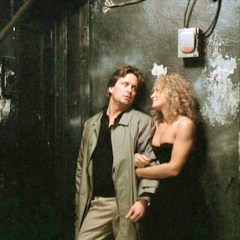
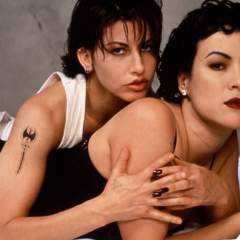
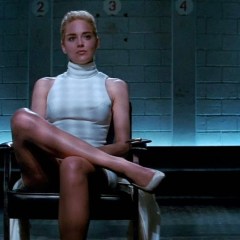
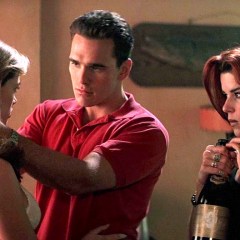
With two more sequels to Fifty Shades of Grey on their way (and Marlon Wayans’ parody Fifty Shades of Black now in theaters), we thought it only proper to shine a light on a whole bevy of films that explored the sensual side of cinema and the actors that went along for the ride.















Arguably the most famous director in cinema history (and the auteur behind the recently crowned Greatest Movie of All Time), Alfred Hitchcock can’t be an easy subject for an on-screen biography. Beyond his larger-than-life persona, embodied by that famously corpulent silhouette, the man was also something of an enigma, an artist who preferred to devote his personality to thrilling audiences with the most popular entertainments of the day.
British-born director Sacha Gervasi has taken a shot at it with this week’s Hitchcock, which adapts — with some creative license — Stephen Rebello’s 1990 book Alfred Hitchcock and the Making of Psycho, while exploring the relationship between Hitch (played by Anthony Hopkins) and his wife Alma Reville (Helen Mirren), as he fights to make the thriller that would prove one of his biggest and most influential hits.
Gervasi, known for his hugely entertaining 2007 metal documentary Anvil! The Story of Anvil, called in to chat about Hitchcock, the challenge of taking on a movie icon, working with Hopkins, and separating the man from the mythology.
Read on for that interview, but first, he talks here about his five favorite films.
Withnail and I (Bruce Robinson, 1987; 93% Tomatometer)
Well I guess my first one has to be Withnail and I, the 1987 Bruce Robinson classic. You know, the plot is one that would get you laughed out of any Hollywood studio: Two unemployed actors go on a holiday, drinking, to one of their uncle’s cottages for the weekend; but it’s one of the most deeply rich, brilliant, tragicomic tales of male friendship. I actually remember seeing it when I was a kid, and walking out of the theater in London — and by the way, it did not do well at the time it was released; it was a tiny little film — but I remember thinking that I wanted to become a filmmaker after that.
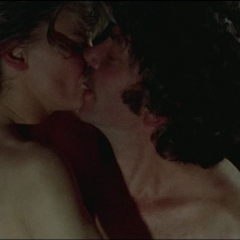
The second one is that incredibly brilliant movie Betty Blue, which I love because it opens with that incredible lovemaking scene with Béatrice Dalle. There’s just something so vivid and luscious about it. It’s just so beautiful and sensual in every regard and I absolutely love the film. I saw it recently and it’s just as brilliant. And the incredible soundtrack, you know. It’s just as brilliant as when I first saw it. Withnail and I and Betty Blue were both in the same period; they were both seminal cinematic experiences for me.
The Sweet Smell of Success is, I think, one of the best — certainly one of the greatest New York films, for me — ever made. Alexander Mackendrick, great director. Unbelievable script. James Wong Howe, unbelievable camerawork. And Tony Curtis and Burt Lancaster — to see those two going at it, and really, you know, the tragedy of corruption and how it infiltrates every aspect of peoples’ lives. There was something so deeply dark and cynical about it. But yeah, there’s this sort of tiny little germ of hope at the end of the film, as Susan walks off with the musician boyfriend that Hunsecker has tried to destroy, and you just feel like, you know, absolute power corrupts but not totally. Still, it has a vicious sting to it, that film. It really affected me.
Obviously Chinatown. Seeing Nicholson with his destroyed nose [laughs], as Polanski is slitting his nose by the reservoir and calling him “pussy cat,” and all that stuff; and him and Faye Dunaway, you know, it’s just extraordinary. It’s one of my favorite movies of all time. It’s one of the greatest screenplays ever written. I’m a huge Robert Towne fan, and a Polanski fan. And it was great on this movie — on Hitchcock — to work with John Huston’s son, Danny. He had some stories about his dad. [Laughs] That Noah Cross character [played by John Huston], I think is one of the darkest villains in cinematic history. Every little detail of that film, you know — whether it’s Gittes choosing the cheap bourbon at the beginning, rather than the expensive stuff; every single touch, I think, was masterful. It has such brilliance, and poise, and ultimately humanity to it. And again, it’s a story of power, of big city power and corruption and how power and privilege can destroy people and families. That’s a theme in Sweet Smell of Success as well.
The last one, for me, just in terms of comedy, is This is Spinal Tap. [Laughs] I mean, I love Spinal Tap. When I first saw it in 1984 I was the only person in the cinema at Swiss Cottage in London, and I didn’t know whether it was real or if it wasn’t. [Laughs] It was just so profoundly funny. I think it obviously inspired me personally, in a huge way. I would say that the movies that inspired Anvil! were a combination of Withnail and I and This is Spinal Tap. [Laughs]
That’s why Anvil! is so good, you see.
[Laughs] It really was those two movies I saw early on. I just love the pomposity and ridiculousness of being an artist and trying with absolutely no-one caring. [Laughs] There’s an inherent tragedy to it. It’s the same thing in Withnail and I, you know — the philosophical ridiculousness of it, of a thespian in crisis. No-one really cares. There’s something so deeply hard about being an artist, because most of the time no-one gives a sh-t. But there’s something very sort of tragic and uplifting and real about that. I think with Spinal Tap it also has the humor, you know — how these guys, who have grown up, are still basically children. That was something that I also responded to in Anvil! But you know, Spinal Tap — the original and best. There would have been no Anvil! without that film. The best part is having the two films play on double bills all over the world. [Laughs]
Did you ever meet those guys, Michael McKean and Christopher Guest?
Yeah, I did. I did, actually, and they were fantastic. They were very funny.
Now, did you know they were American actors when you first saw the movie? I didn’t.
I didn’t know it wasn’t real, but eventually I figured it out.
A lot of people were fooled, ’cause they made records and toured after that film.
Oh absolutely! Their second album, I believe, was called Break Like the Wind [laughs], which I think sums it up. And they had a video for a song called “Bitch School,” which I though was very funny.
They were genius.
They were genius. I just think it was ironic that I found the guys that were part of the reason that inspired movies like Spinal Tap — they were guys like Anvil. It was very similar, the Anvil story, to Spinal Tap — Anvil had songs like “Butterbutt Jerky” and “Whiteknuckle Shuffle.” You could never make it up. I remember being on the road with Anvil, as a roadie, in 1982, before Spinal Tap came out; so I was living that life, you know, as a young kid on the road with a rock band. So when [Spinal Tap] came out, it was like my holiday job was up there on screen.
So it’s no surprise that you thought Spinal Tap were real.
Exactly! I was the drum tech. I was the drum roadie for [Anvil’s] Robb Reiner. [Laughs] And again, the crazy magical connection between Anvil with Rob Reiner, obviously being the name of the director of Spinal Tap. So it’s like, it was just so meta. It was just very surreal. I’m still amazed to this day by that film.
Next, Gervasi talks about Hitchcock, how he approached the story of one of cinema’s most famous directors (and films), and working with Anthony Hopkins on the lead role.
Luke Goodsell: When you set out to do a movie like this, about one of the most famous — if not the most famous — directors of all time, what’s the most daunting aspect?
Sacha Gervasi: Well, I mean when you take on Hitchcock, at all — I mean, we were mostly telling the story of a relationship, but still, Hitchcock is the man — you know it’s gonna provoke some sort of controversy, because there were so many people talking about the book [Stephen Rebello’s Alfred Hitchcock and the Making of Psycho] and wanting it to be the film about the making of this movie [Psycho]. But that’s been done. That’s been done in the book, and Stephen Rebello himself was like, “I want a movie which is an entertainment for the audience.” So we made the conscious decision. I think we knew, though, that what we wanted to do — the intention of the film — was to pay tribute to not just this fiercely loyal and amazing wife [Alma Reville, played by Helen Mirren], but also this brilliant artist in her own right, who stood by his side throughout 54 years of marriage and this incredible career. I think for us, you know, it was really important to shine a light on that relationship and that incredible artist. And really show a little peek behind the curtain, of how hard it must be to live with a genius like Alfred Hitchcock and to deal with his crap — and playing a huge role. So for us I think it was a lovely thing to do — to take nothing away from Hitchcock, but also to acknowledge the unseen contributions that often are made to some of the great artists that we know.
LG: As he’s characterized here, Hitchcock often comes across as a big kid — he’s playing pranks, there’s the scene where he puts the corpse in Vera Miles’ dressing room…
SG: Right, yeah.
LG: I’m curious as to how you and Anthony Hopkins approached Hitchcock, to try and flesh him out — because he was a very impenetrable persona.
SG: Well, yeah, because he was so impenetrable he became so fascinating. I think what we really needed to do was to kind of explore what might have been in his psychology as he shot these movies, you know. So for us it was really a dramatic exploration, because there’s clearly a big fantasy element in the movie — as there should be in making a movie about Hitch; he was so enigmatic and fascinating that we couldn’t really do a documentary about that.
LG: It’s inescapable in the performance that we see Anthony Hopkins and his own rich history as an actor — it’s like a synthesis of their personae.
SG: Absolutely, and we wanted that intentionally to happen. We knew it was “Anthony Hopkins playing Alfred Hitchcock.” We [originally] had a prosthetic that completely covered him up, but there was no point when you have one of the greatest actors in the world and he’s got a big rubber mask on his face.
LG: There’s also, of course, the connection with the killer Ed Gein inspiring both Psycho‘s Norman Bates and, later, Buffalo Bill in The Silence of the Lambs. Did you and Anthony talk about that at all?
SG: Right, absolutely. I definitely think we discussed it on some level. I don’t remember it exactly but we definitely mentioned it.
LG: In your research for the film, was there something that surprised you about Hitchcock that you hadn’t known before?
SG: Yeah, the grocery bills.
LG: [laughs]
SG: The amount he spent was extraordinary. When we went to the Academy and researched his life, we saw all his incredible grocery bills. We found out he was having the food flown in from France and England, and the wines — they had a vineyard in Northern California. I mean, they lived incredibly well — even though their house, at a certain level, was quite modest, the way they lived was quite lavish and extraordinary. You have to admire Hitchcock. He grew up the son of a green grocer, so very humble beginnings, and he reached a point in his life where he was famous and powerful and could do what he wanted, and he loved the finer things in life. So if you’re Alfred Hitchcock and you want to have your food flown in from Maxine’s of Paris, then goddammit you go ahead and do it. [Laughs] The wonderful indulgence of success.
LG: You mentioned working with Danny Huston before. Did he relate any grand tales of his dad? Did the family have any relationship with Hitchcock?
SG: I think they did. I mean, what Danny said to me the other day was growing up with John Huston, he was always aware of the difference between the man and the mythology — and I think that’s what we tried to do in this film, to say there is a difference between the two. Mythology is largely the projection of other people, of what they want someone to be and what they hope they are; and I think for us it was important to tell the story of a man — a contradictory, flawed, difficult human being. It’s not good or bad, you know. He was both. And I think that was the exciting part, to show the complexity of the man. To me that only deepens and enriches your interest in the work, because you’re watching these movies — these brilliant movies — over and over again going, “Who is this guy? What drove him?” And I think we explored that without ever being able to answer it, and that’s a good thing. It needs to be as mysterious as ever.
LG: Do you have a favorite Hitchcock film?
SG: Yeah, Rear Window — because it’s unintentionally his most personal.
LG: That explains the many Rear Window references in your film.
SG: Yeah, there are about 10 references to other Hitchcock films in there.
LG: Were you conscious of maybe putting too many in, or did you just want as many as you could?
SG: We just put stuff in for fun, you know. Again, it’s a fun movie for an audience and we made that decision — and we’re really proud of it. That was really what we wanted, because remember — Hitchcock made movies for the audience, so we tried to be as fun as possible.
Hitchcock opens in a limited release engagement this week ahead of its nationwide expansion.
It’s a three-in-one Five Favorite Film fest today, as we sat down with the stars and writer-director of the indie comedy-drama happythankyoumoreplease, which opens in select theaters this week. The debut feature for How I Met Your Mother star-turned-filmmaker Josh Radnor, the movie follows the unpredictable lives and relationships of four New York twentysomethings, and stars Radnor, Kate Mara and Malin Akerman.
First up, we spoke with Malin Akerman. Familiar to mainstream audiences as superhero Silk Spectre in Watchmen, the versatile actress has alternated between studio comedies and indie drama, appearing radically different in happythankyoumoreplease as Radnor’s best friend who has the condition alopecia.
“It’s what you live for in that it’s so much fun to transform yourself,” Akerman says of her role, which required her to shave her eyebrows and appear hairless. “It’s a lot of fun to be able to extract yourself from the physical and just become a character. A lot of times studios are a little bit more reluctant to bring you in for auditions for roles that are outside of the genre that they’re used to seeing you in, so I feel like the independent film world is a place where I can test that out. I like all genres of film and I want to be able to do everything.”
True to that ethic, Akerman will soon play the title role in Inferno: The Linda Lovelace Story, a biopic of the infamous adult star of Deep Throat. “I’m really excited about that,” she says. “It’s pretty heavy content. It’s really the relationship between her and her husband, and the way that he treated her. It’s more about Linda Lovelace as this battered woman rather than just — obviously it’s not a remake of Deep Throat.[laughs] I’m not getting into that genre.”
Read on for more Five Favorite Films, with co-star Kate Mara and director Josh Radnor. Up now, here’s Malin Akerman’s list.
Dirty Dancing (1987, 68% Tomatometer)
We’ll start with the cheese. [laughs] I’ve seen Dirty Dancing about a million times in my life. Always a good one. Just because, you know, I watched it as a teenager and your hormones are going crazy at that point and you’re like, oh my god, “Nobody puts baby in the corner!” I dreamed about being a dancer. And Patrick Swayze was so sexy in that film; a guy who can dance is always so attractive. It was just like a dream being swept off your feet — one of those fantasy films.
Annie Hall (1977, 98% Tomatometer)
Love Annie Hall. Everything is so random in his films but it’s also so grounded, and it’s so nice to watch. I like when you watch a film and you feel like you’re a part of somebody’s life for an hour and a half. It feels all improvisational, but it’s interesting, it moves along and it has a good story. And it’s just nice to see those people, because there are, you know, mistakes, which becomes the magic of the film.
No Country For Old Men (2007, 95% Tomatometer)
Love No Country for Old Men. I feel like there’s no formula to it. I love the Coen brothers. They’re so brilliant and they always surprise you in one way or another. A Serious Man was awesome. I like stuff like that, that kind of throws you for a loop. It takes you on a journey that is unexpected.
Pan’s Labyrinth (2006, 95% Tomatometer)
I loved Pan’s Labyrinth. It transported me into another world. I like fantasy worlds; I love Lord of the Rings as well, for that reason, because you really get to get out of reality and go somewhere else. Pan’s Labyrinth was kind of this dark, sick, beautiful… it was like watching a moving painting, like a Salvador Dali painting or something like that. It was just really magical and it sort of provoked so many different feelings at one time. It’s kind of sick, you know, the guy with no eyes is coming at her and it felt like when you have a crazy dream — you’re watching someone’s crazy dream. It just affected me.
Betty Blue (1986, 76% Tomatometer)
You know which one is one of my favorites? Betty Blue. Oh, if you’ve not seen it — you have to see it. It’s amazing. What a great film. It’s not without its faults, which sort of parallels life, you know — you feel like you’re living with these people for two-and-a-half hours. It’s really great. Loved it.
The elder of two talented siblings (sister Rooney is currently filming The Girl with the Dragon Tattoo for David Fincher), Kate Mara has been a busy actress of late, appearing in one of the year’s biggest hits, Iron Man 2, and the acclaimed, Oscar-nominated 127 Hours. (Little sister also played a small-but-pivotal role in another of the Best Picture nominees, The Social Network.)
Mara is mixing things up again for this week’s modest indie, happythankyoumoreplease, in which she plays the role of Mississippi, a Southern girl looking to break into the singer-songwriter music scene in New York. She falls into a romantic liaison with central character Sam (played by writer-director Josh Radnor), and gets to perform the movie’s key musical denouement.
We chatted with Mara ahead of the movie’s release, and got her to name her Five Favorite Films. Read on for Josh Radnor’s all-time best list.
I was excited that I had the chance to sing something in [happythankyoumoreplease]. I did a lot when I was younger and I haven’t in such a long time, but I grew up doing musicals and musical theater. That was my real passion and I soon as I started doing films, when I was 14, I did less. I would love to do movie musicals or Broadway. [A music biopic] would be a dream of mine… that leads into my favorite movies. Coal Miner’s Daughter is my all-time favorite movie. A lot of that has to do with that’s just a dream sort of ideal role for me. I love country music. I love the idea of playing a country singer and the whole thing, I love it. And I love Sissy Spacek. So yeah, that’s one of my favorites.
The Sound of Music (1965, 84% Tomatometer)
What else do I love? Well The Sound of Music is what, I think, made me wanna be an actor. I was so young when I saw it. I wanted to be one of the Von Trapp children. [laughs] It’s what started my love of music, singing; the whole thing. Any time it’s on I get this sort of “home” feeling. It’s one of those things, when it’s on, I feel guilty changing the channel. You get sucked in. And it holds up, too. When I went with my mom to Italy, we took a trip to Austria to go specifically on The Sound of Music tour, when I was 12 or something. [laughs] So that’s one.
Lady Jane (1985, 57% Tomatometer)
You know, I haven’t seen the film in a very long time, but because it was another thing that my sister and I, as kids, would watch — the film Lady Jane, with Helena Bonham Carter. And Helena Bonham Carter was, I think she was like, 17. I feel funny saying that’s one of my favorite films, but it really inspired us, and we’re both actors now, and she is, to us, still amazing. When I watched it, I just remember thinking, “Oh my gosh, that’s my dream,” to play that role. I love her. Lady Jane started my love of period films and the British accent, which I’m obsessed with. I just did my first one. I did a medieval film [Ironclad] that… Do you know Jason Flemyng? He’s one of my really good friends. As soon as I heard Jason Flemyng was doing it and that it was medieval, I was like, I don’t even care what it’s about — I gotta do it just for the fun. I was the only girl on the movie. It was hilarious. And yes, I got to do my British accent.
The English Patient (1996, 83% Tomatometer)
Okay, what else? Oh, The English Patient. These are in no particular order, by the way. I just love a sweeping romance. It’s one of the best scores ever. I love cinematic music. I think music is so important to a film and the music in that film is, to me, pretty perfect. And I love a tragic love story.
Friday Night Lights (2004, 81% Tomatometer)
My last one probably seems… it’s really true though: Friday Night Lights [laughs] is one of my favorite movies. And I only say it like that because I… look, I love it. Maybe it’s my love of football playing into it as well. I read the book before I saw the movie. The book is great. I was really into it and I thought, there’s no way the movie is gonna be as good as the book and, I don’t know — [director] Pete Berg did it for me. I’m a huge fan. Maybe it’s all those boys. I don’t really know what it is. Any time that movie’s on TV, I gotta watch it. It’s weird, I know; but you know, that’s me.
Josh Radnor is known to fans of TV’s How I Met Your Mother, the successful sitcom in which he’s appeared for six years now as Ted Mosby. This week, he’s stepping up to the role of writer-director with his first feature film, happythankyoumoreplease, a personal indie comedy-drama that explores the highs and lows of modern twentysomethings negotiating life in New York.
“I wrote it largely during the first two seasons of How I Met Your Mother,” Radnor explains, “kind of on and off when I wasn’t working. Every free moment that I wasn’t at the show I was editing the movie.”
Radnor was conscious of the genre of “first time writer-director” films, drawing from his own observations and experience, as well as some of his influences.
“I mean, I think the movie can be classified in a certain genre,” he says, “but at the same time I feel like it turned some of those tropes on their heads. I had movies that were guiding inspirations — I loved Dazed and Confused, that kind of ensemble feel; I love Magnolia. I love movies that the camera just finds different stories. I described it as like, you’re at a party and the camera goes around and picks up different conversations with different people, but you’re still at the same party.
Here then, are Josh Radnor’s Five Favorite Films.
I just watched, on New Year’s with a bunch of high school friends, The Breakfast Club, which I hadn’t seen in years. I remember being very affected by it but I couldn’t believe how well it held up, and I also couldn’t believe how well I actually knew the movie — like, I remembered every frame of that movie. It’s such good storytelling and it’s such a perfect blend of comedy and pathos. I kind of underestimated the effect that John Hughes had on my consciousness. He really taught, I think, a whole generation of people empathy. It’s kind of a marvel, that movie. So that’s certainly one of them; I have to put that up there.
Before Sunrise (1995, 100% Tomatometer)
Before Sunset (2004, 95% Tomatometer)
I’m a huge fan of those Richard Linklater films, Before Sunrise and Before Sunset, which are kind of like one movie, I think — I’ll call those one movie, ’cause it’s of a piece, right? I don’t know, just something about watching Ethan Hawke and Julie Delpy walk around European towns and fall in love. That movie taught me how active dialogue can be if underneath it is something dramatic. And I love Richard Linklater for that, because he loves dialogue and he lets his characters talk and I certainly want to let my characters talk. It’s not all quivering lips and, you know, weird angles. He really just puts the camera on people and lets it be dramatic.
Tootsie (1982, 88% Tomatometer)
One of my favorite films has always been Tootsie. I think I fell in love with New York and the romantic idea of being an actor from that movie. I saw it in a theater when I was really young and I don’t think I understood it all, but I remember people laughing so hard and I just knew I was watching a great movie. And all that stuff between Dustin Hoffman and Sydney Pollack is amazing. I revisit that movie a lot. I think, again it has that effect — it’s a very bittersweet movie, because it’s really funny but it also has those great sweet, honest moments. And it’s about a guy wearing a dress. I mean, it’s amazing that they pulled that movie off.
The Lives of Others (2006, 93% Tomatometer)
Do I get pretentious? Because this is foreign. {laughs] I love that German film from a few years ago that won the Oscar, The Lives of Others. Such a great movie. I’ve seen it a bunch, and I own it. I love, love, love that movie, and I found that it was just intensely riveting and scary and beautiful and so well crafted, so well plotted as a movie. And such a sad comment on a time in a certain country, but also a really beautiful comment on people being altered and finding their humanity again. I thought that movie was really special.
Happiness (1998, 84% Tomatometer)
This is actually kind of a curve ball, ’cause I don’t generally like movies that are this dark, but I’m a huge fan of the Todd Solondz film Happiness. That movie’s so f**ked up, but it’s so… I actually really enjoy that movie. That movie is so deeply disturbing but there’s something exuberant and hilarious about it. The laughs are so uncomfortable. That movie just really works for me and I don’t generally like movies where the vision of humanity is that dark and unforgiving.
Happythankyoumoreplease is released to select theaters this week.
The Orange British Academy Film Awards 2007 took place tonight at the Royal Opera House in London’s trendy Covent Garden and Rotten Tomatoes UK were there to sip champagne and do our very best to stay sober enough to report back to you. And it was a ceremony full of surprises; an open field outside of Best Actor and Actress (which went to Forest Whitaker for Last King of Scotland and Helen Mirren for The Queen respectively) with no one film winning more than three awards.
Last King of Scotland and, somewhat surprisingly, Pan’s Labyrinth shared that honour while Little Miss Sunshine and United 93 took two awards each. Jennifer Hudson took home Best Supporting Actress for her performance in Dreamgirls, and Alan Arkin snagged Best Supporting Actor for Little Miss Sunshine.
Casino Royale, which had snagged eight nominations, took home only one award – for Best Sound – though its star Eva Green nabbed Orange’s Rising Star award; the only award
Andrea Arnold won the Carl Foreman Award for Special Achievement by a British Director, Writer or Producer in their First Feature Film for her direction of Red Road. In the broader Director category, the honour went to Paul Greengrass for United 93. Special awards were presented to Anne V Coates – recipient of the Academy Fellowship – and Nick Daubeny who took home The Michael Balcon Award for Oustanding British Contribution to Cinema.
We’ll have more from the BAFTAs for you very soon, but for now… onto the winners list!
FILM
The Queen
ALEXANDER KORDA AWARD for Best British Film
Last King of Scotland
THE CARL FOREMAN AWARD for Special Achievement by a British Director, Writer or Producer in their First Feature Film
Andrea Arnold – Red Road
DIRECTION
Paul Greengrass – United 93
ORIGINAL SCREENPLAY
Little Miss Sunshine
ADAPTED SCREENPLAY
The Last King of Scotland
FILM NOT IN THE ENGLISH LANGUAGE
Pan’s Labyrinth
ANIMATED FEATURE
Happy Feet
ACTOR IN A LEADING ROLE
Forest Whitaker – The Last King of Scotland
ACTRESS IN A LEADING ROLE
Helen Mirren – The Queen
ACTOR IN A SUPPORTING ROLE
Alan Arkin – Little Miss Sunshine
ACTRESS IN A SUPPORTING ROLE
Jennifer Hudson – Dreamgirls
THE ANTHONY ASQUITH AWARD for Achievement in Film Music
Babel
CINEMATOGRAPHY
Children of Men
EDITING
United 93
PRODUCTION DESIGN
Children of Men
COSTUME DESIGN
Pan’s Labyrinth
SOUND
Casino Royale
SPECIAL VISUAL EFFECTS
Pirates of the Caribbean – Dead Man’s Chest
MAKE-UP AND HAIR
Pan’s Labyrinth
SHORT FILM
Do Not Erase
ANIMATED SHORT
Guy 101
ORANGE RISING STAR AWARD
Eva Green
THE ACADEMY FELLOWSHIP: Anne V Coates
THE MICHAEL BALCON AWARD: Nick Daubeny