(Photo by Gabriel Olsen/Getty Images)
Alita: Battle Angel turns 5!
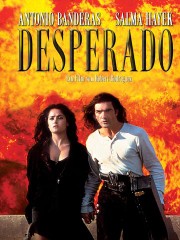
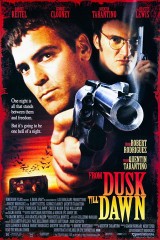
Texas native Robert Rodriguez developed his signature kinetic style way back while he was still in film school, when a short film he made called Bedhead earned him enough attention to convince him to pursue film seriously. Since then, Rodriguez has embraced his love of genre fare and become one of Hollywood’s foremost purveyors of slick, well-crafted grindhouse-style action. He began his big screen career with bombastic modern westerns like Desperado and From Dusk Till Dawn, the latter of which featured fellow cult connoisseur Quentin Tarantino. The friendship between the two of them produced multiple collaborations over the years, including the neo-noir Sin City and the aptly named joint double feature Grindhouse, which spawned a tongue-in-cheek spinoff franchise.
In between all of that, Rodriguez found time to crank out an effects-driven, family-friendly adventure about a couple of Spy Kids, and the film was such a critical and commercial hit that it spawned three sequels, all of which Rodriguez also directed. It’s no wonder James Cameron entrusted him with his long-in-development Alita: Battle Angel, which quickly emerged as a cult favorite. His latest were Netflix’s We Can Be Heroes and Spy Kids: Armageddon. With all of that in mind, we thought it was about time to take a look at his filmography and see how his films match up with each other. Read on to see the full list and see where your favorites land!
 92%
92%
 91%
91%
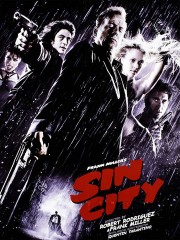 76%
76%
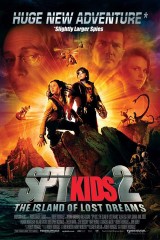 75%
75%
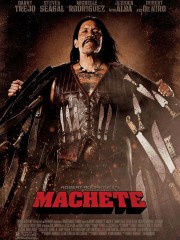 70%
70%
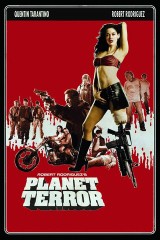
 77%
76%
77%
76%
 71%
71%
 67%
67%
 66%
66%
 66%
61%
66%
61%
 54%
54%
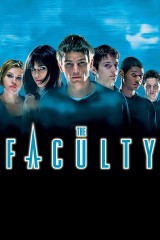 58%
58%
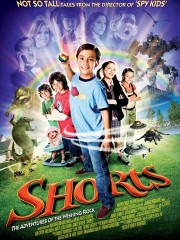 47%
47%
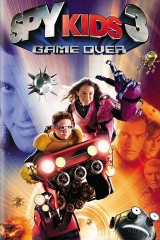 45%
45%
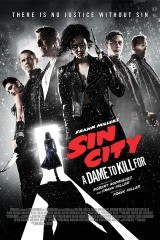 42%
32%
42%
32%
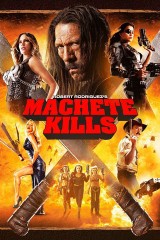 29%
29%
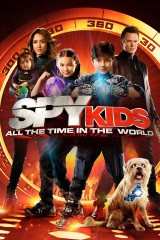 23%
23%
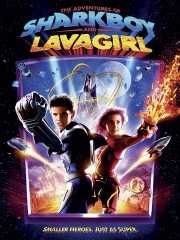 20%
20%

(Photo by 20th Century Fox Film Corp./courtesy Everett Collection)
Looper celebrates its 10th anniversary, as The Fifth Element turns 25!
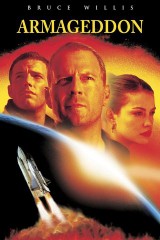
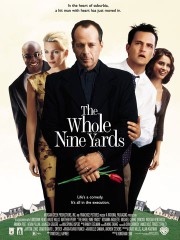
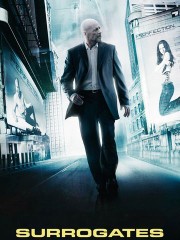
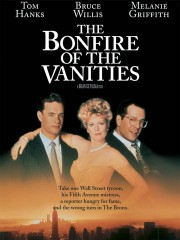
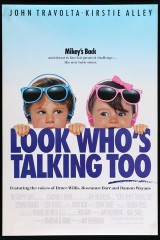
Where there’s a Willis, there’s a way. A way to make it from TV sitcom star to eternal everyman action movie hero (Die Hard). A way to make a talking baby movie work (Look Who’s Talking) to the tune of $300 million at the box office in the ’80s. And a way to throw it all away with misfires like Bonfire of the Vanities and Hudson Hawk. And a way to get it all back again by kickstarting the ’90s indie boom with Pulp Fiction.
Since then, Bruce has continued to have a wild career, with the occasional crucial movie released at the exact right time to freshen up his image, whether in epic blockbusters (Armageddon), muted horror (The Sixth Sense), twee comedy (Moonrise Kingdom), or sci-fi cult classics (Looper). Recent highlights include Glass, the surprise finale to M. Night Shyamalan’s trilogy that started with Unbreakable and Glass, and Edward Norton passion project Motherless Brooklyn. And now we’re ranking all Bruce Willis movies by Tomatometer! —Alex Vo
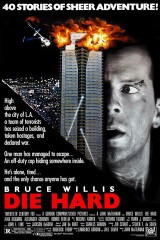 94%
94%
 94%
94%
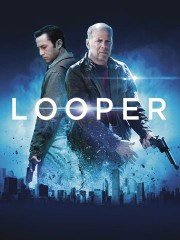 93%
82%
93%
82%
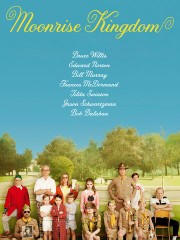 93%
86%
93%
86%
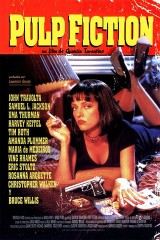 92%
96%
92%
96%
 91%
82%
91%
82%
 88%
88%
88%
88%
 86%
90%
86%
90%
 82%
86%
76%
78%
82%
86%
76%
78%
 75%
71%
75%
71%
 72%
72%
77%
77%
72%
72%
77%
77%
 71%
87%
71%
87%
 71%
70%
71%
70%
 70%
77%
70%
77%
 68%
70%
68%
70%
 68%
67%
68%
67%
 68%
68%
 35%
65%
80%
35%
65%
80%
 64%
58%
64%
58%
 60%
48%
60%
48%
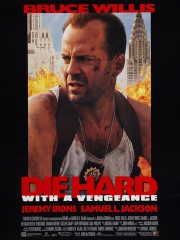 60%
83%
60%
83%
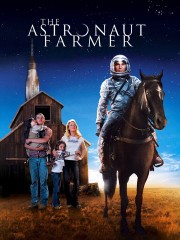 59%
49%
59%
49%
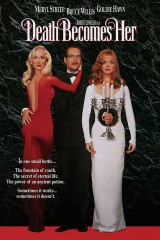 58%
62%
58%
62%
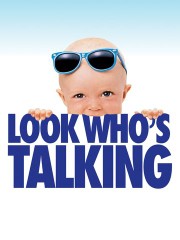 56%
47%
56%
47%
 56%
36%
56%
36%
 55%
57%
55%
57%
 55%
46%
55%
46%
 54%
67%
54%
67%
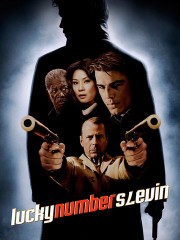 52%
87%
52%
87%
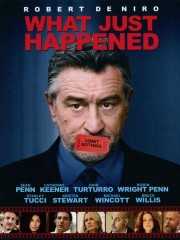 49%
22%
49%
22%
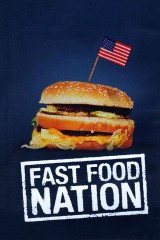 49%
42%
49%
42%
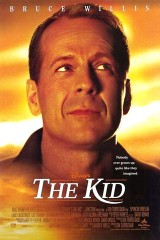 49%
49%
49%
49%
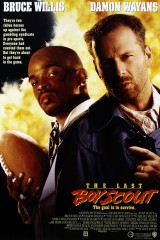 46%
68%
46%
68%
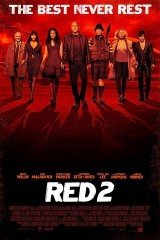 44%
63%
44%
63%
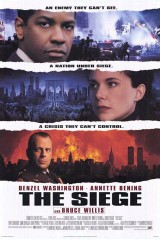 44%
53%
44%
53%
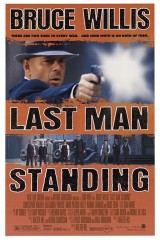 42%
51%
42%
44%
42%
51%
42%
44%
 43%
73%
43%
73%
 42%
64%
41%
64%
42%
64%
41%
64%
 39%
39%
37%
66%
39%
39%
37%
66%
 37%
38%
37%
38%
 36%
28%
36%
28%
 35%
62%
35%
62%
 34%
69%
34%
69%
 30%
56%
30%
56%
 29%
48%
29%
48%
 28%
32%
28%
32%
 25%
58%
22%
77%
25%
58%
22%
77%
 24%
51%
24%
51%
 24%
42%
24%
42%
 22%
30%
22%
19%
22%
30%
22%
19%
 21%
40%
21%
28%
21%
40%
21%
28%
 21%
29%
21%
29%
 20%
35%
18%
54%
18%
54%
20%
35%
18%
54%
18%
54%
 18%
39%
18%
39%
 18%
19%
17%
70%
29%
73%
18%
19%
17%
70%
29%
73%
 15%
40%
15%
40%
 15%
26%
15%
26%
15%
26%
15%
26%
 14%
27%
25%
66%
14%
27%
25%
66%
 13%
69%
13%
51%
13%
69%
13%
51%
 13%
32%
11%
57%
13%
32%
11%
57%
 9%
51%
8%
20%
9%
51%
8%
20%
 8%
90%
8%
17%
8%
90%
8%
17%
 7%
29%
7%
29%
 7%
36%
6%
54%
6%
17%
7%
36%
6%
54%
6%
17%
 4%
40%
4%
40%
 4%
29%
4%
29%
 4%
15%
0%
12%
0%
16%
4%
15%
0%
12%
0%
16%
 0%
23%
0%
23%
 0%
31%
0%
58%
0%
23%
0%
31%
0%
58%
0%
23%

Roger Vadim’s trippy science fiction comedy Barbarella opened on October 10, 1968. For decades, rumors have swirled of a sequel, remake, or TV adaptation of the Aquarius-era stoner film about a stunning young woman who sleeps her way through the galaxy. In the aughts, Robert Rodriguez was attached to a remake that would have starred his then-girlfriend and muse, Rose McGowan. That never materialized, nor did a proposed TV adaptation whose pilot was to be directed by Nicolas Wending-Refn.
Despite its cult fame, Vadim’s 1968 mind-bender has never been followed by a sequel or a remake. But it has nevertheless proven extremely influential, and its DNA can be found in plenty of hits, flops, and obscurities, many of them also based on comic books and featuring badass female protagonists. Barbarella’s not particularly successful combination of kitschy, over-the-top camp comedy, social satire, and stoner spectacle provided just as much a template for the films that followed it as the voyeuristic sexuality for which it became famous. It has inspired some riotous cult classics, but also a lot of sexy science fiction satires that, like Barbarella itself, aren’t particularly sexy, funny, or satirical.

(Photo by Universal Pictures courtesy Everett Collection)
If Mike Hodges’ Flash Gordon feels an awful lot like Barbarella, that’s because they were conceived from similar blueprints. Both are big-budget, kaleidoscopic science fiction epics produced by Italian super-producer Dino DeLaurentis and overflowing with tawdry sensuality, eye-popping special effects, and enough trippy spectacle to satisfy the most demanding stoner.
DeLaurentis clearly conceived of Flash Gordon as the next Star Wars — the comic strip was a big influence on George Lucas’ deathless space opera. But despite its echoes of Star Wars, Flash Gordon owes just as much, if not more, to Barbarella’s combination of BDSM-infused naughtiness and incongruous, child-like innocence.
Flash Gordon replaced the free love sexuality of Barbarella with the sweaty, stimulant-fueled sensuality of disco at its most brazenly sensual, with equally explosive and unforgettable results.

(Photo by Columbia Pictures courtesy Everett Collection)
Few of Barbarella’s far-flung offspring can match the movie’s pedigree for hipness. The exception is the cult 1981 Canadian animated film Heavy Metal, which is funnier and more genuinely satirical as well, if every bit as juvenile. It was produced by Ivan Reitman, co-written by Len Blum and Daniel Goldberg (writers of Reitman-directed hits Meatballs and Stripes) and featured a voice cast that included much of SCTV’s beloved crew (John Candy, Harold Ramis, Joe Flaherty, Eugene Levy), as well as John Vernon and Richard Romanus. Throw in a primo rock soundtrack featuring Cheap Trick, Devo, Black Sabbath, and Donald Fagen and you have an instant cult classic irresistible to the blacklight-and-bong-in-the-closet crowd.
The much-loved adaptation of the popular science fiction and fantasy magazine of the same name is a mind-bending, time-hopping anthology film united by a glowing green orb of PURE EVIL that reappears throughout pulpy vignettes and an adolescent boy’s unending fascination with the naked female form at its most cartoonishly buxom.
The kids might have come for the boobs, but they stayed for the rocking tunes, groundbreaking animation, and thought-provoking satire. Ah, who are we kidding? They came for the boobs, they stayed for the boobs, and they return to it for the boobs. But all that other stuff doesn’t hurt, either.

(Photo by MGM courtesy Everett Collection)
It seems like every generation has a Barbarella of its own that reflects the changing fashions and mores of the times that produced them and irrevocably shaped them. Barbarella was a happening, groovy be-in of a movie that could only have happened in the late 1960s, Flash Gordon gave the sexed-up outer space shenanigans a disco feel, and 1995’s Tank Girl, yet another zeitgeist-chasing adaptation of a cult comic book about a plucky, kick-ass heroine of the future, gave this material a Riot Girl update. The sensuality of Rachel Talalay’s campy cult flick was smartass, sarcastic, androgynous, and gender-bending in sharp contrast to the soft, doe-like femininity of Jane Fonda.
Tank Girl takes place in a grim, dystopian, drought-ravaged future where the malevolent forces that control the limited water supply hold supreme power. They’re opposed by free-thinking punks like the title character (Lori Petty) and her friends, who occupy a gross world overflowing with sexual deviants, most notably a pedophile named Rat Face (Iggy Pop), who is as ugly on the outside as he is on the inside.
Squeamish studio executives toned down the sexuality of the comic strip and earlier versions of the script that dealt much more extensively with the romantic and sexual relationship between Tank Girl and Booga (Jeff Kober), a mutated human-kangaroo super-soldier hybrid. Rumor has it there was even a fabled shot of a naked kangaroo penis that was excised from the final version, but plenty of kinkiness and sexual suggestiveness made it into the film all the same. Besides, even in a punk-rock, post-Barbarella world, nobody needs to see a naked kangaroo penis.

Starring as a warrior for good in a futuristic, titillating science fiction future world in a high-profile adaptation of a popular comic book made Jane Fonda a movie star. That did not happen, however, when Fonda’s fellow activist/sex symbol, Baywatch breakout star and animal rights zealot Pamela Anderson, decided to follow in Fonda’s footsteps. Here, Anderson plays the titular comic book badass, Dark Horse comics’ futuristic bounty hunter Barb Wire, in a poorly received action fantasy with the misplaced audacity to flat-out steal the premise of Casablanca… with Anderson in the Humphrey Bogart role.
While Vadim’s visually stunning but dramatically and comedically inert cult classic is sleaze with prestige, or trash with class, Anderson’s ill-fated attempt at becoming a buxom, cold-blooded action star is just straight-up garbage, a lurid exploitation movie devoid of ideas and intelligence. As an unofficial, blood- and boob-saturated remake of Casablanca, Barb Wire fails to improve upon its inspiration.

(Photo by TriStar Pictures courtesy Everett Collection)
If Barbarella is not as sophisticated a satire as it sets out to be, that’s probably because director Roger Vadim has a lumbering, heavy-handed touch all wrong for sly comedy. The same cannot be said of Paul Verhoeven, the mad genius behind Robocop and Total Recall.
Verhoeven’s wildly divisive 1997 Robert Heinlein adaptation/parody Starship Troopers might just have been too satirical. His brutal vision of a fascist future — in which ridiculously good-looking super-soldiers, both male and female, live and shower together en masse as they take on an evil insectoid species — is so straight-faced that, at the time, it was mistaken by some for what it was sending up. The film’s nudity and hard R-rating go a long way toward separating Starship Troopers from Star Wars, as does its pitch-black satire and intense violence.

With the 2000 Invisible Man riff Hollow Man Verhoeven took his bleak, uncompromising worldview to the story of a brilliant, troubled scientist (Kevin Bacon) who discovers the secret to invisibility and, being a misogynistic sociopath, abuses his new power to sexually assault a neighbor as part of an ongoing crime spree that includes various murders and menacing Linda McKay (Elisabeth Shue), an ex-girlfriend he’s unhealthily obsessed with.
Verhoeven goes further than any version of this story other than The Invisible Maniac in illustrating just how quickly the power of invisibility would corrupt a man and unleash his ugliest, most violent and sexual urges. As a result, Verhoeven made a movie that is disturbingly sexual without being sexy, and darkly satirical in its take on the underlying ugliness of human nature without even trying to be funny.

(Photo by Weinstein Company courtesy Everett Collection)
Needless to say, Rose McGowan did not get to play Barbarella for Robert Rodriguez, but 2007’s Grindhouse — an ambitious attempt by Rodriguez and Quentin Tarantino to replicate the vibe of an evening at a sleazy, sordid drive-in in the 1970s — gave them a consolation prize in the form of Planet Terror, Rodriguez’s half of the double feature.
Planet Terror casts McGowan as Cherry Darling, a pissed-off go-go dancer who ends up doing battle with zombie-like creatures, as well as the usual assortment of creeps with wandering hands that are ubiquitous in movies like this, at least one of whom ends up getting stabbed in the face with part of Cherry’s wooden leg.
Eventually, Cherry’s busted fake leg is replaced by an assault rifle and a grenade launcher, and she starts dealing out death with her peculiar new arsenal. Planet Terror exists for the sake of its central audacious image of woman and weapon welded together into something brazen and bizarre and awesome and new. Unfortunately, like Vadim, Rodriguez isn’t capable of satire — sledgehammer, savage, sophisticated, or otherwise. Leaden, labored camp is more his speed. A tough, sexy, confident woman who is also a deadly weapon? That’s a wet dream out of Heavy Metal, but it’s not quite enough to base an entire movie around, even one this intentionally ridiculous.
Nathan Rabin is the author of six books and the proprietor of Nathan Rabin’s Happy Place.
Follow Nathan on Twitter: @NathanRabin
Since breaking into Hollywood in 1992 with his low-budget masterpiece El Mariachi, Robert Rodriguez has done it all — and not only in terms of his eclectic filmography, which includes action, sci-fi, horror, comedy, and family-friendly thrills. He’s also one of the most hands-on filmmakers in the studio system, assuming editing, composing, and cinematography duties on top of directing, writing, and production. Given all that, we felt it was only right that we honor Rodriguez’s work on the long-awaited Sin City sequel A Dame to Kill For by taking a look back at some of the brightest critical highlights from his career. It’s time for Total Recall!
In case you were wondering, here are Rodriguez’s top 10 movies according RT users’ scores:
1. Desperado — 80%
2. Sin City — 78%
3. Planet Terror — 78%
4. From Dusk Till Dawn — 77%
5. El Mariachi — 76%
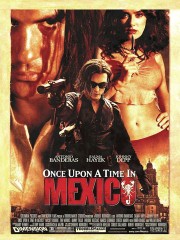
6. Once Upon a Time in Mexico — 64%
7. Machete — 64%
8. The Faculty — 55%
9. Spy Kids — 45%
10. Spy Kids 2: The Island of Lost Dreams — 38%
Take a look through Rodriguez’s complete filmography, as well as the rest of our Total Recall archives. And don’t forget to check out the reviews for Sin City: A Dame to Kill For.

Quentin Tarantino and Robert Rodriguez have long reigned as the Dark Princes of Schlock-Appreciation. They make movies for those who like it rough, sleazy and thrill-packed. Every dirty flicker in Death Proof and Planet Terror pays tribute to a thousand cheaply-produced fun-rides of perversion known as exploitation films. These often violent, and always sensational, flicks were pumped out for high-profits and thrills.
And this is not necessarily a bad thing.
Trash appreciation is a fine tradition amongst film lovers, as witnessed by the large number of grindhouse gems that are repeatedly dug from their filthy graves. These resurrected zombies of the film-world still walk amongst us today and RT pays tribute.

1) Reefer Madness
 50%
50%
This little gem had an unlikely start in life. It was a Church-made morality tale about the evils
of cannabis. That is until exploitation director Dwain Esper got his grubby mitts
on it and with a bit of creative editing turned it into a camp, cult classic.
Now walks the earth as…
Not only is Reefer Madness still compulsive viewing in college dorms and share-houses the world over, it spawned its very own off-Broadway musical satire. Still not content to let it lie, Showtime turned that musical into a film, also called Reefer Madness, starring Kristen Bell and Alan Cumming.

2) Faster, Pussycat! Kill! Kill!
 74%
74%
Ladies and Gentlemen — welcome to violence. This Russ Meyer flick is what happens when angry young go-go dances go wild and it has everything a good little exploitation film could want: speed, sex and violent women.
Now walks the earth as…
You can hardly walk past an art house retrospective without tripping over this one. It has made some reverberations in the rock world having been sampled and referenced by The Cramps, The Killers, White Zombie, and of course, metal band, Faster Pussycat. There have also been some rumours that Tarantino may have a crack at remaking it but this has not been confirmed.

3) Shaft
90%
This is a blaxploitation film with some pretty good pedigree. Isaac Hayes won an Academy Award in 1971 for “Theme from Shaft” and the film was box office lightning on release. It is the story of the coolest black detective in history on the search for the missing daughter of a
mobster.
Now walks the earth as…
It spawned two ’70s sequels and a series of made-for-television movies. In 2000, director John Singleton brought the character back to life with his sequel, also entitled Shaft, starring Samuel L. Jackson. The original film has a place in the United States National Film Registry, preserved as a shining example of its genre.

4) Vanishing Point
75%
Vanishing Point paid tribute to the 1970 Dodge Challenger in one of the great road trip films of the era. Car chases, hitchhikers and blind DJs are all a film really needed to find its way into the drive-ins of the early ’70s. This one was a surprising box-office hit and captured an audience on the look-out for marginalised American anti-heroes cruising the highways at great
speed.
Now walks the earth as…
Its re-make appeared in 1997 and was a little less successful. It starred Viggo_Mortensen and Jason Priestly. The original is still a staple in the DVD collections of those who love a grizzled anti-hero and Tarantino has called it one of the major influences for Death Proof.

5) Dawn of the Dead
97%
George A. Romero’s sequel to Night of the Living Dead is violent, gory and worshipped by horror fans the world over. Not only does it pack a punch on the terror front but also carries powerful metaphors for human emotional and commercial behaviour. It was
critically acclaimed and a blow-away commercial success.
Now walks the earth as…
There are many cuts of Dawn of the Dead in existence, the most famous being Italian director, Dario Argento’s 118 minute version called Zombi. A Japanese version exists that is so violence-free that it is reviled by the purists and the extremely long German version, can inspire riots of hatred. A slightly sanitised American version appeared in 1983 to be shown along with Creepshow but the extraordinary backlash resulted in it being pulled from public viewing. Hong-Kong comedy spoof, Bio Zombie, appeared in 1998. Dawn of the Dead was remade (or re-imagined as many prefer due to its reworking of the original story) in 2004 by director, Zack Snyder. It also underwent another re-imagining two weeks later when Edgar Wright and Simon Pegg set their much loved Shaun of the Dead loose on the
world.

6) Cannibal Holocaust
57%
Ruggero Deodato holds the dubious honour of making one of the most graphic and controversial films in the genre. When the film was released in Italy he was immediately arrested for obscenity and held on suspicion of having made a snuff film due to the extreme graphic nature of the footage. He was released only when he was able to produce each actor alive and well. While it appears that the actors survived, many animals were slaughtered for his art.
Now walks the earth as…
Deodato is helping himself to some flesh-snacking seconds with his remake scheduled for release in 2009. It will be interesting to see if the director will match his original splash of controversy. It is safe to assume that animal welfare groups will have kept a fairly watchful eye over this set.

7) Coffy
72%
If Shaft was cool, Coffy was ice. Billed as the baddest one-chick-hit-squad on the block, this role of nurse turned vigilante catapulted Pam Grier to the position of Queen of the Blaxploitation pics.
Now walks the earth as…
Coffy was mirror-imaged three years after its release as The Sexy Killer (Du Hou Mi Shi) by Hong Kong director, Sun Chung. Chung loved it so much that he knocked it out again in 1977 as Lady Exterminator (A-Sir du hou lao hu qiang). 1981 saw the release of the whitest rendition of a blaxploitation film ever in Lovely But Deadly starring none other than our very own Mark Holden. Strong traces of Coffy can also be found in Kill Bill Volume 1 and Kill Bill Volume 2

8) Foxy Brown
53%
This film started production as a sequel to Coffy but that idea was dropped and Pam Grier was reborn as brown sugar and spice, Foxy Brown. Foxy, like Coffy, is one sexy woman set on revenge and nothing will stand in her way. Despite following Coffy, Foxy Brown is often credited as the film that set the scene for strong, black women to rule the Blaxploitation screen.
Now walks the earth as…
Every time a strong woman appears on screen fighting for the power of good and her loved ones, there is a little bit of Foxy running through her motivation. Tarantino worships at her feet in the Grier vehicle, Jackie Brown, and like Coffy, Foxy’s influence can be seen throughout the Kill Bills.

9) Ilsa, She Wolf of the SS
30%
One of the more disturbing strands in the exploitation tail is the naziploitation film and Ilsa is the undisputed queen. Here she plays the warden of a Nazi death camp who performs horrendous and sexual experiments on her captors. One of the more intriguing elements of this movie is that it was filmed on the set of Hogan’s Heroes. Go figure.
Now walks the earth as…
Ilsa had her share of sequels: Ilsa, Harem Keeper of the Oil Sheiks and Ilsa, the Tigress of Siberia. Ilsa, The Wicked Warden was also released under the titles Greta, The Mad Butcher and Wanda, the Wicked Warden. She has settled comfortably into the role of sadistic cult figure referenced in films, comics and videogames. Notably, she was an inspiration for video game, BloodRayne, and Rob Zombie’s Grindhouse trailer, Werewolf Women of the SS.

10) Beyond the Valley of the Dolls
64%
This Ross Meyer / Roger Ebert collaboration is B-grade gold. It tells the story of all-girl rock band, The Kelly Affair, and their descent into the decadence of Hollywood. Not to be confused in any way with the Valley of the Dolls, Beyond the Valley of the Dolls is hedonistic satire a-go-go.
Now walks the earth as…
Like many exploitation turned cult films, Beyond the Valley of the Dolls has grossed the lion share of its profits through DVD sales and the retro release circuit. This is one film that isn’t going anywhere fast. It is heavily referenced in the Austin Powers films and by rock acts with glam leanings the world over. The Village Voice included it in its 100 Greatest Films of the Century in 2001.
Honorable mention:
An honorable mention goes to the Attack of the Killer Tomatoes which is about to be remade by Kent Nichols and Douglas Sarine.
If you want more schlock, check out Rotten Tomatoes’ definitive Grindhouse A to Z special. In this era of filmmaking when the remake is king, you can be guaranteed that many more of these little treats will come crawling back from the dead, so do your homework and be prepared.
Video Ezy is offering a two for the price of one special. Rent Death Proof today and rent Planet Terror free.

 Welcome to the Times bfi 51st London Film Festival, the capital’s annual event celebrating the best in cinema from around the globe. Running this year from 17th October to the 1st November, the festival will play host to many local, national and international films, premieres, actors and directors.
Unlike the hyper-competative and sales-led environments of Cannes and Sundance, the London Film Festival is an altogether simpler affair, inviting members of the public to sample the films on offer. And the festival’s timing puts it in the perfect position to pick early Oscar hopefuls; many of the films in the programme are already generating early buzz and for most in the UK it’ll be the first and only chance to see them before the end of the year.
So it’s with that in mind that RT-UK editor Joe Utichi and film critic Paul Anderson have been hitting the festival to cherry pick the twenty films from the festival you’re likely to be hearing a lot about in the coming months.
Click on the films below to find out more, or click here to browse through the feature from the beginning.


It’s a long title, long film, long coats and a long time getting to the screen. There’s a lot of long going on here. It took two years to score a release once it was done, so what’s wrong with it? Well, er, nothing.
The Assassination of Jesse James by the Coward Robert Ford, Brad Pitt‘s labour of love, is slow; very slow. Slow and long. But good westerns should be. The best western is as much about the pace and the look as it is about anything, and this looks amazing. There are sumptuous shots of prairies and sepia tinted men in hats and (long) coats saying a lot without speaking much. The film feels poetic and meditative, like you could be doing yoga while it’s on.
Yes it is Pitt’s movie but the star is Casey Affleck as the titular coward. Robert Ford always wanted to be in the James Gang, he idolised Jesse, wanted to be him, dag nabit he probably fancied him. The poster boy of the 1880’s, so myth would tell us, was a Robin Hood figure and American icon, but Jesse James was a vicious killer and this film doesn’t shy away from that, the source being a fictional version of the story by Ron Hansen.
There aren’t many gunfights as such and those that do happen flash up are brutal and over with quickly, as one suspects they probably were at the time. The parallel with Pitt’s own celebrity is interesting, this is a film as much about fame and idolisation and in the end Robert Ford thought he was doing society a favour by shooting James in the back.
Andrew Dominik is the Australian director of Chopper and in what is only his second film, rivals John Hillcoat’s The Proposition in handling the Wild West with great skill, giving the story time to breathe. Pitt stalks around brooding dark violence and menace while Affleck’s Ford is baby faced, naïve and eager to please. It is evident on this example at least that Affleck is destined to outshine brother Ben in front of the camera.
Take a cushion, you’re in for a fair stretch, but it is worth every ass-numbing minute. Gorgeous to witness, with some modern day resonance, an interesting story and subtle yet lightening performances. Paul Anderson

Wes Anderson makes a welcome return to intimately quirkily comedy after the outrageously quirky comedy The Life Aquatic. Or, Wes Anderson makes another one of those quirky comedy things. It largely depends on your point of view.
The Darjeeling Limited tells the tale of three brothers and their pilgrimage across India in search of their mother who abandoned them years prior. Former Anderson collaborators Jason Schwartzman and Owen Wilson join Adrien Brody as the three brothers exploring India aboard the titular train, along the way learning more about each other than they’d ever learnt before.
Like many of Anderson’s characters, not one of the brothers has much in the way of redeeming qualities, and like many of Anderson’s locations, India is presented as a country of bright colours and strange inhabitants. Indeed, it’s safe to say that if you’re a Wes Anderson fan you can’t go wrong with this film; it’s pretty-much more of the same. For anyone not so enamoured of Anderson, that’ll be a big problem as this certainly won’t be the film to change that.
In the mid to late nineties, Anderson championed the quirky American indie, but as box-office receipts and film-school grads have multiplied, so the quirky American indie is fast enveloping the entire American indie landscape, and whether Anderson’s particular brand of quirk has any originality left at this point is a big topic for debate.
Schwartzman, Wilson and Brody do fine jobs in their roles, and the film’s opener – a fifteen minute segment entitled Hotel Chevalier and co-starring Natalie Portman – makes the project worth checking out on its own. For cineastes, it’s a well-realised portrait of love and lust while Portman fans can admire the lack of clothing on display.
But Hotel Chevalier is available for free on iTunes in the US, and at this point it’s worth wondering if more of the same from Anderson in the film proper really justifies the cost of admission. Joe Utichi

Julian Schnabel is an artist in the truest sense; he makes art. He attracts like-minded individuals; Johnny Depp is not so much an admirer more a kindred spirit. Transforming a heart-breaking story into an entertaining film needed an artist’s hand and eye and luckily this film got it.
The Diving Bell and the Butterfly takes its name from the deeply moving book from Jean-Dominique Bauby, the editor of Elle magazine in France, who, at the age of 43, suffered a huge stroke that should have killed him but instead left him paralysed save for the ability to blink one eye. His brain was fine, he could understand, but he couldn’t speak. His condition was diagnosed as ‘locked in syndrome’.
The film begins as Bauby’s eyes open after a two-week coma, and for the opening segment the camera becomes his only working eye. Eventually we get to see the twisted, dribbling mouth of the wheelchair bound victim and Schnabel cleverly takes us on a comparison journey, in home movie style, with the ruggedly good looking Parisian Bauby living and loving life.
Beautiful women surround him; Celine, the mother of his three children, (Emmanuelle Seigner), to whom he is still cruel, is a saint. His speech therapist Henriette (Marie-Josee Croze) and the woman charged with dictating the book, Claude (Anne Consigny), are now beyond his once effortless seductive powers.
The narrative unfolds as an internal monologue from Matthew Amalric‘s Bauby, complete with snide remarks at the surgeon and a preoccupation with his nurse’s cleavage. His only releases are his flights of fancy; his imagination is not locked in and consequently he dines where he likes, seduces women, and travels wherever he wants, all the time cursing for being too selfish and unkind to his children.
Henriette and Claude could lend Job some patience, as the alphabet communication system is spelt out over and over until the correct letter, then word is reached. The most moving scenes are with Bauby’s father Papinou (Max Von Sydow) shown both in flashback and in an agonising post-stroke phone call, where a housebound elderly father likens his son’s situation to his own.
The book is a deeply moving, affecting and very funny masterpiece and Schnabel has replicated Bauby’s imagined world superbly to visually stunning effect. Flawless performances deserve a wide audience and make The Diving Bell and the Butterfly one of the Festival highlights. PA

A companion-piece to the excellent A History of Violence, David Cronenberg has enlisted the help of Viggo Mortensen again and directed a script from Steve Knight who brought us the story of the London people you see but ignore, Dirty Pretty Things. And he nearly gets away with it.
Mortensen is a Russian driver for an Eastern European gangland family and is tattooed to the max. A teenage girl dies while giving birth and Naomi Watts, a midwife, is so shaken by this she decides to find out more about her. This leads to a discovery of a diary, which in turn leads her to Mortensen. And do you know what? She really shouldn’t go there.
Vincent Cassel plays Mortensen’s tighter-than-tight buddy and in usual Cassel style can make you feel the need to change your underwear with just one look. This is an extremely violent film and although not a horror picture in Cronenberg’s usual sense, some scenes are certainly horrific.
Mortensen is brilliant (Aragorn… who knew?), and Watts her usual high standard, while Cassel is just nuts.
Unlike Dirty Pretty Things, Eastern Promises doesn’t capture the underbelly of the unseen so well. The homoeroticism is overplayed (why does Mortensen need to be naked to get a tattoo on the shoulder?) and there is no tangible sense of being an outsider looking into a closed world through the crack in the door, which would have made a half-decent thriller into a tense and buttock-clenching one.
Is this the end of horror for Cronenberg? Unlikely, but Eastern Promises is a disappointing follow-up to A History of Violence. Come on Dave, bring on the gore. PA

Disney’s first attempt at hand-drawn animation in years, Enchanted, is perhaps one of this year’s family film highlights.
The tale of a tried and true Disney Princess, Gisele (Amy Adams), who finds her Prince Charming (James Marsden) before being sent to a faraway land by an evil stepmother (Susan Sarandon), is primarily live-action, book-ended by 20 minutes of hand-drawn Disney.
The faraway land in question is New York City, and so we open with an animated Gisele singing, dancing, and generally sickeningly happy as she engages a gaggle of woodland animals in some spring-cleaning. When she’s later sent down a well and into New York City we see her struggling with her surroundings and generally having trouble living a Disney life in a cold, harsh real world.
Fortunately, the film’s ultimate message, that real life isn’t a Disney cartoon, is unlikely to play to its young target audience, but it’s the biggest gag for parents and allows the whole family to enjoy the comedy and adventure without resorting to cheap and cheerful Dreamworks-esque innuendo.
Marsden is every inch the Prince Charming and Adams, while clearly not as beautiful as most outrageously sexy Disney princesses, moves with so many obvious Disney flairs that it’s a wonder they didn’t animate the whole thing and have her mime the animations.
The joke wears thin towards the end, and the film threatens to undermine years of classic animation from Disney of old, but when it works it really works, and it’s a joy to behold. It’s also worth a trip just for some hand-drawn animation, though on that score a CGI squirrel during the New York sequences rather ironically ends up stealing the show. JU

Funny Games is Michael Haneke‘s shot-for-shot remake of his German version for an American audience. It was just as nasty with subtitles.
A wealthy couple take peachy son and cuddly dog to summer home for a well-earned break. While dad and son sort out the sailing boat, that nice polite boy staying with friends’ next door pops round for some eggs. D’oh, he smashes them, asks for more and smashes those too. Hang on why is he wearing gloves?
So begins a descent into torture, bondage, humiliation, violence, blood and audience culpability. Yes, as an audience member one feels complicit and voyeuristic, as the so-called games are unveiled. Haneke wants to evoke this feeling; he wants the troubled youth and aggressive society in which they inhabit to be all your fault.
Funny Games is a deeply unlikeable film, but there is no criticism implicit in that, it is meant to be unlikeable. No one cries better on screen than Naomi Watts and as ever she is willing to visit the land of raw for her art and as usual does it brilliantly. Tim Roth as the husband is a bit-part once he gets clobbered with a golf club and it is Michael Pitt who steals the show as the creepily polite psychopath accomplice to Brady Corbet‘s egg-smasher. It was ever thus with cinema psychos that the more ‘normal’ they seem the more sinister they really are.
The nods and winks to the camera are a touch irritating as is the rewind bit in the middle but if you’ve seen the original you’ll be expecting all that. Funny Games is an uncomfortable, disturbing film perfect for festivals. PA

Lonesome Jim writer James C. Strouse marks his directorial debut with Grace is Gone, a moving portrait of a man struggling to come to terms with the death of his wife in Iraq and his role as a single parent to two young girls.
What’s most remarkable about the film is that it doesn’t attempt to politicise its story at all. As John Cusack‘s Stanley Philipps opens the film, leading his team at an out-of-town shopping complex in a chant about how the customer is always right, we instantly connect with him, and as he learns of his wife’s fate a couple of scenes later we’re already invested in his life. So when his brother, unaware of Grace’s passing, later attempts to chastise Stanley for his position on the war he’s quickly silenced. It’s a film about family conflict, not political conflict, and it’s all the stronger for it.
The film takes a journey with Stanley as he abandons his commitments, pulls his kids out of school and takes them on a road trip with the sole purpose of keeping the news of their mother’s death from them. It becomes an albatross that hangs over Stanley, but it’s just as much an enabler, for on the journey he gets to grips with his role as a parent and his relationship with his kids.
Cusack has never been better, his nack for engaging an audience more essential here than ever due to some of the more dubious decisions Stanley makes along the way, and Strouse directs with much-needed reserve, never allowing the film to get in the way of Stanley’s story. JU

Velvet Goldmine, Todd Haynes‘ film about a seventies glam rock idol, split filmgoers down the middle. You either get it and it’s a masterpiece or you think there was nothing glamorous about the seventies and all bands look like bricklayers in make up. This time round Haynes is lucky, Bob Dylan already polarises people.
Haynes has taken six moments in Dylan’s life in I’m Not There, married them to what he believes is the musician’s personality at the time, and cast six different actors to play him, including a woman and a black kid.
Littered throughout the piece are references to characters in Dylan songs and well-documented events throughout his life. None of the characters is called Bob Dylan however. Ben Whishaw is Arthur Rimbaud, reflecting the singer’s love for the poet, Heath Ledger plays him as an actor troubled by his success and disappearing from view; Richard Gere, whose sequence is the weakest in the film, is Billy The Kid, a nod to Dylan’s appearance in Pat Garrett and Billy The Kid, and Marcus Carl Franklin is supposedly a black 12 year-old Woody Guthrie, a youth out of time. The stand-out performance and the one that takes up most screen time is Cate Blanchett‘s as Jude, a singer at the height of fame struggling with the constant barrage of questions about the meaning of the songs and the singer’s authenticity. To her credit, five minutes in you forget she’s a woman.
Ambitious and inspired, it’s a little long and full of too many Dylan in-jokes and references. It won’t change your mind either way about Dylan but it might encourage other filmmakers to try future biopics in this way. PA

Theory: There’s nothing more exciting than listening to the former astronauts for the Apollo missions tell their tales of visiting the lunar surface. Except perhaps being one of them. Yes, David Sington‘s In the Shadow of the Moon is a little heavy on the America-the-Great, but it’s also one of the best documentaries of the year; a fascinating portrait of men so brave that most regular Joes couldn’t possible comprehend their journey.
And, to its credit, it allows them to get on with it – there’s no narrator – we’re just shown fascinating footage from the moon’s surface, from the launch pad, from the shuttle, and in between these men tell us their story.
For the real space-junkies, there’s doubtless little in here to learn, but for the rest of us the film is full of fascinating factoids and, like the best movies set in space – fictional or not – it’ll leave you feeling smaller than the smallest needle in the biggest haystack. JU

While most outside America will be unfamiliar with the name Christopher McCandless, the story of his abandonment of civilisation in favour of hiking across America on his way to Alaska is one we can probably all relate to. Who hasn’t thought about throwing off the shackles and experiencing nature in all its glory?
Of course most of us are either too scared or too sensible ever to attempt to do that and that’s perhaps why McCandless’ tale is so intoxicating; his journey is one we all wish we had the courage to take.
Sean Penn directs Emile Hirsch in this adaptation of Jon Krakauer’s book, Into the Wild, about McCandless, and while it runs a little long, at 140 minutes, in takes in some of the most breathtaking scenery imaginable and keeps us gripped throughout as we join our young lead on his journey into either enlightenment or insanity.
Penn deifies McCandless a little too readily, encouraging us to make an idol out of him, and while most will happily do just that, it also makes it hard for us to engage with the film. Penn’s embrace of no-frills solitariness is flawed by the trailers, catering and crew we know to be behind single shot.
No, real credit must go to Hirsch, who goes out of his way to inhabit McCandless regardless of the creature comforts available to him off-screen, for it’s with him and him alone we must ultimately spend two hours of our time with. JU

Jason Reitman‘s debut feature, Thank You For Smoking, coming, as it did, in the same year as his father Ivan’s My Super Ex Girlfriend, was a brilliantly biting satire about the tobacco industry and suggested that perhaps dad’s talent had been well and truly passed on.
His second, Juno, continues his trend for witty comedy, casting Ellen Page as a high-school girl whose desire to lose her virginity leads to an unfortunate bout of pregnancy. She meets Jason Bateman and Jennifer Garner through an ad in the Penny Saver and agrees to adopt the infant their way. But nine months is a long time, and pregnancy seems sure to bring with it a whole heap of inconvenience.
Page is brilliant as Juno, and a cast of recognisable supporting players back her up with aplomb. It’s definitely full of quirk – it’s an American indie after all – but, like Thank You For Smoking, there’s something real at the film’s heart and we’re encouraged to believe the quirk rather than let it wash over us. JU

The most high profile of the recent glut of war themed releases – due mainly to its stellar cast – Lions For Lambs gets its title from an alleged quote from a World War One German General who said of the British troops, “never before have I seen such lions led by such lambs”. Apocryphal or not the debate over right against might is real enough.
There are three layers to the film. The first is a moral, ethical, hypothetical discourse with Robert Redford as a scarily convincing looking college Professor and Andrew Garfield as the owner of a fine mind behind a surfer exterior; the second is a political and strategic debate with media and PR consequences featuring an electrifying face off between Meryl Streep and Tom Cruise. Thirdly is the actuality of the troops in a war zone.
The performances are flawless with Cruise on his best smarmy bastard form as the ambitious senator and cheerleader for the masters of war trading blows with Streep’s journalist, over a new plan for the war in Afghanistan. Streep pleads mea culpa over the media’s acquiescence during the first Iraq/Afghan surge, but is less compliant this time even in the face of an exclusive story. Redford and Garfield debate whether seriously smart people should ‘do something’ with specific reference to two soldiers, Redford’s ex pupils, from neighbourhoods ignored by Uncle Sam who worked hard for their college grades then enlisted to make a real change.
And yes it is those same soldiers we see in the war zone, injured and low on ammo. Lions for Lambs is a one eyed view on the futility of the war on terror. Redford’s politics are all over it despite his best efforts at balance with Cruise’s hawk view. Nothing happens in the film in terms of action bar a few exchanges from the pinned down troops; it’s all about the dialogue and its evident that this is what Redford wants to achieve. When you leave the cinema and go to the pub he wants you to engage and discuss the politics of a war that few in the US want anymore.
There are many Vietnam references and lots of questions needing answers and decisions to be made as a consequence. What do you want to do? Do you want to end the war on terror? Do you think you should act/protest/enlist/run for the Senate? America’s liberal, artsy intelligentsia is pricking consciences but does anyone or should anyone outside the US care? PA

Ang Lee‘s startling ability to jump between projects as diverse as Hulk, Crouching Tiger and Brokeback Mountain is almost as exciting to behold as every new film from the director is.
Lust, Caution is no exception; it’s a thrilling, breathtaking, dramatic, devastating and enrapturing film about a young girl who goes undercover in World War II-era Shanghai in an attempt to woo and then assassinate a key political figure.
Based on an Eileen Chang story, Tony Leung is Mr. Yee, a seemingly untouchable man whose heart is won by Tang Wei‘s Wang Jiazhi. And while Leung is outstanding, it’s Tang Wei, in her first role, who really steals the show, delivering a nuanced and emotional performance as a girl torn apart by politics and her heart, two elements that rarely see eye-to-eye.
Key sexual moments between Yee and Wang are shot explicitly, though never exploitatively, and it’s interesting to note that the film will be released as an NC-17 in the US. The rating is commercial suicide, but the film simply wouldn’t have the power it has without the sex scenes so it helps that it’s penned by the exec in charge of the studio, long time Lee collaborator James Schamus.
Breaking box-office records in Hong Kong and Taiwan, Lust, Caution deserves to have the same cross-over effect as Crouching Tiger, Hidden Dragon, and here’s hoping this is the NC-17 film that breaks down the confines of the curious American ratings system. JU

Let’s get the disappointment out of the way first; Machete is the only fake trailer attached to the theatrical standalone print of Planet Terror. It makes sense that it’s Robert Rodriguez‘ trailer that made the cut, but for those of us outside the United States for whom the idea of pirating the camcorder jobs done on Grindhouse doesn’t sit right, it’s a crying shame. We’re missing out on Edgar Wright’s brilliant Don’t, Eli Roth’s inspired Thanksgiving, and Rob Zombie’s brilliantly-titled Werewolf Women of the S.S. You can sit all the way through the credits; you’ll be wasting your time.
Honestly, the idea of experiencing the whole, balls-to-the-wall grindhouse experience was the biggest disappointment facing fans outside North America, but the Weinsteins’ needs must, and their decision to split the flicks could have been forgiven had the full experience, at the very least, survived two ticket prices. We got some extra time with Death Proof, but the Planet Terror that’s hitting cinemas is the same cut premièred as part of Grindhouse, providing ample opportunity to queue up all the fake trailers within it. As it is most theatregoers outside of the US will, in fact, be missing that full experience at the very least until the DVD arrival of Planet Terror. So why bother?
Well, for starters, perspective is important. As much as the brothers Weinstein plan to reap the rewards that come from double-dipping the Grindhouse experience internationally, we are still getting two films from a pair of the most creative film-makers on the planet. Death Proof is unadulterated Tarantino, and Planet Terror is the funniest zombie movie since Shaun and the goriest since 28 Days.
The films exist in something of a shared universe. For those who’ve seen Death Proof first, nods to Jungle Julia’s fate and an expansion of that somewhat cryptic Dr. Block/Earl McGraw scene will bond the two films even if they’re covered by separate admissions, and the fake film grime and dodgy projection effects cross both features.
Multi-hyphenate Rodriguez creates a stunning world in which he unleashes his zombie plague, draws delicious characters straight out of seventies B-movies, and lets his actors run wild with them. Freddy Rodriguez Rose McGowan shine, but with the remaining cast performing so brilliantly around them it’s the ensemble that sells it. JU

It’s a tricky thing, the what-to-do-with-the-old-folks-when-they-start-to-lose-it movie. Filmmakers are always battling with the question of balance between dark humour and pathos, not forgetting to allow just enough dignity to prick everybody’s conscience about dealing with the elderly. One of the better more recent attempts was Away From Her based on the short story by Alice Munro with Julie Christie as an Alzheimer’s victim. The Savages nails the balance beautifully.
Directing her own script, Tamara Jenkins has landed two of cinema’s best in the lead roles. Philip Seymour Hoffman and Laura Linney are John and Wendy Savage, siblings suddenly thrown together after years of non-communication, to take care of their father who is rapidly descending into dementia. John is writing a book on Brecht, he is also about to end a long-term relationship and Wendy is a penniless playwright in an unfulfilling relationship with a married man.
So they’re pretty uptight people, right? What plays out is a beautifully told story of responsibility, guilt, communication and selfishness with a heavy dose of realism. Philip Bosco is dad Lenny, a heady mix of deaf, cantankerous and incontinent, who beat his kids when mum left and wasn’t as bothered about caring for them as they are about him now.
Hoffman plays the pragmatist, managing the situation with the adroitness of a nursing home administrator. Linney’s Wendy is more emotional and tries to get dad into a beautifully landscaped home but sadly dad fails the test, so she buys a lava lamp for his room. What is prevalent throughout is the brilliant comedic touch in Jenkins’s script, which allows some hilarious bickering between Hoffman and Linney, especially when he puts his neck out playing tennis.
To its credit The Savages doesn’t bash you over the head with its message about being good to the old folks. Some people get ill and old, Lenny cuts a pathetic and pitiful character, but we all die and luckily the script is funny and nuanced enough, while being executed brilliantly by the leads, not to make it maudlin. PA

Michael Moore is back with a new documentary about the healthcare system in America and its ill-treatment of patients who are paying through the nose for medical cover.
Sicko presents a compelling case against HMOs, but as with most of Moore’s work it is more than obvious that while the facts are indisputable there are plenty more he’s chosen to ignore. For this British critic, his portrayal of the socialised system of our NHS made that abundantly clear. Yes, as Moore shows us, we don’t pay for our hospital visits, and the cashier in hospitals gives us money for transport home after an operation, and our doctors are, indeed, incentivised to offer the best care to their patients.
But Moore neglects to ask how long we need to wait for a hospital bed in many cases. Or if people ever get sick because the hospitals they’re staying in aren’t clean enough. This is where our NHS fails, but because it doesn’t support Moore’s case it’s simply not mentioned.
That the treatment of patients in America is shockingly inhuman in many cases is obvious, and Moore uncovers a huge number and variety of horror stories about it. Like much of his work, though, while the film will inspire plenty of discussion through its accessibility, the discussion about Moore himself will outweigh that of the subject he examines. JU

You can tell that Son of Rambow came from a pair of creative types. There’s something about the notion of a couple of friends getting together after school with a video camera and a vague memory of cool things they’d seen in movies and putting together their own tribute that just screams creativity and one wonders how much of the film came from Nick Goldsmith and Garth Jennings‘ own experiences as kids.
When his parents strict religious beliefs force him out of a Geography lesson and into the hallway, Will meets troublemaker Carter and strikes up an unlikely friendship. Carter teaches Will a little of his streetwise attitude and, when he’s shown First Blood, Will convinces himself he’s Rambo’s son and shows Carter a sketchbook full of colourful illustrations which tell a slightly odd but rather wonderful story.
The pair set out to make a sequel in which Will, as the Son of Rambow, attempts to rescue his dad and save the world. Along the way they pick up some collaborators, but when tensions fray on set their friendship, Carter’s relationship with his brother, and Will’s relationship with the church are all called into question.
Best known for producing and directing Hitchhiker’s Guide as well as any number of the nineties greatest music videos as Hammer and Tongs, Goldsmith and Jennings bring their creative flair to an independent level with this heart-warming coming-of-age story that’s been gathering momentum since its debut at this year’s Sundance.
But what’s most important is that Son of Rambow is so much more than its basic premise. Those of us who grew up with grand designs to make the next Indiana Jones will identify with Will and Carter, but all can identify with the film’s grander themes. Lead brilliantly by its two confident young leads, Son of Rambow may well be the best British movie of the year. JU

The last few years haven’t been kind to the Brothers Coen. Indeed, you have to go back to 2001 – past The Ladykillers and Intolerable Cruelty – to get back onto comfortable ground when it comes to their work, and considering these are the guys who brought the world Raising Arizona, Miller’s Crossing and The Big Lebowski, that’s a crying shame. Fortunately with this year’s offering, which played as the surprise movie at the LFF, the Coens have gone back to those roots and have delivered a film worthy of the standards they’ve previously set. No Country for Old Men is classic Coen, both sumptuously involving and wickedly funny.
Based on the book by Cormac McCarthy, the Coens have brought their unique sensibilities to bear on a tale of a drug deal gone wrong and the $2 million in cash found at the scene by a hunter living a modest life in Texas. His name is Llewellyn Moss and he’s smart enough to know that someone will be coming for the loot. But it soon becomes obvious you can’t prepare for Chigurh, an assassin with a flair for creative execution and an enthusiasm for high body counts.
On the trail, too, is an aging Sheriff called Bell who’s convinced the world has changed on him a little too much as he jumps from crime scene to crime scene hoping to track Moss down before Chigurh has a chance.
Full of just the right mix of drama, action and comedy, this is the sort of movie that’ll have you engrossed until its final moments. And if it does get a little bogged down in Texan philosophizing in those final moments, they do nothing to touch what’s come before. JU

It’s easy to forget in this multimedia, mass media, and global communications world just how important radio used to be at times of major unrest or trauma. The 1960s was a turbulent decade of change and 1968 in particular was the most incredible year. Martin Luther King was assassinated, so too Bobby Kennedy and, in Washington DC at least, there was a man who gave hope to those with a sense of hopelessness following those two tragedies. Talk to Me is his story.
Ralph ‘Petey’ Green was an ex con, raised by his maternal Grandmother, who learned to DJ in jail playing records his Grandma sent him. Between songs he would speak the felon’s point of view. A recovering junkie and alcoholic he spoke the same language and had been to the same places. Released early thanks to a deal he cut with the warden, he bullied his way into a job at Washington radio station WOL, whose head of programming, Dewey Hughes, was the brother of a fellow inmate. Don Cheadle plays Green and Chiwetel Ejiofor is Hughes.
The film plays out as a ‘what Petey did next’ to a glorious soundtrack of soul and funk music over two decades. Cheadle plays Petey with such exuberance, even when showing his many flaws, that all thoughts of ‘that accent’ in Ocean’s are banished forever. This guy was bling way before bling existed. Green set up volunteer programmes all over the city and encouraged poor kids from the projects to get educated and avoid the path leading to incarceration. Can you imagine Wogan having the same effect? TV snapped him up and he became a big star and eventually quit drinking.
he performances of the two leads are what save the film from becoming a plodding catalogue of Petey adventures. Ejiofor plays the black man working in the white man’s world brilliantly; the initial exchanges between him and Cheadle when Petey derides him by calling him Mr Tibbs are lightning. Hughes went out on a limb for Green and the two became firm and lifelong friends.
The studio boss is Martin Sheen; comically corporate and at first exasperated by Hughes’s decision to employ Green. But it soon becomes apparent to everyone that Green has a connection to the street and the listeners the station wants to reach, through his own experiences and his articulation of the civil rights issues and the plight of the Afro-American; evidenced by his heartfelt announcement of the shooting of Dr King, equal parts sad and angry. Suddenly the voice of the street was being heard by ‘The Man’.
Green had bucket loads of self-belief which the film overall lacks. Take the lead performances away and Talk to Me doesn’t go anywhere, which is a shame because the story deserves better. PA

Are there any better ‘lived in’ faces than Benicio Del Toro‘s? If he saw you at the bus stop and introduced himself as a recovering heroin addict you’d believe him right? Conversely Halle Berry is too beautiful, that smile, those cheekbones, that skin! Luckily they got cast in the right roles, then.
Berry and David Duchovny are prosperous and sexy and utterly devoted to each other and their two kids. Then he gets shot and killed trying to help a woman being attacked and suddenly lives are shattered and the people involved are ill equipped to pick up the pieces. Del Toro plays Jerry, he and Duchovny’s Brian have been best friends forever. He’s a failed lawyer and junkie going to his addict meetings and working as a janitor. Berry turns to him after the shooting to help her get her life back on track. She asks him to come live in the garage, converted after the fire of the title, so they can lean on each other and patch up their lives. This works up to a point but their relationship is strained as Del Toro gets on with the kids really well, knows some of their secrets (because their dad told him), and fulfils some of the role that Duchovny hadn’t a chance to. Berry’s character Audrey is in denial and not coping with her loss.
It is a gently humorous film with a brilliantly convincing performance from Del Toro, especially during cold turkey after a relapse into the old ways. Berry is tearful and luminous but it seems as if it’s nothing more than just a job, emotionally there is no depth. Yes there is a lot of sad, and a drizzle of schmaltz and a surprising amount of emotional intimacy; Bier handles the pace, relationships and chemistry with the actors with expert ease. The kids are really cute too.
Overall it’s unclear what Things We Lost in the Fire is trying to say. Life goes on? We all suffer loss and face traumatic events and sharing is good? Whatever the message, it would be ignored without Del Toro’s mighty performance. PA
It’s a blockbuster week for DVD watchers, as two highly anticipated titles — a little robot action here (Transformers), a little zombie plague there (Planet Terror) — come a’calling. Thankfully for you more reserved types, we’ve also got some more serious (and critically endorsed) fare, whether it’s based-on-real-life sorrow (A Mighty Heart), trickery (The Hoax), or unexplainable attraction (Crazy Love) you’re after.

Tomatometer: 57%
Michael Bay‘s high-octane saga of alien robot races warring on Earth blasted audiences away last summer and in IMAX, and the DVD release follows suit this week with a wealth of buying options. If you want two specially-made exclusive figurines with your Transformers, go to Best Buy. For a tin collectible case and an animated prequel film, hit up Wal-Mart. But if you ask us, the sweetest release comes courtesy of Target, which will exclusively offer a DVD case that transforms into OPTIMUS PRIME!! Pure marketing genius, we say. Oh yes, there are also behind-the-scenes featurettes and a commentary by Michael Bay. But the Target DVD case IS A TRANSFORMER!

Tomatometer: N/A
Robert Rodriguez‘s half of the mis-marketed Grindhouse double feature comes this week to finish what Quentin Tarantino‘s Death Proof started back in September: namely, teasing fans with a longer version of the original flick and a few extra features while conspicuously omitting those fan-favorite fake trailers. For those, we’ll have to wait for the deluxe DVD. But, lest we encourage you to wait for that holy grail of Grindhouse fun, let us remind you that some Planet Terror is better than no Planet Terror, and watching the extended, gorier version of what some might argue was the better half of the double bill might just make your day. Features on the 2-disc release include commentary by Rodriguez, an Audience Reaction track, 10-Minute Film School with the director, and more.

Tomatometer: 77%
This Certified Fresh dramatization of the real-life disappearance and murder of Wall Street Journal writer Daniel Pearl is told through the eyes of Pearl’s widow, Marianne, whose memoirs serve the basis for the film. Director Michael Winterbottom‘s handheld camera captures deeply emotional performances by his cast, led by Angelina Jolie; the disc’s three special features (a making-of piece, a public service announcement by Christiane Amanpour, and a documentary about the Committee to Protect Journalists) remind us of the real-life circumstances of Pearl’s case and the dangers posed to embedded journalists reporting in highly volatile areas of the world.

Tomatometer: 86%
Richard Gere stars as Clifford Irving, a writer in the 1970s who had all of America convinced he’d written an authorized autobiography of infamous recluse Howard Hughes — until the book, for which he’d collected hundreds of thousands of dollars — was declared a fake. Critics lauded the film’s performances and direction, earning The Hoax a Certified Fresh distinction. The bonus menu is populated by the expected commentary tracks, but look especially for an interview with 60 Minutes correspondent Mike Wallace, in which he recounts being duped himself by Irving’s charade.
Supplementary Selections for Your Cinematic Senses
 Crazy Love
Tomatometer: 78%
A young Bronx beauty in 1959 tries to break off her affair with a married man, but he becomes dangerously obsessed and plots a horrible attack on her; when he is released from jail years later, she not only forgives her attacker, but marries him. The craziest part about Crazy Love? It’s not fiction. The real-life rocky relationship between Burt Pugach and Linda Riss was well-documented tabloid fodder in the 1960s, and now co-directors Dan Klores and Fisher Stevens have crafted a complex documentary about love, obsession, and forgiveness that is almost as hard to believe as it is to watch. As they say, that’s amore!
 Lights in the Dusk
Tomatometer: 69%
Finnish auteur Aki Kaurismaki, a veritable master of deadpan humor, completes his “Loser trilogy” (which began with Drifting Clouds and the The Man Without a Past) with this slow but rewarding bleak comedy about a lonely watchman being set up by a blonde.

The Trials of Darryl Hunt
Tomatometer: 100%
Wrongfully convicted of the rape and murder of a white woman, Darryl Hunt, an African-American man, spent nearly two decades in prison before being exonerated; his case and court battles are chronicled in this convincing documentary.

Studio 60 on the Sunset Strip: The Complete Series
Tomatometer: N/A
Creator Aaron Sorkin crafted this seriocomic backstage serial, set behind the scenes of a fictional primetime sketch comedy show called Studio 60 on the Sunset Strip; unfortunately, fans of the show were as fervent as they were few, and dwindling ratings led the way to cancellation after just one season. If you were among Studio 60‘s champions, make this 6-disc complete series collection a must.
Knowing is Half the Battle

The Reaping
Tomatometer: 7%
Critics found little to redeem the overwrought clichés of this Biblical plague pic, which couldn’t even be saved by a starring performance by Oscar-winner Hilary Swank.

The Invisible
Tomatometer: 20%
This teen ghost story about a dying kid solving his own murder while invisible to everyone around him proved too ludicrous, and yet too dull, for most critics to bear. Will you want to see it on DVD? (Get it? “See”? He’s invisible!)
Until next week, happy renting!
Quentin Tarantino‘s Death Proof hits DVD shelves this week as a stand-alone from Grindhouse, his two-for-the-price-of-one collaboration with Robert Rodriguez. The tale of a group of young women terrorized by an aging stuntman in a killer automobile, Death Proof is an homage to 1970s road movies like Vanishing Point, as well as Tarantino’s twisted take on the slasher genre.
By itself, Death Proof fared pretty well with the critics, notching a 71 percent on the Tomatometer (check out RT’s take here); still, it’s a cut below Grindhouse‘s 82 percent. At a press conference at Cannes, the Death Proof gang, which included Tarantino, stars Kurt Russell, Rosario Dawson, Rose McGowan, Tracie Thoms, and Zoë Bell, as well as executive producer Harvey Weinstein, talked about the differences between the stand-alone version and the Grindhouse cut, as well as Tarantino’s influences, his ability to write for female characters, and what’s going on with his World War II flick, Inglorious Bastards.

The cinema of the 1970s is something of an artistic inspiration for you. You’ve done blaxploitation, action movies, and martial arts. What was your inspiration this time around?
Quentin Tarantino: Two things. My starting off point was that I wanted to do a slasher film. I thought that fit in really well with the whole idea, but when I started thinking about the slasher film, that genre is so rigid. I thought if I did that, it’d be too self-reflective and [the audience] would be too outside of the experience. But I still kind of liked that genre, so I tried to do a completely different thing and use the structure of a slasher. People are asking me, “Is this a revenge film?” or “Is this a feminist film? Because the film empowers women and that’s not like the exploitation movies you took this from.” And I say, “That’s not 100 percent correct.” Actually, exploitation movies dealt with female empowerment in violent genres in ways that Hollywood never did. You just brought up blaxsploitaiton and there was no A-list, white, Hollywood equivalent of Pam Grier in the 1970s. She stood alone. There was [an equivalent] in Japan, there was in Hong Kong, and there was in the last act of every slasher film. There’s always a final girl that stands up and has the moral fortitude to beat the boogeyman. That’s always been the staple of that genre and here there isn’t one final girl, its three, and they all play it chipperly but it still follows the basic rules of the genre.
About the girls: I had no idea they talk that way when they were among themselves, and especially not in a man’s presence. How did you girls work your dialogue and what made you allow him in?
Tracie Thoms: He listens to women. I can’t figure out how he knows how we talk to each other when men aren’t around.
Rose McGowan: We’re not quite as precious as most people.
TT: We’re not and he just listens. He observes people. I read the script and thought, “I have this conversation a lot. How’d he know!?” And we rehearsed the conversation a lot.
Rosario Dawson: Quentin definitely prides himself at being the lone guy when his girlfriends go out.
TT: No one else could write Quentin’s dialogue.
RD: So you just work on it.
You recently mentioned you are eager to make a film with Arnold Schwarzenegger, Bruce Willis, and Sylvester Stallone. That would be the coolest film ever.
QT: Inglorious Bastards — I never said it was going to star Bruce Willis, Schwarzenegger and Stallone. I don’t know who’s going to be in it at this point. I have to write it first. It always starts with me and the characters. Whenever I cast an actor and try to write the character around it I always end up regretting it, so I always try to write the character and cast the actor to fit the character. Whenever I’ve written the character like in the case of Zoë [Bell] or Vanessa [Ferlito], where I know they’re who I want to play, I write it about them. Vanessa is Vanessa and Zoë is Zoë. It’s not like I thought, “I like Kurt Russell for Mike, he’d be very good.” No, I wrote Zoë. And if I couldn’t get Zoë, I’d have to throw the script away because I couldn’t do it. Same with Uma [Thurman], but she said she could do it [Kill Bill] so we did.

What about the “missing scene” in the American version?
QT: For the American version, I wanted this perverse pleasure: I enjoyed the idea of building up to this scene and not giving it to you. (Laughs) I looked forward to hearing the audience go, “Awww!” and curse my name in unison. But one of the biggest things I put [back in] was the black and white reel in the second half of the movie where Kurt’s character spies his next victims. I put that in. Most of the stuff I put back in was stuff I took out of Grindhouse for the simple fact that – we made three movies. When we made Death Proof and Planet Terror we made Grindhouse; they are three separate movies. Death Proof and Planet Terror were meant to stand alone, but when we put them together for Grindhouse we had to make them work together as one evening experience. In the case of Death Proof, in the opening scene, you meet all the girls and they all talk and everything and you have to remember in the opening scene, that’s just five minutes into the movie and we can take time and let the dialogue play out. In the case of Grindhouse, that’s not five minutes into the movie, that’s 95 minutes into the movie, and you don’t have the patience to let the jokes play. Those were the biggest cuts I made, especially shortening dialogue.
In the first cut when Stuntman Mike doesn’t get his lap dance, you kind of feel sorry for him. But in the second cut when he does get his lap dance, he kind of comes off as a sonofab—-. Did you intend any of that or was that an accidental result of the editing?
QT: That was intended. I really enjoy the fact that if you count the minutes [runtime] actually hasn’t changed that much but it has changed things 180 degrees emotionally because something as simple as showing that Stuntman Mike is stalking the girls outside the restaurant — you actually see the pictures of the girls and you know he’s the villain, you know he’s stalking them and you know he’s been there and you still don’t believe…that’s what I love. The way the tone changes is the greatest difference between the two movies (Death Proof alone and as part of Grindhouse] and I’m very proud of what I was able to do that while changing very little.
How do you feel about that, Kurt?
Kurt Russell: I haven’t seen this version, so I can’t tell you —
QT: When I knew it was going to play Cannes, I didn’t want to let the actors see it before they see it [here] so they’ve all been verboten from seeing it.
KR: I’m disappointed for any audience who walks into Grindhouse this April. There will be no movie made in the next five years for the Grindhouse audience like this one. They [audiences] will be able to see Death Proof or Planet Terror as separate films but my prediction is that 20 years from now you will want “the Grindhouse experience,” You won’t watch the films separately. You will see them separately now and hopefully you’ll enjoy them but in the end of the day, if you want to have the full effect, the full experience is something bizarre. In that regard, I like the short version, I like how it is and I’m interested to see the film in its long version [and compare] to see how it stands on its own.
QT: Most grindhouse movies have risen to the top as cult films in the last 10 years because they’ve had an audience on DVD. I feel that part of my job is to be like the symphony conductor and the audience is the orchestra. And my job is to get them to “ooh” and “ahh” and scream and clap when I want them to. That is part of the almost revival tent, religious show experience I was trying to create in the audience. It can be experienced in a lot of different ways but a bunch of strangers who have this thing in front of them that can get them to respond audibly, is the reason I worked on this and the goal I had in the editing room every single day.
Harvey Weinstein might not want to put the film out together —
Harvey Weinstein: I had a great time talking with the British press about this, who thought it was a sacrilege I release these films separately. When you see the new Planet Terror and the new Death Proof, you’re seeing Robert Rodriguez making a Robert Rodriguez movie and Quentin Tarantino making a Quentin Tarantino movie. It’s pure. The things these guys took out of their movie to save time and keep these movies together took out some of the essence of their films. Quentin talks about the scenes where Mike is introduced as a character; it’s a completely different scene in a completely different movie. It’s like cutting Kill Bill and Sin City to 70 minute versions — you’re taking some of the essence out of it. Yes, we had a fun time doing a Grindhouse for European audiences, and yes, they’ll have a great time seeing Grindhouse the way it was intended —
QT: I see what you’re saying, and I love them [the trailers] all, but it’d be wrong to try to put them in Death Proof or Planet Terror and Grindhouse isn’t going anywhere. You’ll be able to see it on DVD for the rest of your life. It would be cheapening them and prostituting them to some degree if I were to attach the trailers to the single films. It’s what makes Grindhouse special.

Your films have had such an influence. How do you define your style?
QT: I don’t define my style. I think that’s for you to do: Add the adjectives and tell me what I’ve done. I’m very proud of the influence I’ve had on filmmakers. I’m very proud when young filmmakers come up to me and say, “I know you’ve heard this a million times, but you’re the reason I’m in filmmaking.” I can’t hear that enough, and I know what I responded to before I was making movies. I actually thought to myself, “I want to make movies that when people like me see them, will make them want to make movies.” I didn’t know how I was going to do that or how I would be able to do that, I didn’t know if I’d ever be able to direct a film but that it’s worked out that way is one of the things I’m the proudest of. I wanted to find a style. As a young man watching movies, I knew what I responded to and if I saw a film I really liked: Jim McBride‘s Breathless, Jonathan Demme‘s Something Wild, John Carpenter‘s The Thing. Once I saw that, I couldn’t see another movie, it was like I couldn’t live another day until I saw that movie again. And usually, especially in my early 20s, I had to see it four times before I could say, “Okay, I can see another movie. Okay, I can move on with my life.” It was like sticking my finger in a light socket and getting all that electricity. I can only hope I can do that for other people.
RD: I think it’s safe to say you do. When I was 16, I was in this film called Kids and after that I told my dad, “I’d like to get into acting.” And the first film my dad handed me was Reservoir Dogs and I watched it seven times. If you wanna talk about his style… he [Tarantino] put his actors in a room in all the same clothes, and put it on his actors to get something going and it gets you really sucked in. I mean he doesn’t use tricks. Zoë Bell is really on the hood of that car. The movie magic he’s doing is not made of tricks; he’s making you feel something about his characters. [To Tarantino] So you did do what you set out to. I had to see your movie again and again and again. And when I had to be in your film I auditioned again and again and again. I was like, “Damn, there’s eight chicks in this movie, I gotta get at least one of them!”
What kind of expectations do you have for the audience? Do you think you have to be a die-hard grindhouse fan to enjoy the film?
QT: No, not at all. If you had to be a die-hard grindhouse fan to enjoy it then the movie is probably pretty limited. I feel that way about any kind of cinema. If you grew up with these movies and you have a sense of history with them then you’ll enjoy the film one way. But if you don’t know about those kinds of movies. I’m not saying my movie is better than those movies, but I am trying to transcend it. I do have a definite agenda. As much as I love those films, if you do love those films then hopefully everything will seem brand new to you and you’ll appreciate those films more. I have my own agenda that I’m trying to get across with the film and that agenda is different than the agenda of most drive-in movies.