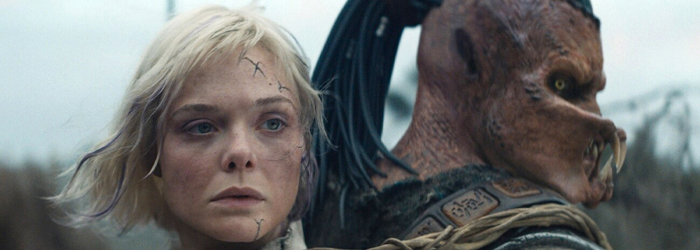
The latest: 2022’s Prey was just prelude to 2025, as Predator fans get treated to two major film releases, both directed by Prey’s Dan Trachtenberg. The animated anthology film Predator: Killer of Killers opened in June to widespread acclaim, and Predator: Badlands, which hits theaters November 7, sees one of the dreaded warriors teaming up with a droid to face larger challenges on an alien planet. Both are Certified Fresh, marking an exciting new era for the franchise.
Predator was part of a string of 1980s hits for Arnold Schwarzenegger: One-half testosterone-drenched shootout movie, one-half sci-fi horror that deconstructs (limb by limb) the action genre and the men who star in them, who find all their guns and collective body mass useless against a superior warrior who hunt humans for sport. The dreaded creature, one-liners, sweltering jungle setting, and John McTiernan made Predator an instant action classic.
Predator 2, set 10 years after the first, is just as sweaty as the first, as the Predator visits Los Angeles with a few days to kill during a sweltering heat wave. Predator 2 is even more meatheaded than the first, but its eclectic cast (including Danny Glover envisioned as a bonafide macho action star), deepening of the Predator lore, and wild coke-fueled attitude and tone, the sequel is something now of a cult classic.
The lingering appearance of a Xenomorph skull in the Predator’s ship led the way to two crossover Alien films in the 2000s. 2010’s Predators goes even further by throwing audiences in with a hive of scum and villainy on a game hunting preserve planet reserved by the Predators. 2018’s The Predator attempted to mix the humor of Shane Black (who starred in the 1987 original) with MCU-style worldbuilding to somewhat disastrous effect.
2022’s Prey, set in 1719, takes it back to basics as a band of Comanche warriors and fighters (including a star-making turn from Amber Midthunder) must learn to adapt as they’re stalked and hunter by a Predator on his first visit to Earth.
And now, we’re ranking all the Predator movies by Tomatometer!
 95%
94%
86%
95%
94%
86%
 65%
65%
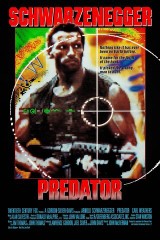 65%
65%
 34%
34%
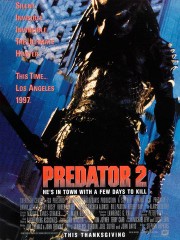 36%
36%
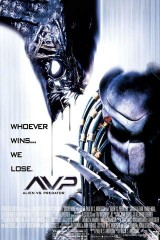 21%
21%
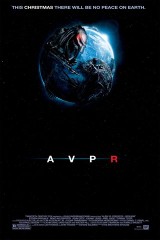 12%
12%

(Photo by Warner Bros. Thumbnail: Jasin Boland for ©Warner Bros. Pictures, 20th Century Fox, Sony Pictures Entertainment/Courtesy Everett Collection)
There’s only one place where you can get clones, time travel, simulated realities, irradiated and irritated giant lizards, and space fights and beyond. (Maybe not all at once, but we can dream.) Anything’s possible in this creative nebula known as science fiction, and with its long and historic association with cinema, we present our choices of the greatest science-fiction movies ever: The 150 Essential Sci-Fi Movies!
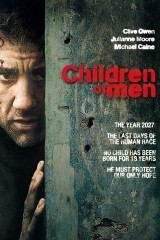
As they do with horror, filmmakers use science fiction to reflect our aspirations, terrors, and issues of the times. Through genre lens, we can consider our impact on the environment (Godzilla, WALL-E), technology gone berserk (The Terminator, Ex Machina), identity (Blade Runner, The Matrix), and societal breakdowns (Children of Men, A Clockwork Orange). We might even check-in on the current state of the human condition (Gattaca, Her).
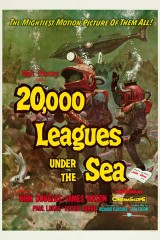
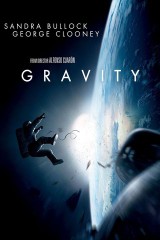
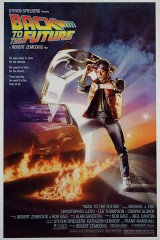
Or, maybe we just want to see giant ants wreak havoc across the neighborhood. There may not be a lot of subtext in a big monster movie like Them!, or even crowd-pleasing masterpieces like Star Wars or Back to the Future, but they speak to the one thing that attracts us to movies in the first place: escapism. Science-fiction movies are our tickets to planets far-away (Star Trek, Avatar, Starship Troopers), or a quick hop to a local joint in the solar system (The Martian, Total Recall). They take us just above the atmosphere (Gravity), deep down to the bottom of the ocean (20,000 Leagues Under the Sea, The Abyss), and into the human body (Fantastic Voyage). Limited only 2020by imagination, sci-fi inspires wonder, awe, terror, and hope for alternative mindsets and better futures.
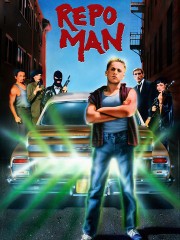
Sci-fi spreads across subgenres, all represented here: the monster movie (Cloverfield), space opera (Serenity), cyberpunk (Ghost in the Shell), and post-apocalyptic (Mad Max: Fury Road) and more. Or it can fuse onto traditional genres like drama (Donnie Darko, Eternal Sunshine of the Spotless Mind), comedy (Repo Man, Idiocracy), and action (Predator, Demoliton Man). Wherever the destination, these movies — each with at least 20 reviews — were selected because of their unique, fun, and possibly even mind-blowing spins on reality.
It’s time to strap in and cue the Theremin for some of the best science-fiction films created: Time to launch the 150 Essential Sci-Fi Movies! (Alex Vo)
 61%
91%
61%
91%
 90%
83%
90%
83%
 84%
83%
84%
83%
 89%
89%
 81%
83%
81%
83%
 67%
88%
67%
88%
 69%
69%
 71%
71%
 85%
85%
 91%
61%
71%
91%
61%
71%
 66%
66%
 56%
56%
 71%
76%
71%
76%
 87%
87%
87%
87%
 78%
84%
78%
84%
 52%
52%
 58%
58%
 68%
68%
 69%
69%
 91%
91%
 61%
70%
61%
70%
 66%
66%
 78%
78%
 76%
76%
 78%
78%
 81%
81%
 77%
77%
 93%
93%
 74%
74%
 87%
87%
 87%
87%
 82%
82%
 89%
89%
 84%
84%
 91%
88%
91%
88%
 93%
93%
 89%
89%
 93%
93%
96%
93%
93%
96%
 93%
93%
 94%
94%
 72%
72%
 71%
71%
 73%
73%
 80%
80%
 89%
89%
 78%
78%
 83%
83%
 79%
79%
 94%
94%
 78%
78%
 91%
91%
 60%
91%
60%
91%
 69%
69%
 65%
65%
 88%
88%
 72%
72%
 71%
71%
 82%
82%
 66%
66%
 68%
68%
 92%
92%
 76%
76%
 82%
82%
 86%
86%
 84%
87%
84%
87%
 79%
79%
 70%
70%
 91%
84%
81%
91%
84%
81%
 89%
89%
 92%
92%
 93%
93%
 83%
83%
 94%
94%
 97%
65%
86%
93%
94%
97%
65%
86%
93%
94%
 86%
89%
88%
86%
89%
88%
 90%
90%
 91%
91%
 92%
92%
 95%
95%
 96%
96%
 91%
81%
91%
81%
 90%
90%
 91%
91%
 96%
96%
 73%
73%
 93%
93%
 93%
91%
94%
93%
91%
94%
 92%
95%
92%
95%
 99%
94%
99%
94%
 92%
92%
 88%
91%
88%
91%
 72%
72%
 100%
100%
 82%
82%
 95%
95%
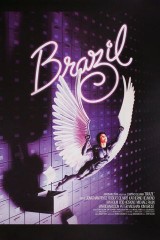 98%
98%
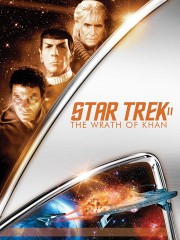 87%
87%
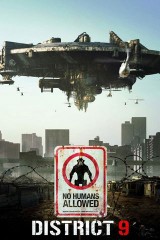 90%
90%
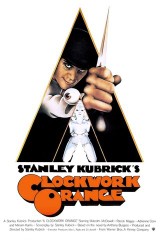 86%
86%
 92%
92%
 95%
95%
 91%
91%
 92%
92%
 90%
91%
90%
91%
 94%
94%
 85%
85%
 97%
97%
 93%
91%
93%
91%
 87%
83%
94%
87%
83%
94%
 97%
89%
97%
89%
 93%
90%
93%
90%
Dark Phoenix has arrived to close out the 19-year X-Men movie saga, which has seen Certified Fresh hits like the 2000 original, Days of Future Past, Logan, and Deadpool. It’s a moment made even more bittersweet now that 20th Century Fox, the studio that has shepherded this Marvel franchise, has been acquired by Disney. Fox has a film library accumulated over 84 years as one of Hollywood’s majors, now finding a new home in the House of M(ouse).
X-Men started in the tenuous superhero years between Batman & Robin and the first Spider-Man. And though the mutants traded spandex costumes for leather (it was still practically the ’90s), the film still kept its outsider spirit, its theme of the status quo destroying the gifted, and the question of what happens when evolution disrupts a narrow-minded society. These concepts are some of the central bearings of science fiction, a genre Fox has had a storied history within, starting with black-and-white classic The Day the Earth Stood Still. Movies that followed, like Star Wars, Alien, Planet of the Apes, and Avatar, not only pressed up against the boundaries of sci-fi, but they shaped our pop culture as a whole.
As the sun starts to set on a historic studio, we take one last look back on 20 of the most groundbreaking science fiction movies of 20th Century Fox.

(Photo by 20th Century Fox. /Courtesy of Everett Collection)
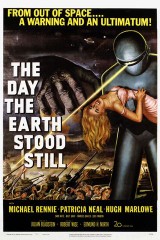
Fox kicked off the creature feature trend of the 1950s with this actually reserved sci-fi parable of a visitor from beyond the stars named Klaatu with a draconian message to humanity: Shape up or face annihilation. To this end, Klaatu has brought his eye-blasting robot, Gort. Day the Earth Stood Still laid down the template for sci-fi combining fantastic visuals with social commentary, that would have immediate influence on ’50s pop achievements like the original Godzilla and The Twilight Zone, and then well into the future.

(Photo by 20th Century Fox. /Courtesy of Everett Collection)
In the race to getting color on the silver screen, the sci-fi grand prix came down between Fox and Paramount. The latter was gearing up to release the Technicolor War of the Worlds in August 1953. Fox, rearing to beat Paramount to the punch, put out Invaders From Mars in April, thus holding the record for first color depiction of aliens in theaters. Texas Chain Saw Massacre helmer Tobe Hooper remade the movie in ’86, with a screenplay by Alien writer Dan O’Bannon.

(Photo by 20th Century Fox. /Courtesy of Everett Collection)
As science fiction became mainstream product in the 1950s, it expanded audiences’ taste for harder, deliberately shocking material. Enter The Fly, which revolted crowds and critics with its nasty transformation effects, effectively capping the swinging creature-feature ’50s with a swat of brutality. David Cronenberg broke into the mainstream in the ’80s with his Jeff Goldblum-starring Fly remake of the ’80s, going full-bore on his trademark body horror and psychosexual obsession.

(Photo by 20th Century Fox. /Courtesy of Everett Collection)
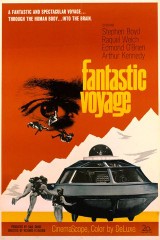
With the ’60s, the sci-fi movie standard animorphed from atomic age monsters to epic and/or disaster expeditions, with Jules Verne the popular source author: 20,000 Leagues Under the Sea, Journey to the Center of the Earth, Master of the World, and Voyage to the Bottom of the Sea. Fantastic Voyage, though not a Verne story, took his sweeping style and turned it inwards, as a group of scientists shrink themselves down into a submersible to explore a human body. The rich concept has been done again many times over since, including 1987’s Innerspace, and in parodies in cartoons ranging from Family Guy to Futurama to The Magic School Bus.

(Photo by 20th Century Fox. /Courtesy of Everett Collection)
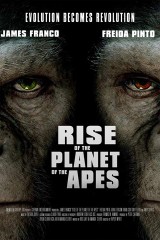
First banana in the long-surviving series, with one of the most memorable and aped endings in history. Planet was the first sci-fi property to turn itself into a franchise in these pre-Star Wars years, with four direct sequels and several TV shows out by the mid-’70s. There was an unfortunate Tim Burton remake in 2001, before it was rebooted properly starting with 2011’s Rise of the Planet of the Apes, highlighting the series’ enduring central theme of a three-way fight between man, science, and natural order.

(Photo by 20th Century Fox. /Courtesy of Everett Collection)
In the post-apocalyptic future, red leather daddy Zed (Sean Connery) boards a gun-vomiting floating head named Zardoz, who deposits him in a paradise estate known as The Vortex, whose immortal inhabitants have grown bored with life. In a kind of psychedelic Pygmalion, the immortals use crude dude Zed for their amusement, while he secretly seeks to unravel the mystery of Zardoz and The Vortex. Director John Boorman decided to use his post-Deliverance cred to deliver this ambitious and goofy misfire that must absolutely be seen to be believed. It’s a reminder of the special kind of big-budget tomfoolery major studios are capable of putting out if they just put their heads together.

(Photo by 20th Century Fox. /Courtesy of Everett Collection)
The most influential sci-fi trilogy in the galaxy. The first film, A New Hope, remains a perfect standalone distillation of the hero’s journey template. The Empire Strikes Back showed you can have an inconclusive AND downer ending, and still make money. And Return of the Jedi had Ewoks. Star Wars regenerated science fiction to appeal to the youngest crowd ever, hooking them with bright and poppy visuals, and all the merchandising you want to express that adoration. The Prequel and Sequel Trilogies have kept the Force alive, and with it tie-in video games, novels, comics, TV shows, and beyond.

(Photo by 20th Century Fox. /Courtesy of Everett Collection)
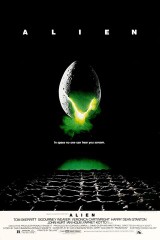
Ridley Scott took a haunted-house-in-space script and turned it into a grimy, claustrophobic experience in terror, launching a media empire — or infestation — of xenomorphs that have crossed over to comic books, video games, and even other venerable sci-fi properties like Predator and Judge Dredd. Not to mention granting us an eternally badass female protag in the form of Ripley. The first sequel helped launched the career of James Cameron, while the second nearly killed David Fincher’s. Scott would return to the Alien series decades later with Prometheus and Covenant.

(Photo by 20th Century Fox. /Courtesy of Everett Collection)
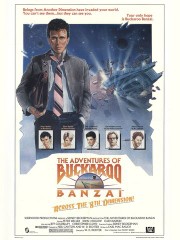
Another idiosyncratic sci-fi movie from Fox somewhat in the vein of Zardoz, but this time on purpose. Peter Weller stars as multi-hyphenate Buckaroo, whose résumé includes New Wave rock god, neurosurgeon, and inter-dimensional crash test dummy, and who must root out in-hiding spacemen here on Earth. This film’s sense of humor is so specific and quirky, one can’t help but think there’s no way the guy who directed it ever got the chance again. And, yep, this is W.D. Richter’s sole movie as director. And now it belongs to zany film audiences who in the years since have propped it up as the ultimate cult movie, whose influence pops in the most unlikely places — like The Life Aquatic‘s end credits, which pays tribute.

(Photo by 20th Century Fox. /Courtesy of Everett Collection)
Arnold Schwarzenegger had one of the most impressive hot streaks in the ’80s, and that includes rumble-in-the-jungle Predator. As military macho Dutch, he and his crew exterminate guerrillas in Central America before the real threat emerges: An outer-space hunter who stalks and skins its prey for sport, using invisible alien technology. Real honorable! Predator‘s minimal plot, maximum carnage remains a high point for a certain breed of ’80s filmmaking. Its sequels and Alien crossovers have kept the franchise in the conversation.

(Photo by 20th Century Fox. /Courtesy of Everett Collection)
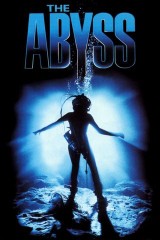
After the grungy Terminator and action-focused Aliens, James Cameron finally came into his own with The Abyss, which for the first time carries everything you imagine when you think of the director’s movies: Enormous budget, ecological message, and cutting-edge technology. Like Blade Runner, this is a major studio sci-fi movie that doesn’t rely on poppy hooks, but instead slowly submerges the viewer with some big concepts and methodical pacing.

(Photo by 20th Century Fox. /Courtesy of Everett Collection)
Approaching something as momentous as the dawn of a new millennium takes a genre like science fiction to work through. Set during the final two days of 1999, Strange Days is a hard-boiled noir of parties, murder, and technology that can record and commodify memories and emotions. The film is a compelling document of ’90s progressive politics, advertising-induced cynicism, end-of-the-world race riots and relations, and the uneasy optimism of the future ahead.

(Photo by 20th Century Fox. /Courtesy of Everett Collection)
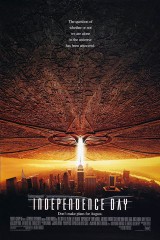
In 1996, nothing felt bigger than Independence Day. The plot of evil space invaders was already decades old at that point, but the casting of Will Smith as lead felt fresh and in-the-moment, along with eye-popping special effects and quick pacing made it an all-new experience. With a sequel 20 years later, Independence Day has also become a poster movie for one of the major overriding emotions of the 2010s: nostalgia.

(Photo by 20th Century Fox. /Courtesy of Everett Collection)
Comic book superhero movies had already found recent success with the Batman and Superman movies, but the whole ensemble thing had yet to be done successfully on the big screen. Enter X-Men, who were a natural choice to give it a try, with their popularity rising through video games and the animated series, and whose outsider status among humans gave the movie the necessary subtext to attract any viewer who felt maligned in life. The series has since been infamously inconsistent, but the original, X2, First Class, Days of Future Past, and Logan remain must-watches in the genre.

(Photo by Fox Searchlight. /Courtesy of Everett Collection)
Danny Boyle and writer Alex Garland suspected the time was right to bring back zombies into the zeitgeist. Choosing to forego soft voodooism or implied crashing satellites, 28 Days Later – which is technically a Fox Searchlight film – went directly into the science-fiction route starting with its opening scene, which sees group of environmental extremists free test monkeys infected with a highly contagious rage virus on an unsuspecting populace. Credit this one with making zombies cool with the kids again.

(Photo by 20th Century Fox. /Courtesy of Everett Collection)
A literal average Joe is cryogenically frozen, only to be awakened well past his due date: 500 years into the future to be exact. The world has dumbed down to an alarming degree, with the nation on the brink of stupid disaster, and Joe suddenly finding himself the smartest man in the world. Though frequently set in the future, science fiction is a mirror that can reflect and warp our current selves, and to that end Idiocaracy is a resounding, hilarious success.

(Photo by 20th Century Fox. /Courtesy of Everett Collection)
Pocahontas in space! Dances With Blue People! Sorry, Avatar can’t hear you over the $2.7 billion (in 2009 money!) we gave the studio. The long-developed James Cameron project transported audiences the world over to Pandora, a resplendent living word inhabited by the Na’vi, leonine blue creatures. As Pandora’s being invaded by Earth, a Na’vi warrior falls in love with one of the humans.Avatar remains the highest-grossing movie ever (a record once held by Cameron’s previous film, Titanic), and represents Fox’s final crowning achievement in the sci-fi genre.

(Photo by 20th Century Fox. /Courtesy of Everett Collection)
Combining sci-fi, found footage, and horror, Chronicle explores the lives of three teenagers who develop powers of telekinesis after being exposed to a mysterious crystal. The film’s explosive terror and slick editing made it an immediate hit, launching the careers of Dane DeHaan, Michael B. Jordan, and director Josh Trank, who later stumbled with the Fan4stic reboot.

(Photo by 20th Century Fox. /Courtesy of Everett Collection)
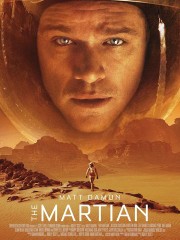
Putting the science back in science fiction, The Martian stars Matt Damon as a NASA astronaut accidentally left behind on the red planet when his crew takes off during a sandstorm. As STEM fields increase in popularity across all genders, Ridley Scott’s Martian became the movie reference about the power of logic, science, and technology to overcome what look like insurmountable odds.

(Photo by Twentieth Century Fox Film Corp. /Courtesy of Everett Collection)
Almost like destiny, the final movie released by 20th Century Fox as an independent studio is Alita: Battle Angel, the cyberpunk adaptation of the anime of almost the same name. And, naturally, James Cameron is here too! Like all of his movies, Cameron was talking about making a Battle Angel movie for a long time before it finally became reality, ultimately under the direction of Robert Rodriguez. Critics were lukewarm but most of the relatively scant audience who watched it fell in love with Alita, and the movie looks to be another cult classic in the making.

Vera Miles in Psycho (1960)
What is the greatest year ever for horror? The debate has raged endlessly and will continue long into the future. However, to offer a point of discussion, we dug through RT data to discover which years had the best Tomatometer, Audience, and overall average scores. The rules we employed were as follows:
Before we get into figuring out which year is the greatest for horror, we did a couple of quick breakdowns just for fun, and we noticed an interesting tidbit as we crunched the numbers. There are almost 900 films in our data set, from 1920 all the way up to the present day, and the overall average Audience score is 53.2%. The overall average Tomatometer score, however, is 54.4%. Conventional wisdom would seem to indicate that audiences tend to rate horror films higher than critics, but the data doesn’t bear that out. Instead, our numbers show that not only do critics and fans have pretty similar taste, but critics generally like horror movies more. Who would’ve thought?
Then, we also decided to take a look at the data by decade. For each decade, we gathered the films with the 10 highest Tomatometer scores and the 10 highest Audience scores, took the average of each of them, and then averaged those two scores to arrive at a single percentage (in other words, rule #3 above). It’s not an exact science, of course, and only a small sample was taken, but the results were very close:
1930s — 89.75%
1940s — 85%
1950s — 84.4%
1960s — 91.75%
1970s — 90.9%
1980s — 90.6%
1990s — 88.5%
2000s — 90.9%
2010s — 90.1%
According to these numbers, the 1960s — which included Psycho, Eyes Without a Face, Rosemary’s Baby, and Night of the Living Dead, just to name a few — were the scariest decade in cinema, but the 1970s, 1980s, 2000s, and 2010s (which, by the way, aren’t over yet) could all stake a reasonable claim at the top.
But what about individual years? That took a bit more work, and the results were surprising. Read on to see what years reigned supreme with critics, audiences, and both.

Winner: 1987
Average Audience Score: 81.6%
At first glance, 1987 might not immediately strike you as an obvious fan favorite year for horror. However, one look at the directors and films should clear things up a bit. The top five horror films of 1987 according to Audience score have some impressive directors behind them, namely Sam Raimi, Kathryn Bigelow, Clive Barker, Joel Schumacher, and John McTiernan. Their films rise above genre and incorporate horror elements beautifully.
The biggest reason why 1987 was victorious is Evil Dead 2: Dead by Dawn’s 89% Audience score. In fact, the Evil Dead franchise has the highest average Tomatometer (81.75%) and Audience score (80.75%) of any horror franchise with at least four theatrical releases. The Evil Dead, Evil Dead 2: Dead by Dawn, Army of Darkness, and the Evil Dead remake are the only foursome in which the box office nearly doubled with each successive film — a rare feat for any genre, let alone horror. Not bad for a tiny franchise featuring a blowhard named Ash being beaten silly.
TOP MOVIES:
Evil Dead 2: Dead by Dawn
Audience Score – 89%
Tomatometer Score – 98%
Predator
Audience Score – 87%
Tomatometer Score – 78%
The Lost Boys
Audience Score – 85%
Tomatometer Score – 73%
Near Dark
Audience Score – 74%
Tomatometer Score – 88%
Hellraiser
Audience Score – 73%
Tomatometer Score – 66%
1987’s Audience score top five also includes a handful of fun pairings:

(Photo by Kit Fraser/Vertical Entertainment)
Winner: 2016
Average Tomatometer Score: 97%
We realize Nina Forever and The Love Witch aren’t traditional horror films, but even if we removed them from the list and replaced them with The Witch (91%) and Green Room (90%), 2016 would still be the winner here. 2016 figures heavily in our Top 100 Horror Movies list (The Witch, The Love Witch, Green Room, Under the Shadow, Train to Busan, The Autopsy of Jane Doe, Don’t Breathe), and with other recent hits like Get Out, IT, and a number of acclaimed smaller films, it’s safe to say we’re currently experiencing something of a horror renaissance, at least according to critics.
That said, it’s interesting to note that The Love Witch and The Witch had a combined average Tomatometer score of 93.5% but an average Audience score of just 58%. Both are unique, meticulously directed, auteur-driven visions that push the boundaries of the genre, and they’re straight-up bonkers, so it’s likely audiences didn’t know what to expect.
TOP MOVIES:
Under the Shadow
Tomatometer Score – 99%
Audience Score – 74%
The Wailing
Tomatometer Score – 99%
Audience Score – 81%
Nina Forever
Tomatometer Score – 96%
Audience Score – 56%
The Love Witch
Tomatometer Score – 96%
Audience Score – 60%
Train to Busan
Tomatometer Score – 95%
Audience Score – 88%

(Photo by Well Go USA Entertainment)
Winner: 2016
Tomatometer Score Average: 97% (Under the Shadow, The Wailing, Nina Forever, The Love Witch, Train to Busan)
Audience Score Average: 81.8% (Train to Busan, The Wailing, The Conjuring 2, Don’t Breathe, 10 Cloverfield Lane)
Combined Average: 89.4%
It took some teamwork for 2016 to be victorious in this category. The Tomatometer was exceptionally high, but Nina Forever, Under the Shadow, and The Love Witch weren’t universally loved by audiences. Luckily, Don’t Breathe, The Conjuring 2, and 10 Cloverfield Lane stepped up to the plate and helped carry 2016 over the top with their Audience scores.
TOP MOVIES:
Train to Busan
Tomatometer Score – 95%
Audience Score – 89%
The Wailing
Tomatometer Score – 99%
Audience Score – 81%
The Conjuring 2
Tomatometer Score – 79%
Audience Score – 81%
Don’t Breathe
Tomatometer Score – 87%
Audience Score – 79%
10 Cloverfield Lane
Tomatometer Score – 90%
Audience Score – 79%

(Photo by Gordon Timpen/Screen Gems)
With 2016 sitting comfortably atop two of the three metrics we examined, we took a deeper dive into some fun odds and ends. Here are the results.
Victims of Animal Attacks – 89.4% (Green Roon, Don’t Breathe, The Wailing, The Witch, The Shallows)
Victims Attacked Mostly in a Single Location – 84.6% (10 Cloverfield Lane, The Invitation, Don’t Breathe, Green Room, The Autopsy of Jane Doe, The Shallows, 31, Under the Shadow)
Victims of Witches – 75% (The Witch, Blair Witch, The Love Witch)
Victims of Zombies – 66.8% (Train to Busan, Pride & Prejudice & Zombies, JeruZalem, Cell, The Wailing, Nina Forever)
Victims of Another Sequel or Prequel – 61.7% (The Conjuring 2, Oiuja: Origin of Evil, 10 Cloverfield Lane, Blair Witch, The Purge: Election, Boo! A Madea Halloween, Phantasm: Remastered)
Victims Murdered in a Forest – 52.6% (The Witch, Green Room, Hush, the Wailing, The Monster, The Eyes of My Mother, The Mind’s Eye, Cell, Pride & Prejudice & Zombies, The Forest, Morgan, Blair Witch, Cabin Fever)
Victims of Unnecessary Remakes – 3% (Martyrs, Cabin Fever)
So now that you’ve seen what critics and audiences at large think, what’s your favorite year for horror?
The Terminator franchise has had its ups and downs over the years, but like Arnold Schwarzenegger‘s trusty T-800, it’s kept lumbering on for more than three decades — and with further sequels promised in the not-too-distant future, we can only expect more blockbuster battles between man and machine. In the meantime, the saga’s second installment is back in theaters this weekend, sporting a new 4K restoration and 3D conversion. To celebrate its imminent arrival, we decided to take a fond look back at Mr. Schwarzenegger’s best films sorted by Tomatometer, while inviting you to rank your own personal favorites. It’s time for Total Recall!
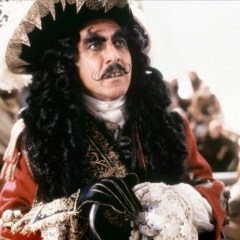
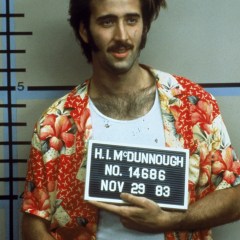
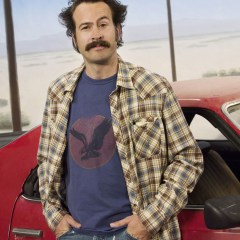
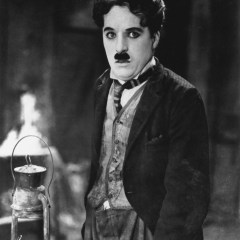
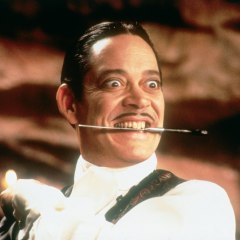
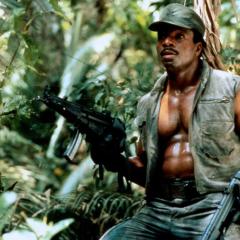
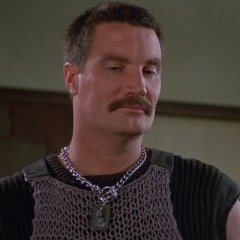
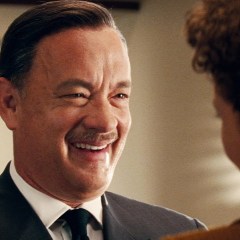
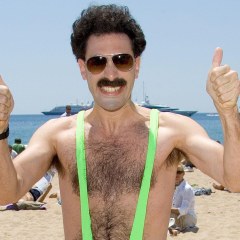
For the entire month of November, dudes everywhere get a free “get out of social jail” card to grow mustaches however they please. We call it “Movember.” So guys, let your upper lip hair prickle forth in order to raise awareness of men’s health issues and… stick it to shaving cream lobbyists in Washington? Anyways, here’s our photo gallery of at least 30 mustaches for 30 days of Movember 2016.

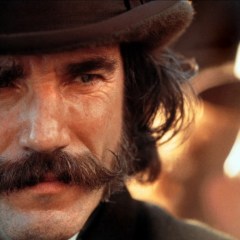
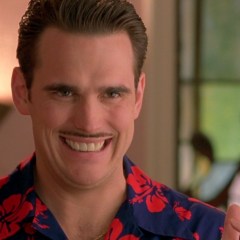
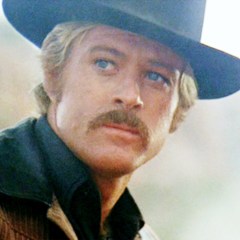
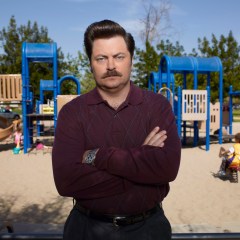

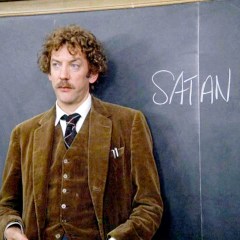
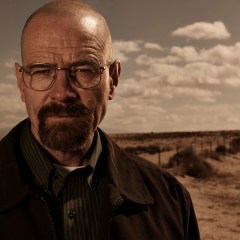
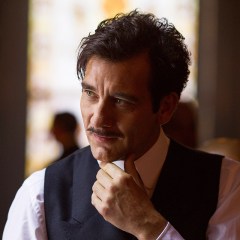
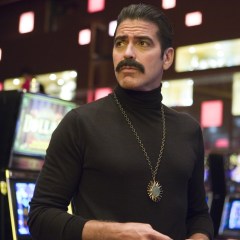

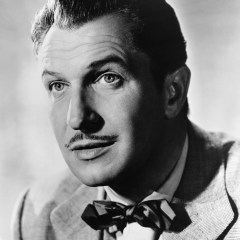

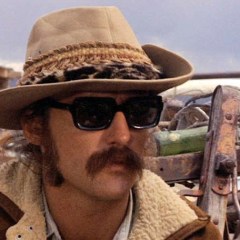
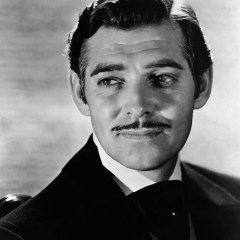
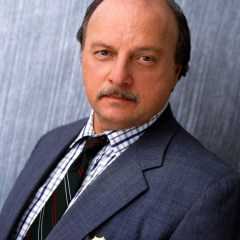
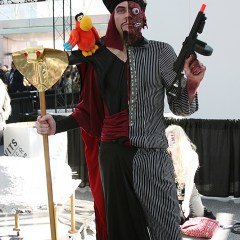
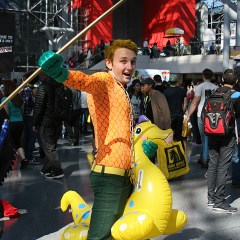
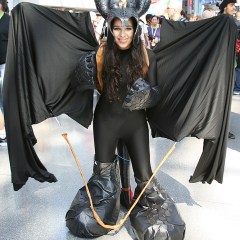
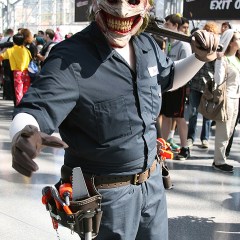
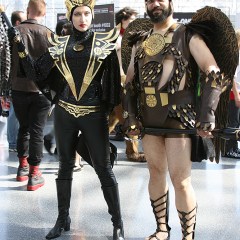
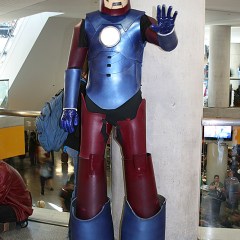
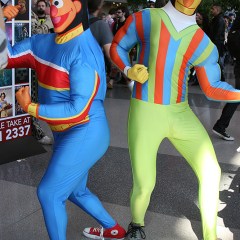
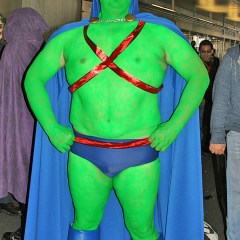
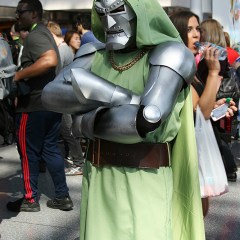
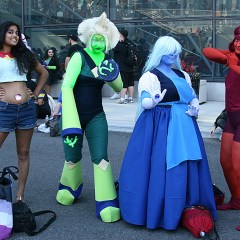
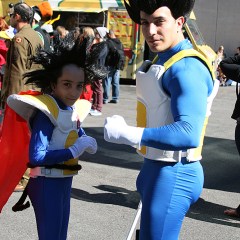
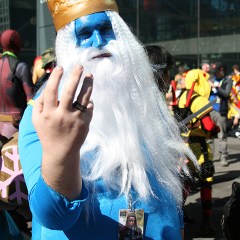
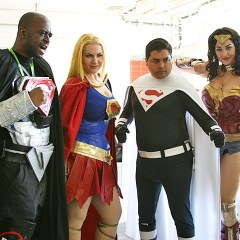
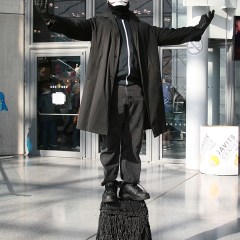
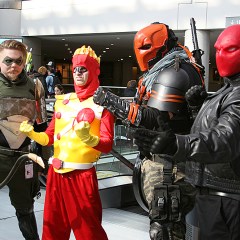
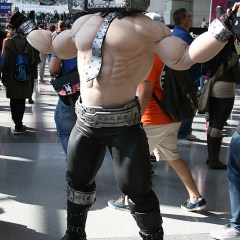
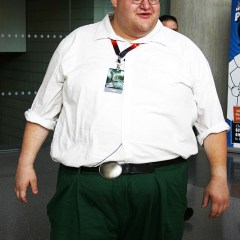
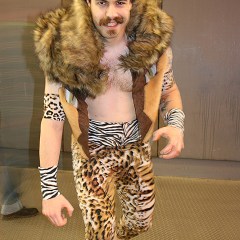
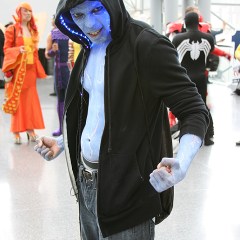
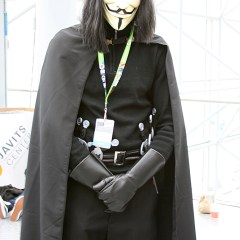
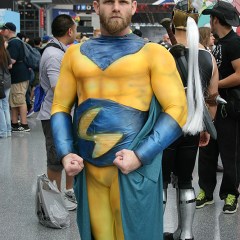
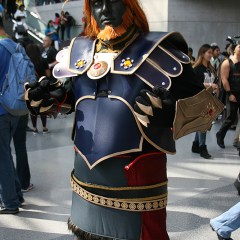
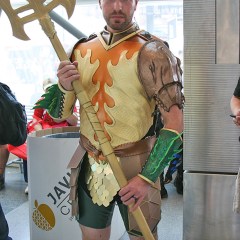
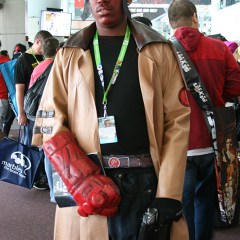
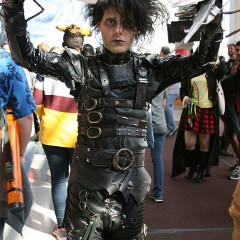
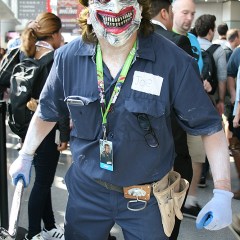
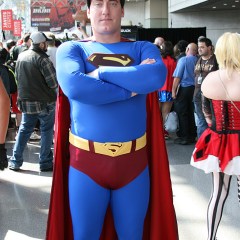
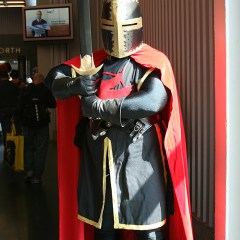
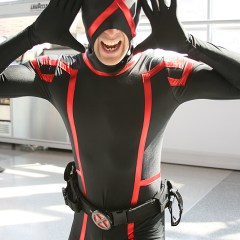
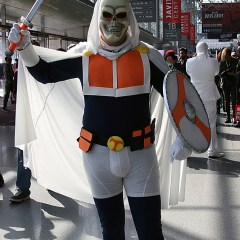
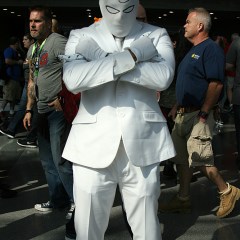
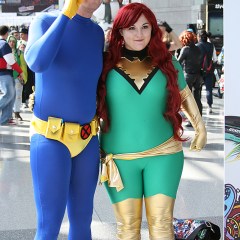
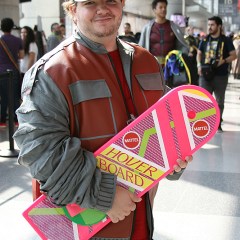
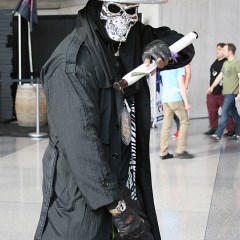
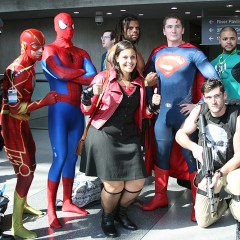
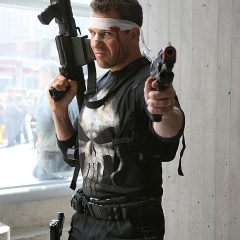
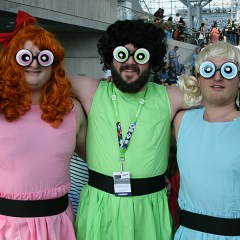
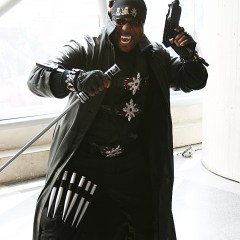
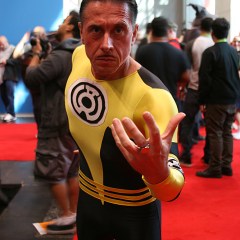
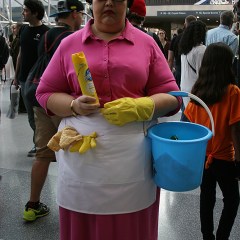
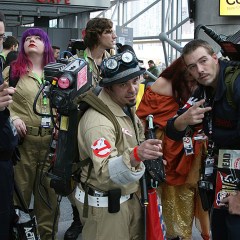
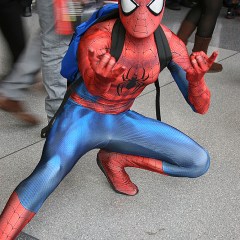
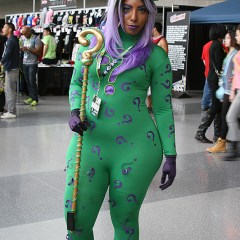
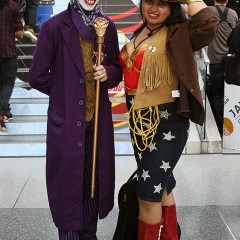
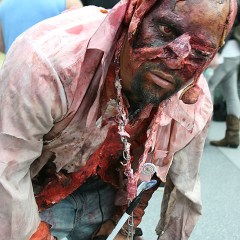
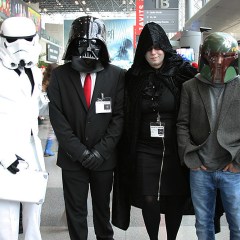
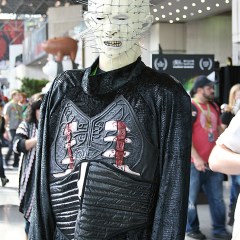
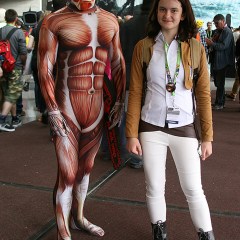
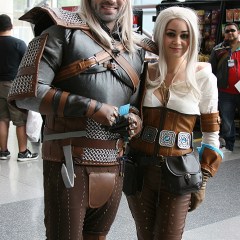
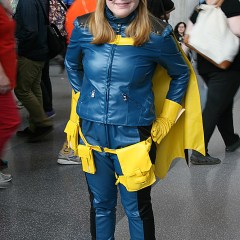
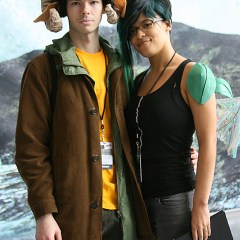
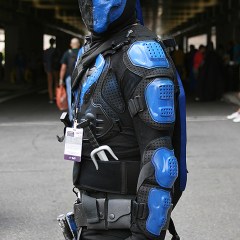
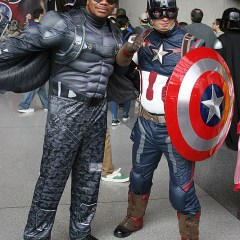
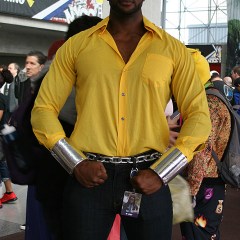
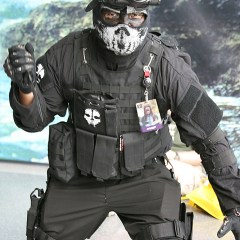
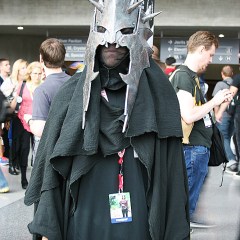
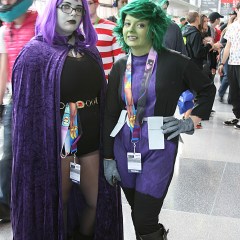
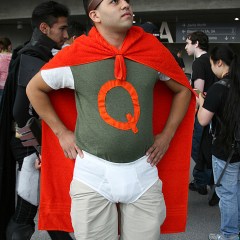
Your favorite characters from comic books, movies, TV shows, and video games are walking the floors of the Javits Center in New York City this weekend, and you can check them out right here. Scroll down for the best costumes of NYCC 2015.













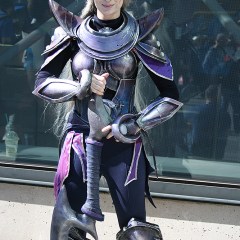



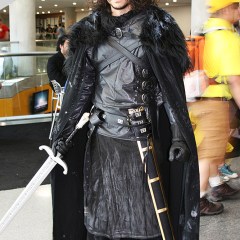

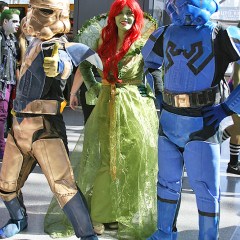

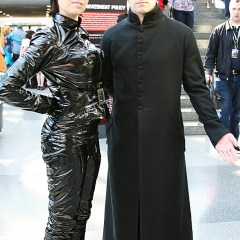

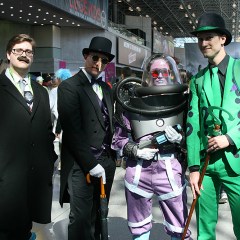

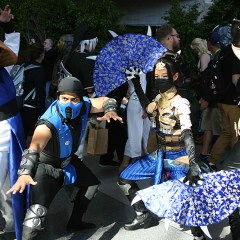


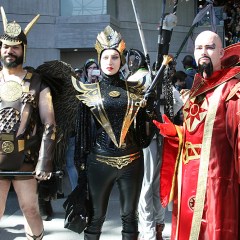

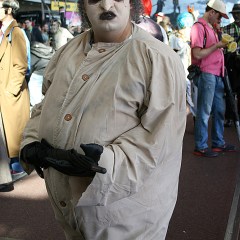









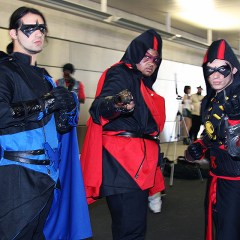
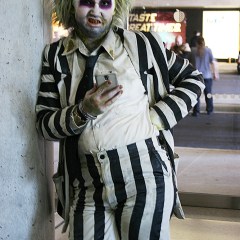


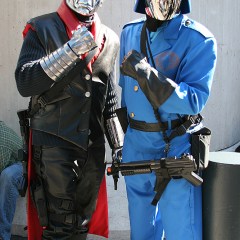

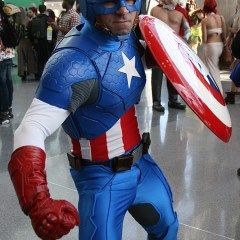





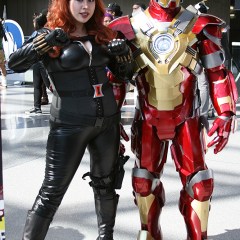

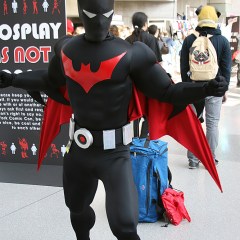

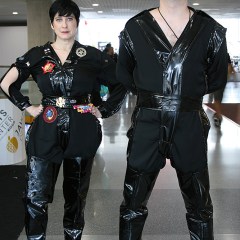

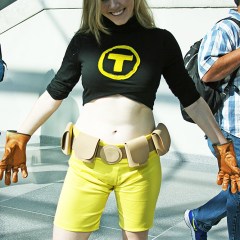













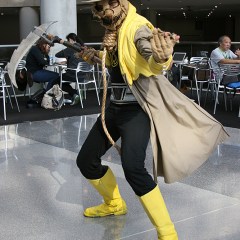




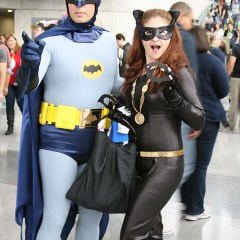
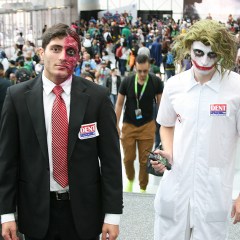








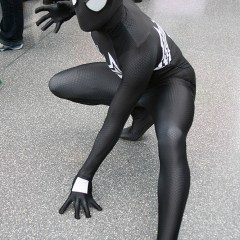



















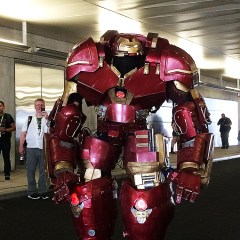
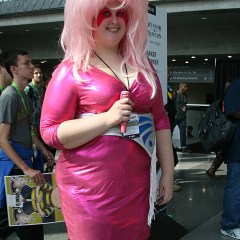
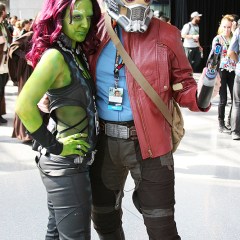

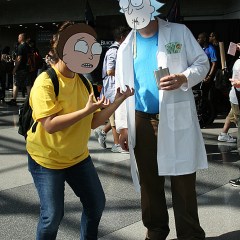







































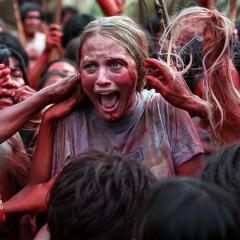
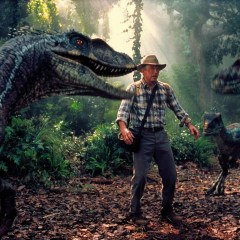
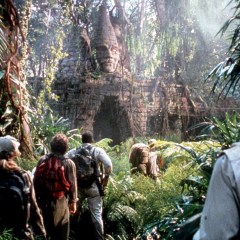
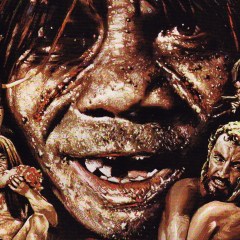
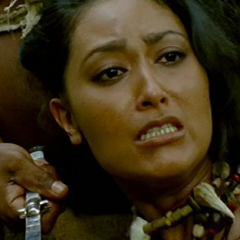
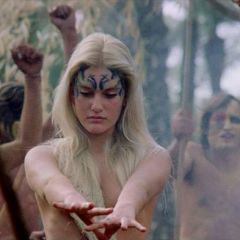
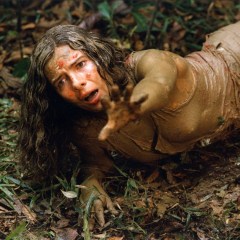
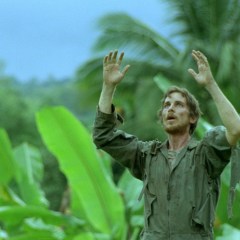
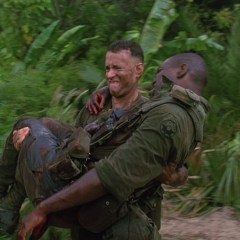
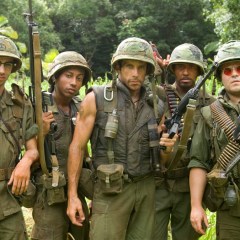
Inspired by The Green Inferno, this week’s 24 Frames treks deep into some of the most dangerous and deadly jungle settings ever captured on film.








The Terminator franchise kept itself going without Arnold Schwarzenegger during his politics-enforced acting hiatus, but it really wasn’t the same without our trusty old T-800 dispensing shotgun blasts and one-liners like only he can, so it was with great anticipation that fans of the series greeted the news that (ahem) he’d be back for the latest installment, Terminator Genisys. To celebrate its imminent arrival, we decided to take a fond look back at some of the brightest critical highlights from a career that includes plenty of blockbusters — and a few surprises. It’s time for Total Recall!

Luring action fans to the theater in 1985 didn’t come much more simply than putting Arnold Schwarzenegger in a sleeveless vest, handing him a weapon, and slapping the poster with the delicious tagline “Somewhere, somehow, someone’s going to pay.” Commando delivered as promised, starring Arnold as a retired Delta Force op whose daughter (Alyssa Milano) is kidnapped by an exiled Latin American dictator (Dan Hedaya) in an effort to blackmail him into assassinating his replacement. Loaded with heavy artillery and big explosions, Commando provides, in the words of Filmcritic’s Pete Croatto, “one of the best arguments available for the action movie as pure entertainment.”

It took a dozen years to make its way to theaters — and did it without James Cameron — but thanks to the durable mythology of the franchise and Schwarzenegger’s welcome return to the title role, Terminator 3: Rise of the Machines proved audiences were still eager for more Skynet-fueled mayhem. Starring Kristanna Loken as the first female Terminator, Nick Stahl as the new John Connor, and Claire Danes as his future bride Kate Brewster, T3 relied more heavily on special effects than storytelling, leaving some critics cold — but for others, even diluted Terminator was good for a couple more hours of popcorn entertainment. “A sizable quotient of the movie’s target audience just wants to see stuff destroyed,” sighed the Chicago Reader’s J.R. Jones, “and in that regard Rise of the Machines won’t disappoint.”

Making an enjoyable movie about a monosyllabic, sword-wielding barbarian is harder than it might seem — just ask the folks behind 2011’s Conan the Barbarian, who attempted to update Robert E. Howard’s classic character for a new millennium and found themselves deluged with bad reviews for their trouble. But it isn’t impossible, as John Milius proved with his 1982 Conan, starring Arnold Schwarzenegger as the beefy barbarian, Max von Sydow as King Osiric, and James Earl Jones as the wonderfully named Thulsa Doom. It’s all very silly, of course, but that’s part of its charm; as Rob Vaux put it for Mania.com, “Its magnificence stems from the very properties we should be condemning with all our might.”

The death knell had sounded for the big, dumb 1980s action movie with 1992’s prophetically titled The Last Action Hero — which, fittingly, also starred Schwarzenegger — but James Cameron helped revitalize the genre with this light, funny, fast-moving thrill ride that boasted likable performances from not only its well-muscled star, but a crackerjack supporting cast that included Jamie Lee Curtis, Bill Paxton, and Tom Arnold at his funniest. Though it was heavily criticized for being misogynist and racist, True Lies combined with Speed to make the summer of 1994 feel a little like the 1980s never ended, and took Cameron’s reign as a Hollywood action king to its logical conclusion while earning the begrudging praise of critics like the Globe and Mail’s Rick Groen, who wrote, “However high your ranking on the culture scale, I defy you to watch this and leave the theatre without a whistled ‘Wow’ followed by a grudging ‘That’s entertainment.'”

Say it’s the mid-’70s and you’re making a movie with a part for an Austrian bodybuilder who plays the fiddle. What do you do? For Bob Rafelson, director of Stay Hungry, the choice was easy: Hand Arnold Schwarzenegger a fiddle. And the results weren’t as silly as they might sound, either — starring Jeff Bridges as the conflicted flunky of some crooked real estate developers who want to strongarm their way into ownership of a Birmingham gym, Hungry earned high critical marks for its assured storytelling and offbeat charm. “When the movie’s over, we’re still not sure why it was made,” admitted Roger Ebert, “but we’ve had fun and so, it appears, has Rafelson.”

Producer Joel Silver and Schwarzenegger teamed up twice during the ’80s, and the results — Commando and Predator — are among any action fan’s favorites from the era. Here, Schwarzenegger must lead a team of tough-as-nails soldiers into the jungle on what’s believed to be a rescue mission for prisoners of war — but which quickly turns out to be a bloody fight against a dreadlocked interstellar hunter (played to perfection by the late, lamented Kevin Peter Hall). Silver’s pictures from the period tended to follow a certain formula, but at this point, familiarity hadn’t yet bred contempt — and anyway, if Predator lacks a surplus of moving parts, it does what it’s supposed to with cool precision. “It achieves a sort of sublime purity,” sighed an appreciative Tim Brayton for Antagony & Ecstacy. “It is Action Movie, nothing more and nothing less.”

One of Schwarzenegger’s most quotable films (not to mention a $261 million box office smash that earned a Special Achievement Academy Award for its impressive special effects), 1990’s Total Recall returned its star to sci-fi after forays into buddy cop territory (Red Heat) and comedy (Twins). A mind-bending adaptation of the Philip K. Dick short story We Can Remember It for You Wholesale, it took audiences on a fast-paced, set piece-fueled journey from Earth to Mars, dispensing quips along the way — and proved so singularly successful that no amount of development could produce a workable sequel (or, as we learned in 2012, a worthwhile remake). “Total Recall is too much,” wrote Entertainment Weekly’s Owen Gleiberman, “but it’s too much of a good thing.”

More often than not, if it takes seven years to put together the sequel to a hit movie, disappointment is just around the corner. In the case of Terminator 2: Judgment Day, however, the prolonged delay worked to everyone’s advantage: James Cameron, a relative newcomer when The Terminator was filmed, had spent the intervening years turning himself into one of Hollywood’s biggest directors, and one of the few filmmakers with enough clout to secure the $102 million budget necessary to pay for both Arnold Schwarzenegger and the super-cool special effects that turned Robert Patrick into a puddle of molten metal. It was money well spent, as T2‘s eventual $519 million worldwide gross proved; in fact, despite its slightly lower Tomatometer rating, many fans believe the second Terminator is superior to the original. In the words of Newsweek’s David Ansen, “For all its state-of-the-art pyrotechnics and breathtaking thrills, this bruisingly exciting movie never loses sight of its humanity. That’s its point, and its pride.”

We don’t often include documentaries in these lists — but then again, there aren’t many documentaries like Pumping Iron, Robert Fiore and George Butler’s fascinating look at the 1975 Mr. Olympia bodybuilding competition. The film introduced a pair of future stars who’d trade in heavily on their physiques: Schwarzenegger and Lou Ferrigno, who went on to green-hued fame as Bill Bixby’s alter ego in the Incredible Hulk TV series — and while Ferrigno achieved his big breakthrough first, Pumping Iron finds him thoroughly manipulated and outclassed by Schwarzenegger, who spends much of the film displaying the physical skill and ruthless savvy that made him one of Hollywood’s foremost action heroes. “The movie is a very shrewd mixture of documentary and realistic fiction, put together with both eyes and ears on entertainment value,” observed Derek Adams of Time Out.

It was made with a fraction of the mega-budget gloss that enveloped its sequels, but for many, 1984’s The Terminator remains the pinnacle of the franchise — not to mention one of the most purely enjoyable movies of the last 30 years. Subsequent entries would get a little hard to follow, but the original’s premise was simple enough for anyone to follow: A scary-looking cyborg (Schwarzenegger) travels back in time to kill a woman (Linda Hamilton) before she can give birth to the child who will grow up to lead the human resistance against an evil network of sentient machines. Tech noir at its most accessible, Terminator earned universal praise from critics such as Sean Axmaker of Turner Classic Movies, who wrote, “Gritty, clever, breathlessly paced, and dynamic despite the dark shadow of doom cast over the story, this sci-fi thriller remains one of the defining American films of the 1980s.”
This week’s Ketchup includes news about lots of sequels and franchise entries (including Predator, Beverly Hills Cop, and The Huntsman), new roles for Chris Hemsworth, Sir Ben Kingsley, and Channing Tatum, and new films for directors Sam Raimi and Tate Taylor.
After disappointing results for films like Red Dawn, Total Recall, and RoboCop, it’s possible that some in Hollywood are starting to get the message that there’s not really an audience champing at the bit for remakes of cherish genre classics. The question posed by this week’s biggest movie development news story is whether there’s still a way of reviving old franchises other than direct reboots/remakes. We speak, of course, of the news that Iron Man 3 and Kiss Kiss Bang Bang director Shane Black has signed with 20th Century Fox to bring back Predator. Shane Black also costarred in the first Predator as Hawkins, the first of the lead commandos — 27 year old spoilers! — to (appear to) be killed. Black will also write the treatment for the new Predator film before handing the screenplay to Fred Dekker, with whom he worked on The Monster Squad (which also came out in 1987). Although the initial reports did call this new Predator film a “reboot,” Black was quick to correct that, saying, “As far as Fred and I are concerned anyway… why start over, when you’ve all this rich mythology yet to mine?,” continuing that he can “really get behind inventive sequels.” This will be the sixth Predator film, after three films in 1987, 1990, and 2010, the two Alien vs Predator movies in 2004 and 2007, and various appearances in comic books, novels, and video games. Besides this new project, Shane Black continues to work on his long-in-development adaptation of Doc Savage, about which he reportedly recent met with Thor star Chris Hemsworth (who also made the news this week, further down in the Ketchup).
The recent box office success of 22 Jump Street over How to Train Your Dragon 2 was the latest achievement for Channing Tatum, who is increasingly looking like he is becoming a true “bankable” Hollywood movie star. Tatum will also be starring with Steve Carell this fall in Foxcatcher, which is already one of the year’s early Awards season frontrunners (it premiered at Cannes last month). Tatum’s pursuit of critical and box office success appears to be continuing with the news this week that he’s going to costar in the next Coen Bros movie. Channing Tatum, Ralph Fiennes, and Tilda Swinton are all in talks to join the already cast duo of George Clooney and Josh Brolin in the Hollywood period comedy Hail, Caesar! In this ensemble comedy about 1950s Hollywood, Tatum will play a Gene Kelly-ish movie star, Fiennes will play a film director, and Swinton will play a “powerful Hollywood gossip columnist.” Hail, Caesar! will be distributed by Universal Pictures, probably in the fall of 2015.
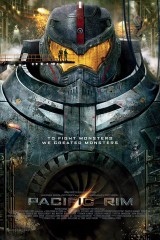
We’ve already known for a while that Guillermo del Toro was working on a sequel to last year’s robots-vs-kaiju monster movie Pacific Rim, but this week, the project was confirmed by that (sometimes reliable) bible of film development: the release schedule. Universal Pictures and Legendary Pictures have announced that Pacific Rim 2 will be released on April 7, 2017 in 3D and IMAX 3D theaters. Guillermo del Toro will again be directing, and is currently writing the script with Zak Penn (cowriter of The Incredible Hulk and Marvel’s The Avengers). Between now and 2017, del Toro will also be working on a Pacific Rim animated TV series, Pacific Rim graphic novels, The Strain TV series, and the haunted house film Crimson Peak, which Universal and Legendary are releasing on October 16, 2015.
Director Sam Raimi became nearly synonymous in recent years with eye candy movies because of his three Spider-Man films, Disney’s Oz the Great and Powerful, and the horror film Drag Me to Hell. This week, Raimi came on board to produce and possibly direct an adaptation of a book by CNN reporter Jake Tapper which would be a departure from that career track. Tapper’s war memoir The Outpost: An Untold Story of American Valor describes a battle in 2009 at Combat Outpost Keating near the Afghanistan border with Pakistan. The 53 U.S. soldiers there found themselves surrounded by nearly 400 Taliban combatants in a bloody clash on October 3, 2009. If Sam Raimi does sign on to direct The Outpost, it will be his first war movie, following previous genre experiments with the thriller (A Simple Plan), the western (The Quick and the Dead), and sports movies (For Love of the Game).
Everything went so spectacularly well on the Apollo 11 mission on July 20, 1969 that reactions to this day range from conspiracy theories to taking it for granted (the moon landing predates many of our readers’ births, obviously). There’s evidence that the success of Apollo 11 was far from a certainty in 1969 (and that’s supported by the events depicted in Apollo 13). When former White House speechwriter William Safire died in 2009, one of the documents found in his papers was a speech titled, “In Event of Moon Disaster.” The speech was to have been read by President Richard Nixon if something had gone wrong with the Apollo 11 mission. Now, the disaster that didn’t happen is going to be adapted as a fictional moon disaster movie with that very title. Tate Taylor, who became famous for directing The Help, and directed the upcoming James Brown biopic Get On Up, will direct and produce In Event of Moon Disaster. The project is on something of a fast track, with casting expected to start soon in preparation for an early 2015 filming start date. And speaking of Apollo 13, that film’s star Tom Hanks also made the news this week because he will have a “brief role” with frequent costar Meg Ryan in her directorial debut, called Ithaca.
The argument can certainly be made that the success of the Marvel movies is establishing artistic relationships that Disney is then able to apply to their other films. Take, for instance, the studio’s live action/CGI animated update of Rudyard Kipling’s The Jungle Book. We already knew that The Jungle Book was going to be directed by Jon Favreau (Iron Man and Iron Man 2), and that Kaa the python would be voiced by Black Widow herself, Scarlett Johansson. This week, we also learned that a third Iron Man alumnus, Sir Ben Kingsley, will be providing the voice of the black panther Bagheera. (Or, maybe, he’ll be playing the guy providing the voice of an animated panther. Epic Mandarin burn!)
Obviously, if Warner Bros and DC Comics are serious about building their own cinematic universe to compete with Marvel, they’re going to be doing a lot of casting in the next few years. The argument can also be made that the Batman v Superman: Dawn of Justice cast is getting kind of crazy huge. We’ll just skip listing the other 13 actors by linking to Wikipedia, and focus on announcing that the 14th cast member of the movie will be the awesomely named Scoot McNairy. Although most people don’t know the face or the name yet, McNairy does come to this movie with some interesting connections. He costarred with Ben Affleck in Argo, worked with the competition on Marvel One-Shot: Hail to the King, and starred in Monsters, the first film from Warner Bros’ darling and Godzilla director Gareth Edwards. We don’t know yet who Scoot McNairy will be playing in the DC movies, but top contenders include Green Lantern and the Flash, though for all we know, he might be playing Elongated Man, the Atom, The Creeper, Blue Beetle, or Booster Gold. And that’s why this is a borderline Rotten Idea… Batman v Superman: Dawn of Justice nearly has more characters than would fit in three movies, much less one.
There was so much scandal about what was going on away from the cameras that the actual release of Snow White and the Huntsman almost seemed to be an afterthought. Of course, the movie brought in almost $400 million worldwide, so maybe the controversy helped, too. Universal was definitely left with some conundrums about how to carry on as if Snow White and the Huntsman was the start of a franchise. Their solution appears to be to drop the director, drop the Snow White, and give the world Frank Darabont’s The Huntsman. Frank Darabont is, of course, a well known genre figure because of his work on Stephen King adaptations like The Green Mile, The Shawshank Redemption, and The Mist, and also for being the original showrunner on AMC’s The Walking Dead. Darabont’s not the reason this is a “Rotten Idea;” it’s because Snow White and the Huntsman had a Tomatometer rating of 48% (Rotten). Chris Hemsworth and Charlize Theron are expected to return in lead roles, but Kristen Stewart is not (though she may still have a very small cameo).
This week, the Michigan Film Office announced (and confirmed) that the fourth Beverly Hills Cop movie (which has the same title as the first film) will be filmed and set entirely in Detroit and Michigan. The premise is that, after decades of living and working in Beverly Hills, Axel Foley will have to return to the mean streets of Detroit. Paramount has scheduled Beverly Hills Cop for March 26, 2016, against the disaster movie Geostorm. Director Brett Ratner’s Tomatometer is the reason Beverly Hills Cop is one of the week’s Rotten Ideas.
Obviously, if superhero movies are going to continue to dominate Hollywood, there is going to need to be evolution and experimentation, including new genres and approaches. And maybe we should have seen this one coming when 20th Century Fox hired Chronicle director Josh Trank for their 6/19/15 reboot of The Fantastic Four. But here we are, as the president of production at Fox has revealed that the film will likely have “found footage elements… It’s Josh, so it can’t not have that feel.” So, just imagine what that means… We’re going to have Reed Richards recording Johnny Storm and the Thing fighting their frustrations out on his GoPro. Yay? In other Marvel news, Edgar Ramirez of Deliver Us from Evil has revealed that he has been talking to Marvel about a role in Doctor Strange (possibly as the villain Baron Mordu, whom he sort of resembles?). And, yes, there was also the news about a Nathan Fillion cameo in Guardians of the Galaxy, but not as who he probably heard he’d be playing. Instead, there’s a rumor that Nathan Fillion might be voicing the Russian space dog Cosmo. Getting back on our Rotten headline for the close, what do the commenters think? Should the adventures of the Fantastic Four be depicted via “found footage”?
For more Weekly Ketchup columns by Greg Dean Schmitz, check out the WK archive, and you can contact GDS via Facebook.
This Week’s Ketchup features one of the most bizarre video game adaptation concepts ever announced (Asteroids?), news about Predators and Resident Evil 4, new projects for Seth Rogen and Julianne Moore, a couple of movies based upon interesting sounding books and we take you into the Independence Day weekend with one of the worst ideas for a remake ever, ever, ever announced.

Sometimes, things are called classic because they are just plain old, but rarely, the title is truly earned. Citizen Kane and Casablanca are classic movies, for example, while I Accuse My Parents is just plain old. One of the video games that truly earns the title of “classic” is Atari’s 1979 hit, Asteroids. Asteroids was sublimely simple, with the player controlling a spaceship in a field of colliding rocks, and visually stunning for the time, thanks to its line-based “vector” graphics, with an “easy to learn, difficult to master” gameplay that was sort of like outer space billiards. There was no story to Asteroids, but it didn’t need one, as all you needed to know was that those rocks made you die. This week, however, Atari sent the idea of an Asteroids movie out for a Hollywood bidding war, and so Universal Pictures beat three other studios for the rights. Universal is sort of becoming the home of movies based on concepts that have no inherent plot, since they are also developing all those movies based on board games like Battleship and Candyland. The job of turning Asteroids into a 90+ minute movie has been handed to Matt Lopez, cowriter of Bedtime Stories, Race to Witch Mountain and the upcoming The Sorcerer’s Apprentice. Lopez’s background seems to be particularly family friendly, so one has to wonder if this means Universal intends Asteroids to be more of a kids movie than say, the gritty, violent science fiction tale of one man, one ship and a crapload of giant rocks.

Harry Knowles of Ain’t It Cool News scored an interview this week with Robert Rodriguez about his producing duties on the “re-inventing” project that is Predators. Confirmed in the piece is that the story will be about a group of people stranded on a planet full of Predators, and that production of the 20th Century Fox movie will start this fall, 2009 in Austin, Texas. The biggest revelation, however, is that the director of Predators will be Nimrod Antal (Vacancy, Kontroll), whose next film is this December’s heist movie, Armored. Although that means Antal now has three movies under his belt, what all three films appear to have in common is an emphasis on character-based tension, but not so much on the sort of visual spectacle that one might expect from the director of a Predators movie. That could be interpreted as both a good thing (if Predators focuses more on suspense than action), or potentially a bad thing, as we don’t really know if Antal knows how to shoot action scenes. Fox apparently has high hopes for Predators, regardless, as they have pegged the movie for a July 7th, 2010 release date.

Apparently following up on where Resident Evil: Extinction ended, Sony Pictures has quietly scheduled Resident Evil: Afterlife for a September 17, 2010 release date. Paul W.S. Anderson (NOT the There May Be Blood and Boogie Nights guy), who directed the first Resident Evil, and wrote all three previous movies, also wrote Resident Evil: Afterlife, and there is no word yet on who will be directing this fourth movie. Soon after this news broke, Milla Jovovich confirmed in a paparazzi interview that she is looking forward to filming this fourth movie, which will start filming this fall, 2009. As anyone who saw the ending of Resident Evil: Extinction knows, not only will Milla Jovovich be back for the sequel, which is set in Japan, but she will be back in a big way (but saying more than that would be a spoiler). The Resident Evil movies are based upon the popular franchise of Capcom survival horror video games, although since Resident Evil: Extinction, they now sort of exist in their own parallel storyline. The latest game in the series, the Africa-based Resident Evil 5, was released in March, 2009.

As filming continues on the two parts of the final entry in the franchise, Harry Potter and the Deathly Hollows, the film franchise that sprang from the pen of J.K. Rowling is nearly done with its effort to give at least some employment to nearly every living British actor of import. And so, the latest Brit to be able to tag along for the ride is Bill Nighy, who you may remmeber as the rock star in Love, Actually, one of the boss vampires in the Underworld franchise, Davy Jones in the Pirates of the Carribean or Shaun’s stepdad in Shaun of the Dead. What exact role Bill Nighy will be playing hasn’t been 100% officially confirmed yet, but almost all of the online speculation seems to agree that Nighy will most likely be playing Rufus Scrimgeour, the latest Minister of Magic, who is described as looking like an old lion, with bushy eyebrows. Since it’s pretty easy to imagine Bill Nighy playing exactly such a character, that’s probably where the speculation comes from. Another Brit who will be joining the movie franchise in these 7th and 8th movies is Rhys Ifans (Notting Hill, Danny Deckchair), who will be playing Xenophilius, Luna Lovegood’s father. Part I of Harry Potter and the Deathly Hollows is scheduled for November 19, 2010 and Part II, wrapping up the series, is scheduled for July 15, 2011.

DreamWorks is firming up a deal in the high six figures to preemptively acquire the film rights to an upcoming series of six young adult novels in a series titled I am Number Four, which Transformers and Pearl Harbor director Michael Bay will also produce, and possibly direct. The concept of I am Number Four is that nine teenage aliens escape their planet just before it is destroyed by an alien enemy, and attempt to assimilate themselves into life at an Earth high school, but the lead character soon discovers that he is being hunted by the alien that destroyed his homeworld. A very interesting bit of trivia about the novels is that one of the two writers, who worked under a pseudonym, is one James Frey, who made the news a few years back when his “memoir” A Million Little Pieces was revealed to be highly fictional, leading to a showdown on The Oprah Winfrey Show in which Oprah took Frey sternly to task. One has to wonder now if that means that when Frey writes a book about alien teens living on Earth, if perhaps his “fiction” is in fact based on real events, right? Since Transformers is itself the story of aliens on the run and in battle on Earth, it is easy to see the parallel to I am Number Four, and why Michael Bay may be considering directing it. Personally, I welcome the idea of Michael Bay directing six movies based on this franchise, because that would then potentially mean that would be six movies based on things that I might actually care about that Michael Bay wouldn’t have his hands on.

Drew McWeeney of HitFix.com, AKA Moriarty of AICN, is reporting that one of the movies that Seth Rogen is considering is a road movie called Mother’s Curse, in which he would costar with Barbra Streisand, presumably as his mother. No other plot details were revealed, or who the writer or director might be, with the only other detail being that it is a DreamWorks project. McWeeney speculates that Mother’s Curse could be an opportunity to explore the comedic chemistry between Rogen and Streisand in a way similar to what Albert Brooks and Debbie Reynolds had in Mother, and obviously, to what Streisand and Ben Stiller had in Meet the Fockers. Although she works only sparingly, it would indeed be nice to see “Babs” doing another comedy some day outside the Fockers franchise (it’s likely that she will appear in the next movie, Little Fockers).

Julianne Moore and Annette Bening have been cast to play a lesbian couple in The Kids Are Alright (which takes its title from a song by The Who, and was also the title of a rockumentary about the band). The Kids Are Alright is an independent dramedy from director Lisa Cholodenko (High Art, Laurel Canyon), which she also cowrote with Stuart Blumberg (Keeping the Faith, cowriter of The Girl Next Door). Mia Wasikowska (who will be starring as Alice in Tim Burton’s Alice in Wonderland) and Josh Hutcherson (one of the kids from Journey to the Center of the Earth) will star as a sister and brother who seek out the man who was their sperm donor, played by Mark Ruffalo, which as one would expect, upsets the balance of their family. Cholodenko’s films have been mostly great (I’ll ignore Cavedweller), and so this movie sounds very promising. Filming started on Tuesday, which at the pace independent movies are produced means that it could feasibly be done in time for next January’s Sundance Film Festival, which I would speculate The Kids Are Alright has a very good chance at playing at (High Art won the screenwriting award there, and Laurel Canyon also screened at the festival).

Three producers are teaming up to adapt Havana Nocturne, the New York Times best selling non-fiction book by T.J. English, a tale of the American mobsters, including Meyer Lansky and Lucky Luciano, who thrived in the 1950s in pre-Castro Cuba. Movie fans will fondly remember that Havana played prominently in the plot of The Godfather Part Two, and another notable (but not particularly good) gambling-based movie set in that era was 1990’s Havana, starring Robert Redford. The three producers involved are Gil Adler (Valkyrie, Constantine), Eric Eisner (Hamlet 2) and Shane McCarthy, who has a biopic about mobster Robert Cooley set up at Paramount. Matt Cirulnick, who cowrote 2002’s Paid in Full and the video game True Crime: New York City, has been hired to adapt English’s book, the full title of which, pretty much describes the plot: Havana Nocturne: How the Mob Owned Cuba and Then Lost It to the Revolution. Producer Eric Eisner said, “We really want to show Havana and Cuba as a character at a time that it’s booming… This is about mobsters who don’t only control a few business but try to control an entire country, and the tension that results when their plans go awry.” The producers hope to film in Cuba, but will most likely have to settle for an alternative Caribbean location like the Dominican Republic.

BBC Films and Origin Pictures have secured the rights to the upcoming suspense thriller novel Ordinary Thunderstorms by William Boyd, which the producers are excited about for its London setting, allowing the British filmmakers to make a “highly compelling” thriller which becomes a chase movie as the lead character races around London locations. Set against the backdrop of a London-based drug testing conspiracy, in Ordinary Thunderstorms, an innocent man is framed for a crime he did not commit and is forced to go on the run. The book’s author, William Boyd, also has a background as a screenwriter (A Good Man in Africa; cowriter of Chaplin), and so he will adapt his own work. Producer David Thompson noted that it’s “very rare to come across a big London-set thriller that is both sophisticated and unpredictable in equal measure.” There’s no word yet on who BBC Films and Origin Pictures will be hiring to direct Ordinary Thunderstorms, and at this early stage, likewise no word on who would star, or when filming might start.

It appears that Unstoppable, the runaway train action thriller that was to star Denzel Washington and Star Trek star Chris Pine, is indeed stoppable, as 20th Century Fox is close to pulling the plug on the project which had been given a greenlight to start production this fall, due to budget concerns. Unstoppable was to have been the fourth collaboration between Denzel Washington and director Tony Scott, following Crimson Tide, Deja Vu and last month’s The Taking of Pelham 1 2 3. Considering that Pelham was also a “train thriller,” one has to speculate that Fox is seeing a parallel between that movie’s budget ($100+ million), its inability to break north of $60 million, and the projected budget of Unstoppable which was in the same range. This news also comes just a week after Sony pulled the plug on Steven Soderbergh’s baseball drama, Moneyball, starring Brad Pitt. In other news of movies being cancelled, beloved visionary director Terry Gilliam also revealed this week that his science fiction project set in the world of computer science, The Zero Theorem, has also been scrapped. Gilliam has a long history of projects being stalled or cancelled, with his retelling of Cervantes’ Don Quixote, The Man Who Killed Don Quixote, being the most famous example, as it was shelved in mid-production, as documented in the brilliant documentary Lost in La Mancha. However, the project is now being revived, Gilliam hopes, although who might star in the movie is still up in the air. Although the director has told Johnny Depp, who participated in the first attempt, that the role is still his if he wants it, Gilliam is now saying that it seems likely that he will have to go with another actor. And of course, Terry Gilliam was forced into another situation of having to replace a star following the death of Heath Ledger, leading to the actor being replaced in different parts of The Imaginarium of Doctor Parnassus by Jude Law, Colin Farrell and… Johnny Depp. Long since finished, The Imaginarium of Doctor Parnassus still has not yet found a distributor.

With Hollywood’s fascination with remake and reboot fever continuing with no sign of relief (thank or blame Star Trek), I am starting to resign myself, with a sigh, that if I’m going to go to any movies at all in the future, remakes are just something I will have to get used to, to some degree. However, there are just some movies that absolutely, positively do not need to ever be remade in any form. Definitely in that category is John Landis’ 1981 slightly comedic werewolf horror film, An American Werewolf in London. That movie holds a particular place for me in my movie loving experience. 1982 was the year that my family got a VCR, and An American Werewolf in London was the movie that I rented most repeatedly in that year, watching it ad infinitum as a 11 year old kid, completely infatuated with the movie’s wry writing, comedic timing and fantastic werewolf transformation scenes, thanks to that visionary madman, Rick Baker. I would even speculate that it’s possible that I’ve seen An American Werewolf in London more times than I’ve seen any single Star Wars movie. The movie just works that well. And so, it with no understatement that I can say that I am absolutely mortified to hear that John Landis has sold the rights to remake An American Werewolf in London to Dimension Films, to be developed by Bryan and Sean Furst, who also produced the upcoming post-apocalyptic vampire film, Daybreakers. In 1997, a horrible sequel, An American Werewolf in Paris, was made, but in a way, I would actually welcome much more another sequel, even if it would probably suck, than to see someone trying to replicate that original movie, especially considering that they will probably try to replicate Rick Baker’s work using CGI werewolves. That’s where we are today, when we are actually starting to get nostalgic for sequel fever, rather than seeing yet another favorite movie getting the dreaded remake treatment.
For more Weekly Ketchup columns by Greg Dean Schmitz, check out the WK archive, and you can contact GDS through his MySpace page or via a RT forum message.
This week’s Ketchup sees Hollywood continuing its love affair with remakes,
sequels, and movies based upon old toys and comic strip orange cats, as well as
yet another Hamlet movie.

Arnold Schwarzenegger might not be making movies anymore, but his filmography
is quickly becoming one of the most mined resources for remakes and sequels.
First up, there is the news that Columbia has
chosen Total
Recall remake writer: Kurt Wimmer, writer/director behind Equilibrium
and Ultraviolet, and scripter behind in-production projects Salt
(starring Angelina Jolie) and Law Abiding Citizen (Jamie Foxx and Gerard
Butler). Next up is
a Moviehole report of Robert Rodriguez supposed interest for Schwarzenegger
reprising his Dutch Schaefer role for Predators cameo. (That’s the
Predator sequel Rodriguez is producing, scheduled for a July 2010 release.)
And finally, there’s a rumor
from JoBlo that 1985’s Commando is being eyed for the remake treatment.

The two Garfield movies have proven an audience exists for movies
about fat orange CGI cats, convincing rights holders of Heathcliff to
begin development
of multiple projects, which may include a live-action movie. First is a 2011
direct-to-DVD animated movie, which could also be expanded to a theatrical
release “if the material warrants” it. Heathcliff got his start as
a comic strip
in 1973 (5 years before Garfield), then starred in two different Saturday
morning cartoon shows during the 1980s. Although Heathcliff and Garfield look
very similar, Heathcliff is an alley cat, while Garfield is very definitely a
house cat. Means Heathcliff actually moves around and has adventures, whereas
Garfield traditionally just… sits there.

These days, there’s no shortage of kids book franchises that extend into
dozens of entries, but once upon a time, most school libraries had only three:
The Hardy Boys, Nancy Drew and…
Tom Swift, who made his
debut all the way back in 1910. Unlike his detective competitors, Edward
Stratemeyer’s (under the pen name Victor Appleton) Tom Swift was a globetrotting
adventurer and inventor, with many of his ideas eventually becoming realities,
with the most famous example being the Taser, which is an acronym that stands
for Thomas A. Swift’s Electric Rifle. Other examples include the electric
railroad, FAX machine and the house trailer. Tom Swift is also in general one of
the earliest examples of the “boy adventurer,” and so with Jonny Quest
set to get his own movie soon, it’s perhaps no surprise that Columbia Pictures
has acquired the
rights for a Tom Swift movie as well. The idea of a Tom Swift movie is not
new, as in the 1960s, there were plans for a movie musical starring Gene Kelly,
and there was another attempt in the 1970s. Tom Swift is being coproduced and
will be directed by Barry Sonnenfeld, the visually creative director who gave us
movies like Men in Black, The Addams Family, Wild Wild West
(which despite outright sucking did indeed look great and featured a lot of
Swift-like steampunk inventions) and the day-glo Pushing Daisies TV
series.

As Hollywood’s reboot/remake fever continues to get really crazy, people are
right to worry whether true classics like The Godfather and Citizen
Kane might be next. With horror, one movie that has achieved comparable
status is The Exorcist. Vertigo Entertainment, the company behind the
J-horror remakes like The Ring and The Grudge, probably could have
secured the rights to remake The Exorcist, but instead have opted a
slightly higher moral road and optioned the rights to
the original book,
The Real Story Behind the Exorcist: A Study of the Haunted Boy And Other
True-Life Horror Legends from Around the Nation’s Capital. This book doesn’t
attempt to tell the story of the 1949 true story that inspired William Blatty to
write The Exorcist, but instead recounts a reporter’s attempt to find the
possessed boy, sixty years earlier. So, if anything, this is a sequel. Even if
it is trading on the fame of another movie, The Real Story Behind the
Exorcist sounds like an attempt to take a somewhat original angle.

In March, The Haunting in Connecticut opened to a surprising $23
million, so it’s no surprise Lionsgate is
developing the concept
into a trilogy. Like Connecticut, Haunting in New York and
Haunting in Georgia will be based on episodes from
A
Haunting, the paranormal reenactment series that airs on the Discovery
Channel. New York will be about a single mother whose mentally handicapped
daughter appears able to communicate with spirits, while Georgia will
tell the tale of a four year-old girl with imaginary friends, whom the girl’s
parents suspect might be evil ghosts (and yes, this element was part of The
Amityville Horror as well) when their daughter wakes with claw marks across
her face. In both stories, families turn to paranormal experts. Given
Lionsgate’s love for extending horror franchises for as long as possible (Saw),
this might just be the tip of the iceberg. Maybe in 2049, your kids will be
talking about plans for The Haunting in New Hampshire and The Haunting
in Nebraska.

In a six-year Hasbro toy deal that included the rights to Ouija,
Monopoly, Candyland and Battleship, the first movie to receive
a greenlight for Universal will be Stretch Armstrong, slated for an April
15th, 2011 release. Based upon the obscure 1970s toy that let kids pull on a
barechested man’s rubber arms and legs, Stretch Armstrong is being
produced by Brian Grazer, who commented that Stretch is “a character I have
wanted to see onscreen for a long time.” Afterwards, he probably asked for
agreement from the crowd and heard back only the sound of crickets. Steve
Oedenkerk (Patch Adams, Evan Almighty) is working on the
Stretch screenplay, and there’s no word yet as to who will direct, although
with the release date less than two years away, Universal will have to decide
soon. In other Universal kid movie news, and because I didn’t know where else to
stick it, the studio this week has pulled the Where’s Waldo? project
out of turnaround
from Paramount and Nickelodeon. Maybe why it fits at universal is that, like
Stretch Armstrong, it’s hard to see (get it?) how they will stretch (zing!)
the concept into a 90+ minute movie.

Doing the publicity rounds for the DVD release of Valkyrie, director
Bryan Singer revealed
this week that he is “possibly” interested in returning to the X-Men
movie franchise with X-Men Origins: Magneto. It’s looking more and more
likely that Singer won’t be returning for a second Superman movie after
the flawed Superman Returns, but the director is still fondly remembered
for the two X-Men movies he directed, which were very, very good. Singer
makes note, however, that the thematic quandary in directing Magneto will be
that he’s already done a couple of Nazi-themed movies (Apt Pupil and
Valkyrie), as well as the Magneto flashback in X-Men. Says Singer:
“I’ve lived in that Nazi universe for quite a while. I just might need to take a
little break before I do something like that.”

One movie that almost made last week’s Ketchup was The Surrogate, the
next thriller from director Paul Verhoeven (Basic Instinct, Total
Recall). This week, the little detail that lands the movie on the list is
news that Halle Berry is
in talks with
20th Century Fox to star. Berry took a couple of years off after 2007’s
Things We Lost in the Fire to have a baby, and recently filmed the multiple
personality drama Frankie and Alice as her comeback. The Surrogate
is about a couple who discover that the woman they hire to be their surrogate
mother is crazy, but it’s unclear whether Berry would be playing the title
character, or the woman whose fertilized egg she’s carrying. If Halle Berry is
indeed to play The Surrogate, this will complete a “crazy lady” trilogy
of sorts, following Gothika and the aforementioned Frankie and Alice.
The Surrogate was written by the father/son team of Rod and Bruce Taylor
(The Brave One) from a novel by Kathryn Mackel, and although there’s no
filming start date yet, the casting of Halle Berry suggests it might be sooner
rather than later.

Hamlet is one of William Shakespeare’s most movie-adapted plays, with
previous actors playing the Danish prince including Laurence Olivier, Niccol
Williamson, Mel Gibson, Kenneth Branagh, and Ethan Hawke, who, at 29, at the
time currently holds the record as the youngest actor, notable since Hamlet is
supposed to be young. Emile Hirsch, 24 and star of Into the Wild and
Speed Racer, wants to break that record. He’s
come up with an idea
for a modernized American Hamlet as a “suspense thriller” about “a young
man [who] must decide whether to kill his uncle to avenge the death of his
father.” This
new Hamlet will be directed by Catherine Hardwicke (Twilight,
Lords of Dogtown, also starring Hirsch) from a script by Ron Nyswaner (Philadelphia,
The Painted Veil). Overture Films (Traitor, Righteous Kill)
hopes to start production soon after the script is finished.

This week saw the announcement of two thematically-tied movies: they’re both
for kids and features an ensemble of monsters. First up is the stop-motion
animation project
Monster Safari, which will set off Interweb nerd bells because it
represents a collaboration between screenwriters Craig Zobel and Matt Chapman,
(creators of Homestarrunner), Screen Novelties (the company behind
Robot Chicken and Moral Orel), and the Jim Henson Company (The
Muppets, obviously). Monster Safari is the story of “what happens
when the Earth’s monsters come out of hiding and a pair of bumbling
crypto-zoologists spring into action to save them from a ruthless big-game
hunter.” Another Robot Chicken-related news story: show writer, Dan
Milano, has been
hired to work on Short Circuit; Dimension Films hopes he’ll bring a
“subversive edge” to the remake. Dimension will be keeping the same look for the
new Number 5, with a producer noting that “we think of Wall-E as an
extended trailer for our film.” Going back to the monster angle, Universal has
made a “big bucks
deal” for an untitled upcoming Mattel toy property, which they will turn into a
musical written by Hairspray team Marc Shaiman and Scott Wittman.
Although no details were revealed about this monster musical, the words “lore”
and “mythology” were used in the article, and it is important to remember that
Universal is the home of such classic monster franchises as Dracula,
Frankenstein, The Mummy, The Invisible Man, The Wolfman,
Creature from the Black Lagoon, King Kong, and Dr. Jekyll and
Mr. Hyde. The two possibilities I see are that Universal could see whatever
this new Mattel toy franchise is as being the latest addition to their monsters,
or it could in fact be a toy version OF those monsters.

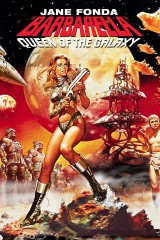
Recently, Robert Rodriguez confirmed that he would no longer be developing a
remake of Barbarella, the schlocky 1968 sci-fi movie starring Jane Fonda,
which would have starred his girlfriend Rose McGowan. This week, however,
Entertainment Weekly
broke the
news that the remake project is being continued by Dino de Laurentiis
(outside Universal, where the Rodriguez project was), with a very different type
of director now attached: Robert Luketic (Legally Blonde,
Monster-in-Law, 21). Where Robert Rodriguez could be seen as bringing
a frenetic visual energy to a Barbarella remake (see: Grindhouse,
Sin City, Spy Kids, etc), Robert Luketic’s first two movies were
just very vanilla comedies, and 21 was different from them, but nothing
about it suggested anything along the crazy lines of Barbarella.
Basically, this news gets the “Rotten Idea of the Week” tag because the idea of
a Barbarella remake only seemed “fresh” when a director like Robert
Rodriguez was attached. It’s not so much that Barbarella is such a
revered classic that it can’t be touched (in fact, the original was kind of
crappy), but just that Luketic seems like such a bland choice for a remake of a
movie that, despite being flawed, was a randy and sexy landmark of the 1960s.
For more Weekly Ketchup columns by Greg Dean Schmitz, check out the WK archive, and you can contact GDS through his MySpace page or via a RT forum message. Greg also blogs about the TV show Lost at TwoLosties.Blogspot.com.
With the passing of Oscar-winning makeup and special effects artist Stan Winston, RT decided to take a closer look at one of Hollywood’s most innovative and influential behind-the-scenes figures, a man whose work changed the way that the movie industry brought special effects magic to the screen.
Stan Winston is proof, if any were needed, that dedicated, inspired craftspeople can leave as indelible a mark on movies — and audiences — as any director or actor. In his four-decade career, Winston’s work was consistently inventive. He won an Emmy for his makeup work on the TV adaptation of The Autobiography of Miss Jane Pitman, aging Cecily Tyson 19 to 110. More recently, he helped bring Iron Man to exhilarating, vivid life. But Winston was no mere craftsman; as he once said, “I don’t do special effects. I do characters. I do creatures.” This week’s Total Recall takes stock of some of Winston’s most memorable cinematic creations, many of which have left a profound mark on the imagination.
 more info… |
The Terminator (1984, 100 percent) Terminator 2: Judgment Day (1991, 97 percent) The first two Terminator films are perhaps the best examples of how Winston’s work changed with the times — and influenced cinematic technology to come. On the low-budget Terminator, Winston crafted the machine’s exoskeleton with puppetry and animatronics. He would use similar applications on T2, but with greater complexity, and combined with the molten, shape shifting CGI, the sequel was huge leap forward for special effects (he won two Oscars for the film, for Best Visual Effects and Best Makeup). The Terminator began a fruitful partnership with James Cameron; they would work together on several more projects, and co-founded Digital Domain, a cutting edge digital effects company. He also remained close to Arnold Schwarzenegger, who has referred to Winston in recent obituaries as “one of my best friends.” |
|
|
|
 more info… |
Aliens (1986, 100 percent) Taking over the helm of the Alien franchise, James Cameron brought Winston with him. They had their work cut out for them; how do you improve on Ridley Scott’s taut, nightmarish direction and H.R. Geiger’s iconic creature? The answer: go bigger and badder. While Cameron pumped up the action, Winston created a truly terrifying expansion on the original creature: the giant alien queen, a 14-foot tall combination of frightening power and dizzying speed. Supported by a crane, and utilizing a complex system of hydraulics, cables, a pair of puppeteers brought the menacing queen to life, and, in doing so, helped to deepen the legacy of one of horror and sci-fi cinema’s most memorable monsters and picking up an Oscar for Best Visual Effects. “The special-effects specialists are featured prominently in the credits that precede Aliens, and so they should be,” wrote Walther Goodman of the New York Times. “Under the direction of James Cameron, they have put together a flaming, flashing, crashing, crackling blow-’em-up show.” |
|
|
|
 more info… |
The Monster Squad (1987, 53 percent) In addition to his proclivity for blood and guts, Winston made a few forays into kid-friendly territory, creating effects for Mouse Hunt and directing the Anthony Michael Hall-toplined The Adventures of a Gnome Named Gnorm. In the cult fave The Monster Squad, Winston introduced some classic cinematic creeps to a new generation. The plot involves a group of pre-teen outcasts who revel in monster movies — and become the world’s only hope when some of their supposed favorites (including Dracula, the Mummy, Frankenstein’s monster, and the Wolf Man) start wrecking havoc. Praising Winston’s work, Filmcritic.com‘s Keith Breese wrote, “The Monster Squad combines goofy humor with real scares and genuine mystery.” |
|
|
|
 more info… |
Predator (1987, 78 percent) “The special effects have dated quite well, and the action scenes — shot by relative newcomer John McTiernan — work well, despite a few clunky spots,” wrote Jeffrey M. Anderson of Combustible Celluloid. |
|
|
|
 more info… |
Pumpkinhead (1988, 53 percent) Winston’s directorial debut tells the spooky tale of a father who, after summoning the titular demon to enact revenge against those who killed his son, learns there’s a price to be paid for his actions. Set in the Appalachian Mountains, Winston’s film blends the supernatural with fairy tales, and his bony, raptor-like creature is the stuff of nightmares. Given his duties as director, Winston delegated much of the special-effects work to others; nonetheless, he crafted a creepy morality tale whose cult has only increased with time. Rob Vaux of Flipside Movie Emporium called it “satisfying B-movie fun from effects maestro Stan Winston.” |
|
|
|
 more info… |
Leviathan (1989, 11 percent)
|
|
|
|
 more info… |
Edward Scissorhands (1990, 90 percent) With his pale, scarred visage, haunted eyes, and unkempt hair, “Depp is tender, affecting and, quite frankly, bloody pretty,” wrote Desson Thomson of the Washington Post. |
|
|
|
 more info… |
Jurassic Park (1993, 86 percent) Critics had plenty of bones to pick with the plot of Jurassic Park. However, virtually no one complained about the dinosaurs — least of all audiences, who were dazzled by the film’s technical marvels. Steven Spielberg used a number of state-of-the-art methods to bring his prehistoric terrors to life, from go-motion to groundbreaking CGI. Winston was called in to create animatronic dinosaurs, and the result was uncanny. Winston received yet another Oscar for Best Visual Effects (and would be nominated again for 1997’s The Lost World. “If they didn’t look real, if you didn’t believe their skin, their flesh, their reality… no matter how good the performances were, it wouldn’t be real,” Winston said in The Making of Jurassic Park. On that count, Winston and his crew succeeded wildly: “Jurassic Park does for live-action critters what Who Framed Roger Rabbit did for toons,” wrote Rita Kemply of the Washington Post. “In that sense, it’s a cinematic landmark.” |
|
|
|
 more info… |
Congo (1995, 20 percent) After the revolutionary CGI/animatronics of Jurassic Park, Winston used models and puppetry for another Michael Crichton adaptation, the ape-gone-ape flick Congo (since director Frank Marshall didn’t think computers could accurately duplicate the beasts’ fur). The film fared poorly with critics (“This glib, overheated film about vicious primates delivers little suspense,” wrote Janet Maslin of the New York Times), and fanboys were disappointed with the lack of digital razzle dazzle. However, Congo was an important film for Winston, who said his work on the movie was a learning process: “The next thing that I did was a movie called Instinct with Anthony Hopkins, which I think was the best gorillas I’ve ever scene on film, and I could never have done that movie if I had not made mistakes on Congo.” |
|
|
|
 more info… |
A.I.: Artificial Intelligence (2001, 72 percent) In his TV days, Winston was the makeup artist for a version of Pinocchio. So it wasn’t much of a stretch when, working on Steven Spielberg’s A.I., he was tasked with crafting animatronics that would make artificial humans as lifelike as possible. The result were a number of puppets that bridged the uncanny valley, as well as Teddy, a super toy that required five crew members to aid it in its movements. Winston’s work on the film impressed MIT scientists and the Academy, garnering his last Oscar nomination for Best Visual Effects. Critics found the film flawed but worthy, especially on a technical level; Michael Wilmington of the Chicago Tribune called A.I “a provocative, personal and intensely engaging picture made with big-studio resources and technical magic.” |
|
|
|
 more info… |
Iron Man (2008, 93 percent) When the adaptation of Iron Man was first announced, Marvel Comics fans eagerly anticipated the design of Tony Stark’s super suit. Winston, a big fan of the original comics, was tasked with the job, and he delivered, creating rubber and metal versions of the Iron Man suits, as well as an eight-foot, 800-lb. animatronic version of Stark’s nemesis, Iron Monger. Though Winston’s untimely passing is deeply sad, he went out on top of his game; Iron Man is the best-reviewed wide release of 2008 so far. “[Director Jon] Favreau has turned what might have been just another comic strip formulation into a completely engaging amalgam of storytelling, romance, performance, acrobatics and organically motivated effects,” wrote Jules Brenner of Cinema Signals. |
|
|
|
Winston’s credits by no means end there. His effects work also includes End of Days and Galaxy Quest, and The Wiz, The Thing,Friday the 13th Part III, and Constantine partially comprise his makeup contributions. He was also working on two forthcoming films at the time of his death: Speed Demon and Terminator Salvation: The Future Begins.
Here’s a clip from one of Winston’s earliest efforts, the made-for-TV film Gargoyles:
And, finally, here’s a clip of NBA all-star Steve Nash on a tour of Winston’s studios:
For more of Stan Winston’s filmography, click here.
Maybe Ice Cube had better hold off a bit on getting that mohawk for The A-Team. Woody Harrelson, though? He’s got a part ready for the taking.
So says director John Singleton, who found himself standing next to Collider‘s Frosty in a valet line last Friday, and was gracious enough to spend a few minutes talking about his plans for Fox’s big-screen adaptation of the ’80s television hit. While not specifically addressing rumors of Ice Cube stepping into Mr. T‘s gold chains as B.A. Baracus, Singleton did say the following:
“I don’t know who is in the cast yet, so all this…saying who is this person and who is…nobody is playing Mr. T — the character’s name is B.A. Baracus, he will have a Mohawk and there is a moment in the movie where he actually gets the Mohawk cause he’s going crazy. And I don’t know who is in the cast yet…but I do know that the only person I want right now is, that I really, really want is Woody Harrelson to play Murdock — the guy who is crazy but he’s kind of real smart, a jack of all trades. That’s the only person I really, really want.”
Harrelson as “Howlin’ Mad” Murdock. Pretty perfect, no?
Singleton also identified the writers responsible for the script’s most recent rewrite (Michael Brandt and Derek Haas), and took pains to clarify his vision for the movie’s overall tone:
It’s not a comic movie farce like Starsky and Hutch, it’s kind of in the tradition of the ’80s action pictures, the man’s movies like Die Hard, Predator, Commando, or even Lethal Weapon…The action is very serious, but there is humor. That’s what we are going for.
Finally (and unsurprisingly), anyone who signs on will need to agree to a multi-picture deal, as Singleton and the studio are eyeing The A-Team as a potential franchise. How does some sequel money sound, Woody?
Source: Collider