The latest: Grab some garlic bread, Scott Pilgrim is celebrating 15 years! (Actually, you know what? he just left.)
What makes a comedy a classic? Something that floats on the changing tides of time and taste, remaining relevant – and hilarious? It probably takes more than a football to the groin or a juiced-up fart on the audio track. (Though we’re not not saying those can sometimes be the pinnacle of professional-grade jokes.) We don’t have the answer, but with our Essential list assembling 150 of the best comedies ever made, we’re getting closer to laugh-out-loud enlightenment than humanly thought possible. We’re melting minds, splitting sides, and slapping knees here.
To that end, we’ve included all forms of the comedy movie. From slapstick (Dumb & Dumber, It’s a Mad, Mad, Mad, Mad World) to silent (The General, Modern Times). Rom-coms (Moonstruck, Annie Hall) to screwball (It Happened One Night, Bringing Up Baby). Parody (Airplane!, Scary Movie) to postmodern (Monty Python and the Holy Grail, Galaxy Quest). These 150 movies will take you to college (Animal House), past some fan favorites (Step Brothers, Super Troopers), and all around the globe (Kung Fu Hustle, Amelie).
There’s no minimum review count for this list. We opened it up to movies of yesteryear, which typically don’t get as many reviews as their modern comedy rivals. Many of these inducted films have high Tomatometer scores and are Certified Fresh, but the Tomatometer was not our only guide. Some comedies that stand the test of time did not necessarily pass the critical test on release, and we’re honoring those here. These are not the best-reviewed comedy films ever released, but they are the essential comedies, movies that broke the Laugh-O-Meter – we’ll totally trademark that soon, so dibs – shaped the genre, molded generations, and which audiences return to time and again, to lift the spirits.
That said, we did ultimately sort the movies by Tomatometer, with Certified Fresh films first. But follow your filthy laughing heart on which to tackle first!

Ready to whip out your funny bone and bash it violently on the nearest flat surface? Then you’re ready for our list of the best comedy movies ever: Rotten Tomatoes’ 150 Essential Comedies! —Alex Vo
 100%
100%
 92%
92%
 100%
89%
100%
89%
 99%
90%
99%
90%
 99%
87%
99%
87%
 98%
95%
98%
95%
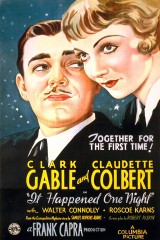 98%
93%
98%
93%
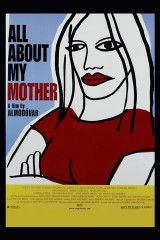 98%
93%
98%
93%

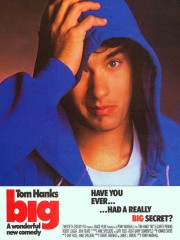 98%
82%
98%
82%
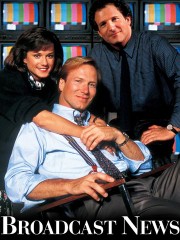 98%
79%
98%
79%
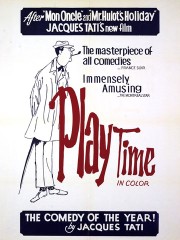 98%
89%
98%
89%
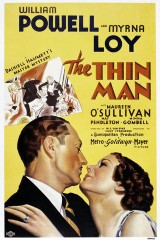 98%
93%
98%
93%
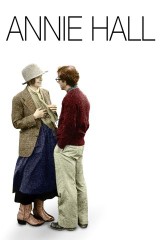 97%
92%
97%
92%
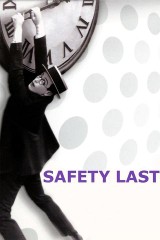 97%
93%
97%
93%
 97%
89%
97%
89%
 97%
89%
97%
89%
 97%
90%
97%
90%
 97%
89%
96%
77%
97%
89%
96%
77%
 96%
87%
96%
87%
 96%
94%
92%
95%
96%
94%
92%
95%
 96%
93%
98%
92%
96%
93%
98%
92%
 96%
84%
94%
78%
96%
84%
94%
78%
 95%
88%
95%
88%
 95%
94%
95%
94%
 95%
92%
95%
92%
 95%
92%
95%
92%
 95%
95%
95%
83%
95%
95%
95%
83%
 95%
77%
95%
77%
 94%
81%
94%
81%
 94%
88%
94%
90%
94%
88%
94%
90%
 94%
88%
94%
88%
 94%
85%
94%
85%
 93%
89%
93%
89%
 93%
88%
93%
88%
 93%
94%
93%
94%
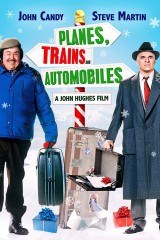 93%
87%
93%
87%
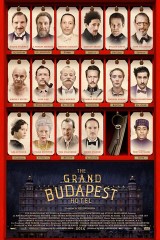 92%
87%
92%
93%
92%
87%
92%
93%
 92%
64%
92%
64%
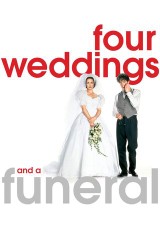 92%
74%
92%
74%
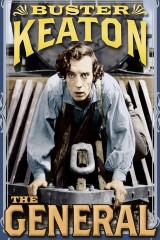 92%
92%
92%
92%
 - -
95%
91%
76%
- -
95%
91%
76%
 91%
89%
91%
89%
 90%
89%
91%
78%
90%
89%
91%
78%
 92%
85%
92%
85%
 91%
85%
91%
85%
 91%
91%
91%
91%
 91%
89%
91%
89%
 91%
81%
91%
81%
 90%
79%
90%
81%
90%
79%
90%
81%
 90%
89%
90%
89%
 90%
82%
90%
82%
 89%
76%
88%
89%
89%
76%
88%
89%
 89%
84%
89%
91%
89%
84%
89%
91%
 89%
91%
89%
91%
 78%
79%
78%
79%
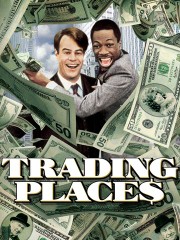 87%
85%
88%
88%
87%
85%
88%
88%
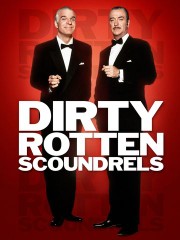 89%
84%
89%
84%
 88%
87%
88%
87%
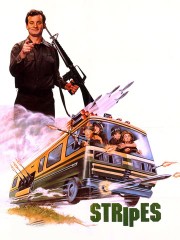 88%
79%
88%
79%
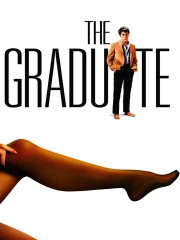 87%
90%
87%
90%
 87%
65%
85%
79%
87%
65%
85%
79%
 86%
82%
88%
84%
86%
82%
88%
84%
 86%
93%
86%
93%
 86%
95%
85%
78%
86%
95%
85%
78%
 85%
83%
85%
84%
85%
83%
85%
84%
 85%
64%
85%
64%
 85%
79%
84%
66%
84%
85%
79%
84%
66%
84%
 51%
84%
66%
51%
84%
66%
 84%
87%
84%
87%
 84%
80%
84%
80%
 84%
61%
84%
61%
 84%
81%
84%
81%
 83%
65%
83%
82%
83%
92%
83%
65%
83%
82%
83%
92%
 83%
75%
83%
75%
 82%
62%
82%
62%
 82%
84%
82%
84%
 83%
82%
83%
82%
 82%
84%
82%
84%
 81%
83%
82%
76%
81%
83%
82%
76%
 82%
93%
79%
93%
82%
93%
79%
93%
 79%
84%
79%
84%
 79%
81%
79%
81%
 79%
84%
79%
84%
 78%
65%
78%
65%
 78%
80%
78%
80%
 77%
80%
77%
80%
 75%
80%
75%
80%
 73%
87%
73%
87%
 100%
87%
100%
87%
 96%
86%
96%
86%
 96%
74%
96%
74%
 94%
81%
94%
81%
 84%
93%
84%
93%
 90%
85%
90%
85%
 89%
83%
89%
83%
 86%
91%
86%
91%
 86%
77%
86%
77%
 79%
77%
79%
77%
 77%
91%
77%
91%
 73%
77%
73%
77%
 73%
85%
73%
85%
 73%
65%
73%
65%
 72%
74%
72%
74%
 72%
72%
73%
86%
72%
72%
73%
86%
 71%
92%
71%
92%
 70%
77%
70%
77%
 71%
61%
71%
61%
 69%
83%
69%
83%
 69%
84%
69%
84%
 66%
86%
66%
86%
 64%
80%
64%
80%
 62%
61%
65%
85%
62%
61%
65%
85%
 54%
69%
54%
69%
 52%
83%
52%
83%
 53%
77%
53%
77%
 51%
43%
51%
43%
 49%
68%
49%
68%
 47%
57%
47%
57%
 47%
82%
47%
82%
 39%
64%
39%
64%
 39%
75%
39%
75%
 40%
90%
40%
90%
 37%
90%
37%
90%
(Photo by Neon/Courtesy Everett Collection. ANORA.)
Every year, after the fracas of awards season and studio campaigning, the Academy of Motion Picture Arts and Sciences hands out the ultimate prize in cinema, the explicit recommendation that if you’re only going to watch one movie, make it the one we picked. We’re talking the Oscar for Best Picture. Less than 100 of these have been handed out through the centuries. But ever wonder how the movies of this exclusive golden club would fare against each other?
Welcome to our countdown of every Best Picture winner ever, from the Certified Fresh (Casablanca, Schindler’s List, Argo, Lawrence of Arabia, The Godfather, The Lord of the Rings: The Return of the King…most of them, fortunately), the kinda Fresh (Out of Africa, Forrest Gump), to the ‘HUH? HOW?’ Rottens (The Broadway Melody, Cimarron).
See where all the films place in our guide to Best Picture Winners, Ranked by Tomatometer!
99%
99%
 99%
99%
 99%
98%
98%
98%
99%
98%
98%
98%
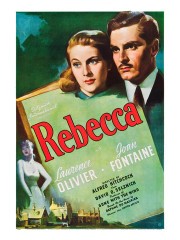 98%
98%
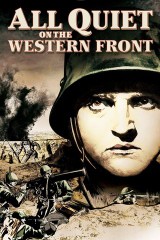 98%
98%
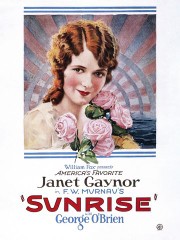 98%
98%
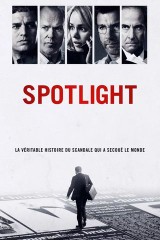 97%
97%
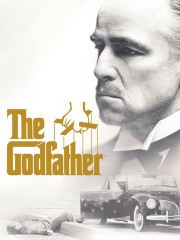 97%
97%
97%
97%
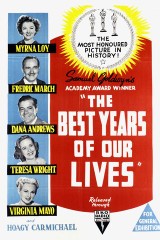 98%
98%
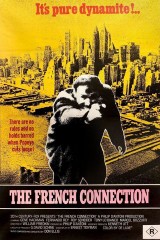 97%
97%
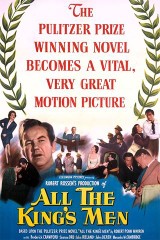 97%
97%
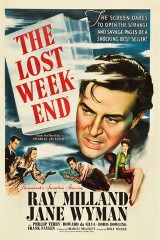 97%
97%
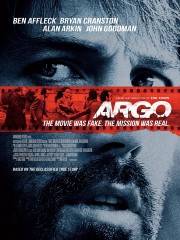 96%
96%
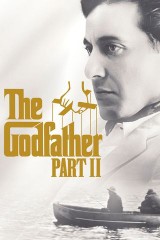 96%
96%
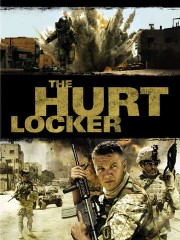 96%
96%
 96%
96%
 96%
96%
 96%
96%
 96%
96%
 96%
96%
 95%
95%
 95%
95%
 95%
95%
 95%
95%
 96%
93%
96%
93%
 94%
94%
94%
94%
94%
94%
 94%
94%
 94%
93%
93%
93%
94%
93%
93%
93%
 93%
93%
 93%
93%
 93%
93%
93%
93%
93%
93%
 93%
93%
 93%
93%
92%
93%
93%
92%
 92%
92%
92%
92%
 92%
92%
 92%
92%
 92%
92%
 91%
91%
 90%
90%
 90%
90%
90%
90%
 90%
90%
 90%
90%
 89%
89%
 89%
89%
 89%
89%
 90%
90%
 89%
89%
 90%
88%
88%
90%
88%
88%
 88%
88%
 87%
87%
87%
87%
 87%
87%
 85%
85%
 87%
87%
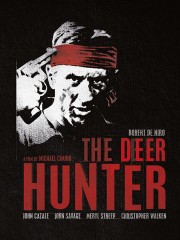 86%
86%
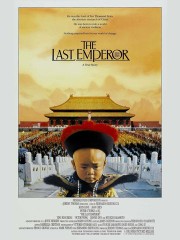 86%
86%
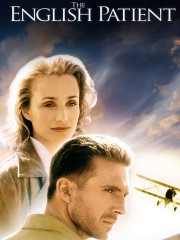 86%
86%
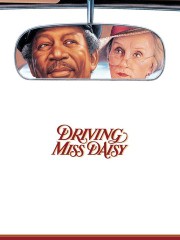 85%
85%
 84%
84%
 83%
83%
 83%
82%
83%
82%
 81%
81%
 80%
77%
80%
77%
 76%
76%
 75%
75%
 74%
74%
 73%
85%
72%
73%
85%
72%
 72%
72%
 64%
64%
 62%
62%
 52%
52%
 50%
50%
 42%
42%

(Photo by © Buena Vista Pictures / courtesy Everett Collection, © Columbia Pictures / courtesy Everett Collection, © Artisan Entertainment/ courtesy Everett Collection)
“Know Your Critic” is a column in which we interview Tomatometer-approved critics about their screening and reviewing habits, pet peeves, and personal favorites.
In speaking with Max Weiss about movies, culture, and her career, it becomes clear that she was destined to become a critic. She predicted movie endings and evaluated their plotlines as a kid; as a result, her critical style is conversational and deeply analytical. In addition to currently being a critic and Editor-in-Chief for Baltimore Magazine, she’s reviewed movies on broadcast TV and radio and written for New York Magazine.
But early in her life, Weiss thought being a writer meant being a novelist.
“I think that most young people who love to write, they think they want to write fiction,” Weiss said in an interview with Rotten Tomatoes. “Even though I actually have this super analytical mind, and I also have this complete love of popular culture, I just thought, Well, I love to write, so I’ll be a fiction writer.”
In college, a mentor guided her toward a different approach: “I had a teacher who very gently said to me, ‘Max, you’re a great writer, but you are not a great fiction writer.’ He was right!”
“Sometimes somebody can give you advice like that, and that’s a story: 20 years later… it’s like, ‘Aha, I proved you wrong!’,” she laughed. “But this wasn’t that. This was more like, You know what? He’s 100% right.”
Weiss quite simply loves writing and loves movies. And like many film fans, she wants to share the titles that excite her to facilitate conversations and think deeply about them.
Criticism, for Weiss, is “an art form in its own right.”
“I’ve always had such a passion for pop culture, for film, for television. Just really love to consume pop culture,” Weiss shared. “I thought, Oh, my God. I could combine my two loves into this one thing. That’s how I found film criticism.”
Max Weiss is Editor-in-Chief at Baltimore Magazine and a film and pop culture critic. Find Max on Twitter: @maxthegirl.
What is your favorite film from your childhood?
E.T. – although I will say that, even as a child watching E.T., I was sophisticated enough to know that E.T. wasn’t going to die. There’s a point in the film, with about maybe 45 minutes to go, when you think maybe E.T. has died. Little pint-sized Max was like, “He’s not dead. There’s still an hour of the film to go.” I was sophisticated enough even then.
What a magical experience that movie is. There’s just something about Spielberg and the kind of magic that he’s been able to accomplish. It’s why we go to the movies, that just sort of wonderful, shimmering suspension, beauty mixed with humor, pathos, excitement.
What is your favorite memory of watching something in a theater?
The Sixth Sense… First of all, it’s a very captivating film. It remains M. Night Shyamalan‘s best film. When the twist came through – the audible gasp in the audience, none of us saw it coming!
It was such a great experience to see that film going in blind. Who is this young filmmaker? Why is Bruce Willis involved in this project? Oh, my God. Look at this amazing child actor!
Do you usually go in cold when you’re reviewing something?
I’m a “read the back page of the book jacket” kind of person. I’m a “watch the trailer” kind of person. Maybe it’s because I’m a control freak – I like to have some sense of what I’m getting myself into as opposed to just completely succumbing to the experience.
What has been your favorite release that you’ve seen this year so far?
A documentary called Fire of Love. It’s about these two volcanologists who fell in love. It’s an amazing character study. It’s terrifying and awesome and reminds you about the beautiful terror of nature.
But, as I put in my review, what the film really does best is it made me believe in soulmates for the first time, because this couple! How is it that they found each other?! They were two volcano obsessives who found each other, and they went around exploring volcanoes together. They never had kids. The volcanoes were their children. It’s an incredible love story on top of everything else. It’s remarkable. Really, one of the best documentaries I’ve seen in a long time.

(Photo by Paramount Pictures)
What, for you, makes a “good movie”?
For the most part, it’s if the film does what it sets out to do. I’m always really mindful of that.
I try to meet the film on its own terms. If it just wants to be a silly comedy, is it an effective silly comedy? If it wants to be polemic, is it an effective polemic? If it wants to be a mystery, et cetera. Then, sometimes in my review, I will say, “This isn’t my kind of film, but it’s really good at what it does.”
However, the best films, I always say, are the kind where, even if you think to yourself, “I’m not that into science fiction,” the film transcends genre and is so good that I will say, “Even if you think you don’t like science fiction, you’re going to like this film.”
Arrival is one that just pops into my head, where it’s so beautifully shot, beautifully acted, compelling on so many levels that you don’t have to be a sci-fi buff to get swept away by a movie like that.
What is the hardest review that you’ve ever written?
Hardest? I can’t think of a specific film, but there’s two kinds of reviews that are very tricky.
One is when you’re reviewing a film that is very much in line with you politically, and you don’t want to make the review political or alienate the reader that may not share your political point of view. I’m thinking way back to early films, Michael Moore-type films and stuff like that, where I used to review them on the radio, and I didn’t want to alienate part of my listenership.
The other thing that can be tricky is when a film is so well-intentioned, and they’re trying so hard, and it’s just no good. You feel like an asshole for giving it a bad review!
Are there fellow critics whose work you regularly seek out, or is there someone whose work you read early in your career that led you towards the style that you have?
Well, yes! Obviously, like everybody else, I read a lot of Pauline Kael when I was a kid. I watched Siskel and Ebert. They were probably the most important. I also read David Denby, who was the other critic at The New Yorker. He doesn’t get as much love, but to me, growing up, I read him rather religiously.
There’s tons of critics today that I love. I love Dana Stevens from Slate. I love Stephanie Zacharek from TIME. Richard Brody, of course, from The New Yorker. I like David Ehrlich from IndieWire. I think he’s got a really nice voice. He’s got a mensch-y vibe going in his writing.
I like the film-critic-as-mensch vibe.
What do you think is the biggest misconception that people have about critics?
That we don’t want to like films or that we get off on not liking films! Critics generally go into films filled with hope, and sometimes that hope is dashed. But our favorite thing is to champion a film, especially a little seen film or a potentially little seen film.
There is this perception that critics get off on being vicious, or we want to impress people with our erudition, and therefore, we just can’t relate to the normal moviegoer. Film critics love movies! That’s why we do what we do.
(Photo by Columbia Pictures, Courtesy Everett Collection)
What were you watching the first time you saw yourself onscreen, and what did you relate to about that character or story?
Well, this is somewhat awkward now, with what has been going on with him and his reputation, but it was probably Woody Allen. I mean, he was a man. I’m a woman. But to see this Jewish, neurotic, New York – I grew up on Long Island, so New York-adjacent – guy… There was something about his particular brand of neuroticism that appealed to me.
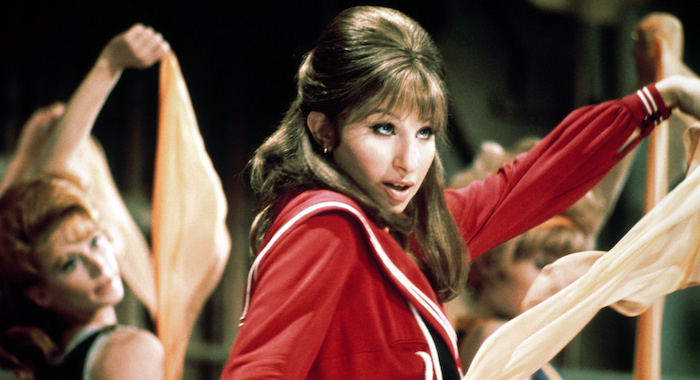
Then I guess literally every Jewish woman that you talk to is going to say Barbra Streisand. Watching The Way We Were and Funny Girl, films like that, it was like, “Oh, my God. She’s got a big nose, and she’s the romantic lead.”
I would say both Woody Allen and Barbra Streisand. I’m not even a religious person or somebody who needs to seek out Jewish people on screen – it’s weird that they’re both Jewish. But those were the two that I, as a kid, probably gravitated to the most and found most relatable. … When it comes to Judaism, I mean, it is like a culture. It’s an essence. I mean, I’m literally a nonbeliever, so it has nothing to do with the religion, per se.
I would love to ask you about how you wrestle with your connection to Woody Allen’s characters, because that can be a complex experience.
Yes. Totally.
How do you wrestle with that?
Well, I interrogate myself a lot when it comes to Woody Allen.
Ronan Farrow said once in a documentary that, for some people, the accusations against Woody Allen almost pose an existential threat. I thought, That is so right on for me, because what he means is there are people who formed part of their identity based on loving these films. I would say that’s me to a certain extent.
I went back and rewatched Manhattan, which was a film that I loved. I mean, it was kind of cringe. I wasn’t able to have the relationship I used to have with it. I think that happens to be true a lot. You go back and you watch a film, and just because of what the cultural mores were at the time, the film seems dated or has a little bit of an ick factor. There certainly are things about Manhattan that I still love. It’s gorgeously shot. It has an excellent Wally Shawn joke that I will never not love. There’s a lot that I love about it. Annie Hall, too.
I tend to be a person who says, “Separate the art from the artist,” although I think that tends to happen more after the artist is no longer alive. When he’s alive, it’s a little trickier. When he’s doing films where he is a middle-aged dude having an affair with a schoolgirl, it becomes that much trickier.
This is something that I have had to really grapple with a lot because he really was important to me. The accusations against him and the sort of perception of him, Ronan is right, they do pose an existential threat to me.
(Photo by © Buena Vista Pictures / courtesy Everett Collection)
What is your favorite classic film?
I very much love The Graduate. I really love Mike Nichols.
I love Chinatown a lot.
I love Godfather One and Godfather Two. Depending on my mood, I’ll go back and forth as to which is the better film. They’re both just stone cold masterpieces.
Jaws! I mean, you want to put Jaws in there. It’s not black and white, but it is a classic film in its own way. I just love that. Bonnie and Clyde.
I also really love The Apartment with Billy Wilder. Fantastic. Fantastic!
What is your favorite thing that’s Rotten on the Tomatometer?
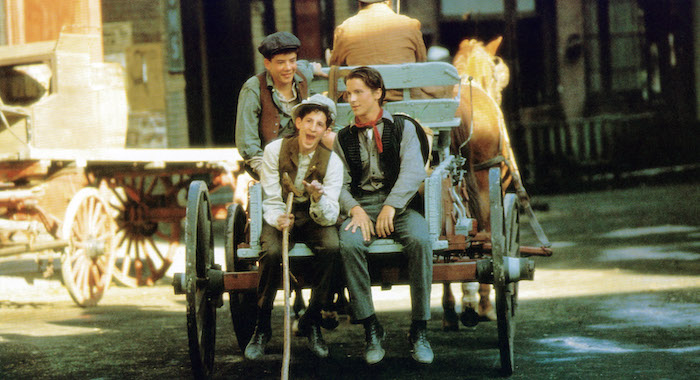
I’m sort of embarrassed, but I would say Newsies.
Yes!
Right? Thank you. Newsies is really f–king great. It’s annoying that it got such terrible reviews because it’s just banger after banger. You have young, beautiful Christian Bale dancing and letting loose. Honestly, it’s an extremely charming, well-choreographed film. But, in particular, it has some great songs. Not all the songs are great, but it has lots of songs and cute boys with smudged faces saying, “Get your papes.” I’m a fan of Newsies.
Who are the three folks that you think everyone should follow on Twitter?
Well, okay. I would say follow Female Film Critics (@FemaleCritics), which is the account run by my friend Diana Drumm. She aggregates a lot of tweets from female film critics and reviews. That’s one that I would really say to follow.
I love Emily Nussbaum (@emilynussbaum). Major girl crush on her. I think that she is, to me, the perfect blend of erudition and wit and warmth in her writing, and her Twitter account is actually very funny.
What is the movie or show that you have watched more than any other?
Buffy the Vampire Slayer is the show without a doubt. Here’s another problematic male. I’m drawn to the problematic male.
In terms of movies – gosh, they’re all embarrassing. They’re all comfort-type films, like Pretty in Pink, Dirty Dancing. At one point, I was thinking I would start a podcast about reclaiming some of those titles that get dismissed as women’s films or girls’ films, and taking them back and acknowledging that they do have an intrinsic value and a power.
But yeah, I probably have watched Pretty in Pink more than any other film. Molly Ringwald for life.
Ah, yes. I love her. And Dirty Dancing!
I would say that is the answer that so many people give. That’s really an interesting question: What is it about that film that not only do people love, because it’s lovable, but that people feel like, “Oh, it’s on? I’m going to watch it.”? It’s absolute comfort food in film form. …
One thing that always works in film – I mean, it’s definitely a manipulative tactic – is when there’s somebody who has been underestimated who triumphs. That’s why Good Will Hunting is so satisfying to watch, because they think he’s just the janitor, and then he turns out to be smarter than them all. It’s like, “Yeah!”
It’s the same with Dirty Dancing and Johnny. They think that he’s this no-good guy. He turns out to be this incredibly heroic guy! As far as Baby is concerned, people think that she’s not a woman in control of her own sexuality or desirable. She proves otherwise in that.
Maybe that’s it: It’s a two-in-one film of somebody proving the doubters and the haters wrong. As a viewer, that experience, when it’s done well, as certainly is the case in Dirty Dancing and Good Will Hunting, it can be very satisfying.
Max Weiss is Editor-in-Chief at Baltimore Magazine and a film and pop culture critic. Find Max on Twitter: @maxthegirl.
 Astrid Stawiarz/Getty Images
Though he’s widely recognizable these days as the current Star Trek franchise‘s “Scotty” and the Mission: Impossible franchise’s IMF technician Benji, Simon Pegg first caught the attention of movie buffs in 2004’s Shaun of the Dead, a zom-com co-starring Nick Frost and directed by Edgar Wright. It was the first in a trilogy of hilarious, wildly clever comedies steeped in pop culture geekery dubbed the Three Flavours Cornetto, and it rightly earned the trio a wider cult following.
Since then, of course, Pegg has branched out and found work in a variety of genres, including the blockbuster series mentioned above, but he likes to keep busy with smaller projects in the meantime. This week, for example, he stars opposite Margot Robbie in Terminal, a stylized crime thriller that interweaves a number of connected stories.
We should note that Simon Pegg has done a Five Favorite Films with us before, and as we began chatting with him about it this time, he admitted that “there are films which have staked their claim in my affection forever. The ones that stay with me and remain my kind of go-to cinematic events, I would imagine, stay the same.” Read on for Simon Pegg’s updated list of Five Favorite Films!
I’d go with the first Star Wars just because that was the source of it all, even though Empire is essentially a slightly more grown-up, often seen as the better film. But I think Star Wars, really as the kind of ground zero, has to be the one. A New Hope, as we’re now supposed to call it after all this sequel bulls—.
Also, I would say probably Taxi Driver, just as a piece of acting and just fabulous scene-setting brilliance from Scorsese and characterization from De Niro. That’s one of those films I just watch in awe of all of it, because it’s just so uncompromising.
I saw Avengers yesterday, and it was such a fun romp and really entertaining and decently done. That’s the kind of film adults watch today, when in the 1970s, when Taxi Driver came out, that was the kind of film that adults would watch. That and French Connection and Godfather and Bonnie and Clyde. Anything pre-Star Wars, really. The preserve of grown-up cinema in those days were genuinely grown-up movies, and that goes for everything I’m doing as well, from Star Trek to Ready Player One or even Mission: Impossible. They’re pure entertainment rather than think pieces, which is what film cinema used to be in the mainstream.
Why do you think that’s happened?
Because of Star Wars. Star Wars happened and spectacle was thrust to the front of the priority list for filmmakers, and as such, we started to change our tastes more toward fantasy and stuff that required big special effects set pieces, and as such, that muscled its way to the front of our affections, I guess. For better or for worse, you know, that’s cinema now.

As a piece of modern cinema, I would love to mention Alex Garland’s Ex Machina, which I thought was a brilliant, brilliant film. I think in a year that saw Oscar Isaac and Domhnall Gleeson have another science fiction film out as well, it was such a great reminder of how smaller, more thoughtful, more intense, grown-up… It’s an example of the combination of those things, in a way, a kind of more science fiction in the vein of 2001, a more cerebral, literally cerebral kind of science fiction film that was and just how beautifully performed it is. Alicia Vikander is amazing in that film. It’s a film that I’ve watched many times because I just, I don’t seem to tire of it. I think it’s excellent.
It’s a terrific film. Have you had a chance to see Annihilation?
I have, yeah, and I thought it was brilliant, kind of everything that everyone seems to be asking for right now. It’s like, people keep saying we should have more diversity, and there should be more original ideas, and there should be more women in positions and roles where they get to have more power and strength. It was all those things, and yet it didn’t seem to get marketed that well. Not enough people saw it. It was great. It was a really, really smart movie. I love Alex Garland. I think he’s got such great ideas, and he pulls great performances from his actors. I really liked it. Ex Machina — I would probably go with that one just because I’ve known it for longer, so I’m more acquainted with it. I have a greater affection for it because I’ve seen it more.
Let me try and think of a comedy. At university, I wrote about Annie Hall. I know Woody Allen is currently a contentious issue, but that film as a comedy, if we can separate the art from the person for whatever reason, is such a clever, poetic film, but it’s written in the same way that a poem is… When you read a piece of prose, it’s very formal and everything follows one after the other. It’s very conventional. Poetry is different because it draws attention to itself as writing, and it rhymes and does different things, and it uses rhythm. Annie Hall in the same way does that cinematically. It’s kind of like a cinematic poem, and it’s just really, really smartly made. It’s one of the few comedies that ever got nominated or actually won any Oscars.
Comedy, I think, is one of the most underrated art forms that there is, particularly in terms of material rewards. There is no Oscar for best comedy. There is no Oscar for best comic performance. I think that’s a shame, and I think if there was, then Jim Carrey would be laden down with scones. It’s not something everybody can do. You might dismiss Ace Ventura: Pet Detective as a ridiculous, goofy, throwaway movie, but it is a virtuoso performance from Jim Carrey, as often is with his work. You see a lot of so-called straight actors, serious actors, trying to do comedy, and they cannot do it. I think comedy is something which is underestimated because it is literally not serious. It’s like people think that seriousness equals serious, if you know what I mean.
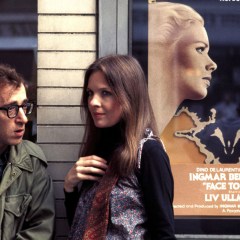
But Annie Hall, I think, it’s such a well-crafted film. It says a lot. Diane Keaton is just unbelievable in that movie. I got to meet her at CinemaCon. She was there promoting Book Club, and I said to the people I was with at CinemaCon, I said, “I have to meet Diane Keaton. Please, can you introduce me to her? I just need to tell her how much I love her. I won’t bother her too much.” I found a moment and I went over and I just told her I had written a thesis about her at university. She said, “Oh, I’d love to read that.” And I said, “No, you wouldn’t. It’s boring and dense.” But she was delightful. For her performance alone, that film, as controversial as it might be, would definitely be on my list.
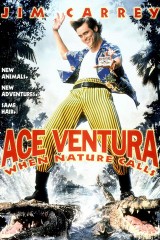
All right. I’ll tell you what I’m going to do. I’ll pick something completely weird and ridiculous for the very reason that I just said, and that would be Ace Ventura: When Nature Calls, specifically for the scene in which Jim Carrey births himself from the anus of a fake rhino, because it is one of the single most genius pieces of comedic writing that will never be given its due because it’s part of a ridiculous, vaguely racist, silly comedy.
The setup for that whole sequence is incredible from the point you see him. He’s inside this rhino, which he’s using as a sort of eavesdropping device, and it’s so meticulously done. There’s a fan inside because it’s hot. The fan breaks, so he has to undress. All to get to this point where he literally squeezes his way out of the behind of this rhino in front of a family of tourists who just effectively see a rhino giving birth to a screaming, naked human being.
The industry involved in setting that joke up, the way that it just creeps up on you, like you’ll think, “Oh, it’s funny because he’s inside a rhino. It’s funny because it’s hot. It’s funny because he’s taking off his underwear.” And then suddenly, you realize, “Oh, wait a minute, this was a long game they were playing here. This is a buildup.” And it snuck up on you. And suddenly he starts to, as only he can, emerge from the back of this rhino, and then this family pulls up, and it’s just brilliant. I think that sequence should be celebrated in no uncertain terms because it is just a genius piece of comedy executed with the extraordinary aplomb that that man is capable of displaying.
I can’t disagree with you, because I remember the exact day I saw that with a buddy of mine, and we both fell off the couch laughing at that specific scene.
It’s unbelievable. It’s extraordinary. I watched it again. I watched it with my daughter. We went through some… I try to show her lots of movies that she might not see, because she’s only eight. So without having a movie lover for a dad, she’d never see even the Amblin movies or Bill and Ted, stuff like that she might miss out on. The Ace Ventura films were on that list, and watching it again, oh my god, I was apoplectic. I was literally lying on the floor screaming with laughter. The commitment. I mean, he has the most… Nobody commits to stuff like he does. I believe that he might be a genius.
Ryan Fujitani for Rotten Tomatoes: So I’m here talking to you because of Terminal. I haven’t seen the film, but it looks like a twisty tale with a lot of interlocking storylines. What can you tell me about the film and your role in it?
Simon Pegg: I took it on because I was sent the script by essentially what were a group of assistant directors who had been working on various films in the UK who had decided to say, “Actually, we are producers, and we’re going to make a feature film.” We have Margot attached, which is great, which gives it some momentum. But there’s also this script, which is a really dense, almost theatrical kind of dialogue piece, which I really liked the idea of doing.
I’ve done a lot of stuff where I’ve been essentially running around saving the universe or delivering exposition or whatever my British accent is required to do. I felt like I really wanted to do something that was a bit more chewy and a bit more involved, in terms of the acting. When I read it, it was just a lot of me sitting in a café with Margot’s character just talking about death. It felt like a play. It felt like a kind of a Pinter or something, and I was like, this is great.
I also just loved the fact that it was a fresh idea. It was an original script, and it was made by a bunch of people who just wanted to make a movie. That really appealed to me in terms of how I started out. I never want to lose touch with that kind of filmmaking. It’s important. It’s so fun being in big films. It’s a real thrill ride. But I don’t want to untether myself from the beginnings of what I love doing, which was smaller movies.
It’s very dialogue-led. It’s very character-led, particularly with my character, Bill, who’s a terminally ill English professor, who is deciding whether or not to just kill himself. It just felt like, “Wow, this is going to be a chance to actually do some acting.” Also to act alongside Margot, who is fantastic — you know, already set the world on fire with The Wolf of Wall Street — seemed like an exciting person to spar with. I just thought this is going to be great. I get to go to Budapest and get that feel of making a small movie, which is a lot more hard and fast than it is making a big film. There’s less room to wiggle. There’s less waste. There’s less relying on post-production. You just have to get it done. It feels like everyone is in it together. It’s like a little battle you’re fighting. I like doing that.
RT: Knowing you’re something of a geek culture junkie, I’m wondering, between the Mission: Impossible franchise and the Star Trek franchise, which of them was more exciting for you to land?
Pegg: That’s an interesting question. I think maybe for the sheer significance to me as a person, Star Trek was a big deal because the Mission: Impossible series was a little bit before my time. But the chance to work with Tom Cruise and Ving Rhames and J.J. was obviously a big deal. Now, I couldn’t really distinguish between them in terms of my affection. Although, having said that, having written Star Trek: Beyond and been that close to it, having actually gotten to generate some of the universe, I have a special affection for Star Trek. Probably Star Trek just because of its… It was a show that I watched from the age of eight, and then suddenly to be in it was kind of crazy. I think by the time I got Mission: Impossible, Mission: Impossible was a movie series. It wasn’t the TV show writ large anymore. It was such a joy to get back with the gang to do Fallout and have our new folks come in as well. It was great.
RT: What were your first thoughts when you learned about Quentin Tarantino’s involvement in the Star Trek universe?
Pegg: We were all like, “Wow, that’s great.” I mean, I can’t think of… All of Quentin’s movies, I could have put in those five films, you know? He’s such a dynamic filmmaker. He has such commitment and passion to cinema. I know he’s a huge Star Trek fan because we’d spoken about it in the past. He really likes our crew. He likes the new iteration of the original series crew. It was cool. They don’t tell us anything because they know we get put in this situation all the time, and we blab because we’re all just big mouths. So they don’t actually give us anything that we could possibly say. All I can tell you is that the prospect of him being involved is extremely exciting. I’d be very happy about it.
RT: I saw you were attached to a project with Nick Frost called Slaughterhouse Rulez. Have you spoken to Edgar Wright about potentially all of you reuniting again for another project at some point in the future?
Pegg: We always talk about it. Edgar is like family to me. We’ve been friends for a very long time. It’s not like he’s just my colleague. We see each other whenever we can, and we always talk about it when we get together. The only thing that holds it up is finding a moment when we’re all simultaneously free, because we’ve all got commitments leading up to a certain point. But yeah, it will happen. There’s no doubt in my mind. Edgar is working on something at the moment. I have a few things coming up. As soon as we get a nice big bit of free space, that’s what we will do.
Terminal opens in limited release this Friday, May 11. Read reviews for it here.
Box office is hitting the lowest numbers since the red alert days of Glitter. And this weekend doesn’t look to turn things around, unless Tulip Fever draws the Waldenbooks crowd out of hiding and makes $200 million (conservative estimate) by Sunday. Let us avert our eyes then, away from contemporary misery and back to a more joyful era: 1977! The gilded year of Atari 2600s, 65 cent gas, and guillotine executions, when Disco Demolition Night was still but a twinkle in some blue collar slob’s eye…
The in-flight movie on our ’77 trip is Close Encounters of the Third Kind, the landmark extraterrestrial drama that’s re-releasing in theaters this week for its 40th anniversary. The Certified Fresh trophy we made from mashed potatoes and sent to Spielberg’s office went unanswered for some reason, so instead we’ll be commemorating the moment with our gallery of the 24 best-reviewed movies (with at least 20 reviews) of 1977! How many have you seen?


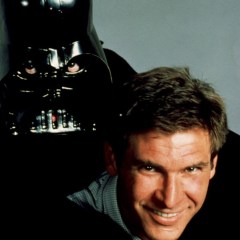
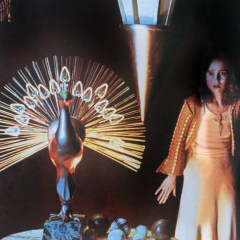
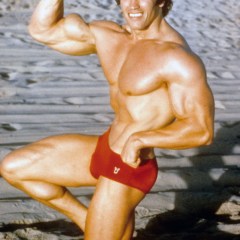
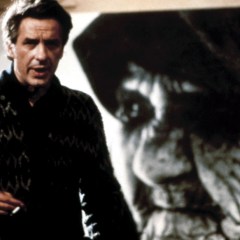
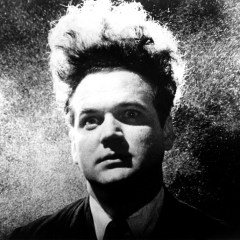
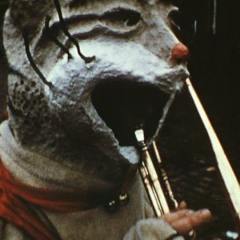
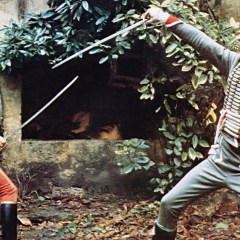
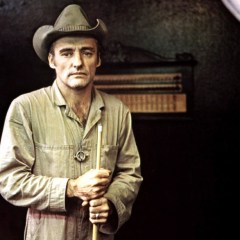
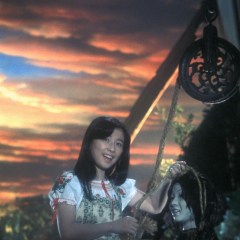
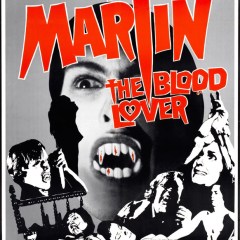
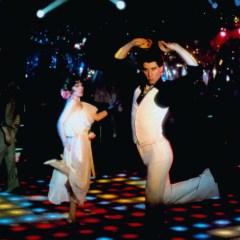
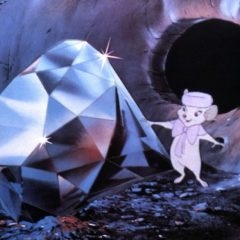
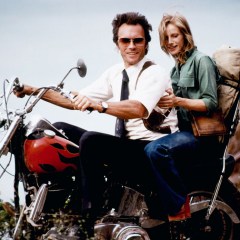
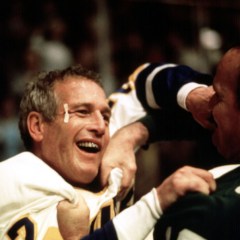
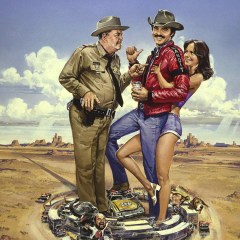
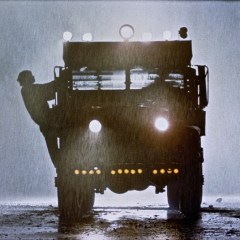
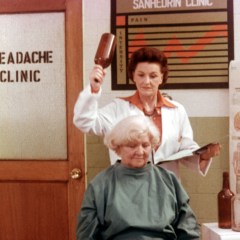
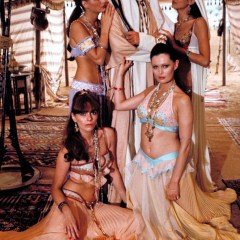

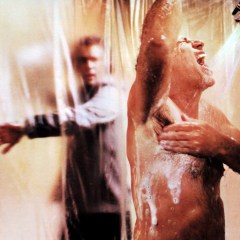

(Photo by Mireya Acierto/Getty Images)
Right after her breakout performance in 2011’s Martha Marcy May Marlene and just ahead of the release of the horror film Silent House, Rotten Tomatoes spoke to then rising star Elizabeth Olsen about her Five Favorite Films. Five years have passed since then, and Olsen has made the most of her opportunities, appearing in smaller independent films as well as gigantic blockbusters like Godzilla and the Marvel Cinematic Universe movies.
This week, she stars alongside fellow Avenger Jeremy Renner in acclaimed writer/director Taylor Sheridan’s new thriller Wind River, which follows a pair of law enforcement agents on the trail of a murderer in rural Wyoming. RT spoke to Olsen, who decided it would be fun to compare her current list of Five Favorite Films with the one she picked in 2012. She also talked about the new film and how her perspective has changed since she began her career.
I would watch that movie on VHS every night before bed for maybe two years. I’ve always felt a very close kinship with middle-aged women. [laughs] When I was in elementary school, I felt like I understood it. [laughs] I don’t know why. It’s three greats, three great female comedians, and the final song and dance at the end, “You Don’t Own Me,” was something Sarah Paulson and I recreated many a time, filming Martha Marcy May Marlene. It had a new meaning, all of a sudden.
Indiana Jones, that trilogy I just rewatched on a plane from a holiday I just took. I watched all three, and Temple of Doom just continues to win me over. I know; usually, people like The Last Crusade, and there’s a lot of love for Raiders, because it’s the original. But Temple of Doom is just, to me, so funny and entertaining and fun. And the kid from Goonies — Hot Shot? Short Round. He’s so funny, and I grew up with Goonies, but I prefer him in Indiana Jones.
What, you didn’t like Data in The Goonies?
No, I loved him. Obviously, he had all his fun little tricks, all the things that he would shoot out and cling on. I do, I just love Indiana Jones so much, and I believe Harrison Ford is one of the best big movie actors. While he is still engaged in something that’s really active and he keeps the intensity of the moment. Now I can appreciate it, because I don’t know how to be funny in the Avengers movies. He keeps the intensity, but then he still can be sly and charming and funny. Same thing in Star Wars. I just think he’s so good.
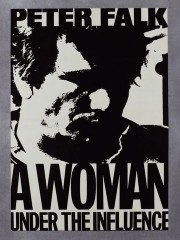
Between Opening Night and A Woman Under the Influence, Cassavetes. I still dream, to this day, of having an experience. I thought the borderline guys are the modern version of this, of creating a really intimate, truly intimate environment, without any kind of producers with creative control, or any kind of desire of a specific distribution, but to just make stories that you want to make because they are close to you and personal and interesting and character-driven. Gena Rowlands, to me, is so amazing to watch. That’s something I discovered more in my early 20s, Cassavetes movies.
Return to Oz was just one of my favorite films as a kid. If you watch it any time recently, it’s one of the most disturbing films made for children.
Oh, definitely. And I love that movie myself. To be honest, I think I actually have a deeper connection to that movie than the original Wizard of Oz.
Oh yeah, me, too. Absolutely, by eons. That was the film that my friend Clay and I were just obsessed with for our whole childhood, with the wheelers and the woman with the hallway full of heads. That was a movie we loved.
Woody Allen — namely the Diane Keaton collaborative days — those movies were really important to me when I was like 15, 16 years old, because it was when I discovered watching them and went through the canon. I, for the first time, had seen a woman that I was like, “Oh, I can be that kind of a woman. I’m not really the nerd, I’m not really the charactery person. I’m not really the sexy one, but I am a neurotic, nervous, but semi-intelligent one, but I also say stupid things.” It felt comforting to know that that was an example of a kind of woman I could be when I grew up and when I was going through that transition in teenagehood.
Ryan Fujitani for Rotten Tomatoes: So there was only one duplicate between this list and the one you chose last time, and that’s Annie Hall. You mentioned at the time that you loved Woody Allen, so another one of your choices was Manhattan. Then you also picked Gone with the Wind, Roman Holiday, and Pal Joey.
Olsen: Oh, I said Pal Joey? That’s cute, that’s cute. I think, probably, Roman Holiday, I must have been going through a phase or just enjoying watching that movie. I don’t have very many movies. I think Roman Holiday is right next to Heavyweights on my iTunes movie list.
RT: That’s a weird double feature.
Olsen: Also, probably, Seven might be right above it. It’s a very strange group. [laughs]
RT: So let’s talk about the film. Taylor Sheridan wrote and directed Wind River, and he’s been actor for a long time. Was it different working with someone as a director who had done all three things?
Elizabeth Olsen: I don’t know. I would actually be curious to ask Taylor, but I think he probably would have approached all three — whether it was being an actor, a writer, or a director — I think he approaches them very similarly, which is just trying to tell an authentic truth of an experience that he has had, or that he knows of, or that he had learned about. I think why people are drawn to his writing is because it’s poetic while showing active, driven stories where character becomes unfolded. It’s not just about the action. The action is how we understand characters better, because of how they approach whatever obstacles that come their way and then we learn about them.
He’s a very straightforward, no bulls— kind of guy. That’s why he writes the way he writes. That’s the way he directs, and I’m assuming that maybe that’s what he did as an actor. Sometimes, it’s hard to do that as an actor, because there are so many things that are fake that you’re dealing with. That’s why it’s not for everyone.
I do know that he’s a great bulls— detector, and he’s really great at telling you. He’s a great lie detector, and I think that’s what I want in a director. I want them to have a great vision and understanding of the tone and the world they’re trying to create, and I want them to be passionate about the story we’re making. I also want them to just say, “That wasn’t good,” or, “This is how you can do it better,” or, “How about you try this?” He’s very good at that, and so is Jeremy. The three of us together, I think it was a very trusting and comfortable set to be on, because no one was just trying to stroke each other’s egos.

(Photo by The Weinstein Company)
RT: Speaking of Jeremy Renner, it feels to me, at least based on a lot of the media coverage that comes from the set, that the Avengers cast is a fairly tight group, and I’m wondering if either you or Jeremy played a part in recruiting the other for this film?
Olsen: I was attached to the movie first. I was attached to it for a year, and there was another actor — I think that’s public knowledge at this point — that was attached as well. Scheduling didn’t work out, and Taylor wanted to make it the during the winter we made it. He said, “How about Jeremy?” I said, “I love Jeremy. It would be incredible to get to work with him.”
But I felt uncomfortable pushing it on him, because we weren’t that close. If it were Aaron Taylor Johnson, I’d be on him to do it because Aaron and I have that kind of friendship. Now Jeremy and I do, but at the time, it was more of just a work relationship and semi-social. I think I might have just sent him a text message once saying, “Did you read this script yet? I’m doing it. I just wanted to let you know that I’m definitely doing it, and it’s not someone just… Whispering that in your ear, or something.”
I told Taylor I didn’t want to be too pushy about it, because I don’t think Jeremy responds well to that. Taylor just sent him a note and said, “Dude, read 10 pages of this script, and if you hate it, you don’t have to finish reading it, and I’ll buy you a nice bottle of booze.” That’s the story that I’ve heard now a gazillion times, since we’ve been doing press. He loved the script and that was it. We started filming a month or two later. It was really fast. He finished the script. He devoured it and wanted to do it.
RT: When we first spoke with you, it was five years ago in 2012. You’d just done Martha Marcy May Marlene and Silent House, and you had stuff like Kill Your Darlings and Old Boy coming out. You expressed at that time a desire to challenge yourself with a lot of different roles. So, looking back on the past five years and the rapid rise of your career, do you feel like you’ve settled into a groove now? That you have a handle on the kids of projects you want to do and want to be involved with?
Olsen: Yeah. I think the first, I would say, four or five years of working, I was just so excited to be working. I was excited to do every kind of movie. I wasn’t thinking, really, about the producers or the directors, the DP. My mind didn’t work in that way. I wasn’t even thinking about, “What’s a creative arc that I want to create for myself?” That has altered and that has changed.
I really love working. I think that’s also part of the problem, because I don’t want to have free time. I like to go from one film to the next to the next with just maybe a week or two in between, because that’s all I really need to decompress. I think I just got a little excited at the beginning, and I wasn’t making the most discerning decisions.
Now, I do feel like I have made decisions, even though it’s almost impossible to compare and contrast Ingrid Goes West and Wind River. They were both projects I really wanted to be a part of, and I thought made sense for me, for what I want to put out there, that are completely different. They don’t have to be similar. It is interesting, and now I’m diving a little bit into the development side of things.
It hasn’t even been 10 years yet for me, but it’s still a much more knowledgeable perspective now, obviously, than I had in 2012 after working for like a year and a half or something. I seemingly get wiser. I think maybe in 10 years, I’ll tell myself that I was an idiot today, but we’ll see.
Wind River opens in limited release this Friday, August 4.
It’s our first streaming column of the month, which means subscription services Netflix and Amazon Prime have released a lot of new choices. As usual, we’ve narrowed them down to the most critically acclaimed, ranging from a few well-received smaller films and one big blockbuster this year to some trusty classics. Read on for the full list.
This South Korean horror drama centers on a small town reeling from a series of brutal murders after the arrival of a mysterious stranger.
Available now on: Netflix
Winona Ryder and Christian Slater star in this 1980s cult favorite about a high school girl who rebels against her popular clique in rather dark fashion.
Available now on: Netflix
Neel Sethi stars in this live-action remake of the Disney adaptation of Rudyard Kipling’s tale about a young boy raised by wolves who helps defend his jungle against a fearsome tiger.
Available now on: Netflix
John Belushi stars in this iconic comedy that takes a ribald look at the alcohol-soaked underbelly of collegiate life, laying the groundwork for dozens of subsequent “snobs vs. slobs” comedies.
Available now on: Netflix
Eddie Murphy stars in this action comedy as Detroit transplant Axel Foley, a fast-talking detective sent on involuntary vacation who helps the Beverly Hills police take down the crime lord who killed his friend.
Available now on: Netflix

Richard Linklater’s dazzling philosophical meditation features stunning rotoscoped visuals and several witty celebrity cameos.
Available now on: Netflix

Season 1 of this Bravo comedy, about a newly separated self-help author (Lisa Edelstein) trying to navigate life in the face of her impending divorce, is Certified Fresh, and Netflix now has season 2.
Available now on: Netflix

Woody Allen and Diane Keaton star in this Best Picture winner, the most Woody Allen-ish of Woody Allen comedies.
Available now on: Amazon Prime
Sarah Polley’s rapturously reviewed documentary portrait of her family and its secrets is a feature-length exploration of the nature of memory and storytelling.
Available now on: Amazon Prime
Colin Farrell and Rachel Weisz star in this Certified Fresh sci-fi dramedy about a man who must choose a mate or risk turning into a lobster.
Available now on: Amazon Prime
Kevin Spacey and Annette Bening star in Sam Mendes’ multiple Oscar-winning drama, a dark, cynical portrait of suburban life as seen through the eyes of a forty-something father experiencing a midlife crisis.
Available now on: Amazon Prime
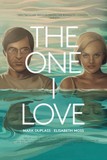
Mark Duplass and Elisabeth Moss star in this dramedy about a struggling married couple who retreat to a remote cabin to rekindle their love, only to discover the guest house holds a bizarre, mysterious secret.
Available now on: Amazon Prime
Tom Hanks stars in Robert Zemeckis’ drama about the real-life US Airways pilot who saved all 155 people aboard his plane when he was forced to attempt an emergency landing in the Hudson river.
Available now on: Amazon, FandangoNOW, iTunes
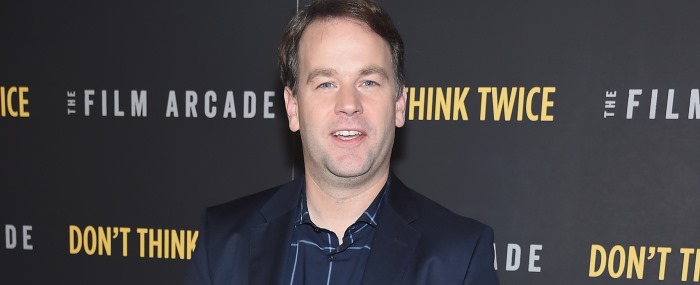
Photo by Michael Loccisano/Getty Images
Comedian/actor/writer/director Mike Birbiglia is a multifaceted artist with a resume full of contemporary classics like Your Sister’s Sister, Sleepwalk with Me, a couple seasons of Orange is the New Black, and the weekly radio show This American Life. This week, he struts his stuff in the Certified Fresh Don’t Think Twice, about an improv comedy troupe and the laughs and heartbreak that comes with such a life. He shared with us his five favorite movies and we got a bit of insight into his highly creative brain. Check out the list:
This film was my introduction to New York-based films and actually New York City at all. Once I saw this, I knew that I, too, would be destined for a penthouse Manhattan apartment with trampolines, pinball machines and bunk beds. The romance with Elizabeth Perkins is believable despite its high concept and just adorable and laugh-out-loud funny. It’s also heartbreaking, and makes me cry every time I’ve seen it. I’ve seen it 15 times. Actually, I cry quite a bit in general.
When I was a kid, I was allowed to watch Moonstruck despite my age because it was about Italians and it was important for the Birbiglias that I see Italian-American films. What sticks out for me is the smaller characters that highlight the larger themes. In the liquor store Cher‘s character visits, there’s a charming argument between a middle-aged couple. The wife says, “I see a wolf in you.” The husband responds, “You know what I see in you? The girl I married.” It’s those secondary characters that make that film really sing comedically — in addition, of course, to the hilarious and emotional Nic Cage and Cher.
C’mon. Is every scene in this movie perfect? Yes. I could watch this movie over and over on a loop. Actually, I’m pretty sure they do that on cable. It plays quite a bit. Meg Ryan is nothing short of magical in this performance. And the time lapses are, for me, what make this film really work — because we truly believe that this oil-and-water couple will stay together and they ought to. I sure hope they do in the sequel: When Harry Stayed With Sally.
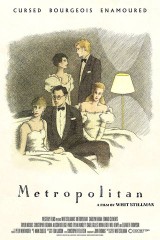
I saw this film in high school and I watch and re-watch it now like it’s an old friend. It’s about this very specific debutante culture in Manhattan, but because the protagonist is the outsider, we feel like it’s our movie, too. We’re the outsider who has a crush on the incredible, Molly Ringwald-esque Carolyn Farina.
I saw this film in college when I was first studying screenwriting and starting out as a comic. It has forever been imprinted in my DNA. It’s funny, it’s emotional, and it’s unafraid. I was so struck when I saw it that it found the beauty in a breakup as opposed to wallowing in it. It also traffics in an area so specific — a neurotic, Jewish comedian — but yet it feels so universal. Woody Allen does this in all of his films of that period: Hannah and Her Sisters, Manhattan, Crimes and Misdemeanors. But this one truly makes me laugh the most and get choked up in the same moment. It also has the line that my wife repeats to me all the time, which is the mother’s line to the child Alvy when he asks what they’ll do about the universe expanding: “WHAT, IS THAT YOUR BUSINESS?!”

(Photo by Jason Merritt / Getty Images)
Chris Parnell recently talked to Rotten Tomatoes about his Five Favorite Films. The charming and funny SNL Alum, television actor (Archer, 30 Rock, Rick and Morty), and star of the upcoming tennis comedy Break Point showed up ready with his picks, and they’re all aces. Here are his smashing selections — compare and see if any of your favorites game, set, match!
Break Point opens in wide release on September 4, 2015.

Though he’s been acting in film and television for a decade, Corey Stoll‘s most recognizable roles have come all in a flurry over the past few years. Fans of the short-lived Law & Order: LA knew him as Detective TJ Jaruszalski, but more recently, Stoll impressed as Pennsylvania congressman Peter Russo in Netflix’s acclaimed political drama House of Cards, which earned him a Golden Globe nomination. If you missed both of those shows, you may have caught him on FX’s recent hit The Strain, in HBO’s Emmy-winning original film The Normal Heart, or in a brief appearance on the season four premiere of Showtime’s Homeland.
But Stoll’s talent isn’t limited to the small screen; his feature film appearances include the Angelina Jolie actioner Salt, Woody Allen’s Midnight in Paris, and the Liam Neeson thriller Non-Stop, among others. Currently, he stars alongside Reese Witherspoon in The Good Lie, a based-on-true-events film about a woman who helps four Sudanese refugees adjust to life after they win an opportunity to relocate to the US. Stoll took some time out of his schedule to give us his Five Favorite Films:
Dr. Strangelove or: How I Learned to Stop Worrying and Love the Bomb (Stanley Kubrick, 1964; 100% Tomatometer)
No movie is funnier or more scary. Kubrick somehow ramps up both the very real stakes and the increasingly weird humor throughout the movie. Most of the praise usually lands on Peter Sellers’s multiple performances, but don’t sleep on George c. Scott. The man who played the ultimate military authority in Patton plays the ultimate military buffoon. Fun fact: this movie has the longest title in film history.
Do the Right Thing (Spike Lee, 1989; 96% Tomatometer)
This was the first movie where I was aware of what a director did. There’s a scene near the climax where the camera zooms in and rotates 45 degrees into an extreme Dutch angle close-up on Giancarlo Esposito’s face. “Someone made that decision!” I thought. I also love the fact that it was our last president and irst lady’s first date.
Sean Penn’s performance is brutally raw. He starts off so cocky and impenetrable and hateful. Slowly he strips away his armor until he’s left with nothing but love. Some actors can give a perfectly calibrated performance and some can strip themselves bare — Penn does both.
Kinetic, profane, and operatic. This movie has the most simply badass shot in motion picture history: Robert De Niro sitting at a bar sucking down a cigarette as the camera slowly pushes in with “Sunshine of Your Love” on the soundtrack.
I find a lot of comedy from this period to be dated, but I never feel that way about Annie Hall. Somehow even references to psychoanalysis and Marshall McLuhan feel vital. And you’ve got to love Paul Simon as the most unlikely lothario in film history.
The Good Lie is currently in theaters.

Simon Pegg, an actor who I often identify with fun and freewheeling characters like Shaun in Shaun of the Dead or Scotty in the new Star Trek films, and now the main character in Hector and the Search For Happiness, doles out his list exactly how I would expect.
“I sort of thought I’d wing it. I find that if you start thinking about these things, you end up in a terrible mire of indecision, so I’m just going to try to go off the top of my head with it. There’s no particular order because there will be discriminatory glitches. So here they are.”
This was a mythic, elusive film because it was banned from the UK. It took me a long time to track it down, but I heard many a story about it — helicopter decapitation and the guy with the screwdriver in his ear. That stuff was just so fascinating to me as I grew up, and when I finally saw it, it did not disappoint. It obviously eventually led to me making a film with a similar title.
How did you find it?
I found it on VHS video in a shop in Bristol in the UK, and I sat in my university viewing room and put it on and it just was everything I wanted it to be. I love it as a piece of cinema — I think it’s very, very funny, and it is a great horror film. But Romero was always a maverick and had the surviving members of the team at the end of the film are a black guy and a woman. In 1978, it was years later — 10, 12 years later, Ridley Scott was being celebrated for that in Alien, when Romero had been daring enough to do that 10, 12 years before. It was always the white male who was the survivor who would take revenge for the death of his black partner or wife who would have been killed along the way — and he did that in 1968 in Night of the Living Dead as well, as a big civil rights metaphor. So I really love that movie for its sort of shlock horror and also for being a clever, smart political statement.
I remember seeing that film and having a sort of epiphany in terms of realizing that comedy didn’t have to just be about writing and performance, it could be about the way that the camera moved. I loved the way that that film is structurally really poetic and visually inventive in a wacky and delightful way. I think that Edgar Wright cites that as a favorite film of his, and I think it’s one of the films we bonded over as youngsters before we started making films together. You can see a lot of that film in our films, in the way that they rhymed scenes and they had recurring motifs and set ups and payoffs which were quite delightful to decipher. For me as a fan of the Coen brothers, even as I’m loving their more sober, serious stuff later on, I do feel that one is my favorite.
Let’s get you in a Coen bros. movie.
I’d love to work with the Coens; I think they’re extraordinary. There are certain directors that retain vision — these days there are a lot of directors that make films for studios, but there are certain directors and directing teams which maintain a kind of way of making films which mark them out. I’m thinking of like the Coens and Wes Anderson and Paul Thomas Anderson. It’s good that those people exist, because directorial vision is important, I think.
Annie Hall (Woody Allen, 1977; 98% Tomatometer)
I just think it’s the most perfect romantic comedy ever made. I love its honesty and its kind of slightly bleak kind of view of relationships which I think is daring and real, but at the same time it’s not cynical about relationships. It celebrates when relationships can be great, and the joy of meeting someone. It is romantic, but it’s not romanticized.
I love the scene with Christopher Walken talking about going over the cliff.
Hilarious. There’s also moments of such subtlety when you have the scene with Annie and Alvy and the lobsters, and then later he’s doing it again with someone else who just doesn’t get it like she does. It just serves to completely remind you of just what a perfect catch she was at that point, if you pardon the lobster-based metaphor. She is luminous in that movie. Diane Keaton is so great, so watchable, it’s one of the truly great female comedic performances I think ever. It’s a film that I can return to again and again. It’s really inventive — [Woody Allen] uses lots of different devices like narration and speaking to the camera and animation — it’s quite an avant garde film in some respects, but it is the template by which all romantic comedies should be measured.
In terms of performances, I still watch that film and am stunned by Robert De Niro. It’s such a carefully studied performance and he’s extraordinary in that movie. I watch it just for the glee, even though it’s quite a dark film — I watch it and I love him in that film, it’s just like watching someone do an amazing guitar solo. But I also love Scorsese’s sort of sleight of hand in that movie; the way that the story is told, every performance in the film from Peter Boyle and Cybill Shepherd, and everyone in between –Scorcese himself in that awful, cokey, monstrous revenger in the back of that car. It’s like watching a very slow car crash and there is great value in that, I think.
It’s interesting to go back and see scenes that have permeated society, like him talking in the mirror.
There’s a reason why it’s been parodied and recreated, because it’s utterly, utterly affecting and it’s unforgettable. And the brilliant ending as well, in a film which is so gloomy and yet has this strange kind of happy ending, which you don’t expect, it’s a brilliant switcharoo. And that weird moment of discombobulation in the mirror, I watched that and think “What is he saying, and is it what I think he’s saying?” I love a film which stays with you, and that film has never left me since I first saw it.
I would probably have to go with the first one because it shaped my view of cinema as a kid, and as pure entertainment has a real place in cinema. It is one of the most seismic and significant events in recent cinema history — some might say detrimental — but it certainly led to a culture of whiz-bang cinema which we see now, but it meant so much to me as a kid, and Empire is the best of the first three. It also had that slightly weird edgy bleak sheer sort of joy of the first; suddenly everything went to s*** in the most spectacular way and it was kind of cool. I remember coming away from it so thrilled that they all got really beaten up. It’s widely regarded as the best of the three and it would be too obvious to say Star Wars.
We won’t have the Empire vs. Jedi argument. And for the record, I was glad to see on your Twitter feed that you met Bill Murray.
It was awesome. I was really cool as well. I just sort of went, “Hey Bill, what’s up?” and then ran away saying, “Woo hoo!” [laughs]
Hector and the Search for Happiness opens today in limited release.
Click here for more Five Favorite Films.
This week on streaming video, we’ve only got one brand new release (a Steve Coogan powered comedy), but it’s accompanied by a nice variety of classics and fan favorites, including Annie Hall, Wayne’s World, Easy Rider, Major League, The Blues Brothers, and more. Read on for details:
Steve Coogan as the narcissistic chat show host he made famous in Britain in this Certified Fresh comedy.
Available now on: iTunes
83%
Tom Berenger, Charlie Sheen, Corbin Bernsen, and Wesley Snipes star in this baseball comedy, a perennial favorite about a team of loveable losers who suddenly find a way to win.
Available now on: Netflix
97%
Woody Allen and Diane Keaton star in this Best Picture winner, the most Woody Allen-ish of Woody Allen comedies.
Available now on: Netflix
81%
Richard Linklater’s dazzling philosophical meditation features stunning rotoscoped visuals and several witty celebrity cameos.
Available now on: Netflix
79%
It’s party time! Excellent! Mike Myers and Dana Carvey star in the classic SNL spinoff about a pair of metalheads with a goofy public access cable show.
Available now on: Netflix
90%
Terry Gilliam’s fantasy about a famed fabulist was a notoriously troubled production that has earned a cult following for its delirious visual inventiveness.
Available now on: Netflix
94%
Sarah Polley’s rapturously-reviewed documentary portrait of her family and its secrets is a feature-length exploration of the nature of memory and storytelling.
Available now on: Netflix
96%
James Spader, Andie MacDowell, and Peter Gallagher star in the low-budget indie hit that put Steven Soderbergh on the map.
Available now on: Crackle
94%
George Clooney, Jennifer Lopez, Ving Rhames, Don Cheadle, and Steve Zahn star in Steven Soderbergh’s excellent crime thriller.
Available now on: Crackle
71%
John Belushi and Dan Aykroyd are on a mission from God in John Landis’ action comedy musical, which features a truckload of musical legends and a junkyard’s worth of destroyed automobiles.
Available now on: Crackle
84%
Get your motor runnin’ with this biker classic starring Dennis Hopper and Peter Fonda in the movie that gave kickstarted the New Hollywood era.
Available now on: Crackle
69%
Gary Oldman, Winona Ryder, Anthony Hopkins, and Keanu Reeves star in Francis Ford Coppola’s bloody, gothic take on the most familiar of vampire tales.
Available now on: Crackle
87%
Richard Gere and Susan Sarandon in this drama about a hedge fund mogul whose placid surface belies adultery and fraud.
Available now on: Amazon Prime
90%
This smart, original horror comedy about teenage werewolves spawned a cult audience and a couple sequels.
Available now on: Amazon Prime
David Duchovny became a bona fide pop culture star in the ’90s with his wry, oddball performance as alien-chasing Special Agent Fox Mulder on TV’s The X-Files — though some may remember his even more eccentric FBI turn on Twin Peaks — a role he reprized over several award-winning seasons and two big-screen films. Duchovny parlayed the success into his current starring role on the hit Californication, while on occasion finding time to appear in films like this week’s Goats, in which he plays a bearded, stoned Arizona goat herder — and quite convincingly, it should come as little surprise to learn. With the film opening in limited release this week we got a chance to sit down and chat with Duchovny, where we talked about his five favorite films.
The Godfather (Francis Ford Coppola, 1972; 100% Tomatometer)
The Godfather. That’s two. One and two. Oh, it’s just epic, you know. It’s the best soap opera. It’s all those — you know, it’s the human drama and it’s exciting. And if it was done badly it’s like a soap opera in the afternoon, and you just realize that there are only so many stories that can be told, but when they’re told in the right way they’re beautiful and effective. So much of it is good, you know: The acting is good, the directing is subtle, withheld — so much of it in wide shots, with very few close ups. It takes balls to do that. I mean, it’s a different world now; close ups are the way people tell stories now. I don’t mind close-ups, I like them, but they’re kind of forceful — you see a lot, you get a lot of information in a close-up. There’s less mystery.
The Godfather has more of a studied frame.
Yeah. I mean, I’m not a guy that loves a painterly composed frame; I’m talking more about just, “Okay, we’re not seeing exactly what this guy feels.” We’re getting a sense of it, but we’re not being spoon-fed .
You’re interacting with the film.
Right, right .
Nobody ever mentions poor old number three.
No, number three is not as good. I don’t think it’s nearly as bad as [its reputation], it’s just that it’s compared to one and two. I think it’s got — I don’t know it as well, so I probably shouldn’t talk about it — but I do remember an amazing scene with Pacino and the priest, where the priest just guides him into confessing; it’s amazing. You think it’s just a conversation — it’s a long scene — and then the priest, he’s a good priest, he just leads him into telling all of the horrible things he’s done. It’s just an amazing scene.
It’s interesting that your director on this film, Christopher Neil, worked with the Coppolas on some of their stuff as an acting coach. Did you talk to him about that?
To Chris? No. I wasn’t interested in that part of Chris. I was interesting in him directing this movie. I don’t think his connection to those people had anything to do with him doing this movie. I’m sure it had a lot to do with him being interested in making movies.
He would be good with actors as a result of that experience, though.
He is. He’s gentle with actors. He’s generous in that he gives. For me personally it was great. I think it was his stepfather who was like a goat man to him, and his conception of the character was informed by that — even though that wasn’t mine, ’cause I had to come up with my own, he had a lot of pictures and stories and things like that that were really helpful to me.
I’ll say Annie Hall, even though I’ve probably seen it too many times. [Laughs] To me, Annie Hall, Manhattan are the Woody Allen films… but then Crimes and Misdemeanors, that’s… I might put Crimes and Misdemeanors ahead of the other ones, because it’s not just funny and sweet and sad, it’s also kind of brutal — and maybe more mature. I just think he’s so unique, his voice. There’s been nobody that’s been able to quite claim that area.
I’m gonna say Chinatown. That’s just great storytelling, acting, directing. I think Polanski’s an amazing director. It’s opera, you know. It’s the biggest issues. You can’t tell an epic without a big problem, and Chinatown is brilliant in the sense of Los Angeles history — the whole creation of the Valley, and the diversion of water to make the Valley. [Screenwriter] Robert Towne was able to take a very interesting historical fact — what’d he call it, Mulwray instead of Mulholland? — and tell this amazing personal story about it. I like that very much. I guess The Godfather is similar to that in many ways; obviously based on certain facts. I like that historical aspect to Chinatown as well.
I’m gonna throw a new one in there, just so I don’t seem like an old fogey. [Laughs] I’m gonna say a movie that I recently rewatched — I saw it for the first time last year — a Korean film called Oldboy. I love it. I think [Chan-wook Park’s] an amazing storyteller. And I thought the actor was great.
Pretty tough performance, considering the octopus and all.
[Laughs] Just the whole thing. How about that one shot in the hallway when he’s fighting everybody? It’s one shot. How did — you know, to choreograph that? Days. And there are some hokey punches thrown, you can see — it’s not perfect — but it’s just fun. You start to laugh. I started to laugh, I’m like, “Oh god, he’s doing it. He’s gonna do it. He’s gonna go through the whole f–king hallway — and he’s not gonna cut.” And then the elevator door opens, and there’s all those guys — and the cut is the elevator door opening again, and they’re all dead.
It’s kind of crazy, yeah. There’s an emotional kick to the end of the movie, too.
It’s like Chinatown. [Laughs]
Goats is in select theaters this week.

(Photo by Dimitrios Kambouris/Getty Images)
Considering she’s the little sister of two of pop culture’s most famous siblings, Elizabeth Olsen came out of relatively nowhere to wow critics and audiences with her eerie performance in last year’s cult thriller Martha Marcy May Marlene. Some observers even had her pegged for a possible Best Actress Oscar nomination. She was robbed; but we digress.
In this week’s horror release Silent House, Olsen again gets to flex her talent for freaking the hell out, only this time with more of the shocks, splatter and lurid psychology favored by the genre crowd. As Sara, a mysterious young woman trapped and fighting for her life in a dilapidated old property, Olsen has the difficult task of carrying the movie — made to resemble one queasy long take — from off-kilter beginnings to its shrieking, full-blown conclusion.
We sat down with a much calmer Olsen recently to talk about shooting the film and the pressure of following up the acclaimed Martha; but first, she took a moment to run through her five favorite films.
For me a favorite movie is a movie that you can watch at any time, and so I would say Gone With the Wind. I think the cool thing about Gone With the Wind… Well, this is what I decided, as I get older and more intelligent, why I like the film — because as a little kid I just loved the love story, and the Civil War was an interesting thing to me — but now it’s that I think it’s really cool to have the heroine of a film be someone that you really just don’t wanna like. You struggle liking her and I think that’s awesome. It is not a happy film. When it ends it’s just so heartbreaking, and I know it’s happening but I just can’t handle it every time.
I just love Woody Allen movies, so much. Annie Hall is also the first movie poster I owned — and it’s an original; I feel so happy to have it. I would love to work with Woody Allen. I would love to.
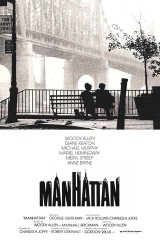
Also, Manhattan. I can watch Diane Keaton in a Woody Allen movie over and over and over again. Any time I’m on location somewhere foreign, I watch those two movies ’cause they remind me of New York and being happy. I have them on my computer.
Roman Holiday is another one of those movies: first off, I feel like I’m supposed to go to Rome, like my soul’s supposed to be in Rome, but it’s also one of those movies that I have on my computer for when I’m abroad. It also helps me fall asleep — the older movies, the way they look, for some reason, make me tired. It’s just one of those easy movies to watch and cozy up to and unwind with.
Luke Goodsell for Rotten Tomatoes: Silent House is another intense performance from you after Martha Marcy May Marlene. Do you feel any pressure with this, given the accolades you received for Martha?
Elizabeth Olsen: I think I did at first but, you know, they’re different audiences, the two movies. I’m a horror movie fan, and I want horror movie fans to go and see this movie — and that’s a very different audience than people going to art cinema. So at first I was like, “Oh I’m so nervous, what are the critics gonna say?” but now it’s just like, “Wait, this is an audience’s movie.” That’s how I’m thinking about it.
RT: You also set the bar too high for yourself. You should’ve started with a really crappy film.
Olsen: [laughs] I know.
RT: Was this actually shot in one take?
Olsen: No. No, it wasn’t. It was very difficult. We did about 13 takes, so the average take was about 10, 12 minutes; maybe a couple were seven minutes. So that’s how we did it.
RT: Did you get far into takes and then make a mistake and have to do them again?
Olsen: Every day. Every single day we did one shot, and so we literally just worked on one chunk for 12 hours. They only had one or two options that they were allowed to use in editing, because everything else would have a mistake in it and it’d be technically for nothing.
RT: I was watching closely the blood splattered on your neck, for example, to see if it moved or changed shape across shots.
Olsen: To try and find the continuity? Yeah. There were so many pictures taken at all times. Once we’d finished — actually completed a take fully, all 12 minutes, and they felt confidently about it — every single department was snapping away, all over the set, all over my body. It was just, we literally would have to pick up continuity and be, “Oh, you had a tear here — we have to put a little shiny thing here.” [laughs]
RT: So you were being watched very intensely by all these people?
Olsen: Yeah. But it was really fun to do these long takes and have the crew be a boom guy and a camera guy — and that’s it. And you’re just in a house, playing make believe. There was something really cool about that. I mean, it was exhausting and difficult, but there was something cool to it.
RT: Did filming these multiple long takes help heighten the intensity of the performance?
Olsen: It did build the intensity. I don’t know if it helped or not, because I tried hard to try and have some kind of journey and variation; but sometimes — because of the repetitive nature of how we filmed it; there’s no other way to do it, I don’t think — it definitely made things more intense. And you know, if it works it works. I sometimes wish I could go back and be like, “If only I were more brave in that part,” ’cause I feel like that was needed, or something like that — but you’re always gonna do that for every movie, so I’m just letting it go.
(Photo by Open Road Films)
RT: This character’s pretty traumatized. How do you get to a point where you’re able to escalate that trauma? What sort of preparation did you do?
Olsen: You know, we did discuss a lot — and obviously I don’t want to give away the ending — but we did discuss a lot about what happens with trauma and people who hide it, and things like that. So that’s just something that I needed to learn a little bit more about, to justify what happens in the end and understand it. When it comes to just being chased around the house and being scared for your life and trying to get out, I have a pretty fatalistic imagination — and eventually, as we were filming it, it just became like this muscle. And I was actually very sensitive in my everyday life. For instance: I wasn’t driving, but let’s say if I was driving and someone flipped me off or something, I probably would have cried. [laughs] I was so sensitive. I feel like it was such a muscle that came on, like being scared or hurt or nervous — because of doing it over and over again.
RT: Those are real tears in the film, then.
Olsen: Yeah. [laughs]
RT: These characters you’re playing — Sara in this, Martha, and even some of the parts you’ve got coming up — are so harrowed and in such emotional peril. What is it with you and these kinds of roles?
Olsen: I’m really interested in working on movies that are also kind of like different genres. I feel like Martha‘s one genre, this is a different type of genre; both are difficult in their own ways, and challenging. But I did do this movie Liberal Arts with Josh Radnor that was at Sundance; I really wanted to do something happy. [laughs] And I did.
RT: Okay. I was getting worried about you there.
Olsen: [laughs] And I’m doing a really fun movie with Dakota Fanning that’s more based in, what do you call it? It’s not like a comedy but it’s also not a drama. It’s just kind of real. We’re doing that, and then I’m doing two different period pieces — so I am trying to mix it up.
RT: Are you looking forward to playing [writer and Jack Kerouac’s wife] Edie Parker in Kill Your Darlings?
Olsen: Yeah, I’m so excited. We do that in New York at the end of March. I feel like I’m doing her autobiography in my mind, but I’m really doing four scenes of her life. [laughs] But I’m very excited. It’s gonna be a great movie.
Silent House is in theaters this week.
It’s a three-in-one Five Favorite Film fest today, as we sat down with the stars and writer-director of the indie comedy-drama happythankyoumoreplease, which opens in select theaters this week. The debut feature for How I Met Your Mother star-turned-filmmaker Josh Radnor, the movie follows the unpredictable lives and relationships of four New York twentysomethings, and stars Radnor, Kate Mara and Malin Akerman.
First up, we spoke with Malin Akerman. Familiar to mainstream audiences as superhero Silk Spectre in Watchmen, the versatile actress has alternated between studio comedies and indie drama, appearing radically different in happythankyoumoreplease as Radnor’s best friend who has the condition alopecia.
“It’s what you live for in that it’s so much fun to transform yourself,” Akerman says of her role, which required her to shave her eyebrows and appear hairless. “It’s a lot of fun to be able to extract yourself from the physical and just become a character. A lot of times studios are a little bit more reluctant to bring you in for auditions for roles that are outside of the genre that they’re used to seeing you in, so I feel like the independent film world is a place where I can test that out. I like all genres of film and I want to be able to do everything.”
True to that ethic, Akerman will soon play the title role in Inferno: The Linda Lovelace Story, a biopic of the infamous adult star of Deep Throat. “I’m really excited about that,” she says. “It’s pretty heavy content. It’s really the relationship between her and her husband, and the way that he treated her. It’s more about Linda Lovelace as this battered woman rather than just — obviously it’s not a remake of Deep Throat.[laughs] I’m not getting into that genre.”
Read on for more Five Favorite Films, with co-star Kate Mara and director Josh Radnor. Up now, here’s Malin Akerman’s list.
Dirty Dancing (1987, 68% Tomatometer)
We’ll start with the cheese. [laughs] I’ve seen Dirty Dancing about a million times in my life. Always a good one. Just because, you know, I watched it as a teenager and your hormones are going crazy at that point and you’re like, oh my god, “Nobody puts baby in the corner!” I dreamed about being a dancer. And Patrick Swayze was so sexy in that film; a guy who can dance is always so attractive. It was just like a dream being swept off your feet — one of those fantasy films.
Annie Hall (1977, 98% Tomatometer)
Love Annie Hall. Everything is so random in his films but it’s also so grounded, and it’s so nice to watch. I like when you watch a film and you feel like you’re a part of somebody’s life for an hour and a half. It feels all improvisational, but it’s interesting, it moves along and it has a good story. And it’s just nice to see those people, because there are, you know, mistakes, which becomes the magic of the film.
No Country For Old Men (2007, 95% Tomatometer)
Love No Country for Old Men. I feel like there’s no formula to it. I love the Coen brothers. They’re so brilliant and they always surprise you in one way or another. A Serious Man was awesome. I like stuff like that, that kind of throws you for a loop. It takes you on a journey that is unexpected.
Pan’s Labyrinth (2006, 95% Tomatometer)
I loved Pan’s Labyrinth. It transported me into another world. I like fantasy worlds; I love Lord of the Rings as well, for that reason, because you really get to get out of reality and go somewhere else. Pan’s Labyrinth was kind of this dark, sick, beautiful… it was like watching a moving painting, like a Salvador Dali painting or something like that. It was just really magical and it sort of provoked so many different feelings at one time. It’s kind of sick, you know, the guy with no eyes is coming at her and it felt like when you have a crazy dream — you’re watching someone’s crazy dream. It just affected me.
Betty Blue (1986, 76% Tomatometer)
You know which one is one of my favorites? Betty Blue. Oh, if you’ve not seen it — you have to see it. It’s amazing. What a great film. It’s not without its faults, which sort of parallels life, you know — you feel like you’re living with these people for two-and-a-half hours. It’s really great. Loved it.
The elder of two talented siblings (sister Rooney is currently filming The Girl with the Dragon Tattoo for David Fincher), Kate Mara has been a busy actress of late, appearing in one of the year’s biggest hits, Iron Man 2, and the acclaimed, Oscar-nominated 127 Hours. (Little sister also played a small-but-pivotal role in another of the Best Picture nominees, The Social Network.)
Mara is mixing things up again for this week’s modest indie, happythankyoumoreplease, in which she plays the role of Mississippi, a Southern girl looking to break into the singer-songwriter music scene in New York. She falls into a romantic liaison with central character Sam (played by writer-director Josh Radnor), and gets to perform the movie’s key musical denouement.
We chatted with Mara ahead of the movie’s release, and got her to name her Five Favorite Films. Read on for Josh Radnor’s all-time best list.
I was excited that I had the chance to sing something in [happythankyoumoreplease]. I did a lot when I was younger and I haven’t in such a long time, but I grew up doing musicals and musical theater. That was my real passion and I soon as I started doing films, when I was 14, I did less. I would love to do movie musicals or Broadway. [A music biopic] would be a dream of mine… that leads into my favorite movies. Coal Miner’s Daughter is my all-time favorite movie. A lot of that has to do with that’s just a dream sort of ideal role for me. I love country music. I love the idea of playing a country singer and the whole thing, I love it. And I love Sissy Spacek. So yeah, that’s one of my favorites.
The Sound of Music (1965, 84% Tomatometer)
What else do I love? Well The Sound of Music is what, I think, made me wanna be an actor. I was so young when I saw it. I wanted to be one of the Von Trapp children. [laughs] It’s what started my love of music, singing; the whole thing. Any time it’s on I get this sort of “home” feeling. It’s one of those things, when it’s on, I feel guilty changing the channel. You get sucked in. And it holds up, too. When I went with my mom to Italy, we took a trip to Austria to go specifically on The Sound of Music tour, when I was 12 or something. [laughs] So that’s one.
Lady Jane (1985, 57% Tomatometer)
You know, I haven’t seen the film in a very long time, but because it was another thing that my sister and I, as kids, would watch — the film Lady Jane, with Helena Bonham Carter. And Helena Bonham Carter was, I think she was like, 17. I feel funny saying that’s one of my favorite films, but it really inspired us, and we’re both actors now, and she is, to us, still amazing. When I watched it, I just remember thinking, “Oh my gosh, that’s my dream,” to play that role. I love her. Lady Jane started my love of period films and the British accent, which I’m obsessed with. I just did my first one. I did a medieval film [Ironclad] that… Do you know Jason Flemyng? He’s one of my really good friends. As soon as I heard Jason Flemyng was doing it and that it was medieval, I was like, I don’t even care what it’s about — I gotta do it just for the fun. I was the only girl on the movie. It was hilarious. And yes, I got to do my British accent.
The English Patient (1996, 83% Tomatometer)
Okay, what else? Oh, The English Patient. These are in no particular order, by the way. I just love a sweeping romance. It’s one of the best scores ever. I love cinematic music. I think music is so important to a film and the music in that film is, to me, pretty perfect. And I love a tragic love story.
Friday Night Lights (2004, 81% Tomatometer)
My last one probably seems… it’s really true though: Friday Night Lights [laughs] is one of my favorite movies. And I only say it like that because I… look, I love it. Maybe it’s my love of football playing into it as well. I read the book before I saw the movie. The book is great. I was really into it and I thought, there’s no way the movie is gonna be as good as the book and, I don’t know — [director] Pete Berg did it for me. I’m a huge fan. Maybe it’s all those boys. I don’t really know what it is. Any time that movie’s on TV, I gotta watch it. It’s weird, I know; but you know, that’s me.
Josh Radnor is known to fans of TV’s How I Met Your Mother, the successful sitcom in which he’s appeared for six years now as Ted Mosby. This week, he’s stepping up to the role of writer-director with his first feature film, happythankyoumoreplease, a personal indie comedy-drama that explores the highs and lows of modern twentysomethings negotiating life in New York.
“I wrote it largely during the first two seasons of How I Met Your Mother,” Radnor explains, “kind of on and off when I wasn’t working. Every free moment that I wasn’t at the show I was editing the movie.”
Radnor was conscious of the genre of “first time writer-director” films, drawing from his own observations and experience, as well as some of his influences.
“I mean, I think the movie can be classified in a certain genre,” he says, “but at the same time I feel like it turned some of those tropes on their heads. I had movies that were guiding inspirations — I loved Dazed and Confused, that kind of ensemble feel; I love Magnolia. I love movies that the camera just finds different stories. I described it as like, you’re at a party and the camera goes around and picks up different conversations with different people, but you’re still at the same party.
Here then, are Josh Radnor’s Five Favorite Films.
I just watched, on New Year’s with a bunch of high school friends, The Breakfast Club, which I hadn’t seen in years. I remember being very affected by it but I couldn’t believe how well it held up, and I also couldn’t believe how well I actually knew the movie — like, I remembered every frame of that movie. It’s such good storytelling and it’s such a perfect blend of comedy and pathos. I kind of underestimated the effect that John Hughes had on my consciousness. He really taught, I think, a whole generation of people empathy. It’s kind of a marvel, that movie. So that’s certainly one of them; I have to put that up there.
Before Sunrise (1995, 100% Tomatometer)
Before Sunset (2004, 95% Tomatometer)
I’m a huge fan of those Richard Linklater films, Before Sunrise and Before Sunset, which are kind of like one movie, I think — I’ll call those one movie, ’cause it’s of a piece, right? I don’t know, just something about watching Ethan Hawke and Julie Delpy walk around European towns and fall in love. That movie taught me how active dialogue can be if underneath it is something dramatic. And I love Richard Linklater for that, because he loves dialogue and he lets his characters talk and I certainly want to let my characters talk. It’s not all quivering lips and, you know, weird angles. He really just puts the camera on people and lets it be dramatic.
Tootsie (1982, 88% Tomatometer)
One of my favorite films has always been Tootsie. I think I fell in love with New York and the romantic idea of being an actor from that movie. I saw it in a theater when I was really young and I don’t think I understood it all, but I remember people laughing so hard and I just knew I was watching a great movie. And all that stuff between Dustin Hoffman and Sydney Pollack is amazing. I revisit that movie a lot. I think, again it has that effect — it’s a very bittersweet movie, because it’s really funny but it also has those great sweet, honest moments. And it’s about a guy wearing a dress. I mean, it’s amazing that they pulled that movie off.
The Lives of Others (2006, 93% Tomatometer)
Do I get pretentious? Because this is foreign. {laughs] I love that German film from a few years ago that won the Oscar, The Lives of Others. Such a great movie. I’ve seen it a bunch, and I own it. I love, love, love that movie, and I found that it was just intensely riveting and scary and beautiful and so well crafted, so well plotted as a movie. And such a sad comment on a time in a certain country, but also a really beautiful comment on people being altered and finding their humanity again. I thought that movie was really special.
Happiness (1998, 84% Tomatometer)
This is actually kind of a curve ball, ’cause I don’t generally like movies that are this dark, but I’m a huge fan of the Todd Solondz film Happiness. That movie’s so f**ked up, but it’s so… I actually really enjoy that movie. That movie is so deeply disturbing but there’s something exuberant and hilarious about it. The laughs are so uncomfortable. That movie just really works for me and I don’t generally like movies where the vision of humanity is that dark and unforgiving.
Happythankyoumoreplease is released to select theaters this week.
Surprised to see Annie Hall-themed ads from American Apparel last year? You weren’t the only one.
Woody Allen has filed a lawsuit against American Apparel, saying the company’s 2007 ad campaign was unauthorized, “egregious and damaging,” and went against his policy of not endorsing commercial products in America. From Variety:
The lawsuit complained of a billboard featuring a frame from “Annie Hall,” a film that won Allen a best director Oscar. The image showed Allen dressed as a Hasidic Jew with a long beard and black hat and Yiddish text meaning “the holy rebbe.” The words “American Apparel” also were on the billboard.
Allen’s suit seeks at least $10 million in compensatory damages, plus what Variety refers to as “unspecified punitive damages.”
Source: Variety
Ten years ago the AFI gave us a list of the Top 100 American Films Ever Made — and when that was done they churned out 15 other lists every few years. And then last night they updated the Top 100 … I guess because they ran out of lists.
Frankly I think all of these lists are a little silly, but they do spark a lot of movie discussion and therefore I’m all for ’em. Seems a bit unnecessary to update a list that’s barely ten years old, but hey, you do what you have to do to get the viewers interested. I’ll post the new list below, but if you’d like to compare it to the original Top 100, you can check our source below.
And definitely feel free to share your thoughts, opinions and outrage regarding the big list. There’s a lot of movies out there, so please do toss your lists out, too. (The one below came from a list of 1,500 filmmakers, writers, actors, critics, and "others.")
At the very least, this list should give you a good idea of how to fill up your Netflix queue.
1. "Citizen Kane," 1941.
2. "The Godfather," 1972.
3. "Casablanca," 1942.
4. "Raging Bull," 1980.
5. "Singin’ in the Rain," 1952.
6. "Gone With the Wind," 1939.
7. "Lawrence of Arabia," 1962.
8. "Schindler’s List," 1993.
9. "Vertigo," 1958.
10. "The Wizard of Oz," 1939.
11. "City Lights," 1931.
12. "The Searchers," 1956.
13. "Star Wars," 1977.
14. "Psycho," 1960.
15. "2001: A Space Odyssey," 1968.
16. "Sunset Blvd.", 1950.
17. "The Graduate," 1967.
18. "The General," 1927.
19. "On the Waterfront," 1954.
20. "It’s a Wonderful Life," 1946.
21. "Chinatown," 1974.
22. "Some Like It Hot," 1959.
23. "The Grapes of Wrath," 1940.
24. "E.T. the Extra-Terrestrial," 1982.
25. "To Kill a Mockingbird," 1962.
26. "Mr. Smith Goes to Washington," 1939.
27. "High Noon," 1952.
28. "All About Eve," 1950.
29. "Double Indemnity," 1944.
30. "Apocalypse Now," 1979.
31. "The Maltese Falcon," 1941.
32. "The Godfather Part II," 1974.
33. "One Flew Over the Cuckoo’s Nest," 1975.
34. "Snow White and the Seven Dwarfs," 1937.
35. "Annie Hall," 1977.
36. "The Bridge on the River Kwai," 1957.
37. "The Best Years of Our Lives," 1946.
38. "The Treasure of the Sierra Madre," 1948.
39. "Dr. Strangelove," 1964.
40. "The Sound of Music," 1965.
41. "King Kong," 1933.
42. "Bonnie and Clyde," 1967.
43. "Midnight Cowboy," 1969.
44. "The Philadelphia Story," 1940.
45. "Shane," 1953.
46. "It Happened One Night," 1934.
47. "A Streetcar Named Desire," 1951.
48. "Rear Window," 1954.
49. "Intolerance," 1916.
50. "The Lord of the Rings: The Fellowship of the Ring," 2001.
51. "West Side Story," 1961.
52. "Taxi Driver," 1976.
53. "The Deer Hunter," 1978.
54. "M*A*S*H," 1970.
55. "North by Northwest," 1959.
56. "Jaws," 1975.
57. "Rocky," 1976.
58. "The Gold Rush," 1925.
59. "Nashville," 1975.
60. "Duck Soup," 1933.
61. "Sullivan’s Travels," 1941.
62. "American Graffiti," 1973.
63. "Cabaret," 1972.
64. "Network," 1976.
65. "The African Queen," 1951.
66. "Raiders of the Lost Ark," 1981.
67. "Who’s Afraid of Virginia Woolf?", 1966.
68. "Unforgiven," 1992.
69. "Tootsie," 1982.
70. "A Clockwork Orange," 1971.
71. "Saving Private Ryan," 1998.
72. "The Shawshank Redemption," 1994.
73. "Butch Cassidy and the Sundance Kid," 1969.
74. "The Silence of the Lambs," 1991.
75. "In the Heat of the Night," 1967.
76. "Forrest Gump," 1994.
77. "All the President’s Men," 1976.
78. "Modern Times," 1936.
79. "The Wild Bunch," 1969.
80. "The Apartment, 1960.
81. "Spartacus," 1960.
82. "Sunrise," 1927.
83. "Titanic," 1997.
84. "Easy Rider," 1969.
85. "A Night at the Opera," 1935.
86. "Platoon," 1986.
87. "12 Angry Men," 1957.
88. "Bringing Up Baby," 1938.
89. "The Sixth Sense," 1999.
90. "Swing Time," 1936.
91. "Sophie’s Choice," 1982.
92. "Goodfellas," 1990.
93. "The French Connection," 1971.
94. "Pulp Fiction," 1994.
95. "The Last Picture Show," 1971.
96. "Do the Right Thing," 1989.
97. "Blade Runner," 1982.
98. "Yankee Doodle Dandy," 1942.
99. "Toy Story," 1995.
100. "Ben-Hur," 1959.
Grr. I’m annoyed that neither of my all-time favorites (those would be "Alien" and "Young Frankenstein") made the list. Oh well.
Be honest: How many of ’em have you seen?
Source: SeattlePI.com
Navigate your way over to the "Ultraviolet" movie page to see stills from the futuristic actioner starring Milla Jovovich, opening this week!
"Ultraviolet" is set in the late 21st century, when a mysterious genetic mutation has created a subcommunity of super smart, super strong super people — causing a panicky government to try to eradicate them all. Enter Violet (Milla Jovovich), one such "hemophage" bent on protecting a young boy while exacting revenge on the people behind the epidemic.
Click here to see the vivid colors and action shots of "Ultraviolet," written and directed by Kurt Wimmer (whose "Equilibrium" employed a similar minimalist future setting as well as an innovative hybrid martial art style). Jovovich, of course, looks great in action (recall her performance in "The Fifth Element"), wields a samurai-looking sword (a la "Kill Bill") and sports a long, black don’t-mess-with-me hairdo (eerily similar to the one she wore in "Zoolander").
For those interested, a few intriguing details about "Ultraviolet" from the production notes:
Writer-director Kurt Wimmer envisioned "Ultraviolet" as an updated comic-book twist on John Cassavetes’ "Gloria" (1980), a mob tale about a former mobster’s girlfriend on the run protecting a young boy (remade in 1999 with Sharon Stone).
"Ultraviolet" was shot entirely in High-Definition.
According to costume designer Joseph Porro, Milla Jovovich has "a great body." Shocker.
"Ultraviolet" also stars Cameron Bright, Nick Chinlund, and William Fichtner and opens March 3.
This week’s wide releases contain tales of existential, angst-ridden meteorologists ("The Weather Man"), psychopaths in sequels ("Saw II"), swashbuckling spouses ("The Legend of Zorro"), and the trials and tribulations of love ("Prime"). Which of these films will get good marks from the critics?
Zorro is back! And this time he’s facing his biggest challenge yet…. domestic issues! Yes, one of the silver screen’s favorite heroes is married with child in "The Legend of Zorro," starring Antonio Banderas and Catherine Zeta-Jones. "Legend" is an attempt to mix swashbuckling with family fare, both onscreen and off, but the results are mixed at best, critics say, and too campy and — gasp! — dull at worst. At 46 percent on the Tomatometer, this "Zorro" isn’t leaving much of a mark. And it’s definitely a cut below its predecessor, "The Mask of Zorro," which galloped off with an 86 percent.
The original "Saw" didn’t exactly score with critics (45 percent), but its perverse, squirm-inducing catch-22s turned it into an instant cult favorite. Now comes "Saw II," which also features the antics of Jigsaw, but ups the stakes with more potential victims. While some scribes say "Saw II" succeeds on its own grisly terms, others say it’s so repulsive that it disgusts more than it thrills. At 50 percent, this is a rusty "Saw" that may still cut, depending on your taste.
Nicolas Cage‘s character in "The Weather Man" seems to be drawn from a lyric in "Stormy Weather:" "Life is bare/ Gloom and misery everywhere/ Stormy weather/ Just can’t get my poor old self together." That’s also an apt summary of what the critics are saying about the film. Cage stars as a Chicago TV meteorologist who is unhappy with both his professional and family life. And while some critics have praised the film for its (very) dry, dark humor, others say it’s too much of a slog, too dark to really resonate. At 57 percent on the Tomatometer, this one’s mostly cloudy.
A romance with an age gap, set in Manhattan, with its protagonists in therapy… is "Annie Hall" back in theaters? Nope, it’s "Prime," starring Uma Thurman, Meryl Streep, and Bryan Greenberg. The scribes say this May-December rom-com has its moments, but lacks a strong forward drive. At 43 percent on the Tomatometer, this one might not be ready for "Prime" time.
Recent Swashbuckling Films:
———————————
80% — Pirates of the Caribbean: The Curse of the Black Pearl (2003)
86% — The Mask of Zorro (1998)
37% — The Man in the Iron Mask (1998)
26% — The Three Musketeers (1993)
100% — The Princess Bride (1987)