
The Forgotten Island Cast Details the Friendship That Led to the Film’s Wild Night of Adventures
Liza Soberano, Manny Jacinto and writer-directors Joel Crawford and Januel Mercado talk about character inspirations, cultural specificity, and Easter eggs.
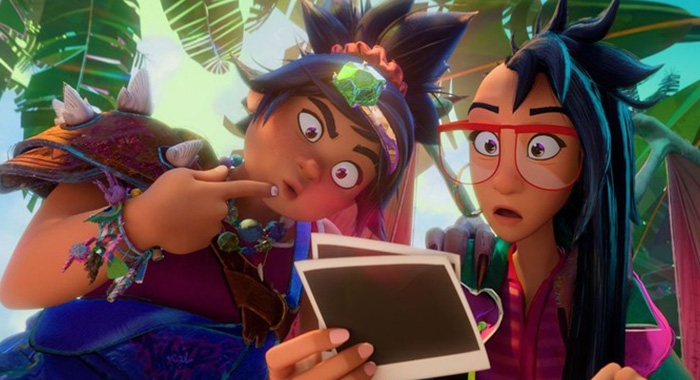
DreamWorks’ latest adventure, Forgotten Island, showcases culture, friendship, family, and laughs, and it’s set to hit theaters in September. Universal Pictures hosted a star-studded tastemaker screening with the cast and filmmakers to discuss the film, and Awards Tour host Jacqueline Coley moderated the post-screening Q&A. This new original animated story pairs two longtime DreamWorks filmmakers who bonded in their early days at the studio and collaborated on their previous hit, Puss in Boots: Last Wish. Forgotten Island is a retro comedy featuring cutting-edge animation that tells the story of two childhood friends, Jo (Gabriella “H.E.R.” Wilson) and Raissa (Liza Soberano), who have vowed to always stay friends. However, after high school graduation, Raissa prepares to travel to the United States for college while Jo is set on trying to persuade her to stay. On the eve of Raissa’s departure, the two are suddenly transported through a portal to the fantastical world of the forgotten island of Nakali, where memories and love may be the only thing that can bring them home. There they meet a cast of characters played by Dave Franco, Manny Jacinto, and Joy Koy.
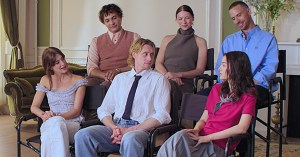
Read on for the chat with Forgotten Island stars Liza Soberano, Manny Jacinto, and co-writers and co-directors Joel Crawford and Januel Mercado.
Jacqueline Coley for Rotten Tomatoes: Joel and Januel, talk about the inception of this story and how the heartbeat of your friendship echoed throughout what you were able to put on the screen?
Joel Crawford: We’ve been working together for almost two decades at DreamWorks. We started as storyboard artists a long time ago, and it’s one of those things where, when we started, we got put together, sharing an office, and we just found that we have the same humor and the same kind of, I think, not just the humor, the same instincts: We love to laugh, we love to cry, we love action. So we found this instant shorthand with each other. And after doing multiple kinds of franchise movies and having the opportunity to do something original, we’re like, doing something that’s felt so original and personal. That’s what kicked it off — it was a movie about friendship, a movie about the Philippines.
Januel Mercado: A lot of times you have those “a-ha” moments, like in the shower, it happens a lot too, where these ideas come to you. Joel and I take walks, all our walks, even to the commissary or to the parking lot. I distinctly remember walking to get lunch, and we were talking about doing something original, and Joel said, “We should definitely do something to honor the Filipino culture.” And we were like, “Yeah, the mythology is so rich with the Aswang.” So that was another ingredient. There was the friendship; there was this fantasy world that already lived inherently in this mythology. And then, of course, we wanted to pay homage to our families, specifically the women in our families: Joel’s wife, Kathy, and my sister, Joy. We call them out a lot, but really there are a lot of family members we’re inspired by.
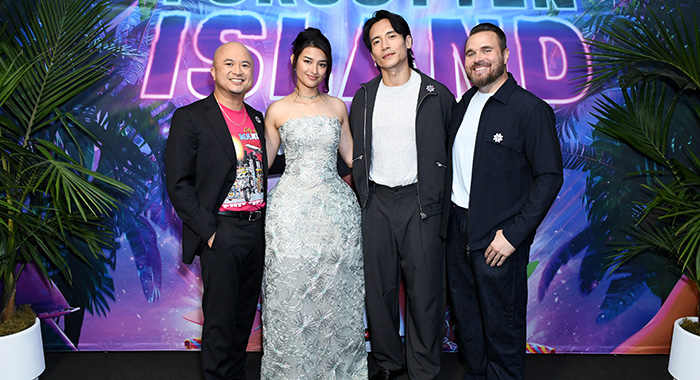
RT: Liza, I’d love for you to talk about how you discovered the specificity of you and Gabby’s dynamics and how your specific experiences with each other translated onto the screen?
Liza Soberano: That’s a great question. Gabby and I, before we started recording Forgotten Island, had only met twice at major events. I didn’t know her personally, but I was a fan. So when I found out she was cast as Jo, I started watching a lot of her interviews on YouTube because I wanted to get to know her personally. Still, we didn’t have the time, because everything moved so fast once we got cast. So it started with that, just me building this parasocial relationship with her.
But then when we had our first recording session together — which is a very rare occurrence for animation, apparently — that really helped give us a better understanding of the dynamic we both have. And because we both grew up with Filipino parents and grandparents, we instantly clicked. It’s the Filipino connection, because there are a lot of things in our upbringing that we’ve both experienced and can identify with and relate to. It really helped that we had those two in-person sessions. Gabby is also such a warm, friendly person, and she made so much effort to reach out to me and hang out before we went into recording.
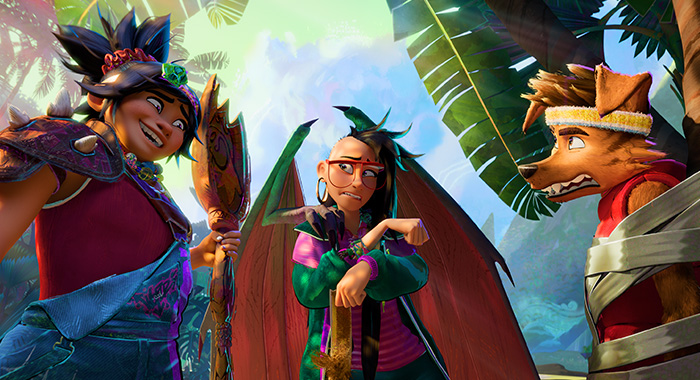
RT: Manny, did any of you start watching the movie and, halfway through, be like, “What character is he playing?” I’ve seen you do a lot of things, from The Good Place to The Acolyte. Didn’t know you had Bungi in you. So how did you find him?
Manny Jacinto: Jan and Joel were like, “Hey, we want you to play a 200-year-old baby demon.” And I was like, “This is what I’ve been waiting for my whole life. This is why I got into acting, to play a big-ass baby.” And they made it happen. Working with these guys, it really felt like I was working with a bunch of my best friends back home, really, from when they first presented the project. I was so stoked to be a part of it and contribute. We worked it out — where the voice would come from and how it would be. But yeah, it was a team effort. I think we are all Bungi. And [Joel and Januel] are so great. They make me feel so comfortable trying anything and just being free. And we landed on whatever that is.
Crawford: It was funny: The first session we recorded — Manny, you’re so generous to try a lot of variations. Like, he’s a baby, but he’s also eight feet tall, and he’s huge, trying a lower register, trying some with an accent, no accent. And in editorial, when we cut it together, I remember the second record, you were like, “Can you send me a sample of what you landed on?”
RT: Januel, there’s so much culture inside this film. But it’s also a universal story about found family. Tell us about that part.
Mercado: Yeah. It’s the sensibility and the hospitality of welcoming people, and food is a big part of a culture. In many cultures, it is a common thing: if you’re here with us at the party, well, you eat; you better eat, or it’s so disrespectful if you don’t eat. Even if you’re not hungry, you better eat; you better take it to go, because you’re not wasting any food. With so many communities, it’s such common sense. We’re here together, and let’s eat together, because food is sustenance; it’s life, and this is what connects us. I appreciate all of you really reacting to all that love in the movie, because we say this every time: Our crew and our cast, people in the Filipino community, people outside the Filipino community, they put everything into this, and it means so much. We’ve worked so hard, and this is why we make art, to communicate, reach out, and feel the connection. And for you to feel that and receive it back to us is everything. So if you keep watching them, we’ll keep making them.
RT: Joel, one of the things you’re responsible for is getting these performances out of these folks, sometimes in a sound booth, and whatever imagery you can place inside the actor’s head. What would you say were the ways that you found to be the most fun to get these folks where you wanted them to be?
Crawford: Oh, yeah. When we’re writing, we’ll switch scenes; I’ll write over Januel’s, and he’ll write over mine. And the rule is, if it makes us laugh, we believe it’ll make other people laugh. We work with a great team: our producer, Mark Swift, and our editor, who we’ve worked with on multiple movies. We have a core group that we bounce things around and really try to find the best version. The script is worked out and has the laughs built in, but we also love working like improv. So we know we have something in there, but the fun is to go, “Let’s surprise ourselves. Let’s go too far, and we can always pull back.” That’s really so much of our sensibility, to get silly with it and not judge it while we’re doing it. We always appreciate the trust our cast has given us to be stupid in the room. So much of animation is starting with nothing, and everything is intentional; you have to work extra hard to find spontaneity. So we’re constantly relying on the moments we share in the booth with our cast to find what surprises us. And it feels like a real conversation. I think so much of the characters you feel on the screen are from the way our cast bounce off each other and the way we bounce off of them. We’ve all found this shorthand, I feel like, through this journey.
RT: Who is the most interesting discovery in casting? Who was the one that was the most surprising discovery that you added to the voice cast, or the one that you found most interesting?
Jacinto: Can I say mine? So, I don’t know if you know who’s singing karaoke [in the party scene]. It’s Januel. Yeah, the angelic voice is Januel’s.
RT: Wow!
Mercado: That’s Me!

RT: Liza, the movie is funny, but it’s also very emotional at the end. I’d love for you to talk about when you had to go to those moments in the script, because they are just as impactful as all of the laughs and wackiness.
Soberano: It’s those sequences that I find the most comfort in. They come more naturally to me than the comedic moments, because the story of a Filipino moving overseas is so familiar. We have this thing called OFWs, overseas Filipino workers. So everybody has had a family member, a friend, or somebody they know who had to make that big move. It’s such a familiar feeling of longing, a fear of abandoning loved ones or being abandoned, and uncertainty about moving to a new territory. Having gone through that myself, and having family who had to move to make a living, made it easy for me to tap into those emotions.
But also at the same time, to be honest, throughout the whole film, I was thinking of my little sister. I have a nine-year-old sister in the Philippines. When I got cast in this film and moved, she was the person I was most scared to leave behind, because she was only seven when I left. I’ve always wanted to raise a little sister, because my siblings and I all grew up in different households except for my full brother. I was really scared of leaving my sister, but while I was working on those emotional scenes, I thought of her when I was talking to Jo.
RT: And you also had layers for Bungi, like anger. Manny, tell us, how did you find the scream?
Jacinto: The great thing about Joel and Januel’s work is that they make sure all these characters aren’t super flat and one-sided. They give them layers; they give them things to play with. Coming into it, I didn’t know what to expect, but you feel for Bungi; you feel sorry for him too, but then you mess with him, and he can mess you up. He can hold his own.
RT: There are a ton of fun Easter eggs. You guys have worked on a ton of DreamWorks things, and I know we have nods to that. What’s your favorite little behind-the-scenes Easter egg, especially if it can maybe relate to some of your other works at DreamWorks?
Mercado: This one is a little bit more on the surface, but did y’all catch the How to Train Your Dragon reference?
Crawford: With Puss in Boots: The Last Wish, we had a fantastic time working with that cast, and some of them after that experience said to us, “If I can’t at least do a little voice in your next movie, I’ll be so disappointed.” And they are good friends, and this movie’s about friends, so we have a few voices in the movie from Puss in Boots: The Last Wish.
Forgotten Island is in theaters on September 25th.
This conversation was cut and edited for brevity and clarity.