

10 Essential Mexican Films That Are Worth Watching
Dig deeper into Mexican cinema with this sampler of overlooked and underseen films.
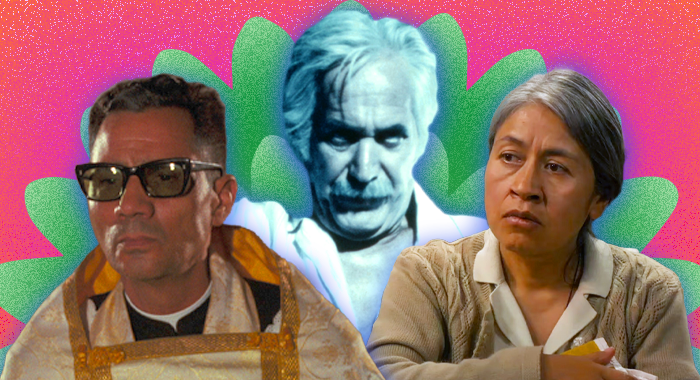
For Hispanic Heritage Month, Rotten Tomatoes is spotlighting essential films from four Hispanic communities to celebrate their cinematic histories — from beloved classics and box-office landmarks to award winners and breakthrough movies that changed the conversation.
Vast and varied, Mexican cinema has constantly evolved in parallel with Mexican society. And while making movies in Mexico remains challenging given shifting government attitudes towards financing policies, the 21st century has seen an explosion of voices.
From the melodramas of the Golden Age of Mexican Cinema, to landmarks of the Nuevo Cine Mexicano like Amores Perros and Y Tu Mamá También, or the wave of films that address the country’s challenges with cartel violence and economic disparity, the Mexican film industry has transitioned from periods of scant opportunities to an impressive growth in the number of productions and great thematic diversification in recent years.
Today, Mexican filmmakers continue to make waves at international festivals around the world. And over the last decade or so, many of the most acclaimed productions have often been crafted by talented women directors. To celebrate Hispanic Heritage Month, we present this short list as a sampler to whet your appetite and dig deeper into one of the most eclectic and compelling national cinemas.
1. Enamorada (1946)

Where to watch: Prime Video
In a ferocious performance, incomparable screen diva María Felíx stars in Enamorada as Beatriz Peñafiel, a woman who refuses to bow down to revolutionary general José Juan Reyes (Pedro Armendáriz). Their initial bickering eventually sparks an unlikely romance between them. From Emilio “Indio” Fernández, a pilar of the Golden Age of Mexican Cinema whose prolific output as a director includes some of the most notable pictures in the country’s history, this melodrama is set against the backdrop of the Mexican Revolution. Beatriz is only allowed her virulent defiance of a women’s role because she is the daughter of a wealthy landowner. Meanwhile, the general brings a more class-conscious worldview to the equation.
2. Macario (1960)
Where to watch: ViX
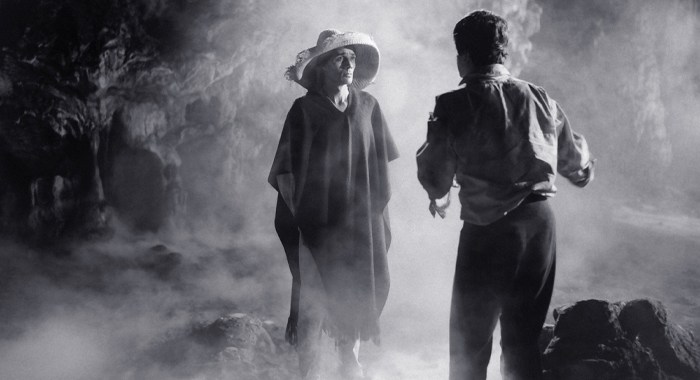
Macario, Mexico’s first ever Oscar-nominated film unfolds during the Día de Muertos holiday. A poor Indigenous man who dreams of eating a whole turkey on his own, Macario (Ignacio López Tarso) is visited by three otherworldly entities in human form: the Devil, God, and eventually Death. It’s only with Death, who looks like a peasant, that Macario is willing to share his meal. In return, he receives a powerful gift. In the hands of legendary cinematographer Gabriel Figueroa, the fanciful drama boasts dazzling frames including an emblematic scene filmed in caverns known as las Grutas de Cacahuamilpa, where human lives are represented by endless candles. When Death snuffs one out, a person’s time runs out.
3. Canoa: A Shameful Memory (1976)
Where to watch: Fandango
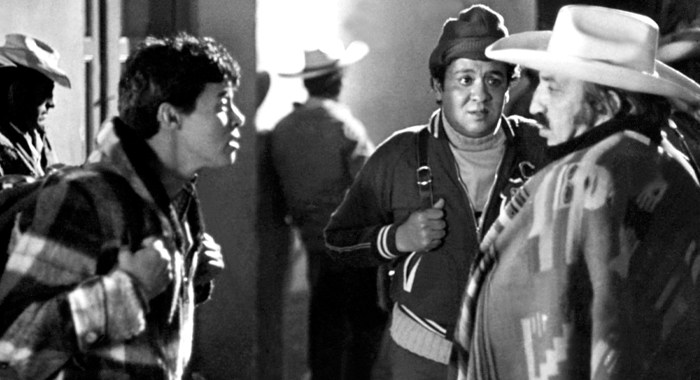
Inspired by true events, this politically charged metafiction follows a group of young university employees who find themselves stranded in the small town of San Miguel Canoa due to bad weather. What they don’t know is that the malevolent local priest (Enrique Lucero) has poisoned the minds of locals, convincing them that evil Communists will come from the city to force them to give up religion. The late master filmmaker Felipe Cazals made Canoa: A Shameful Memory as a hard-hitting statement about the dangers of propaganda during a volatile time in Mexico’s history, just a few years after the 1968 Tlatelolco student massacre. Cazals stretched the cinematic form by including sequences that resemble non-fiction interviews.
4. Doña Herlinda and Her Son (1985)
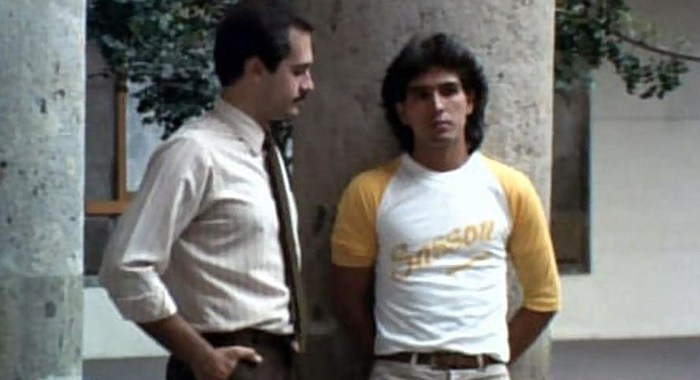
Guillermo del Toro’s late mother Guadalupe del Toro stars in Doña Herlinda and Her Son as the titular mother, a woman bent on seeing her son Rodolfo (Marco Treviño), a pediatric neurosurgeon, married with children. And yet, she also cares for Ramón (Arturo Meza), a gay music student who is Rodolfo’s not-so-secret lover. Though her motives remain unspoken, the love triangle between the two men and Doña Herlinda implies that she wants to both appease the status quo and ensure her closeted son is truly happy behind closed doors. Provocative for its time, this queer dramedy is a key entry in director Jaime Humberto Hermosillo’s body of work centered around sexual desire and subjects considered taboo in Mexican society.
5. Danzón (1991)

Where to watch: ViX
A trailblazer for Mexican women directors, Maria Novaro crafts stories about conflicted everyday heroines who often defy rigid gender norms. For her sophomore effort Danzón, Novaro entered the world of dance halls in Mexico City via Julia (the striking María Rojo), a single mother working as a switchboard operator whose pastime is dancing danzón (a Cuban musical genre) with Carmelo (Daniel Rergis), a man she barely knows but with whom her body has a rhythmic connection. When Carmelo vanishes without warning, she travels to the coastal state of Veracruz looking for him. Though ultimately unfruitful, the trip in turn exposes her to unique people and experiences that breathe a new wind in her sails.
6. Solo con Tu Pareja (1991)

Where to watch: Prime Video
Long before earning international acclaim for Y Tu Mamá También and Oscar glory for Roma, Alfonso Cuarón made his feature debut with Solo con Tu Pareja, a satirical comedy about a womanizer whose cheating antics finally catch up with him. Played with mordant charm by one Mexico’s most renowned thespians, Daniel Giménez Cacho, the deviant protagonist Tomás considers suicide after a jilted nurse fabricates a false HIV diagnosis to punish him. Alongside cinematographer extraordinaire Emmanuel Lubezki in one of their early collaborations, a young Cuarón conjures up a playful and biting romantic narrative that stood out for its ingenuity at a time when Mexico only produced a handful of films per year.
7. Cronos (1992)
Where to watch: Fandango, Apple TV, HBO Max, Prime Video
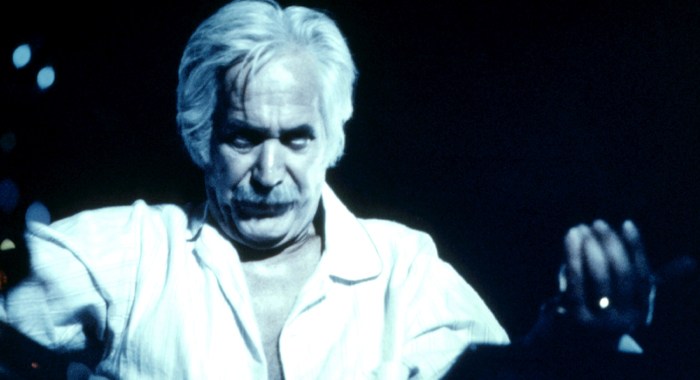
Plunging its sharp-edged, golden limbs into the flesh of elderly antique dealer Jesús Gris (Argentine actor Federico Luppi), the scarab-shaped mechanism central to Guillermo del Toro’s monstrous debut outing Cronos announces itself as the first memorable emblem in a career marked by strong motifs. The ancient device magically rejuvenates Mr. Gris, turning back his biological clock, but also making him thirsty for blood (an unforgettable scene shows him licking the vital fluid from a bathroom floor). Soon he learns others are also looking to benefit from this “miracle.” Del Toro burst onto the screen with a fully formed vision that set him apart from cotemporary Mexican filmmakers and kickstarted a body of work that has helped redefine the possibilities of genre cinema.
8. Deep Crimson (1996)

Where to watch: Fandango, Prime Video
Sordid tales about morally dubious people is what audacious veteran auteur Arturo Ripstein has been known for since the 1960s. One of his most accomplished explorations of human depravity and perverse desire is Deep Crimson, a crime saga centered around two deadly lovers, nurse Coral (Regina Orozco) and conman Nicolás (Daniel Giménez Cacho), whose toxic bond claims multiple victims along the way. The twisted pair pose as siblings to take advantage of lonely women in northern Mexico. Ripstein’s longtime screenwriter and partner in life Paz Alicia Garciadiego used the real-life case of serial killers Raymond Fernandez and Martha Beck as foundation for this riveting and often disturbing period piece set in 1949.
9. Tempestad (2016)
Where to watch: Roku Channel, Tubi
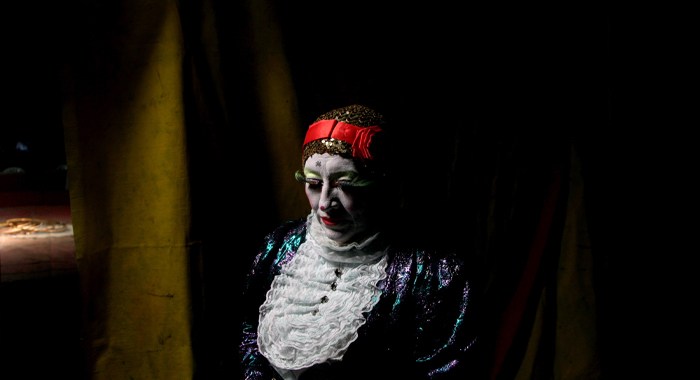
In 2017, Tatian Huezo became the first woman to win the best director prize at the Ariel Awards (Mexico’s equivalent to the Oscars) for this stunning dual portrait of women who have survived unthinkable injustices. With an eye for visual lyricism, the documentarian interviews Miriam, a former airport employee who spent time in a cartel-run prison after being falsely accused of participating in human trafficking, and Adela, a circus performer whose life has been threatened as consequence of her ongoing search for her abducted daughter. Images of landscapes, travelers, and everyday citizens appear in Tempestad under brooding soundscapes, creating an ominous atmosphere that conveys the corrosive and pervasive impact of impunity.
10. Identifying Features (2020)

Where to watch: Fandango, Prime Video
A modern masterpiece of Mexican cinema, Fernanda Valadez’s debut feature (co-written with artistic partner Astrid Rondero) stands among the most devastating portrayals of the despair afflicting thousands of innocent people caught in the crosshairs of cartel violence. Through the eyes of Magdalena (Mercedes Hernández), a tireless mother searching for her teenaged son who disappeared while on his way to the U.S. border, the filmmakers unflinchingly expose the enormous fear and powerlessness that permeate the lives of the less privileged when the state seems to have given up on protecting them. The conclusion of Identifying Features is at once spellbinding and earthshattering, as it confirms that when dehumanizing brutality becomes normalized, death is not the worst fate a victim can face.