
Revisiting the Oscars: How Braveheart Overtook the Biggest Frontrunners of 1996
In anticipation of the upcoming 98th Academy Awards, we reexamine the Best Picture race of 1996.
Like every Oscar year, film critics were the Greek chorus of the 1996 awards season without being the ultimate deciders. They didn’t get a vote, but today they get to be heard. This is an analysis of the critical receptions for the 68th Academy Awards’ Best Picture lineup as they were received in their own time, informed by over 300 archival reviews added by the Rotten Tomatoes curation team.
The Race
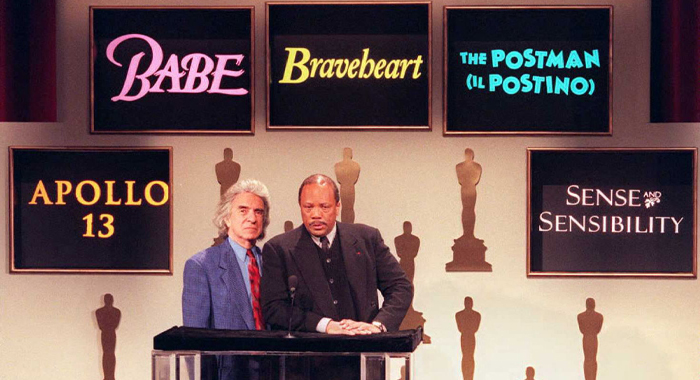
When the Academy Award nominations for the films of 1995 were announced on February 13th, 1996, the incredulous reactions came fast and furious. Following several consecutive years of everything going according to plan for projected frontrunners, Hollywood had gone off script.
Seattle Post-Intelligencer’s William Arnold called the finalized slate of nominees “the biggest set of surprises in recent Oscar memory.”
From the outset of the 1995 awards season, there were two frontrunners perceived to be well ahead of the pack: the historical blockbuster Apollo 13 and the Jane Austen adaptation Sense and Sensibility. Critical darlings that had cleaned up at the box office, both were assumed to duke it out for the top prize. That calculus was turned upside down when their directors, Ron Howard and Ang Lee, were snubbed for nominations.
“Omissions accomplished,” quipped Philadelphia Inquirer’s Steven Rea in reaction.
While it wasn’t unprecedented for a film to win Best Picture without a corresponding nomination for its director, the statistics were bleak. For any movie expected to cruise to a golden statue, a directorial snub meant — to borrow Rea’s riff — “Houston, we have a problem.”
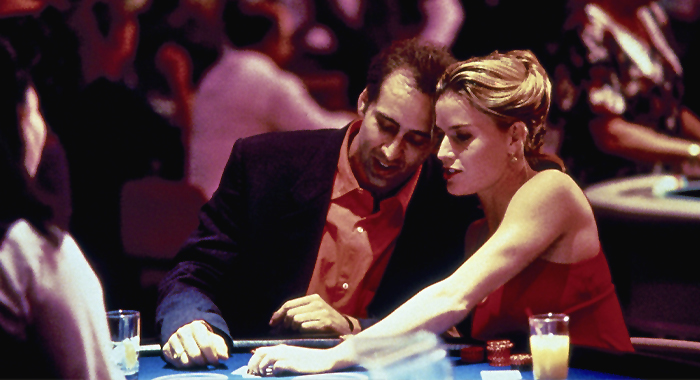
There were also plenty of surprises in the Best Picture category itself. In a packed field, two hotly tipped contenders were director Mike Figgis’ melancholy character study Leaving Las Vegas, starring Nicholas Cage as a suicidal alcoholic and Elisabeth Shue as an escort he falls in love with during one last bender, and Tim Robbins’ Dead Man Walking, a morally nuanced drama tackling the death penalty debate starring Susan Sarandon and Sean Penn.
Other candidates in the mix included Rob Reiner’s Capraesque romantic comedy The American President, Barry Sonnenfeld’s Hollywood satire Get Shorty, Oliver Stone’s presidential biopic Nixon, and the pioneering Pixar-animated smash Toy Story. David Fincher’s shocking serial killer thriller Seven had been floated as a possibility, but distributor New Line Cinema reportedly declined to market the grisly chiller as an awards vehicle (it would, however, go on to win the MTV Movie Awards’ Best Picture prize).
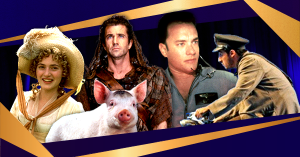
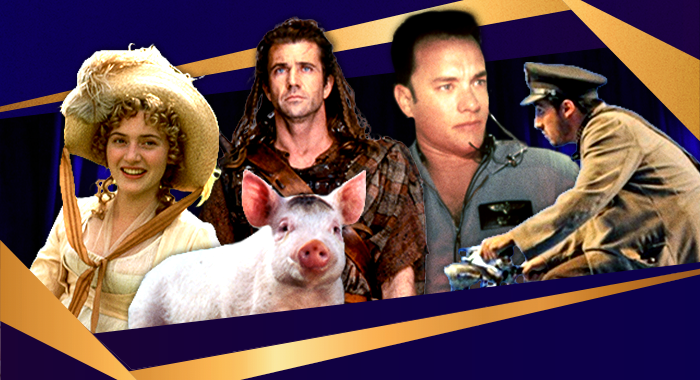
Instead, joining Apollo 13 and Sense and Sensibility to round out the best picture five were Babe, an Australian family film starring a talking pig; Braveheart, a bloody Highlander epic directed by and starring Mel Gibson; and The Postman, an Italian love letter to the power of poetry.
Braveheart, described by Arnold as “never much of a critical hit or considered a strong Oscar contender,” had suddenly vaulted over the competition with a leading tally of 10 nominations, including one for Gibson in the Best Directing category.
“Does anyone have a dart?” joked Chicago Tribune’s Gene Siskel when it came time for making his winner predictions. “How about some chicken bones? Seriously, I don’t know what’s going to happen here.”
Apollo 13
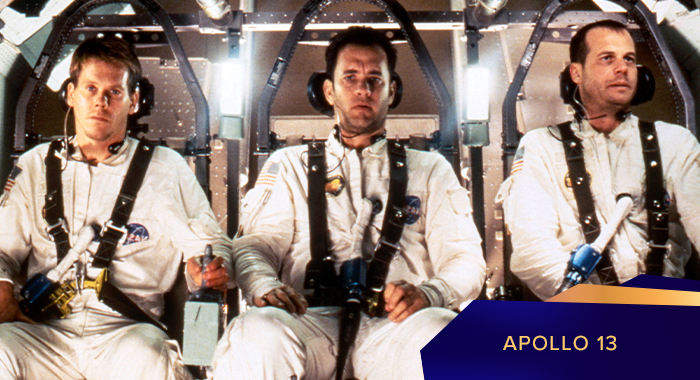
Tomatometer: 92% with 157 reviews
Popcornmeter: 87% with 250,000+ Ratings
Directed by: Ron Howard
Starring: Tom Hanks, Kevin Bacon, Bill Paxton, Gary Sinise, Kathleen Quinlan, Ed Harris
Apollo 13 may be one of the quintessential cases in Oscars history of a frontrunner peaking too early for awards season. As the real-life heroes in the space epic could attest, launching a rocket into the stratosphere is one thing, but landing it is a wholly different challenge.
Recreating the Apollo 13 space mission crisis, when a technical malfunction imperiled three astronauts during their trip to the moon, the film focused on how NASA’s mission control snatched victory from the jaws of defeat by bringing their boys back home safely. Director Ron Howard, a former child star who had long outgrown the shadow of Opie after helming hits like Splash and Cocoon, latched onto the story after reading the nonfiction book Lost Moon, co-authored by Apollo 13 astronaut Jim Lovell. Howard saw it as a unique opportunity to tell a story of heroism.
“It’s a very dangerous thing to present a character in realistic, heroic ways because it seems corny,” Howard told Gannett News at the time. “One of the things about this movie is that here’s a case where you can celebrate a triumph, and you need make no apology.”
While Universal Pictures wanted Kevin Costner to star as Lovell, Howard had his eye on Tom Hanks, who had pitched the idea of an Apollo 13 movie to him before Lost Moon had even been published.
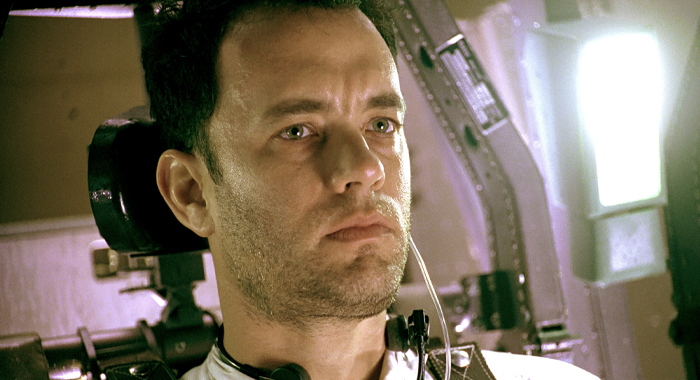
“At that point, Philadelphia hadn’t come out, and Forrest Gump was still in the future,” Howard recalled to the Newark Star-Ledger. “People said, ‘Tom Hanks? Are you doing this as a comedy?’ Now I look like a genius.”
The ensemble was filled out with Kevin Bacon, Bill Paxton, and Gary Sinise as Hanks’ fellow astronauts, Kathleen Quinlan as his wife holding the family together during the crisis, and Ed Harris as the authoritative flight director overseeing the rescue mission. As stacked as the cast was, they shared co-equal star billing with the production’s cutting-edge special effects overseen by Digital Domain’s Rob Legato.
“It’s a major effects movie that doesn’t look like it,” Legato told the Boston Globe while explaining the extensive model replicas and compositing required to recreate outer space after his company ditched their original idea to use NASA stock footage.
Opening wide across the U.S. on June 30, Apollo 13 received a stupendous critical reaction, with many sparking to Howard’s reverent treatment of the space program. “Apollo 13 might make you wonder why space exploration is no longer a high national priority,” wrote Tampa Tribune’s Bob Ross. “It will certainly bring a lump of wholesome pride to your throat.” Tom Long of the Santa Cruz Sentinel went one step further, declaring Apollo 13 “the most purely American film in memory. It is also the best film so far this year.”
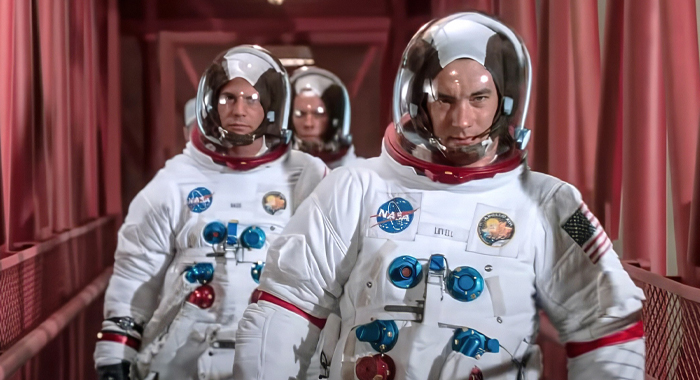
Long’s first sentiment was shared by the movie’s detractors, but not as a compliment. “Howard and company jettison the contradictions surrounding the American rush into space, even if they’re not shrewd enough to make their deception stick,” ruled LA Weekly’s Manohla Dargis, who found the film’s lack of acknowledgment for the ongoing Vietnam War to be “Odious.” Amy Taubin of the Village Voice suggested “If Forrest Gump was right-wing revisionist history, then Apollo 13 represses history entirely.”
The majority of critics, though, were enamored with the movie’s focus on technical expertise and how steady experimentation saved the day, with Arizona Republic’s Bob Fenster calling it “a tribute to the scientific achievements of the human race.”
Taking in an astronomical $330 million worldwide and featuring on over 120 critics’ Top 10 lists by the end of the year, Apollo 13 exited the summer positioned as an obvious frontrunner for Best Picture glory. That proved harder to sustain as the months rolled on, with Universal’s aggressive campaigning having perhaps hurt more than it helped. “I have never received so much junk in my life as I have received from Universal this year,” an anonymous Oscar voter complained to the Chicago Tribune, overwhelmed by the incessant promotional materials for Apollo 13 sent to their home.
“Like any successful space shot, the picture soars past the bounds of gravity with deceptively effortless ease — making it possible to ignore the difficulties and complexities of such a hugely ambitious enterprise.”
– Michael Medved, New York Post
Babe
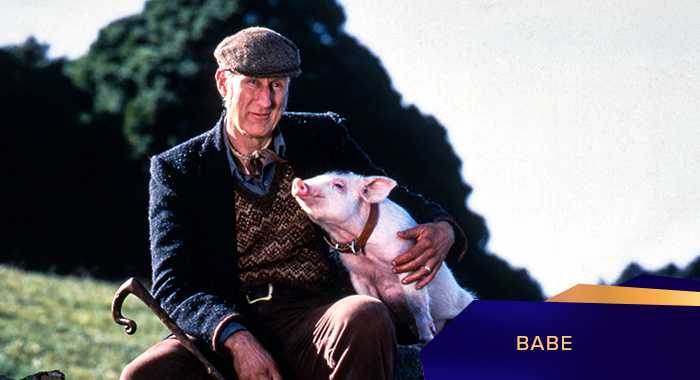
Tomatometer: 98% with 124 reviews
Popcornmeter: 68% with 250,000+ Ratings
Directed by: Chris Noonan
Starring: James Cromwell, Christine Cavanaugh, Magda Szubanski, Hugo Weaving, Miriam Margolyes
When Mad Max director George Miller brought the children’s book The Sheep-Pig to his fellow Australian filmmaker Chris Noonan, the appeal of the porcine fable was immediately apparent to both men. Penned by Dick King-Smith, the novel told the story of a sweet-natured pig who avoids becoming his farmer’s dinner by making himself useful as a sheep herder. Ostensibly family-friendly, the tale was larded with poignant perspectives on the food chain.
“I thought it was extraordinary,” Noonan told the Sunday Independent (Dublin ed.). “What, on the surface, is a simple children’s story had lots of different layers and depth to it. It was talking about the sort of issues that are the source of many of the world’s problems, issues such as prejudice.”
Noonan signed on as director while Miller produced the quirky enterprise, which came with some exceedingly tricky logistics. To make the ensemble of farm animals convincingly talk among themselves, the production had to employ an intricate combination of animal training, animatronics, and digital effects. Animal trainer Karl Lewis Miller found the task of training the piglet cast to star as the titular Babe to be so unrealistically time-consuming that he wound up collecting 48 pigs and taught them each a specific function so they could be used like a factory assembly line.
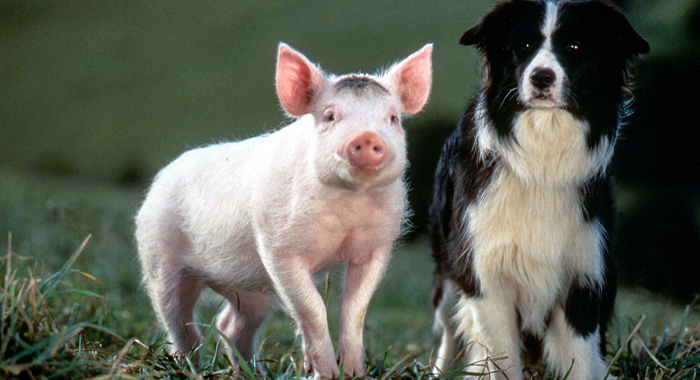
“There isn’t any such thing as a dumb animal,” Karl Miller told The Observer (UK) while explaining how teaching a pig to give a performance even for a single scene was doable. “From the cow to the horse, all of them can learn and be taught.” The 48 pigs who were enlisted to play Babe, happily, were relocated to sanctuaries in Australia after the shoot to live out their natural lifespans.
The big-hearted movie reportedly had some hard feelings on set. James Cromwell, one of the few human stars of the picture, later recalled to The Hollywood Reporter that Miller and Noonan frequently clashed over the film’s tone, despite having co-written the screenplay together.
Whatever creative strife occurred between the director and producer, the finished product was regarded as a wholly unique vision upon its release on August 4, 1995. “Babe is one of the three films in history that you can call charming and mean it as a compliment,” effused Jonathan Romney of the New Statesman.
Chicago Tribune critic Gene Siskel commended it as “a terrific picture that takes a lot of risks and makes them all pay off.” The tricky balance of light and dark had been pulled off, with Santa Cruz Sentinel’s Wallace Baine summing up the blend as “a distinctly Animal Farm social take with a pleasingly droll comic touch.”
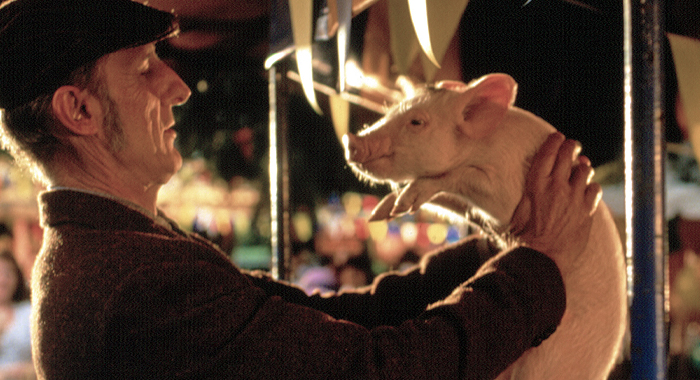
Though it was a critical hit that made a mighty $246 million at the global box office, Babe’s inclusion in the Best Picture category was still regarded as somewhat of a surprise. Noonan’s nomination for directing even sparked some speculation that the plucky family film could go all the way.
“Bet the farm,” predicted Los Angeles Daily News’ Phil Rosenthal. “Babe will win the Academy Award for Best Picture on Oscar night — no ifs, ands or rumps.”
Rosenthal’s colleagues Bob Strauss and Amy Dawes had a dimmer view of the film’s prospects, countering, “It’s a talking pig movie. There are rules about that.”
“I can’t believe I cried in a movie about a pig who wants to be a sheepdog, but there it is.”
– Judy Adamson, Sydney Morning Herald
Braveheart
Tomatometer: 74% with 139 reviews
Popcornmeter: 85% with 250,000+ Ratings
Directed by: Mel Gibson
Starring: Mel Gibson, Sophie Marceau, Patrick McGoohan, Brendan Gleeson, Catherine McCormack, Angus Macfadyen
After decades marked by controversy and scandals, it can be easy to forget that Mel Gibson was once among the world’s most beloved movie stars. Rising fast as a leading man in the Australian film industry with classics like Mad Max (1979) and Gallipoli (1981), the nervy screen actor broke big in Hollywood with the Lethal Weapon franchise, cresting into the 1990s as a reliable star attraction. Having worked with visionaries like George Miller and Peter Weir, Gibson harbored filmmaking ambitions of his own, taking his first crack at bat in 1993 with The Man Without a Face, where he starred both in front of and behind the camera. The modest production gave no indication of the sheer scale of his next directorial project, Braveheart.
Penned by Randall Wallace, the script mythologized the rise, rebellion, and death of the Scottish knight William Wallace in the 13th century, wherein he raised hell against the oppressive rule of English King Edward Longshanks. The 39-year-old Gibson initially passed on the project, deeming himself too old for the part, but soon after, he realized he was hooked.
“It just wouldn’t leave me alone,” Gibson told The Houston Chronicle at the time. “I got to the point where I thought, ‘If I don’t tell this story, I’m going to explode.'”
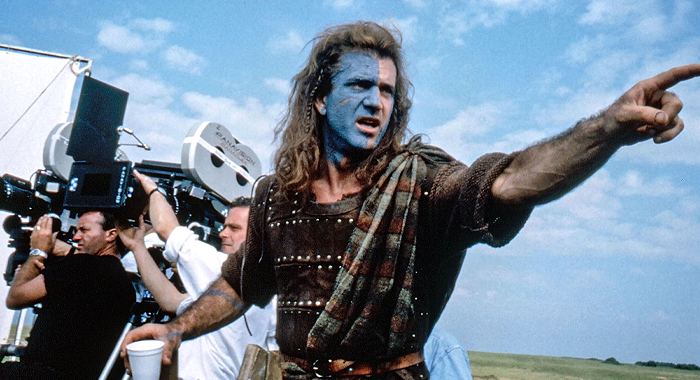
Changing his mind, Gibson opted to both direct and star. Enthralled by romantic epics as a child, he was determined to push the action envelope. “I looked at as many battle films as I could possibly lay my hands on, from Kurosawa to Kubrick,” he told McClatchy News Service. Despite describing himself as “a complete pacifist and a devout coward,” he was determined to reinvent how carnage was depicted on camera.
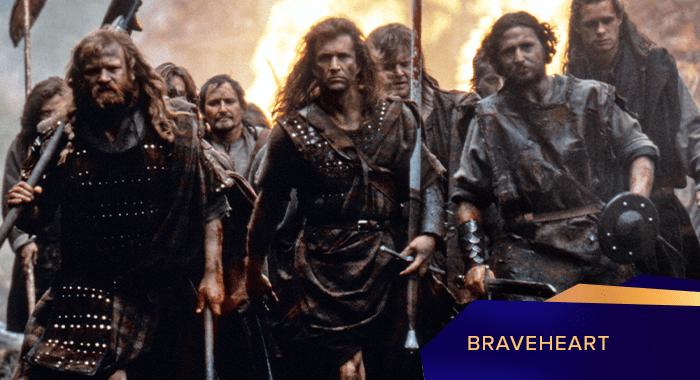
Shooting in Ireland, Gibson enlisted the country’s army reserve, known then as the Fórsa Cosanta Áitiúil (FCA), to teem the raging battlefields he had envisioned in his head. While Paramount Pictures had wanted a compact running time, they were pleased enough by the rough cut that they allowed Gibson to broaden the length to an epic three hours.
Braveheart was first unveiled at the Seattle International Film Festival before opening wide in the U.S. on May 24, 1995. It was met with a broadly impressed critical reception with big caveats, most of the praise reserved for the warfare.
“The heroes of Mel Gibson’s Braveheart are 1,700 members of the FCA, their Irish faces unmistakable as they line up for what must be some of the most spectacular battle scenes ever filmed,” raved Ronan Farren of the Sunday Independent (Dublin ed.). Quentin Falk of the Sunday Mirror (UK) added, “Not since the Sixties, and the heyday of film spectacles with casts of thousands like El Cid, has there been an historical tale of such scope and size.”
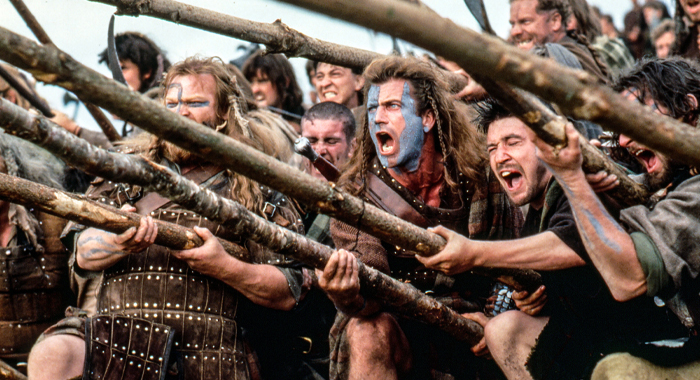
While the epic’s raw physicality and romantic sweep won over the majority, about a quarter of critics cleaved it down to size with a claymore, the most cited complaint being the runtime that Paramount had encouraged. “Long after we’re convinced that war is hell, Gibson’s still going after us, as if he wants to show us how war is monotonous,” chided Jeff Millar of The Houston Chronicle.
The most criticized aspect of the film was the sniveling depiction of Prince Edward (Peter Hanly). A scene featuring Longshanks chucking the prince’s male lover out of a tower drew condemnation and protest from the Gay and Lesbian Alliance Against Defamation (GLAAD), who cited Gibson’s history of homophobic statements as a compounding factor.
“The movie pushes the homosexual-panic button much more vigorously than any other, making Braveheart more about Gibson’s idea of manhood than it is about the man he’s playing,” Village Voice’s Gary Dauphin wrote in agreement.
Braveheart grossed a solid $209 million at the global box office against a $72 million budget. While it featured on over 40 critics’ Top 10 lists by the end of the year, it was distinctly the least critically favored contender in the Best Picture race.
Gibson, shrugging off the criticisms, said “I think it takes a little talent to do mindless bashing really well.”
“[Braveheart] is stirring in ways that not too many movies are, and to a degree that not too many movies achieve. You fight it, but it wins. Hours after you’ve seen it, it’s still with you; days later, it isn’t quite gone.”
– Frank Bruni, Detroit Free Press
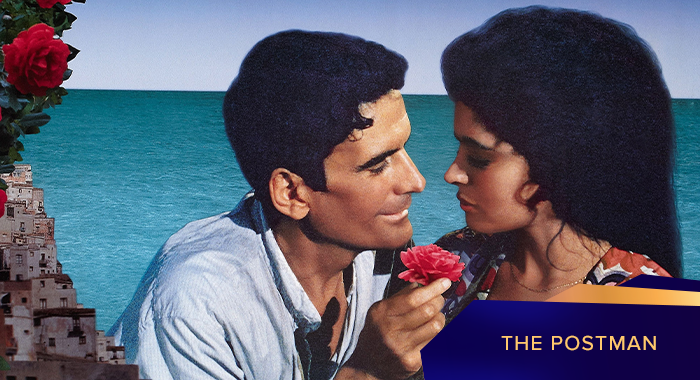
The Postman (Il Postino)
Tomatometer: 92% with 105 reviews
Popcornmeter: 94% with 10,000+ Ratings
Directed by: Michael Radford
Starring: Massimo Troisi, Philippe Noiret, Maria Grazia Cucinotta
There is suffering for one’s art, and then there’s dying for it. The untimely passing of Massimo Troisi gave The Postman, interchangeably known by its Italian title Il Postino, a metanarrative that was just as affecting as what was onscreen, helping propel the longshot production to its surprise Best Picture nomination.
The sweet-natured film about an unlikely friendship was born out of the real-life friendship between Troisi, an Italian comedian and filmmaker, and British director Michael Radford (1984). When Radford became disenchanted with his career and took an extended break, Troisi came to him with the novel Burning Patience and proposed they make it into a movie together.
Radford was hesitant, thinking he was unqualified to direct an Italian-language film, but Massimo assured him, “If a man understands humanity, culture is no problem.”
The story, set in Naples circa 1950, imagines a friendship between the exiled Chilean poet Pablo Neruda (played by Philippe Noiret) and a local postman who delivers his fan-mail. The meek courier, played by Troisi, becomes a student of poetry under Neruda, blossoming with his newfound love of language.
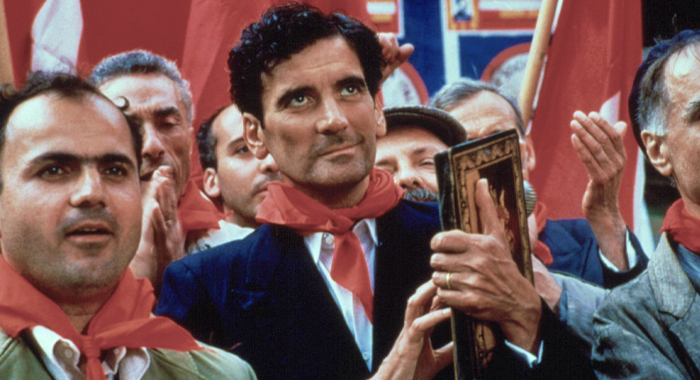
The production almost instantly ran into trouble when Troisi’s health took a downward turn. Suffering from heart issues for most of his life, the 41-year-old was warned by doctors that he was in imminent need of a heart transplant. Refusing to scupper his dream collaboration with Radford, he resolved to put off the operation until production was complete, insisting “I want the last piece of my old heart to be in this new film.”
Troisi’s frail condition necessitated only shooting for a couple hours a day, extending production by weeks. On the evening that principal photography wrapped, he passed away in his sleep. At the ensuing funeral, Radford tearfully promised his friend to make the best movie he could.
The Postman premiered at the 1994 Venice Film Festival and was snatched up by Miramax for U.S. distribution. It received a warm welcome from critics, who were near-unanimously touched by the film’s narrative both on and off the screen.
Troisi, who was beloved in his native Italy but had never achieved international fame in his lifetime, was hailed for his sensitive performance, with many critics reflecting on the tragedy of finally becoming acquainted with a great talent when he had already passed.
“Troisi’s farewell performance is a marvel of precise understatement,” wrote Tim Appelo of the Oregonian. “And you don’t need to know how close he is to death to sense a terrible poignance in his gaze.”
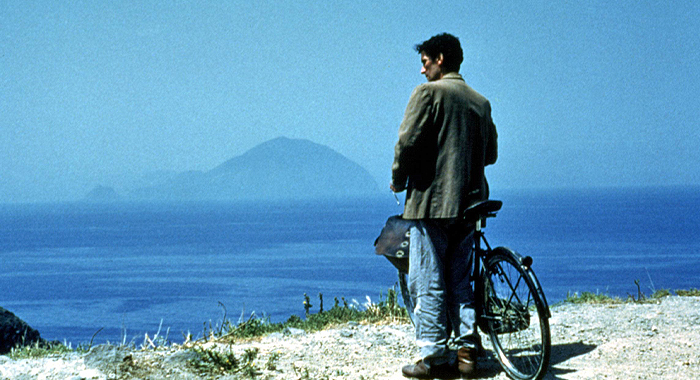
Critics were also kind to Radford’s direction, commending the filmmaker for avoiding the pitfalls of potentially sentimental material. The Guardian’s Derek Malcolm wrote it was “like seeing a film from another, more genuine age when you could tell a story without pressing too many buttons in order to make your audience laugh or cry.”
Among the few demerits levelled at the film were its tragic ending, which some deemed to be unearned and too grandiose. Village Voice’s Georgia Brown also expressed some discomfort with how the production cost the star his life, describing Troisi’s performance as “horribly, pointlessly valiant.”
Come awards season, The Postman ran into a snag when it was deemed ineligible for the Best Foreign Language Film category. Miramax pivoted by running ads decrying the injustice. The campaign also strategically sent out videocassettes early to Academy voters before that Thanksgiving to get ahead of their competitors.
On nomination morning, The Postman prevailed with its surprise nominations for Best Picture (making it the first foreign language film to snag a spot in 22 years, and only the fifth of all time by that point), Radford’s inclusion in the Best Directing category, and a posthumous Best Actor nod for Troissi.
An emotional Radford told the Associated Press, “Somewhere, somewhere [Troisi]’s watching this and weeping with delight.”
“You remember words, don’t you? Those are those sounds that come out of people’s mouths between the explosions and the car chases. Well, The Postman doesn’t have any explosions or car chases. It has the words, though. Not just garden-variety words, mind you — it has words about words, words about poetry, words about how words touch our minds and our souls.”
– Sean P. Means, Salt Lake Tribune
Sense and Sensibility
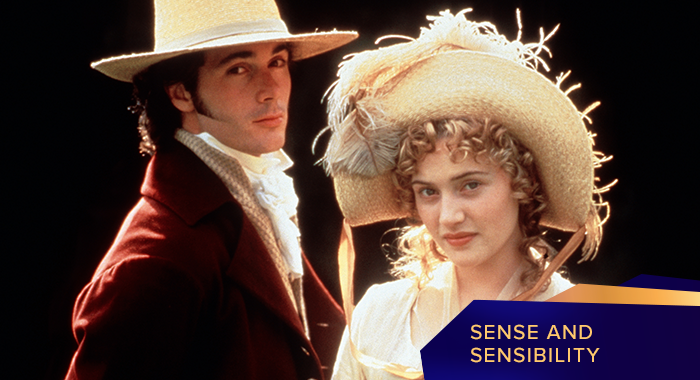
Tomatometer: 97% with 139 reviews
Popcornmeter: 90% with 100,000+ Ratings
Directed by: Ang Lee
Starring: Emma Thompson, Kate Winslet, Hugh Grant, Alan Rickman, Greg Wise
It was the year of Austen-mania. While the celebrated Regency-era author’s novels had been a pop culture staple throughout the 20th Century, 1995 felt like a culmination, with four high-profile adaptations of her work. There was the well-regarded Persuasion, Roger Michell’s adaptation of her final, posthumously-published book; the watershed BBC miniseries Pride and Prejudice, starring Jennifer Ehle and Colin Firth; Clueless, Amy Heckerling’s hip modern update of Emma that relocated the story of mischievous matchmaking to Beverly Hills. Last, but certainly not least, there was Sense and Sensibility.
Emma Thompson, at the behest of producer Lindsay Doran, had begun adapting Austen’s first book when she was still a little-known sketch comic writing skits for the BBC. It took her five years of rewrites to finish the screenplay, during which her career had transformed from comedian to prestige star. Doran recalled to the San Francisco Chronicle how Thompson’s involvement had originally befuddled studios when she shopped the project around, but following her Best Actress Oscar win for Howards End in 1993, their tune changed from “Does she have to be in it?” to “If she’s not in it we’re not making it.”
Thompson, who had become an authority figure within her own family at 22 years old after her father’s death, personally identified with Austen’s story of the Dashwood sisters, the sensible Elinor and the passionate Marianne, who must scramble for financial security through marriage after their own father’s passing. She was also heartened by the Austen formula of everything working out after great hardship.
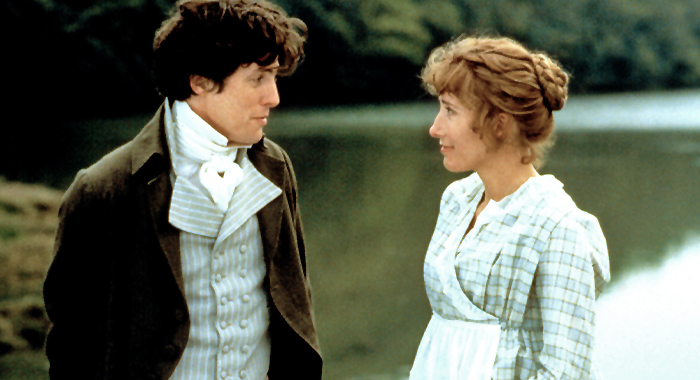
“We need to know that going through pain is a good thing,” Thompson told the Boston Globe at the time. “It makes all human beings much more human.”
Taiwanese director Ang Lee, who had made a name for himself with Eat Drink Man Woman and The Wedding Banquet, was approached to direct. Lee was confused by the offer until he read Austen’s novel and discovered that it shared the same themes as his previous two films. “I read the book, and I said ‘This is it!’” he told Los Angeles Daily News. “All this time, I’ve been doing Jane Austen. It was the call of destiny.”
Teenage actress Kate Winslet, hot off her terrifying turn in Peter Jackson’s Heavenly Creatures, was cast as Marianne, with Alan Rickman, Hugh Grant, and Greg Wise rounding out the cast as the revolving door of suitors. Thompson kept a diary on set, noting one day that Lee was so bowled over by his cast that he asked aloud, “Can everyone in England act?”
Sense and Sensibility began its platform release on December 13, 1995, distributed by Columbia Pictures, and was met with rapturous praise. Even though it arrived at the tail end of Austen-mania, it was hailed as the best of the bunch.
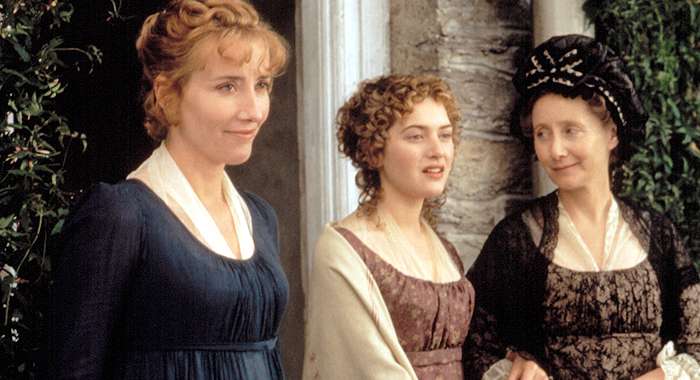
Most critics noted that the combination of Thompson’s wit and Lee’s light touch had yielded a literary adaptation that felt bracingly contemporary. “Director Ang Lee’s Sense and Sensibility isn’t the Great Movie Adaptation the most rigid Jane Austen fans have been panting for,” wrote Boston Globe’s Stephanie Zacharek, adding, “which is what’s good about it.” Tampa Bay Times’ Steve Persall called it “a modern movie rarity: a stiff upper lip period piece that can bond with mainstream audiences ready for a class fix.”
While Thompson’s contributions as writer and star received a great deal of credit, with Fresno Bee’s John Scalzi deeming the script “yet another reason to fall to the ground and worship Emma Thompson as the divine creature that she is,” Lee’s direction was also singled out as essential to the film’s success, with TIME Magazine’s Richard Schickel declaring that the filmmaker had become “a world-class director.”
Sense and Sensibility courted over $135 million at the worldwide box office and featured on over 100 critics’ Top 10 lists for the year, bringing the season of Austen-mania to a triumphant close.
“If the result is less passionate or psychological than the fare to which contemporary audiences have become accustomed, it still provides a valuable glimpse of manners and conventions that, in an era seemingly bereft or rules for right living, might well be worth retrieving.”
– Ann Hornaday, Austin American-Statesman
Oscar Evening
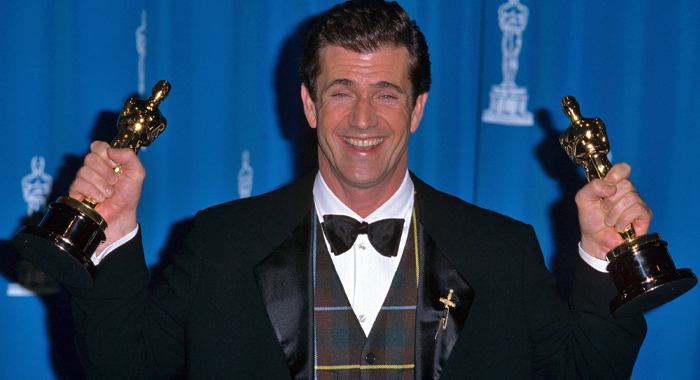
If the nominations for the 68th Academy Awards had drawn incredulity from critics, the ceremony itself proved much more to their liking. Co-produced by Quincy Jones and presided over by returning host Whoopi Goldberg at the Dorothy Chandler Pavilion, it was one of the most warmly-received telecasts in Oscars history.
From the wreckage of Apollo 13 and Sense and Sensibility’s stalled momentum emerged Braveheart as the night’s ultimate victor, taking the Best Picture prize. When Mel Gibson accepted his award for best director, he quipped, “Like most directors, what I really want to do is act.” His next project would be a starring role in Ron Howard’s thriller Ransom.
While the slate of nominees had been a chaotic surprise, they had gone a long way towards creating a genuinely unpredictable climax. Sizing up the ceremony the next day, Variety’s Brian Lowry concluded that the season had been “one of those rare years when there was some true suspense to go with the line ‘And the Oscar goes to…’”