

The Basics Of Ice And Fire: How Is HBO’s Game Of Thrones Universe Connected
Who are the characters? When does each series take place? Where should you start? We break it all down.
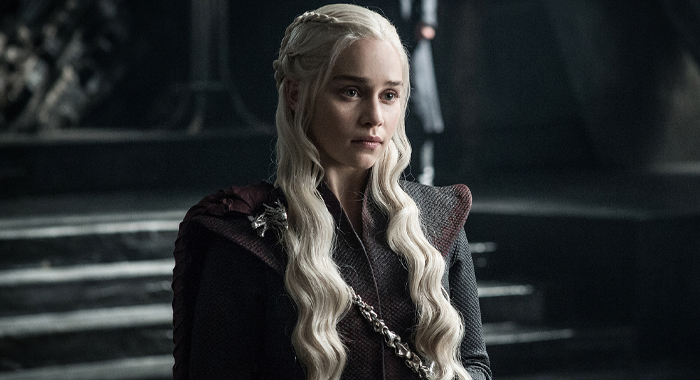
Like J.R.R. Tolkien’s Middle-earth before it, author George R.R. Martin’s world of Ice and Fire is expansive, detailed, and rich with characters. Also like Middle-earth, it is a media sensation thanks to HBO’s three series based on Martin’s writings: Game of Thrones, House of the Dragon, and A Knight of the Seven Kingdoms. But as the combined trio of shows mean around 100 hours of television — and more if you decide to dive into Martin’s written work — accessing the GoT landscape can prove daunting to new viewers.
Continuing with the Tolkien trend, there are different points of entry into this world of dragons, prophecies, and family squabbles over an important piece of furniture. As the season 3 finale of House of the Dragon looms on the horizon, join us as we present the basics of Ice and Fire and, perhaps, offer you the best way to access its expansive universe.
The Land Of Ice And Fire
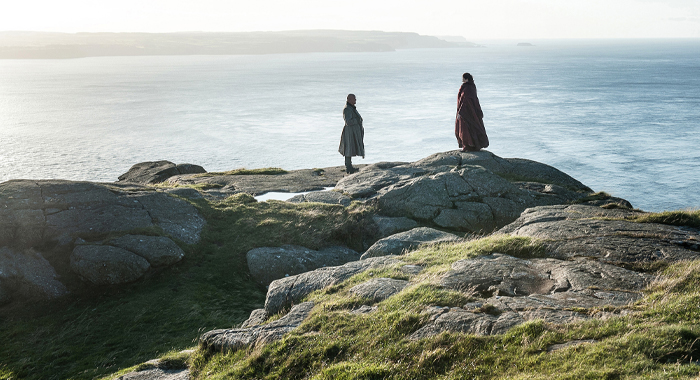
All three shows, and Martin’s whole world, is set in a fantasy realm often referred to as Westeros, but that is just one of three known continents to exist in the world. In terms of our reality, much of the charted lands resemble our own from the European medieval period. The technology, mores, religions, and cultures are roughly analogous except for two key divergences: one “season” can last for years and magic is a real thing.
Biomes, meanwhile, are as diverse as the permanently frozen far North, the sun-drenched domain of Dorne, the grasslands of the Dothraki Sea, and the storm-battered island of Pyke.
Martin’s A Song of Ice and Fire novels concern various claimants to Westeros’s central seat of power, the Iron Throne, from bickering noble houses while an existential and supernatural threat looms in the far North of the continent.
While Game of Thrones adapts the mainline Ice and Fire novels, the subsequent television series are based on other writings: Martin’s pseudo-historical tome, Fire and Blood, begat House of the Dragon, while A Knight of the Seven Kingdoms takes its cues from the author’s “Dunk and Egg” short stories. Reading all of these works is not a prerequisite to enjoying the shows, but they all offer added depth and loving descriptions of the food characters consume.
The Times Of Fire And Blood
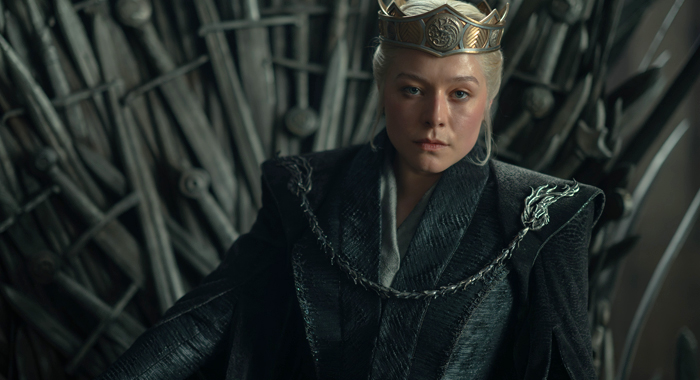
HBO’s three television shows all take place in the same world, but in different eras. Chronologically, the earliest set series is House of the Dragon. Occurring around 200 years before the first episode of Game of Thrones, it concerns itself with a question of succession to the Iron Throne which leads to a civil war within House Targaryen, the ruling house for centuries before and after the events of the series. The Targaryens are known for their shock-white hair and penchant for madness.
A Knight of the Seven Kingdoms, meanwhile, is set roughly 100 years before Game of Thrones and centers on a hedge knight — a wandering swordsman with no noble standing and the freedom to hire himself out to the leading families — and his young squire, who has a destiny as a member of House Targaryen. Although only one season is available, subsequent stories will see the pair wandering Westeros and experiencing the life of more common people than the other two programs.
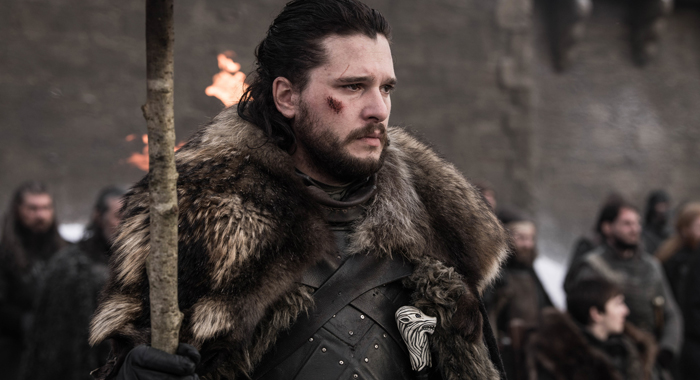
Finally, Game of Thrones is the grand epic. Set 20 years after House Targaryen is deposed from the Iron Throne, the sudden death of King Robert Baratheon (Mark Addy) sets off various schemes among the noble houses, the seven kingdoms, and even outside influences from beyond the sea and, incredibly, beyond the veil of death. Where the other two shows are more tightly focused on the struggles of a knight or the Targaryens, GoT is a globe-trotting epic of Tolkien-esque proportions, if lacking in many of that author’s ideally heroic archetypes. The series is dirtier and grubbier, but compulsively watchable through most of its run.
Those looking for a light introduction to the world should start with A Knight of the Seven Kingdoms, but those who enjoy forward chronological progression should start with House of the Dragon. Of course, Game of Thrones is a valid beginning, too, as it is where Martin himself began writing, and it stands as the culmination of all three shows.
Familiar Faces And Families
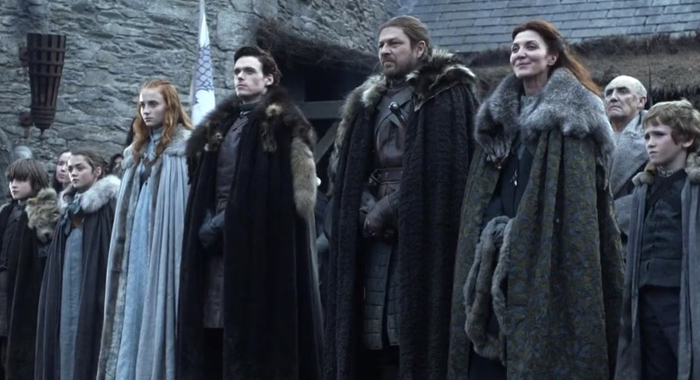
While the Targaryens are the most consistent nobles across all three time periods, they are not the only recurring names one will see across the shows.
House Stark is a very old Westerosi family. They predate the arrival of the Targaryens and the unification of the Seven Kingdoms under the Iron Throne. While not as prominent in House of the Dragon, Cregan Stark (Tom Taylor) has a role to play in the succession of the Targaryen rulers and in the aftermath of their civil war. No Starks are prevalent in Seven Kingdoms so far, but various members of the family are the protagonists of Game of Thrones — notably would-be King in the North Robb Stark (Richard Madden), restless spirit Arya Stark (Maisie Williams), and the indecisive Jon Snow (Kit Harrington). Yes, his different last name is significant.
Over on Seven Kingdoms, Ser Lyonel Baratheon (Daniel Ings), the Laughing Storm, is one of the most enjoyable characters outside of Ser Duncan the Tall (Peter Claffey) — aka Dunk — and Egg (Dexter Sol Ansell) themselves. As his family name implies, he is likely a direct antecedent of Robert Baratheon, who becomes king after another civil war following a particularly important tournament. It is no accident that Dunk and Egg meet at a similar tourney or that Lyonel even warns Dunk about an eventual war that may see House Baratheon on top.
In GoT, another leading family is House Lannister. Their machinations lead to at least two wars, many deaths, and a lot of strife. In House of the Dragon, they are represented by Lord Jason Lannister (Jefferson Hall), who vies for Princess Rhaenyra’s (Milly Alcock, later Emma D’Arcy) hand long before the question of succession becomes a problem, and his twin brother Tyland. The former also marshals his forces as the Targaryen civil war heats up into open conflict. But as viewers of the series know, the family’s role in the war — known as the Dance of Dragons — is fairly limited. They are also missing from Seven Kingdoms as their long term goals have little to do with Dunk, Egg, or their travels. Nonetheless, a plot twist in the second “Dunk and Egg” novella may bring the family into clearer view in the second season.
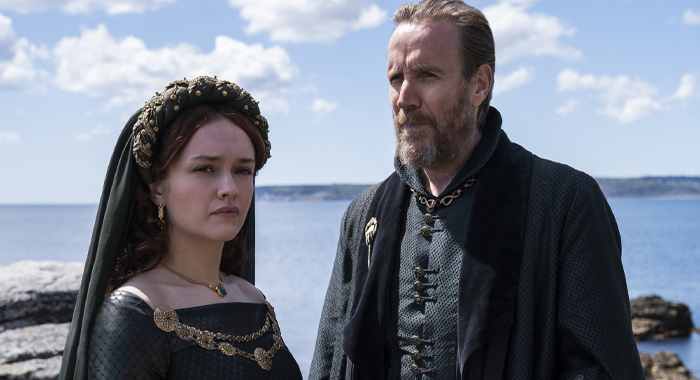
Meanwhile, House of the Dragon’s second-most important group of nobles is House Hightower. Otto Hightower (Rhys Ifans) served as King Viserys Targaryen’s (Paddy Considine) chief advisor for many years and engineered a marriage between his daughter, Allicent (Olivia Cooke), and the aging king. The offspring of their union set off an additional succession crisis, as Viserys previously named Rhaenyra from a previous marriage as his heir. That issue sets off the Dance of Dragons and the bulk of the series. Their prominence wanes by the time of Game of Thrones to a handful of mentions.
Close watchers of Game of Thrones will also note a lack of the seafaring Velaryons, a cousin house to the Targaryens who followed them when they first arrived in Westeros. Although, they are mentioned as supporters of Stannis Baratheon’s (Stephen Dillane) claim to the throne following the death of his brother Robert. On HotD, they are represented by characters like Corlys (Steve Toussaint), aka the Sea Snake. Their dominance of the seas between Westeros and the eastern continent of Essos is key to Rhaenyra’s early victories in the Dance of Dragons and the two houses often intermarry.
Back on GoT, House Tyrell represents similar ambitions to the Hightowers, but via different means. They are chiefly represented by Margaery Tyrell (Natalie Dormer), wife to three almost kings of Westeros, and house matriarch Olenna Tyrell (Diana Rigg), the Queen of Thorns who has a very important message for ruling Queen Cersei (Lena Headey) late in the series’ run. We mention them here as they are notably absent from House of the Dragon beyond a mention about their loyalties.
And although most of these characters have natural lifespans, at least one Targaryen who appears in GoT has been name-checked in Seven Kingdoms and many suspect Alys Rivers (Gayle Rankin) from HotD is, in fact, GoT‘s Melissandre (Carice van Houten), the Red Priestess with some magical abilities who is very important to Stannis Baratheon. It remains to be seen, though, if this is really the case.
Nevertheless, the almost complete lack of character crossovers between the shows means prospective viewers won’t have to keep track of, say, a disgraced Mandalorian across several Star Wars movies and television series.
Where Should You Start?
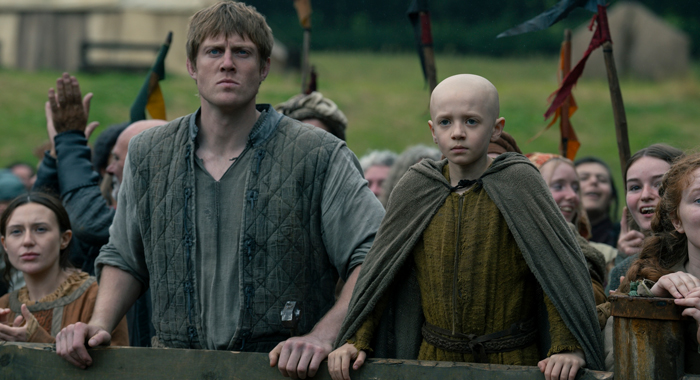
Choosing where best to start a Westerosi journey may come down to a matter of tone. Games of Thrones, as the epic, is the most diverse in this regard. A serious scene of Lannisters plotting their ascension to the Iron Throne could easily be followed by Jon Snow pratfalling in the ice. Bran Stark’s (Isaac Hempstead-Wright) spiritual journey may lead into a battle scene set hundreds of miles away. HotD and Seven Kingdoms are more focused. Lighthearted moments can occur in the former, but the Targaryen civil war and the machinations of the Targaryens and the Hightowers means the show tends toward its more dire situation. Seven Kingdoms, meanwhile, leans further into Martin’s comedic undercutting of mythic tropes — see the first minutes of AKotSK’s debut episode as an example. If you enjoy the, um, bodily humor, it might be the best place to start. Meanwhile, all three shows share a fascination with realistic depictions of violence, whether crowds are cheering it on — like in Seven Kingdoms’ tournament — or recoiling in horror, as seen on the other shows from time to time.
Ultimately, any entry point into the world of Ice and Fire will lead to the other stories eventually. How much you enjoy one or the other — or GoT’s famously controversial ending — is all a matter of individual taste. Nevertheless, a walk in Westeros is often a rewarding experience.
The season finale of House of the Dragon: Season 3 airs on HBO on Sunday, August 9, 2026.