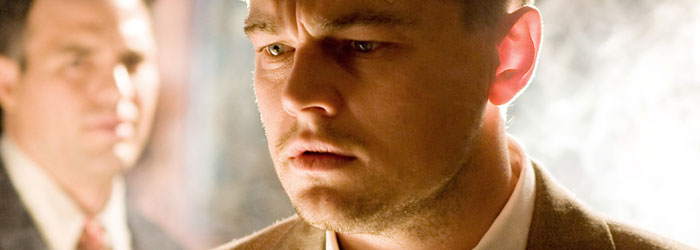
(Photo by Paramount. SHUTTER ISLAND.)
Pick any decade since the 1970s American New Wave, reach in to grab some of the best movies of those years, and chances are you’ll be pulling out some Martin Scorsese pictures. Along with Steven Spielberg, George Lucas, and Francis Ford Coppola, Scorsese was among the rabble-rousers who shook filmmaking to its core in the 1970s, when all conventional wisdom (and filming permits) were thrown out the window for a more dangerous yet personal style of cinema. When you think of that decade, what better captures its grit, grime, and freewheeling cynicism than Taxi Driver?
He made the 1980s a wash for other directors by releasing his masterpiece as early as possible in the decade, with the transformative Raging Bull, netting star Robert De Niro his second acting Oscar. Scorsese subsequently showed off his lighter side with the media satire The King of Comedy, the Kafka-esque comedy After Hours, and, um, The Last Temptation of Christ. A real knee-slapper!
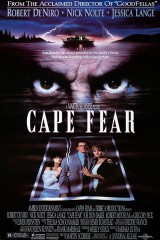
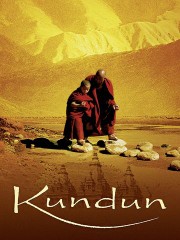
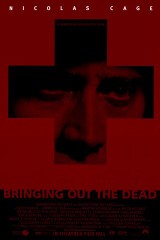
With the 1990s, Scorsese did it again, releasing beloved mob epic Goodfellas in the first year of that decade. While 1995’s Casino works as a companion piece to Goodfellas, Scorsese films also began to have a more specific otherworldly aura, like in the romantic The Age of Innocence and the religious Tibetan biopic Kundun; he then returned to a more hazy, hard-edged spirituality with Bringing Out the Dead, starring Nicolas Cage.
Scorsese’s post-Casino material was not warmly received by audiences, and by the 2000s he was on the lookout for a new actor-collaborator in the same vein as De Niro for a comeback. Scorsese found his man in Leonardo DiCaprio, himself looking to shed his Titanic heartthrob image. Gangs of New York and The Aviator proved Scorsese/DiCaprio was serious business, leading the way for the 2000s masterpiece The Departed, which won Best Picture and, at last, got Scorsese the Best Director Oscar.
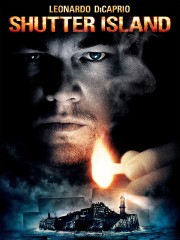
The playful Shutter Island, secret movie history lesson Hugo, and the long-gestating Silence were all befitting his reputation and style, but it might be Scorsese’s latest that will be his defining 2010s statement. 2019’s The Irishman arrived into theaters, all three-plus hours of it, on a massive wave of hype for its promise of bringing De Niro, Pacino, and Joe Pesci together on-screen. Judging by the critical response and Netflix positioning the movie as its grand Thanksgiving offering, Irishman did not disappoint.
Scorsese’s latest movie is Killers of the Flower Moon, depicting the 1920s murders of Osage Native Americans over their oil-rich land. With the master director showing no signs of slowing down in his 80s, we pay our respects with our guide to all Martin Scorsese movies ranked by Tomatometer!
Luke Skywalker’s epic journey from moisture farmer to cave hermit continues this Friday with Star Wars: The Last Jedi!
Wait, a movie with ‘The Last‘ in its title? Turns out we’ve seen that one before, prompting this week’s gallery of 24 best and worst Last movies.
Happy Valentine’s Day weekend, kinky film fans! Hearts, flowers and candy are nice if you like that sort of thing, but for those of a more…adventurous persuasion, your average rom-com simply won’t suffice for February 14 viewing. But never fear — your pals here at Rotten Tomatoes have taken it upon ourselves to put together a list of boundary-pushing film releases from the past, organized according to the taboos they busted. Remember that safe word, because it’s time for Total Recall!
Clocking in at under a minute, this 1896 short was commissioned by Thomas Edison for director William Heise, and features little more than a pair of actors (May Irwin and John Rice) recreating their smooch from the stage musical The Widow Jones. It’d be the stuff of little-seen YouTube uploads today, but at the time, the sight of people kissing on screen was nothing short of scandalous — as one review seethed, “The spectacle of the prolonged pasturing on each other’s lips was beastly enough in life size on the stage but magnified to gargantuan proportions and repeated three times over it is absolutely disgusting.” It all seems awfully quaint now, but it just goes to show you how social mores change over time.
We’ve already established that audiences were scandalized by the sight of actors smooching in 1896’s The Kiss, and they were driven to distraction all over again roughly 15 years later by something almost as innocuous: the infamous “gaucho dance” depicted in Urban Gad’s The Abyss. The scene, which finds our protagonist Magda Vang (Asta Nielsen) seducing a potential conquest she’s lassoed to a chair, is exceedingly tame by today’s standards — but by the same token, there’s no mistaking Magda’s aim with that dance, and the notion that a young lady could possibly be so unabashedly forward on the silver screen was enough to send U.S. censors’ scissors into prudish conniptions. Already a leading lady of the stage when The Abyss was filmed, Nielsen enjoyed international stardom afterward (and married Gad, too).
People who refuse to watch films with subtitles out of a misguided belief that they’re boring are cheating themselves in lots of ways — and anyway, lots of movies are well worth reading on the screen. Take Ingmar Bergman’s Persona, a career high point from the Swedish master that bedeviled censors with controversial content both visual (a quick glimpse of an erect penis) and aural (a monologue detailing one character’s adulterous outing with several underage boys and her subsequent abortion). Persona‘s pleasures run deeper than the merely prurient, however; as Richard Brody pointed out for the New Yorker, “Bergman blends a theatrical subjectivity with a tactile visual intimacy, with his characters, the objects close at hand, and the superb coastal landscape.”
Like In the Realm of the Senses, Melvin Van Peebles’ Sweet Sweetback’s Baadasssss Song featured scenes of unsimulated sex — but Van Peebles decided to kick cinematic sand in another taboo’s eyes while he was at it, hiring his 13-year-old son Mario to stand in as Sweetback’s youthful proxy for a flashback scene depicting the character losing his virginity (to a prostitute, natch). A landmark for black filmmaking with or without its most provocative moments, Sweetback set off the Blaxploitation trend while earning approval from critics like the Chicago Reader’s Dave Kehr, who called it “A shrewd and powerful mix of commercial ingredients and ideological intent.”
Perhaps convinced he hadn’t elevated enough blood pressures with the nude male wrestling match he depicted in Women in Love, director Ken Russell kicked things up a notch with The Devils, which centers on the religious hysteria fomented in a 17th-century French town where the Church is convinced demonic tomfoolery is transpiring. As it turns out, they have a few things to worry about, including a nun orgy and a randy Vanessa Redgrave, who brings Our Lord and Savior down from the cross so she can have her way with Him. While a number of critics resented Russell’s over-the-top lurid approach, The Devils resonated with plenty of others, including Ken Hanke of the Mountain Xpress, who deemed it “Quite frankly one of the greatest films ever made. Period. No qualifiers are necessary.”
An erotic drama about a widower’s anonymous affair starring one of the most famous actors in the world, 1972’s Last Tango in Paris might have catapulted director Bernardo Bertolucci to infamy even if he hadn’t worked overtime to come up with the most deliberately transgressive sex scenes possible — including the infamous tête-à-tête that unravels after Marlon Brando tells Maria Schneider to “go get the butter.” Neither Brando nor Schneider were happy with Bertolucci after making Paris; in fact, Schneider held a grudge against the director for the rest of her life. No apologies were necessary for most critics, however — and some of them even saw past all the steamy goings-on, including Jamie Russell of the BBC, who argued that it’s “actually a dark, torrid masterpiece about love and grief.”
Nicolas Roeg’s Don’t Look Now — a 1973 adaptation of the Daphne du Maurier short story about a pair of grieving parents (Donald Sutherland and Julie Christie) haunted by memories (and possibly more) of their dead daughter — is probably one of the least sexy films on this list. For the bulk of its running time, it’s a stylishly creepy meditation on grief with a dash of supernatural horror tossed in — but then there’s that one scene where Sutherland and Christie are getting ready to go out for the evening, and they opt for a nude interlude in which Sutherland… orders an appetizer. So realistic that rumors persisted for decades the on-screen coitus was unsimulated, it earned Don’t Look Now an X rating in the U.S., but it certainly didn’t damage the movie’s standing with critics. “It’s a ghost story; it’s a meditation on time, memory and the poignancy of married love,” wrote Peter Bradshaw for the Guardian. “And it’s a masterpiece.”
Onscreen sex can seem awfully realistic, but we take it as a given that it’s simulated — except in the rare instances when the stars are actually in flagrante delicto. For example, there’s Nagisa Oshima’s In the Realm of the Senses, an overall forcefully provocative drama about the increasingly sordid affair between a former prostitute (Eiko Matsuda) and the owner of the hotel where she works as a maid (Tatsuya Fuji). Also noteworthy for its (definitely no pun intended) climactic scene in which Fuji suffers a fate familiar to anyone who’s watched Lars von Trier’s Antichrist, Senses raised eyebrows for its depictions of unsimulated sexual activity (and later shook booties with the Chaz Jankel song “Ai No Corrida,” inspired by the movie’s Japanese title) — and wowed critics like Empire’s David Parkinson, who called it “An undeniably powerful, stylish and impressive piece of work.”
Sometimes, what works on the page just doesn’t seem right on the screen. Take, for example, the infamous Howard the Duck, which took Marvel’s beloved off-kilter cult comic — rife with counter-culture humor and endowed with a richly subversive point of view — and turned it into a cruddy would-be comedy in which a creepy-looking duck tries to get it on with Lea Thompson. Neither smart nor funny enough for adult audiences, and too clumsily dark and ribald for kids, Howard went down in history as one of cinema’s biggest duds — as well as the one and only time a screenwriter attempted a duck-woman pairing. That contribution to history aside, this turkey has few friends in the critical sphere aside from the Orlando Sentinel’s Jay Boyar, who argued, “It’s hard to fault the tongue-in-bill high spirits of a movie like Howard the Duck.”
Religious folk tend to get a little testy when Jesus is depicted as fallible in any fundamental way, and the conservative community reacted to the news of Martin Scorsese’s The Last Temptation of Christ by marshalling the moral majority long before a single frame of the film had even been screened. Their concerns were met with a movie that, while ultimately more or less faithful to the rough contours of the crucifixion story, added a few narrative wrinkles that disturbed less accommodating viewers — including a brief scene that depicted Christ (Willem Dafoe) consummating his marriage to Mary Magdalene (Barbara Hershey). Controversy aside, the end result resonated with many critics, including Carol Cling for the Las Vegas Review-Journal, who wrote that it was “Stunning and heartfelt; Scorsese at the height of his power and artistry.”
All things considered, Paul Verhoeven’s Basic Instinct is little more than a slickly assembled, eminently well-cast upgrade from your average late ’80s/early ’90s late-night softcore thriller. But even a little dramatic heft can go an awfully long way when a filmmaker is offering some extra T&A — and Instinct packed some extra taboo-busting firepower in the form of its most famous scene, during which femme fatale Sharon Stone toys with her interlocutors during police questioning by languidly crossing her legs and giving the cops (not to mention all the folks in the audience) a glimpse of what her mama gave her. Often imitated, never duplicated (not even in the long-delayed, ill-advised sequel), Instinct‘s enthusiastically trashy box office triumph inspired a slew of similarly wardrobe-challenged dramas in the years to come, although few if any inspired the level of modest critical acclaim expressed in Basic reviews like the one written by Antagony & Ecstasy’s Tim Brayton, who mused, “Through all this, there remains that calm center of nasty, brilliant social insight.”
Before E.L. James built a publishing empire out of Anastasia and Christian’s sadomasochistic exploits, the film world had its own celebrity dominating/submissive couple: E. Edward Grey (James Spader) and Lee Holloway (Maggie Gyllenhaal), whose decidedly unorthodox love affair is chronicled in Steven Shainberg’s 2002 film Secretary. Expanded and adapted from author Mary Gaitskill’s short story Bad Behavior, it earned a small mountain of acclaim (including a Sundance Special Jury Prize) while raising countless eyebrows with its depiction of a relationship that, loosely speaking, begins with the new confidence awakened in an emotionally troubled young woman after her boss gives her a spanking in the office. But under the surface, wrote Karen Montgomery for Cinerina, “It’s an interesting exploration of people finding and accepting themselves and then finding the puzzle piece that fits this new shape.”
Lest you ever doubt the depth and breadth of Chloe Sevigny’s acting talent, simply remind yourself that she found a way to rebound from the salacious stir that erupted around her appearance in Vincent Gallo’s The Brown Bunny. Booed at Cannes (and deemed the worst film in the history of the festival by Roger Ebert), it’s probably chiefly remembered for a sequence in which Sevigny performs an apparently unsimulated oral sex act on Gallo — and while Bunny does have its share of defenders, it hasn’t aged as well as Sevigny, who’s gone on to earn widespread respect for her work in projects like Zodiac and the HBO drama Big Love.
Okay, so maybe puppet intercourse isn’t really anyone’s idea of a taboo, but we’d be remiss if we left off the unforgettable sex scene between Gary Johnston (Trey Parker) and Lisa Jones (Kristen Miller) in Team America: World Police, which found South Park creators Parker and Matt Stone sending up bombastic action movie clichés with the puerile glee of the world’s most brilliantly subversive fifth-grade boys. With puppets for stars, Parker and Stone were freed to make this scene almost as filthy as they wanted, and they took advantage with a wildly over the top few minutes that somehow still manages to feel more lifelike than the boudoir romp from Top Gun. “The puppets are extremely impressive,” observed Matthew Turner for ViewLondon, “and the fact that the strings are constantly visible is used to brilliant comedic effect, particularly during one of the film’s crudest scenes.”
A campfire, the Wyoming stars, bonding over the satisfaction of a hard day’s work… what could be more romantic, right? And yet some viewers were still scandalized by Brokeback Mountain, Ang Lee’s 2005 adaptation of the Annie Proulx short story about a pair of ranch hands (Heath Ledger and Jake Gyllenhaal) whose sheep-herding gig blooms into a secret affair that changes the lives of both men and their families — and not necessarily in a good way. Brokeback met a far cheerier fate at the box office, where it earned nearly $200 million while reaping scads of positive reviews on its way to netting three Academy Awards (including Best Director for Lee) against eight nominations. “If you have the patience to sit through a slow-moving romance and you lack the vanity to be put off by explicit cowboy on cowboy relations,” suggested Brian Marder of Hollywood.com, “you’ll greatly appreciate the light at the end of Brokeback Mountain, a work of art that’s more than just a movie.”
Finally, here’s the earliest example of on-screen censorship, as displayed in Thomas Edison’s 1897 short, Fatima:
Is Martin Scorsese America’s greatest living director? It’s open to debate, but most movie buffs would agree that he’s created a body of work that is astonishing in its consistency and depth. Scorsese’s films contain many grand themes – organized crime, male insecurity, spiritual and moral uncertainty – and they’re executed with a level of artistic panache and intimate detail that few can match. Scorsese has exerted a profound influence on many important directors, including Quentin Tarantino, Spike Lee, and John Woo. And with apologies to Lee and Woody Allen, Scorsese is perhaps the greatest cinematic chronicler of New York’s distinctive social landscape.
While he’s considered one of the most important filmmakers to emerge in the 1970s, the 2000s have found Scorsese enjoying yet another fertile period, one that culminated with The Departed, for which he was granted his first Best Director Oscar. With his latest, Shutter Island, hitting theaters Feb. 19, we’ve decided to take a closer look at some of Scorsese’s most important films. However, rather than rank them by Tomatometer, we chose the movies that we feel best define the man’s art and stylistic breadth.
So join us for a tour of Scorsese’s career — a journey that will take us from the Bronx to Vegas, from Tibet to Boston, with plenty of interesting scenery along the way.
![]() |
Release Date: October 14, 1973 – Scorsese initially considered entering the priesthood, but ultimately decided to enroll in New York University’s film school, where he directed a number of shorts before graduating in 1969. It was here that he met two of his most important collaborators: a young actor named Harvey Keitel, and Thelma Schoonmaker, who would become his longtime editor.
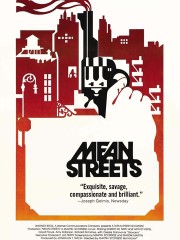
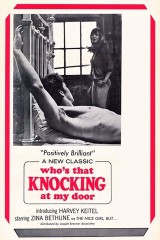
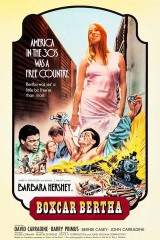
In 1967, Scorsese directed his first feature, Who’s That Knocking at My Door?, starring Keitel as a young Italian American wracked by Catholic guilt. The film had a palpable sense of place and a soundtrack heavy with contemporary rock, but was occasionally sidetracked by excessively arty touches. Scorsese’s second feature, the solid-if-unspectacular Bonnie and Clyde-aping Boxcar Bertha, was made under the tutelage of exploitation maestro Roger Corman. Fellow director John Cassavetes told Scorsese his next film should be more personal, and the result was Mean Streets, a powerful tale of urban sin and guilt that marked Scorsese’s arrival as an important cinematic voice.
Keitel stars as Charlie, a low-level Mafioso whose devout Catholicism and loyalty to an old friend, the violent and impulsive Johnny Boy (Robert DeNiro, in the first of his many great performances for Scorsese) fill him with conflict. His love life is no easier: he’s torn between Diane (Jeannie Bell), a stripper, and Johnny Boy’s epileptic sister Teresa (Amy Robinson), and his lustful feelings consume him with self-loathing. From Mean Streets‘ electrifying title sequence (featuring grainy super-8 home movies of the characters over Ronettes’ bittersweet plea “Be My Baby”) to its inevitably grim conclusion, the film provides a far darker, less glamorous tour of the gangster life than The Godfather — one filled with uneasy alliances, sudden, clumsy violence, and moral dread.
![]() |
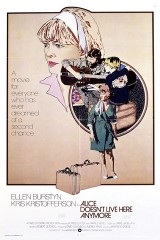
Release Date: May 30, 1975 – Before Mean Streets‘ release, Scorsese was hired to direct Alice Doesn’t Live Here Anymore, a vehicle for actress Ellen Burstyn. It was his first Hollywood production, and though it’s atypical of the kind of movie Scorsese would become known for, Alice showcases the director’s skill for capturing the small details in the lives of people facing adversity. Alternating between fantasy and everyday life, this intelligent dramedy found Scorsese making the most overtly feminist film of his career.
Burstyn plays Alice Hyatt, a New Mexico housewife reeling from the death of her husband. She decides to sell her possessions and hit the road, with her young son in tow, to live out her dream of becoming a professional singer. She gets a job at a seedy lounge and finds a boyfriend in Ben (Harvey Keitel), but their relationship shatters when Ben’s violent temper emerges. She skips town again, taking a job as a waitress in Phoenix, where she bonds with her coworkers and begins an uncertain but strong romance with a lonely rancher named David (Kris Kristofferson). Burstyn’s powerful, risk-taking performance won her an Oscar for Best Actress, and the movie was adapted into a long-running sitcom, but Alice Doesn’t Live Here Anymore also proved that Scorsese was no one-trick pony; he could put his stamp on more conventional material.
![]() |
Release Date: February 8, 1976 – The nightmarish, endlessly compelling Taxi Driver confirmed Scorsese’s reputation as one of the foremost figures of the “Movie Brat” generation and provided Robert DeNiro with perhaps his most iconic movie role: Travis Bickle, a lonely, socially awkward, and dangerously volatile Vietnam vet turned late-night cabbie. DeNiro ad-libbed the movie’s most famous line (“You talkin’ to me?”), and Paul Schrader wrote the script (ominously, the Bickle character was partially based upon himself), but Scorsese pulled it all together, and the result is a haunted, unforgettable portrait of troubled masculinity and, by proxy, the urban malaise that plagued New York in the mid-1970s.
Bickle is an insomniac, and takes the graveyard shift driving a taxi around the city, frequently returning to Times Square. However, the more he sees during his nocturnal excursions, the more he seethes: he’s disgusted by the pimps, prostitutes, and junkies that regularly line the sidewalks of his route. One ray of light comes in the form of Betsy (Cybill Shepherd), a presidential campaign worker who’s intrigued by Travis. But after an ill-fated date to a porno flick, Travis begins to stalk Betsy — and the candidate as well. He also takes it upon himself to save Iris (Jodie Foster), a teenage prostitute, from her life on the streets — a life she seems unwilling to abandon. The movie builds to a feverish, brutal climax that finds Travis exploding with the violent rage that’s been simmering throughout the film, before ending with an oddly elliptical, dreamlike coda.
Taxi Driver won the Palme d’Or at the Cannes Film Festival and was nominated for a Best Picture Oscar; it also inspired John Hinckley, Jr. to attempt to assassinate President Reagan. In other words, it’s cinema at its most primal and provocative, a masterwork that continues to leave audiences both profoundly moved and deeply unsettled.
![]() |
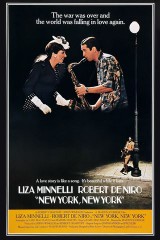
Release Date: June 21, 1977 – Today, New York, New York is probably best remembered for Frank Sinatra’s unparalleled rendition of its title tune, but it stands as a monument to the kind of epic, ambitious, auteur filmmaking that became virtually extinct by the end of the 1970s. Following the success of Mean Streets and Taxi Driver, Scorsese grafted his gritty realism onto the glitzy superficiality of the classic MGM musicals that he loved. The result is uneven, but while it bombed at the box office and remains one of Scorsese’s least-loved works, New York, New York features several show-stopping numbers and a distinctive style that’s all its own.
Robert DeNiro stars as Jimmy Doyle, a roguish jazz saxophonist who develops an on-and-off relationship with an up-and-coming singer named Francine Evans (Liza Minnelli). Their relationship is troubled from the beginning — Jimmy is a difficult customer, too temperamental for the responsibilities of love or his career. After a long split, the two find each other again, and this time, they’re at the top of their respective games — Francine’s topping the charts, and Jimmy has become a respected musician and club owner. In attempting an old-school rags-to-riches tale against a glittery backdrop, Scorsese can’t help but flesh out his characters’ painful insecurities, all of which makes for a stylistically jagged but often fascinating picture.
![]() |
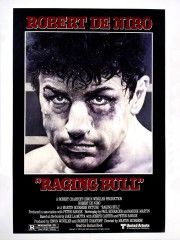
Release Date: December 19, 1980 – By the end of the 1970s, Scorsese’s career faced uncertain times. He directed the all-star rockumentary “The Last Waltz,” which chronicled the Band’s final gig, and the little-seen but queasily fascinating “American Boy,” a doc about Neil Diamond roadie and all-around sketchy character Steven Prince. But he had a bad drug habit, and Robert DeNiro, obsessed with bringing former middleweight champ Jake LaMotta’s autobiography to the screen, worked overtime to coax the director back into action. The result, Raging Bull, is considered by many to be Scorsese’s greatest achievement, a kinetic, on-edge portrait of a brutal, flawed man that never loses sight of its protagonist’s humanity.
The film charts the rise of LaMotta (DeNiro) through the middleweight ranks, aided and abetted by his brother Joey (Joe Pesci), who acts as his matchmaker and sparring partner. After throwing a fixed fight, LaMotta is granted a title shot by underworld fixers in the fight game, and also begins to court the teenaged Vicky (Cathy Moriarty), who he meets at a Bronx swimming pool. LaMotta is most expressive in the ring, delivering flurries of punches to his opponents; on the outside, though, LaMotta is fiercely possessive of Vicky, and his inability to control his emotions leads to a long, sad decline.
Filmed in tactile black-and-white, the movie is perhaps Scorsese’s most articulate meditation on male inadequacy, and its fight scenes are vivid and electric. Raging Bull was nominated for eight Oscars, and while winning two — Best Actor for DeNiro, and Thelma Schoonmaker for Best Editing — it failed to take home the Best Picture or Best Director awards, two honors that would elude Scorsese for years to come. Still, the director can take comfort in the film’s critical appraisal — the prestigious British magazine Sight and Sound called Raging Bull the best movie of the 1980s.
![]() |
Release Date: February 18, 1983 – Simon Cowell should be thankful that the average deluded American Idol also-ran isn’t Rupert Pupkin. The single-minded fameball at the center of Scorsese’s pitch-black The King of Comedy is a type with whom we’ve become increasingly familiar in our tabloid-saturated times: Pupkin is needy, desperate, and willing to do anything to become famous. However, as played by Robert DeNiro, he’s a strangely sympathetic psychopath — and not an untalented one at that. Largely ignored and misunderstood upon its release, The King of Comedy today looks eerily prescient, and finds Scorsese dissecting our showbiz-fixated culture through the lens of the troubled loners that populated his previous films.
The lonely Pupkin amuses himself by seeking autographs and play-acting a late night talk show (he has a full set in his apartment, and banters with cardboard cutouts of the stars). One night, he has a chance meeting with one of his idols, chat host Jerry Langford (Jerry Lewis), who non-committally promises to check out Pupkin’s comedy act. Convinced he has his foot in the door, Pupkin shows up daily at Langford’s office until eventually he’s forcefully ejected. He then hatches a plot to kidnap Langford in a last-ditch effort to realize his dreams. With terrific performances from DeNiro, Lewis, and a borderline possessed Sandra Bernhard (who plays Pupkin’s accomplice), The King of Comedy is about as black as black comedies come, but it makes for riveting, prophetic entertainment. Most ironic line of dialogue, courtesy of Langford: “You don’t just walk onto a network show without experience.” Just you wait, buddy.
![]() |
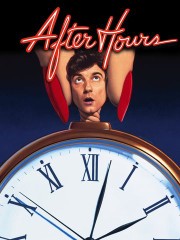
Release Date: September 13, 1985 – Like Taxi Driver, After Hours chronicles one man’s nightmarish, paranoid nocturnal journey throughout New York City. Unlike Taxi Driver, After Hours is a comedy — albeit an absurdist, Kafka-esque one. Scorsese had difficulty securing funding for some of his dream projects, so he decided to scale down for After Hours, adopting an underground, almost punk-rock aesthetic. The result was a different kind of Scorsese picture, an oddball movie that maintained the themes of his previous work while adjusting to the changing times.
Griffin Dunne stars as Paul, a corporate drone who meets an intriguing woman named Marcy (Rosanna Arquette) in a diner. He gets her number, and shortly thereafter she invites him to the apartment where she’s staying. But when Paul clumsily loses his money — and finds out that Marcy is more than he bargained for — he decides to head home. Subsequently, Paul is confronted with a bizarre series of circumstances — including subway fare increases, a bondage session, the loss of his keys, a suicide, Cheech and Chong, and a marauding mob that wrongly believes he’s a cat burglar — that prevent him from leaving Soho. Loaded with tension and wacky characters, this cult favorite found Scorsese making common cause with the burgeoning 1980s indie movement.
![]() |
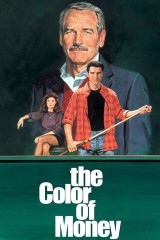
Release Date: August 12, 1988 – In the mid-1980s, Scorsese directed a pair of films that got him back in the mainstream’s good graces (The Color of Money, a sequel to The Hustler starring Tom Cruise and Paul Newman who won a Best Actor Oscar; and the long-form music video for Michael Jackson’s “Bad”). Next, he turned to a project of intense personal significance: an adaptation of Nikos Kazantzakis’ novel The Last Temptation of Christ.
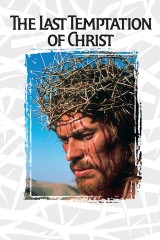
It was Scorsese’s most controversial film to date; a scene in which Jesus (Willem Defoe), in a dream, forsakes the cross to marry Mary Magdalene (Barbara Hershey) drew thunderous protests from religious groups (unfortunately for Scorsese, the brouhaha did little for the film’s commercial prospects, as it bombed at the box office). However, The Last Temptation of Christ was hardly an empty provocation; while the film deviates from Scripture, it’s a sincere, deeply-felt attempt by Scorsese, a dedicated Catholic, to explore the mysteries inherent in Jesus’ tale – most notably, the grey area between his divinity and his humanity.
The Last Temptation of Christ touches on many of the greatest hits from the Gospels, from Jesus’ Sermon on the Mount to his Crucifixion. However, in drawing from the novel, Scorsese depicts Christ’s complex relationship with Judas (Harvey Keitel) and provides him with an inner monologue laced with uncertainty and distress over his supernatural visions. Each of the actors speak in their own accents, which lends an immediacy to the proceedings, and the on-location shoot in Morocco makes for a vibrant, mysterious stand-in for ancient Israel. The Last Temptation of Christ is austere, serious moviemaking, and though it isn’t always easy to watch, it’s a brilliant example of Scorsese’s ability make transcendent cinema out of inner tumult.
![]() |
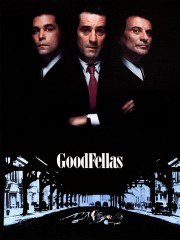
Release Date: September 19, 1990 – Raging Bull may be Scorsese’s most critically revered film, and The Departed was his biggest commercial success, but Goodfellas is probably his most cultishly adored picture. The tale of Henry Hill (Ray Liotta), an Irish-Italian mobster-turned snitch contains one of the most oft-quoted lines of dialogue in any Scorsese film, courtesy of Joe Pesci as the psychopathic Tommy DeVito: “I’m funny how? I mean, funny like I’m a clown? I amuse you?”
It’s easy to see why Goodfellas continues to resonate: It’s brilliantly acted, shockingly violent, unnervingly tense, and wickedly funny. It also contains one of Scorsese’s best soundtracks, utilizing the Rolling Stones’ “Gimme Shelter” and Derek and the Dominoes’ “Layla” to evocative effect. And once again, Scorsese is brilliant at capturing the distinctive milieus and daily rhythms of the underworld and bonds that form between those who live outside the law.
Hill is a Brooklyn kid who’s always dreamed of being a part of the Mafia. His wish comes true when he teams up with such local toughs as DeVito and Jimmy “The Gent” Conway (DeNiro) for a series of burglaries and hijackings. After attempting to recover money from an indebted gambler, many of the wiseguys are sent to prison, where Hill starts dealing drugs to support his family. Upon their release, the gang executes a spectacular heist of money and jewelry from JFK Airport, a crime that breaks the tight bonds of the gang. Hill convinces Conway and DeVito to join him in the drug trade, but soon, the wiseguys’ trust in one another has completely eroded. Based upon true events, Goodfellas feels absolutely authentic, not least because Scorsese is brilliant in depicting the inherent appeal of the gangster life — and its dark consequences.
![]() |
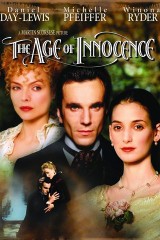
Release Date: October 1, 1993 – After a tense, assured remake of Cape Fear in 1991, Scosese did another U-turn. When it was released in 1993, The Age of Innocence seemed like a radical departure for the director; he took time out from chronicling New York’s gangsters and loners to craft a lush period piece about the city’s society life of the 1870s. However, like many of Scorsese’s other films, The Age of Innocence, based upon Edith Wharton’s novel, explores the social codes of a time and place that govern – and restrict – people’s behavior; Newland Archer (Daniel Day-Lewis) and Countess Ellen Olenska (Michelle Pfeiffer) are as bound by the conventions of their environs as Charlie and Johnny Boy were in Mean Streets. They may not have the outlets for emotional release afforded Scorsese’s other protagonists, but their passions run just as deep. The result is the director’s prettiest film, and a deeply poignant one.
Archer is an upstanding (but questioning) member of New York’s upper crust at a happy point in his life – he’s engaged to beautiful socialite May Welland (Winona Ryder). However, May’s cousin Ellen has just arrived in town, causing a scandal — she was unhappily married in Europe, and rumor has it she had an affair with a commoner. Seeking a divorce from her husband, she consults Archer, an attorney, for advice. Though he’s sympathetic to Ellen and feels she shouldn’t be shunned because of her marital status, Archer asks her to consider the social ramifications of her decision. What follows is a delicate dance between Archer and Ellen, who are powerfully attracted to one another; Archer sees possibilities for happiness with this new woman beyond his humdrum marriage.
Scorsese’s pacing is stately, but The Age of Innocence succeeds where many period-pieces fail, showing impeccable period décor as well as passion and, ultimately, bittersweet longing.
![]() |
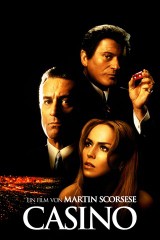
Release Date: November 22, 1995 – Upon its release in 1995, critics were somewhat disappointed by Casino. With the focused brilliance of GoodFellas fresh in their minds, many felt Casino was simply a well-crafted yarn that lacked the narrative focus to achieve its ambitious aims. However, seen 15 years later (and endless replays on cable), Casino has aged remarkably well; its telling of Vegas’ Genesis story is complicated, to be sure, but Scorsese deftly balances the historical details with the human drama, and he’s helped immeasurably by excellent performances from Robert DeNiro, Joe Pesci, and Sharon Stone (in arguably her greatest performance).
Casino is the story of how Las Vegas went from a sleepy desert outpost to a major tourist destination, told primarily through the eyes of Sam “Ace” Rothstein (DeNiro), a master sports handicapper recruited by the mob to manage the Tangiers Casino – and skim as much money as possible. Rothstein is a great success at generating illicit revenue, but his personal life takes a perilous turn when he marries former prostitute Ginger McKenna (Stone) and his old buddy, the violent, impulsive Nicky Santoro (Pesci) is brought in to provide muscle. Soon, Ace is besieged by the FBI, his closest associates, and, eventually, the mob itself.
Casino is filled with fly-on-the-wall details about how criminal organizations function – it’s a secret history of one of America’s most iconic cities, and a reminder of the criminality that helped build it. But it’s also a story about how human failings can derail even the most seemingly foolproof of plans.
![]() |
Release Date: December 25, 1997 – In The Sopranos, there’s a scene in which a young Mafioso sees Scorsese (played by Anthony Caso) entering a nightclub and shouts, “Marty! Kundun — I liked it!” Coming on the heels of the gangster epic Casino, Kundun took some by surprise, but this biography of the 14th Dalai Lama can be seen as a companion piece with The Last Temptation of Christ. Made in Morocco with a cast of non-professional actors, it’s a devout, patient, gorgeously-shot work — and if it doesn’t delve deeply enough into the inner workings of His Holiness, Kundun provides both a dramatic recreation of the conflict between Tibet and China, as well as a crash course in Buddhist principles and rituals.
Kundun begins in 1937, with a group of lamas searching for the latest incarnation of the Dalai Lama. They discover a two-year-old in a farming village near the Chinese border, and the boy is deemed a worthy successor after successfully selecting which items randomly laid on a table belonged to the previous Dalai Lama. The boy grows into his role, with intensive study of Buddhism and a preternatural grasp of political affairs. However, he’s tested when China annexes Tibet; after a few promising meetings with Mao Zedong, the Dalai Lama (played as an adult by Tenzin Thuthob Tsarong) realizes that Tibet’s way of life is under attack.
Featuring a moody, evocative score by Philip Glass, Kundun is one of Scorsese’s most visually ravishing pictures, and while it occasionally veers into standard biopic tropes, it’s a reverent, impassioned work. Kundun‘s sympathetic treatment of Tibet irked Chinese authorities, who permanently banned Scorsese and screenwriter Melissa Mathison from entering the country.
![]() |
Release Date: December 20, 2002 – After the underrated Paul Schrader collaboration Bringing Out the Dead, Scorsese tackled a long-gestating dream project: Gangs of New York. Loosely based upon Herbert Asbury’s 1928 true crime book of the same name, Gangs was an attempt by one of cinema’s poets of organized crime to explore the roots of American gangsterism — and its inextricable ties with society and government. Set in Civil War-era Manhattan, the movie depicts a city teeming with hatred and violence — Gangs‘ Five Points setting is worlds away from the genteel folks living across town in The Age of Innocence. Costing more than $100 million and clocking in at nearly three hours, Gangs of New York can feel overstuffed, and it sometimes lacks historical context, but it’s always watchable, thanks to the impeccable production design and a gonzo performance from Daniel Day Lewis.
Leonardo DiCaprio (in his first performance for Scorsese) stars as Amsterdam, the son of Priest Vallon (Liam Neeson), an Irish immigrant gang leader. Vallon is killed in a gang war by Bill “The Butcher” Cutting (Lewis), who leads the virulently anti-immigrant Natives gang. Amsterdam is raised in a home for orphans, but upon his release as a young man, he returns to the Five Points section of New York, where Cutting rules with an iron fist. Amsterdam becomes Cutting’s right-hand man, while secretly planning to kill him. Meanwhile in the mayor’s office, Boss Tweed schemes to employ the gangs’ mutual antipathy to his political advantage. However, forced conscription of Irish immigrants into the Union army threatens to bring New York to a boil. Given that Scorsese had wanted to make this film for decades, his insistence on packing in as many events as possible is understandable, but it can make for a grueling experience. Still, Lewis is mesmerizing to watch, and rarely has a period piece captured an era with such acute attention to detail.
Gangs won Scorsese his first Golden Globe for Best Director, but he couldn’t repeat at the Oscars, losing Best Director and Best Picture to The Pianist and Chicago, respectively.
![]() |
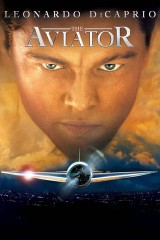
Release Date: December 25, 2004 – As the old saying goes, if you’re poor, you’re crazy, but if you’re rich, you’re eccentric. Few lived this maxim quite like Howard Hughes, who was a business tycoon, film producer, aviation pioneer, and germophobic loon. Scorsese’s handsome, sprawling biopic brings Hughes – or at least the idea of the man – to modern audiences. As history, The Aviator is often dubious (and it downplays some of Hughes’ less amusing idiosyncrasies — his enthusiastic, lifelong racism, for instance). However, Like Casino, The Aviator charts a historic moment before American business became more corporatized – when go-for-broke dreamers could change the status quo.
Leonardo DiCaprio plays Hughes as a cocksure, free-spending optimist; when we first meet him, he’s ignoring all sensible budgetary concerns to make Hell’s Angels the most spectacular picture possible. He also has a passion for fast airplanes and beautiful women, heedlessly breaking speed records, spearheading grand designs for flying machines, and courting Hollywood stars like Katherine Hepburn (Cate Blanchett). And as the owner of TWA, he’s locked in battle with Juan Trippe (Alec Baldwin) and Pan-Am for control of the airline industry. However, Hughes’ paranoia and obsessive-compulsive behavior contribute to his eroding social stature – by the end of the film, he’s sequestered himself in his private movie theater, terrified of germs and antagonists. Scorsese captures the glamour and ambitious spirit of Hughes’ era, and DiCaprio is outstanding at projecting a boyish recklessness that hardens into madness.
If The Aviator whitewashes certain aspects of Hughes’ life, it’s never less than watchable and breezily compelling. And though it didn’t win Best Picture, The Aviator took home five awards on 11 nominations.
![]() |
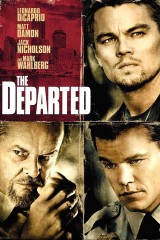
Release Date: October 6, 2006 – For years, Scorsese was to the Oscars what Susan Lucci was to the Daytime Emmys – a perennially deserving runner-up. When The Departed won both Best Picture and Best Director, some surmised that it was not simply because of the quality of the film – it was for the whole of Scorsese’s body of work. Still, if The Departed is a notch below GoodFellas or Raging Bull, it’s still a remarkable picture – an entertaining, complex cat-and-mouse tale that traded the mean streets of New York for South Boston without sacrificing Scorsese’s acute eye for regional detail.
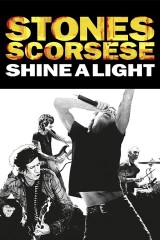
A loose remake of the Hong Kong crime drama Infernal Affairs, The Departed is directed with matchless assurance from the man who wrote the rulebook on this kind of picture – and still finding new ways to expand the boundaries. (It should not pass without mention that Scorsese bookended The Departed with two fine rockumentaries: No Direction Home, a mammoth, insightful exploration of Bob Dylan’s early career that aired on PBS, and Shine a Light, an exhilarating live document of the still-spry Rolling Stones).
Irish Mafia head Frank Costello (Jack Nicholson) has a plan to stay one step ahead of the Boston authorities: utilizing Colin Sullivan (Matt Damon), who has just graduated from the Massachusetts State Police Academy, as his personal spy. However, the cops have a mole of their own: Billy Costigan (Leonardo DiCaprio), who quickly earns Costello’s trust. Before too long, it becomes apparent that both sides have people on the inside; as a result, Sullivan and Costigan work frantically to root out their counterpart. The Departed is filled with fine performances – Nicholson is at his grouchy, angry best here, and features juicy supporting roles for Mark Wahlberg, Martin Sheen, Vera Farmiga, and Alec Baldwin, to name just a few. But ultimately, The Departed is Scorsese’s triumph – a film with the grit and emotional weight that compares favorably to this cinematic master’s finest work.

As the NFT in London prepares a Juliette Binoche season, Kim looks at Abel Ferrara‘s Mary which also stars Marion Cotillard and Forest Whitaker.
Say what you like about wild man writer-director Abel Ferrara (probably still best known for The Driller Killer), but he knows how to land the talent. His 2005 picture Mary — which gets its first UK screenings, at the NFT in London as part of a Juliette Binoche season, on the 2nd and 3rd of October — not only casts the 1995 Best Supporting Actress Oscar winner (The English Patient), but finds room for 2007 Best Actor Forest Whitaker (The Last King of Scotland) and 2008 Best Actress Marion Cotillard (La Vie en Rose), plus Matthew Modine (returning as a Ferrara alter ego after The Blackout) and Euro-favourite Stefania Rocca (best known for The Talented Mr Ripley).

In the past, Ferrara has managed (against the odds) to get solid work from hit-or-miss talents like Madonna (reasonably credible in Snake Eyes aka Dangerous Game), Asia Argento (outstanding in New Rose Hotel) and Ice-T (good in R’Xmas), and guided powerhouses like Christopher Walken and Laurence Fishburne (The King of New York), Harvey Keitel (Bad Lieutenant) and Lili Taylor (The Addiction) through method performances which would fill shelves with statuettes if folks in Beverly Hills paid attention to films as rough, challenging and strange as the Ferrara oeuvre.
Made partially as a response to Mel Gibson‘s The Passion of the Christ, Mary is a hard-to-categorise exercise in street theology — which touches on Da Vinci Code-ish speculations about the gospels, and wrestles with the age-old problems of faith and uncertainty in a mix of subtle character interplay and outright silent movie-style melodramatics. Tony Childress (Modine) has just finished directing and starring in a film called This is My Blood (not to be confused with There Will Be Blood), which is attracting Last Temptation of Christ-style organised protests for supposed blasphemy and anti-semitism. Marie Palesi (Binoche), the actress cast as Mary Magdalene, has been so overwhelmed by the experience of playing the role that she has opted to abandon her career and go to Jerusalem (‘what are you doing,’ Tony asks, ‘healing lepers?’) to explore spiritual pursuits and dispense enigmatic wisdom via cell-phone.

It seems that she has come to believe that the depiction of Mary as a prostitute in the gospels and as Jesus’s wife in modern fiction are both male-perpetrated myths designed to cover up the fact that the messiah chose her, not Saint Peter, as his chief disciple — this is an interesting ‘what if’ in itself, and the scenes from This is My Blood in which Mary resists being shut out of the disciples’ boys’ club have a Pasolinian vigour that bests Gibson’s Christian torture porn and at least competes with Scorsese’s It’s a Wonderful Life heresies.

A year later, with the film edited and due for release, Tony has shaved off his Jesus beard and retreated behind dark glasses while embarking on an embattled publicity tour for the film, responding to the protests with desperate aggression and hurt-little boy pride (Ferrara has been playing autobiographical games on the theme of artist as childish monster ever since The Driller Killer, and Modine enthusiastically plays up to the director’s out-of-the-room image). Ted Younger (Whitaker), a New York-based talk show host, conducts nightly interviews with theologians and Biblical historians (what channel could this possibly air on?) and Tony agrees to appear on the program (hinting that Marie might show up to solve the mystery of her disappearance) if Ted covers the scheduled premiere, which is expected to feature a possibly-violent clash with protestors (in a jarring shock scene, what seems to be a mix of hasidic Jews and a street gang attack the limo Tony and Ted are riding in).

Ted is being unfaithful to his pregnant wife Elizabeth (Heather Graham) with actress Gretchen (Cotillard), and this ‘sin’ is punished when Elizabeth gives premature birth to a baby who struggles to live (it’s probably a mercy that Ferrara uses a plainly healthy baby, though this undercuts the desperation of the hospital scenes). Just as Harvey Keitel’s Bad Lieutentant bared his soul to Jesus, so Whitaker’s straying commentator stops the show with an angst-driven prayer — very few actors can get away with praying on screen, especially if they have to talk out loud to God and the audience, but Whitaker is as good here as in any given Idi Amin scene.
With his spirituality completely turned around by this travail, Ted doesn’t give Tony the easy ride he expects on his show — and brings in the distant voice of Marie, who remains certain and centered as the men around her descend into mania. Like many a Ferrara film, the home stretch is deliberately chaotic and hard to follow, but a bomb threat disrupts the This is My Blood premiere and Marie takes to a fishing boat in Israel as she blends even more with Mary Magdalene. As cued by a debate in which characters (and the audience) are enjoined to ‘really think’ about the crucifixion, everyone gets a ‘big suffering scene’: Modine’s turn comes when Tony goes crazy as he works a projector, screening his film to the cops searching the auditorium for a bomb and gloating that there are ‘lines around the block in Chicago’. Only Binoche remains serene, though Marie’s abandonment of the life of a movie star for that of a saint might prompt audiences to muse that when Ferrara gives her great iconic close-ups he is turning saintliness back to old-fashioned stardom.

Ferrara has always had one foot in the grindhouse and the other in the arthouse. He even made (and starred in) a porn movie (9 Lives of a Wet Pussy), which is unusual for someone as inclined as fellow New York Italian-American Martin Scorsese to make bizarre religious films. Then again, ‘really think’ about the crucifixion, as Mel Gibson did, and you find the horror movie bleeding heart of Roman Catholicism — previously strongest in the Ferrara filmography in the revisionist vampire movie The Addiction.
Perhaps to put further distance between Mary and Gibson’s film, it inclines towards the respectable end of Ferrara’s output, which means even fans who cherish the likes of Ms .45 and Body Snatchers (on which he first worked with Whittaker) haven’t completely embraced it. Like Ferrara’s New Rose Hotel, R’Xmas, Go Go Tales and the documentary Chelsea on the Rocks, Mary has mostly screened at film festivals. Since The Blackout in 1997, even independent distributors haven’t got behind his films in the UK: they don’t even go direct to DVD, where you could find a Driller Killer 2 if any schlockmeister got the rights to it. This is the penalty for making films at a volume of eleven.
This week at the movies, we’ve got a new take on the first Noel ("The Nativity Story," starring Keisha Castle-Hughes), endangered Americans in Brazil ("Turistas," starring Melissa George), and a hard partying expat ("Van Wilder: The Rise of Taj," starring Kal Penn). What do the critics have to say?
It may be based on The Greatest Story Ever Told, but critics say "The Nativity Story" is hardly the greatest movie ever made — or even a particularly good one. In case you need a refresher on the origins of the upcoming holiday that may be the occasion for you to receive a Playstation 3, "The Nativity Story" tells the tale of a teenager named Mary (Keisha Castle-Hughes) who is to give birth to the savior of mankind — all the while dealing with political persecution and lousy hotel service. Critics say the film is too safe (strange, given director Catherine Hardwicke‘s previous films about remarkable young people, "Thirteen" and "Lords of Dogtown"), adding little spark to the most inspirational (and familiar) of sagas. "The Nativity Story" currently stands at 26 percent on the Tomatometer.
"Turistas" continues a mini-trend in slasher films that began with "Hostel": arrogant Americans getting their comeuppance in foreign locales. In this case, a group of youngsters are terrorized in Brazil after they fall into the clutches of a mad organ harvester. While some critics have praised the film’s political undertones and better-than-average tension, most say "Turistas" adds little to a stale genre. At 38 percent on the Tomatometer, this tourist trap may be worth avoiding.

"Turistas": Return I won’t to old Brazil.
"Van Wilder: The Rise of Taj" was not screened for critics, which may indicate that it has the potential to sink like a stone with the scribes. (The original "Van Wilder" garnered a robust 17 percent.) Guess that Tomatometer.

They may not be toasting when the reviews come out….
Opening this week in limited release: "10 Items or Less," a laid-back romance starring Morgan Freeman and Paz Vega, is at 53 percent; "3 Needles," a globe-spanning drama about the toll of the AIDS virus, is at 33 percent; and "The Architect," a tale of two families in conflict over a public housing structure, is at 33 percent.
Notable Biblical Epics:
——————————
51% — The Passion of the Christ (2004)
80% — The Last Temptation of Christ (1988)
88% — The Gospel According to St. Matthew (1965)
96% — Ben Hur (1959)
91% — The Ten Commandments (1956)
Recent Slasher Movies:
—————————-
29% — Saw III (2006)
18% — Texas Chainsaw Massacre: The Beginning (2006)
57% — Feast (2006)
35% — Calvaire (2006)
20% — Mad Cowgirl (2006)
Armed with a love story taking place at three times over a thousand years, flawless special effects, and more period costumes than you can shake a stick at, the man who brought you "Pi" and "Requiem for a Dream" has a gem of a film with "The Fountain." Here is the flipbook, full of pics and courtesy of Rotten Tomatoes, plus a snazzy new trailer.
The trailer is a little taste of what Darren Aronofsky has in store, and it should whet your appetite for the razzles and dazzles of three interwoven period pieces, a love story, and a science fiction enigma.
With visuals reeking of "Solaris" just as much "Requiem," "The Fountain" takes on Aronofsky’s usual questions about life, love, and the universe, and stars Hugh Jackman, Rachel Weisz, Ellen Burstyn, and Ethan Suplee. IN THEATERS OCTOBER 13, 2006.