Frankenstein First Reviews: Visually Stunning, Full of Passion, and Jacob Elordi Steals the Show
Critics at the Venice Film Festival say Guillermo del Toro's long-in-development passion project drips with style and emotional depth and benefits from a brilliant Jacob Elordi performance, but it's not without its flaws.
It was nearly 20 years ago, back in 2007, that we first heard director Guillermo del Toro gush about his love for Mary Shelley’s classic novel Frankenstein and his deep desire to helm his own adaptation of it. After several starts and stops, del Toro has finally brought his long-gestating “dream project” to life with the help of Oscar Isaac, Jacob Elordi, Mia Goth, Christoph Waltz, and Netflix, and critics at the Venice International Film Festival who were at the premiere have begun to chime in with their thoughts. According to them, del Toro’s Frankenstein carries his signature stylistic flair and reinforces themes that have become a calling card for the writer-director’s work, but it’s not without its flaws.
Here’s what critics are saying about Guillermo del Toro’s Frankenstein:
The genre-defying craftsman’s sumptuous retelling of Frankenstein honors the essence of the book in that it’s not so much straight-up horror as tragedy, romance and a philosophical reflection on what it means to be human… There are jaw-dropping visuals throughout… One of del Toro’s finest, this is epic-scale storytelling of uncommon beauty, feeling and artistry.
— David Rooney, Hollywood Reporter
The best way to describe del Toro’s Frankenstein is indulgent… Frankenstein feels like a production for which del Toro had every final say, and for which nothing was left on the cutting room floor… Despite the oppressive length of the film’s 149-minute runtime, you can’t quite be mad at a movie that looks as stunning as this. There are breathtaking images of the Creature against the horizon, or blood-stained tulle that will remain burned in my mind. And some wild performance choices from Isaac or Elordi feel like they’re increasingly rare in today’s safe cinematic landscape.
— Hoai-Tran Bui, Inverse
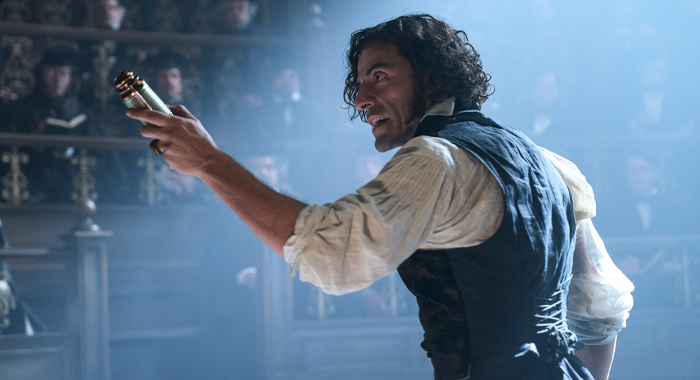
The visual style of the movie is utterly distinctive and unmistakably that of Del Toro: a series of lovely, intricate images, filigreed with infinitesimally exact cod-period detail; deep focus but also strangely depthless, like hi-tech stained glass or illustrated plates in a Victorian tome; pictures whose luxurious beauty underscores the film’s reverence for the source material and for itself, but which for me impedes the energy of horror… I have to concede the ingenuity and verve with which Del Toro pulls off a storytelling switch to the creature’s own point of view, allowing him to narrate his own experiences after escaping Frankenstein’s lab: absurd, and yet that shift is the lightning-flash that jolts the movie into some semblance of life.
— Peter Bradshaw, Guardian
Given the opportunity to bring his childhood favourite to life, Del Toro throws everything he can at the screen. Frankenstein is loud, bombastic, sublime and silly. This is a universe in which towers totter above precipices, cellars drip hollowly and women wear impossible dresses in the snow… As with The Shape of Water, del Toro makes no secret of where his sympathy lies and who the real monsters are, but there are surprises here. Not least of which is how moved you might feel in the end.
— John Bleasdale, Time Out
Cleaving closely to the source material, del Toro wants to explore the trauma that makes us, mankind’s capacity for cruelty, the death we bring on ourselves through war, and the catharsis of forgiveness… Beautiful mirroring and colour signalling are key to the visual syntax of del Toro’s expectedly lush direction, and a treat in themselves… Though a feast for the eyes and peopled with acting excellence, Frankenstein moves at a stately pace, which may frustrate..
— Jane Crowther, GamesRadar+
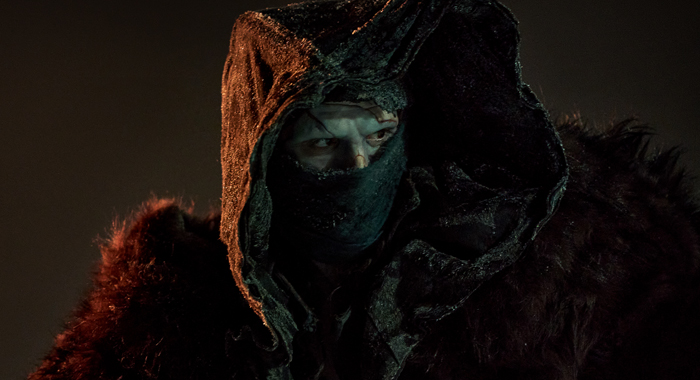
If the writer/director doesn’t significantly reimagine the source material, he certainly invests it with emotion and passion… When Frankenstein attempts emotional delicacy, del Toro’s occasionally awkward, on-the-nose screenplay undercuts the quieter moments… Frankenstein is frequently a triumph of spectacle over nuance — grand gestures over precise character insights.
— Tim Grierson, Screen International
A big, juicy, glossy, expensive mounting of the Mary Shelley classic novel for Netflix, [Frankenstein] lacks the voiciness, the edge, the perverse streak of del Toro’s great run of films from the ‘90s and into the early aughts, from Cronos and Mimic to The Devil’s Backbone and Pan’s Labyrinth… [Elordi] brings a quiet watchfulness to this Frankenstein’s monster, and he becomes the soul of a movie that may not have had one without him… If you want your del Toro weirder, Frankenstein might not be your cup. But if you want a period monster movie that’s solid, almost oaken in its sturdiness, you don’t need to knock on wood to assure that del Toro is keeping the innermost essence, the soul of cinema, alive at least.
— Ryan Lattanzio, IndieWire
The movie roars to life but seemingly forgets to breathe. That is, until it finally does. For that we must at least give some credit to Jacob Elordi… Elordi makes the creature’s awakening, his growing curiosity and hurt, feel fresh, vital, new… Whatever its flaws, the director has filled Frankenstein with seemingly everything he loves, and it reflects his obsessions. It feels like the work of a true madman, and that’s really the only way anyone should make a movie of Frankenstein.
— Bilge Ebiri, New York Magazine/Vulture
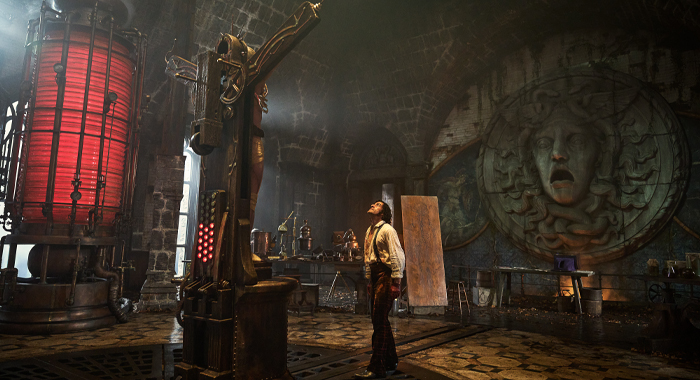
Few contemporary directors can match Del Toro’s visual flair or his imagination… In terms of craft, there is much to admire here… Unfortunately, Frankenstein continually risks losing its footing. The film lurches between scenes of lush romantic melodrama and moments of Grand Guignol bloodletting.
— Geoffrey Macnab, Independent
There’s something a bit off about the film tonally, as if it or Mr. del Toro isn’t in the right mood… Even with a 2-hours-and-29-minutes runtime, Frankenstein feels rushed. It’s trying to cram in so much that there’s no time left for character development… There’s no horror or suspense whatsoever, just magical dismemberments under golden hues and glittering harps on the soundtrack. It’s all kind of perverse, and I’m not sure if Mr. del Toro really meant it that way.
— Martin Tsai, Critic’s Notebook
Guillermo del Toro’s Frankenstein opens in theaters in limited release on October 17, 2025 and streams on Netflix on November 7, 2025.